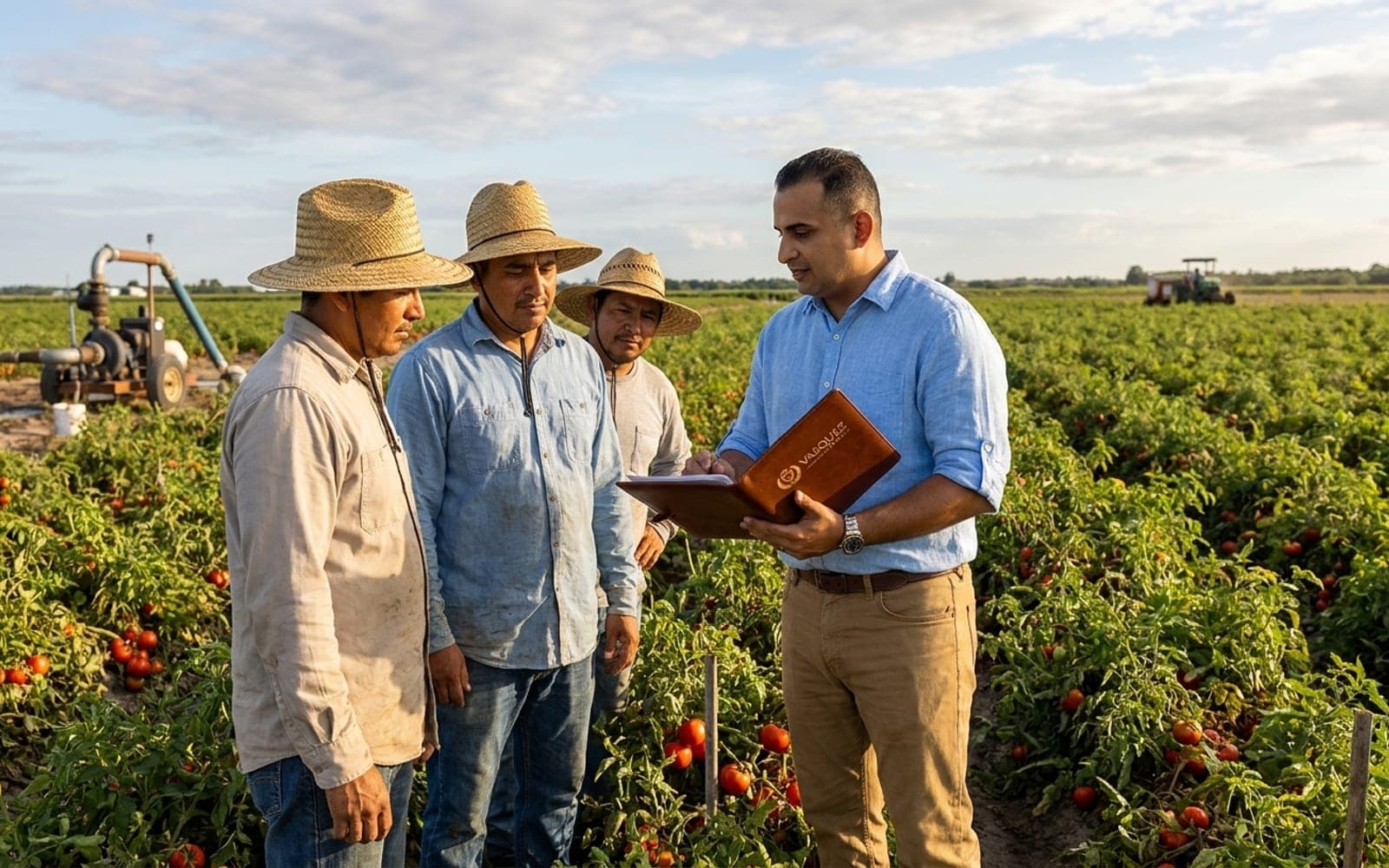
These visas usually begin with a sponsor filing a petition. The guide explains how R-1 religious worker, H-2A and H-2B seasonal worker, H-3 trainee and I media visas generally work. It also clarifies that CR-1 is a different visa, and touches on religious persecution and asylum. Because the organization or employer files, the sponsor's documents matter as much as the worker's. Our Orlando firm advises congregations, Florida employers and individuals, and lists a checklist and tips for choosing a lawyer.
- Each category starts with the organization or employer filing a petition.
- R-1 is for religious workers; CR-1 is a different spouse visa.
- H-2A and H-2B cover seasonal work for employers.
- Sponsor documents matter as much as the worker's documents.
Introduction
Religious workers, seasonal farm and hospitality workers, trainees and foreign journalists each have their own visa category, and each has rules that differ sharply from the more familiar H-1B. This guide explains the R-1, H-2A, H-2B, H-3 and I visas in general terms, plus two categories people often confuse with them, so you know what to ask before you hire a lawyer for one of these cases in Florida. To discuss a specific situation, call 1-844-YO-PELEO or contact us.
The page is written for congregations and religious organizations that want to sponsor a minister or religious worker, for Florida growers and employers that rely on seasonal labor, for organizations that offer training programs, and for individual workers and media professionals. Each of these categories begins with the organization or employer filing a petition, so the sponsor's documents matter as much as the worker's.
This guide is general information, not legal advice. Visa categories, annual limits and forms change, so check the current instructions with USCIS and the Department of Labor, and speak with a lawyer about your facts.
R-1 Visas for Religious Workers
The R-1 is a temporary visa for ministers and people working in a religious vocation or occupation for a religious organization in the United States. In general terms:
- The sponsoring organization must be a bona fide nonprofit religious organization in the United States, or affiliated with one.
- The worker must have been a member of the same religious denomination for at least two years immediately before the petition is filed.
- The position must generally be at least part-time, averaging at least 20 hours per week.
- The total time in R-1 status is limited, generally to five years.
The employer files Form I-129 with the R-1 supplement, and USCIS may conduct a site inspection to confirm the organization exists and the job is real. A lawyer helps the congregation document its tax-exempt status, its religious mission, how the worker will be paid or supported, and the worker's religious training. Pastors and church administrators who have never sponsored anyone before often find that explaining the evidence early saves time.
Many R-1 workers later pursue permanent residence as special immigrant religious workers through Form I-360. A lawyer can explain the two-year work history requirement for that green card and note that the program for non-minister religious workers has historically needed periodic reauthorization by Congress, so its availability should be checked at the time of filing.
CR-1 Visas Are Something Different
Because the names look alike, people sometimes contact a lawyer about a CR-1 when they mean an R-1, or the reverse. A CR-1 is not a work visa at all. It is an immigrant visa for the spouse of a U.S. citizen when the marriage is less than two years old at the time the spouse becomes a resident. The spouse receives a conditional green card and later files Form I-751 to remove the conditions. If your question is about a spouse abroad, see our marriage-based immigration page.
Religious Persecution and Asylum
Another overlap: some religious workers and members of faith communities fear returning home because of their beliefs. That is not an R-1 question but potentially an asylum question. Religion is one of the five protected grounds for asylum, alongside race, nationality, political opinion and membership in a particular social group. A lawyer looks at whether the harm feared rises to persecution, who is causing it, and whether the government at home is unable or unwilling to protect the person.
Asylum generally must be requested within one year of arrival, with limited exceptions, so timing matters. Our asylum page has more on that process. Someone who holds R-1 status and also fears return should talk to a lawyer before the status expires, because the options and the deadlines interact.
H-2A and H-2B Visas for Seasonal Workers
Florida agriculture depends heavily on seasonal labor, and the H-2A program lets U.S. employers bring foreign workers for temporary or seasonal farm work when there are not enough able, willing and qualified U.S. workers. The process generally runs in three stages: the employer obtains a temporary labor certification from the Department of Labor, files Form I-129 with USCIS, and the workers apply for visas at a U.S. consulate. H-2A employers take on obligations that go beyond wages, such as providing or arranging housing and meeting transportation and recordkeeping requirements. A lawyer helps growers and farm labor contractors plan the filing timeline around the season and keep compliance records.
The H-2B covers temporary non-farm jobs, which in Florida often means landscaping, hospitality, construction, marine work and seafood processing. The employer must show the need is temporary, such as seasonal, peak-load, intermittent or a one-time occurrence, and must obtain a temporary labor certification before filing with USCIS. The H-2B is subject to an annual numerical cap, so filing windows and demand can affect whether a petition can be approved for a given season. When comparing lawyers for either category, ask about experience with both the Department of Labor stage and the USCIS stage, since a problem at either one can delay workers past the season.
H-3 Trainee Visas and I Visas for Foreign Media
The H-3 is for a foreign national invited by a U.S. organization to receive training that is not available in the person's home country. It is not meant for productive employment, and the training program cannot place the trainee in a position normally held by U.S. workers, except as incidental to the training. A separate H-3 category covers special education exchange visitors. A lawyer helps the sponsoring organization write a training program with a fixed schedule, defined objectives and supervision, because a vague plan is a common reason these petitions are questioned.
The I visa is for representatives of foreign media, such as reporters, film crews, editors and similar workers, traveling to the United States to work in their profession for a foreign media outlet. The activity must be informational or news-related, and the person generally must be working for a media organization based outside the United States. A lawyer can help a journalist or production company confirm the activity qualifies and prepare for the consular interview. Entertainment or commercial productions may need a different visa.
How the Petition Process Works in Florida
The steps differ somewhat by category, but most of these cases follow a similar outline, and the process is the same for a sponsor in Orlando or in any other Florida city.
- Confirm the category. The sponsor and the lawyer decide which visa matches the job, the worker and the timing.
- Gather the sponsor's evidence. Tax-exempt status, business records, the training plan or the seasonal need is documented.
- Obtain a labor certification where required. H-2A and H-2B cases need this step from the Department of Labor before the USCIS petition.
- File the petition with USCIS. The employer files Form I-129 with the right supplements and evidence.
- Visa application abroad. After approval, the worker applies for a visa at a U.S. consulate, unless the worker is already in the U.S. and is changing status.
- Entry and compliance. The worker arrives, and the sponsor keeps the records and follows the rules for the category.
Some workers are already in the United States in another status and may be able to change status through the petition, while others must complete consular processing abroad. A lawyer should review that question before any travel is booked.
Document Checklist for R-1, H-2, H-3 and I Cases
- For R-1: proof of the organization's nonprofit religious status, a description of the job and the worker's religious training and membership.
- For H-2A and H-2B: a description of the seasonal or temporary need, the number of workers and the dates of need.
- For H-3: a detailed training plan with a schedule, objectives and supervision.
- For I visas: a letter from the foreign media employer and evidence of the assignment.
- The worker's passport, résumé and credentials.
- Information on how the worker will be paid or supported.
- Any prior petition, visa denial or immigration history.
- Housing and transportation arrangements, where the category requires them.
The sponsor's documents are as important as the worker's, and weak sponsor evidence is among the most common reasons for requests for evidence. Bring what you have to the first meeting, and a lawyer can identify gaps.
Timeline and Processing Expectations
These cases often run on a calendar that the sponsor does not control. Seasonal employers need workers by a certain date, congregations want a pastor in place before a particular event, and training programs begin on a schedule. USCIS, the Department of Labor and the State Department publish current processing information on their websites, and those times change, so plan with extra margin and check the most recent figures.
The H-2B annual cap and filing windows add another source of uncertainty, since a petition that arrives late may not be approved for the intended season. A lawyer should explain the dates that matter at the start. The table gives the stages in a general way.
| Stage | What happens | Who acts |
|---|
| Planning | The sponsor chooses the category and gathers evidence | Sponsor and lawyer |
| Labor certification | Required for H-2A and H-2B; reviewed by the agency | Employer, then Department of Labor |
| Petition | Form I-129 is filed and reviewed; a site visit is possible | Employer, then USCIS |
| Visa application | Consular interview and visa issuance, if the worker is abroad | Worker and U.S. consulate |
| Arrival and compliance | The worker begins the job and the sponsor keeps records | Worker and sponsor |
Responding to a Request for Evidence or a Site Visit
USCIS may issue a request for evidence when a petition lacks documents, and for R-1 cases it may arrange a site inspection to confirm the organization and the job are real. A response should answer every point in the notice, in an organized way, before the deadline. For a religious organization, that might mean updated records on membership, finances and the duties of the position. For an employer in H-2A or H-2B, it may mean evidence of temporary need and of the recruitment of U.S. workers.
Prepare the sponsor's staff for a site visit by explaining who will meet the officer, where the records are kept and how to answer questions truthfully. Do not coach anyone to say something that is not true. Accurate information, consistently given, is the most important element.
How to Choose a Lawyer
For any of these categories, ask the lawyer how they will handle the agency stages involved, what the employer or organization must document, and what happens if a request for evidence arrives. Avoid anyone who promises approval, and be cautious about any lawyer who guarantees an outcome; every petition is decided by the government on its record.
Also ask whether the lawyer will help with compliance after approval. Many of these categories carry continuing obligations, such as housing and wage rules for H-2A employers, or reporting changes to the job for R-1 workers, and mistakes after the petition is approved can affect future filings.
Cost Factors and Fee Breakdown
Costs in these cases are shared among the sponsor, the government and sometimes the worker, and rules about who may pay certain costs differ by category, so ask a lawyer before you agree on an arrangement.
| Item | Amount | Notes |
|---|
| Form I-129 filing and related fees | Check USCIS for the current fee | Fees and add-ons differ by visa category |
| Labor certification for H-2A or H-2B | Check the court or agency for current fees | Follow Department of Labor instructions |
| Consular visa fees | Check USCIS for the current fee | Set by the State Department; check its website |
| Recruitment, housing or training costs | Varies by case | Depends on the category and the employer |
| Attorney fees | Varies by case | Set in a written agreement |
Government fees can change, and some categories have additional fees, so check the agency's current schedule and the form instructions before sending payment.
Legal fees depend on the category, the number of workers and the complexity of the case. Ask for the scope of work and billing terms in writing.
Common Mistakes to Avoid
- Confusing similar names, such as the R-1 and the CR-1, and starting the wrong application.
- Filing an R-1 petition without proof of the worker's two years of denominational membership.
- Filing an H-2B petition too late for the cap or filing window.
- Using an H-3 training program as a way to employ a worker in a regular job.
- Treating the I visa as a general work visa for entertainment or commercial production.
- Ignoring housing, wage and recordkeeping duties after an H-2A approval.
- Letting a worker's status expire while a related asylum or green card issue is still undecided.
When to Call a Lawyer
Call a lawyer when you are first planning to sponsor a worker, because the choice of category and the timing drive the rest of the case. Call right away if you receive a request for evidence, a denial or a notice of a site inspection, or if a worker's status is about to expire. A short consultation can tell you which category fits, what the sponsor must document and whether another option, such as a different visa or asylum, should be considered.
About Vasquez Law Firm
Vasquez Law Firm practices immigration law only. Our only office is at 1111 E Amelia Street in Orlando. We serve clients throughout Florida, including congregations, growers, businesses and individuals, by phone and secure video, with in-person meetings in Orlando. William J. Vásquez is the founding attorney. Consultations are available in English and Spanish. Call 1-844-YO-PELEO or contact us to schedule a consultation.
Sources and References
Related services: marriage-based immigration, immigration lawyers in Florida
Other ways people search for this
People look for this help under different names. Related searches include asylum application lawyer; r1 visa attorney; r1 visa lawyer; cr1 visa attorney; h-2a visa lawyer; i-1 visa lawyer; r-1 visa lawyer; religious persecution asylum lawyer; religious worker visa attorney; h-3 visa lawyer; h2a visa attorney; h2b attorney; h2b lawyers.
This article is general information, not legal advice. Every case is different; speak with an immigration lawyer about your situation.