EAD Advance Parole Combo Card in Florida: Key Details
Explore the EAD advance parole combo card in Florida, essential for those with pending I-485 applications. Understand the application process, documentation, and common mistakes to avoid. For expert guidance, contact Florida Immigration Lawyers.
The EAD advance parole combo card allows individuals with a pending I-485 application to work and travel outside the U.S. legally. Key benefits include avoiding separate applications, reducing paperwork, and providing more flexibility for travel and employment while waiting for a green card.
- Combines work and travel authorization.
- Useful for I-485 pending applicants.
- Reduces need for multiple applications.
Introduction
For those navigating the complex U.S. immigration system, understanding the EAD advance parole combo card is crucial, especially if you are waiting for your green card in Florida. This card combines employment authorization and travel permission, offering significant convenience. In this article, we explore what the combo card entails, its benefits, and how it impacts your immigration journey in Orlando and beyond.
The journey to obtaining a green card can often be a lengthy and unpredictable process, leaving applicants in a state of uncertainty regarding their ability to work or travel. The EAD advance parole combo card serves as a vital bridge during this waiting period, providing much-needed stability and peace of mind. For many individuals and families across Florida, this document is instrumental in maintaining daily life, supporting loved ones, and addressing urgent personal or professional needs without jeopardizing their permanent residency application.
Understanding the nuances of the combo card, from eligibility to application procedures and potential pitfalls, is paramount. This guide aims to demystify the process, offering practical advice and highlighting the critical role legal counsel can play. For personalized assistance, call Florida Immigration Lawyers at 1-844-YO-PELEO for a free case review.
What is an EAD Advance Parole Combo Card?
An EAD advance parole combo card is a document issued to individuals with a pending I-485 application, allowing them to work and travel while their application is processed. This card simplifies the process by combining employment authorization (EAD) and advance parole (AP) into one document.
The Employment Authorization Document (EAD), often referred to as a work permit, grants foreign nationals permission to work legally in the United States. Without it, individuals with pending green card applications might be unable to secure or maintain employment, leading to significant financial strain. Concurrently, Advance Parole (AP) is a travel document that allows certain foreign nationals to re-enter the U.S. after traveling abroad without invalidating their pending adjustment of status application. Traveling without an approved AP can lead to the abandonment of your I-485, a critical mistake many applicants unknowingly make.
By integrating these two crucial authorizations into a single, convenient card, USCIS streamlines the administrative burden for both applicants and the agency. This combination not only reduces the amount of paperwork but also ensures that applicants have a clear, unified document to present to employers or border officials. As of 2026, the combo card is a popular choice for many immigrants in Florida due to its efficiency and cost-effectiveness, eliminating the need to apply separately for a work permit and travel document, thus reducing the administrative burden and potential delays.
Eligibility Criteria for the EAD Advance Parole Combo Card
The fundamental requirement for obtaining an EAD advance parole combo card is having a pending Form I-485, Application to Register Permanent Residence or Adjust Status. This means that you have already submitted your green card application and it is actively being processed by U.S. Citizenship and Immigration Services (USCIS). The combo card is essentially an interim benefit designed to provide flexibility during the often lengthy wait for permanent residency approval.
Eligibility extends to various categories of I-485 applicants. This includes individuals applying for adjustment of status based on family petitions (e.g., spouses or parents of U.S. citizens), employment-based petitions (such as EB-1, EB-2, or EB-3 categories), and certain asylum or refugee adjusters. Each category has its own specific requirements for the underlying I-485, but once that application is pending, the option to apply for the combo card typically becomes available.
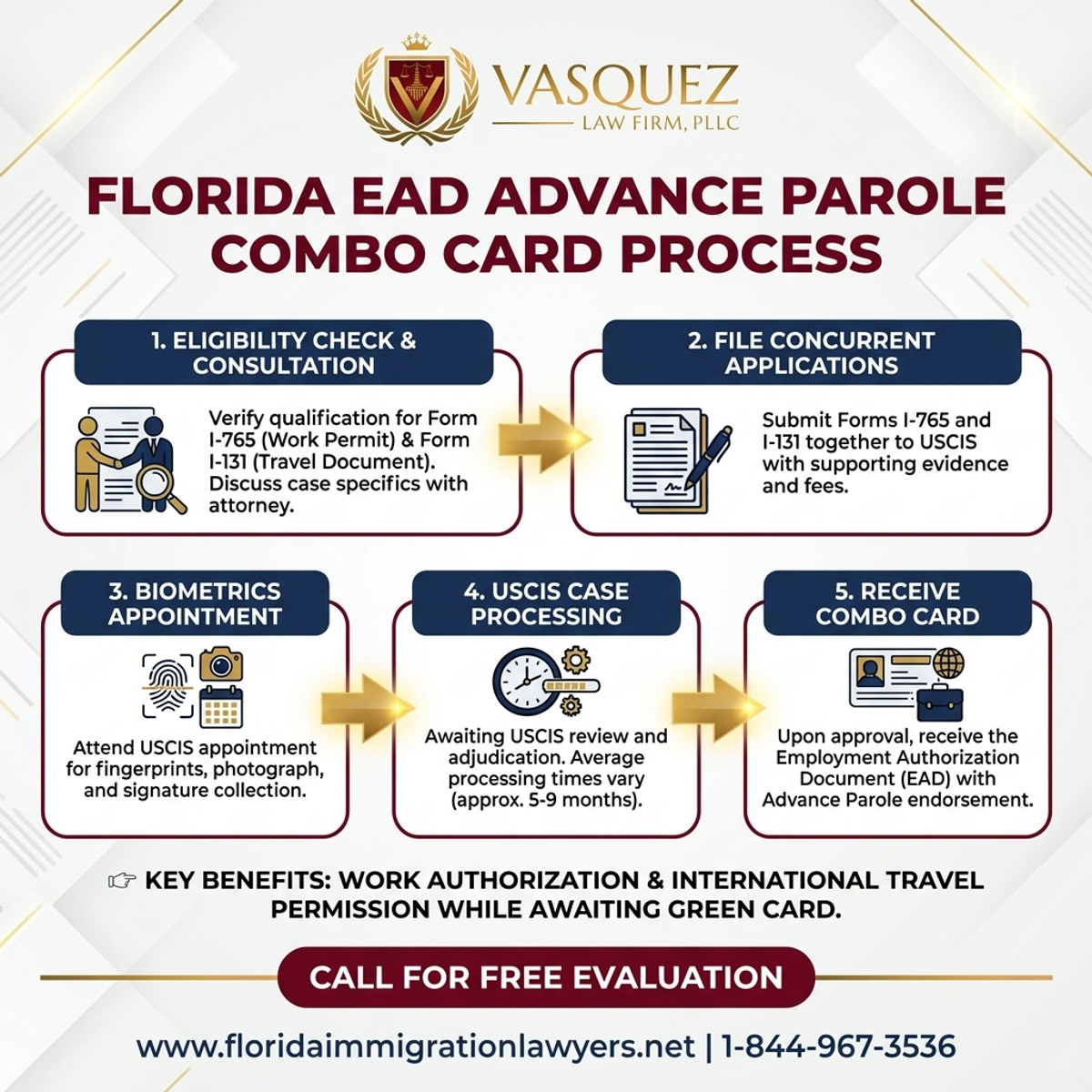
Step-by-Step Process — EAD Advance Parole Combo Card in Florida: Key Details
It's important to note that while a pending I-485 is the primary requirement, certain circumstances can affect eligibility. For instance, individuals with specific criminal convictions, previous immigration violations, or those who have fallen out of status might face challenges. In such complex scenarios, consulting with an experienced immigration attorney at Florida Immigration Lawyers is not just recommended, but often crucial. They can assess your individual case, identify potential issues, and guide you through the application process to maximize your chances of approval.
Benefits of the EAD Advance Parole Combo Card
The EAD advance parole combo card offers a multitude of benefits that significantly enhance the lives of individuals awaiting their green card approval, particularly those residing in Florida. Its primary advantage lies in providing uninterrupted employment authorization. This means applicants can legally work anywhere in the U.S., allowing them to maintain financial stability, support their families, and pursue career opportunities without the anxiety of losing their ability to earn a living during the green card processing period. This financial security is invaluable for individuals and families establishing roots in communities like Orlando.
Another critical benefit is the freedom to travel internationally without jeopardizing the pending I-485 application. Without Advance Parole, leaving the U.S. while your adjustment of status application is pending would typically be considered an abandonment of that application, leading to a denial. The combo card allows individuals to visit family abroad, attend important events, or handle urgent personal matters, and then lawfully re-enter the U.S. This capability provides immense relief and flexibility, especially in emergencies or for those with strong ties to their home countries.
Beyond work and travel, the combo card offers invaluable peace of mind and flexibility. The green card process can be long and stressful, and having a document that allows for a more normal life—working, traveling, and planning for the future—can significantly reduce anxiety. It also offers practical advantages by combining two essential documents into one, simplifying identification and reducing the administrative burden of managing multiple pieces of immigration paperwork. This holistic approach ensures that applicants can navigate their daily lives with greater ease while patiently awaiting the final decision on their permanent residency.
How to Apply for a Combo Card in Florida?
Applying for a combo card involves submitting Form I-765 for employment authorization and Form I-131 for advance parole, along with your Form I-485 application. It's essential to ensure all forms are complete and accurate to avoid delays.
- Complete Form I-765 and Form I-131.
- Submit forms along with Form I-485 and required fees.
- Attend a biometrics appointment if required.
- Await approval and issuance of the combo card.
One significant advantage for many applicants is the ability to file Forms I-765 and I-131 concurrently with their Form I-485. When filed together, USCIS often waives the fees for the EAD and Advance Parole applications, making the process more cost-effective. Even if your I-485 is already pending, you can still file these forms separately. However, meticulous attention to detail is paramount. Even minor errors, such as incorrect dates, missing signatures, or incomplete sections, can lead to Requests for Evidence (RFEs) or outright denials, significantly prolonging your wait time.
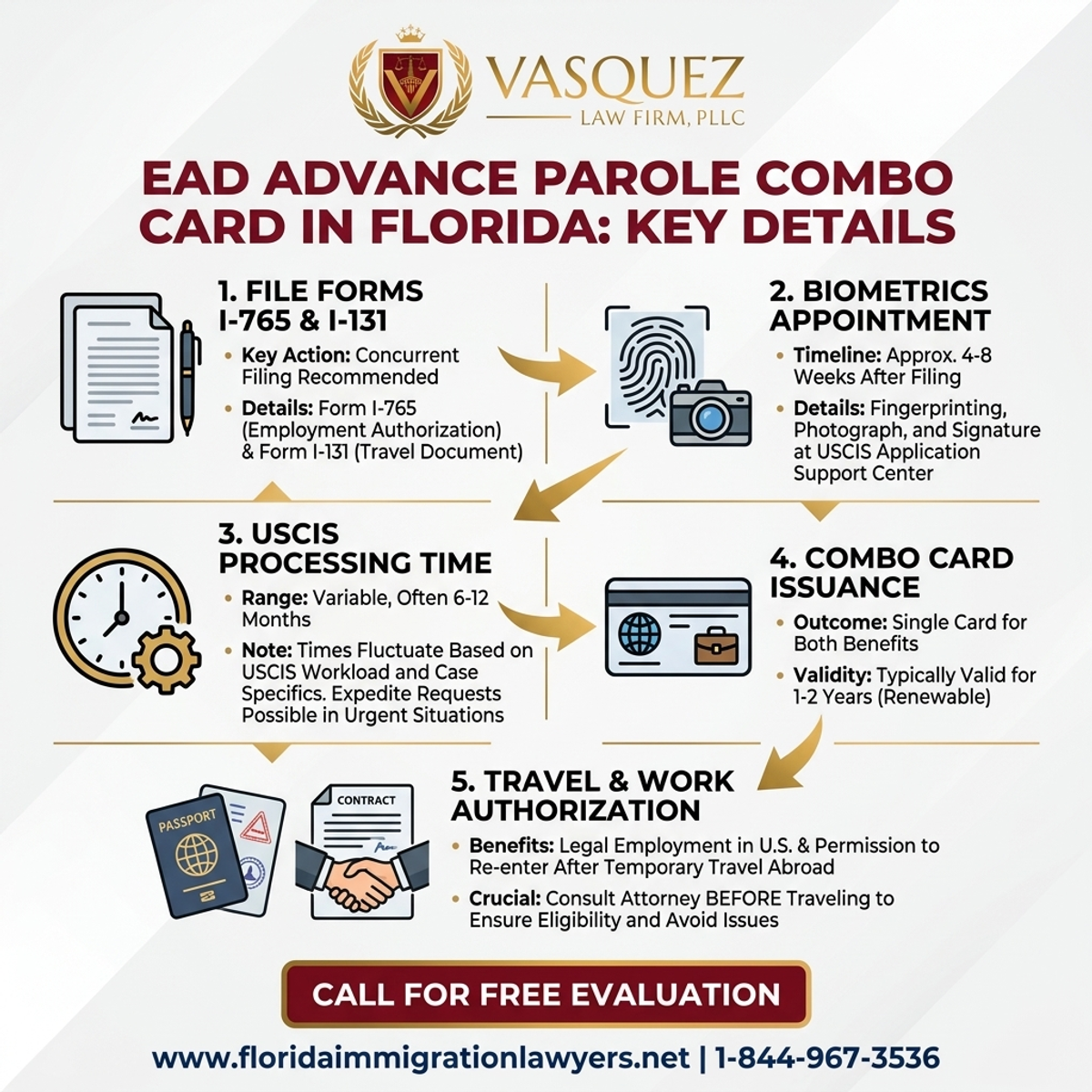
Key Statistics — EAD Advance Parole Combo Card in Florida: Key Details
Ensuring accuracy in your application is crucial. Incomplete forms can lead to delays or denials. Consider consulting with an immigration attorney to ensure your forms are correctly filled out. A practical tip is to make copies of all submitted documents for your records, including the application forms, supporting evidence, and payment receipts. This will be invaluable if USCIS requests additional information or if you need to reference your application details later. Florida Immigration Lawyers can provide expert guidance, ensuring every detail is correct before submission, safeguarding your application's integrity.
What Documents Do You Need for the Combo Card?
Gathering the correct supporting documentation is a critical step in the combo card application process. These documents serve to verify your identity, confirm your eligibility for the underlying I-485 application, and meet USCIS's specific requirements. Organizing these materials meticulously can prevent delays and ensure a smoother application journey.
- Completed Form I-765 and Form I-131.
- Proof of identity (e.g., passport, birth certificate, national ID with photo).
- Copy of your I-485 receipt notice (if filed separately).
- Two recent passport-style photographs meeting USCIS specifications (white background, no glasses, specific dimensions).
- Copy of your last EAD card (if applicable, for renewals).
- Copy of your I-94 Arrival/Departure Record.
- Copy of your visa (if applicable).
- Any additional documents USCIS might require based on your specific case.
It is highly recommended to make multiple copies of all documents submitted and keep them organized in a personal file. This practice serves as a safeguard in case any documents are lost in transit or if USCIS requests duplicates. Always ensure your photographs meet the strict USCIS guidelines, as improper photos are a common reason for application rejection or delay. Consulting with Florida Immigration Lawyers can help you confirm you have all necessary documents and that they are correctly prepared.
Timeline for Receiving a Combo Card
Processing times for the combo card can vary, but generally, applicants can expect a wait of several months. Let's look at the typical timeline:
| Stage | Typical Timeframe | Notes |
|---|---|---|
| Application Submission | 1-2 weeks | Time to prepare and submit forms |
| Biometrics Appointment | 3-5 weeks | Appointment scheduling and completion |
| Approval and Card Issuance | 3-5 months | Processing by USCIS |
Keep in mind, processing times can change based on USCIS workload and policy changes. Regularly checking the USCIS website for updates is advisable. Factors such as the specific USCIS service center handling your application (e.g., Nebraska, Texas, etc.), the volume of applications they are processing, and the complexity of your individual case can all influence how long it takes to receive your card. While the table above provides a general estimate, it's crucial to manage expectations and understand that delays are possible.
To stay informed, applicants can create an online account with USCIS and link their case receipt numbers to track their application status in real-time. This allows you to receive updates directly and check for any Requests for Evidence (RFEs) or other notifications. It's strongly advised not to make any non-refundable travel plans until you have the physical combo card in your possession, as approval notices alone are not sufficient for re-entry into the U.S. Patience and diligent monitoring are key during this waiting period.
Cost Factors for the Combo Card
The cost of obtaining a combo card can vary based on specific circumstances and the need for additional forms or documentation. Below is a general breakdown of typical costs:
| Item | Typical Fee | Notes |
|---|---|---|
| Form I-765 Fee | Varies | May be waived if filed with I-485 |
| Form I-131 Fee | Varies | May be waived if filed with I-485 |
| Biometrics Fee | Varies | Required if applicable |
Fees are subject to change, so always verify with the latest USCIS fee schedule. A significant cost advantage of the combo card is that if Forms I-765 and I-131 are filed concurrently with your Form I-485, there is typically no separate fee for the EAD and Advance Parole applications. However, if you file them separately after your I-485 has been submitted, individual fees for each form may apply, unless you meet specific criteria for a fee waiver.
While the fees for immigration applications can seem substantial, it's important to view them as an investment in your future. The ability to work legally and travel internationally provides immense value and stability during the green card process. Beyond USCIS filing fees, applicants should also budget for potential costs such as attorney fees, which can provide invaluable guidance and prevent costly mistakes, as well as costs for passport photos and document copying services. Florida Immigration Lawyers can provide a clear breakdown of potential costs during your free consultation.
Maintaining Your Status While on a Combo Card
Holding an EAD advance parole combo card is a significant benefit, but it comes with responsibilities to ensure you maintain your immigration status and do not jeopardize your pending I-485 application. The most crucial rule is never to travel internationally without an approved Advance Parole document in hand. If you leave the U.S. without it while your I-485 is pending, USCIS may consider your adjustment of status application abandoned, leading to its denial upon your return.
Another vital aspect of maintaining your status is keeping USCIS informed of any changes to your personal information, especially your mailing address. Failure to update your address promptly can result in missed notices, RFEs, or even a final decision on your case, which could lead to severe consequences. USCIS communicates primarily through mail, so an outdated address can cause significant problems and delays in your application process.
Furthermore, be mindful of the expiration date on your combo card. If your I-485 is still pending when your card is due to expire, you must file for a renewal of both Form I-765 and Form I-131 well in advance, typically 120-180 days before expiration. This proactive approach ensures there is no lapse in your work authorization or travel privileges. If you experience significant life changes—such as a change in employment, marital status, or encounter any legal issues—it is imperative to consult with Florida Immigration Lawyers immediately. These changes could impact your I-485 eligibility and require specific actions to protect your application.
Middle CTA
Do not navigate this process alone. Contact Florida Immigration Lawyers today.
Common Mistakes to Avoid
Navigating the EAD advance parole combo card application can be intricate, and even minor errors can lead to significant delays or denials. Being aware of common pitfalls can help you avoid unnecessary stress and ensure a smoother process.
- Incorrect Form Submission: Ensure all forms are filled correctly to avoid delays. Submitting forms with missing information, typos, or outdated versions can lead to immediate rejection or a Request for Evidence (RFE).
- Missing Documents: Submit all required documents to prevent application rejection. Forgetting to include copies of identity documents, previous EADs, or required photographs can halt your application.
- Failure to Attend Biometrics: Missing this appointment can significantly delay processing. Your biometrics appointment is mandatory for identity verification; failing to attend without proper rescheduling will result in application abandonment.
- Ignoring USCIS Updates: Stay informed about USCIS policy changes that may affect your application. USCIS frequently updates forms, fees, and processing procedures; not staying current can lead to using outdated information.
- Traveling Without Advance Parole: Do not travel outside the U.S. without approved advance parole to avoid abandonment of your I-485. This is perhaps the most critical mistake, as it can result in the automatic denial of your green card application.
- Not Consulting an Attorney: Legal guidance can prevent costly mistakes. Attempting to navigate complex immigration laws without expert advice can lead to errors that are difficult and expensive to rectify.
- Using Incorrect Fees: Verify current fees to avoid rejections. USCIS fees change periodically; submitting an incorrect payment amount will cause your application to be returned.
- Improper Photo Submission: Ensure photos meet USCIS specifications. Photos that do not meet size, background, or quality requirements are a common reason for RFEs.
By being vigilant and proactive in avoiding these common mistakes, you can significantly improve the efficiency and success of your combo card application. When in doubt, always seek professional legal advice to safeguard your immigration journey.
When to Call a Lawyer?
Consulting with an immigration attorney can be crucial in complex situations such as:
- Receiving a Request for Evidence (RFE) from USCIS, which requires a precise and timely response.
- Having previous immigration violations or a criminal record that could impact your eligibility.
- Needing expedited processing due to emergencies, where an attorney can help compile a compelling request.
- If your application has been denied or delayed without clear explanation.
- If you have a complex employment history or multiple visa categories.
- If there are significant changes in your life, such as marriage, divorce, or a new job, that could affect your I-485.
An experienced attorney can provide invaluable guidance, ensuring all documentation is accurate and complete, and representing your best interests throughout the process. Proactively seeking legal counsel can help identify potential issues before they become major problems, saving you time, stress, and potentially costly errors. Our team at Florida Immigration Lawyers is ready to assist with your immigration needs, offering expert advice and dedicated support for every step of your journey.
About Florida Immigration Lawyers
Florida Immigration Lawyers is dedicated to providing top-notch immigration services across Florida. We specialize in family immigration, asylum, deportation defense, and more. With our 24/7 availability, you can reach us anytime for a free consultation. Call us at 1-844-YO-PELEO or schedule a free consultation through our website.
Our firm prides itself on a client-centric approach, understanding that each immigration journey is unique and deeply personal. We are committed to providing compassionate, knowledgeable, and aggressive representation, ensuring that our clients feel supported and informed at every stage. With a deep understanding of both federal immigration law and its specific applications within Florida, we strive to achieve the best possible outcomes for individuals and families seeking to build their lives in the United States. Your success is our priority.
Sources and References
- U.S. Citizenship and Immigration Services (USCIS)
- Executive Office for Immigration Review (EOIR)
- 8 U.S.C. Chapter 12 - Immigration and Nationality Act
Related services: immigration practice areas, family immigration services, citizenship and naturalization.
This article provides general legal information and is not intended as legal advice. Every case is unique, and outcomes depend on specific facts and circumstances. Contact an attorney for advice about your particular situation.
For comprehensive immigration support, call us at 1-844-YO-PELEO. Se Habla Español - Estamos aquí para ayudarle.
If you need legal assistance, learn more about immigration lawyers in Florida, or call us at 1-844-967-3536 for a free case review.
Do Not Navigate This Process Alone
Our experienced immigration attorneys are ready to fight for you. Get a free, confidential case review today.
Se Habla Español
Or leave your details and we’ll call you:
Free Evaluation in 24 Hours
Or talk to us right now

AI voice assistant — available 24/7
FreeFrequently Asked Questions

William J. Vásquez
Founding Attorney · Vasquez Law Firm
U.S. Air Force veteran and immigration attorney with years of hands-on U.S. immigration experience. J.D., NCCU School of Law. AILA member. Admitted to the 4th, 5th, and 11th Circuit Courts.
Available 24/7 - Free Evaluations
Reviewed for legal accuracy by William J. Vásquez
Licensed in North Carolina; U.S. immigration is federal practice.
Related Legal Services
Our Florida immigration attorneys can help you with immigration practice areas, free immigration consultation and business immigration. Call today at 1-844-YO-PELEO for a free case review.
Related Links
Related Topics
Free Legal Case Review
Discuss your case with our experienced attorneys. We're available 24/7.
Se Habla Español - Estamos aquí para ayudarle.
Related Articles
Certificate of Eligibility for Expungement in Florida 2026
For non-U.S. citizens in Florida, understanding how a state expungement impacts immigration status is critical. A certificate of eligibility for expungement in Florida allows a criminal record to be sealed or expunged under state law. However, federal immigration agencies often disregard such state-level relief, still considering the original criminal offense as a conviction for immigration purposes. This can have severe implications for visa applications, green card eligibility, naturalization, and even lead to deportation. This guide clarifies the Florida expungement process, its limited effect on federal immigration law, and key steps to protect your status in 2026. Learn about common mistakes, required documents, timelines, and when to seek expert legal counsel from Florida Immigration Lawyers to navigate these complex issues effectively.
Immigration Lawyer Orlando Free Consultation in Florida
For individuals and families in Orlando, Florida, navigating the complexities of U.S. immigration law requires expert guidance. An immigration lawyer in Orlando offers crucial support for everything from visa applications and green card processes to naturalization and deportation defense. This comprehensive guide details what a free consultation covers, providing a step-by-step overview of immigration pathways, essential document checklists, and expected timelines in 2026. We also highlight common mistakes to avoid, discuss the critical role of legal counsel in deportation and asylum cases, and explain why choosing a local Orlando immigration attorney is beneficial. Florida Immigration Lawyers is dedicated to serving the diverse community of Orlando with compassionate, effective legal solutions, ensuring you receive personalized advice and robust representation for a successful immigration journey.
Naturalization Ceremony Locations and Schedule 2026 Florida
For those in Florida aspiring to U.S. citizenship, understanding the naturalization process, including ceremony locations and schedules for 2026, is essential. This guide from Florida Immigration Lawyers details the N-400 application, eligibility requirements, and typical timelines. We cover the step-by-step journey, from initial filing and biometrics to the naturalization interview and the final Oath of Allegiance ceremony held across Florida's USCIS field offices, including Orlando, Miami, Tampa, and Jacksonville. Learn about critical documents, potential costs, and common mistakes to avoid. Our firm emphasizes the importance of accurate applications and offers expert legal assistance for complex cases, ensuring a smoother path to becoming a U.S. citizen. Get a free case review today.
Green Card Renewal Process in Florida: 2026 Guide
Renewing your green card in Florida is a vital process for maintaining your lawful permanent resident status. This comprehensive 2026 guide from Florida Immigration Lawyers breaks down the Form I-90 application, covering eligibility, step-by-step instructions, necessary documents, typical costs, and current processing timelines. We explain who needs to renew, what to expect at your biometrics appointment, and Florida-specific considerations for permanent residents. Learn how to avoid common mistakes that can delay your application and understand when professional legal assistance is crucial. Our expert attorneys are here to provide free case reviews and guide you through every stage, ensuring a smooth and secure renewal of your permanent resident card.