Naturalization Ceremony Locations and Schedule 2026 Florida
For those in Florida aspiring to U.S. citizenship, understanding the naturalization process, including ceremony locations and schedules for 2026, is essential. This guide from Florida Immigration Lawyers details the N-400 application, eligibility requirements, and typical timelines. We cover the step-by-step journey, from initial filing and biometrics to the naturalization interview and the final Oath of Allegiance ceremony held across Florida's USCIS field offices, including Orlando, Miami, Tampa, and Jacksonville. Learn about critical documents, potential costs, and common mistakes to avoid. Our firm emphasizes the importance of accurate applications and offers expert legal assistance for complex cases, ensuring a smoother path to becoming a U.S. citizen. Get a free case review today.
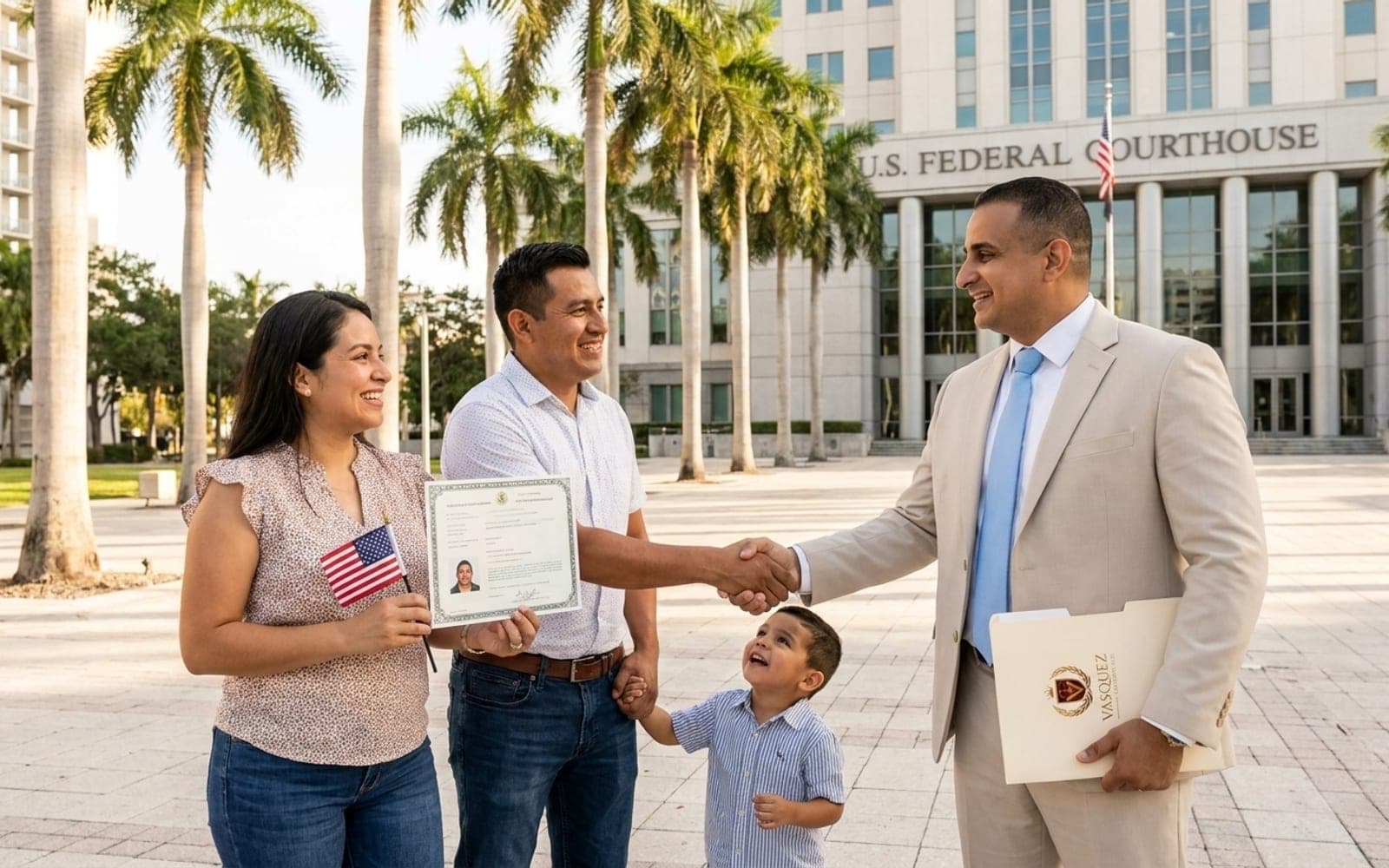
Naturalization ceremony locations in Florida for 2026 are primarily held at U.S. Citizenship and Immigration Services (USCIS) field offices in Orlando, Miami, Tampa, and Jacksonville, along with federal courthouses. The schedule varies by location and USCIS workload, but ceremonies are typically held monthly or bi-monthly. Applicants receive an Oath of Allegiance ceremony notice (Form N-445) after their N-400 application interview is approved. This notice specifies the date, time, and location, usually within a few weeks to a few months post-interview. It is crucial to attend the scheduled ceremony to finalize the path to U.S. citizenship.
- USCIS field offices in Orlando, Miami, Tampa, and Jacksonville are primary locations.
- Ceremony schedules are variable, often monthly or bi-monthly, depending on local demand.
- Applicants receive a Form N-445 notice detailing their specific ceremony date and time.
- The oath ceremony is the final step to becoming a U.S. citizen.
- Timely attendance is mandatory to complete the naturalization process.
For many immigrants in Florida, the dream of U.S. citizenship represents the culmination of years of hard work, dedication, and building a new life. The naturalization process, while rewarding, can often feel complex and daunting, especially when trying to understand the various stages, timelines, and requirements. One of the most anticipated moments is the naturalization ceremony, where individuals officially take the Oath of Allegiance and become citizens.
As of 2026, navigating the specifics of naturalization ceremony locations and schedules in Florida requires careful attention to detail. This comprehensive guide from Florida Immigration Lawyers aims to demystify the journey, providing essential information on eligibility, the N-400 application process, processing times, and what to expect during your path to U.S. citizenship in the Sunshine State. We understand the significance of this milestone and are here to help you every step of the way.
If you are considering applying for naturalization or have questions about your eligibility, do not hesitate to seek expert legal guidance. Call Florida Immigration Lawyers at 1-844-YO-PELEO for a free case review and let our experienced team assist you.
What are the Naturalization Ceremony Locations in Florida in 2026?
As of 2026, naturalization ceremonies in Florida are primarily conducted at U.S. Citizenship and Immigration Services (USCIS) field offices and, in some instances, federal courthouses. The specific location for your ceremony will depend on your residence and the USCIS field office that processed your N-400 application. The main USCIS field offices in Florida that regularly host these ceremonies include Orlando, Miami, Tampa, and Jacksonville.
The USCIS Orlando Field Office serves applicants from Central Florida and frequently holds ceremonies, often at its facility or sometimes at larger venues like the Orange County Convention Center for bigger groups. The USCIS Miami Field Office handles a significant volume of applications from South Florida and typically hosts ceremonies at its office or the federal courthouse downtown. Similarly, the USCIS Tampa Field Office caters to the Gulf Coast region, while the USCIS Jacksonville Field Office serves North Florida, both conducting regular oath ceremonies. Occasionally, federal district courts might also host special ceremonies, particularly around national holidays, offering a more formal and ceremonial experience. Virtual ceremonies have also been utilized in recent years, though in-person ceremonies remain the standard. Your Form N-445, Notice of Naturalization Oath Ceremony, will explicitly state the date, time, and exact location of your ceremony, ensuring you know precisely where to go to finalize your citizenship journey.
How Long Does the Naturalization Process Take in Florida as of 2026?
As of 2026, the naturalization process in Florida typically takes between 8 to 14 months from the initial filing of Form N-400, Application for Naturalization, to the Oath of Allegiance ceremony. This timeframe is an estimate and can vary significantly based on several factors, including the specific USCIS field office handling your case, the complexity of your application, and current agency workloads. For instance, the processing times at the Orlando Field Office might differ slightly from those in Miami or Tampa due to varying application volumes.
The overall duration encompasses several key stages: the initial application review, biometrics appointment, naturalization interview, and finally, the oath ceremony. While USCIS continually strives to improve efficiency, backlogs can sometimes occur, extending these timelines. It is always advisable to check the USCIS processing times tool for the most current estimates specific to your field office. For applicants in Central Florida, the Orlando Field Office processing times are particularly relevant. Maintaining an accurate and complete application from the outset can help prevent delays, as requests for evidence (RFEs) or interview rescheduling can add months to the process. Understanding these potential variations is crucial for managing expectations.
Timeline and Processing Expectations for Naturalization in Florida
| Stage | Typical Timeframe (As of 2026) | Notes |
|---|---|---|
| File Form N-400 | Day 0 | Submission of complete application with all supporting documents. |
| Receive Receipt Notice | 1-3 weeks | Form I-797C, Notice of Action, confirms USCIS received your application. |
| Biometrics Appointment | 3-5 months | Fingerprints, photos, and signature collected for background checks. |
| Naturalization Interview | 6-10 months | Evaluation of eligibility, English, and civics knowledge. |
| Decision on N-400 | Interview day to 1-4 months | Approval, denial, or request for further evidence (RFE). |
| Oath Ceremony Scheduling | 1-3 months post-approval | Receipt of Form N-445, Notice of Naturalization Oath Ceremony. |
| Oath Ceremony | 8-14 months total | Final step where you take the Oath of Allegiance and receive your Certificate of Naturalization. |
What is the Step-by-Step Naturalization Process in Florida?
The journey to becoming a U.S. citizen through naturalization involves several distinct steps, each with its own requirements and procedures. Understanding this process is vital for applicants in Florida to ensure a smooth and successful outcome. Here is a detailed breakdown of the naturalization process:
- Determine Your Eligibility: Before applying, you must meet specific eligibility criteria established by the Immigration and Nationality Act (INA). Generally, you must be at least 18 years old, be a lawful permanent resident (Green Card holder) for at least five years (or three years if married to a U.S. citizen), demonstrate continuous residence and physical presence in the U.S., possess good moral character, be able to read, write, and speak basic English, and have a knowledge of U.S. history and government (civics). Exceptions exist for certain military personnel.
- Prepare and File Form N-400: Once you confirm eligibility, the next step is to accurately complete and submit Form N-400, Application for Naturalization, along with all required supporting documentation and the filing fee to USCIS. This extensive form requires detailed personal information, residency history, marital history, employment, travel records, and a thorough review of your good moral character. Any errors or omissions can cause significant delays.
- Attend Biometrics Appointment: After USCIS accepts your N-400, you will receive a notice for a biometrics appointment at a local Application Support Center (ASC), such as the one in Orlando. At this appointment, your fingerprints, photograph, and signature will be collected for background checks and security clearances. This step is crucial for verifying your identity and ensuring you meet the good moral character requirements under 8 CFR 316.10.
- Complete the Naturalization Interview: You will be scheduled for an interview at a USCIS field office, like the Orlando Field Office. During this interview, a USCIS officer will review your N-400 application, ask questions about your eligibility, and administer the English and civics tests. The English test assesses your ability to read, write, and speak basic English, while the civics test covers U.S. government and history.
- Receive a Decision: After the interview, the USCIS officer will issue a decision, which may be an approval, a denial, or a request for additional evidence (RFE). If approved, you will typically receive a Form N-445, Notice of Naturalization Oath Ceremony, shortly thereafter. In some cases, a decision may be delayed if further review is needed or if an RFE was issued.
- Attend the Oath of Allegiance Ceremony: This is the final and most significant step. You will attend a public ceremony where you take the Oath of Allegiance to the United States. Upon taking the oath, you will surrender your Permanent Resident Card and receive your Certificate of Naturalization, officially making you a U.S. citizen. It is essential to arrive on time and prepared for this momentous occasion.
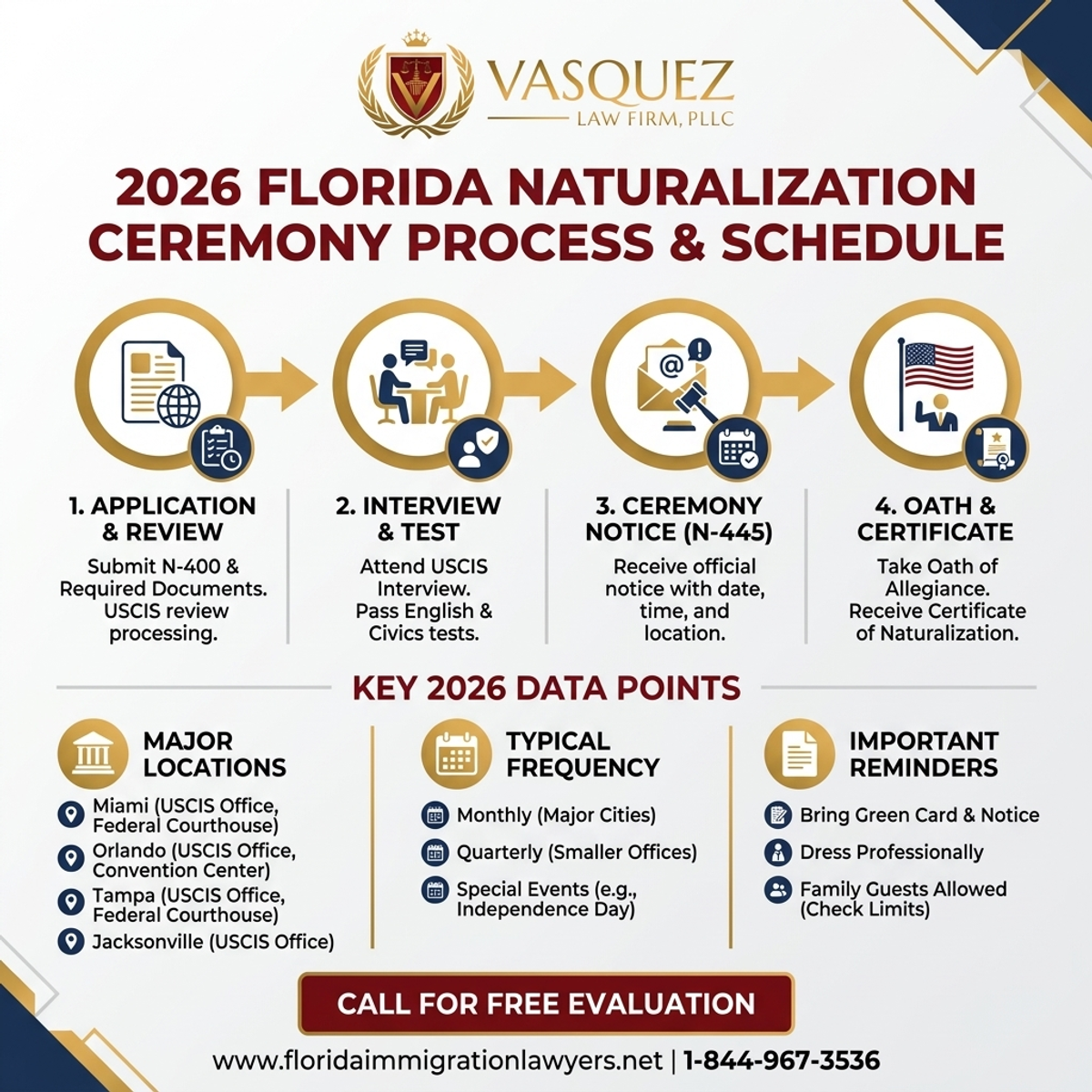
Step-by-Step Process — Naturalization Ceremony Locations and Schedule 2026 Florida
For residents of Central Florida, the Orlando Field Office will be your primary point of contact throughout most of this process. Ensuring all steps are followed meticulously and all documentation is accurate is paramount for a successful naturalization application. Our team at Florida Immigration Lawyers is ready to assist you in preparing for each stage.
What Documents Do You Need for Naturalization (N-400) in Florida?
Preparing a complete and accurate set of documents is critical for a successful Form N-400 application for naturalization in Florida. Missing or incorrect documentation can lead to delays, requests for evidence, or even denial. Here is a comprehensive checklist of documents you will typically need:
- Permanent Resident Card (Green Card): Original and a photocopy of the front and back.
- State-Issued Identification: A copy of your driver's license or other valid state ID.
- Social Security Card: A copy of your Social Security card.
- Current and Expired Passports: Copies of the biographical page of all passports, both current and any expired ones used during your permanent residency.
- Travel Records: Documentation of all trips outside the U.S. since becoming a permanent resident, including dates of departure and return.
- Marriage Certificate: If applying based on marriage to a U.S. citizen, provide a copy of your marriage certificate.
- Divorce Decrees or Death Certificates: If applicable, documentation for all prior marriages of both you and your current spouse.
- Birth Certificates: Copies of birth certificates for any children listed on your application.
- Tax Transcripts/Returns: Copies of federal income tax returns or tax transcripts for the last five years (or three years if applying as a spouse of a U.S. citizen).
- Evidence of Selective Service Registration: If you are a male applicant who resided in the U.S. between ages 18 and 26, provide proof of Selective Service registration.
- Criminal Records: Certified copies of arrest reports, court dispositions, and sentencing records for any arrests or convictions, regardless of how minor or old. This is crucial for demonstrating good moral character.
- Child Support/Alimony Orders: If applicable, proof of compliance with any child support or alimony obligations.
- USCIS Interview Notice: Form I-797C, Notice of Action, for your interview.
- Photographs: Two identical passport-style photographs if you are filing from outside the U.S. or if specifically requested.
It is important to provide both copies and be prepared to show originals at your interview. Organizing these documents meticulously before filing can significantly streamline your naturalization process. For complex situations, such as those involving criminal history or extensive travel, professional legal assistance from a Florida immigration lawyer is highly recommended.
What are the Costs Associated with the Naturalization Process in 2026?
As of 2026, the primary cost associated with the naturalization process is the filing fee for Form N-400, Application for Naturalization, paid to U.S. Citizenship and Immigration Services (USCIS). While fees are subject to change, the N-400 filing fee generally includes the application processing fee and the biometrics services fee. It is crucial to check the official USCIS website for the most current fee schedule before filing, as these amounts can be updated periodically.
Beyond the government filing fee, applicants in Florida may encounter other expenses. These can include attorney fees if you choose to hire a legal professional for assistance with your application, document translation costs if any of your supporting documents are not in English, and travel expenses for appointments such as biometrics and the naturalization interview at your local USCIS field office (e.g., Orlando). While some applicants may qualify for a fee waiver based on their income or receipt of certain public benefits, this must be applied for separately using Form I-912, Request for Fee Waiver. Understanding all potential costs upfront helps in planning your naturalization journey effectively.
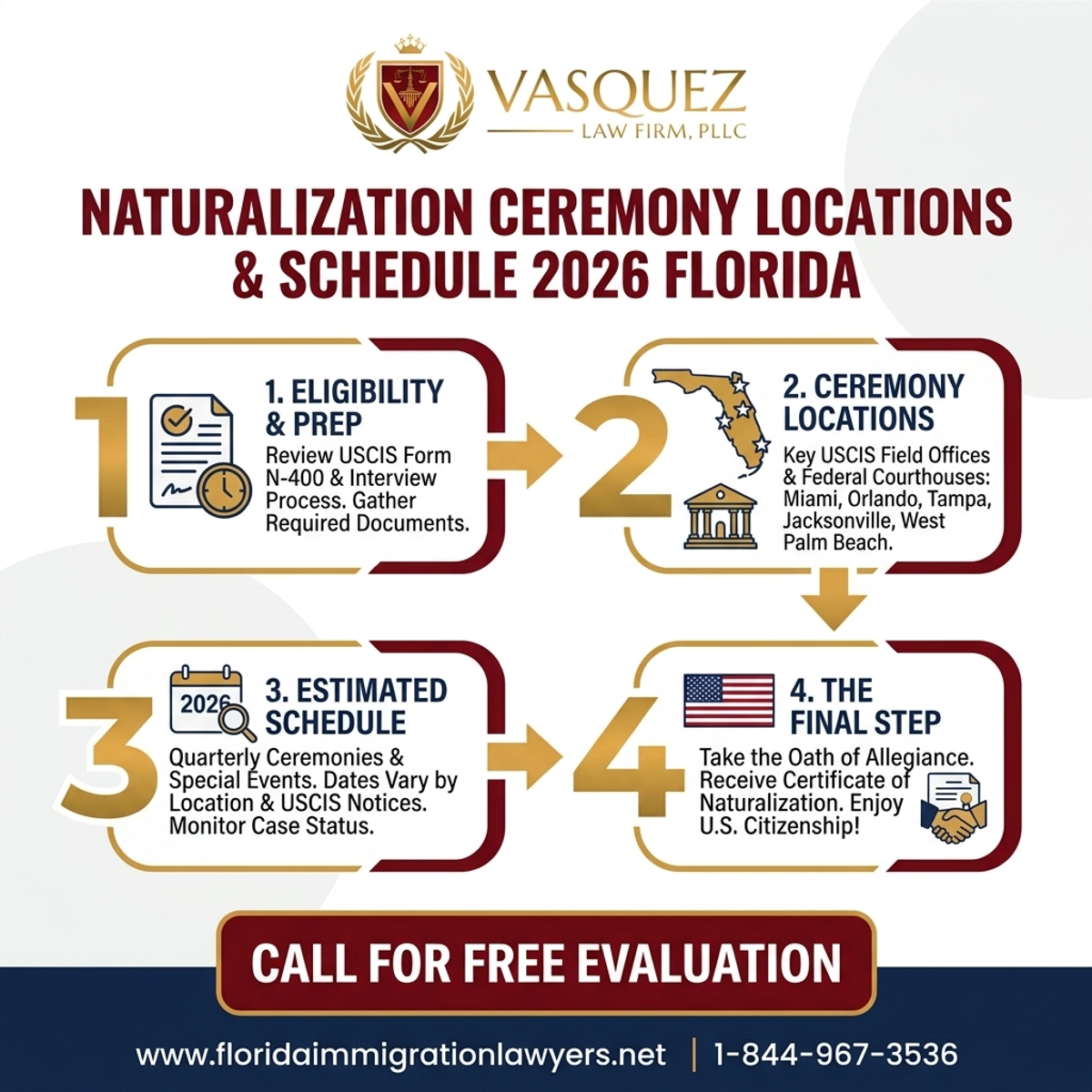
Key Statistics — Naturalization Ceremony Locations and Schedule 2026 Florida
Cost Factors and Fee Breakdown for Naturalization (As of 2026)
| Item | Typical Fee (Approx. As of 2026) | Notes |
|---|---|---|
| USCIS Form N-400 Filing Fee | $725 | Includes application processing and biometrics service fee. Subject to change by USCIS. |
| Attorney Fees | Variable ($1,500 - $5,000+) | Depends on complexity of case and services provided. Highly recommended for complex cases. |
| Document Translation | Variable ($20 - $50 per page) | Required for any non-English documents. Must be certified. |
| Travel Expenses | Variable | For biometrics appointment, interview, and oath ceremony at USCIS field office. |
| Passport Photos | $10 - $20 | Only if specifically requested or filing from abroad. |
| Medical Exam (if applicable) | Variable ($200 - $500+) | Required for some immigration benefits, but typically not for N-400 unless specific health issues arise. |
Understanding Eligibility Requirements for U.S. Citizenship in Florida
Before embarking on the naturalization process, it's crucial for individuals residing in Florida to thoroughly understand the eligibility requirements set forth by the Immigration and Nationality Act. Meeting these criteria is foundational to a successful application and ensures that your journey to U.S. citizenship proceeds without unnecessary hurdles. The general requirements apply nationwide, but understanding them within a Florida context can be particularly helpful.
The core requirements include being at least 18 years old at the time of filing, holding lawful permanent resident status (a Green Card) for a specified period, demonstrating continuous residence and physical presence in the United States, and exhibiting good moral character. For most applicants, the continuous residence requirement is five years as a lawful permanent resident. However, if you are married to and living with a U.S. citizen, this period is reduced to three years, provided your spouse has been a U.S. citizen for at least three years. Additionally, applicants must show physical presence in the U.S. for at least half of their continuous residence period and must not have taken any trip outside the U.S. for six months or more. Good moral character is assessed based on an applicant's entire history, particularly during the statutory period, and includes adherence to laws, payment of taxes, and absence of certain criminal offenses. Finally, proficiency in basic English and knowledge of U.S. civics are tested during the naturalization interview. Exceptions for the English test exist for older applicants and those with certain disabilities. For residents of Orlando and throughout Central Florida, meeting these criteria is the first step towards realizing the dream of U.S. citizenship.
Do not navigate this process alone. Contact Florida Immigration Lawyers today to ensure your application is strong and accurate.
Common Mistakes to Avoid During the Naturalization Process
The naturalization process is detailed and requires precision. Even minor errors can lead to significant delays or even denial. Here are some common mistakes applicants in Florida should strive to avoid:
- Filing an Incomplete or Inaccurate Form N-400: Failing to answer all questions truthfully and completely, or missing required signatures, can result in your application being rejected or delayed. Always double-check every section.
- Misrepresenting Facts or Providing False Information: Any false statements or misrepresentations on your application or during your interview can lead to a denial and potentially severe immigration consequences, including deportation. Honesty is paramount.
- Failing to Meet Continuous Residence and Physical Presence Requirements: Spending too much time outside the U.S. can break your continuous residence, making you ineligible. Keep meticulous records of all international travel and consult an attorney if you have extended absences.
- Not Disclosing All Criminal History: Even minor offenses or arrests that were expunged or dismissed must be disclosed. USCIS has access to extensive databases, and failure to disclose can be seen as a lack of good moral character, leading to denial and legal issues.
- Poor Performance on English and Civics Tests: Underestimating the importance of these tests can lead to failure. Practice regularly, study the civics questions, and consider ESL classes if your English proficiency is weak. While retesting is possible, it adds delays.
- Failing to Update Your Address with USCIS: If you move, you must inform USCIS within 10 days using Form AR-11. Failure to do so can result in missing important notices, including interview or ceremony dates, leading to processing delays or abandonment of your application.
- Not Providing Certified Translations: Any supporting documents not in English must be accompanied by a complete and certified English translation. Uncertified or incomplete translations will not be accepted.
- Missing Deadlines or Appointments: Failing to respond to Requests for Evidence (RFEs) by the deadline or missing your biometrics appointment or naturalization interview without proper rescheduling can lead to your application being denied or closed.
- Assuming Eligibility Without Review: Eligibility rules can be complex, especially with unique circumstances like criminal records, extensive travel, or previous immigration issues. Assuming you qualify without a thorough review can lead to wasted time and money.
- Not Preparing for the Interview: The interview is a critical step. Not reviewing your N-400, practicing potential questions, or understanding the process can lead to nervousness and errors. Be prepared to discuss all aspects of your application.
When to Call a Florida Immigration Lawyer for Naturalization
While the naturalization process may seem straightforward for some, many applicants in Florida encounter complexities that warrant professional legal assistance. Knowing when to consult a qualified immigration lawyer can significantly impact the success and efficiency of your application. Florida Immigration Lawyers are here to provide the guidance you need.
You should consider contacting our firm if you have a criminal record, even if charges were dismissed or expunged, as this can affect your good moral character determination. Similarly, if you have had significant periods of time outside the U.S. that might impact your continuous residence or physical presence requirements, an attorney can help analyze your travel history and advise on potential issues. Prior immigration denials, deportation proceedings, or any history of misrepresentation to immigration officials are also strong indicators that legal counsel is essential. Furthermore, if you have a medical condition that might qualify you for an exemption from the English or civics tests, a lawyer can guide you through the necessary documentation and procedures.
For individuals facing language barriers, learning disabilities, or simply feeling overwhelmed by the extensive documentation and legal jargon, our team at Florida Immigration Lawyers can offer invaluable support. We can help prepare your N-400 application, gather supporting documents, prepare you for the interview, and represent you during the process. Our expertise in citizenship and naturalization law ensures that your case is handled with precision and care, maximizing your chances of a positive outcome. Do not risk your future citizenship by navigating complex legal waters alone.
About Florida Immigration Lawyers
Florida Immigration Lawyers is a leading law firm dedicated to providing exceptional legal representation to immigrants across the entire state of Florida. With a deep understanding of U.S. immigration law and a compassionate approach, our experienced attorneys are committed to helping individuals and families achieve their immigration goals. We pride ourselves on offering personalized service, strategic advice, and vigorous advocacy for every client.
Our comprehensive range of immigration services includes family-based immigration, business immigration, asylum claims, deportation defense, and, of course, naturalization and citizenship applications. We understand the unique challenges faced by immigrants in Central Florida and beyond, and we are dedicated to providing accessible and effective legal solutions. Our firm operates with integrity and a commitment to protecting the rights and interests of our clients. We offer free case reviews and are available 24/7 to address your urgent immigration needs. When you choose Florida Immigration Lawyers, you choose a partner who will fight tirelessly for your American dream. Schedule a free consultation with us today.
Sources and References
- U.S. Citizenship and Immigration Services (USCIS)
- Executive Office for Immigration Review (EOIR)
- U.S. Department of State
- 8 U.S.C. Chapter 12 - Immigration and Nationality Act (INA)
- 8 CFR 316.10 - General requirements for naturalization
- USCIS Policy Manual, Volume 12, Part D, Chapter 9 - Good Moral Character
Related services: citizenship test preparation, dual citizenship guidance.
This article provides general legal information and is not intended as legal advice. Every case is unique, and outcomes depend on specific facts and circumstances. Contact an attorney for advice about your particular situation.
Your journey to U.S. citizenship is a significant milestone, and navigating the naturalization process requires diligence and expertise. Do not leave your future to chance. For dedicated and experienced legal support, contact Florida Immigration Lawyers today. Our team is ready to provide you with a free case review and guide you through every step.
Call us at 1-844-YO-PELEO. Se Habla Espanol - Estamos aqui para ayudarle.
Do Not Navigate This Process Alone
Our experienced immigration attorneys are ready to fight for you. Get a free, confidential case review today.
Se Habla Español
Or leave your details and we’ll call you:
Free Evaluation in 24 Hours
Or talk to us right now
AI voice assistant — available 24/7
FreeFrequently Asked Questions
William J. Vásquez
Founding Attorney · Vasquez Law Firm
U.S. Air Force veteran and immigration attorney with years of hands-on U.S. immigration experience. J.D., NCCU School of Law. AILA member. Admitted to the 4th, 5th, and 11th Circuit Courts.
Available 24/7 - Free Evaluations
Reviewed for legal accuracy by William J. Vásquez
Licensed in North Carolina; U.S. immigration is federal practice.
Related Legal Services
Our Florida immigration attorneys can help you with deportation defense, family immigration services and immigration lawyer cost in Florida. Call today at 1-844-YO-PELEO for a free case review.
Related Links
Related Topics
Free Legal Case Review
Discuss your case with our experienced attorneys. We're available 24/7.
Se Habla Español - Estamos aquí para ayudarle.
Related Articles
Certificate of Eligibility for Expungement in Florida 2026
For non-U.S. citizens in Florida, understanding how a state expungement impacts immigration status is critical. A certificate of eligibility for expungement in Florida allows a criminal record to be sealed or expunged under state law. However, federal immigration agencies often disregard such state-level relief, still considering the original criminal offense as a conviction for immigration purposes. This can have severe implications for visa applications, green card eligibility, naturalization, and even lead to deportation. This guide clarifies the Florida expungement process, its limited effect on federal immigration law, and key steps to protect your status in 2026. Learn about common mistakes, required documents, timelines, and when to seek expert legal counsel from Florida Immigration Lawyers to navigate these complex issues effectively.
Immigration Lawyer Orlando Free Consultation in Florida
For individuals and families in Orlando, Florida, navigating the complexities of U.S. immigration law requires expert guidance. An immigration lawyer in Orlando offers crucial support for everything from visa applications and green card processes to naturalization and deportation defense. This comprehensive guide details what a free consultation covers, providing a step-by-step overview of immigration pathways, essential document checklists, and expected timelines in 2026. We also highlight common mistakes to avoid, discuss the critical role of legal counsel in deportation and asylum cases, and explain why choosing a local Orlando immigration attorney is beneficial. Florida Immigration Lawyers is dedicated to serving the diverse community of Orlando with compassionate, effective legal solutions, ensuring you receive personalized advice and robust representation for a successful immigration journey.
Green Card Renewal Process in Florida: 2026 Guide
Renewing your green card in Florida is a vital process for maintaining your lawful permanent resident status. This comprehensive 2026 guide from Florida Immigration Lawyers breaks down the Form I-90 application, covering eligibility, step-by-step instructions, necessary documents, typical costs, and current processing timelines. We explain who needs to renew, what to expect at your biometrics appointment, and Florida-specific considerations for permanent residents. Learn how to avoid common mistakes that can delay your application and understand when professional legal assistance is crucial. Our expert attorneys are here to provide free case reviews and guide you through every stage, ensuring a smooth and secure renewal of your permanent resident card.
H-1B Visa for Florida Employers: Your 2026 Guide
For Florida employers looking to hire skilled foreign professionals, the H-1B visa program is a critical pathway. This comprehensive 2026 guide details the complex process, from understanding eligibility requirements for both the company and the prospective employee to navigating the annual H-1B cap and lottery system. We provide a step-by-step overview, a detailed document checklist, and transparent information on associated costs and processing timelines. Learn how to avoid common pitfalls that can lead to delays or denials, and understand when it's crucial to seek expert legal assistance. Florida Immigration Lawyers offers dedicated support to businesses throughout Central Florida, ensuring compliance and maximizing your chances of securing the talent you need. Contact us for a free case review and expert guidance on your H-1B sponsorship journey.