Certificate of Eligibility for Expungement in Florida 2026
For non-U.S. citizens in Florida, understanding how a state expungement impacts immigration status is critical. A certificate of eligibility for expungement in Florida allows a criminal record to be sealed or expunged under state law. However, federal immigration agencies often disregard such state-level relief, still considering the original criminal offense as a conviction for immigration purposes. This can have severe implications for visa applications, green card eligibility, naturalization, and even lead to deportation. This guide clarifies the Florida expungement process, its limited effect on federal immigration law, and key steps to protect your status in 2026. Learn about common mistakes, required documents, timelines, and when to seek expert legal counsel from Florida Immigration Lawyers to navigate these complex issues effectively.
Obtaining a certificate of eligibility for expungement in Florida allows you to legally seal or expunge a criminal record under state law. However, for immigration purposes, an expungement generally does not eliminate the underlying conviction or its consequences as defined by federal immigration law. U.S. immigration agencies, like USCIS and ICE, often consider the original criminal offense, even if expunged by a state court, when determining eligibility for visas, green cards, or citizenship. It is crucial to understand that federal immigration law has its own definitions of 'conviction' and 'crime involving moral turpitude' that may not align with state expungement statutes, making legal counsel essential.
- Florida expungement seals state records, but typically not federal immigration consequences.
- Federal immigration law defines 'conviction' broadly, often including expunged offenses.
- A certificate of eligibility is a state-level document, not recognized by federal immigration agencies for relief.
- Full disclosure of all arrests and convictions, even expunged, is mandatory for immigration applications.
- Consult an immigration attorney before pursuing expungement if you are not a U.S. citizen.
Navigating the intersection of Florida criminal law and federal immigration regulations can be one of the most challenging aspects for non-U.S. citizens. You might believe that once a criminal record is expunged or sealed in Florida, it no longer has any bearing on your life, especially concerning your immigration status. However, this is a common misconception that can lead to severe and unforeseen consequences, including deportation or denial of immigration benefits. Understanding the nuances of a certificate of eligibility for expungement in Florida and its actual impact on your immigration journey is absolutely critical.
This comprehensive guide from Florida Immigration Lawyers will clarify what a Florida expungement entails, how federal immigration law views such state-level relief, and the crucial steps you need to take to protect your immigration future. We will delve into the specific legal definitions, procedural timelines, and potential pitfalls that can arise when a criminal record intersects with your immigration case in 2026. Our goal is to equip you with the knowledge needed to make informed decisions and avoid common mistakes that could jeopardize your status. If you are concerned about how a past criminal record, even one you believe is cleared, might affect your ability to live and work in the U.S., do not hesitate. Call Florida Immigration Lawyers at 1-844-YO-PELEO for a free case review today.
What is a Certificate of Eligibility for Expungement in Florida?
A certificate of eligibility for expungement in Florida is a formal document issued by the Florida Department of Law Enforcement (FDLE) that confirms an individual meets the statutory requirements to have a criminal history record sealed or expunged. As of 2026, this certificate is the essential first step in the state expungement process. It signifies that your specific criminal case, typically a single misdemeanor or felony charge, is eligible for removal from public access under Florida Statute 943.0585. Once obtained, this certificate allows you to petition a Florida court to issue an order to seal or expunge your record, making it inaccessible to the general public, including potential employers and landlords.
However, it is vital to distinguish between a sealed record and an expunged record under Florida law. A sealed record means the criminal history information is placed under restricted access, not destroyed, and can still be accessed by certain government agencies and for specific purposes like future background checks for law enforcement or state licensing boards. An expunged record, on the other hand, involves the physical destruction of the criminal history record, though some non-public records may still exist. The certificate of eligibility is a prerequisite for both processes, confirming that the FDLE has reviewed your criminal history and determined that you meet the strict criteria, which often include no prior adjudications of guilt, no previous expungements, and completion of all sanctions.
The process of obtaining this certificate in Florida is administrative, involving an application to the FDLE with supporting documentation, such as a certified disposition of your case and a sworn statement. While a successful expungement or sealing order in Florida can offer relief from certain state-level civil disabilities, it is critical to understand its limited scope regarding federal matters, particularly immigration. For non-citizens, obtaining this certificate and subsequent court order does not automatically clear the path for immigration benefits. The federal government operates under a different set of rules and definitions, which often disregard state expungement orders when evaluating a person's immigration eligibility.
How Does a Florida Expungement Affect Your Immigration Status?
Generally, a Florida expungement does not erase the underlying conviction or its consequences for federal immigration purposes. Federal immigration law, specifically the Immigration and Nationality Act (INA), often defines a 'conviction' much more broadly than state criminal law. Even if your record is sealed or expunged in Florida, immigration authorities may still consider the original offense as a conviction, potentially leading to inadmissibility, deportability, or denial of immigration benefits.
This critical distinction stems from federal definitions. Under INA 101(a)(48)(A), a 'conviction' includes a formal judgment of guilt, or a plea of guilty or nolo contendere, or an admission of sufficient facts to warrant a finding of guilt, where the judge has ordered some form of punishment, penalty, or restraint on the alien's liberty. The Board of Immigration Appeals (BIA) decision in Matter of Roldan, 22 I&N Dec. 512 (BIA 1999), affirmed that state rehabilitative programs, including expungements, generally do not eliminate a conviction for immigration purposes. This means that even if a Florida court has expunged your record, USCIS or an immigration judge can still look at the original facts of your case to determine if you are inadmissible or deportable due to a criminal offense.
For example, if you were convicted of a crime involving moral turpitude (CIMT) or an aggravated felony under federal immigration law, an expungement in Florida will typically not remove the immigration consequences of that conviction. This could affect your eligibility for a green card, naturalization, or even lead to deportation proceedings. It is imperative for non-U.S. citizens in Orlando and across Central Florida to understand that federal immigration law operates independently from state criminal law. Therefore, complete transparency about all arrests and convictions, even those expunged, is absolutely necessary when dealing with immigration applications. Failure to disclose such information can lead to accusations of misrepresentation, which carries its own severe penalties.
Step-by-Step Guide to Florida Expungement and Immigration Considerations
Navigating the expungement process while mindful of immigration implications requires careful planning. This guide outlines the typical steps, emphasizing the need for legal counsel at each stage, especially for non-U.S. citizens in Florida.
-
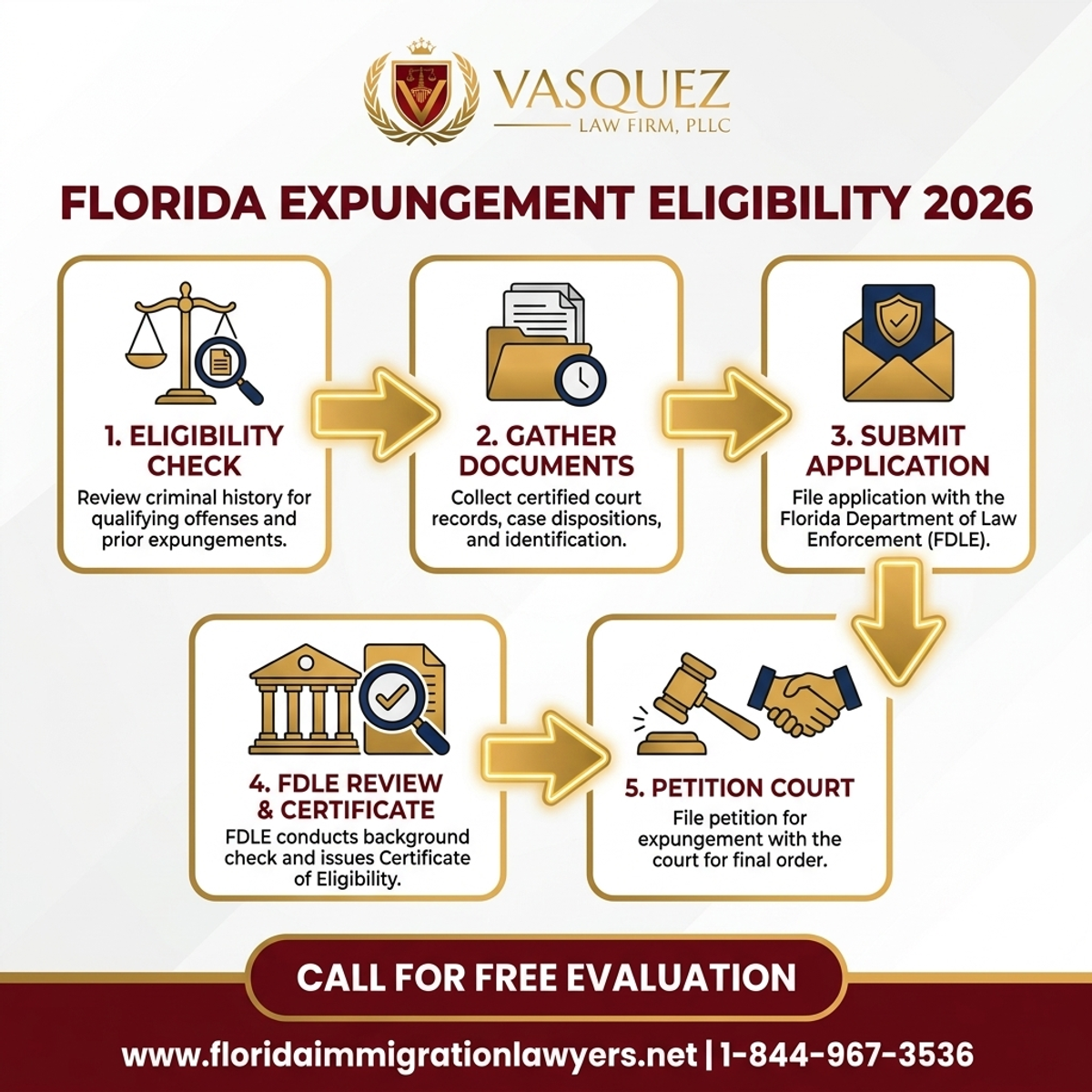
Determine Eligibility for Florida Expungement: First, you must confirm if your criminal record qualifies for expungement under Florida Statute 943.0585. This often requires that you have no prior adjudications of guilt, no previous expungements, and that the charge was not one of the specific offenses excluded from expungement (e.g., certain violent felonies). You must have completed all sanctions, including probation, fines, and community service. This initial assessment is crucial, and an attorney can help review your criminal history.
-
Obtain a Certified Disposition and Application Form: You will need to get a certified copy of the disposition of your case from the clerk of court in the county where the charge occurred. Then, download the Application for Certificate of Eligibility for Expungement from the FDLE website. This form requires detailed information about your arrest and the court case.
-
Consult with an Immigration Attorney: BEFORE submitting your application for the certificate of eligibility, it is absolutely essential to consult with an experienced immigration lawyer. They can assess how the specific offense, even if expunged, might impact your current or future immigration status. They can also advise on potential waivers or relief options that might be available despite the conviction.
-
Apply for the Certificate of Eligibility from FDLE: Complete the application form, gather all required documents (certified disposition, sworn statement, fingerprints), and submit them to the Florida Department of Law Enforcement. The FDLE will review your application to determine if you meet the state's eligibility criteria. This process can take several weeks to a few months.
Step-by-Step Process — Certificate of Eligibility for Expungement in Florida 2026
-
Petition the Court for Expungement: Once you receive the Certificate of Eligibility from the FDLE, you must then file a petition with the circuit court in the county where the arrest occurred. This petition requests the court to issue an order to seal or expunge your record. A hearing may be scheduled, and the State Attorney's Office will have an opportunity to object. An attorney can represent you in court.
-
Serve the Court Order: If the court grants your petition, you must ensure that certified copies of the expungement order are properly served to all relevant agencies, including the FDLE, the arresting agency, and the clerk of court. This ensures that your record is officially sealed or expunged at the state level. However, remember to keep personal copies of all expungement documents for your records, as you will still need to disclose the original incident to immigration authorities.
Key Documents Required for Expungement and Immigration Applications
Successfully navigating both the Florida expungement process and subsequent immigration applications requires meticulous record-keeping and the submission of specific documents. Gathering these documents early can streamline your process and ensure you are prepared for any inquiries from state or federal agencies. Failing to provide complete and accurate documentation can cause significant delays or even lead to denial of your applications.
- Application for Certificate of Eligibility: The official form provided by the Florida Department of Law Enforcement (FDLE) for requesting a determination of your eligibility for expungement or sealing.
- Certified Disposition of Your Criminal Case: An official document from the clerk of court in the county where your case was adjudicated, detailing the outcome of your charges, including pleas, verdicts, and sentencing.
- Fingerprint Card: A recent set of fingerprints obtained from an authorized law enforcement agency, required by the FDLE for background checks.
- Sworn Statement/Affidavit: A notarized document affirming that you have not been adjudicated guilty of any other criminal offense and have not previously had a record sealed or expunged.
- Copy of Arrest Record/Charging Document: Documentation from the arresting agency or the State Attorney's Office detailing the initial charges.
- Court Order for Expungement/Sealing: If granted, the official order issued by a Florida circuit court directing agencies to seal or expunge your record. This is vital for state-level compliance.
- Personal Identification Documents: Valid government-issued ID, such as a passport, driver's license, or state ID card, for identity verification throughout the process.
- Immigration Documents: For any immigration application, you will need your passport, visa, I-94 arrival/departure record, previous immigration filings, and potentially birth certificates or marriage certificates.
- Comprehensive Criminal History Records: Even with an expungement, you must retain and be prepared to provide all original arrest reports, police records, court transcripts, and sentencing documents to immigration authorities. This full disclosure is critical, as federal agencies will still consider the underlying facts.
Do not navigate this complex process alone. Contact Florida Immigration Lawyers today to ensure your expungement and immigration applications are handled correctly and strategically. Our experienced team serves all of Florida, including Orlando and Central Florida, and is ready to provide the guidance you need.
What is the Timeline for Expungement and its Immigration Impact in Florida?
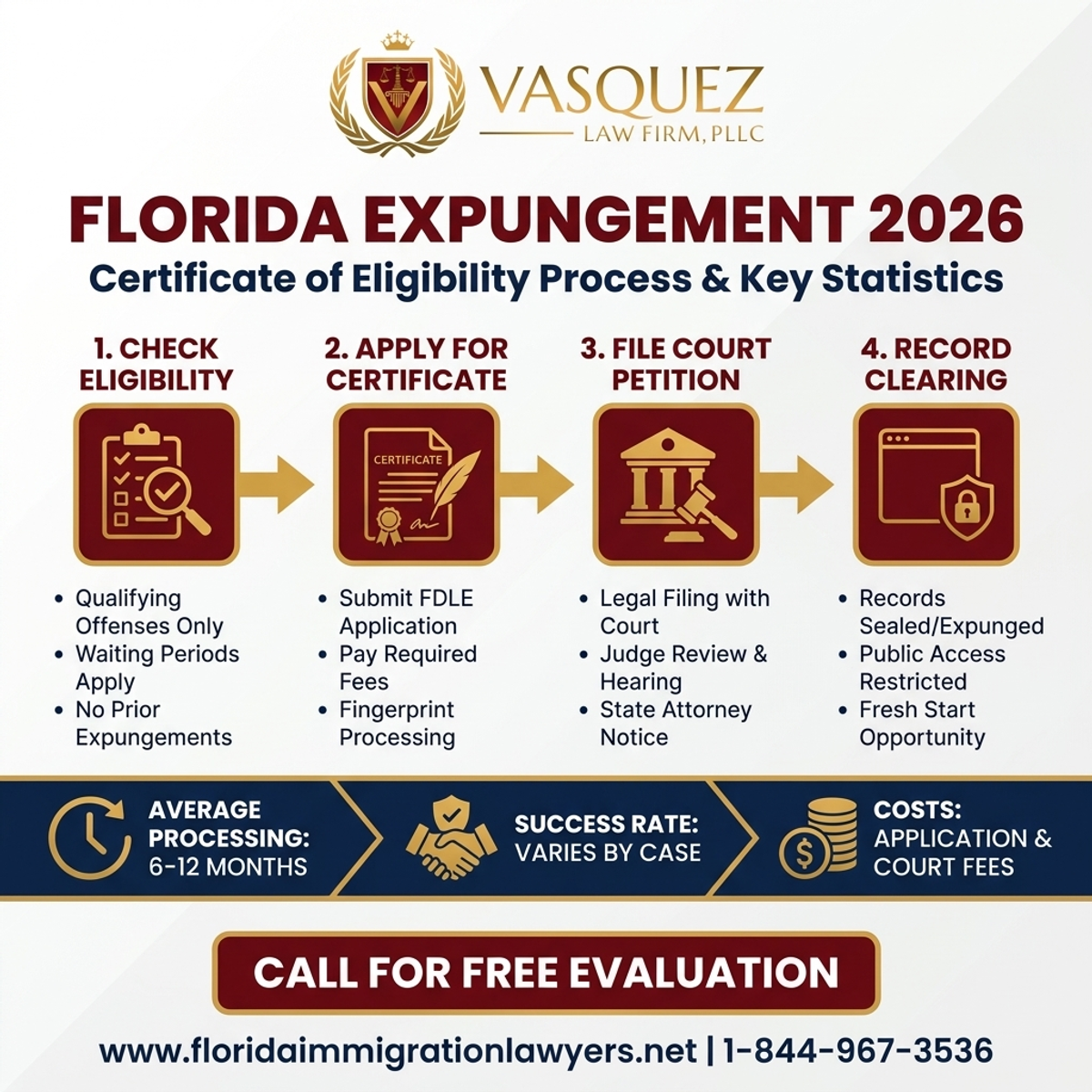
As of 2026, the timeline for obtaining a Florida expungement can vary significantly, typically ranging from a few months to over a year, depending on the specifics of your case and the efficiency of the agencies involved. The immigration impact, however, is often immediate and long-lasting, as federal agencies may disregard the state expungement order from the outset. Understanding these timelines is crucial for strategic planning.
The process begins with gathering documents, followed by the FDLE's review for the Certificate of Eligibility, which can take 2-6 months. Once obtained, filing the court petition and awaiting a judge's order can add another 3-6 months. After the order is issued, it takes time for agencies to process the expungement. For immigration, the original conviction is often considered from the moment it occurs, regardless of state expungement efforts. This means that an expunged record could still trigger grounds of inadmissibility or deportability even while the state expungement process is underway or completed, making proactive legal consultation essential.
| Stage | Typical Timeframe (As of 2026) | Notes |
|---|---|---|
| Gathering Documents & Initial Consultation | 1-4 weeks | Crucial for assessing eligibility and immigration consequences. |
| FDLE Application Review for Certificate of Eligibility | 2-6 months | Varies based on FDLE workload and complexity of criminal history. |
| Filing Court Petition for Expungement/Sealing | 1-2 weeks after FDLE approval | Requires filing with the appropriate Florida circuit court. |
| Court Processing & Judge's Order | 3-6 months | May involve a hearing; depends on court docket and prosecutor's response. |
| Agency Notification & Record Update | 1-3 months | Agencies (FDLE, arresting agency, clerk) update their records after receiving the court order. |
| Total State Expungement Process | Typically 6-18 months | This does not include any immigration processing times. |
| Immigration Consequence Assessment | Immediate & Ongoing | Federal immigration agencies consider original conviction date, not expungement date. |
Key Statistics — Certificate of Eligibility for Expungement in Florida 2026
Cost Factors and Fees for Florida Expungement and Immigration Cases
The costs associated with pursuing a Florida expungement and simultaneously addressing immigration concerns can vary widely based on several factors, including attorney fees, state filing fees, and the complexity of your criminal and immigration history. It's important to budget for both the state expungement process and any subsequent immigration applications or waivers. As of 2026, these fees are subject to change, so consulting with a legal professional for the most current figures is always recommended.
Attorney fees will constitute a significant portion of the total cost, reflecting the specialized knowledge required to navigate both criminal and immigration law. An attorney can help prepare the FDLE application, represent you in court, and crucially, advise on the potential immigration pitfalls. Beyond legal representation, there are mandatory state fees for fingerprints, the FDLE application, and court filings. For immigration, fees are associated with various forms (e.g., I-485, N-400, I-601 waivers), biometric services, and potentially additional legal counsel if a waiver or deportation defense is needed. Florida Immigration Lawyers offers free case reviews to help you understand potential costs upfront.
| Item | Typical Fee (As of 2026) | Notes |
|---|---|---|
| FDLE Expungement Application Fee | $75 | Non-refundable fee to the Florida Department of Law Enforcement. |
| Fingerprint Card Processing | $5-$25 | Fee charged by the agency taking your fingerprints. |
| Certified Disposition from Clerk of Court | $2-$5 per page + certification fee | Cost varies by county and number of pages. |
| Court Filing Fee for Petition to Expunge/Seal | $400-$450 (approx.) | Varies by Florida circuit court; check specific county clerk for exact amounts. |
| Attorney Fees for Florida Expungement | $1,500-$5,000+ | Depends on complexity, attorney experience, and whether court appearance is required. |
| USCIS Application Fees (e.g., I-485, N-400) | $1,140 - $1,295+ | These are federal fees for immigration benefits, separate from expungement. Subject to change. |
| USCIS Biometrics Fee | $85 (if applicable) | Required for many immigration applications, separate from filing fee in some cases. |
| Attorney Fees for Immigration Case (if applicable) | Highly variable ($2,000-$10,000+) | Depends on the type of application, need for waivers, or deportation defense. |
It is important to remember that these costs are estimates and can fluctuate. Investing in experienced legal counsel from Florida Immigration Lawyers can save you significant time, stress, and potential financial loss in the long run by preventing costly mistakes related to your immigration status.
Common Mistakes to Avoid When Dealing with Expungement and Immigration
Navigating criminal records and immigration law is fraught with potential pitfalls. Avoiding these common mistakes can protect your immigration future:
-
Assuming Expungement Clears Your Immigration Record: This is perhaps the most dangerous misconception. A Florida expungement does not automatically erase the immigration consequences of a conviction under federal law. Immigration agencies still consider the original offense.
-
Failing to Disclose Expunged Records: You are legally required to disclose ALL arrests and convictions, even those expunged or sealed, on immigration applications. Failure to do so can be considered misrepresentation, leading to denials, deportation, or a bar from future benefits.
-
Not Consulting an Immigration Attorney First: Before pursuing any expungement or sealing of a criminal record, a non-citizen MUST consult an immigration attorney. They can assess the specific immigration impact of your charges.
-
Misinterpreting Federal vs. State Law: State laws on expungement differ significantly from federal immigration definitions of a 'conviction.' What is cleared at the state level is often still a 'conviction' under the INA.
-
Delaying Action: The longer you wait to address a criminal record, the more complicated your immigration case can become. Timely legal advice is crucial.
-
Ignoring Minor Offenses: Even seemingly minor offenses, especially those involving moral turpitude or drug-related charges, can have severe immigration consequences, regardless of state expungement.
-
Not Obtaining Certified Copies: Always secure certified copies of all court dispositions and expungement orders. These are essential for any future legal or immigration proceedings.
-
Failing to Understand Waivers: In some cases, even with an expunged record, you might need a waiver of inadmissibility. Not understanding or applying for available waivers can lead to denials.
-
Providing Incomplete Information to Attorneys: Be completely honest and thorough with your legal team about your entire criminal history, no matter how insignificant it may seem.
-
Attempting to Handle Complex Cases Alone: The intricacies of criminal and immigration law demand professional expertise. Self-representation in these matters is highly risky.
When to Call a Florida Immigration Lawyer About Expungement
Given the complex interplay between Florida state criminal law and federal immigration regulations, knowing when to seek professional legal help is paramount. You should immediately contact Florida Immigration Lawyers if any of the following scenarios apply to you:
- You have a past arrest or conviction in Florida, even if it was a minor offense or you believe it was handled.
- You are a non-U.S. citizen considering applying for a certificate of eligibility for expungement in Florida or have already obtained one.
- You are applying for a green card, visa, or U.S. citizenship and have any criminal history, sealed or otherwise.
- You have received a Notice to Appear (NTA) in immigration court or are facing deportation proceedings due to a criminal charge.
- You are unsure whether a specific conviction makes you inadmissible or deportable under federal law.
- You need to understand if you qualify for any waivers of inadmissibility related to criminal offenses.
- You are seeking to travel internationally and are concerned about re-entry into the U.S. with a criminal record.
Our experienced immigration attorneys at Florida Immigration Lawyers understand the unique challenges faced by immigrants in Orlando and throughout Central Florida. We are adept at analyzing your criminal history through the lens of immigration law, providing strategic advice, and representing you before USCIS or the Executive Office for Immigration Review (EOIR) in Miami. Don't let a past mistake jeopardize your future in the U.S. Schedule a free consultation with us to discuss your specific situation.
About Florida Immigration Lawyers
Florida Immigration Lawyers is a leading law firm dedicated to providing comprehensive and compassionate immigration legal services across the entire state of Florida. With a deep understanding of both federal immigration law and state criminal statutes, our experienced attorneys are uniquely positioned to assist individuals facing complex challenges, including the intersection of criminal records and immigration status. We proudly serve clients from our office in Orlando and extend our services to all communities in Central Florida and beyond.
Our firm handles a wide array of immigration practice areas, including family-based immigration, business immigration, deportation defense, asylum, and naturalization. We are committed to offering personalized legal strategies tailored to each client's unique circumstances. We understand the stakes involved in immigration cases and strive to provide clear communication, diligent representation, and unwavering support. Available 24/7, we offer free case reviews to help you understand your options without financial commitment. When your future in the U.S. is on the line, choose the dedicated advocates at Florida Immigration Lawyers.
Sources and References
- U.S. Citizenship and Immigration Services (USCIS)
- Executive Office for Immigration Review (EOIR)
- U.S. Department of State
- Immigration and Nationality Act (INA), 8 U.S.C. Chapter 12 - 8 U.S.C. § 1101 et seq.
- INA § 101(a)(48)(A) - Definition of Conviction
- Florida Statute § 943.0585 - Expunging or Sealing Criminal History Records
- Matter of Roldan, 22 I&N Dec. 512 (BIA 1999)
Related services: immigration practice areas, family immigration services, citizenship and naturalization.
This article provides general legal information and is not intended as legal advice. Every case is unique, and outcomes depend on specific facts and circumstances. Contact an attorney for advice about your particular situation.
Do not let uncertainty about a past criminal record jeopardize your American dream. The complexities of expungement and its immigration consequences require expert guidance. Contact Florida Immigration Lawyers today for a free, confidential case review. Call us at 1-844-YO-PELEO. Se Habla Español - Estamos aquí para ayudarle.
Do Not Navigate This Process Alone
Our experienced immigration attorneys are ready to fight for you. Get a free, confidential case review today.
Se Habla Español
Or leave your details and we’ll call you:
Free Evaluation in 24 Hours
Or talk to us right now

AI voice assistant — available 24/7
FreeFrequently Asked Questions

William J. Vásquez
Founding Attorney · Vasquez Law Firm
U.S. Air Force veteran and immigration attorney with years of hands-on U.S. immigration experience. J.D., NCCU School of Law. AILA member. Admitted to the 4th, 5th, and 11th Circuit Courts.
Available 24/7 - Free Evaluations
Reviewed for legal accuracy by William J. Vásquez
Licensed in North Carolina; U.S. immigration is federal practice.
Related Legal Services
Our Florida immigration attorneys can help you with citizenship and naturalization, immigration practice areas and free immigration consultation. Call today at 1-844-YO-PELEO for a free case review.
Related Links
Related Topics
Free Legal Case Review
Discuss your case with our experienced attorneys. We're available 24/7.
Se Habla Español - Estamos aquí para ayudarle.
Related Articles
Immigration Lawyer Orlando Free Consultation in Florida
For individuals and families in Orlando, Florida, navigating the complexities of U.S. immigration law requires expert guidance. An immigration lawyer in Orlando offers crucial support for everything from visa applications and green card processes to naturalization and deportation defense. This comprehensive guide details what a free consultation covers, providing a step-by-step overview of immigration pathways, essential document checklists, and expected timelines in 2026. We also highlight common mistakes to avoid, discuss the critical role of legal counsel in deportation and asylum cases, and explain why choosing a local Orlando immigration attorney is beneficial. Florida Immigration Lawyers is dedicated to serving the diverse community of Orlando with compassionate, effective legal solutions, ensuring you receive personalized advice and robust representation for a successful immigration journey.
How to Apply for VAWA in Florida: A 2026 Guide
Discover how to apply for VAWA in Florida, offering crucial immigration relief for abuse victims. Learn the process, requirements, and how Florida Immigration Lawyers can assist you.
USCIS Office Near Me: Florida Locations & Appointments 2026
Navigating USCIS processes in Florida can be complex, from finding the right field office to preparing for critical appointments. This comprehensive guide provides essential information for individuals seeking immigration services in 2026, including a step-by-step process for locating your nearest USCIS office in Florida, understanding its services, and efficiently scheduling appointments. We detail the necessary documents for interviews, outline typical processing timelines, and break down associated costs. Furthermore, we highlight common pitfalls to avoid and crucial situations when consulting an experienced Florida immigration lawyer is indispensable. Whether you're in Orlando or elsewhere, empower your immigration journey with expert advice and practical strategies. Learn how Florida Immigration Lawyers can assist you.
Immigration Appeal Process with BIA in Florida
Facing an immigration appeal in Florida? Learn about the Board of Immigration Appeals process, essential steps, and when to seek legal help. Call Florida Immigration Lawyers at 1-844-YO-PELEO for a free case review.