Consular Processing Lawyer for Florida Applicants in 2026
Consular processing is a key step for Florida immigrants seeking an immigrant visa. Learn about the process, including the embassy interview and preparation tips. Call Florida Immigration Lawyers at 1-844-YO-PELEO for assistance.
Consular processing is a crucial step for Florida residents seeking an immigrant visa. It involves attending an interview at a U.S. embassy or consulate. Key points include:
- Preparation is vital for success.
- Interviews take place at embassies.
- Processing times can vary.
- Hiring a lawyer can ease complexities.
- Be aware of common mistakes to avoid delays.
Introduction
For many immigrants in Orlando, Florida, securing an immigrant visa through consular processing is a significant part of their journey to the United States. This process involves an interview at a U.S. embassy or consulate in your home country. Understanding each step is crucial to navigating this complex procedure successfully. This article explores the consular processing pathway, offering tips and insights to help you prepare effectively.
The path to obtaining a U.S. immigrant visa can often feel daunting, filled with intricate legal requirements and bureaucratic hurdles. For individuals and families in Florida sponsoring relatives or employees from abroad, consular processing represents the primary avenue for their loved ones or future team members to join them legally in the U.S. It’s not just about paperwork; it's about fulfilling dreams, reuniting families, and building new lives. Being well-informed and meticulously prepared can significantly reduce stress and improve your chances of a smooth process.
Whether you are sponsoring a spouse, child, parent, or an employee, the journey requires careful attention to detail and a clear understanding of what lies ahead. From the initial petition approval by USCIS to the final interview at a U.S. embassy or consulate, each stage is interconnected and vital for a positive outcome. This guide aims to demystify the process, providing a comprehensive overview that addresses common concerns and offers actionable advice for Florida residents.
If you're facing the consular processing journey, call Florida Immigration Lawyers at 1-844-YO-PELEO for a free case review.
What is Consular Processing and How Does it Work?
Consular processing is the procedure through which a foreign national applies for an immigrant visa at a U.S. embassy or consulate abroad. As of 2026, this process remains a key method for obtaining legal residency for those outside the U.S.
During consular processing, the applicant must complete several steps, including submitting the necessary documentation and attending an interview. This method allows individuals to receive an immigrant visa before traveling to the U.S. Unlike "adjustment of status," which is for individuals already in the U.S. seeking to change their status to permanent resident, consular processing is specifically designed for those residing outside the United States. It ensures that all eligibility criteria are met and verified by a consular officer in the applicant's home country before they are granted permission to enter the U.S. as an immigrant.
This pathway is particularly common for family-sponsored visas, such as those for spouses, children, parents, and siblings of U.S. citizens or lawful permanent residents, as well as for many employment-based immigrant visas. The meticulous nature of this process is designed to safeguard U.S. borders and ensure that all immigrants meet legal and security standards. Understanding the distinction between consular processing and adjustment of status is crucial for determining the correct immigration pathway for your specific situation.
The U.S. Department of State, through its National Visa Center (NVC), plays a pivotal role in managing the administrative side of consular processing. After USCIS approves your initial petition, the NVC acts as a central hub, collecting all necessary fees and documents from both the petitioner and the beneficiary. This pre-screening helps streamline the embassy interview process, ensuring that the consular officer has a complete file to review. Any delays in submitting accurate and complete documentation to the NVC can significantly prolong the overall timeline, underscoring the importance of diligent preparation from the outset.
Steps in Consular Processing
- Petition Approval: The process begins with the approval of an immigrant petition by USCIS.
- National Visa Center (NVC) Processing: After USCIS approval, the case is transferred to the NVC, which collects required documents and fees.
- Embassy Interview: The applicant attends an interview at the U.S. embassy or consulate.
- Visa Issuance: If approved, the visa is issued, allowing entry to the U.S.
What to Expect at the Embassy Interview?
The embassy interview is a critical phase in consular processing. As of 2026, applicants often wonder what to expect during this step.
During the interview, a consular officer will verify the information provided in the application and assess eligibility. The officer may ask about your background, intentions in the U.S., and supporting documents. This interview is your opportunity to demonstrate your eligibility and intent to comply with U.S. immigration laws. Consular officers are trained to identify inconsistencies and potential issues, so honesty and consistency are paramount. They will review your entire application, including all submitted civil documents, financial support evidence, and medical examination results, to ensure everything aligns.
The interview typically lasts between 10 and 20 minutes, though it can be shorter or longer depending on the complexity of the case. The officer's questions will usually focus on your relationship with the petitioner (for family-based visas), your educational and work history, any past immigration history, and your plans once you arrive in the U.S. For example, if you are applying for a spousal visa, expect questions about how you met, your wedding, and your daily life together. It's not uncommon for officers to ask questions designed to uncover potential marriage fraud, so being prepared to discuss your relationship openly and truthfully is essential.
It's also important to maintain a polite and respectful demeanor throughout the interview. Answer questions directly and concisely, avoiding unnecessary details that could lead to further questions or confusion. If you don't understand a question, politely ask the officer to rephrase it. Remember, the goal of the interview is for the consular officer to determine if you are admissible to the U.S. under the Immigration and Nationality Act and if you meet all the requirements for the immigrant visa you are seeking. Thorough preparation, perhaps even practicing with an attorney from Florida Immigration Lawyers, can build your confidence and help you present your case effectively.
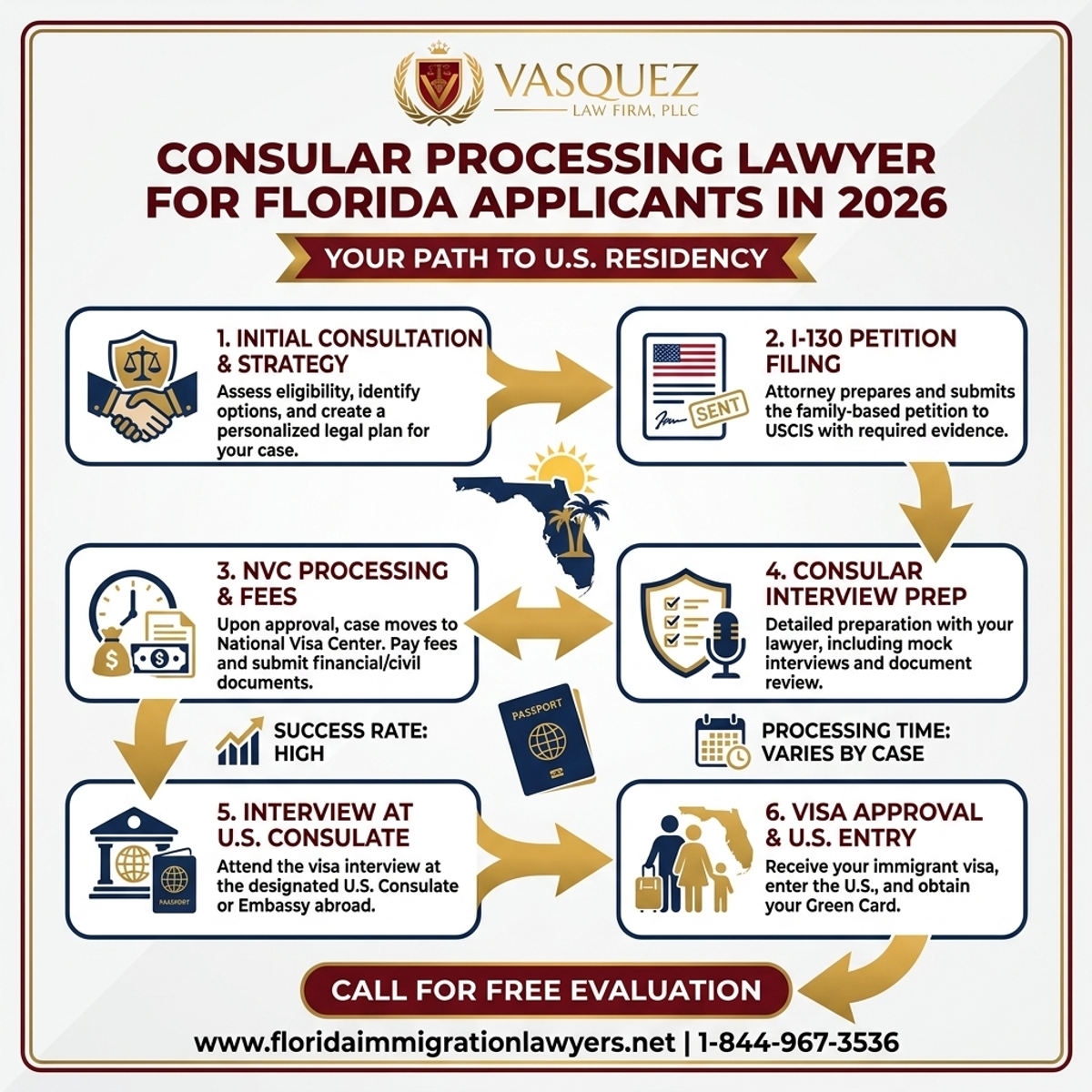
Step-by-Step Process — Consular Processing Lawyer for Florida Applicants in 2026
Document Checklist for the Interview
- Passport valid for travel to the U.S.
- DS-260 confirmation page
- Medical examination results
- Supporting civil documents such as birth certificates
- Visa application fee receipt
How Long is the Consular Processing Timeline?
Understanding the timeline for consular processing helps set realistic expectations. As of 2026, the timeline can vary significantly based on several factors.
These factors include the specific visa category (e.g., immediate relative visas generally process faster than preference categories), the country where the interview takes place, the current caseload at both USCIS and the NVC, and how quickly the applicant submits requested documents. For instance, a family-sponsored visa for a spouse of a U.S. citizen typically moves faster than a visa for a sibling of a U.S. citizen due to visa availability. Global events, such as public health emergencies or political unrest, can also impact embassy operations and lead to unforeseen delays.
To minimize delays, applicants should be proactive in gathering all required documents well in advance and responding promptly to any requests from the NVC or the embassy. Any missing document or incorrect information can result in an Request for Evidence (RFE) or a delay notice, pushing back your interview date. For example, if a birth certificate is missing or not translated correctly, the NVC will place the case on hold until the correct document is provided, adding weeks or even months to the overall timeline. Partnering with Florida Immigration Lawyers can help streamline this document submission process, ensuring accuracy and completeness from the start.
| Stage | Typical Timeframe | Notes |
|---|---|---|
| Petition Approval | 6-12 months | Varies by petition type |
| NVC Processing | 2-4 months | Depends on document submission |
| Embassy Interview | 1-3 months | Subject to embassy schedule |
| Visa Issuance | 1-2 weeks | After successful interview |
What are the Costs Involved in Consular Processing?
Cost is a significant consideration for many applicants. As of 2026, fees can vary, and it's essential to plan accordingly.
The total cost of consular processing goes beyond just the government filing fees. It encompasses a range of expenses, including the initial USCIS petition fee (e.g., Form I-130 for family-based petitions), the immigrant visa application processing fee (DS-260), and the USCIS immigrant fee paid after visa issuance. Additionally, applicants must budget for the mandatory medical examination conducted by an authorized physician, which varies widely by country and clinic. Don't forget the costs associated with obtaining necessary civil documents, such as birth certificates, marriage certificates, and police clearances, which may require translation services.
Beyond the official fees, applicants must also account for travel expenses to and from the U.S. embassy or consulate for the interview, which can be substantial if international travel is required. Accommodation, transportation within the interview city, and potential lost wages due to time off work should also be factored into your financial planning. While some fees are fixed, others, like medical examination costs or document translation, can fluctuate. It's advisable to create a detailed budget early in the process and consult with Florida Immigration Lawyers for a clear understanding of all potential costs specific to your case.
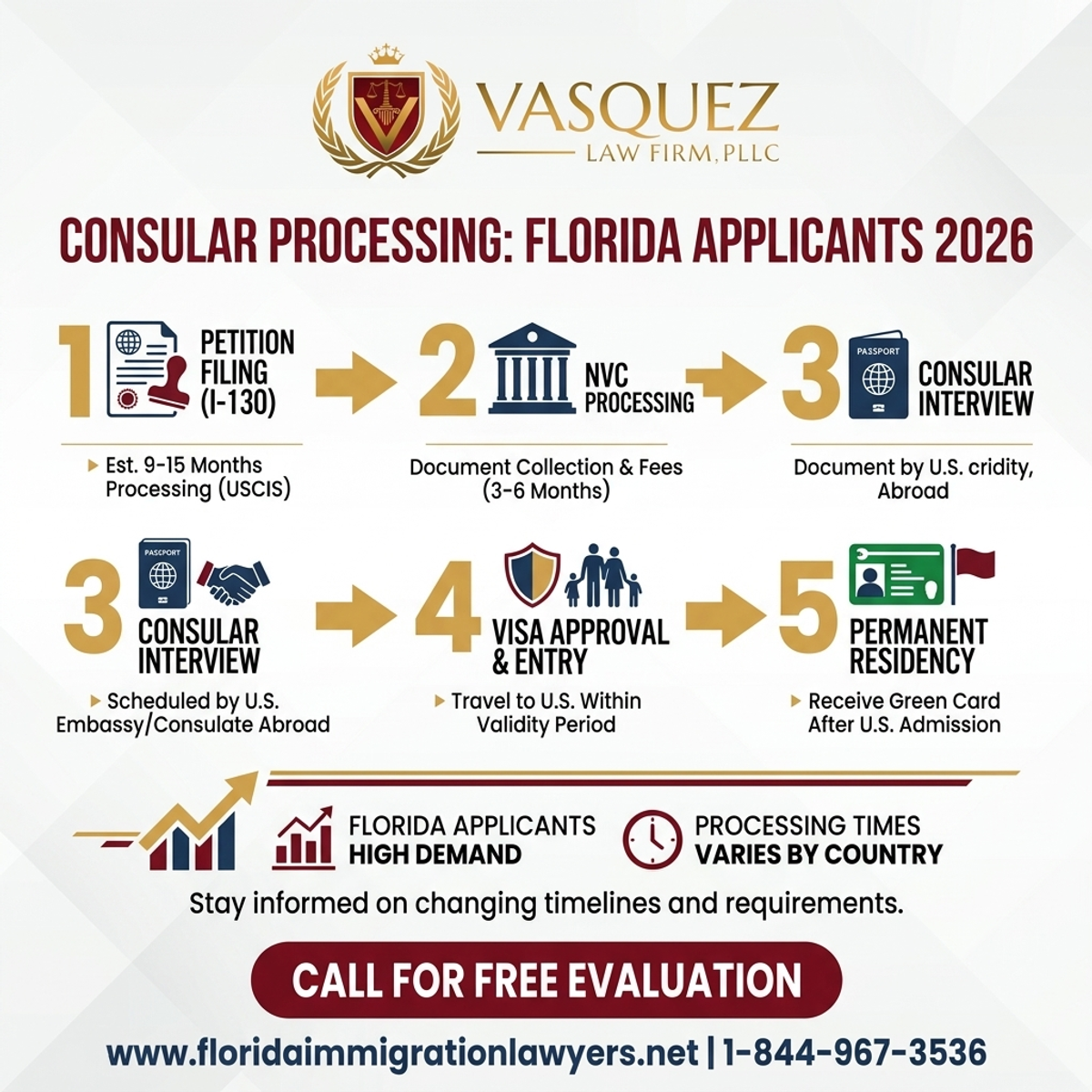
Key Statistics — Consular Processing Lawyer for Florida Applicants in 2026
How Do I Prepare for Consular Processing?
Proper preparation increases the likelihood of a successful consular processing experience. As of 2026, thorough preparation remains key.
Ensure all documents are complete and accurate. Attend the medical examination and prepare for the interview by reviewing your case details and practicing potential questions. Beyond just gathering documents, it’s crucial to organize them meticulously. Create a checklist and keep both original documents and photocopies readily accessible. For example, having all civil documents, financial affidavits, and evidence of your relationship (if applicable) in a well-ordered folder can make a significant difference during the interview. Any document not in English must be accompanied by a certified English translation.
A critical aspect of preparation is understanding the purpose of the interview: to confirm your eligibility and intent. Review your DS-260 application thoroughly so you are familiar with every answer you provided. Practice answering common interview questions out loud, focusing on clarity, honesty, and conciseness. Consider potential questions about your background, your relationship with the petitioner, your employment history, and your plans for living in the U.S. Being able to articulate your answers confidently and consistently with your submitted documentation will instill confidence in the consular officer.
Finally, ensure you schedule and complete your medical examination with an embassy-approved physician well in advance of your interview date. The results must be submitted directly to the embassy or brought by you in a sealed envelope, as instructed. Failure to complete this crucial step or having an expired medical exam can lead to significant delays. For comprehensive guidance and personalized interview preparation, don't hesitate to contact Florida Immigration Lawyers. Our team can review your entire application packet and conduct mock interviews to ensure you are fully ready.
Do not navigate this process alone. Contact Florida Immigration Lawyers today.
Common Mistakes to Avoid During Consular Processing
- Submitting incomplete documentation - leads to processing delays.
- Missing the scheduled interview date - can result in denial.
- Providing inconsistent information - may raise red flags.
- Failing to disclose previous visa denials - could affect eligibility.
- Ignoring medical examination requirements - crucial for visa approval.
- Not paying required fees - can halt processing.
- Overlooking updates to immigration laws - may lead to non-compliance.
- Neglecting to prepare for the interview - results in unconvincing answers.
- Disregarding local embassy instructions - each embassy may have specific rules.
- Delaying response to NVC notices - could prolong the process.
When to Call a Lawyer for Consular Processing?
Seeking legal assistance can be crucial. If you encounter complex situations, such as prior visa denials or inadmissibility issues, consulting a lawyer is advisable. An attorney can guide you through the documentation and interview preparation.
While some straightforward cases might proceed without legal representation, many applicants face unique challenges that can jeopardize their visa approval. For instance, if you have a criminal record, a history of overstaying a previous visa, or past immigration violations, you might be deemed "inadmissible" to the U.S. In such scenarios, an attorney can assess your eligibility for waivers of inadmissibility, prepare the necessary waiver applications, and present a compelling case on your behalf. A lawyer can also help if there are inconsistencies in your immigration history or if you've previously been denied a visa.
Consider a scenario: Maria, a Florida resident, sponsored her brother, Juan, from Colombia. Juan had a minor criminal conviction from over a decade ago that he thought was irrelevant. During NVC processing, this issue arose, threatening to derail his application. Maria contacted Florida Immigration Lawyers. Our team immediately reviewed Juan's record, determined he was eligible for a waiver, and meticulously prepared the waiver application with supporting evidence demonstrating rehabilitation and good moral character. With our guidance, Juan successfully obtained his waiver and visa, allowing him to reunite with his sister in Orlando. This highlights how proactive legal intervention can turn a seemingly insurmountable obstacle into a successful outcome.
Florida Immigration Lawyers offer expertise in handling such cases, ensuring you have the best chance of success. Our attorneys are adept at identifying potential issues early, developing strategic solutions, and advocating for our clients throughout the entire consular processing journey. Don't wait until a problem arises; a proactive consultation can save you time, stress, and potentially your visa application. Call 1-844-YO-PELEO for a free case review today.
About Florida Immigration Lawyers
Florida Immigration Lawyers is dedicated to assisting immigrants throughout Central Florida. We offer comprehensive services in immigration law, including consular processing, asylum, and deportation defense. Our experienced team provides personalized attention to each case.
Our commitment extends beyond just legal advice; we strive to be a trusted partner for individuals and families navigating the complexities of U.S. immigration law. We understand that each client's journey is unique and often deeply personal, which is why we approach every case with empathy, diligence, and a fierce dedication to achieving the best possible outcome. From the initial consultation to the final visa approval, our goal is to provide clear communication, strategic guidance, and unwavering support. We pride ourselves on demystifying the legal process, ensuring our clients in Orlando and across Florida feel informed and empowered every step of the way.
With years of specialized experience, Florida Immigration Lawyers has a proven track record of successfully assisting clients with consular processing, even in the most challenging circumstances. We stay abreast of the latest changes in immigration policy and procedure, ensuring our advice is always current and effective. Whether you are dealing with a straightforward family petition or a complex inadmissibility issue, our team is equipped to handle your case with the highest level of professionalism and care. We are here to serve the diverse communities of Florida, offering accessible and effective legal solutions tailored to your specific needs.
Available 24/7, we offer free case reviews. Call us at 1-844-YO-PELEO or schedule a consultation today.
Frequently Asked Questions About Consular Processing
What exactly is consular processing?
Consular processing is the procedure for foreign nationals to apply for an immigrant visa at a U.S. embassy or consulate in their home country. It's designed for individuals outside the U.S. who wish to become lawful permanent residents. This process involves submitting extensive documentation to the National Visa Center and attending a mandatory interview to verify eligibility and ensure compliance with U.S. immigration laws before traveling to America.
How long does consular processing typically take?
The timeline for consular processing varies significantly, typically ranging from several months to over a year, depending on the visa category, the specific country, and current demand. Factors like USCIS petition approval times, NVC document processing, and embassy interview backlogs all contribute. Proactive and accurate submission of all required documents can help prevent unnecessary delays, making thorough preparation crucial for a smoother journey.
What are the main costs associated with consular processing?
Key costs include USCIS filing fees for the initial petition (e.g., I-130), the immigrant visa application fee (DS-260), and the USCIS immigrant fee. Additionally, applicants must pay for a mandatory medical examination, obtain civil documents, and potentially cover translation services. Travel expenses to the embassy for the interview, including flights and accommodation, also add to the overall financial commitment. Budgeting carefully is essential.
What should I bring to my embassy interview?
You must bring your valid passport, the DS-260 confirmation page, sealed medical examination results, and all original civil documents (birth certificates, marriage licenses, police certificates) along with their certified English translations. Also, bring any financial support documents, evidence of your relationship with the petitioner, and proof of paid fees. Organize everything meticulously in a folder for easy access and presentation to the consular officer.
When is it best to hire an immigration lawyer for consular processing?
It's advisable to hire an immigration lawyer, like Florida Immigration Lawyers, if your case involves complexities such as prior visa denials, criminal history, previous immigration violations, or if you require a waiver of inadmissibility. A lawyer can provide expert guidance, ensure all documentation is correct, prepare you thoroughly for the interview, and advocate on your behalf, significantly increasing your chances of a successful outcome and peace of mind.
Sources and References
- U.S. Citizenship and Immigration Services (USCIS)
- Executive Office for Immigration Review (EOIR)
- U.S. Department of State
- 8 U.S.C. Chapter 12 - Immigration and Nationality Act
Related services: immigration practice areas, family immigration services, citizenship and naturalization.
This article provides general legal information and is not intended as legal advice. Every case is unique, and outcomes depend on specific facts and circumstances. Contact an attorney for advice about your particular situation.
Final CTA
For expert guidance through consular processing, contact Florida Immigration Lawyers. Call 1-844-YO-PELEO for a free consultation. Se Habla Español - Estamos aquí para ayudarle.
Do Not Navigate This Process Alone
Our experienced immigration attorneys are ready to fight for you. Get a free, confidential case review today.
Se Habla Español
Or leave your details and we’ll call you:
Free Evaluation in 24 Hours
Or talk to us right now

AI voice assistant — available 24/7
FreeFrequently Asked Questions

William J. Vásquez
Founding Attorney · Vasquez Law Firm
U.S. Air Force veteran and immigration attorney with years of hands-on U.S. immigration experience. J.D., NCCU School of Law. AILA member. Admitted to the 4th, 5th, and 11th Circuit Courts.
Available 24/7 - Free Evaluations
Reviewed for legal accuracy by William J. Vásquez
Licensed in North Carolina; U.S. immigration is federal practice.
Related Legal Services
Our Florida immigration attorneys can help you with family immigration services, immigration lawyer cost in Florida and experienced immigration attorneys. Call today at 1-844-YO-PELEO for a free case review.
Related Links
Related Topics
Free Legal Case Review
Discuss your case with our experienced attorneys. We're available 24/7.
Se Habla Español - Estamos aquí para ayudarle.
Related Articles
Immigration Lawyer Orlando Free Consultation in Florida
For individuals and families in Orlando, Florida, navigating the complexities of U.S. immigration law requires expert guidance. An immigration lawyer in Orlando offers crucial support for everything from visa applications and green card processes to naturalization and deportation defense. This comprehensive guide details what a free consultation covers, providing a step-by-step overview of immigration pathways, essential document checklists, and expected timelines in 2026. We also highlight common mistakes to avoid, discuss the critical role of legal counsel in deportation and asylum cases, and explain why choosing a local Orlando immigration attorney is beneficial. Florida Immigration Lawyers is dedicated to serving the diverse community of Orlando with compassionate, effective legal solutions, ensuring you receive personalized advice and robust representation for a successful immigration journey.
Immigration Rights in Florida: Know Your Rights
Understanding your immigration rights in Florida is crucial. From ICE encounters to navigating immigration courts, this comprehensive guide provides essential information for safeguarding your future. Learn about legal protections, common mistakes to avoid, and when to seek professional legal advice. Florida Immigration Lawyers are here to help.
Special Immigrant Juvenile Status in Florida 2026
Discover how Special Immigrant Juvenile Status (SIJS) in Florida can help minors facing abuse, neglect, or abandonment obtain legal residency. Understand the application process, eligibility requirements, and common mistakes to avoid. Contact Florida Immigration Lawyers for a free case review.
Fiance Visa in Miami: 2026 Process Guide for Florida
For U.S. citizens in Florida, bringing a foreign fiancé(e) to the U.S. requires navigating the K-1 Fiance Visa process. This guide details the 2026 requirements, step-by-step application, essential documents, and expected timelines. Learn about filing Form I-129F with USCIS, consular interviews, and the crucial Adjustment of Status after marriage. We cover typical fees, common mistakes to avoid, and when to seek legal assistance. Florida Immigration Lawyers offers expert guidance for couples in Miami, Orlando, and across Florida, ensuring a smooth path to uniting with your loved one. Get a free case review today.