Immigration Appeal Process with BIA in Florida
Facing an immigration appeal in Florida? Learn about the Board of Immigration Appeals process, essential steps, and when to seek legal help. Call Florida Immigration Lawyers at 1-844-YO-PELEO for a free case review.
Navigating an immigration appeal in Florida involves understanding the role of the Board of Immigration Appeals (BIA) and the necessary steps to take. If your application was denied, you may have the right to appeal, but it's crucial to act promptly and correctly.
- Appeals must be filed within 30 days of the decision.
- The BIA is the highest administrative body for immigration appeals.
- Legal representation can significantly impact the outcome.
Introduction
Facing a denial in your immigration case can be daunting, especially in a bustling state like Florida where immigration dynamics are constantly evolving. Understanding the appeal process with the Board of Immigration Appeals (BIA) is critical for those looking to challenge their immigration decisions. This article will guide you through the process, outline essential steps, and highlight when it’s crucial to seek professional legal assistance. Call Florida Immigration Lawyers at 1-844-YO-PELEO for a free case review.
The journey through the U.S. immigration system is often complex and fraught with uncertainty. A denial, whether for a visa, asylum, or adjustment of status, can feel like a devastating roadblock. However, it's important to remember that a denial is not always the final word. The right to appeal exists precisely to provide a mechanism for review, ensuring that legal standards are correctly applied and that individuals have every opportunity to present their case fairly.
In Florida, a state with a vibrant and diverse immigrant population, the stakes are particularly high. The legal landscape is constantly shifting, and navigating it requires not just diligence but also a deep understanding of federal immigration law and administrative procedures. This guide aims to demystify the BIA appeal process, offering clarity and practical advice to help you understand your options and take decisive action. Our goal is to empower you with the knowledge needed to challenge an unfavorable decision effectively, potentially changing the trajectory of your immigration future.
What is the Board of Immigration Appeals (BIA)?
The Board of Immigration Appeals (BIA) is the highest administrative body for interpreting and applying immigration laws. Located within the Department of Justice, the BIA reviews decisions made by immigration judges and some decisions made by the Department of Homeland Security (DHS). As of 2026, the BIA continues to play a significant role in shaping immigration policy by setting legal precedents.
In Florida, where immigration issues are prevalent, understanding the BIA's role is crucial for anyone involved in an immigration case. The BIA does not conduct trials but rather reviews records from lower courts to ensure correct legal standards were applied. Their decisions can affirm, reverse, or remand cases back to immigration courts.
The BIA's jurisdiction extends to a wide array of cases, including appeals from removal proceedings, bond redetermination decisions, and certain visa petition denials. It operates as an appellate court, meaning it primarily reviews the record of proceedings from the immigration court below, focusing on errors of law or fact. This distinction is vital: new evidence is generally not introduced at the BIA level unless specific conditions are met, emphasizing the importance of building a strong record during the initial immigration court proceedings.
The decisions rendered by the BIA are binding on all immigration judges and DHS officers unless modified or reversed by the Attorney General or a federal circuit court of appeals. This makes the BIA a powerful entity in determining immigration outcomes and establishing legal precedents that impact countless individuals across the nation, including those residing in Florida. A favorable decision from the BIA can lead to the reversal of a deportation order, the approval of an asylum claim, or the granting of a visa, underscoring the profound impact of their work.
How to File an Immigration Appeal with the BIA?
To file an immigration appeal with the BIA, you must submit Form EOIR-26 within 30 days of receiving the immigration judge’s decision. This form can be filed electronically or by mail. Ensure that all sections are completed accurately to avoid delays or dismissals.
- Review the immigration judge’s decision thoroughly to understand the reasons for denial.
- Complete Form EOIR-26 carefully, providing all requested information.
- Submit the form within the 30-day deadline to the BIA along with any required fee.
- After submission, await a receipt notice from the BIA confirming your appeal.
- Prepare a legal brief if requested by the BIA to support your case.
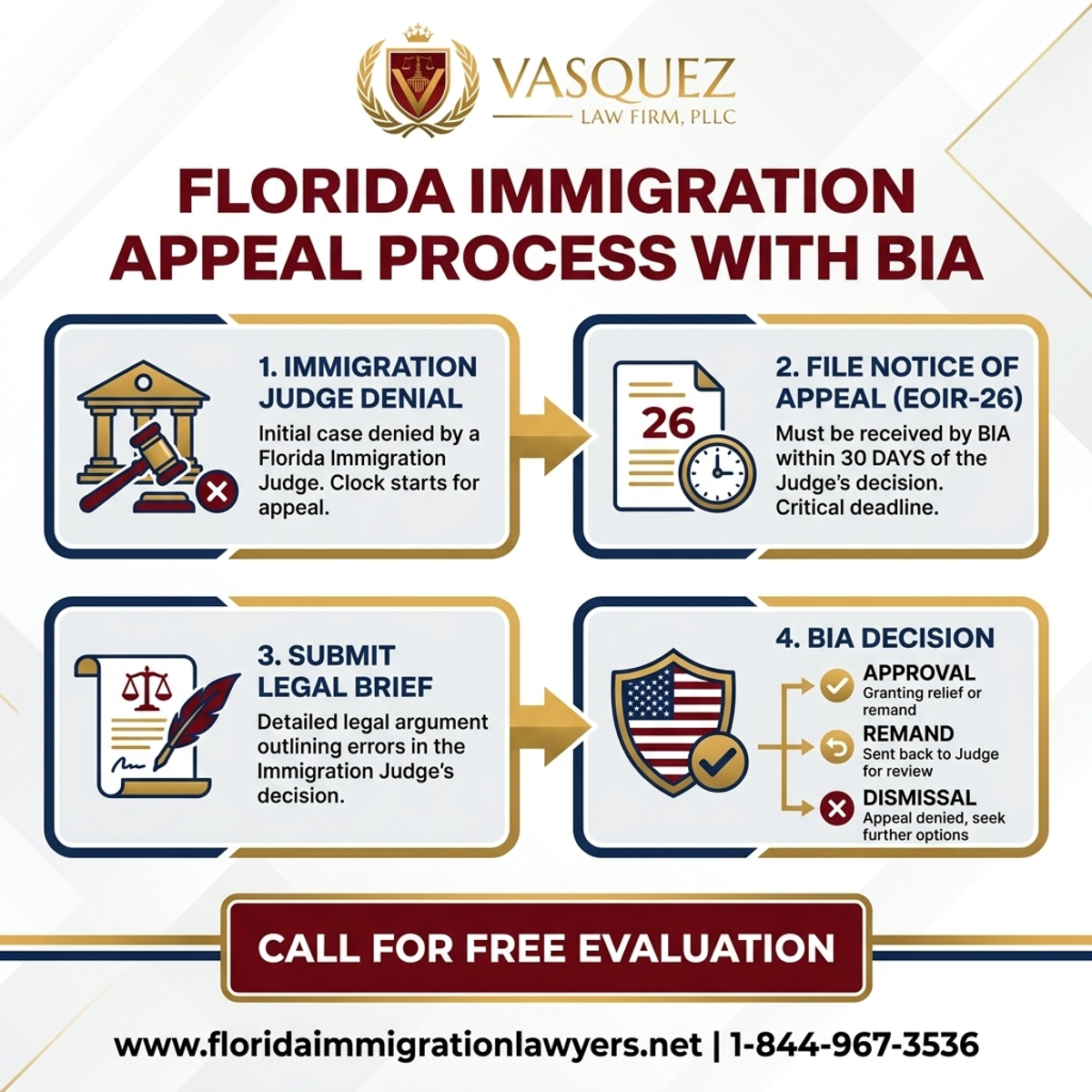
Step-by-Step Process — Immigration Appeal Process with BIA in Florida
The appeal process can be complex and may require additional documentation depending on your case specifics.
The 30-day deadline for filing Form EOIR-26 is absolute, and missing it almost invariably results in the dismissal of your appeal. This period begins from the date the immigration judge issues their oral decision or the date the written decision is mailed. It is highly advisable to act swiftly, ideally consulting with an attorney immediately upon receiving an unfavorable decision to ensure all deadlines are met and the appeal is properly initiated. Florida Immigration Lawyers are ready to assist you in this critical initial phase.
When completing Form EOIR-26, attention to detail is paramount. You must clearly state the specific grounds for your appeal, identifying the errors of law or fact made by the immigration judge. Simply disagreeing with the outcome is not enough; you must articulate a legal basis for reversal. This often requires a thorough understanding of immigration statutes, regulations, and prior BIA or federal court decisions, which is where expert legal counsel becomes indispensable. An attorney can help identify the strongest arguments and ensure they are presented effectively.
After filing Form EOIR-26 and receiving a receipt notice, the BIA may set a deadline for you to submit a legal brief. This brief is your opportunity to flesh out your arguments, cite relevant legal authority, and explain why the immigration judge’s decision should be overturned. This document is often the most crucial part of your appeal, as it directly addresses the legal merits of your case. Failure to submit a compelling and well-researched brief can significantly weaken your chances of success, making legal representation from Florida Immigration Lawyers a wise investment.
What Documents Are Needed for a BIA Appeal?
When preparing for a BIA appeal, having a complete and accurate set of documents is essential. The following checklist can help you gather necessary materials:
- Copy of the immigration judge’s decision
- Completed Form EOIR-26
- Proof of payment of the filing fee or a fee waiver request
- Any additional evidence supporting your appeal
- Legal brief (if applicable)
Ensuring all documents are in order helps prevent unnecessary delays in the appeal process.
The copy of the immigration judge's decision is fundamental as it outlines the specific findings and conclusions you are challenging. It serves as the roadmap for your appeal, guiding the arguments you will make in your brief. Carefully reviewing this document for any factual inaccuracies or misinterpretations of law is the first step in building a strong appeal. It’s also crucial to include the Notice of Appeal (Form EOIR-26) itself, ensuring it is correctly filled out with your identifying information and the grounds for your appeal clearly stated.
Proof of payment of the filing fee, or an approved fee waiver request (Form EOIR-26A), is another non-negotiable requirement. Without it, your appeal may be rejected. If you are seeking a fee waiver, you must provide documentation demonstrating your inability to pay the fee, such as tax returns, pay stubs, or public assistance records. This ensures that financial hardship does not bar access to justice. An attorney from Florida Immigration Lawyers can help you determine eligibility for a fee waiver and prepare the necessary documentation.
While the BIA primarily reviews the existing record, certain circumstances allow for the submission of "new" evidence. This is typically limited to evidence that was not available and could not have been discovered or presented at the time of the original hearing. Such evidence must be highly relevant and material to the outcome of the case. For example, a new country conditions report for an asylum case, or new medical records demonstrating a change in health status, might be considered. The legal brief, if requested, is where you meticulously present your arguments, citing statutes, regulations, and case law to support your position, making it a cornerstone of your appeal strategy.
Timeline and Processing Expectations for BIA Appeals
The time it takes for the BIA to process an appeal can vary based on several factors including case complexity and current caseload. As of 2026, here is a general timeline for BIA appeals:
| Stage | Typical Timeframe | Notes |
|---|---|---|
| Filing of Appeal | Within 30 days | Must submit Form EOIR-26 |
| Receipt of Appeal | 2-3 weeks | Confirmation from BIA |
| Review Process | 6-12 months | Varies by case load |
| Decision Issued | 12-18 months | Outcome of the appeal |
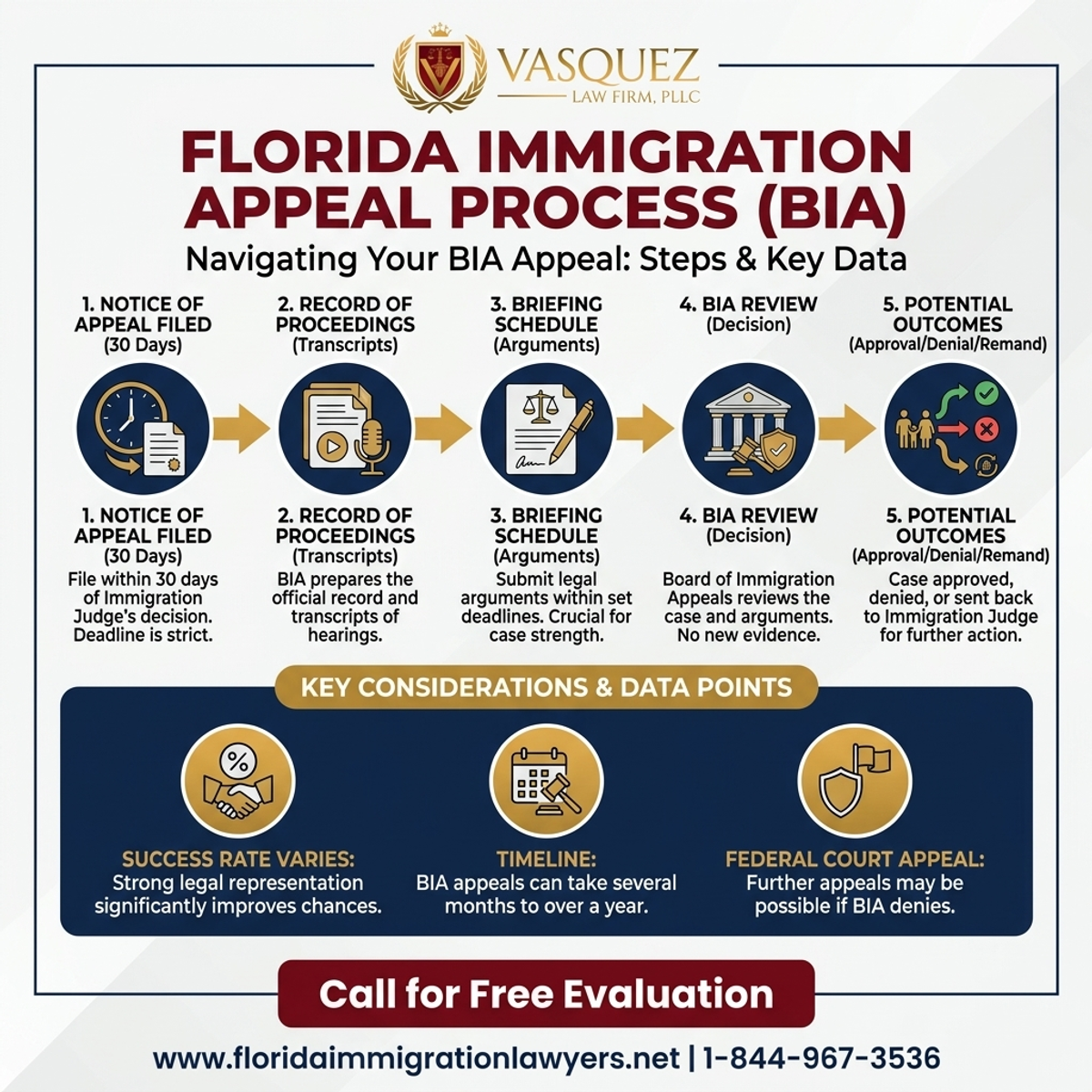
Key Statistics — Immigration Appeal Process with BIA in Florida
It is vital to stay informed about your case status throughout the process.
It's important to understand that the "typical timeframe" provided is an estimate, and actual processing times can fluctuate significantly. Factors such as the complexity of the legal issues involved, the volume of appeals currently before the BIA, and whether the case involves novel legal questions can all influence how long your appeal takes. For instance, a case involving complex asylum claims with extensive country condition evidence might take longer to review than a straightforward procedural error.
While waiting for a decision, maintaining regular communication with your attorney is crucial. They can monitor your case status through the EOIR online case status system and inform you of any updates or requests for further information from the BIA. In some urgent cases, such as those involving individuals in detention or with compelling humanitarian concerns, it may be possible to request expedited processing, though this is granted sparingly and requires strong justification. Your Florida Immigration Lawyers can advise if your case qualifies for such a request.
Patience is often a virtue in the BIA appeal process, but proactive engagement is equally important. Ensure your contact information is always up-to-date with the BIA and your legal representative. Unexpected delays or requests for additional information are not uncommon, and being prepared to respond promptly can prevent further setbacks. Remember, the BIA's decision is final at the administrative level, so a thorough and well-prepared appeal from the outset is your best strategy for a favorable outcome.
Costs Associated with Filing a BIA Appeal
Filing an appeal with the BIA involves several cost factors. Here is a basic fee breakdown:
| Item | Typical Fee | Notes |
|---|---|---|
| Filing Fee | Subject to change | Check current rates on EOIR |
| Attorney Fees | Varies | Consult with a lawyer |
| Additional Documentation | Varies | Depends on case specifics |
Being aware of these costs can help you budget for the appeal process.
The BIA filing fee is a mandatory administrative cost that must accompany your Form EOIR-26 unless a fee waiver is granted. This fee is subject to change, so always verify the current amount on the Executive Office for Immigration Review (EOIR) website or consult with an immigration attorney. Failure to pay the correct fee or properly submit a fee waiver request can lead to the rejection of your appeal, adding unnecessary delays and potentially jeopardizing your case.
Attorney fees represent a significant portion of the overall cost, but they are an invaluable investment in the success of your appeal. An experienced immigration lawyer brings expertise in legal research, brief writing, and appellate strategy that is critical for navigating the complexities of BIA review. While flat fees or hourly rates vary depending on the complexity of your case and the attorney's experience, the peace of mind and enhanced probability of a favorable outcome often outweigh the financial outlay. Florida Immigration Lawyers offer transparent fee structures and free case reviews to help you understand your options.
Beyond the filing and attorney fees, other potential costs may arise. These can include expenses for obtaining certified copies of documents, translation services for foreign-language evidence, courier services for expedited mailings, or fees for expert witnesses if their testimony is crucial to your appeal. It's important to discuss all potential costs with your legal team upfront to avoid surprises and ensure you are fully prepared for the financial aspects of your BIA appeal. Planning ahead financially is a key component of a successful appeal strategy.
Middle CTA
Do not navigate this process alone. Contact Florida Immigration Lawyers today.
Common Mistakes to Avoid in BIA Appeals
- Filing late: Missing the 30-day deadline can result in automatic dismissal. Always use certified mail with return receipt or electronic filing to prove timely submission.
- Incomplete forms: Incorrect or incomplete forms can delay your case. Double-check all fields on Form EOIR-26 and ensure all necessary attachments are included.
Do Not Navigate This Process Alone
Our experienced immigration attorneys are ready to fight for you. Get a free, confidential case review today.
Se Habla Español
Or leave your details and we’ll call you:
Free Evaluation in 24 Hours
Or talk to us right now

AI voice assistant — available 24/7
FreeFrequently Asked Questions

William J. Vásquez
Founding Attorney · Vasquez Law Firm
U.S. Air Force veteran and immigration attorney with years of hands-on U.S. immigration experience. J.D., NCCU School of Law. AILA member. Admitted to the 4th, 5th, and 11th Circuit Courts.
Available 24/7 - Free Evaluations
Reviewed for legal accuracy by William J. Vásquez
Licensed in North Carolina; U.S. immigration is federal practice.
Related Legal Services
Our Florida immigration attorneys can help you with family immigration services, immigration lawyer cost in Florida and experienced immigration attorneys. Call today at 1-844-YO-PELEO for a free case review.
Related Links
Related Topics
Free Legal Case Review
Discuss your case with our experienced attorneys. We're available 24/7.
Se Habla Español - Estamos aquí para ayudarle.
Related Articles
Immigration Lawyer Orlando Free Consultation in Florida
For individuals and families in Orlando, Florida, navigating the complexities of U.S. immigration law requires expert guidance. An immigration lawyer in Orlando offers crucial support for everything from visa applications and green card processes to naturalization and deportation defense. This comprehensive guide details what a free consultation covers, providing a step-by-step overview of immigration pathways, essential document checklists, and expected timelines in 2026. We also highlight common mistakes to avoid, discuss the critical role of legal counsel in deportation and asylum cases, and explain why choosing a local Orlando immigration attorney is beneficial. Florida Immigration Lawyers is dedicated to serving the diverse community of Orlando with compassionate, effective legal solutions, ensuring you receive personalized advice and robust representation for a successful immigration journey.
Consular Processing Lawyer for Florida Applicants in 2026
Consular processing is a key step for Florida immigrants seeking an immigrant visa. Learn about the process, including the embassy interview and preparation tips. Call Florida Immigration Lawyers at 1-844-YO-PELEO for assistance.
Immigration Rights in Florida: Know Your Rights
Understanding your immigration rights in Florida is crucial. From ICE encounters to navigating immigration courts, this comprehensive guide provides essential information for safeguarding your future. Learn about legal protections, common mistakes to avoid, and when to seek professional legal advice. Florida Immigration Lawyers are here to help.
Special Immigrant Juvenile Status in Florida 2026
Discover how Special Immigrant Juvenile Status (SIJS) in Florida can help minors facing abuse, neglect, or abandonment obtain legal residency. Understand the application process, eligibility requirements, and common mistakes to avoid. Contact Florida Immigration Lawyers for a free case review.