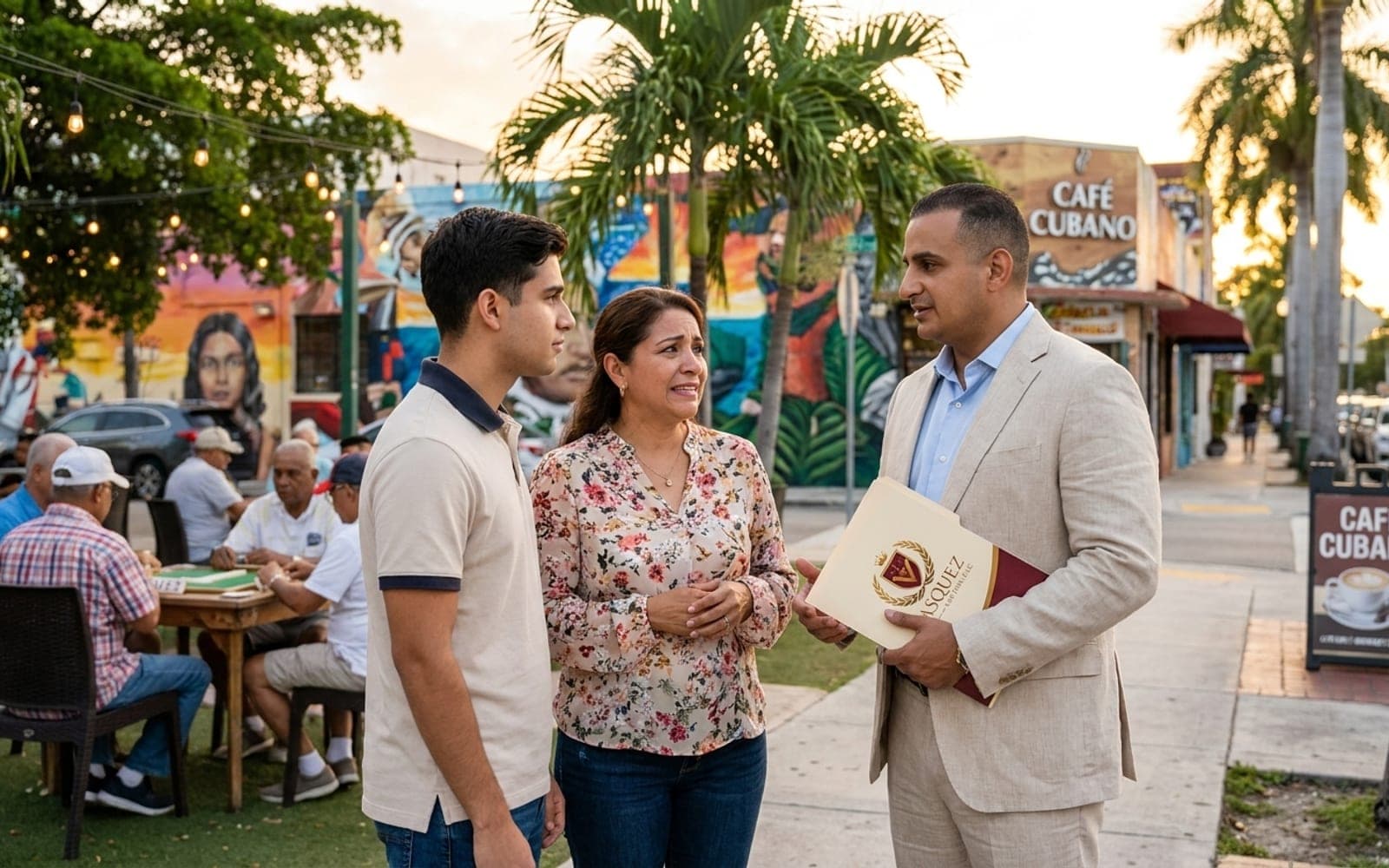
People in Plantation who search for a deferred immigration lawyer usually mean deferred action, and their questions range from green cards and work permits to detained relatives and immigration court. Family petitions use Form I-130, followed by adjustment of status or consular processing, while permanent residents ready to naturalize use Form N-400. Work permits may be tied to a pending case, TPS, asylum or DACA. Many tasks work well by video, so Broward residents can use our Orlando firm without traveling for every step.
- Typical matters include family green cards, citizenship, work permits and removal defense.
- Detained relatives and bond questions are also covered.
- Document review and hearing preparation work well by video.
- Policies on deferred action, bond and enforcement change often.
Introduction
If you live in Plantation and need help with a green card, a work permit, deferred action, a detained relative, or a case in immigration court, you can work with our firm without driving to Orlando for every step. This guide is for Plantation and Broward County residents searching for an immigration lawyer in Plantation, FL, including people who type "deferred immigration lawyer" when they mean deferred action. To talk about your situation, call 1-844-YO-PELEO or contact us.
We serve Plantation and the rest of Broward County by video and phone, in English and Spanish, and meet clients in person at our only office, in Orlando. Many tasks, such as document review, form preparation, and hearing preparation, work well by video.
This article is general information, not legal advice. Policies on deferred action, bond, and enforcement change often, so the details of your case must be checked against the current rules.
Immigration Help for Plantation Residents
Plantation sits in the middle of Broward County, with residents from across the Caribbean, Central and South America, and beyond. The questions we hear from people looking for an immigration lawyer in Plantation tend to fall into a few groups.
- Family-based green cards: a U.S. citizen or permanent resident petitioning for a spouse, parent, child, or sibling with Form I-130, followed by adjustment of status or consular processing.
- Citizenship: permanent residents ready to file Form N-400.
- Work permits and renewals: employment authorization tied to a pending case, TPS, asylum, or DACA.
- Removal defense: people who received a Notice to Appear or have a hearing before an immigration judge.
- Detention: families trying to get a relative released from ICE custody.
Our immigration law services page gives an overview of each area.
Broward County families often include people with different statuses under one roof, such as a U.S. citizen child, a permanent resident parent, and a relative with a pending case or no status at all. A useful review looks at every person in the household, because the right filing for one person can affect the choices of another. Take your time, ask questions, and avoid signing anything you do not understand.
Deferred Action and Prosecutorial Discretion
People sometimes search for a deferred immigration lawyer when they mean deferred action: a decision by the government not to pursue removal against someone for a period of time. DACA is the most widely known form, but deferred action can also arise in other contexts, such as certain victims of crimes while a U visa is pending. Deferred action is not lawful status and does not by itself lead to a green card, but it can allow a person to apply for a work permit. For DACA specifically, see our DACA page.
A related idea is prosecutorial discretion, where government attorneys decide whether to dismiss, close, or not pursue a case. A lawyer who works on discretion requests will review whether a request makes sense given the person's history, family ties, and the current policies, which change from one administration to the next. No lawyer can promise that discretion will be granted. What a lawyer can do is present the strongest honest picture of the person's situation.
U Visas and Other Situations Where Deferred Action Appears
Deferred action can show up in cases beyond DACA. A person who has applied for a U visa as a victim of certain crimes, or who has a pending self-petition under the Violence Against Women Act, may in some circumstances be considered for deferred action while waiting. These are discretionary and depend on the current policies of the agency, so no one should assume they will be granted. If you are in one of these situations, ask a lawyer how safety, work authorization, and timing fit together, and avoid sharing sensitive details with anyone who is not a licensed attorney or accredited representative.
How the Process Works in Florida for Filings and Court Cases
Most matters begin with a paper filing or a notice. The general sequence is below, although each case varies.
- Review your documents, your entries, and anything you have filed before.
- Decide which application, request, or defense fits your facts and the current rules.
- Prepare the forms and evidence so the case is complete when it is submitted.
- File with USCIS or the immigration court, and keep every receipt and notice.
- Attend biometrics, an interview, or hearings at the locations listed on each notice.
- Respond to requests for evidence, and plan next steps after a decision.
Family Petitions and Citizenship for Broward Families
Family-based cases are the largest group of filings we discuss with Plantation clients. A U.S. citizen can petition for a spouse, parent, child, or sibling, and a permanent resident can petition for a spouse or unmarried child, each in a different category with its own rules. After the petition is approved, the relative either adjusts status inside the United States or completes consular processing abroad. Which route applies depends on the person's entry, history, and the number of visas available in that category, so check the current instructions.
Permanent residents who are ready to become citizens file Form N-400. Before filing, a lawyer should review absences from the United States, tax filings, and any arrest, even one that was dismissed. Citizenship is rarely a good place to learn about a problem for the first time.
When a Relative Is Detained: Bond and Release
When someone is taken into ICE custody, families often search online for an immigration bail lawyer late at night. In immigration cases, "bail" is called bond. Depending on how the person entered the United States, their criminal history, and current rules, they may be able to ask an immigration judge for a bond hearing. At that hearing, the judge looks at whether the person is a flight risk or a danger to the community.
Some people are not eligible for bond at all, and eligibility rules in this area have been changing, so a lawyer needs to review the specific facts quickly. Helpful documents include proof of address, family relationships, employment, community letters, and any court records. Getting these together early makes a difference. Read more about the process on our South Florida immigration detention page.
Filings With USCIS and the Immigration Court
Many matters are paper filings. An immigration filing attorney prepares the forms and evidence for USCIS so that the case is complete when it is submitted. Plantation residents are generally served by the USCIS field office and the immigration court that cover Broward County, and interviews, biometrics, and hearings take place at the locations listed on each notice.
A lawyer should also track every deadline on those notices, because missing a hearing in immigration court can result in a removal order. Keeping your address current with both USCIS and the court prevents missed notices.
What to Expect at a Consultation
A first consultation is a conversation, not a commitment. We ask about how and when you entered, what you have filed before, who in your family is a citizen or permanent resident, and whether anyone has been arrested or received a notice. We then explain the options that seem realistic, the options that are not, and the risks in each. You should leave knowing what documents to gather, what deadlines are involved, and what the next step would be if you decide to move forward.
Consultations are available in English and Spanish, by video or phone, and family members can join from different places. If you need to meet in person, you can come to our Orlando office.
Document Checklist for Your Consultation
- Passport, I-94 record, and any visas or entry documents.
- Every notice you have received from USCIS, ICE, or the immigration court.
- Marriage and birth certificates for family-based cases.
- Arrest reports and final court dispositions, if you have any criminal history.
- Copies of anything you previously filed, even if it was denied.
- Proof of address, work, and community ties.
- For a detained relative: full name, date of birth, country of birth, and A-number if known.
If something is missing, bring what you have and a lawyer can explain how to request the rest.
It also helps to keep a simple file at home with copies of every notice, receipt, and decision, organized by date. When a lawyer asks about an earlier filing, being able to produce the paper quickly can save weeks. Store originals of identity documents safely, and carry copies when you travel within the country.
Timeline and Processing Expectations
How long a case takes depends on the kind of application, the office handling it, and whether more evidence is requested. USCIS and the immigration courts publish current processing information, and it changes, so we do not predict times in this article.
Court cases follow the judge's calendar, and detained cases are often scheduled differently from cases of people who are not in custody. The table lists the usual stages.
| Stage | What happens | Who acts |
|---|
| Consultation and review | Documents and history are reviewed; options explained | Lawyer, client |
| Preparation and filing | Forms and evidence are completed and submitted | Lawyer, USCIS or court |
| Biometrics or interview | Fingerprints or questions about the application | Applicant, USCIS |
| Hearings | Master calendar and individual hearings, if in court | Immigration judge, DHS, lawyer |
| Decision | Approval, denial, or next steps | USCIS or judge |
How to Compare Immigration Lawyers
People who search for a standout immigration lawyer usually want three things: someone who understands their type of case, someone who explains the process clearly in their language, and someone who answers when they call. Florida Bar rules do not let lawyers claim they are better than other lawyers, so look instead at how each lawyer handles your questions. Be cautious about any lawyer who guarantees an outcome. When comparing immigration attorneys that friends or neighbors have recommended, ask the following.
- Who will actually work on my case, and how will we communicate?
- What are the risks in my case, not just the possibilities?
- Can I meet by video if I cannot travel?
- Will someone explain documents to me in Spanish if I need it?
A bilingual immigration attorney should be able to review your documents with you in the language you are most comfortable with. Every member of our team can help you in English or Spanish.
Cost Factors and Fee Breakdown
The cost of immigration help depends on the type of case and the amount of work involved.
| Item | Amount | Notes |
|---|
| Attorney fees for a family, work, or citizenship filing | Varies by case | Depends on the number of applicants and the evidence needed |
| USCIS filing fees | Check USCIS for the current fee | Fees differ by form and change over time |
| Immigration court filings | Check the court or agency for current fees | Vary with the application or motion |
| Bond | Check the court or agency for current fees | Set by ICE or the immigration judge |
| Translations and document copies | Varies by case | Foreign-language records usually need translation |
Ask for a written fee agreement that explains what is covered, and read the current USCIS fee information before you file.
A lower fee is not always a better value if a filing is rejected or a deadline is missed. Focus on clarity about scope and communication.
Common Mistakes to Avoid
- Assuming that "deferred" status is the same as lawful status or a green card.
- Filing a request for discretion without current guidance or supporting evidence.
- Waiting to look for a lawyer until the week of a hearing.
- Ignoring a notice because it arrived late or in the wrong language.
- Failing to update your address with USCIS and the immigration court.
- Delaying a bond request when a relative is detained and evidence is easy to collect.
- Hiring a notario or anyone who is not a licensed attorney.
When to Call a Lawyer
Call as soon as a relative is detained, a Notice to Appear arrives, or an application is denied. Call before you file anything if you have an arrest, an overstay, or an earlier denial. If you are unsure which application fits, a consultation can sort out the options before you spend money on the wrong form.
How We Work With Plantation Clients From Orlando
Our only office is at 1111 E Amelia Street in Orlando. We do not have an office in Broward County, and we do not need one to represent you. Most of our work with South Florida clients happens through secure video calls, phone, and electronic document sharing. If you would like to meet in person, you are welcome at our Orlando office. If you are looking for an immigration consultation near Plantation, a video meeting from your home or workplace is often the most practical option. Whether you found us by search or were referred by a friend, the first step is the same: schedule a consultation so we can review your documents and explain your options.
About Vasquez Law Firm
Vasquez Law Firm practices immigration law only. Our only office is at 1111 E Amelia Street in Orlando. We serve clients across Florida by phone and secure video, and we meet in person at the Orlando office. William J. Vásquez is the founding attorney, and consultations are available in English and Spanish. To talk about your situation, call 1-844-YO-PELEO or contact us.
Sources and References
Related services: immigration law services, immigration lawyers in Florida
Other ways people search for this
People look for this help under different names. Related searches include immigration lawyer for bond; deferred immigration lawyer plantation fl; best immigration lawyer plantation fl; bilingual immigration attorney plantation fl; immigration attorney near plantation fl; immigration attorneys plantation; immigration bail lawyer plantation; immigration discretion attorney plantation fl; immigration filing attorney plantation fl; immigration filing lawyer plantation fl.
This article is general information, not legal advice. Every case is different; speak with an immigration lawyer about your situation.