Immigration Bond Hearing Florida: Your Essential Guide
Facing an immigration bond hearing in Florida can be a daunting experience, but understanding the process is key to securing release from ICE detention. This guide from Florida Immigration Lawyers covers who is eligible for bond, the step-by-step hearing process, essential documents, and what to expect regarding timelines and costs. We highlight the importance of legal representation, especially in areas like Kissimmee, where local experience can make a significant difference. Learn how to avoid common mistakes and when to contact an attorney to advocate for your freedom and future. Our firm offers free consultations and serves all of Florida.
An immigration bond hearing in Florida is a crucial court proceeding where an immigration judge determines if a detained non-citizen can be released from U.S. Immigration and Customs Enforcement (ICE) custody by posting a bond. The judge assesses factors like flight risk, danger to the community, and ties to the U.S. to set a bond amount or deny release. Successfully navigating this process is vital for individuals in detention, offering a path to temporary freedom while their immigration case proceeds. Legal representation is highly recommended to present a strong case for release.
- Immigration bond hearings determine release from ICE custody.
- Judges assess flight risk and public safety to set bond amounts.
- Strong ties to the U.S. can improve the chances of release.
- Legal counsel is essential for effective representation.
- Bonds allow temporary release during ongoing immigration proceedings.
Finding yourself or a loved one in immigration detention can be an overwhelming and frightening experience, especially when navigating the complexities of the U.S. immigration system. In Florida, a state with a significant immigrant population, the need for clear guidance on processes like an immigration bond hearing Florida is paramount. Whether you are in Kissimmee, Orlando, Miami, or anywhere else in the Sunshine State, understanding your rights and the steps involved in securing release is the first step towards reuniting with family and preparing your defense.
This comprehensive guide from Florida Immigration Lawyers will demystify the immigration bond hearing process, offering crucial insights into eligibility, what to expect, and how to build a strong case for release. We understand the urgency and emotional toll that detention takes on families. Our goal is to empower you with the knowledge needed to face these challenges. Do not face this complex legal journey alone. Call Florida Immigration Lawyers at 1-844-YO-PELEO for a free consultation and let our experienced team advocate for you.
Understanding Immigration Bonds and Detention in Florida
An immigration bond is a sum of money paid to the Department of Homeland Security (DHS) to secure the temporary release of a non-citizen from immigration detention. This release is granted under the condition that the individual will appear for all scheduled immigration court hearings. In Florida, individuals may be detained by U.S. Immigration and Customs Enforcement (ICE) for various reasons, including visa overstays, undocumented entry, or certain criminal offenses that trigger deportation proceedings. The state's proximity to international borders and its diverse population mean that immigration detention and bond hearings are frequent occurrences.
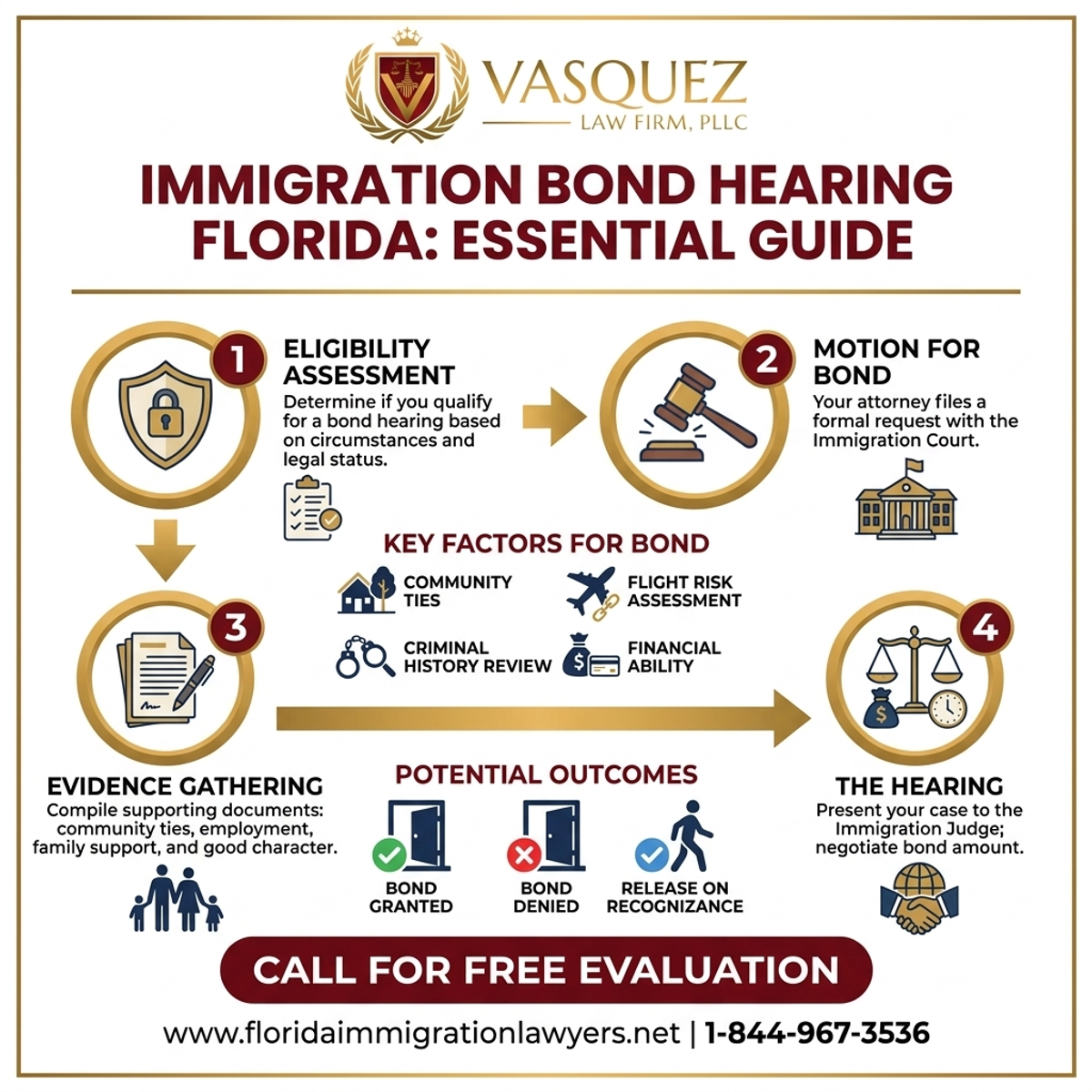
There are generally two types of immigration bonds: delivery bonds and voluntary departure bonds. A delivery bond, the most common type, ensures the individual's appearance at all future immigration proceedings. A voluntary departure bond ensures that the individual will leave the U.S. by a specified date. The decision to grant a bond and the amount required rests with either an ICE officer or an immigration judge during a bond hearing. Factors like the individual's immigration history, criminal record, community ties, and flight risk are all carefully considered. Understanding these foundational aspects is critical for anyone facing detention in Florida.
Who is Eligible for an Immigration Bond?
Not everyone detained by ICE is eligible for an immigration bond. Eligibility is primarily governed by the Immigration and Nationality Act (INA), specifically INA Section 236 (8 U.S.C. § 1226). Generally, individuals who are subject to mandatory detention, such as those convicted of certain aggravated felonies or terrorism-related offenses, are not eligible for bond. However, many non-citizens, including asylum seekers and those with minor immigration violations, may be eligible. The determination of eligibility is often complex and depends heavily on the specific charges and the individual's immigration and criminal history.
In Florida, ICE officers initially review cases for bond eligibility. If ICE denies bond or sets an unreasonably high amount, the detained individual has the right to request a bond hearing before an immigration judge. This hearing takes place in immigration courts located across Florida, such as the Orlando Immigration Court or the Miami Immigration Court. The judge will then make an independent assessment, considering all evidence presented. Seeking legal counsel from Florida Immigration Lawyers can significantly improve the chances of a favorable bond determination, as we can identify grounds for eligibility and argue effectively on your behalf.
The Immigration Bond Hearing Process: A Step-by-Step Guide
Navigating an immigration bond hearing in Florida can feel daunting, but understanding each step can help alleviate some anxiety. This process is your opportunity to convince an immigration judge that you are not a flight risk and do not pose a danger to the community, thereby meriting release on bond.
-
Initial Detention and ICE Review: Upon arrest by ICE, the individual is processed and typically held in a detention facility. Within a reasonable time, an ICE officer will review the case to determine if the individual is eligible for release on bond and, if so, set an initial bond amount. This review is often brief, and the bond amount set by ICE may be high or denied altogether, often without detailed explanation.
-
Requesting a Bond Hearing: If ICE denies bond or sets an amount that the family cannot afford, the detained individual or their attorney can request a bond hearing before an immigration judge. This request is filed with the Executive Office for Immigration Review (EOIR), the agency that oversees immigration courts. In Florida, hearings typically occur at the Orlando Immigration Court, Miami Immigration Court, or other judicial facilities, depending on where the individual is detained.
-
Preparing for the Hearing: This is a critical phase. The defense must gather evidence to demonstrate the individual's ties to the community, lack of flight risk, and absence of danger to others. This includes proof of family in the U.S., employment, property ownership, community involvement, and a clean criminal record. A skilled attorney from Florida Immigration Lawyers will help compile and present this evidence effectively.
-
The Bond Hearing Itself: During the hearing, an immigration judge presides, and a DHS attorney represents the government. The detained individual (or their attorney) will present evidence and testimony to support release on bond. The DHS attorney may argue against bond or for a higher amount. The judge will listen to both sides, review documents, and question the individual or witnesses. The focus is on the factors outlined in 8 CFR 236.1(c)(8), which guides bond determinations.
-
Judge's Decision: After hearing all arguments, the immigration judge will render a decision. The judge may grant bond, deny bond, or adjust the bond amount set by ICE. If bond is granted, the judge will specify the amount. The decision is based on a totality of the circumstances, with the primary goals of ensuring future court appearances and protecting public safety.
-
Posting the Bond: If bond is granted, it can be posted by a U.S. citizen or legal permanent resident at an ICE Enforcement and Removal Operations (ERO) field office. The bond must be paid in full, typically by money order or cashier's check. Once the bond is posted, the individual is released from detention, often within a few hours or days, depending on the facility's processing times.
-
Appealing a Bond Decision: If the bond is denied or set too high, the decision can be appealed to the Board of Immigration Appeals (BIA). This must be done within a strict timeframe, usually 30 days. An appeal is a complex legal process that requires experienced legal representation to argue that the immigration judge made a legal or factual error in their decision. Our team at Florida Immigration Lawyers is adept at handling BIA appeals.
Documents and Evidence for a Florida Bond Hearing
To maximize the chances of a favorable outcome in an immigration bond hearing Florida, presenting compelling evidence is crucial. The goal is to demonstrate strong ties to the community and a low risk of flight or danger. Preparing a comprehensive portfolio of documents can significantly strengthen your case before an immigration judge in courts like the Orlando Immigration Court or the Miami Immigration Court.
Essential Document Checklist:
- Proof of Identity and Nationality: Passport, birth certificate, national ID card.
- Immigration Documents: I-94 arrival/departure record, visa, previous immigration applications, notices from USCIS or ICE.
- Proof of Residence in Florida: Utility bills, lease agreements, property deeds, mail addressed to the individual.
- Family Ties: Marriage certificates, birth certificates of U.S. citizen or legal permanent resident children/spouse, letters from family members confirming relationship and support.
- Employment History: Employment verification letters, pay stubs, tax returns (W-2s, 1099s), business licenses if self-employed.
- Financial Assets: Bank statements, property deeds, vehicle titles, documentation of any investments.
- Community Involvement: Letters from community leaders, religious leaders, or non-profit organizations confirming participation, volunteer work, or membership.
- Medical Records: Documentation of serious medical conditions requiring ongoing treatment, especially if detention would pose a significant health risk.
- Criminal Records (if applicable): Certified disposition of any prior arrests or convictions, demonstrating rehabilitation or minor nature of offenses.
- Character Reference Letters: Letters from employers, friends, family, and community members attesting to good moral character and reliability.
- Affidavits of Support: Statements from U.S. citizens or LPRs willing to provide financial and emotional support, and potentially post the bond.
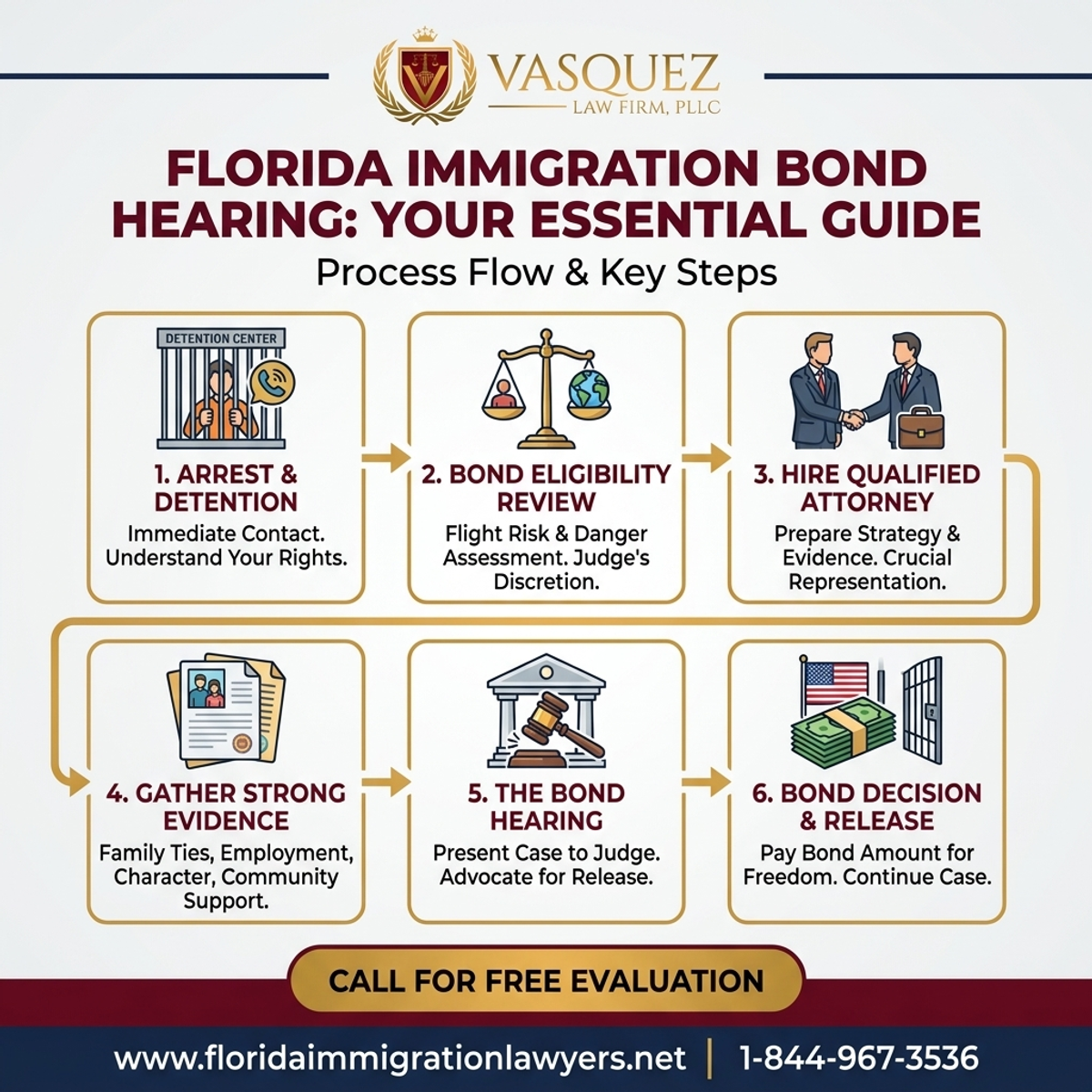
Step-by-Step Process — Immigration Bond Hearing Florida: Your Essential Guide
Gathering these documents can be challenging while detained. This is where the support of an experienced Florida immigration attorney becomes invaluable. Our team at Florida Immigration Lawyers can work with family members and other contacts to collect and organize this vital evidence, ensuring it is presented clearly and persuasively to the immigration judge.
Navigating ICE Detention and Bond Hearings in Kissimmee, Florida
For individuals residing in Kissimmee and surrounding areas like Orlando, Sanford, or Lakeland, the prospect of an immigration bond hearing Florida often means dealing with ICE detention facilities and specific immigration courts. Central Florida is a vibrant hub for many immigrant communities, making access to reliable legal assistance critical when facing detention.
Detention facilities commonly used by ICE in Florida include the Glades County Detention Center and Baker County Detention Center, though individuals might be transferred to various locations. For those in the Kissimmee area, hearings are typically held at the Orlando Immigration Court, which is part of the Executive Office for Immigration Review (EOIR). Understanding which facility a loved one is in and which court has jurisdiction is the first step in mounting an effective defense.
The immigration landscape in Kissimmee and Central Florida is dynamic. Recent policy shifts and enforcement priorities, sometimes influenced by national discussions like those seen in news reports about increased immigration enforcement funding, can impact detention rates and bond decisions. It is more important than ever to have legal counsel who stays abreast of these changes and understands the local nuances of the Florida immigration courts. Our attorneys at Florida Immigration Lawyers are deeply familiar with the judges, procedures, and expectations within the Florida immigration court system, including the Orlando Immigration Court, ensuring your case is handled with local experience. We are here to serve families across Kissimmee and all of Florida.
Do not navigate this process alone. Contact Florida Immigration Lawyers today at 1-844-YO-PELEO for a free consultation. Our dedicated team is ready to provide the compassionate and effective legal representation you need.
Timeline, Costs, and What to Expect for Your Immigration Bond
Understanding the timeline and potential costs associated with an immigration bond hearing Florida is crucial for effective planning. The immigration system is known for its complexities and varying processing times, which can add to the stress of detention. While exact timelines are hard to predict, we can outline typical expectations.
Processing Expectations:
- From Detention to Hearing: Once a bond hearing is requested, it can take anywhere from a few days to several weeks for the hearing to be scheduled. This largely depends on the caseload of the specific immigration court, such as the Orlando Immigration Court or the Miami Immigration Court. Delays can occur due to court backlogs or administrative procedures.
- After a Favorable Decision: If bond is granted, the actual release process typically begins once the bond is posted. This can take anywhere from a few hours to 2-3 business days, depending on the ICE field office's processing speed and the detention facility's internal procedures. It is important to have the bond money readily available to expedite release.
- Overall Case Duration: Obtaining a bond is a critical first step, but it does not resolve the underlying immigration case. The individual will still need to attend future court hearings, which can span months or even years, depending on the complexity of the case, the type of relief sought (e.g., asylum, cancellation of removal), and court schedules.
Cost Factors and Fee Breakdown:
The costs associated with an immigration bond hearing can be significant and typically involve two main components: the bond amount itself and legal fees.
-
The Bond Amount: Immigration bond amounts are determined by the ICE officer or the immigration judge. They typically range from a minimum of $1,500 to $25,000 or more, depending on factors such as the individual's criminal history, ties to the community, and flight risk assessment. This amount must be paid in full to ICE. It is a refundable amount, returned once the immigration case concludes and all conditions are met, regardless of the case's outcome.
Key Statistics — Immigration Bond Hearing Florida: Your Essential Guide
-
Legal Fees: Hiring an experienced immigration attorney is an investment in your freedom and your future. Legal fees for bond hearings vary based on the complexity of the case, the amount of evidence to be gathered, and the attorney's experience. These fees cover case preparation, legal research, representation at the hearing, and communication with ICE and the court. While an upfront cost, legal representation often leads to a lower bond amount or a successful bond grant, saving money and stress in the long run.
It is crucial to have a clear understanding of these financial aspects. Florida Immigration Lawyers offers transparent fee structures and can discuss payment options during your free consultation. We believe that everyone deserves quality legal representation, regardless of their financial situation.
Common Mistakes to Avoid in Florida Immigration Bond Hearings
Navigating an immigration bond hearing Florida is complex, and even minor missteps can have significant consequences, potentially leading to prolonged detention or a higher bond amount. Being aware of common pitfalls can help you avoid them.
-
Failing to Request a Bond Hearing: Many individuals or their families do not realize they have the right to challenge ICE's initial bond determination. Not requesting a hearing means accepting whatever ICE decided, which is often a denial or an excessively high bond.
-
Not Hiring an Attorney: Attempting to represent yourself in an immigration bond hearing is a critical mistake. Immigration law is highly complex, and a non-citizen without legal training will struggle to present a compelling case, understand legal arguments, or navigate court procedures. This significantly reduces the likelihood of a favorable outcome.
-
Lacking Sufficient Evidence: A bond hearing requires strong evidence of community ties, lack of flight risk, and good moral character. Failing to provide comprehensive documentation, such as proof of residence, employment, family ties, and community involvement, weakens the case for release.
-
Providing Inconsistent or False Information: Any inconsistencies or false statements made during the hearing or in submitted documents can severely damage credibility. This can lead to bond denial and even have negative repercussions for future immigration applications.
-
Not Understanding Eligibility Criteria: Some individuals are subject to mandatory detention under INA 236(c) and are not eligible for bond. Pursuing a bond hearing in such cases without proper legal analysis can waste time and resources. An attorney can assess eligibility upfront.
-
Ignoring Criminal History Details: Past criminal offenses, even minor ones, can significantly impact bond eligibility and the judge's decision. Failing to address these records transparently and provide certified dispositions can be detrimental. Aggravated felonies, as defined by INA 101(a)(43), often lead to mandatory detention.
-
Missing Deadlines or Procedures: Immigration courts operate under strict deadlines and specific procedural rules (8 CFR Part 1003). Missing a deadline for requesting a hearing or submitting documents can result in a waiver of rights or denial of the request.
-
Underestimating the DHS Attorney's Role: The Department of Homeland Security (DHS) attorney will actively argue against bond or for a high amount, presenting evidence to support their position. Being unprepared for their arguments can leave you at a disadvantage.
-
Poor Presentation of the Case: Even with good evidence, if it's not organized, clearly presented, and persuasively argued, its impact is diminished. An attorney ensures that all information is conveyed effectively to the immigration judge.
-
Failing to Plan for the Bond Payment: If a bond is granted, it must be paid quickly to secure release. Not having the financial resources or a plan to post the bond immediately can delay release, even after a successful hearing.
When to Call a Florida Immigration Lawyer for a Bond Hearing
The decision to seek legal counsel for an immigration bond hearing Florida is not merely advisable; it is often critical for a successful outcome. The complexities of immigration law, the strict procedures of immigration courts, and the high stakes involved mean that professional legal representation can make a significant difference in securing release from detention.
You should contact Florida Immigration Lawyers immediately if you or a loved one is detained by ICE anywhere in Florida, including Kissimmee, and facing possible deportation proceedings. This urgency is paramount because early intervention allows us to assess the situation, determine bond eligibility, and swiftly prepare for a bond hearing. We can quickly communicate with ICE and the detention facility to understand the charges and status.
Specific scenarios where legal help is indispensable include:
- Bond Denial or High Bond by ICE: If ICE denies bond or sets an amount that is unaffordable, an attorney can request a hearing before an immigration judge and argue for a lower, more reasonable bond.
- Complex Immigration History: If the detained individual has prior immigration violations, a criminal record, or previous deportation orders, navigating bond eligibility becomes intricate. An attorney can analyze these complexities and present mitigating factors.
- Language Barriers: Communication can be a significant hurdle. Our bilingual attorneys ensure that all information is clearly understood, both by the client and the court.
- Asylum Seekers: Individuals seeking asylum often face unique challenges in detention and bond hearings. An attorney can help articulate the fear of return and argue for release based on humanitarian grounds.
- Mandatory Detention Concerns: If there's a question of whether the individual is subject to mandatory detention, an attorney can provide a legal analysis and challenge the government's classification if appropriate.
Florida Immigration Lawyers has extensive experience with bond hearings across all Florida immigration courts. Our dedicated team works tirelessly to protect your rights, prepare a robust case, and advocate for your timely release. We understand the local legal landscape, including the specific practices of judges in courts like Orlando and Miami. Do not delay; your freedom may depend on it. Contact us today.
About Florida Immigration Lawyers
Florida Immigration Lawyers is an immigration law firm dedicated to serving individuals and families across the entire state of Florida. With years of experience and a deep understanding of U.S. immigration law, we provide compassionate, effective, and results-driven legal representation. Our mission is to guide our clients through every step of their immigration journey, from visa applications and green cards to complex deportation defense and citizenship cases.
We focus on a wide range of immigration services, including general immigration matters, asylum petitions, deportation defense, citizenship applications, family immigration, and business immigration. Our attorneys are known for their meticulous preparation, strategic thinking, and unwavering commitment to client success. We pride ourselves on offering personalized attention, ensuring that each client feels heard, understood, and confidently represented. We understand the unique challenges faced by immigrants in Florida, including those in Kissimmee, and are here to provide tailored solutions.
Choosing Florida Immigration Lawyers means choosing a team that is available 24/7 to address your concerns. We offer free consultations to help you understand your options without financial pressure. Our firm is proud to offer bilingual services, with attorneys and staff fluent in English and Spanish, ensuring clear communication throughout your case. Trust Florida Immigration Lawyers to be your steadfast advocate. Visit our attorneys page to learn more about our dedicated team, or contact us directly.
Sources and References
- U.S. Citizenship and Immigration Services (USCIS) - Immigration and Nationality Act (INA)
- Executive Office for Immigration Review (EOIR)
- U.S. Department of State - Bureau of Consular Affairs
- 8 U.S. Code Chapter 12 - Immigration and Nationality Act (INA)
- 8 CFR Part 236 - Apprehension and Detention of Aliens Ordered Removed
- 8 CFR Part 1003 - Executive Office for Immigration Review
- USCIS Policy Manual - Volume 10, Part II, Chapter 10 (Bond and Parole)
Related services: immigration waivers, humanitarian protection programs, DACA renewal and applications, temporary protected status (TPS).
This article provides general legal information and is not intended as legal advice. Every case is unique, and outcomes depend on specific facts and circumstances. Contact an attorney for advice about your particular situation.
Do not let the fear of immigration detention or the complexity of a bond hearing deter you from seeking the justice and freedom you deserve. Florida Immigration Lawyers is here to stand by your side, offering legal guidance and unwavering support. We provide free, confidential consultations to discuss your specific situation and outline the best path forward. Call us today at 1-844-YO-PELEO to speak with a dedicated immigration attorney. Se Habla Español - Estamos aqui para ayudarle.
Do Not Navigate This Process Alone
Our experienced immigration attorneys are ready to fight for you. Get a free, confidential case review today.
Se Habla Español
Or leave your details and we’ll call you:
Free Evaluation in 24 Hours
Or talk to us right now

AI voice assistant — available 24/7
FreeFrequently Asked Questions

William J. Vásquez
Founding Attorney · Vasquez Law Firm
U.S. Air Force veteran and immigration attorney with years of hands-on U.S. immigration experience. J.D., NCCU School of Law. AILA member. Admitted to the 4th, 5th, and 11th Circuit Courts.
Available 24/7 - Free Evaluations
Reviewed for legal accuracy by William J. Vásquez
Licensed in North Carolina; U.S. immigration is federal practice.
Related Legal Services
Our Florida immigration attorneys can help you with deportation defense, family immigration services and immigration lawyer cost in Florida. Call today at 1-844-YO-PELEO for a free case review.
Related Links
Related Topics
Free Legal Case Review
Discuss your case with our experienced attorneys. We're available 24/7.
Se Habla Español - Estamos aquí para ayudarle.
Related Articles
EB-5 Investor Green Card in Florida: A 2026 Guide
Explore how to obtain an EB-5 investor green card in Florida. Learn about the investment requirements, processes, and benefits of participating in this program. Discover how Florida's economic landscape can be an ideal setting for your investment. Contact Florida Immigration Lawyers for a free case review.
Certificate of Eligibility for Expungement in Florida 2026
For non-U.S. citizens in Florida, understanding how a state expungement impacts immigration status is critical. A certificate of eligibility for expungement in Florida allows a criminal record to be sealed or expunged under state law. However, federal immigration agencies often disregard such state-level relief, still considering the original criminal offense as a conviction for immigration purposes. This can have severe implications for visa applications, green card eligibility, naturalization, and even lead to deportation. This guide clarifies the Florida expungement process, its limited effect on federal immigration law, and key steps to protect your status in 2026. Learn about common mistakes, required documents, timelines, and when to seek expert legal counsel from Florida Immigration Lawyers to navigate these complex issues effectively.
Immigration Lawyer Orlando Free Consultation in Florida
For individuals and families in Orlando, Florida, navigating the complexities of U.S. immigration law requires expert guidance. An immigration lawyer in Orlando offers crucial support for everything from visa applications and green card processes to naturalization and deportation defense. This comprehensive guide details what a free consultation covers, providing a step-by-step overview of immigration pathways, essential document checklists, and expected timelines in 2026. We also highlight common mistakes to avoid, discuss the critical role of legal counsel in deportation and asylum cases, and explain why choosing a local Orlando immigration attorney is beneficial. Florida Immigration Lawyers is dedicated to serving the diverse community of Orlando with compassionate, effective legal solutions, ensuring you receive personalized advice and robust representation for a successful immigration journey.
Immigration Interview Preparation Florida 2026 Guide
Facing an immigration interview in Florida? This comprehensive guide offers essential 2026 USCIS interview tips for green card and naturalization applicants. Learn how to meticulously prepare your documents, understand the typical timelines, and avoid common mistakes that could jeopardize your case. We cover what to expect at the Orlando USCIS Field Office, provide a detailed document checklist, and explain the various costs involved in the process. With insights into naturalization specifics and when to seek legal counsel, Florida Immigration Lawyers helps you approach your interview with confidence. Our firm is dedicated to empowering immigrants across Florida with the knowledge and support needed for a successful outcome. Get a free case review today.