Immigration Bond Hearing in Florida: How to Get Released
Facing an immigration bond hearing in Florida can be an incredibly stressful experience for individuals and their families. This comprehensive guide from Florida Immigration Lawyers provides essential information on understanding the process, eligibility for bond, what to expect at a hearing, and crucial steps for securing release from ICE detention. Learn about the documents needed, typical timelines, and common mistakes to avoid. Discover when it's critical to seek professional legal assistance from an experienced Miami immigration lawyer to navigate the complexities of bond hearings and protect your rights in Florida. We offer free consultations to help you start your journey to freedom.
An immigration bond hearing in Florida is a crucial court proceeding where an immigration judge determines if a detained individual can be released from U.S. Immigration and Customs Enforcement (ICE) custody by paying a bond. This process aims to ensure the person will appear for future court dates while allowing them to live outside detention. Eligibility and bond amounts depend on many factors.
- An immigration judge sets the bond amount and conditions.
- Strong community ties and minimal flight risk are key factors.
- Legal representation significantly improves your chances.
- The hearing focuses on release, not the merits of your immigration case.
- Bonds are typically paid to ICE, allowing release from detention.
Navigating an Immigration Bond Hearing in Florida: A Comprehensive Guide
Imagine the distress of learning a loved one has been detained by U.S. Immigration and Customs Enforcement (ICE) in Florida. The sudden uncertainty, the fear, and the urgent need to understand their path to freedom can be overwhelming. This is a common and deeply personal challenge faced by many families across our state, from Miami to Orlando and beyond.
For those in ICE custody, an immigration bond hearing Florida represents a critical opportunity for release. This guide will walk you through the entire process, explaining what to expect, how to prepare, and the vital role legal counsel plays in securing a favorable outcome. We understand the stakes are incredibly high for you and your family.
Our goal is to provide clear, actionable information to help you navigate this complex legal landscape. We will cover everything from eligibility and documentation to common pitfalls and when to seek professional help. If you or a loved one is facing an immigration bond hearing in Florida, do not hesitate to seek guidance. Call Florida Immigration Lawyers at 1-844-YO-PELEO for a free consultation today.
Understanding the Immigration Bond Hearing Florida Process
When an individual is detained by ICE, their immediate priority is often to secure release. An immigration bond hearing is the primary mechanism through which this can happen. This hearing takes place before an immigration judge, who evaluates various factors to decide if a bond should be granted and, if so, the appropriate amount.
The judge's decision hinges on whether the detained individual is considered a flight risk or a danger to the community. In Florida, these hearings occur in immigration courts located in cities like Miami and Orlando. Understanding the nuances of this process is essential for anyone hoping to secure release.
What is an Immigration Bond?
An immigration bond is a sum of money paid to the Department of Homeland Security (DHS) as a guarantee that a non-citizen will appear for all scheduled immigration court hearings. It's similar to a bail bond in criminal court, but it operates under different legal principles.
The bond amount is set by an immigration judge or, in some cases, directly by ICE. If the individual attends all their hearings, the bond money is typically refunded. Failure to appear results in forfeiture of the bond and potentially a final order of removal.
Who is Eligible for an Immigration Bond?
Not everyone detained by ICE is eligible for an immigration bond. Eligibility largely depends on the individual's immigration history, criminal record, and the specific grounds for their detention. Generally, individuals with certain serious criminal convictions or those deemed mandatory detainees under the Immigration and Nationality Act (INA) may not be eligible.
For example, individuals subject to mandatory detention under INA Section 236(c) (8 U.S.C. § 1226(c)) are typically not eligible for bond. This often includes those convicted of certain aggravated felonies or drug offenses. However, other detainees, including many asylum seekers, often have the right to a bond hearing.
Role of ICE and Immigration Judges in Florida
ICE initially determines whether to set a bond or release an individual on their own recognizance. If ICE does not set a bond, or if the bond amount is deemed too high, the detained individual or their attorney can request a bond hearing before an immigration judge. In Florida, these judges preside over cases at the Executive Office for Immigration Review (EOIR) courts, such as the Miami Immigration Court.
The immigration judge at the immigration bond hearing Florida has the authority to set, lower, or deny a bond. Their decision is based on a review of the evidence presented by both the detainee's attorney and the ICE attorney. The judge acts as an impartial arbiter, weighing the arguments to determine the appropriate course of action.
Step-by-Step Guide to Requesting an Immigration Bond Hearing in Florida
The process of requesting and participating in an immigration bond hearing can seem daunting. However, by following a structured approach, you can significantly improve your chances of success. Here is a general outline of the steps involved:
-
Initial Detention and Review by ICE: After an individual is detained, ICE will typically conduct an initial review. During this review, ICE may decide to release the individual on their own recognizance (without bond), set an immigration bond, or determine that the individual is subject to mandatory detention and not eligible for bond. You may receive a Notice to Appear (NTA) at this stage, which initiates removal proceedings.
-
Requesting a Bond Hearing: If ICE does not set a bond, or if the bond amount is too high, the detainee or their legal representative can formally request a bond hearing. This request is filed with the immigration court that has jurisdiction over the detainee's case. In Florida, this would typically be the Miami or Orlando Immigration Court.
-
Preparing for the Hearing: This is a critical phase. Your attorney will gather evidence to demonstrate that the detainee is not a flight risk and not a danger to the community. This includes proof of strong family ties, employment history, community involvement, financial stability, and any other factors that show they are likely to appear for future court dates. Preparing thoroughly for an immigration bond hearing Florida is paramount.
-
The Immigration Bond Hearing Itself: At the hearing, the immigration judge will hear arguments from both the detainee's attorney and the ICE attorney. The detainee will have an opportunity to testify. The judge will consider all evidence, including testimony, documents, and arguments, to make a decision on bond eligibility and amount. This is where you address concerns about flight risk or danger.
-
Judge's Decision and Bond Payment: The judge will issue a decision, which could be to grant a bond, deny a bond, or release the individual on their own recognizance. If a bond is granted, the judge will specify the amount. The bond must then be paid to ICE at an authorized facility, typically by a U.S. citizen or lawful permanent resident. Once paid, the detained individual will be processed for release, which can take several hours to a few days.
Essential Documents for Your Immigration Bond Case
Having the right documentation is crucial for a successful immigration bond hearing. These documents help establish your ties to the community, demonstrate your good character, and show that you are not a flight risk or a danger. Your attorney will help you compile a comprehensive package.
- Proof of Identity and Immigration Status: Passport, birth certificate, previous visa documents, I-94 arrival/departure record.
- Proof of Family Ties in the U.S.: Marriage certificate, birth certificates of U.S. citizen or LPR children, letters from family members, photographs.
- Proof of Employment and Financial Stability: Pay stubs, employment verification letters, tax returns, bank statements, property deeds or rental agreements.
- Proof of Community Ties: Letters from community leaders, religious figures, or employers; volunteer work certificates; school enrollment records for children.
- Medical Records: If there are health issues that require care outside of detention.
- Criminal History Records (if any): Certified disposition of any arrests or convictions, demonstrating rehabilitation or minor nature of offenses.
- Affidavits of Support: From family members or friends willing to vouch for your character and provide financial support.
Timeline and Processing Expectations for Immigration Bond Hearings in Florida
The timeline for an immigration bond hearing Florida can vary significantly based on several factors, including the specific immigration court's caseload, the detention facility, and whether the detainee has legal representation. Understanding these expectations can help manage anxiety during a stressful time.
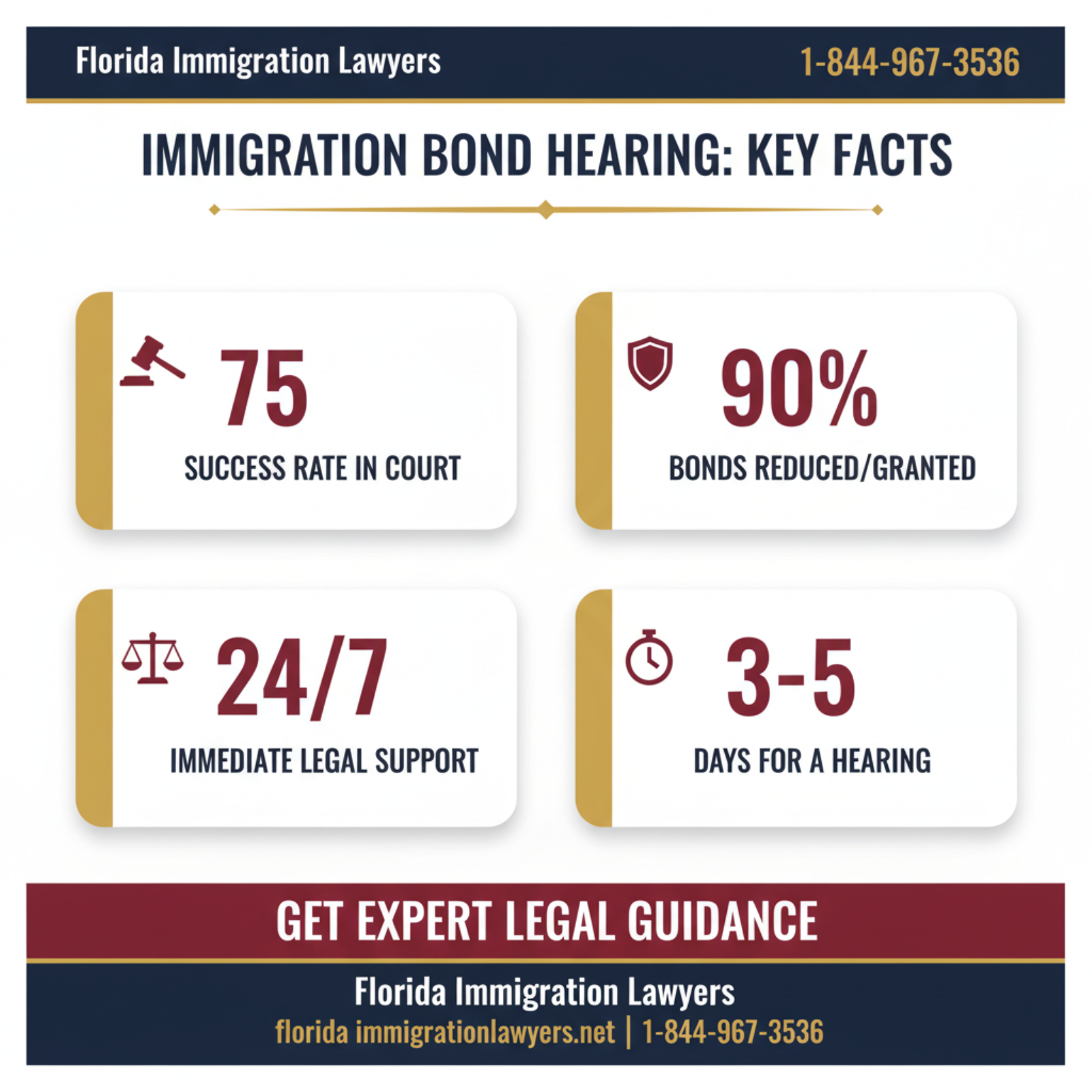
Typically, once a request for a bond hearing is filed, it can take anywhere from a few days to several weeks for the hearing to be scheduled. In busy courts like Miami, wait times might be longer. After a bond is granted and paid, the actual release from detention usually occurs within 24-72 hours, though sometimes it can take longer depending on administrative processing.
Factors that influence the timeline include the complexity of the case, the availability of the immigration judge, and the efficiency of the detention center's administrative staff. Your attorney can provide a more accurate estimate based on current court conditions. Staying in regular contact with your legal team is important for updates.
Cost Factors and Fee Breakdown for Immigration Bonds
Securing an immigration bond involves several potential costs. It's important to understand these financial aspects to plan accordingly. The primary cost is the bond amount itself, which can range from a few thousand dollars to tens of thousands, depending on the judge's assessment of flight risk and danger.
This bond amount is paid to ICE by a U.S. citizen or lawful permanent resident. While the bond is refundable if all court appearances are met, it represents a significant upfront expense. Additionally, there are other fees to consider:
- Attorney Fees: Legal representation for an immigration bond hearing is highly recommended. Attorney fees can vary based on the complexity of the case and the experience of the lawyer. This investment often pays off by increasing the likelihood of a lower bond or successful release.
- Filing Fees: While there is generally no specific filing fee for requesting a bond hearing, other associated costs, such as obtaining certified documents or criminal records, may apply.
- Travel and Communication Costs: For family members supporting the detainee, there might be costs associated with travel to the detention facility, court, or for phone calls to maintain contact.
It is crucial to discuss all potential costs with your legal team during your initial consultation. They can provide a clear breakdown and help you understand the financial commitment involved in an immigration bond hearing Florida.
Do not navigate this process alone. The complexities of immigration law require seasoned expertise. Contact Florida Immigration Lawyers today to discuss your case and learn how we can assist you. We are dedicated to fighting for your loved one's freedom.
Common Mistakes to Avoid During Your Immigration Bond Hearing
An immigration bond hearing is a critical legal proceeding where even minor errors can have significant consequences. Avoiding common mistakes can greatly improve the chances of a favorable outcome for your loved one in Florida.
-
Failing to Seek Legal Representation: Attempting to represent oneself or a loved one without an experienced immigration attorney is one of the biggest mistakes. Immigration law is complex, and a lawyer understands the legal arguments, court procedures, and how to present evidence effectively. Without counsel, critical details can be overlooked, potentially leading to a higher bond or denial.
-
Not Preparing Sufficient Evidence: Going into a hearing without a comprehensive package of supporting documents significantly weakens your case. Judges rely on evidence of community ties, employment, and good moral character. Missing documents can lead the judge to conclude the individual is a flight risk, resulting in a higher bond or denial.
-
Providing Inconsistent or False Information: Any inconsistencies or false statements, whether in documents or testimony, can severely damage credibility. Immigration judges are trained to identify discrepancies. Such actions can lead to a denial of bond and may even result in criminal charges or further immigration consequences.
-
Underestimating the Seriousness of Prior Criminal History: Even seemingly minor past legal issues can impact a bond decision. Failing to disclose or downplaying prior arrests or convictions can be detrimental. It is crucial to provide certified dispositions for all criminal matters so your attorney can address them proactively.
-
Speaking Without Prior Consultation with an Attorney: Detained individuals should be cautious about discussing their case with ICE agents or other officials without their attorney present. Statements made can be used against them in court. Always assert the right to remain silent and request an attorney.
-
Failing to Establish Strong Community Ties: The judge needs to be convinced that the detainee has strong reasons to remain in the U.S. and will appear for future hearings. A lack of evidence showing family, employment, property, or community involvement in Florida makes it difficult to argue against flight risk.
-
Missing the Hearing or Being Late: Timeliness is critical in immigration court. Missing a scheduled bond hearing or being significantly late can result in the bond being denied or the case being adjudicated without the detainee's presence, leading to adverse outcomes.
-
Not Understanding Eligibility Criteria: Some individuals are subject to mandatory detention and are not eligible for a bond hearing. Pursuing a bond hearing when one is not eligible wastes time and resources. An attorney can quickly assess eligibility and advise on alternative strategies.
-
Failing to Address Danger to the Community Concerns: If there are any past issues that could suggest a danger to the community, these must be proactively addressed with mitigating evidence and arguments. Ignoring these concerns will likely lead to a bond denial.
When to Call a Miami Immigration Lawyer for Bond Assistance
Navigating an immigration bond hearing Florida requires specialized legal knowledge and experience. While it's always advisable to have legal counsel, certain situations make calling an attorney absolutely critical. Florida Immigration Lawyers are here to help you.
You should contact an attorney immediately if a loved one has been detained by ICE in Florida. This is especially true if ICE has set an unreasonably high bond, or if they have indicated that no bond will be granted. An experienced Miami immigration lawyer can review the detainee's case, assess their eligibility for bond, and develop a strong legal strategy.
Furthermore, if the detainee has any criminal history, even minor offenses, legal representation is essential. A lawyer can analyze the criminal record, explain its potential impact on bond eligibility, and present arguments to mitigate any negative perceptions. Complex cases, such as those involving asylum claims or prior deportation orders, also significantly benefit from legal guidance.
Language barriers or a lack of understanding of U.S. legal procedures can severely hinder a detainee's ability to advocate for themselves. A lawyer acts as a crucial advocate, ensuring that the detainee's rights are protected and their story is effectively communicated to the immigration judge. Visit our attorneys page to learn more about our team, or contact us directly.
Frequently Asked Questions About Immigration Bond Hearings
We understand you likely have many questions regarding immigration bond hearings. Here are answers to some of the most common inquiries, providing further clarity on this vital process in Florida.
What to Expect at an Immigration Bond Hearing?
At an immigration bond hearing Florida, you can expect a formal court proceeding before an immigration judge. The judge will listen to arguments from both the detainee's attorney and the government's attorney (ICE counsel). The detainee will typically be present, often via video conference from the detention facility. The hearing's focus is solely on whether the individual should be released on bond, and if so, what amount. The judge will consider factors like flight risk, danger to the community, and ties to the U.S. It is not a hearing about the merits of the underlying immigration case, such as whether someone will ultimately be deported or granted asylum. For more information on your rights during detention, visit our deportation defense page.
Can a Case Be Dismissed at a Bond Hearing?
No, an immigration bond hearing is not typically where an entire immigration case can be dismissed. The purpose of a bond hearing is strictly to determine if a detained individual can be released from custody while their immigration case proceeds. The immigration judge at a bond hearing does not rule on the merits of the underlying removal proceedings. The main immigration case, which determines whether the person can stay in the U.S. or will be deported, is handled in separate hearings. Successfully obtaining a bond allows the individual to fight their case from outside detention, which is a significant advantage.
What Happens at a Bond Hearing in Florida?
During a bond hearing in a Florida immigration court, the immigration judge will review the detainee's immigration history, any criminal record, and the arguments presented by both sides. The detainee's attorney will present evidence of community ties, family responsibilities, employment, and good moral character to show that the detainee is not a flight risk and poses no danger. The ICE attorney will argue against bond or for a high bond, often highlighting factors that suggest a flight risk or danger. The judge will then make a decision based on the evidence and legal arguments. If a bond is granted, the amount will be set, and instructions for payment will be provided. The process is similar across Florida's immigration courts, including Miami and Orlando.
How Long Does It Take to Get a Bond Hearing in Immigration Court?
The time it takes to get an immigration bond hearing in Florida can vary. Generally, once a request for a bond hearing is filed, it can take anywhere from a few days to several weeks for the hearing to be scheduled. Factors influencing this timeline include the specific immigration court's current caseload, the detention facility where the individual is held, and the administrative efficiency of the court. Having an attorney who can promptly file the necessary motions and track court dockets can help expedite the process as much as possible. While there are no guarantees, a proactive approach can make a difference.
About Florida Immigration Lawyers
Florida Immigration Lawyers is a leading law firm dedicated to providing comprehensive and compassionate immigration legal services across the entire state of Florida. With years of experience and a deep understanding of U.S. immigration law, our team is committed to helping individuals and families navigate the complexities of the immigration system.
We offer a wide range of services, including assistance with immigration bond hearing Florida, deportation defense, asylum claims, family-based immigration, business immigration, and citizenship applications. Our attorneys are known for their meticulous preparation, aggressive advocacy, and unwavering commitment to our clients' rights and futures.
We understand the profound impact immigration matters have on your life. That's why we offer personalized attention, clear communication, and strategic legal solutions tailored to your unique situation. Our firm is available 24/7, offering free consultations to discuss your case and provide the guidance you need. Choose Florida Immigration Lawyers for dedicated and effective representation. Call us at 1-844-YO-PELEO or visit our website at Vasquez Law Firm. We are here to help you achieve your immigration goals.
Sources and References
- U.S. Citizenship and Immigration Services (USCIS)
- Executive Office for Immigration Review (EOIR)
- U.S. Immigration and Customs Enforcement (ICE)
- 8 U.S.C. Chapter 12 - Immigration and Nationality Act (INA)
- INA Section 236 (8 U.S.C. § 1226) - Apprehension and Detention of Aliens
- 8 CFR Part 236 - Apprehension and Detention of Aliens
- USCIS Policy Manual - Volume 10, Part II, Chapter 3 - Bond Determinations
This article provides general legal information and is not intended as legal advice. Every case is unique, and outcomes depend on specific facts and circumstances. Contact an attorney for advice about your particular situation.
If you or a loved one needs assistance with an immigration bond hearing Florida, do not delay. Your freedom and future depend on timely and effective legal action. Call Florida Immigration Lawyers today at 1-844-YO-PELEO for a free consultation. Se Habla Español - Estamos aquí para ayudarle.
Do Not Navigate This Process Alone
Our experienced immigration attorneys are ready to fight for you. Get a free, confidential case review today.
Se Habla Español
Or leave your details and we’ll call you:
Free Evaluation in 24 Hours
Or talk to us right now

AI voice assistant — available 24/7
FreeFrequently Asked Questions

William J. Vásquez
Founding Attorney · Vasquez Law Firm
U.S. Air Force veteran and immigration attorney with years of hands-on U.S. immigration experience. J.D., NCCU School of Law. AILA member. Admitted to the 4th, 5th, and 11th Circuit Courts.
Available 24/7 - Free Evaluations
Reviewed for legal accuracy by William J. Vásquez
Licensed in North Carolina; U.S. immigration is federal practice.
Related Legal Services
Our Florida immigration attorneys can help you with deportation defense, family immigration services and immigration lawyer cost in Florida. Call today at 1-844-YO-PELEO for a free case review.
Related Links
Related Topics
Free Legal Case Review
Discuss your case with our experienced attorneys. We're available 24/7.
Se Habla Español - Estamos aquí para ayudarle.
Related Articles
Immigration Lawyer Orlando Free Consultation in Florida
For individuals and families in Orlando, Florida, navigating the complexities of U.S. immigration law requires expert guidance. An immigration lawyer in Orlando offers crucial support for everything from visa applications and green card processes to naturalization and deportation defense. This comprehensive guide details what a free consultation covers, providing a step-by-step overview of immigration pathways, essential document checklists, and expected timelines in 2026. We also highlight common mistakes to avoid, discuss the critical role of legal counsel in deportation and asylum cases, and explain why choosing a local Orlando immigration attorney is beneficial. Florida Immigration Lawyers is dedicated to serving the diverse community of Orlando with compassionate, effective legal solutions, ensuring you receive personalized advice and robust representation for a successful immigration journey.
EAD Advance Parole Combo Card in Florida 2026
For individuals with a pending Form I-485, Application to Register Permanent Residence or Adjust Status, the EAD Advance Parole Combo Card is an essential document. This single card combines the authorization to work legally in the U.S. (Employment Authorization Document - EAD) with permission to travel internationally and re-enter without abandoning your green card application (Advance Parole). This guide from Florida Immigration Lawyers provides a comprehensive overview for applicants in Florida in 2026, covering eligibility, the step-by-step application process, required documents, expected processing times, and associated costs. We also highlight common mistakes to avoid and when to seek legal counsel to ensure a smooth and successful immigration journey. Understanding this vital card is key to maintaining stability while awaiting your permanent residency approval.
EAD Advance Parole Combo Card in Florida: What You Need
An EAD advance parole combo card allows individuals with pending adjustment applications to both work and travel abroad without jeopardizing their green card application. Learn how to apply in Florida, what documents you need, and common mistakes to avoid.
Dual Citizenship Lawyer in Florida: What You Need to Know
For Florida residents, the concept of dual citizenship, or holding two passports, offers a compelling blend of opportunities and challenges. While the U.S. generally permits dual nationality, the path to achieving this status requires a meticulous understanding of both U.S. immigration laws and the citizenship policies of your country of origin. This guide explores the definition of dual citizenship, the detailed step-by-step process for U.S. naturalization, and the significant benefits and potential pitfalls involved. We cover essential documentation, typical timelines, and cost considerations for 2026, providing crucial insights for anyone in Orlando, Miami, or across Florida considering this important legal step. Learn about common mistakes to avoid and understand when to seek professional legal counsel to navigate this complex process successfully. Florida Immigration Lawyers is here to provide expert, bilingual support for your dual citizenship journey.