USCIS Forms Checklist for Florida Immigration Filings
Navigating immigration paperwork can be daunting, especially with recent policy shifts impacting Florida. This guide helps you create a comprehensive checklist for Jacksonville, FL, ensuring all necessary documents are prepared for your immigration processes.
- Understand which USCIS forms you need.
- Gather necessary supporting documents, like identification and financial records.
- Be aware of recent policy changes affecting Florida.
Introduction: USCIS Forms Checklist for Florida Immigration Filings
Navigating immigration paperwork can be daunting, especially with recent policy shifts impacting Florida. Whether you're applying for a visa, adjusting your status, or seeking naturalization, understanding what documents you need is crucial. This article will guide you through creating an immigration documents checklist specifically for Jacksonville, Florida. You'll learn about the essential forms, supporting documents, and common pitfalls to avoid. Call Florida Immigration Lawyers at 1-844-YO-PELEO for a free consultation.
The complexities of U.S. immigration law are not static; they evolve, often with significant implications for applicants. Florida, as a prominent hub for diverse communities, frequently experiences the direct impact of these changes. A meticulously prepared checklist is not just a suggestion but a critical tool to ensure your application stands the best chance of success, minimizing delays and avoiding costly rejections.
From the initial gathering of personal identification to the final submission of complex legal forms, every step requires precision and attention to detail. This guide aims to demystify the process, offering practical advice tailored to individuals residing in or moving to Jacksonville. We understand the stakes are high, and ensuring your documentation is impeccable is paramount to achieving your immigration goals. Florida Immigration Lawyers are here to assist you through every stage, offering guidance.
What Documents Are Needed for Immigration in Florida?
As of 2026, the key documents required for immigration processes in Florida include identification, financial, and relationship proof, among others. Depending on your specific case, you may need to provide additional paperwork.
Typically, documents like your birth certificate, passport, and recent photographs are mandatory. You also need to fill out specific USCIS forms relevant to your application. For example, form I-485 for adjustment of status or form N-400 for naturalization. Ensure that all documents are translated into English and certified if they are in another language.
The specificity of required documents cannot be overstated. For instance, a birth certificate must typically be the original, or a certified copy, issued by a government authority, not a hospital record. Similarly, photographs must meet strict USCIS specifications regarding size, background, and clarity. Failing to provide documents that meet these exact standards is a common reason for Request For Evidence (RFE) notices, which can significantly delay your case.
Understanding the nuances of each document's requirement is where legal counsel becomes invaluable. Florida Immigration Lawyers can help you discern which specific versions of documents are acceptable, ensuring you don't waste time or resources on submissions that will be rejected. This proactive approach is essential for a smooth application process.
Key Documentation for Various Immigration Processes
Understanding the type of application you are filing is crucial for knowing which documents to prepare. Here are some typical cases:
- Family-Based Applications: Documents proving your relationship, such as marriage certificates or birth certificates. Beyond these, you might need affidavits from third parties, joint bank statements, utility bills, or photographs demonstrating a bona fide relationship. For example, a spouse sponsoring their partner would need a marriage certificate, but also joint lease agreements, shared insurance policies, and photos from various stages of their relationship to prove its legitimacy.
- Employment-Based Applications: Employment verification letters, tax returns, and pay stubs. These often need to be accompanied by academic transcripts, professional licenses, detailed job descriptions, and letters from previous employers. For highly skilled workers, evidence of exceptional ability or advanced degrees, such as diplomas and professional awards, will also be critical to include.
- Student Visas: School acceptance letters and financial support evidence. In addition to the I-20 form from your educational institution, you must provide bank statements, scholarship letters, or affidavits of support from sponsors demonstrating sufficient funds to cover tuition and living expenses. This ensures you can sustain yourself without needing to work illegally during your studies.
How to Create a Comprehensive Immigration Documents Checklist
Creating a thorough checklist can help streamline your application process. Here’s a step-by-step guide:
A well-organized checklist is your roadmap through the immigration journey. It helps prevent oversight, ensures all required items are gathered, and provides a clear overview of your progress. Think of it as your personal project management tool for one of the most important processes in your life. This systematic approach reduces stress and significantly improves the efficiency of your application preparation.
Furthermore, maintaining a checklist allows for easy tracking of document expiration dates, translation statuses, and the collection of supporting evidence over time. It’s particularly useful when working with Florida Immigration Lawyers, as it provides a clear framework for collaboration and review, ensuring no detail is overlooked before submission.
- Identify Your Immigration Goal: Determine whether you are applying for a visa, green card, or citizenship. Each goal has distinct requirements, and clarity here will dictate every subsequent step. For instance, applying for a K-1 fiancé visa is vastly different from adjusting status to a permanent resident.
- Research Required Forms: Visit USCIS to find the exact forms you need. Always use the most current versions of forms, as USCIS frequently updates them. Check the "Edition Date" and ensure you download fillable PDFs directly from the official website.
- Gather Personal Documents: Collect birth certificates, passports, and any identification documents. This includes marriage certificates, divorce decrees, and any previous immigration documents like I-94 records or prior visa stamps. Ensure all names match across documents or provide explanations for discrepancies.
- Secure Financial Records: Ensure you have tax returns and bank statements ready. These are crucial for demonstrating financial stability and the ability to support yourself or be supported, preventing you from becoming a "public charge." Include pay stubs, employment verification letters, and any asset statements.
- Compile Relationship Evidence: If applicable, gather marriage licenses or affidavits. Beyond official certificates, collect joint utility bills, lease agreements, photographs, shared insurance policies, and letters from friends/family attesting to the authenticity of your relationship. The more comprehensive your evidence, the stronger your case.
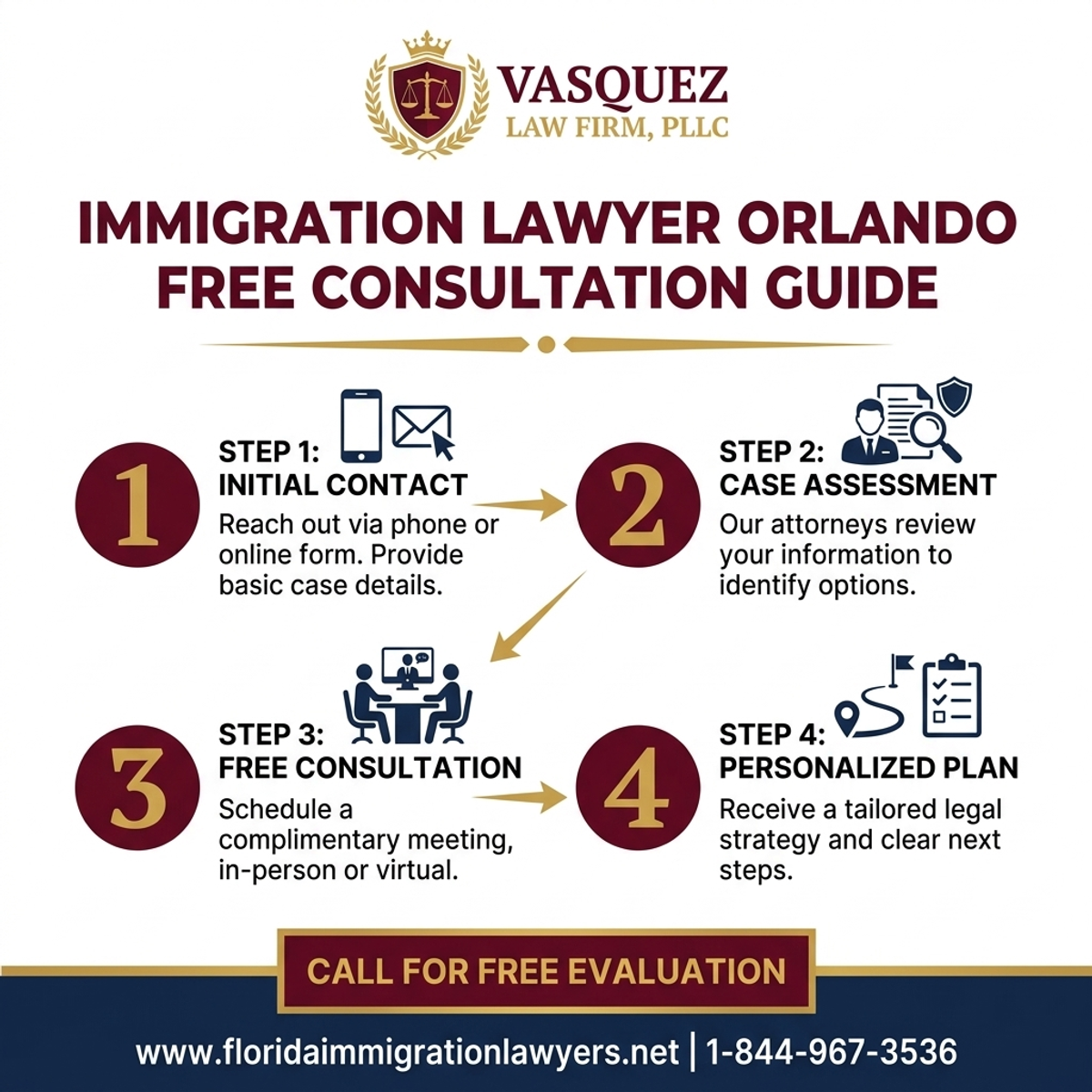
Step-by-Step Process — Immigration Lawyer Orlando Free Consultation Guide
Document Checklist for Residents in Jacksonville, FL
For residents in Jacksonville, creating a checklist can be particularly helpful given the specific local regulations and requirements.
While federal immigration laws apply nationwide, local jurisdictions can have specific nuances, especially concerning proof of residency or access to local resources. Jacksonville, as a major city in Florida, has a diverse immigrant population, and understanding the local context can significantly ease your application process. This includes knowing which local government offices might require specific documentation for ancillary services or state-level benefits.
Moreover, the proximity to various ports of entry and the presence of a significant military population in Northeast Florida can sometimes influence the types of cases seen by local USCIS field offices. Being prepared for any local specificities, often guided by an attorney familiar with the Jacksonville area, is a distinct advantage. Florida Immigration Lawyers are well-versed in both federal and local requirements.
- Local USCIS Office Visits: Know the location and operation times of the nearest USCIS office. The USCIS Field Office in Jacksonville serves residents of Northeast Florida. It's crucial to confirm appointment procedures and specific document requirements before visiting, as walk-ins are often not permitted for certain services.
- Proof of Residency: Utility bills or lease agreements that establish your residence in Florida. Beyond these, a Florida driver's license or state ID, vehicle registration, and school enrollment records for children can further solidify your proof of continuous residency in the state.
- Legal Representation: Consider having an attorney review your documents. An immigration lawyer in Jacksonville can provide invaluable insight into local processing trends, common issues encountered by applicants in the area, and ensure your application package is robust and compliant with all regulations. Call 1-844-YO-PELEO for assistance.
Local Support Resources
Jacksonville offers several resources for immigrants, including legal aid services and community centers that can assist with document preparation and provide translation services.
These local organizations, often non-profits, play a vital role in supporting the immigrant community by offering affordable or free services. They can guide you through form filling, provide certified translations at a reduced cost, and connect you with other essential community services. While these resources are helpful, they are not a substitute for professional legal advice, especially for complex cases.
Additionally, many cultural centers and religious organizations in Jacksonville provide support networks and information sessions for new immigrants, helping them integrate into the community and understand local customs and regulations. Leveraging these resources, alongside the expertise of Florida Immigration Lawyers, creates a comprehensive support system for your immigration journey.
Understanding the Timeline and Processing Expectations
Processing times for immigration documents can vary significantly. Here's a breakdown:
| Stage | Typical Timeframe | Notes |
|---|---|---|
| Initial Submission | 2-4 weeks | Time for USCIS to acknowledge receipt. |
| Biometrics Appointment | 4-8 weeks | Fingerprinting and photo session. |
| Interview Scheduling | 6-12 months | Varies by case type and local office workload. |
| Final Decision | 6-24 months | Dependent on the complexity of the case. |
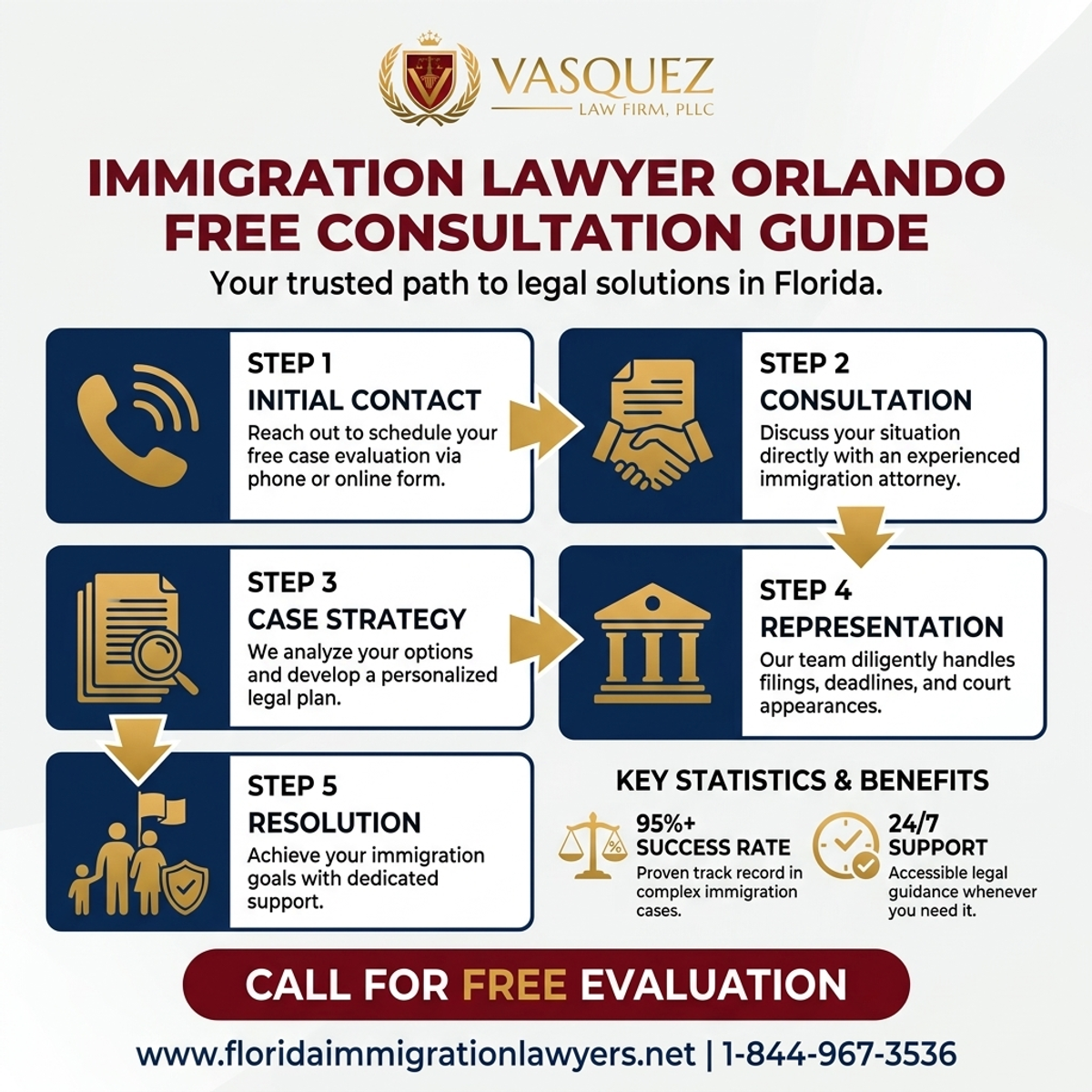
Key Statistics — Immigration Lawyer Orlando Free Consultation Guide
Delays can occur due to incomplete applications or missing documents, making it essential to have a comprehensive checklist.
Several factors beyond incomplete applications can influence processing times, including the volume of applications USCIS receives, changes in policy, and the specific field office handling your case. For example, a complex employment-based petition might take longer than a straightforward family-based one. It’s important to manage expectations and understand that posted processing times are estimates, not guarantees.
To mitigate potential delays, ensure all forms are meticulously filled out, every supporting document is included, and all fees are correct. Proactive communication and prompt responses to any USCIS requests for additional evidence are also crucial. Consulting with Florida Immigration Lawyers can help you stay informed about current processing trends and prepare for any eventuality, minimizing stress during these waiting periods.
How Much Does It Cost to File Immigration Paperwork?
Costs can vary widely depending on the type of application and additional services required. Here’s a general breakdown:
| Item | Typical Fee | Notes |
|---|---|---|
| USCIS Filing Fee | Varies | Check USCIS for current fees. |
| Biometrics Fee | Varies | Typically required for fingerprinting. |
| Attorney Fees | Varies | Consult with an attorney for a quote. |
Always verify current fees as they are subject to change. Additional costs may include translation services or document authentication.
Do not navigate this process alone. Contact Florida Immigration Lawyers today.
Beyond the direct USCIS filing and biometrics fees, applicants should budget for other potential expenses. These can include medical examination fees, which are often mandatory for green card applications, and the cost of obtaining certified copies of foreign documents from your home country. These seemingly minor costs can accumulate, so a comprehensive financial plan is advisable.
For individuals facing financial hardship, USCIS offers fee waivers for certain forms. Eligibility for these waivers is strict and typically requires proof of income below a certain poverty level or receipt of means-tested public benefits. An experienced attorney from Florida Immigration Lawyers can assess your eligibility for a fee waiver and help you prepare the necessary documentation to apply, potentially saving you significant costs.
Common Mistakes to Avoid: USCIS Forms Checklist for Florida Immigration Filings
- Incomplete Forms: Missing information can delay processing. Always double-check every field, even those that seem irrelevant, and ensure all required signatures are present. An incomplete application will almost certainly be rejected or returned, causing significant setbacks.
- Incorrect Fees: Submitting the wrong fee can result in application rejection. USCIS fees change periodically, so always verify the current amount on the official USCIS website before sending your application. Ensure your payment method is correct and funds are available.
- Uncertified Translations: Documents not in English must be certified. Any document not in English must be accompanied by a complete and accurate English translation, certified by a translator who is competent in both languages and fluent to translate, and who has attested in writing that the translation is complete and accurate.
- Expired Documents: Ensure all identification documents are current. Submitting an application with an expired passport, visa, or even a driver's license can lead to immediate rejection or a Request for Evidence (RFE). Always check expiration dates well in advance.
- Not Keeping Copies: Always retain copies of everything you submit. This includes the completed forms, all supporting documents, and proof of mailing. These copies are invaluable for your records, for future reference, or if USCIS requests additional information.
- Ignoring Deadlines: Timely submission is crucial. Missing a deadline for an RFE, an appeal, or an application renewal can have severe consequences, including denial or even deportation proceedings. Mark all deadlines clearly and plan to submit well in advance.
- Overlooking Local Requirements: Some forms and documents may have Florida-specific requirements. While federal law governs immigration, local USCIS offices or state agencies might have specific preferences or additional requests, particularly concerning proof of residency or local background checks. An attorney familiar with Florida's landscape can guide you.
When to Call a Lawyer: USCIS Forms Checklist for Florida Immigration Filings
Consider calling a lawyer if you encounter complex issues such as prior deportations, criminal records, or if your case involves multiple family members. A lawyer can provide guidance on legal strategies and documentation.
Beyond these complex scenarios, a lawyer is also invaluable if you've previously been denied an immigration benefit, have an upcoming interview and need preparation, or are simply overwhelmed by the sheer volume and complexity of the paperwork. Trying to navigate these situations alone can lead to critical errors with long-lasting consequences for your immigration status.
Florida Immigration Lawyers offer services to help you navigate these challenges effectively. Our team can assess your unique situation, identify potential pitfalls, and develop a robust legal strategy tailored to your needs. We provide peace of mind, knowing that your case is handled with the utmost care and professional experience. Don't hesitate to call 1-844-YO-PELEO for a free consultation.
About Florida Immigration Lawyers: USCIS Forms Checklist for Florida Immigration Filings
Florida Immigration Lawyers provide comprehensive immigration services across Florida. Our team is dedicated to assisting immigrants with their legal needs, offering 24/7 support and bilingual consultations. Call 1-844-YO-PELEO or visit our website for more information.
With years of experience and a deep understanding of both federal and state-specific immigration laws, our firm stands ready to advocate for you. We pride ourselves on clear communication, personalized attention, and a commitment to achieving the strongest possible outcomes for our clients. From visa applications to complex deportation defense, we cover a broad spectrum of immigration law.
Our mission is to make the immigration process as straightforward and stress-free as possible for individuals and families throughout Florida. We understand the hopes and anxieties that come with seeking a new life in the U.S., and we are here to be your trusted legal partners every step of the way. Contact us today to learn how we can help you.
Frequently Asked Questions (FAQs): USCIS Forms Checklist for Florida Immigration Filings
Here are some common questions regarding immigration documents and processes:
Q: What if my documents are not in English?
A: Any document submitted to USCIS that is not in English must be accompanied by a complete and accurate English translation. The translator must provide a certification that they are competent to translate from the foreign language into English and that the translation is complete and accurate. This certification should be signed and dated by the translator. Failing to provide a certified translation can lead to delays or rejection of your application.
Q: Can I submit photocopies of my documents?
A: Generally, USCIS prefers that you submit photocopies of original documents unless specifically requested otherwise. However, always keep your original documents safe, as you may need to present them at an interview or if USCIS issues a Request for Evidence (RFE). For certain critical documents like birth certificates or marriage licenses, having certified copies is advisable for your records.
Q: How often do immigration policies change in Florida?
A: While federal immigration policies are set by the U.S. government, state-level policies and their implementation can evolve, sometimes affecting immigrants in Florida. These changes might pertain to state benefits, driver's licenses, or local law enforcement's interaction with federal immigration agencies. Staying informed through reliable sources or consulting Florida Immigration Lawyers ensures you are aware of any relevant updates impacting your status.
Q: What should I do if my application is denied?
A: If your immigration application is denied, it's crucial not to panic. First, carefully review the denial letter to understand the specific reasons. Depending on the reason, you might have options such as filing an appeal, a motion to reopen, or a motion to reconsider, or even refiling the application. It is highly recommended to seek immediate legal counsel from an experienced immigration attorney like Florida Immigration Lawyers to assess your best course of action.
Q: Is it possible to get a fee waiver for USCIS applications?
A: Yes, USCIS offers fee waivers for certain forms if you can demonstrate an inability to pay. Eligibility criteria typically include receiving means-tested public benefits, having an income below 150% of the Federal Poverty Guidelines, or experiencing financial hardship. You must submit Form I-912, Request for Fee Waiver, along with supporting documentation. Consulting with Florida Immigration Lawyers can help determine your eligibility and assist with the application.
Sources and References: USCIS Forms Checklist for Florida Immigration Filings
- U.S. Citizenship and Immigration Services (USCIS)
- Executive Office for Immigration Review (EOIR)
- 8 U.S.C. Chapter 12 - Immigration and Nationality Act
Related services: immigration practice areas, family immigration services, citizenship and naturalization
Do Not Navigate This Process Alone
Our experienced immigration attorneys are ready to fight for you. Get a free, confidential case review today.
Se Habla Español
Or leave your details and we’ll call you:
Free Evaluation in 24 Hours
Or talk to us right now

AI voice assistant — available 24/7
FreeFrequently Asked Questions

William J. Vásquez
Founding Attorney · Vasquez Law Firm
U.S. Air Force veteran and immigration attorney with years of hands-on U.S. immigration experience. J.D., NCCU School of Law. AILA member. Admitted to the 4th, 5th, and 11th Circuit Courts.
Available 24/7 - Free Evaluations
Reviewed for legal accuracy by William J. Vásquez
Licensed in North Carolina; U.S. immigration is federal practice.
Related Legal Services
Our Florida immigration attorneys can help you with immigration practice areas, free immigration consultation and business immigration. Call today at 1-844-YO-PELEO for a free case review.
Related Links
Related Topics
Free Legal Case Review
Discuss your case with our experienced attorneys. We're available 24/7.
Se Habla Español - Estamos aquí para ayudarle.
Related Articles
EB-5 Investor Green Card in Florida: A 2026 Guide
Explore how to obtain an EB-5 investor green card in Florida. Learn about the investment requirements, processes, and benefits of participating in this program. Discover how Florida's economic landscape can be an ideal setting for your investment. Contact Florida Immigration Lawyers for a free case review.
Certificate of Eligibility for Expungement in Florida 2026
For non-U.S. citizens in Florida, understanding how a state expungement impacts immigration status is critical. A certificate of eligibility for expungement in Florida allows a criminal record to be sealed or expunged under state law. However, federal immigration agencies often disregard such state-level relief, still considering the original criminal offense as a conviction for immigration purposes. This can have severe implications for visa applications, green card eligibility, naturalization, and even lead to deportation. This guide clarifies the Florida expungement process, its limited effect on federal immigration law, and key steps to protect your status in 2026. Learn about common mistakes, required documents, timelines, and when to seek expert legal counsel from Florida Immigration Lawyers to navigate these complex issues effectively.
Immigration Lawyer Orlando Free Consultation in Florida
For individuals and families in Orlando, Florida, navigating the complexities of U.S. immigration law requires expert guidance. An immigration lawyer in Orlando offers crucial support for everything from visa applications and green card processes to naturalization and deportation defense. This comprehensive guide details what a free consultation covers, providing a step-by-step overview of immigration pathways, essential document checklists, and expected timelines in 2026. We also highlight common mistakes to avoid, discuss the critical role of legal counsel in deportation and asylum cases, and explain why choosing a local Orlando immigration attorney is beneficial. Florida Immigration Lawyers is dedicated to serving the diverse community of Orlando with compassionate, effective legal solutions, ensuring you receive personalized advice and robust representation for a successful immigration journey.
Immigration Interview Preparation Florida 2026 Guide
Facing an immigration interview in Florida? This comprehensive guide offers essential 2026 USCIS interview tips for green card and naturalization applicants. Learn how to meticulously prepare your documents, understand the typical timelines, and avoid common mistakes that could jeopardize your case. We cover what to expect at the Orlando USCIS Field Office, provide a detailed document checklist, and explain the various costs involved in the process. With insights into naturalization specifics and when to seek legal counsel, Florida Immigration Lawyers helps you approach your interview with confidence. Our firm is dedicated to empowering immigrants across Florida with the knowledge and support needed for a successful outcome. Get a free case review today.