Immigration Rights: Know Your Protections in Florida 2026
Understanding your immigration rights in Florida is paramount for your protection and peace of mind. This comprehensive guide details your core constitutional protections, including the right to remain silent and the right to an attorney, regardless of your immigration status. Learn essential strategies for interacting with ICE, what vital documents to carry, and a step-by-step overview of the immigration detention and removal process in Florida. We also cover common mistakes to avoid and when it's crucial to seek legal counsel. Florida Immigration Lawyers are dedicated to empowering you with the knowledge and support needed to navigate complex immigration challenges. Our firm offers free case reviews and serves clients across the entire state, ensuring you have access to experienced legal representation when you need it most.
Knowing your immigration rights in Florida is crucial for protecting yourself and your family. As of 2026, immigrants in Florida, regardless of status, possess fundamental constitutional rights, including the right to remain silent, the right to an attorney, and protection against unlawful searches. It is vital to understand how to interact with immigration authorities like ICE, what identification to carry, and the process if you are detained. Always seek legal counsel from an experienced immigration lawyer to navigate complex situations and ensure your rights are upheld.
- You have the right to remain silent and do not have to answer questions about your immigration status.
- You have the right to speak with an attorney before answering any questions or signing documents.
- Do not open your door to ICE without a warrant signed by a judge.
- Always carry proper identification and documentation of your immigration status.
- If detained, ask to speak with your lawyer and do not lie or present false documents.
Navigating the complex landscape of immigration law can feel overwhelming, especially when faced with uncertainty about your legal standing. In Florida, a state with a vibrant and diverse immigrant community, understanding your immigration rights is not just beneficial—it's essential for your safety and well-being. Whether you are a permanent resident, a visa holder, or undocumented, you possess fundamental protections under U.S. law. Knowing these rights empowers you to confidently respond to interactions with law enforcement and immigration officials, ensuring you are not taken advantage of.
This comprehensive guide from Florida Immigration Lawyers is designed to help you know your rights in Florida for 2026. We will delve into your core protections, provide actionable advice on how to interact with Immigration and Customs Enforcement (ICE), outline crucial documents you should always have ready, and explain the detention and removal process. Our goal is to equip you with the knowledge needed to protect yourself and your loved ones. If you find yourself in a challenging situation or need personalized legal guidance, do not hesitate. Call Florida Immigration Lawyers at 1-844-YO-PELEO for a free case review today.
What Are Your Core Immigration Rights in Florida?
As of 2026, all individuals present in the United States, including non-citizens, are afforded certain constitutional rights. These fundamental protections apply to you no matter your immigration status, ensuring a baseline of fairness and due process. Understanding these core immigration rights is your first line of defense against potential abuses or misunderstandings during interactions with authorities in Florida.
Your rights include the Fifth Amendment's protection against self-incrimination, meaning you have the right to remain silent and do not have to answer questions about your citizenship or immigration status. You also have the Sixth Amendment right to an attorney, which is critical if you are detained or facing removal proceedings. Furthermore, the Fourth Amendment protects you from unreasonable searches and seizures, requiring law enforcement, including ICE, to have a warrant signed by a judge to enter your home without your permission. It is crucial to remember that you should never lie to a government official or present false documents, as this can lead to severe penalties. In Florida, local law enforcement agencies may have agreements with ICE, such as 287(g) programs, which allow them to perform certain immigration enforcement functions. Therefore, knowing your rights when interacting with any law enforcement officer is paramount. Always state clearly that you wish to remain silent and want to speak with an attorney.
How Should You Interact with Immigration and Customs Enforcement (ICE) in Florida?
Interacting with ICE can be a stressful experience, but knowing how to respond appropriately can significantly impact the outcome. If ICE agents approach you in Florida, it is essential to remain calm, assert your rights, and avoid making statements or signing documents without legal counsel. Your responses during these encounters are critical, and understanding the proper protocol can help protect your future.
If ICE agents come to your home, do not open the door unless they present a warrant signed by a judge. Ask them to slide the warrant under the door or hold it up to a window for you to inspect. A warrant for arrest (Form I-200) or a warrant for search (Form I-205) is required for them to enter your home without your consent. If they do not have a judicial warrant, you can keep your door closed. If you are stopped in a public place, you have the right to remain silent. You can say, "I choose to remain silent and wish to speak with an attorney." Do not resist arrest, but you can state that you do not consent to a search. If you are arrested, ask to speak with your lawyer immediately. Remember the name and badge number of the officers if possible. Florida has several ICE field offices, including Miami, Tampa, and Orlando, which oversee enforcement activities across the state. Understanding the procedures they follow, as outlined by agencies like USCIS and the Executive Office for Immigration Review (EOIR), can help you prepare for these encounters.
Essential Documents to Carry and Have Accessible in Florida
Having your critical documents readily available and organized is a proactive step that can save you significant stress and potential legal complications in Florida. In any interaction with law enforcement or immigration officials, demonstrating your identity and legal status quickly and accurately can be crucial. Misplacing or failing to produce necessary identification can lead to prolonged questioning or even detention.
It is strongly advised to carry a valid form of identification, such as a state driver's license, a non-driver ID, or your passport. Crucially, if you are a non-citizen, you should carry proof of your immigration status, such as your Permanent Resident Card (green card), Employment Authorization Document (EAD), or valid visa with your I-94 arrival/departure record. Never carry false documents or documents belonging to someone else. Keep original copies of all your important immigration applications, petitions, and legal documents in a secure, accessible place at home, and carry only copies with you, unless the original is specifically required (like your green card). Also, have a list of emergency contacts, including your immigration attorney's phone number, readily available. In Central Florida, including Orlando, having these documents in order is a simple yet effective way to exercise your know your rights principle. This preparation ensures that you can quickly and clearly communicate your status if needed, minimizing potential delays or misunderstandings.
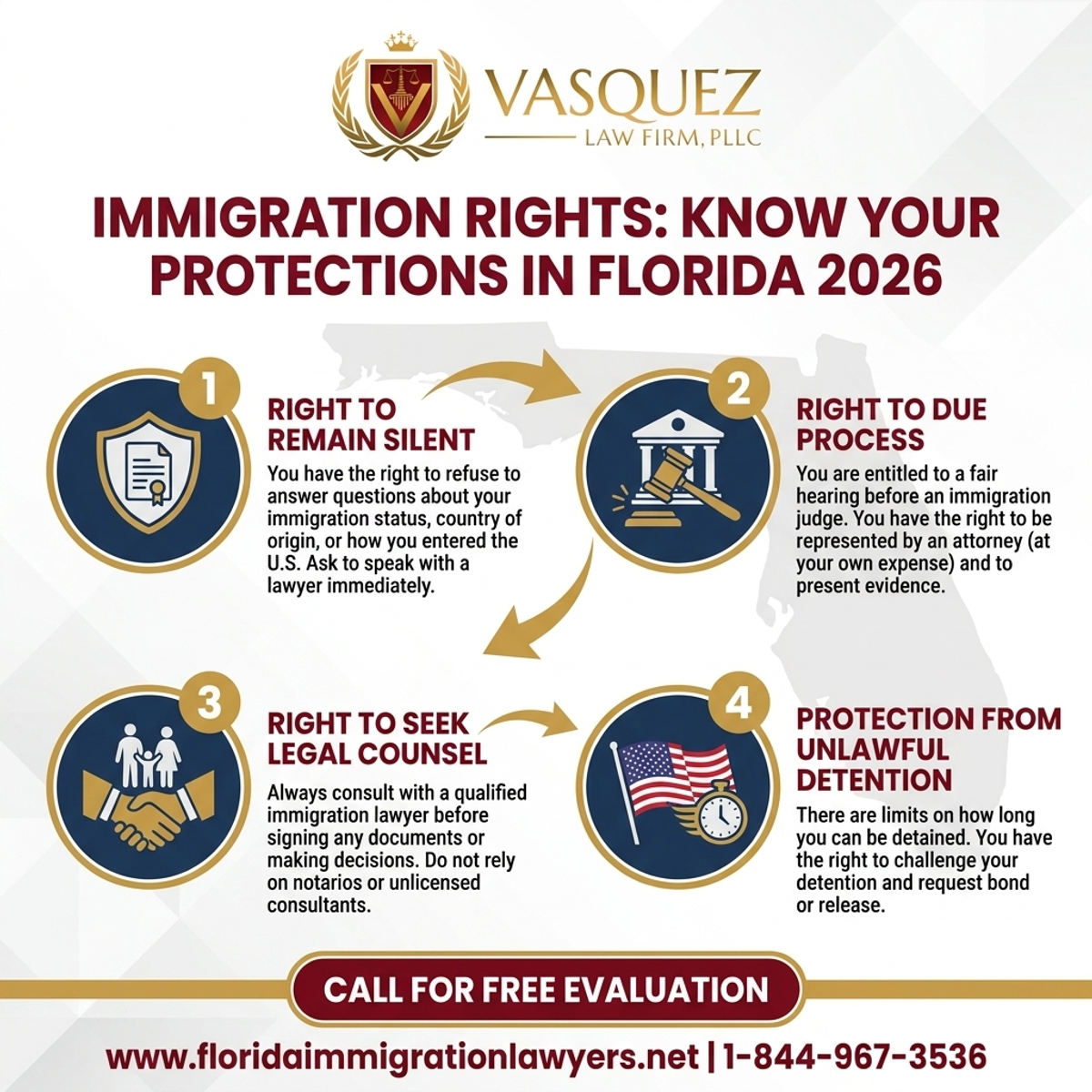
Step-by-Step Process — Immigration Rights: Know Your Protections in Florida 2026
Document Checklist for Immigrants in Florida:
- Valid Government-Issued Photo ID (e.g., Florida Driver's License/ID, Passport from country of origin).
- Original Permanent Resident Card (Green Card) for lawful permanent residents.
- Employment Authorization Document (EAD) for those authorized to work.
- Valid Visa and I-94 Arrival/Departure Record for non-immigrants.
- Copies of all submitted immigration applications and petitions (e.g., I-130, I-485, I-765).
- Birth certificates and marriage certificates, if applicable.
- Contact information for your immigration attorney and trusted family members.
- Medical records or proof of medical conditions, especially if requiring specific care.
Understanding the Immigration Detention and Removal Process in Florida
If you or a loved one are detained by immigration authorities in Florida, understanding the subsequent process is vital for effective legal defense. The detention and removal process is a sequence of legal steps that can be complex and intimidating. Knowing what to expect allows you to prepare for each stage and make informed decisions, especially regarding your right to legal representation. This process is governed by specific federal laws and regulations, primarily the Immigration and Nationality Act (INA).
Upon arrest, individuals are typically taken to an ICE detention facility, such as the Krome Service Processing Center in Miami-Dade County or Glades County Detention Center. Here, they may be interviewed by an asylum officer or an ICE agent. It is crucial to request an attorney at this stage. Following initial processing, an individual may be issued a Notice to Appear (NTA), which formally begins removal proceedings in immigration court. A bond hearing may be scheduled, where an immigration judge determines if the detained individual can be released on bond. If bond is granted, paying it allows release while the case proceeds. If not, the individual remains detained. The case then proceeds to Master Calendar Hearings and Individual Hearings before an immigration judge at courts like the Orlando Immigration Court or Miami Immigration Court, where evidence is presented, and eligibility for relief from removal is argued. An appeal to the Board of Immigration Appeals (BIA) is possible if the judge's decision is unfavorable. Throughout this process, consistent legal advice is indispensable for navigating the intricacies of 8 U.S.C. 1229a, which outlines removal proceedings.
Step-by-Step Guide to the Detention and Removal Process:
- Arrest and Detention: An individual is apprehended by ICE or other law enforcement and transported to an immigration detention facility.
- Initial Interview/Processing: Detainees are processed, and an initial interview may occur. It is critical to assert your right to remain silent and request an attorney.
- Notice to Appear (NTA): ICE issues an NTA, formally charging the individual with removability and initiating court proceedings. This document specifies the reasons for removal.
- Bond Hearing (if applicable): An immigration judge reviews the case to determine if the individual can be released on bond, considering factors like flight risk and danger to the community.
- Master Calendar Hearing: The first appearance before an immigration judge, where charges are admitted or denied, and forms of relief are identified.
- Individual Hearing (Merits Hearing): A full hearing where evidence is presented, witnesses testify, and arguments are made regarding eligibility for relief from removal.
- Decision and Appeal: The immigration judge issues a decision. If unfavorable, an appeal can be filed with the Board of Immigration Appeals (BIA) and potentially federal courts.
Typical Timeline for Immigration Detention and Removal Process:
| Stage | Typical Timeframe | Notes |
|---|---|---|
| Arrest to Initial Processing | 24-72 hours | Detainee transported to facility, basic intake. |
| NTA Issuance | Days to weeks after arrest | Formal charges for removal proceedings begin. |
| Bond Hearing | Within 1-2 weeks of NTA/detention | Judge determines eligibility for release on bond. |
| Master Calendar Hearing | Weeks to months after NTA | Initial court appearance, setting the stage for the case. |
| Individual Hearing | Months to years after Master Calendar | Full evidentiary hearing, often significantly delayed due to court backlogs. |
| BIA Appeal | 6-12 months | If filed, decision from the Board of Immigration Appeals. |
Navigating Legal Costs: Attorney Fees and Bond in Florida Immigration Cases
Understanding the potential financial aspects of an immigration case is a critical part of preparing for the journey, especially when asserting your legal rights in Florida. While the thought of legal expenses can be daunting, viewing them as an investment in your future and freedom can help. The costs associated with immigration proceedings typically fall into two main categories: attorney fees for legal representation and immigration bonds for release from detention. These fees are not fixed and can vary significantly based on the complexity of the case, the experience of the attorney, and specific court decisions.
Attorney fees are generally based on the type of service provided, whether it's a consultation, assistance with an application, or full representation in removal proceedings. For complex cases involving court appearances in Orlando or Miami Immigration Courts, retainers can range widely. An immigration bond, if granted by an immigration judge, is a sum of money paid to the Department of Homeland Security (DHS) to ensure an individual's appearance at future court dates. Bond amounts in Florida can vary from a few thousand dollars to tens of thousands, depending on factors such as criminal history, ties to the community, and flight risk. While these costs represent a significant commitment, the value of experienced legal representation in navigating the intricate legal system and potentially securing a favorable outcome is immeasurable. Discussing these costs transparently with your attorney is crucial for financial planning.
Typical Cost Factors in Florida Immigration Cases:
| Item | Typical Fee Range (Approximate) | Notes |
|---|---|---|
| Initial Consultation | $100 - $300 | Many firms offer free consultations, like Florida Immigration Lawyers. |
| Application Preparation (e.g., Green Card, EAD) | $1,500 - $5,000+ | Varies by application complexity and required supporting documents. USCIS filing fees are separate. |
| Removal Defense (Court Representation) | $5,000 - $15,000+ | Highly dependent on case complexity, number of hearings, and type of relief sought. |
| Immigration Bond | $1,500 - $25,000+ | Set by an immigration judge; depends on flight risk, criminal history, and community ties. |
| USCIS Filing Fees | Varies by form (e.g., I-485, I-765) | These are government fees, separate from attorney fees. Subject to change by USCIS. |
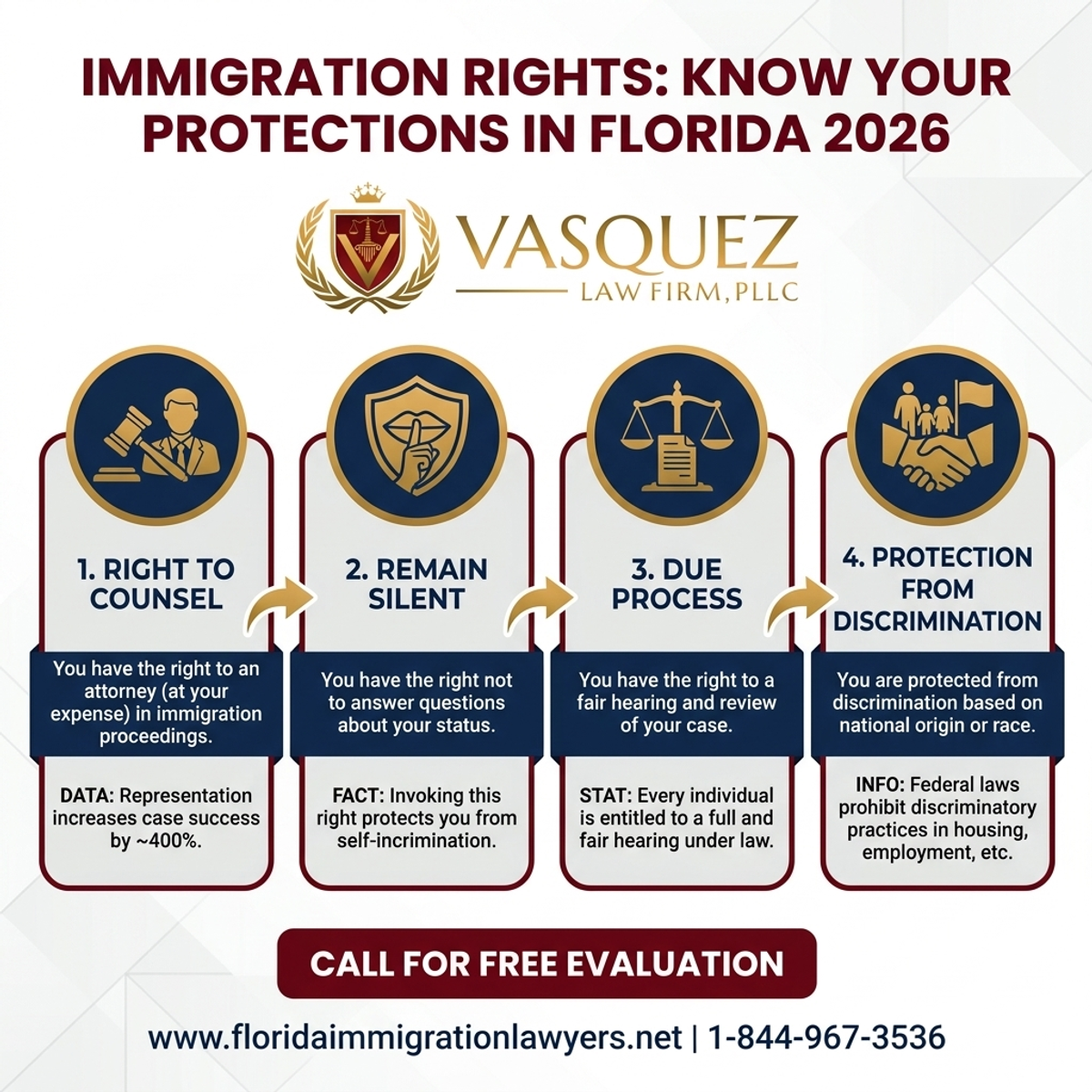
Key Statistics — Immigration Rights: Know Your Protections in Florida 2026
Do not navigate this process alone. Contact Florida Immigration Lawyers today to understand your options and secure legal representation for your immigration case.
Common Mistakes to Avoid When Asserting Your Immigration Rights
Navigating immigration matters in Florida is fraught with potential pitfalls. Even seemingly small errors can have significant, long-lasting consequences for your case and future. Being aware of these common mistakes is as important as knowing your rights, as it allows you to proactively avoid actions that could jeopardize your immigration status or legal proceedings.
- Lying to Immigration Officials: Providing false information or misrepresenting facts to ICE or USCIS is a serious offense that can lead to criminal charges, denial of benefits, and even permanent bars from the U.S. Always be truthful, even if it means asserting your right to remain silent.
- Signing Documents You Don't Understand: Never sign any document presented by an immigration official without fully understanding its contents and implications. Always ask for an explanation and, if possible, consult with an attorney first.
- Not Carrying Proper Identification: Failing to carry valid proof of identity and immigration status can lead to prolonged detention or complications during encounters with law enforcement. Keep copies of vital documents accessible.
- Resisting Arrest: While you have rights, actively resisting arrest can lead to additional criminal charges and complicate your immigration case. Comply physically, but verbally assert your rights to silence and an attorney.
- Missing Court Dates: Failing to appear for any scheduled immigration court hearing can result in a removal order issued in absentia, making it extremely difficult to reverse. Always keep track of all court dates.
- Not Seeking Legal Advice: Attempting to navigate the complex immigration system without the guidance of an experienced attorney can lead to missed deadlines, errors in applications, or failure to present a strong case.
- Traveling Without Necessary Documents: Traveling internationally or even domestically, especially near borders or airports, without all required travel and immigration documents can lead to delays, questioning, or detention.
- Overstaying Your Visa: Remaining in the U.S. beyond the authorized period of your visa can trigger severe penalties, including bars from re-entry, and complicate future immigration attempts.
- Posting Sensitive Information on Social Media: Information shared on social media can be used by immigration authorities. Be mindful of what you post, especially regarding your travel, status, or activities.
- Ignoring Notices from USCIS or ICE: Failing to respond to official notices or requests for evidence from immigration agencies can lead to the denial of your application or other adverse actions.
When to Call a Florida Immigration Lawyer
Knowing when to seek professional legal help is one of the most critical aspects of protecting your immigration rights. While this guide provides general information, every immigration case is unique and fraught with specific legal nuances. Attempting to manage complex immigration issues on your own can lead to irreversible mistakes, missed opportunities, or unfavorable outcomes. Florida Immigration Lawyers are here to provide the guidance you need.
You should immediately contact an immigration attorney if you or a family member are arrested or detained by ICE or any law enforcement agency. If you receive a Notice to Appear (NTA) in immigration court, or any official notice from USCIS or ICE that you do not fully understand, it is imperative to seek legal counsel. Other scenarios that warrant immediate attorney consultation include facing deportation or removal proceedings, having a previous deportation order, applying for asylum or other forms of relief, having a criminal record, or experiencing a denial of an immigration benefit. Our experienced attorneys at Florida Immigration Lawyers can assess your situation, explain your options, represent you in court, and help you prepare all necessary documents and arguments. We serve clients across all of Florida, including Central Florida and Orlando, ensuring dedicated support through every stage of your immigration journey.
About Florida Immigration Lawyers
Florida Immigration Lawyers is an immigration law firm dedicated to serving the diverse immigrant communities across the entire state of Florida. With a deep understanding of federal immigration laws and their application in local contexts, our compassionate and highly skilled attorneys are committed to providing exceptional legal representation and guidance. We focus on a wide range of immigration services, including family-based petitions, employment visas, deportation defense, asylum claims, naturalization, and DACA renewals.
Our firm prides itself on a client-centered approach, ensuring that every individual receives personalized attention and strategic advocacy tailored to their unique circumstances. We understand the anxieties and challenges that come with immigration processes, and we strive to offer clear communication, transparent processes, and unwavering support. Available 24/7, Florida Immigration Lawyers offers free case reviews to help you understand your options without financial commitment. Our bilingual team is ready to assist you. To learn more about our services or to schedule a free consultation, contact us today at 1-844-YO-PELEO. We are here to help protect your rights and achieve your immigration goals.
Sources and References
- U.S. Citizenship and Immigration Services (USCIS)
- Executive Office for Immigration Review (EOIR)
- U.S. Department of State
- 8 U.S.C. Chapter 12 - Immigration and Nationality Act (INA)
- 8 U.S.C. § 1357 - Powers of Immigration Officers and Employees
- 8 U.S.C. § 1229a - Removal Proceedings
- 8 CFR Part 287 - Field Operations
- U.S. Constitution - Fifth Amendment (Due Process, Self-Incrimination)
- U.S. Constitution - Sixth Amendment (Right to Counsel)
- U.S. Constitution - Fourth Amendment (Search and Seizure)
Related services: asylum and refugee protection, immigration waivers, humanitarian protection programs, DACA renewal and applications.
This article provides general legal information and is not intended as legal advice. Every case is unique, and outcomes depend on specific facts and circumstances. Contact an attorney for advice about your particular situation.
Protect your future and ensure your rights are defended. Contact Florida Immigration Lawyers today at 1-844-YO-PELEO for a free, confidential case review. Se Habla Espanol - Estamos aqui para ayudarle.
If you need legal assistance, learn more about learn about deportation defense options, or call us at 1-844-YO-PELEO for a free case review.
Do Not Navigate This Process Alone
Our experienced immigration attorneys are ready to fight for you. Get a free, confidential case review today.
Se Habla Español
Or leave your details and we’ll call you:
Free Evaluation in 24 Hours
Or talk to us right now

AI voice assistant — available 24/7
FreeFrequently Asked Questions

William J. Vásquez
Founding Attorney · Vasquez Law Firm
U.S. Air Force veteran and immigration attorney with years of hands-on U.S. immigration experience. J.D., NCCU School of Law. AILA member. Admitted to the 4th, 5th, and 11th Circuit Courts.
Available 24/7 - Free Evaluations
Reviewed for legal accuracy by William J. Vásquez
Licensed in North Carolina; U.S. immigration is federal practice.
Related Legal Services
Our Florida immigration attorneys can help you with business immigration, deportation defense and family immigration services. Call today at 1-844-YO-PELEO for a free case review.
Related Links
Related Topics
Free Legal Case Review
Discuss your case with our experienced attorneys. We're available 24/7.
Se Habla Español - Estamos aquí para ayudarle.
Related Articles
Certificate of Eligibility for Expungement in Florida 2026
For non-U.S. citizens in Florida, understanding how a state expungement impacts immigration status is critical. A certificate of eligibility for expungement in Florida allows a criminal record to be sealed or expunged under state law. However, federal immigration agencies often disregard such state-level relief, still considering the original criminal offense as a conviction for immigration purposes. This can have severe implications for visa applications, green card eligibility, naturalization, and even lead to deportation. This guide clarifies the Florida expungement process, its limited effect on federal immigration law, and key steps to protect your status in 2026. Learn about common mistakes, required documents, timelines, and when to seek expert legal counsel from Florida Immigration Lawyers to navigate these complex issues effectively.
Immigration Lawyer Orlando Free Consultation in Florida
For individuals and families in Orlando, Florida, navigating the complexities of U.S. immigration law requires expert guidance. An immigration lawyer in Orlando offers crucial support for everything from visa applications and green card processes to naturalization and deportation defense. This comprehensive guide details what a free consultation covers, providing a step-by-step overview of immigration pathways, essential document checklists, and expected timelines in 2026. We also highlight common mistakes to avoid, discuss the critical role of legal counsel in deportation and asylum cases, and explain why choosing a local Orlando immigration attorney is beneficial. Florida Immigration Lawyers is dedicated to serving the diverse community of Orlando with compassionate, effective legal solutions, ensuring you receive personalized advice and robust representation for a successful immigration journey.
Immigration Attorney Florida: Your Guide for 2026
Navigating the U.S. immigration system is complex, especially for employment visas. Learn how an immigration attorney in Florida can simplify the process and help you succeed in your immigration journey. Discover the steps, common mistakes, and the importance of professional legal guidance. Contact Florida Immigration Lawyers for a free case review.
H-4 EAD Work Permit Rules for Spouses in Florida
Explore how H-4 EAD work permits enable spouses of H-1B visa holders in Florida to gain work authorization. Learn about the application process, eligibility, and common mistakes to avoid. Florida Immigration Lawyers offer expert guidance to ensure a smooth process.