Why Is Form N-600 Taking So Long? Florida Delays Explained
Delays with Form N-600 can be frustrating. Learn about common causes such as incomplete documentation and USCIS backlogs, and how to resolve them, especially in Florida. Contact Florida Immigration Lawyers for assistance.
Form N-600 delays can be frustrating, particularly when waiting for a Certificate of Citizenship for your child in Florida. Common causes include incomplete documentation, USCIS backlogs, and verification processes. It is essential to ensure all forms are correctly filled and supported by necessary documents to avoid delays. Additionally, understanding current USCIS processing times and contacting professional immigration lawyers in Florida can help navigate these challenges.
- Ensure all documents are complete and accurate
- Understand USCIS processing timelines
- Seek professional legal assistance if needed
Introduction
Imagine applying for a Certificate of Citizenship for your child in Kissimmee, Florida, only to find the process stalled. The delays associated with Form N-600 can be perplexing, especially when the stakes are high for your family's future. This article will guide you through the common causes of these delays and provide practical advice for navigating the USCIS system in Florida.
Obtaining a Certificate of Citizenship is more than just acquiring a document; it's about formally recognizing your child's identity and securing their rights and opportunities as a U.S. citizen. This certificate serves as definitive proof of citizenship, enabling them to apply for a U.S. passport, register to vote upon turning 18, and access various federal benefits and protections. Delays in this crucial process can create anxiety and uncertainty for families, impacting future plans and educational opportunities.
Florida, with its diverse population and vibrant immigrant communities, often sees a high volume of immigration applications. This makes understanding the nuances of the USCIS system and potential local processing variations particularly important for residents. Navigating the federal bureaucracy alone can be overwhelming, which is why guidance is often indispensable. Learn about the steps involved in filing Form N-600, potential pitfalls, and how to expedite the process. If you're facing delays, call Florida Immigration Lawyers at 1-844-YO-PELEO for a free consultation.
What Causes Delays in Form N-600 Processing?
As of 2026, delays for Form N-600, used to obtain a Certificate of Citizenship, are often due to incomplete applications, document verification, and USCIS backlogs.
1. **Incomplete Documentation**: Missing or incorrect information can cause significant delays. Ensure all required sections are filled out and supported by proper documents.
For instance, submitting an expired version of Form N-600 or failing to include certified copies of birth certificates and marriage licenses are frequent missteps. Even minor omissions, like a missing signature or an unanswered question, can lead to the application being rejected or significantly delayed, requiring you to resubmit or provide additional information. Meticulous attention to detail and adherence to the latest USCIS instructions are paramount to avoid these common pitfalls.
2. **Verification Processes**: The USCIS may take additional time to verify the authenticity of submitted documents, especially if there are discrepancies.
USCIS conducts thorough background checks and verifies the authenticity of every document, including birth records, marriage certificates, and previous immigration history. This process involves cross-referencing information with other government agencies, which can take considerable time. Any discrepancies, even minor ones, between your submitted documents and government records can trigger further investigation, extending the processing period and potentially requiring additional evidence or an interview.
3. **USCIS Backlogs**: High volumes of applications can lead to slower processing times. Keeping abreast of current USCIS timelines can help set realistic expectations.
The sheer volume of applications submitted nationwide, coupled with fluctuating staffing levels and policy shifts within USCIS, often creates significant backlogs. These systemic issues mean that even perfectly prepared applications can experience delays beyond the published processing times. Staying informed about the current processing times for the specific service center handling N-600 applications is crucial for setting realistic expectations, particularly for Florida residents.
Another significant cause of delays is the issuance of a Request for Evidence (RFE) or, in more serious cases, a Notice of Intent to Deny (NOID). An RFE indicates that USCIS requires more information or clarification on your submitted documents or eligibility. Responding comprehensively and promptly to an RFE is critical, as an inadequate response can further prolong the process or even lead to denial. Similarly, a NOID signals that USCIS is considering denying your application and provides a final opportunity to present your case.
The complexity of a family's immigration history can also contribute to N-600 delays. Cases involving adoption, children born out of wedlock, situations where parents naturalized after the child's birth but before they turned 18, or scenarios with unique residency requirements often require more extensive review. These intricate situations may necessitate additional documentation or an interview to clarify eligibility, adding layers of scrutiny and time to the process. Florida residents, particularly those in Kissimmee, should remain vigilant about these common issues and consult with legal experts as needed.
How to Expedite Form N-600 Processing?
To potentially expedite your Form N-600 processing, consider the following steps:
- **Ensure Complete Applications**: Double-check all forms and documents to ensure they are complete and accurate before submission.
- **Track Application Status**: Use the USCIS online tools to monitor your application's progress and respond promptly to any requests for additional information.
- **Consult with an Attorney**: Engaging with an immigration lawyer can help identify any potential issues and provide strategic advice to avoid delays.
Before submitting Form N-600, meticulously review every section and ensure all questions are answered truthfully and accurately. Utilize the USCIS checklist for Form N-600 and consider having a qualified immigration professional review your application package. Remember to include certified translations for any documents not in English, and ensure all copies are clear and legible. This proactive approach significantly reduces the chance of an RFE or outright rejection, which are major sources of delay.
Leverage the USCIS online case status tool by entering your receipt number to monitor your application's progress. Sign up for email and text updates to receive notifications about any status changes. If your application falls outside the normal processing times, you can submit an e-Request or contact the USCIS Contact Center to inquire about its status. Promptly responding to any USCIS communications, such as appointment notices or RFEs, is vital to keeping your application moving forward.
An experienced immigration lawyer can be an invaluable asset in navigating the N-600 process. They can help you meticulously prepare your application, ensure all supporting documents are correctly assembled, and strategically respond to any RFEs or NOIDs. Furthermore, an attorney can communicate directly with USCIS on your behalf, providing legal arguments and clarification that may help resolve issues more quickly. For those in Florida, Florida Immigration Lawyers can offer guidance to streamline your application and address potential delays.
While USCIS does have an expedite request process, it is typically reserved for extreme circumstances such as severe financial loss, urgent humanitarian reasons, or national interest concerns. Form N-600 applications rarely meet these stringent criteria, as the Certificate of Citizenship is generally not considered an urgent benefit. However, if you believe your situation warrants an expedite, consulting with an attorney from Florida Immigration Lawyers can help determine if you have a viable case and assist in preparing a compelling request.
Submitting a well-organized application package can also subtly contribute to faster processing. Use cover letters to clearly list all submitted documents, separate sections with tabs, and ensure everything is neatly presented. While this won't bypass systemic backlogs, it can make the review process smoother for USCIS officers, potentially preventing minor administrative delays and demonstrating your diligence. These proactive measures can reduce the possibility of errors and expedite the process.
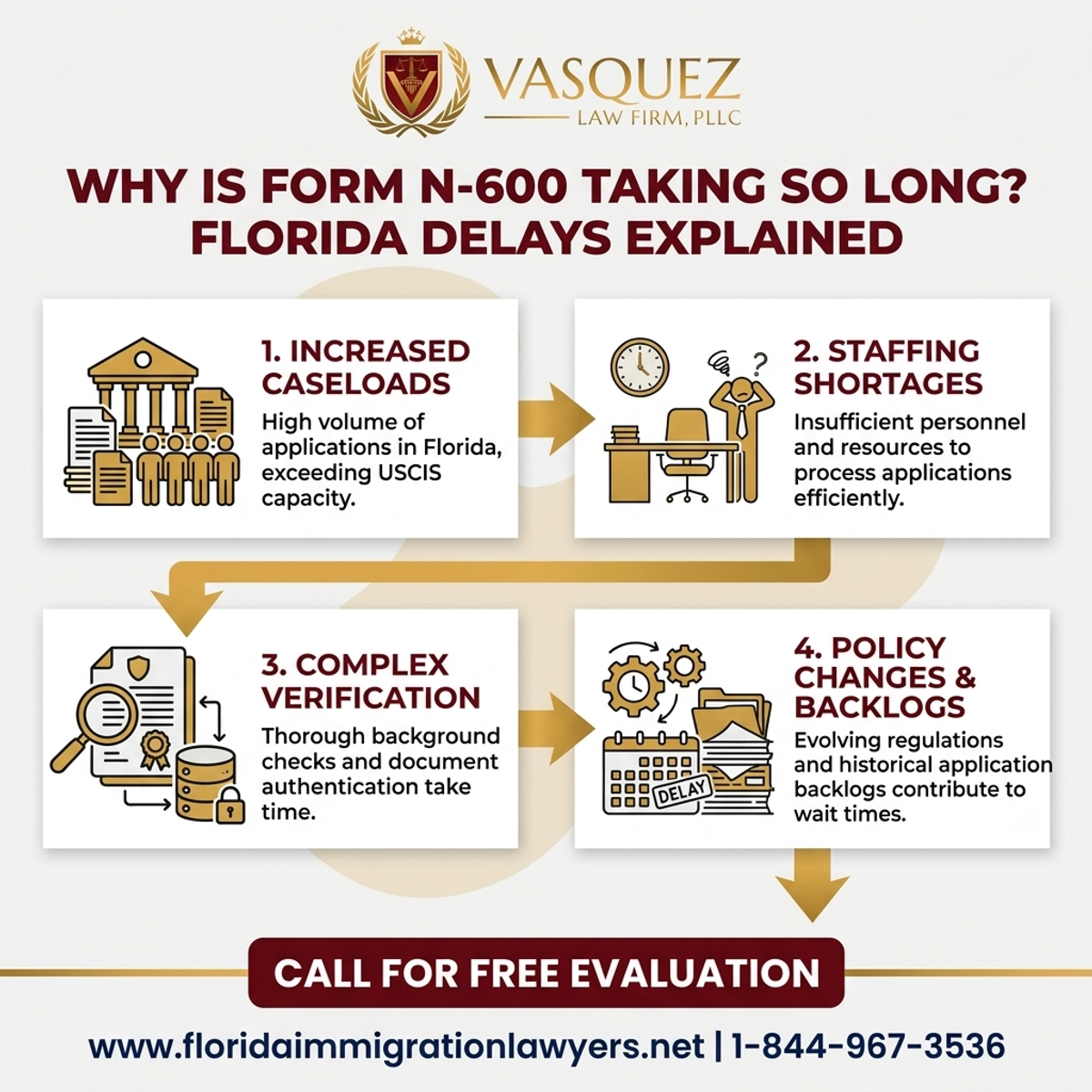
Step-by-Step Process — Why Is Form N-600 Taking So Long? Florida Delays Explained
Required Documents for Form N-600
When filing Form N-600 in Florida, ensure you have the following documents:
- Child's birth certificate
- Proof of parent's citizenship
- Marriage certificate of parents (if applicable)
- Child's permanent resident card
You must provide your child's original birth certificate or a certified copy from the issuing authority. If the birth certificate is not in English, a complete and accurate certified translation is mandatory. This document establishes the child's identity and parentage, which are foundational to their citizenship claim. Ensure all names, dates, and places match other submitted documents to avoid discrepancies that could lead to delays.
Evidence of the U.S. citizen parent's citizenship is paramount. This can include a U.S. birth certificate, a Certificate of Naturalization, a Certificate of Citizenship (N-550 or N-560), a Consular Report of Birth Abroad (CRBA), or a valid U.S. passport. If both parents are U.S. citizens, documentation for both should be provided. The date the parent became a U.S. citizen is crucial for determining the child's eligibility, especially for automatic acquisition of citizenship.
If the U.S. citizen parent was married to the child's other parent, a certified copy of the marriage certificate is required. If either parent has been married previously, you must also provide evidence of the termination of all prior marriages (e.g., divorce decrees, annulment decrees, or death certificates). These documents establish the legal relationship between the parents and the child, which is often a key factor in automatic citizenship claims under the Immigration and Nationality Act.
If your child is a lawful permanent resident (LPR) and acquired citizenship automatically through a U.S. citizen parent, you must include a copy of their Permanent Resident Card (Form I-551). This card serves as proof of their LPR status, which is a prerequisite for automatic acquisition of citizenship under certain sections of the Immigration and Nationality Act (INA). Double-checking these documents against the USCIS requirements can prevent unnecessary delays.
Depending on the specifics of your case, additional documents might be necessary. These could include adoption decrees (if the child was adopted), evidence of legal and physical custody by the U.S. citizen parent, or affidavits from individuals who can attest to critical facts. For children born abroad who acquired citizenship, proof of the U.S. citizen parent's physical presence in the U.S. for a specified period prior to the child's birth may be required. Always refer to the N-600 instructions for a complete list tailored to different scenarios.
It is critical to remember that all foreign language documents must be accompanied by a complete English translation certified by the translator as accurate and competent. Furthermore, while you generally submit copies of supporting documents, USCIS may request to see original documents at an interview. Always keep your original documents safe and readily accessible, and consider consulting Florida Immigration Lawyers for a comprehensive document review.
Typical Processing Timeline for Form N-600
Understanding the typical timeline for processing Form N-600 can help manage expectations:
| Stage | Typical Timeframe | Notes |
|---|---|---|
| Initial Submission | 1-2 months | Includes receipt notice |
| Biometric Services | 3-6 months | Appointment scheduling |
| Final Decision | 6-12 months | Outcome notification |
After you mail your Form N-600 application to the USCIS Lockbox, you should receive a receipt notice (Form I-797C, Notice of Action) within 1-2 months. This notice confirms that USCIS has received your application and provides a receipt number, which is essential for tracking your case online. At this stage, you can create an online account with USCIS if you haven't already, linking your case to receive digital updates and monitor its progress.
Approximately 3-6 months after submission, USCIS will send an appointment notice for biometric services. This appointment, typically held at an Application Support Center (ASC) in Florida, involves taking your child's fingerprints, photographs, and signature. These biometrics are used to conduct essential background and security checks, which are a mandatory part of the process for all applicants, ensuring national security and preventing fraud.
The final decision phase, which can take anywhere from 6-12 months or longer, culminates in USCIS either approving or denying your application. While interviews are not always required for N-600 applications, especially if the case is straightforward, they may be scheduled if USCIS needs further clarification or verification. If approved, your child will be invited to an Oath of Allegiance ceremony (though often waived for children) where they will receive their Certificate of Citizenship, a formal document proving their U.S. citizenship.
It is important to understand that these timelines are averages and can fluctuate significantly based on the specific USCIS service center handling your application, the current national workload, and the complexity of your individual case. USCIS regularly updates its processing times on its website, and applicants in Florida should check these resources regularly for the most current estimates. Factors like Requests for Evidence (RFEs) or unexpected administrative reviews can add several months to these estimates.
Once approved, the Certificate of Citizenship is a crucial document that can be used to apply for a U.S. passport, register to vote (upon turning 18), and serve as definitive proof of U.S. nationality. The journey from application submission to receiving this certificate can test patience, but with careful preparation and informed expectations, it is a navigable path. These timelines can vary based on individual circumstances and USCIS workload.
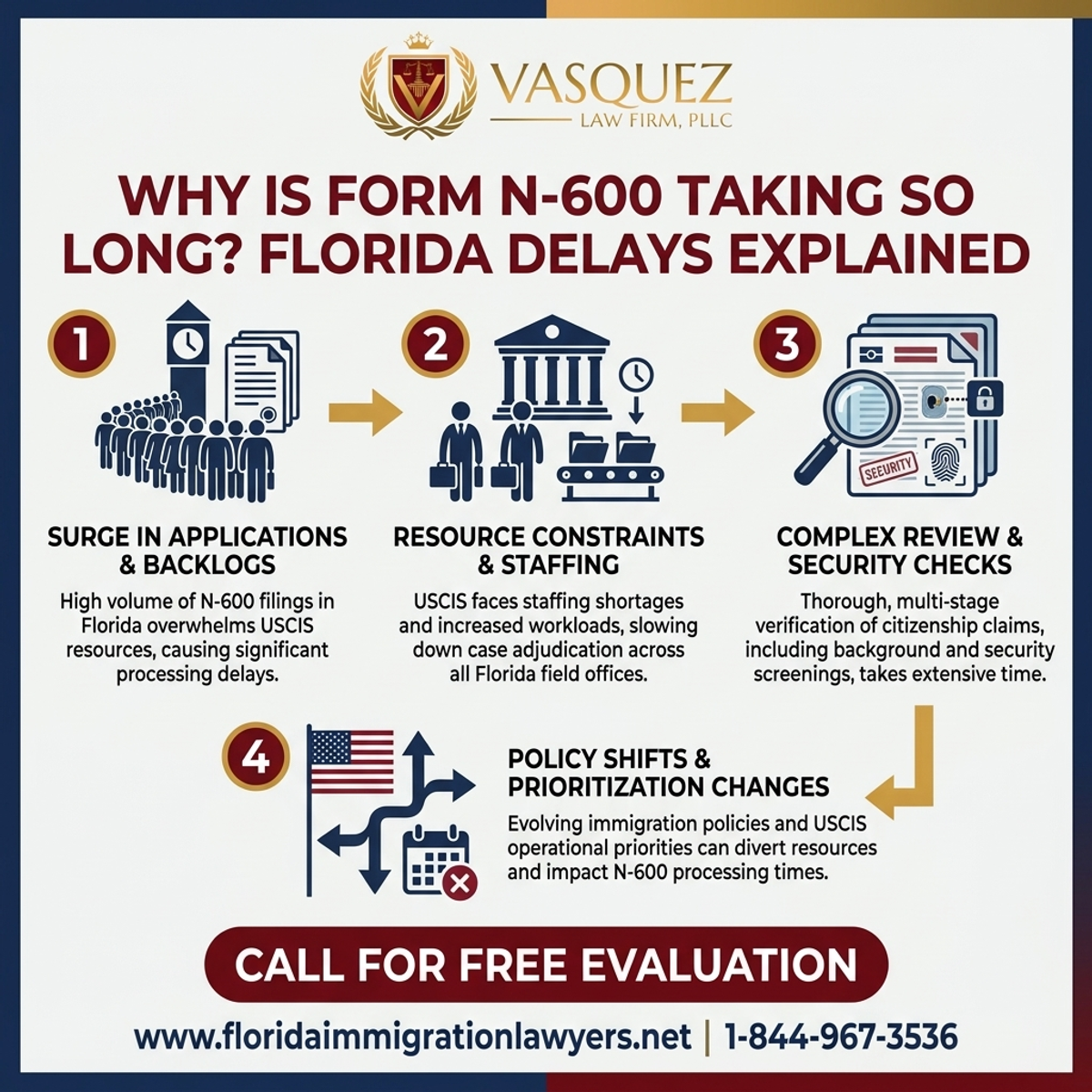
Key Statistics — Why Is Form N-600 Taking So Long? Florida Delays Explained
Cost Factors and Fee Breakdown for Form N-600
The costs associated with filing Form N-600 can vary. Here's a general breakdown:
| Item | Typical Fee | Notes |
|---|---|---|
| Filing Fee | Variable | Check USCIS for current rates |
| Biometrics Fee | Variable | May apply to certain applicants |
| Legal Fees | Variable | Depends on attorney rates |
The base filing fee for Form N-600 is subject to change, so always verify the current rate on the official USCIS website before submitting your application. This fee is non-refundable, regardless of the outcome of your application. USCIS periodically updates its fee schedule, and submitting an incorrect fee is a common reason for application rejection, leading to significant delays as you have to resubmit with the correct amount and potentially incur additional mailing costs.
While a separate biometrics fee was once common for many immigration forms, for Form N-600, the biometrics fee is typically included in the overall filing fee. However, it's always wise to confirm this on the USCIS fee schedule page or with an immigration attorney. This fee covers the cost of fingerprinting and background checks conducted at an Application Support Center, which are essential for security vetting.
Engaging an immigration attorney, such as Florida Immigration Lawyers, involves legal fees that vary based on the complexity of your case and the services required. While an additional cost, legal representation can be an invaluable investment. An attorney ensures your application is accurately prepared, all necessary documents are included, and responses to USCIS inquiries are timely and legally sound, potentially saving you time, stress, and costly errors in the long run. The peace of mind and increased likelihood of a smooth process often outweigh the legal fees.
Beyond the direct USCIS fees, applicants should also budget for potential 'hidden' costs. These can include fees for obtaining certified copies of birth certificates, marriage licenses, or other vital records from government agencies, translation services for non-English documents, and mailing costs (especially if using certified mail with return receipt requested). Travel expenses to and from biometric appointments or potential interviews in Florida should also be considered, as these can add up.
For individuals who meet specific income guidelines or are receiving certain public benefits, USCIS offers the possibility of a fee waiver (Form I-912). If granted, this waiver can significantly reduce the financial burden of the application, making citizenship more accessible. Consulting with an attorney can help you determine if you qualify for a fee waiver and assist in preparing the necessary documentation to ensure a successful request. Consulting the USCIS website for the most current fee structure is recommended.
Common Mistakes to Avoid
- **Submitting Incomplete Forms**: Missing information can lead to delays.
- **Incorrect Fees**: Always verify the current fee schedule before submission.
- **Ignoring USCIS Notices**: Promptly respond to any requests for additional information.
- **Insufficient Supporting Documentation**: Ensure all claims are backed by proper evidence.
- **Not Seeking Legal Help**: Complex cases benefit from professional guidance.
- **Failing to Track Application Status**: Regularly check for updates.
- **Using Outdated Forms**: Always use the latest version from the USCIS website.
When to Call a Lawyer
If you encounter any of the following situations, it may be time to consult with a lawyer:
- Received a request for evidence (RFE) from USCIS
- Application has been pending beyond typical processing times
- Complex family situations affecting eligibility
An RFE is a clear signal that USCIS needs more information to make a decision on your case. Responding to an RFE requires a thorough understanding of immigration law and the specific evidence USCIS is seeking. An attorney can help you interpret the RFE, gather the correct documentation, and formulate a compelling legal argument to address the agency's concerns, preventing further delays or a potential denial. This is a critical juncture where legal expertise can significantly impact the outcome.
If your N-600 application has been pending significantly longer than the published processing times for your service center, it's a strong indicator that something may be amiss. A lawyer can initiate inquiries with USCIS, escalate the issue to a higher level, or, in extreme cases, file a Writ of Mandamus in federal court to compel USCIS to make a decision. This level of intervention often requires sophisticated legal expertise to be effective and ensure your case is not overlooked.
Cases involving complex family dynamics, such as children born out of wedlock, adoptions, situations where parents naturalized after the child's birth but before they turned 18, or issues with legal custody, often present intricate legal challenges. An experienced immigration lawyer can analyze your specific circumstances, determine the correct legal pathway for your child's citizenship, and ensure all necessary documentation and legal arguments are presented clearly and persuasively to USCIS.
If you receive a Notice of Intent to Deny (NOID) or an outright denial, immediate legal action is crucial. A NOID gives you a final chance to present your case before a denial, while a denial means you'll need to consider options like filing an appeal (Form I-290B) or refiling the application. In these critical situations, the expertise of Florida Immigration Lawyers can be the difference between a successful outcome and a lost opportunity for your child's citizenship, guiding you through the appeals process or advising on the best course of action.
Beyond reacting to problems, a proactive consultation with an immigration lawyer can prevent issues from arising in the first place. Before even filing Form N-600, a lawyer can review your eligibility, ensure all documents are in order, and advise on any potential pitfalls specific to your family's situation. This initial investment can save considerable time, stress, and expense down the line. Don't hesitate to call Florida Immigration Lawyers at 1-844-YO-PELEO for a free consultation to assess your needs effectively.
About Florida Immigration Lawyers
Florida Immigration Lawyers is dedicated to providing comprehensive legal services for all immigration-related issues throughout Florida. Our team is available 24/7 to assist you with filing Form N-600 and more. Call us at 1-844-YO-PELEO for a free consultation. Visit our website at
Sources and References
- U.S. Citizenship and Immigration Services (USCIS)
- Executive Office for Immigration Review (EOIR)
- U.S. Department of State - Bureau of Consular Affairs
- Immigration and Nationality Act (INA), 8 U.S.C. Chapter 12
Do Not Navigate This Process Alone
Our experienced immigration attorneys are ready to fight for you. Get a free, confidential case review today.
Se Habla Español
Or leave your details and we’ll call you:
Free Evaluation in 24 Hours
Or talk to us right now

AI voice assistant — available 24/7
FreeFrequently Asked Questions

William J. Vásquez
Founding Attorney · Vasquez Law Firm
U.S. Air Force veteran and immigration attorney with years of hands-on U.S. immigration experience. J.D., NCCU School of Law. AILA member. Admitted to the 4th, 5th, and 11th Circuit Courts.
Available 24/7 - Free Evaluations
Reviewed for legal accuracy by William J. Vásquez
Licensed in North Carolina; U.S. immigration is federal practice.
Related Legal Services
Our Florida immigration attorneys can help you with family immigration services, immigration lawyer cost in Florida and experienced immigration attorneys. Call today at 1-844-YO-PELEO for a free case review.
Related Links
Related Topics
Free Legal Case Review
Discuss your case with our experienced attorneys. We're available 24/7.
Se Habla Español - Estamos aquí para ayudarle.
Related Articles
EB-5 Investor Green Card in Florida: A 2026 Guide
Explore how to obtain an EB-5 investor green card in Florida. Learn about the investment requirements, processes, and benefits of participating in this program. Discover how Florida's economic landscape can be an ideal setting for your investment. Contact Florida Immigration Lawyers for a free case review.
Certificate of Eligibility for Expungement in Florida 2026
For non-U.S. citizens in Florida, understanding how a state expungement impacts immigration status is critical. A certificate of eligibility for expungement in Florida allows a criminal record to be sealed or expunged under state law. However, federal immigration agencies often disregard such state-level relief, still considering the original criminal offense as a conviction for immigration purposes. This can have severe implications for visa applications, green card eligibility, naturalization, and even lead to deportation. This guide clarifies the Florida expungement process, its limited effect on federal immigration law, and key steps to protect your status in 2026. Learn about common mistakes, required documents, timelines, and when to seek expert legal counsel from Florida Immigration Lawyers to navigate these complex issues effectively.
Immigration Lawyer Orlando Free Consultation in Florida
For individuals and families in Orlando, Florida, navigating the complexities of U.S. immigration law requires expert guidance. An immigration lawyer in Orlando offers crucial support for everything from visa applications and green card processes to naturalization and deportation defense. This comprehensive guide details what a free consultation covers, providing a step-by-step overview of immigration pathways, essential document checklists, and expected timelines in 2026. We also highlight common mistakes to avoid, discuss the critical role of legal counsel in deportation and asylum cases, and explain why choosing a local Orlando immigration attorney is beneficial. Florida Immigration Lawyers is dedicated to serving the diverse community of Orlando with compassionate, effective legal solutions, ensuring you receive personalized advice and robust representation for a successful immigration journey.
Immigration Interview Preparation Florida 2026 Guide
Facing an immigration interview in Florida? This comprehensive guide offers essential 2026 USCIS interview tips for green card and naturalization applicants. Learn how to meticulously prepare your documents, understand the typical timelines, and avoid common mistakes that could jeopardize your case. We cover what to expect at the Orlando USCIS Field Office, provide a detailed document checklist, and explain the various costs involved in the process. With insights into naturalization specifics and when to seek legal counsel, Florida Immigration Lawyers helps you approach your interview with confidence. Our firm is dedicated to empowering immigrants across Florida with the knowledge and support needed for a successful outcome. Get a free case review today.