Good Moral Character for Naturalization in Florida
Exploring the role of good moral character in the Florida naturalization process, this guide provides insights into how criminal history and personal integrity affect your N-400 application. Learn the steps to demonstrate good moral character and avoid common pitfalls.

When applying for naturalization in Florida, demonstrating good moral character is crucial. It involves assessing your conduct over a statutory period, typically five years. Key considerations include your criminal history, honesty, and adherence to laws. Issues like recent criminal convictions or false testimony can negatively impact your application.
- Good moral character is essential for naturalization.
- The assessment period is typically five years.
- Criminal history plays a significant role.
- Honesty and law adherence are critical.
- Consult an immigration attorney for guidance.
Understanding Good Moral Character for Naturalization in Florida
Imagine living in Orlando and dreaming of becoming a U.S. citizen. You're ready to apply for naturalization, but there's one critical aspect you must understand: good moral character. This article explores the importance of good moral character in the naturalization process, especially in Florida, and provides guidance on how to navigate this requirement successfully.
For personalized assistance, call Florida Immigration Lawyers at 1-844-YO-PELEO for a free case review.
What is Good Moral Character for Naturalization?
Good moral character is a prerequisite for naturalization, as defined by the Immigration and Nationality Act (INA) Section 316(a). It requires applicants to demonstrate honesty, respect for the law, and overall integrity during a specified period, typically five years before filing the N-400 form.
The U.S. Citizenship and Immigration Services (USCIS) evaluates your behavior, focusing on criminal history, compliance with laws, and truthful interactions with immigration authorities. Any negative actions during this period can affect your application.
Beyond the absence of criminal records, USCIS looks at the "totality of the circumstances" to determine if you meet the good moral character standard. This means they consider your entire life and conduct, not just isolated incidents. They want to see a consistent pattern of behavior that aligns with the values of U.S. citizenship, including financial responsibility, honesty in all dealings, and adherence to civic duties like paying taxes and child support.
While the statutory period typically covers the five years immediately preceding your application (or three years if applying through marriage to a U.S. citizen), USCIS can review your conduct outside this timeframe if there are specific concerns. For instance, a serious crime committed ten years ago might still be considered if it indicates a persistent pattern of behavior. This discretionary power underscores the importance of a thorough and honest disclosure of your past.
Demonstrating good moral character is not just about avoiding bad acts; it's also about showing positive contributions to your community and country. This could involve volunteer work, consistent employment, or simply being a law-abiding and contributing member of society. Understanding this broader scope is crucial for anyone in Florida seeking to become a naturalized citizen.
How Does Criminal History Impact Good Moral Character?
Criminal history significantly impacts the assessment of good moral character. The USCIS reviews any arrests, charges, or convictions within the statutory period. Crimes involving moral turpitude, drug offenses, and aggravated felonies are particularly concerning.
Even if an offense occurred outside the statutory period, it might still influence the USCIS's decision. It's crucial to disclose all past incidents honestly, as failure to do so can result in denial of naturalization.
Crimes involving moral turpitude (CIMT) are offenses that involve an act of baseness, vileness, or depravity contrary to the accepted rules of morality and the duties owed between persons or to society in general. Examples often include theft, fraud, assault with intent to injure, and certain sex offenses. Even a single conviction for a CIMT can be a significant barrier to naturalization, especially if it occurred within the statutory period. Drug offenses, including possession, trafficking, or distribution, are also viewed very seriously by USCIS and can lead to a finding of a lack of good moral character, regardless of their severity under state law.
Aggravated felonies, as defined by the INA, are a category of serious crimes that carry severe immigration consequences, including automatic deportation and a permanent bar from demonstrating good moral character. These can range from murder and rape to certain drug trafficking offenses and even some theft or fraud offenses if the sentence or loss exceeds a specific amount. If you have any aggravated felony on your record, even if it occurred decades ago, it is imperative to consult with Florida Immigration Lawyers immediately, as your eligibility for naturalization is likely compromised.
It's also important to understand that not all criminal interactions are treated equally. Minor traffic infractions, for example, typically do not impact good moral character unless they involve serious offenses like DUI. However, a pattern of repeated minor offenses could still raise concerns. Rehabilitation efforts, such as completing probation, paying fines, or participating in counseling, can sometimes mitigate the impact of past offenses, but this is highly dependent on the nature and severity of the crime. Always provide complete documentation of any arrest or conviction, along with proof of rehabilitation, to USCIS.
Steps to Prove Good Moral Character
To demonstrate good moral character, follow these steps:
Proactively building a strong case for your good moral character is paramount to a successful naturalization application. It requires meticulous preparation and a clear understanding of what USCIS expects. By taking deliberate actions and compiling comprehensive evidence, you can present yourself as a deserving candidate for U.S. citizenship.
- Gather Documentation: Collect police clearance records from all jurisdictions where you have lived for the statutory period, court documents for any arrests or convictions (even if expunged or dismissed), and any other relevant legal paperwork. This includes certified copies of disposition records, sentencing orders, and proof of completion of probation or parole.
- Provide References: Obtain strong character reference letters from community leaders, employers, religious figures, or other reputable individuals who can attest to your honesty, integrity, and positive contributions. These letters should be detailed, signed, and dated, explaining how they know you and why they believe you possess good moral character.
- Maintain Honesty: Ensure all information provided on your application (Form N-400) and during interviews is truthful and accurate. Any misrepresentation, even seemingly minor, can be considered a lack of good moral character and lead to a denial, potentially with severe future immigration consequences.
- Participate in Community Activities: Engage in volunteer work, community service, or active participation in local organizations to show positive contributions to society. Document your involvement with letters from organizations, certificates, or photos. This demonstrates your commitment to the community and aligns with the civic responsibilities of a U.S. citizen.
- Consult an Immigration Attorney: Seek legal advice from experienced professionals like Florida Immigration Lawyers to understand how your specific circumstances, especially any past legal issues, affect your application. An attorney can help you identify potential challenges and strategize the best way to present your case, significantly improving your chances of success.
Beyond these steps, maintaining financial responsibility is also a key component of good moral character. This means consistently paying taxes, child support, and other financial obligations. Any history of tax evasion or failure to pay child support can be viewed negatively by USCIS. Demonstrating a stable financial history reinforces your image as a responsible and law-abiding individual.
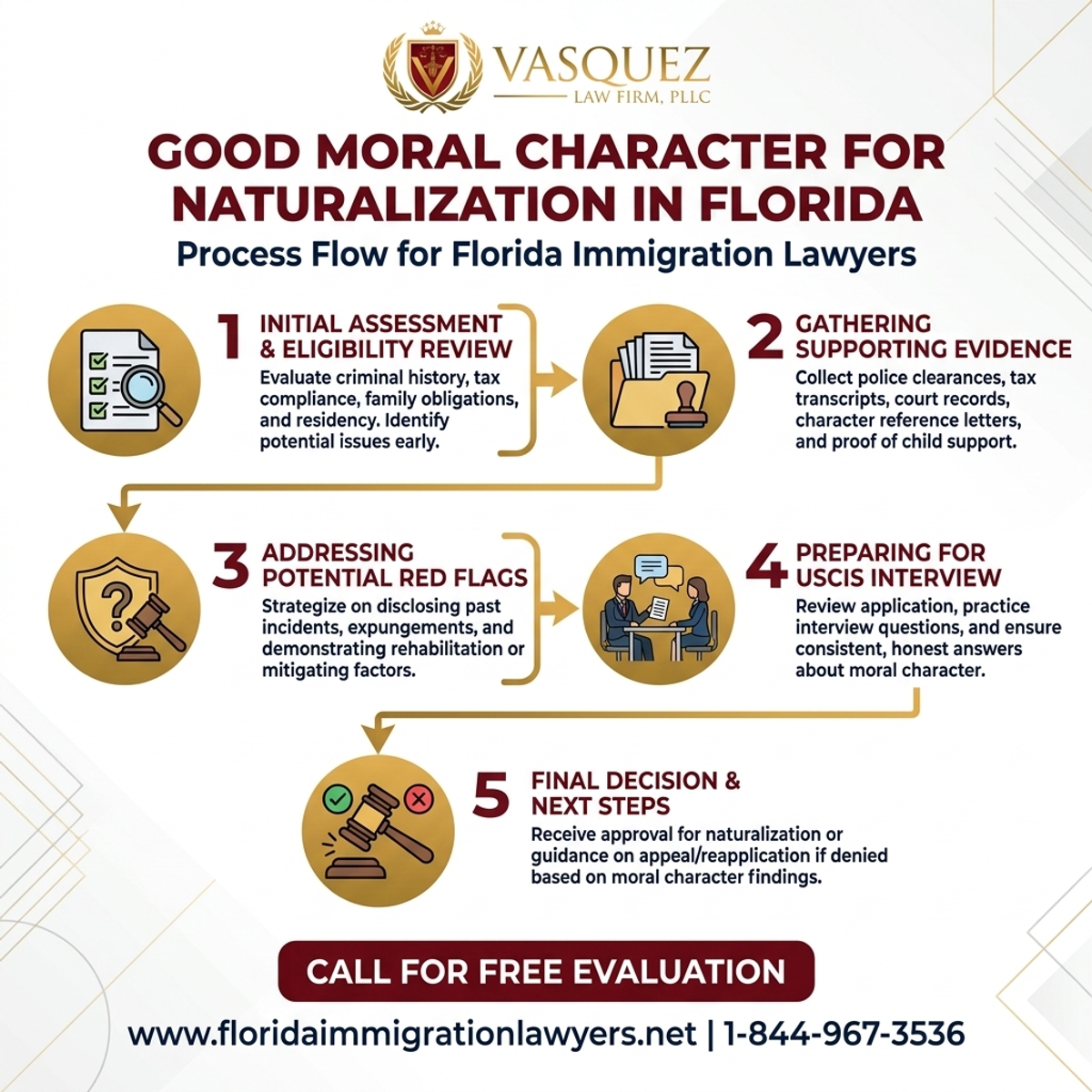
Step-by-Step Process — Good Moral Character for Naturalization in Florida
Document Checklist for Naturalization Application
Ensure you have the following documents ready for your naturalization application:
- Completed N-400 form: This is the Application for Naturalization, which must be filled out accurately and completely.
- Two passport-style photographs: These must meet specific USCIS requirements for size, background, and clarity.
- Proof of residency in Florida: This can include utility bills, lease agreements, property deeds, or state identification showing your continuous residence in the state for the required period.
- Police clearance certificates: Obtain these from all police departments in every city/county where you have lived for the statutory period, even if you believe you have no record.
- Character reference letters: As discussed, these should be from reputable individuals attesting to your good moral character.
- Any relevant court documents: This includes certified copies of arrest records, charging documents, plea agreements, sentencing records, and proof of completion for any criminal offenses, no matter how minor or old.
- Marriage certificate (if applicable): If applying based on marriage to a U.S. citizen, you'll need this, along with proof of the bona fide nature of your marriage.
- Tax transcripts: USCIS may request proof of tax compliance for the past five years (or three years if applicable).
- Selective Service registration proof (for males): If you are a male applicant between 18 and 26, you must have registered for Selective Service.
Organizing these documents meticulously is crucial. Create a checklist and make copies of everything you send to USCIS. Presenting a well-prepared and complete application package can help avoid delays and requests for additional evidence, streamlining the processing of your naturalization case.
Remember that USCIS may request additional documents at any stage of the process, so it's wise to keep all important personal and financial records readily accessible. If you're unsure about any specific document or have difficulty obtaining it, don't hesitate to reach out to Florida Immigration Lawyers for guidance. They can help you navigate the complexities of document gathering and ensure your application is robust.
Naturalization Timeline and Processing Expectations
Understanding the naturalization timeline can help manage expectations and reduce anxiety during the process. While the exact duration can vary based on the USCIS field office workload, the complexity of your case, and current processing times, there are general stages and expectations you should be aware of.
| Stage | Typical Timeframe | Notes |
|---|---|---|
| Filing N-400 | 6-12 months | Initial processing and background checks. This period includes the time it takes for USCIS to acknowledge receipt of your application and begin security checks with various government agencies. |
| Biometrics Appointment | 1 month after filing | Fingerprinting and photo. You will receive an appointment notice for your biometrics, which are used for identity verification and background checks. It's crucial not to miss this appointment. |
| Interview and Testing | 1-2 months after biometrics | English and civics test. An immigration officer will review your application, ask questions about your eligibility, and administer the English language and U.S. civics tests. Preparation is key for this stage. |
| Oath Ceremony | 1-2 months after interview | Final step to citizenship. Upon approval, you will be scheduled for an Oath of Allegiance ceremony, where you officially become a U.S. citizen. Sometimes, the oath can be administered on the same day as the interview. |
It's important to note that these timeframes are estimates. Some cases may be processed more quickly, while others, particularly those with complex issues related to good moral character or extensive travel history, might take longer. USCIS provides online tools to check current processing times for specific field offices, which can offer a more localized estimate.
Throughout this journey, maintaining patience and ensuring all communications from USCIS are promptly addressed is vital. If you receive a Request for Evidence (RFE) or a Notice of Intent to Deny (NOID), it's highly advisable to consult with Florida Immigration Lawyers to formulate an appropriate and timely response. Their expertise can be invaluable in navigating unexpected delays or challenges.
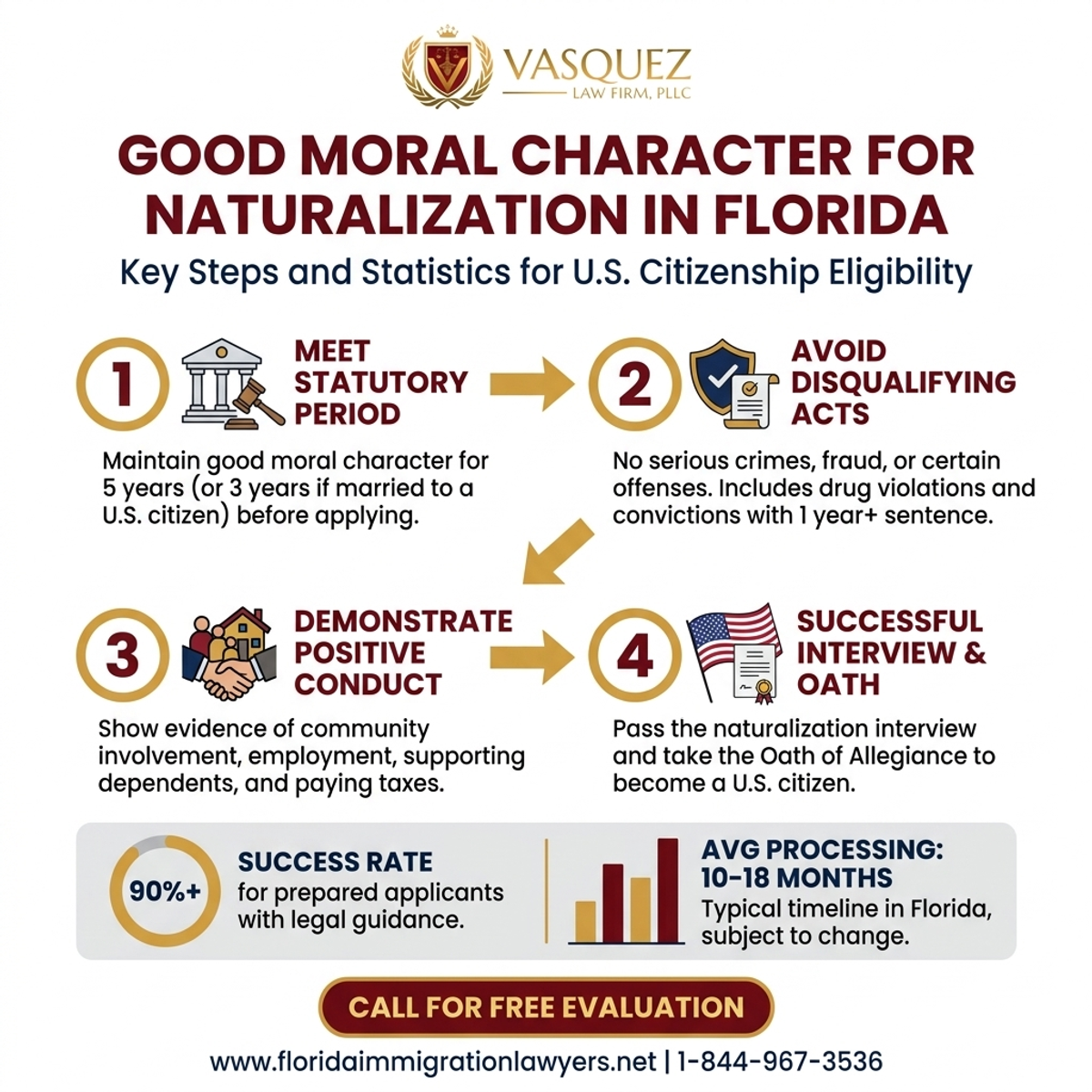
Key Statistics — Good Moral Character for Naturalization in Florida
Naturalization Costs and Fee Breakdown
The cost associated with naturalization is an important consideration for many applicants. While the fees are set by USCIS, understanding the breakdown and potential options for assistance can help you plan financially for your journey to citizenship.
| Item | Typical Fee | Notes |
|---|---|---|
| N-400 Filing Fee | Varies (e.g., $710 as of late 2023) | Check the official USCIS website (uscis.gov) for the most current fee. This fee covers the processing of your application. |
| Biometrics Fee | Included in total application cost | Previously a separate fee, it is now typically integrated into the N-400 filing fee for most applicants. |
| Attorney Fees | Varies (e.g., $1,500 - $5,000+) | Depends on case complexity, services required (e.g., document preparation, interview representation), and the attorney's experience. This is an investment in professional guidance. |
For applicants with limited income, USCIS offers fee waivers or reduced fees. To qualify for a fee waiver, you typically need to demonstrate that your household income is at or below 150% of the Federal Poverty Guidelines, or that you are receiving a means-tested benefit, or that you are experiencing financial hardship. Applying for a fee waiver requires submitting Form I-912, Request for Fee Waiver, along with supporting documentation.
Sources and References
- U.S. Citizenship and Immigration Services (USCIS)
- Executive Office for Immigration Review (EOIR)
- U.S. Department of State
- Immigration and Nationality Act (INA), 8 U.S.C. Chapter 12
Do Not Navigate This Process Alone
Our experienced immigration attorneys are ready to fight for you. Get a free, confidential case review today.
Se Habla Español
Or leave your details and we’ll call you:
Free Evaluation in 24 Hours
Or talk to us right now
AI voice assistant — available 24/7
FreeFrequently Asked Questions

William J. Vásquez
Founding Attorney · Vasquez Law Firm
U.S. Air Force veteran and immigration attorney with years of hands-on U.S. immigration experience. J.D., NCCU School of Law. AILA member. Admitted to the 4th, 5th, and 11th Circuit Courts.
Available 24/7 - Free Evaluations
Reviewed for legal accuracy by William J. Vásquez
Licensed in North Carolina; U.S. immigration is federal practice.
Related Legal Services
Our Florida immigration attorneys can help you with immigration practice areas, free immigration consultation and business immigration. Call today at 1-844-YO-PELEO for a free case review.
Related Links
Related Topics
Free Legal Case Review
Discuss your case with our experienced attorneys. We're available 24/7.
Se Habla Español - Estamos aquí para ayudarle.
Related Articles
Certificate of Eligibility for Expungement in Florida 2026
For non-U.S. citizens in Florida, understanding how a state expungement impacts immigration status is critical. A certificate of eligibility for expungement in Florida allows a criminal record to be sealed or expunged under state law. However, federal immigration agencies often disregard such state-level relief, still considering the original criminal offense as a conviction for immigration purposes. This can have severe implications for visa applications, green card eligibility, naturalization, and even lead to deportation. This guide clarifies the Florida expungement process, its limited effect on federal immigration law, and key steps to protect your status in 2026. Learn about common mistakes, required documents, timelines, and when to seek expert legal counsel from Florida Immigration Lawyers to navigate these complex issues effectively.
Immigration Lawyer Orlando Free Consultation in Florida
For individuals and families in Orlando, Florida, navigating the complexities of U.S. immigration law requires expert guidance. An immigration lawyer in Orlando offers crucial support for everything from visa applications and green card processes to naturalization and deportation defense. This comprehensive guide details what a free consultation covers, providing a step-by-step overview of immigration pathways, essential document checklists, and expected timelines in 2026. We also highlight common mistakes to avoid, discuss the critical role of legal counsel in deportation and asylum cases, and explain why choosing a local Orlando immigration attorney is beneficial. Florida Immigration Lawyers is dedicated to serving the diverse community of Orlando with compassionate, effective legal solutions, ensuring you receive personalized advice and robust representation for a successful immigration journey.
H-4 EAD Work Permit Rules for Spouses in Florida
Explore how H-4 EAD work permits enable spouses of H-1B visa holders in Florida to gain work authorization. Learn about the application process, eligibility, and common mistakes to avoid. Florida Immigration Lawyers offer expert guidance to ensure a smooth process.
How to Apply for VAWA in Florida: A 2026 Guide
Discover how to apply for VAWA in Florida, offering crucial immigration relief for abuse victims. Learn the process, requirements, and how Florida Immigration Lawyers can assist you.