U Visa Immigration Relief for Crime Victims in Florida
U Visa provides a crucial pathway to legal status for crime victims in Florida. Learn about eligibility, application steps, and common pitfalls to avoid. Contact Florida Immigration Lawyers for expert guidance and a free consultation.

Introduction
Imagine you're a victim of a crime in Hialeah, Florida, and you're worried about your immigration status. The U Visa offers a lifeline for crime victims, providing a path to legal status while helping law enforcement. This article covers the basics of the U Visa, eligibility criteria, application steps, and common mistakes to avoid. Call Florida Immigration Lawyers at 1-844-967-3536 for a free consultation.
The U Visa program was established by Congress to protect immigrant victims of certain crimes and to strengthen the ability of law enforcement agencies to investigate and prosecute criminal activity. It recognizes the unique vulnerabilities faced by non-citizen victims who might otherwise be hesitant to report crimes due to fear of deportation or lack of legal status. By offering a pathway to legal residency, the U Visa not only provides humanitarian relief but also enhances public safety for everyone in communities like Hialeah.
Understanding the nuances of the U Visa process is critical. It's not merely about being a victim; it's about active cooperation with authorities, demonstrating substantial harm, and navigating a complex legal framework. This article aims to demystify the process, offering clear guidance and highlighting the importance of expert legal assistance from dedicated professionals like Florida Immigration Lawyers.
What is a U Visa?
The U Visa is a form of immigration relief for victims of certain crimes who have suffered substantial physical or mental abuse. It allows victims to stay in the U.S. to assist law enforcement and government officials in investigating or prosecuting criminal activity. As of 2026, it remains a crucial option for many immigrants in Florida seeking safety and justice.
Eligible crimes include domestic violence, sexual assault, and human trafficking, among others. Applicants must have information about the crime and be willing to assist in the investigation or prosecution.
The list of qualifying criminal activities is extensive and includes crimes such as abduction, blackmail, extortion, false imprisonment, felonious assault, female genital mutilation, hostage taking, incest, involuntary servitude, kidnapping, murder, obstruction of justice, peonage, perjury, prostitution, rape, sexual assault, sexual exploitation, slave trade, torture, trafficking, and unlawful criminal restraint. The key is that the crime resulted in substantial physical or mental abuse to the victim and that the victim possesses credible and reliable information regarding the criminal activity.
This visa is a powerful tool designed to empower victims, ensuring they can seek justice without fear of immigration consequences. It fosters trust between immigrant communities and law enforcement, which is vital for effective crime fighting. For victims in Florida, especially those in diverse communities like Hialeah, the U Visa offers a path to rebuild their lives with dignity and security, eventually leading to permanent residency.
How to Apply for a U Visa in Florida?
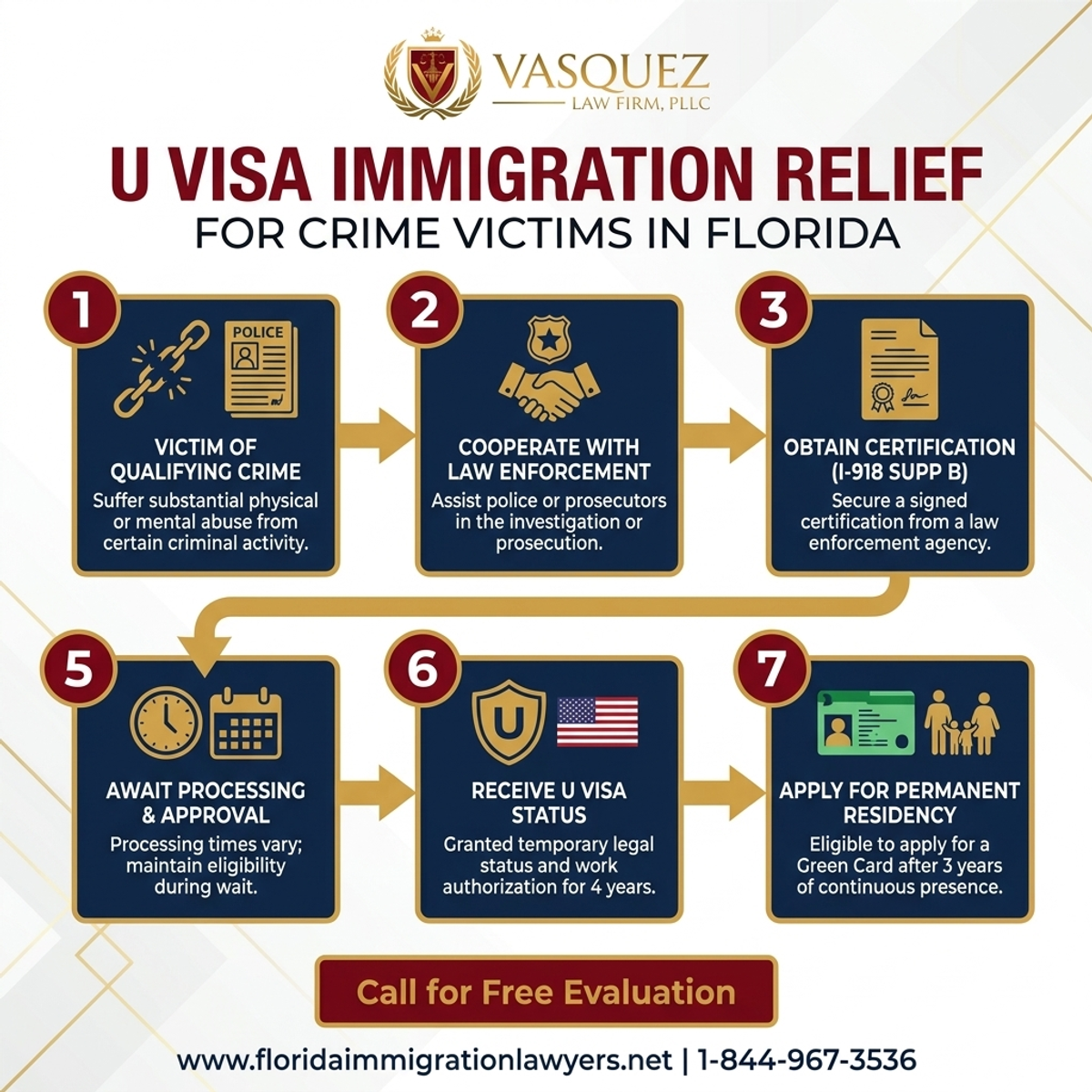
Applying for a U Visa involves several steps, beginning with obtaining certification from a law enforcement agency. This certification verifies your cooperation with authorities. Here is a step-by-step guide to the application process:
- Obtain a U Nonimmigrant Status Certification (Form I-918, Supplement B) from a law enforcement agency.
- Complete the Petition for U Nonimmigrant Status (Form I-918).
- Gather supporting documents, including evidence of the crime and its impact on you.
- Submit all forms and documents to USCIS, along with the filing fee or fee waiver request.
- Attend a biometrics appointment for fingerprinting and photographing.
Step-by-Step Process — U Visa Immigration Relief for Crime Victims in Florida
The U Nonimmigrant Status Certification (Form I-918, Supplement B) is arguably the most critical component of the application. This form must be signed by an authorized official from a qualifying law enforcement agency, prosecutor's office, judge, or other government agency with authority to investigate or prosecute the qualifying criminal activity. It confirms that you have been helpful, are being helpful, or are likely to be helpful in the investigation or prosecution of the crime. Without this certification, your U Visa petition cannot proceed.
Once certified, the comprehensive Form I-918, Petition for U Nonimmigrant Status, requires detailed information about the crime, the abuse suffered, and your cooperation. It's essential to provide a thorough personal statement that clearly articulates your experience and the impact of the crime. This narrative, supported by strong documentary evidence, helps USCIS understand the full scope of your situation. Working with Florida Immigration Lawyers can ensure that your application is meticulously prepared and accurately reflects your circumstances, maximizing your chances of approval.
What Documents Are Needed for a U Visa Application?
- Completed Form I-918 and Supplement B certification.
- Personal statement describing the crime and its impact.
- Police reports and court documents related to the crime.
- Medical records showing physical or mental injuries.
- Proof of identity, such as a passport or birth certificate.
Beyond these core documents, applicants should also consider submitting any additional evidence that strengthens their case. This could include affidavits from witnesses, psychological evaluations, photographs of injuries, or evidence of lost wages due to the crime. The more comprehensive and compelling your evidence, the stronger your petition will be.
It's crucial to present a clear and consistent narrative through all your submitted documents. Each piece of evidence should corroborate your personal statement and the details provided in Form I-918. Organizing these documents meticulously and ensuring all translations are certified can significantly streamline the review process for USCIS. Florida Immigration Lawyers are experts in helping victims compile and organize all necessary documentation, ensuring nothing is overlooked.
U Visa Processing Time and Expectations
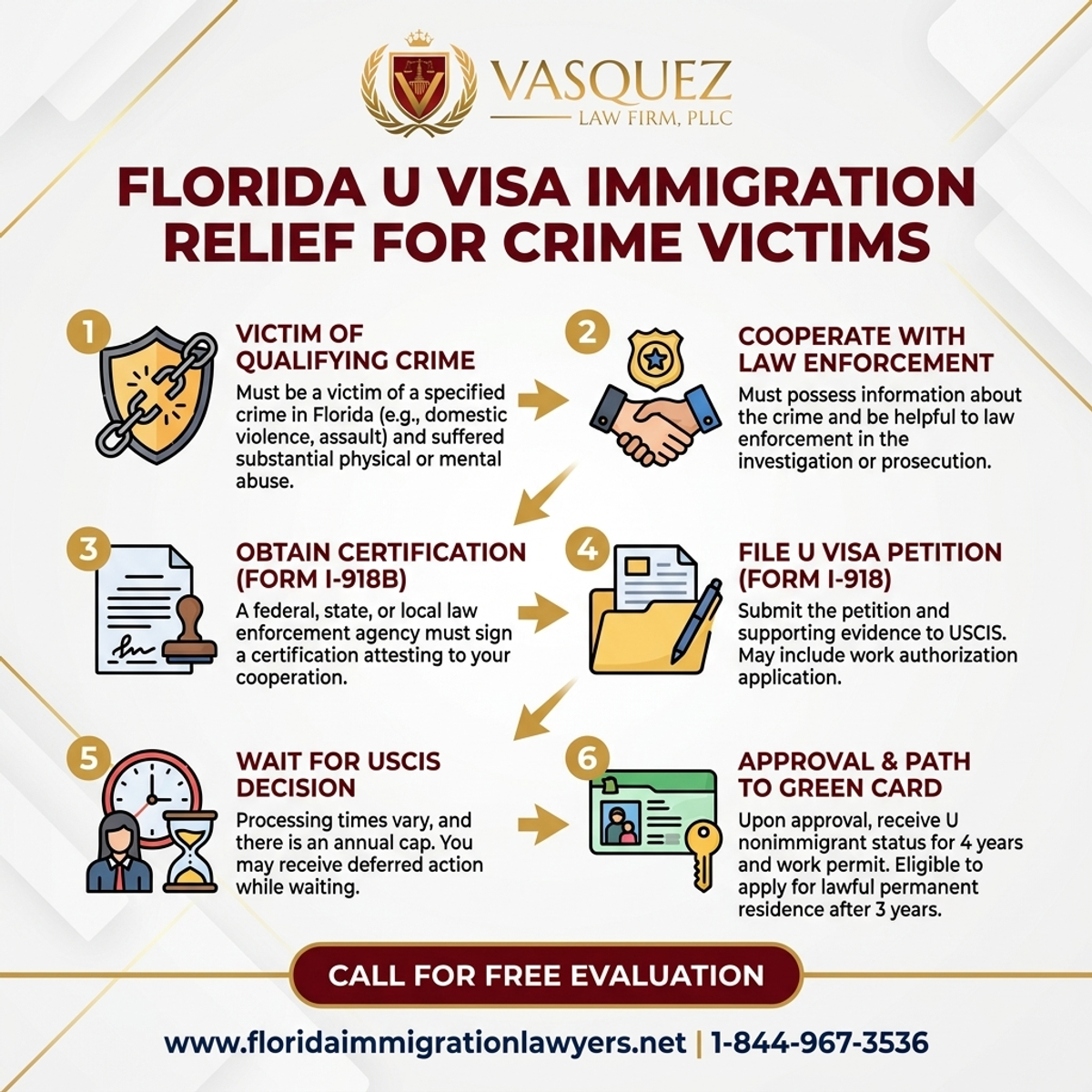
Processing times for U Visas can be lengthy. As of 2026, applicants may wait several years due to the annual cap on visas. Here's a general timeline:
| Stage | Typical Timeframe | Notes |
|---|---|---|
| Certification | 1-3 months | Depends on law enforcement agency response. |
| Application Submission | 1 month | Processing begins after submission. |
| Biometrics | 1-2 months | Appointment for fingerprinting. |
| USCIS Decision | 3-5 years | Subject to visa cap and backlog. |
Key Statistics — U Visa Immigration Relief for Crime Victims in Florida
The significant wait times are primarily due to the statutory cap of 10,000 U Visas issued per fiscal year. While USCIS strives to process applications efficiently, the demand far exceeds the available visas, leading to a substantial backlog. During this waiting period, however, applicants may be eligible for deferred action and work authorization if USCIS determines they have a "bona fide" U Visa petition. This "bona fide determination" (BFD) allows victims to legally work and live in the U.S. while awaiting a final decision.
Understanding these timelines is essential for managing expectations and planning for your future. While the wait can be challenging, the potential benefits—including legal status, work authorization, and a path to permanent residency—make the U Visa a worthwhile pursuit for eligible victims. Florida Immigration Lawyers can provide realistic expectations and guide you through each stage, helping you understand interim relief options.
Factors That Affect U Visa Costs
While specific filing fees change, here are typical costs associated with the U Visa process:
| Item | Typical Fee | Notes |
|---|---|---|
| Filing Fee | Varies | May be waived for financial hardship. |
| Biometrics Fee | Varies | Required for fingerprinting and photographs. |
| Attorney Fees | Varies | Depends on case complexity. |
It's important to note that while USCIS charges fees for filing Form I-918 and for biometrics, many U Visa applicants are eligible for fee waivers due to financial hardship. This is a critical consideration for victims who may have lost income or incurred significant expenses due to the crime. Properly requesting a fee waiver can alleviate a substantial financial burden.
Attorney fees, while an investment, can be invaluable. The complexity of U Visa applications, the need for meticulous documentation, and the potential for long processing times often make legal representation a wise choice. An experienced immigration lawyer can prevent costly errors, advocate on your behalf, and navigate the intricate legal landscape, ultimately saving you time and stress. Florida Immigration Lawyers offers free consultations to discuss your case and potential costs, ensuring transparency from the start.
Middle CTA
Do not navigate this process alone. Contact Florida Immigration Lawyers today.
Common Mistakes to Avoid
Applying for a U Visa is a detailed process where even minor errors can lead to significant delays or outright denial. Being aware of potential pitfalls can help applicants avoid common missteps and ensure a smoother journey towards obtaining legal status. Here are crucial mistakes to be mindful of:
- Failing to obtain a certification from law enforcement, which is a crucial requirement.
Without Form I-918, Supplement B, your petition is incomplete. Proactively engaging with the certifying agency and following up respectfully is key to securing this vital document.
- Submitting incomplete or inaccurate forms, leading to delays or denials.
Every field on every form must be filled out truthfully and completely. Any missing information or inconsistencies can raise red flags for USCIS adjudicators.
- Ignoring deadlines for submission and responses, which can result in case abandonment.
USCIS provides specific timeframes for responding to Requests for Evidence (RFEs) or Notices of Intent to Deny (NOIDs). Missing these deadlines can lead to your application being closed.
- Not providing sufficient evidence of the crime and its impact on your life.
Your personal statement and supporting documents must clearly demonstrate that you suffered substantial physical or mental abuse as a direct result of the qualifying criminal activity.
- Failing to update USCIS with changes in address or contact information.
If USCIS cannot reach you, you may miss crucial communications, including interview notices or RFEs, potentially jeopardizing your application.
- Attempting to file without legal guidance, increasing the risk of errors.
The legal complexities, specific eligibility criteria, and detailed documentation requirements make professional legal assistance highly advisable for U Visa petitions.
- Misunderstanding the eligibility requirements, leading to ineligible applications.
Not all crime victims qualify. It's essential to confirm that the crime you experienced is a "qualifying criminal activity" and that you meet all other criteria before applying.
- Not anticipating the long processing times and preparing for interim solutions.
Given the multi-year wait, understanding options like deferred action and work authorization is crucial for maintaining stability while your application is pending.
- Neglecting to keep copies of all documentation submitted.
Always retain a complete copy of your entire application package, including all forms, evidence, and correspondence, for your records.
- Forgetting to apply for work authorization, if eligible.
Once your U Visa petition is deemed "bona fide," you can apply for employment authorization, which is vital for financial stability during the long waiting period.
When to Call a Lawyer
If you're a crime victim in Hialeah, seeking a U Visa can be complex. Legal assistance is crucial, especially if you're unsure about eligibility, facing challenges with law enforcement cooperation, or need help gathering documentation. Florida Immigration Lawyers can guide you through this process, ensuring your application is complete and timely. Call us for support and peace of mind.
You should consider contacting Florida Immigration Lawyers immediately if you:
- Are unsure if the crime you experienced qualifies for a U Visa.
- Are struggling to obtain the necessary certification from a law enforcement agency.
- Have a complicated immigration history or any past criminal convictions.
- Fear deportation and need protection while your case is pending.
- Require assistance in drafting a compelling personal statement and organizing extensive evidence.
About Florida Immigration Lawyers
Florida Immigration Lawyers is dedicated to helping immigrants navigate the complexities of U.S. immigration law. We offer services in U Visa applications, deportation defense, asylum, and more. Our team is available 24/7 to assist clients throughout Florida, providing free consultations and bilingual support. Phone: 1-844-967-3536. Visit us at Florida Immigration Lawyers.
Our commitment extends beyond just filing paperwork; we understand the trauma and vulnerability that crime victims often experience. We strive to create a supportive and understanding environment, ensuring that our clients feel heard and protected throughout their legal journey. From the initial consultation to the final decision, Florida Immigration Lawyers stands by your side, fighting for your right to safety and legal status in the United States. We serve clients across Florida, including Hialeah, Miami, Orlando, and Tampa, offering accessible and expert legal counsel.
Sources and References
- U.S. Citizenship and Immigration Services (USCIS)
- Executive Office for Immigration Review (EOIR)
- 8 U.S.C. Chapter 12 - Immigration and Nationality Act
- Code of Federal Regulations - 8 CFR
Related services: asylum and refugee protection, asylum application process, refugee status and resettlement.
This article provides general legal information and is not intended as legal advice. Every case is unique, and outcomes depend on specific facts and circumstances. Contact an attorney for advice about your particular situation.
Final CTA
For comprehensive assistance with your U Visa application, contact Florida Immigration Lawyers today at 1-844-967-3536 for a free consultation. Se Habla Espanol - Estamos aqui para ayudarle.
If you need legal assistance, learn more about speak with an immigration lawyer, or call us at 1-844-967-3536 for a free consultation.
Do Not Navigate This Process Alone
Our experienced immigration attorneys are ready to fight for you. Get a free, confidential consultation today.
Se Habla Español
Frequently Asked Questions
Harold Estrada-Rodriguez
Florida Immigration Attorney · FL Bar No. 1041171
Florida Bar attorney handling Florida-jurisdiction immigration matters. Bilingual representation, free consultations.
Available 24/7 - Free Evaluations
Related Legal Services
Our Florida immigration attorneys can help you with citizenship and naturalization, family immigration services and immigration practice areas. Call today at 1-844-967-3536 for a free consultation.
Related Links
Related Topics
Free Legal Consultation
Discuss your case with our experienced attorneys. We're available 24/7.
Se Habla Español - Estamos aquí para ayudarle.
Related Articles
Immigration Bond Hearing Florida: Your 2026 Guide | VLF Florida
Navigating an immigration bond hearing in Florida requires a clear understanding of the process, eligibility, and legal requirements. This 2026 guide from Florida Immigration Lawyers provides essential information on securing release from ICE detention, including details on bond hearings, required documents, typical timelines, and associated costs. Learn about the factors immigration judges consider, common mistakes to avoid, and when it's critical to enlist expert legal counsel. With Florida-specific insights and practical advice, this resource aims to empower individuals and families facing immigration detention across the state, from West Palm Beach to Miami. Secure a free consultation with our experienced attorneys for dedicated support.
J-1 Waiver for Physicians in Florida: A 2026 Guide
Navigating the J-1 waiver process in Florida can be challenging for foreign physicians. Learn how the Conrad 30 program facilitates placements in underserved areas like Homestead, ensuring a successful application. Call Florida Immigration Lawyers today for expert guidance.
Naturalization Process Florida Timeline 2026 Guide
The naturalization process in Florida, culminating in U.S. citizenship, involves several key stages including eligibility assessment, filing Form N-400, biometrics, an interview, and the Oath of Allegiance. As of 2026, the typical timeline for this process in Florida ranges from 18 to 24 months, though individual experiences can vary. This guide from Florida Immigration Lawyers provides a comprehensive overview, covering requirements, step-by-step procedures, potential costs, and common pitfalls. We emphasize the importance of understanding Florida-specific nuances and the benefits of legal counsel to navigate this complex journey effectively. Contact us for a free consultation.
H-2B Visa for Florida Hospitality Seasonal Workers
Explore the H-2B visa process for seasonal workers in Florida's hospitality industry. Learn about costs, timelines, and common mistakes. Contact Florida Immigration Lawyers for expert assistance.
