J-1 Waiver for Physicians in Florida: A 2026 Guide
Navigating the J-1 waiver process in Florida can be challenging for foreign physicians. Learn how the Conrad 30 program facilitates placements in underserved areas like Homestead, ensuring a successful application. Call Florida Immigration Lawyers today for expert guidance.

- Eligibility requirements focus on serving underserved areas.
- Homestead, Florida, is a designated location for placements.
- Waivers require commitment to work for three years.
Introduction
Imagine being a foreign physician completing your residency in the U.S. and hoping to continue your medical career here. The J-1 waiver could be your pathway to achieving this, especially if you plan to serve in areas like Homestead, Florida. This article dives deep into the J-1 waiver process for physicians, focusing on the Conrad 30 program and its implications for Florida placements. If you're navigating this complex process, call Florida Immigration Lawyers at 1-844-967-3536 for a free consultation.
The demand for healthcare professionals in the United States, particularly in rural and low-income urban communities, continues to outpace supply. Foreign physicians, who often complete their advanced medical training in the U.S. under a J-1 exchange visitor visa, represent a critical resource in addressing these disparities. However, the standard J-1 visa requires them to return to their home country for two years after their training, a rule that can disrupt careers and further exacerbate physician shortages in underserved areas.
The J-1 waiver program offers a crucial solution, allowing these highly skilled doctors to bypass the home residency requirement and continue their invaluable work in the U.S. Florida, with its diverse population and growing healthcare needs, actively participates in this program, making it a viable option for many. Understanding the intricacies of this waiver is essential for any foreign physician looking to build a long-term medical career in the Sunshine State.
What is a J-1 Waiver for Physicians?
A J-1 waiver allows foreign physicians to remain in the U.S. after their training, provided they work in designated underserved areas. As of 2026, Florida offers opportunities through the Conrad 30 program. This program grants waivers to 30 physicians annually, provided they commit to serving in medically underserved areas for at least three years.
Physicians interested in this waiver must meet specific criteria and secure a job offer from an eligible health facility. This waiver bypasses the usual requirement of returning to their home country for two years post-training.
The statutory basis for this requirement is Section 212(e) of the Immigration and Nationality Act (INA), which mandates that J-1 exchange visitors subject to the home residency requirement return to their country of nationality or last residence for at least two years before they can change to certain other visa statuses, such as H-1B or L-1, or apply for lawful permanent residency. The J-1 waiver offers an exception to this rule, recognizing the significant public interest in retaining foreign medical graduates in the U.S. healthcare system, particularly where medical access is limited.
While several types of J-1 waivers exist, including those based on a claim of persecution or exceptional hardship, the Conrad 30 program is the most common and relevant pathway for physicians. It specifically targets the critical shortage of doctors in Health Professional Shortage Areas (HPSAs) and Medically Underserved Areas/Populations (MUA/Ps), ensuring that the waiver serves a direct public health purpose. This commitment to serving vulnerable communities is at the heart of the J-1 waiver program for physicians.
How does the Conrad 30 Program Work in Florida?
Florida's Conrad 30 program is a vital tool for retaining skilled physicians in the state. The program allocates 30 waivers each year to foreign medical graduates who agree to work in federally designated underserved areas. Homestead, Florida, is one such area.
The process involves securing a job offer from a qualifying employer who can demonstrate a need for healthcare professionals. Applicants must then submit a detailed application, including proof of the facility's underserved status and a contract stipulating the terms of employment.
The Florida Department of Health (DOH) is responsible for administering the state's Conrad 30 program. Each year, the DOH opens an application window, during which eligible physicians and their sponsoring facilities can submit their applications. Given the limited number of waivers, the program is highly competitive, emphasizing the importance of a meticulously prepared application and a compelling case for the physician's necessity in the target community. Facilities must articulate the specific needs of their patient population and how the foreign physician will address those gaps, often requiring letters of support from local community leaders.
A critical aspect of the program is the employer's commitment. The facility hiring the physician must be located in a designated HPSA or MUA/P and demonstrate that it has exhausted all reasonable efforts to recruit a U.S. citizen or permanent resident physician for the position. This ensures that foreign physicians are filling genuine gaps in healthcare access rather than displacing U.S. workers. For example, a community health clinic in Homestead might demonstrate a severe shortage of pediatricians, leading to long wait times for children's appointments, thereby justifying the need for a J-1 waiver physician. Seeking guidance from Florida Immigration Lawyers can significantly enhance your application's strength.
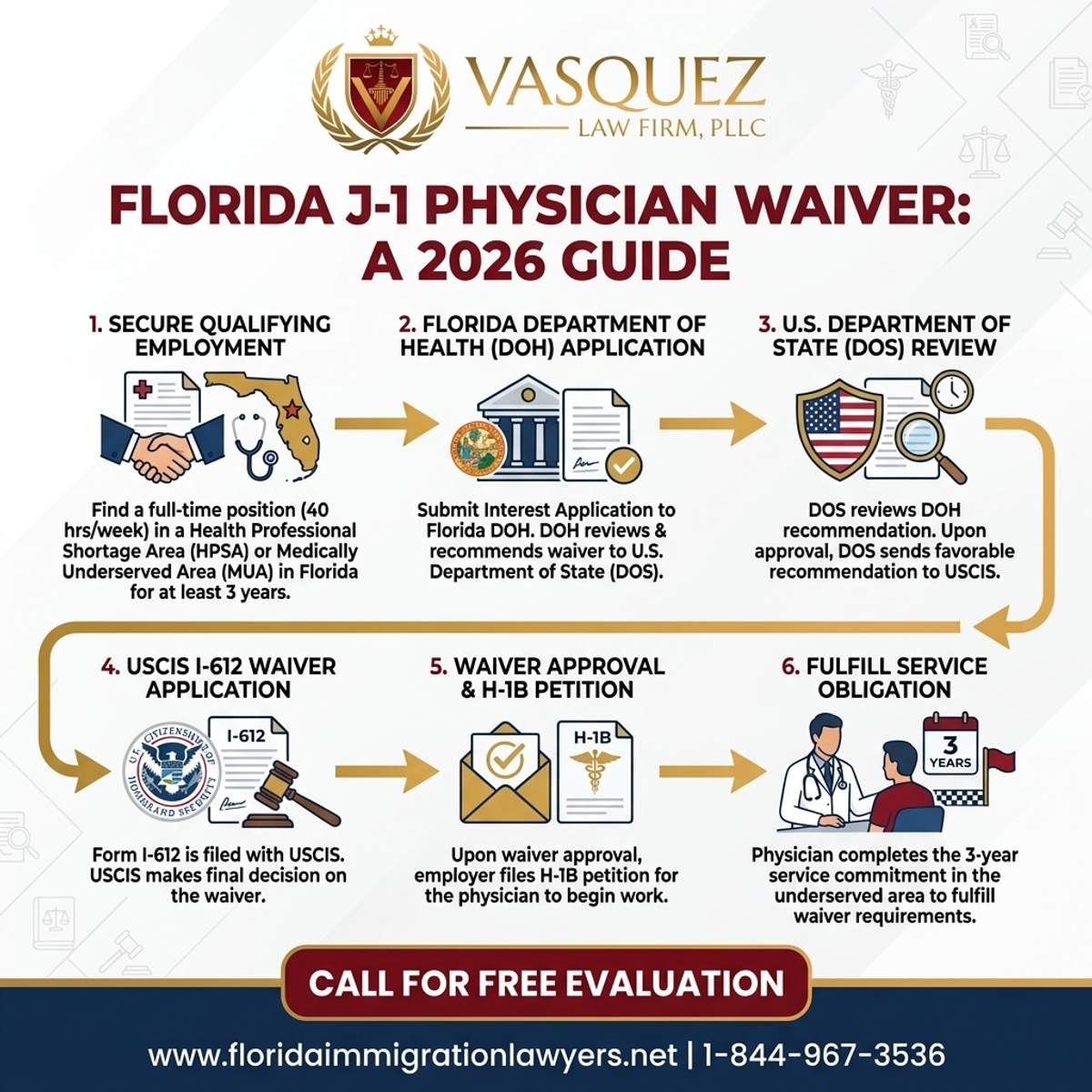
Step-by-Step Process — J-1 Waiver for Physicians in Florida: A 2026 Guide
What is the Application Process for a J-1 Waiver?
The J-1 waiver application involves several steps:
- Secure a Job Offer: Ensure the position is in a designated underserved area.
- Prepare Required Documents: This includes a signed contract, proof of facility designation, and a personal statement.
- Submit the Application: Applications are typically submitted through state health departments before being forwarded to USCIS.
- Await Approval: Approval times can vary, but it generally takes a few months.
Securing a qualifying job offer is the foundational step. The position must be full-time, clinical, and located in a federally designated HPSA or MUA/P. The employment contract must clearly stipulate a minimum three-year commitment to practice medicine in that underserved area. It's crucial that the contract also outlines the physician's salary, benefits, and responsibilities, ensuring they are commensurate with industry standards and the physician's qualifications. Any ambiguity in the job offer can lead to delays or even denial, making legal review by Florida Immigration Lawyers highly advisable.
The preparation of required documents demands meticulous attention to detail. Beyond the job offer and proof of facility designation, a compelling personal statement is vital. This statement should articulate the physician's commitment to serving underserved populations, their understanding of the community's needs, and their long-term career goals in the U.S. All supporting documents, such as medical licenses, board certifications, and educational transcripts, must be accurate and properly translated if not in English. An incomplete application is the most common reason for delays or rejection.
Once the state health department reviews and recommends the waiver, the application is forwarded to the U.S. Citizenship and Immigration Services (USCIS) for federal review. This two-stage process means physicians must satisfy both state-specific criteria and federal immigration requirements. USCIS conducts background checks and verifies all submitted information. Throughout this process, maintaining open communication with your legal team at Florida Immigration Lawyers and staying informed about your application status is crucial. Do not navigate this process alone. Contact Florida Immigration Lawyers today.
Document Checklist for J-1 Waiver Applications
- Job offer letter from a qualifying employer
- Signed employment contract
- Proof of underserved area designation
- Personal statement detailing commitment to the position
- Copies of J-1 visa and DS-2019 forms
- Curriculum Vitae (CV) or resume
- Copies of all medical licenses and board certifications
- Evidence of no objection from the home country (if applicable)
- Letters of support from the community or facility
- Any other documents required by the Florida Department of Health
Each document on this list plays a critical role in demonstrating your eligibility and commitment. For instance, the job offer letter and employment contract must clearly state the three-year commitment in the designated underserved area, along with your salary and duties. Proof of underserved area designation, typically a federal designation number, confirms the facility's eligibility. Your personal statement is your opportunity to convey your dedication to serving the community, while copies of your J-1 visa and all DS-2019 forms provide a complete history of your exchange visitor status. Ensuring all these documents are accurately prepared and submitted can significantly streamline your application process.
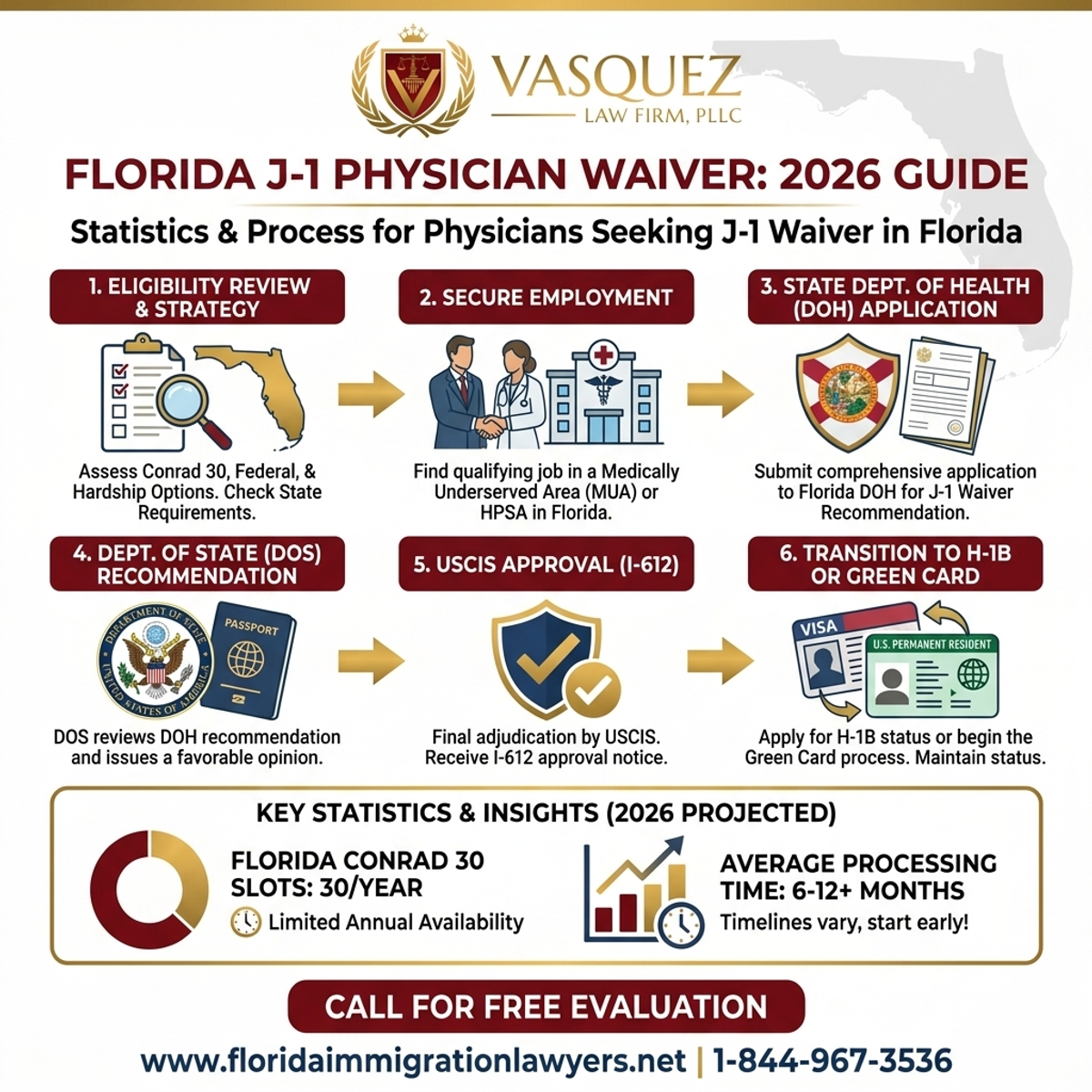
Key Statistics — J-1 Waiver for Physicians in Florida: A 2026 Guide
How Long Does the J-1 Waiver Process Take?
The processing time for a J-1 waiver can vary. As of 2026, expect the following timeline:
| Stage | Typical Timeframe | Notes |
|---|---|---|
| Application Submission | 1-2 months | State health department review |
| USCIS Processing | 3-6 months | Includes background checks |
| Final Approval | 1 month | Notification of waiver grant |
Cost Factors and Fee Breakdown for J-1 Waivers
While official fees for J-1 waivers fluctuate, here is a general breakdown:
| Item | Typical Fee | Notes |
|---|---|---|
| USCIS Filing Fee | Variable | Subject to change |
| Legal Assistance | $1,000 - $5,000 | Varies by complexity |
| Documentation Costs | Varies | Includes translations, certifications |
Common Mistakes to Avoid
- Incomplete Applications: Missing documents can delay processing.
- Ignoring State Requirements: Each state has specific guidelines that must be followed.
- Failing to Demonstrate Need: Employers must prove the necessity of hiring a foreign physician.
- Incorrect Contract Terms: Not adhering to state-mandated employment terms can result in denial.
- Misunderstanding Timeline: Underestimating the time required for approval can cause issues.
- Lack of Legal Representation: Navigating without legal help can lead to errors.
- Poor Communication: Failing to maintain communication with USCIS and state departments can result in missed updates.
- Not Understanding Post-Waiver Obligations: Failing to grasp the requirements after waiver approval, such as the three-year service commitment, can lead to serious legal consequences, including potential deportation. Ensure you fully understand your responsibilities.
- Failing to Maintain J-1 Status: It's crucial to maintain your J-1 non-immigrant status while your waiver application is pending. Any lapse in status could jeopardize your application and lead to complications, potentially requiring a new strategy with the help of Florida Immigration Lawyers.
One of the most frequent pitfalls is submitting an application with missing information or incorrect forms. Always use the most current versions of forms from the USCIS website and the Florida DOH. A single missing signature or an expired document can trigger a Request for Evidence (RFE), significantly prolonging the process. Double-checking every item on the checklist before submission is a simple yet critical step.
Each state's Conrad 30 program has unique requirements and application periods. What works in one state may not apply in Florida. Physicians must thoroughly research the Florida Department of Health's specific guidelines, including any supplemental forms, deadlines, and preferred formats for documentation. Generic applications often fail because they do not address these state-specific nuances.
Employers must provide compelling evidence that they have a genuine need for a foreign physician and that no qualified U.S. physician is available for the position. This typically involves extensive recruitment efforts, such as advertising the position for a specified period and documenting the lack of suitable U.S. applicants. A weak demonstration of need can lead to the state health department declining to recommend the waiver.
The employment contract is a legally binding document that must comply with all state and federal regulations, including minimum salary requirements and the three-year service commitment. Any terms that deviate from these standards, or that are unclear, can lead to a denial. It's highly recommended to have an experienced immigration attorney review the contract to ensure it meets all legal requirements and protects both the physician and the employer.
When to Call a Lawyer
If you are uncertain about any part of the J-1 waiver process, it's crucial to seek legal advice. Situations such as receiving a Notice of Intent to Deny or needing to appeal a decision require experienced guidance. Florida Immigration Lawyers can assist with these and other immigration issues, offering expertise and support throughout the process.
Beyond denials or RFEs, a lawyer's expertise is invaluable for proactive planning. For instance, if you anticipate any changes in your employment circumstances, such as a potential change in facility or a need to alter your specialty, consulting an attorney can help you understand the implications for your waiver and explore permissible options. Furthermore, navigating the complexities of your dependents' immigration status while you pursue your J-1 waiver is another area where legal counsel is essential.
Even seemingly minor issues, like questions about the specific designation of an underserved area or ensuring your personal statement is persuasive and compliant, benefit from professional review. The J-1 waiver process is not just about paperwork; it's about strategizing to present the strongest possible case to both state and federal authorities. Don't hesitate to reach out to Florida Immigration Lawyers at 1-844-967-3536 for personalized guidance.
Frequently Asked Questions (FAQs) About J-1 Waivers
How long does the J-1 waiver process typically take in Florida?
The entire J-1 waiver process, from initial application to final approval, typically spans 5-9 months. The state health department's review can take 1-2 months, followed by USCIS processing which usually lasts 3-6 months. Final notification of approval then takes about one month. Timelines can vary based on caseloads and the completeness of your application, so meticulous preparation is key to avoiding delays. Consulting Florida Immigration Lawyers can help streamline this process.
What are the estimated costs associated with a J-1 waiver application?
The costs for a J-1 waiver application generally include USCIS filing fees, which are variable and subject to change. Legal assistance fees typically range from $1,000 to $5,000, depending on the complexity of your case and the services provided. Additionally, you might incur documentation costs for translations, certifications, and courier services. It's advisable to budget for these expenses and discuss them transparently with your legal counsel at Florida Immigration Lawyers.
Can I change employers after my J-1 waiver is approved?
Generally, changing employers after a J-1 waiver approval is highly restricted and can jeopardize your waiver. The waiver is granted based on your commitment to a specific underserved area and employer for three years. Any change usually requires a new waiver application or an amendment, which is rarely granted and can be complex. It’s crucial to consult with Florida Immigration Lawyers immediately if you anticipate any need to change employers to understand your limited options.
What happens if I fail to complete the three-year service commitment?
Failing to complete the three-year service commitment can have severe consequences, including the revocation of your J-1 waiver and the reinstatement of your two-year home residency requirement. This could lead to difficulties in obtaining future visas or even deportation. It is a strict legal obligation. If unforeseen circumstances arise, you must seek legal advice from Florida Immigration Lawyers promptly to explore any potential, albeit limited, remedies.
Are there specific specialties prioritized for J-1 waivers in Florida?
While all medical specialties are technically eligible, states often prioritize certain fields based on their most pressing healthcare needs in underserved areas. Primary care physicians (Family Medicine, Internal Medicine, Pediatrics) are frequently in high demand. However, specialists in fields like psychiatry, obstetrics/gynecology, and general surgery may also be prioritized depending on specific community needs. Check the Florida Department of Health's annual guidelines for current priorities.
Can my family members also obtain a waiver or remain in the U.S.?
Your dependent family members (spouse and unmarried children under 21) who hold J-2 visas are typically subject to the same two-year home residency requirement as you. When your J-1 waiver is approved, your J-2 dependents also benefit from it, allowing them to adjust their status or apply for an H-4 visa. It's important to include their details in your application and consult Florida Immigration Lawyers to ensure their status is properly managed.
What is the difference between a HPSA and a MUA/P?
Both Health Professional Shortage Areas (HPSAs) and Medically Underserved Areas/Populations (MUA/Ps) are designations by the Health Resources and Services Administration (HRSA) indicating a lack of healthcare access. HPSAs specifically identify shortages of primary medical care, dental, or mental health providers. MUA/Ps identify areas or populations with a shortage of primary care services, often based on factors like infant mortality rates, poverty, and elderly population. Both qualify for J-1 waivers.
About Florida Immigration Lawyers
Florida Immigration Lawyers is a leading law firm specializing in all areas of immigration law. We offer comprehensive services, including assistance with J-1 waivers, asylum, deportation defense, and family and business immigration. Our team is dedicated to serving clients across Florida, ensuring you receive the best possible representation. Contact us at 1-844-967-3536 or visit our website for more information. We are available 24/7 and provide free consultations.
Sources and References
- U.S. Citizenship and Immigration Services (USCIS)
- Executive Office for Immigration Review (EOIR)
- 8 U.S.C. Chapter 12 - Immigration and Nationality Act
- Florida Department of Health, Conrad 30 J-1 Waiver Program
- Health Resources and Services Administration (HRSA)
Related services: immigration practice areas, family immigration services.
This article provides general legal information and is not intended as legal advice. Every case is unique, and outcomes depend on specific facts and circumstances. Contact an attorney for advice about your particular situation.
Contact us today at 1-844-967-3536 for a consultation. Se Habla Espanol - Estamos aqui para ayudarle.
If you need legal assistance, learn more about learn about our immigration practice, or call us at 1-844-967-3536 for a free consultation.
Do Not Navigate This Process Alone
Our experienced immigration attorneys are ready to fight for you. Get a free, confidential consultation today.
Se Habla Español
Frequently Asked Questions
Harold Estrada-Rodriguez
Florida Immigration Attorney · FL Bar No. 1041171
Florida Bar attorney handling Florida-jurisdiction immigration matters. Bilingual representation, free consultations.
Available 24/7 - Free Evaluations
Related Legal Services
Our Florida immigration attorneys can help you with immigration practice areas, free immigration consultation and experienced immigration attorneys. Call today at 1-844-967-3536 for a free consultation.
Related Links
Related Topics
Free Legal Consultation
Discuss your case with our experienced attorneys. We're available 24/7.
Se Habla Español - Estamos aquí para ayudarle.
Related Articles
Naturalization Process Florida Timeline 2026 Guide
The naturalization process in Florida, culminating in U.S. citizenship, involves several key stages including eligibility assessment, filing Form N-400, biometrics, an interview, and the Oath of Allegiance. As of 2026, the typical timeline for this process in Florida ranges from 18 to 24 months, though individual experiences can vary. This guide from Florida Immigration Lawyers provides a comprehensive overview, covering requirements, step-by-step procedures, potential costs, and common pitfalls. We emphasize the importance of understanding Florida-specific nuances and the benefits of legal counsel to navigate this complex journey effectively. Contact us for a free consultation.
H-2B Visa for Florida Hospitality Seasonal Workers
Explore the H-2B visa process for seasonal workers in Florida's hospitality industry. Learn about costs, timelines, and common mistakes. Contact Florida Immigration Lawyers for expert assistance.
Military Naturalization Expedited at Florida Bases
Explore expedited military naturalization for service members stationed in Florida, including MacDill Air Force Base. Learn about eligibility, application steps, and how Florida Immigration Lawyers can assist you.
Immigration Services in Jacksonville, Florida: Your Complete
Explore comprehensive immigration services in Jacksonville, Florida. Learn about visa applications, legal support, and common mistakes to avoid. Contact Florida Immigration Lawyers for expert guidance.
