H-2B Visa for Florida Hospitality Seasonal Workers
Explore the H-2B visa process for seasonal workers in Florida's hospitality industry. Learn about costs, timelines, and common mistakes. Contact Florida Immigration Lawyers for assistance.
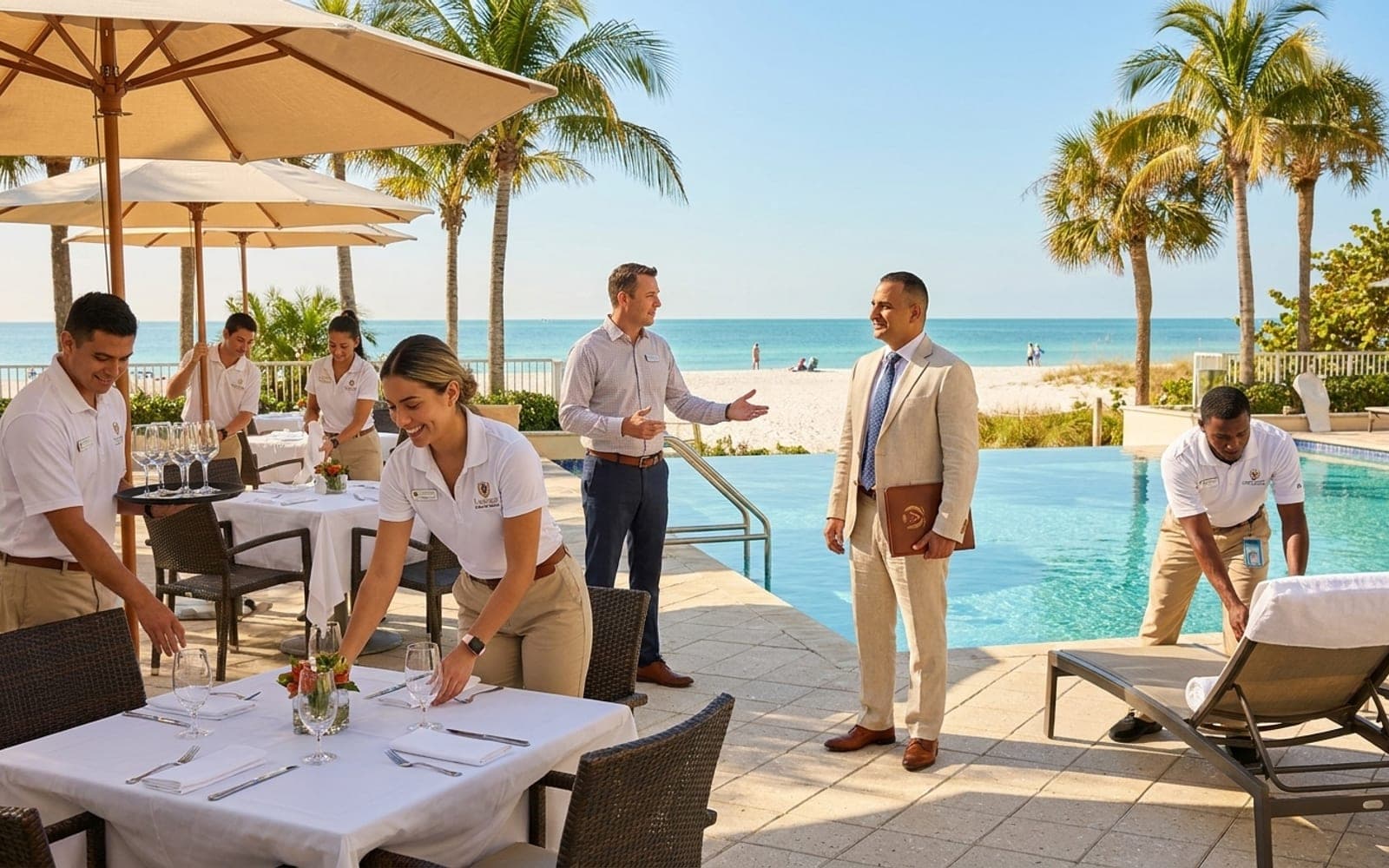
H-2B Visa for Florida Hospitality Seasonal Workers: Your Comprehensive Guide
Florida, with its sun-drenched beaches, world-renowned theme parks, and vibrant tourism industry, relies heavily on a seasonal workforce to maintain its high standards of hospitality. From bustling resorts to quaint coastal restaurants, the demand for temporary, non-agricultural workers often outstrips the local supply. This is where the H-2B visa program becomes an indispensable tool for employers and a crucial pathway for foreign nationals seeking temporary employment in the Sunshine State.
The H-2B non-immigrant visa program allows U.S. employers to bring foreign nationals to the United States to fill temporary non-agricultural jobs. These jobs must be for a temporary period, defined as a one-time occurrence, seasonal need, peakload need, or intermittent need. For Florida's hospitality sector, which experiences significant fluctuations in demand throughout the year, the H-2B visa is a lifeline, ensuring businesses can adequately staff up during peak seasons without committing to year-round employment for positions that are only needed for a portion of the year.
Navigating the complexities of U.S. immigration law can be daunting for both employers and prospective workers. This comprehensive guide will demystify the H-2B visa process, outlining eligibility requirements, the application journey, common challenges, and the immense benefits it offers to Florida's economy and the individuals who contribute to its success.
Understanding the H-2B Visa: Purpose and Scope
The H-2B visa is designed to address labor shortages in various non-agricultural sectors across the United States. Unlike the H-2A visa, which is specifically for agricultural work, the H-2B program covers a broad spectrum of industries, including:
- Hospitality and Tourism (hotels, resorts, restaurants, theme parks)
- Landscaping and Groundskeeping
- Construction
- Forestry and Logging
- Seafood Processing
- Carnival and Amusement Park Workers
- Housekeeping and Janitorial Services
For Florida, the hospitality and tourism sectors are particularly significant. During peak tourist seasons, such as winter and spring break, hotels, restaurants, and attractions require a surge in staff. The H-2B program enables these businesses to hire temporary workers to fill roles like housekeepers, cooks, servers, front desk staff, and lifeguards, ensuring that visitors receive top-notch service and the state's tourism engine continues to thrive.
It's crucial to understand that the H-2B visa is strictly for temporary employment. The employer must demonstrate a temporary need for the workers, which can be seasonal (e.g., winter season in Florida), peakload (e.g., an unexpected increase in business), intermittent (e.g., sporadic needs), or a one-time occurrence (e.g., a special event). This temporary nature is a cornerstone of the H-2B program and differentiates it from visas for permanent or long-term employment.
Eligibility Requirements for H-2B Workers and Employers
For the H-2B Worker:
Individuals seeking an H-2B visa must meet specific criteria:
- Offer of Temporary Employment: The worker must have a legitimate job offer from a U.S. employer for a temporary, non-agricultural position.
- Intent to Return: Applicants must demonstrate an intent to return to their home country upon the expiration of their visa. This often involves showing ties to their home country, such as property, family, or other commitments.
- Qualifications: Workers must meet the minimum job requirements specified by the employer, which may include specific skills, experience, or educational background.
- Country of Origin: Generally, H-2B workers must be from countries designated by the Department of Homeland Security (DHS) in consultation with the Department of State (DOS) as eligible to participate in the program. This list is updated annually.
For the U.S. Employer:
U.S. employers looking to hire H-2B workers must also satisfy several requirements:
- Demonstrate Temporary Need: The employer must prove that their need for the worker's services or labor is temporary, falling into one of the four categories: seasonal, peakload, intermittent, or one-time occurrence.
- Labor Shortage: The employer must show that there are not enough U.S. workers who are able, willing, qualified, and available to perform the temporary work. This typically involves extensive recruitment efforts within the U.S.
- Prevailing Wage: The employer must offer and pay the prevailing wage for the occupation in the area of intended employment, ensuring that H-2B workers are not undercutting U.S. workers' wages.
- Working Conditions: The employment of H-2B workers must not adversely affect the wages and working conditions of similarly employed U.S. workers.
Meeting these stringent requirements is critical for a successful H-2B petition. Employers must meticulously document their temporary need and recruitment efforts, often requiring guidance to navigate the regulatory landscape.
The H-2B Visa Application Process: A Step-by-Step Guide
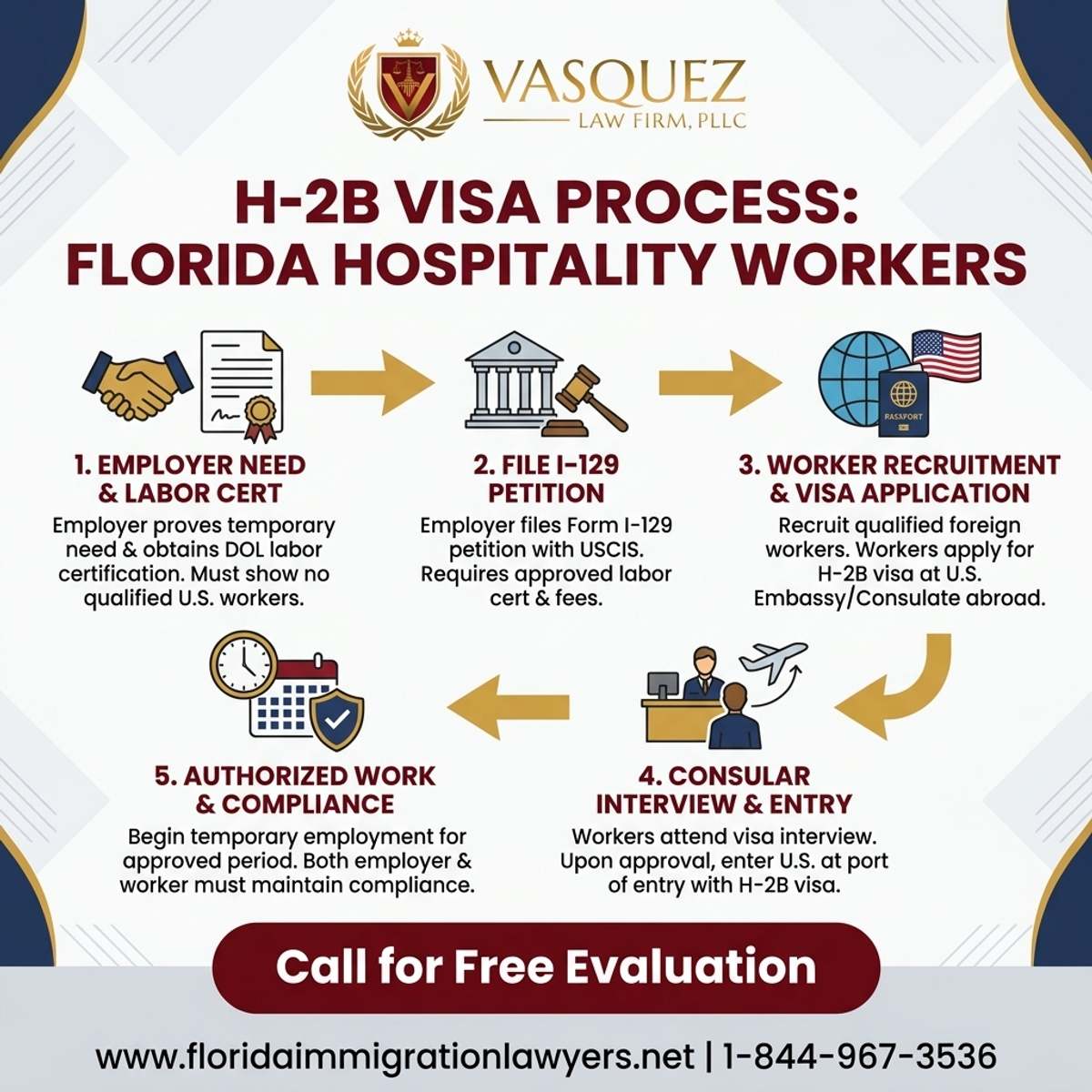
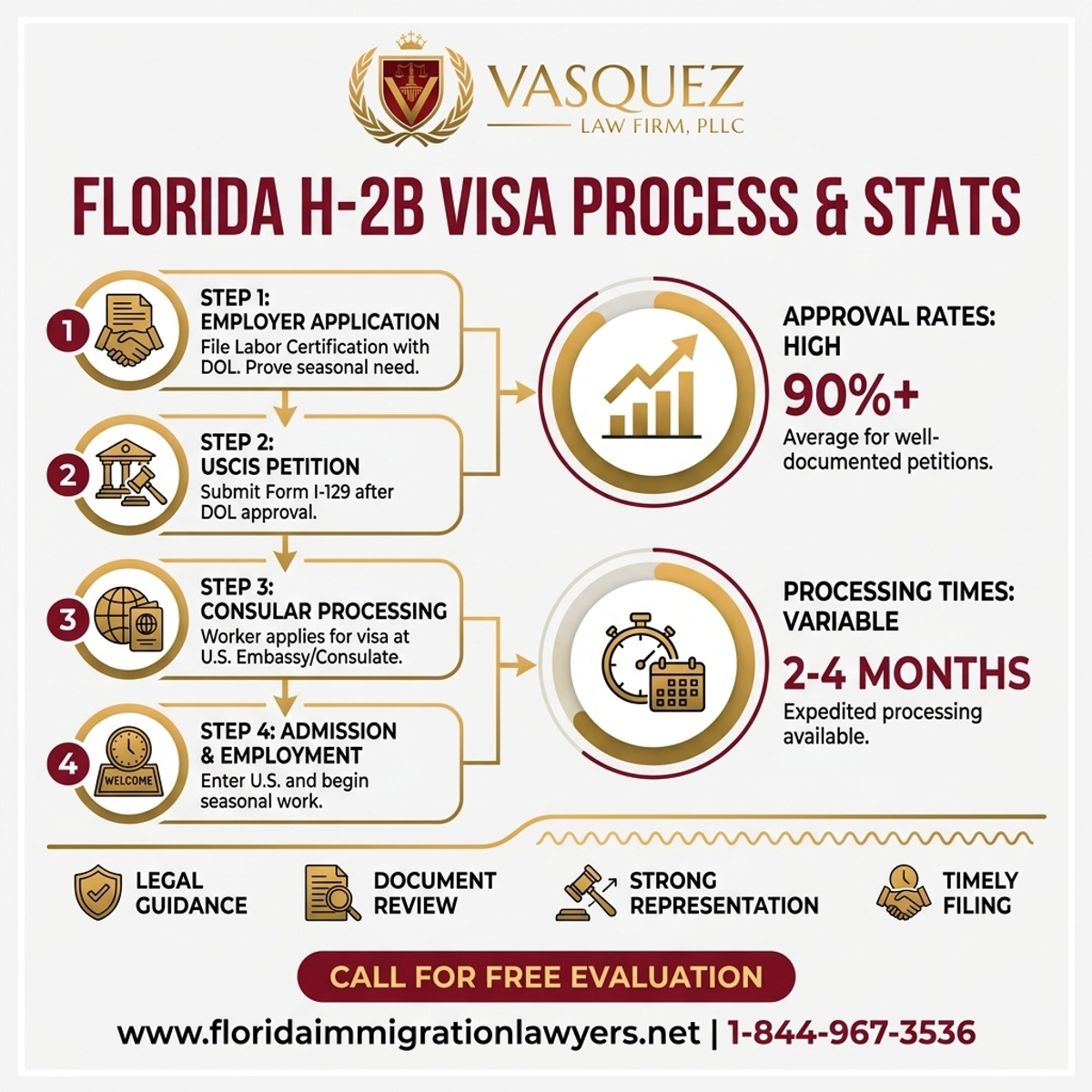
The H-2B visa application process is multi-faceted, involving several government agencies and strict timelines. It typically unfolds in these key stages:
Step 1: Temporary Labor Certification (TLC)
The employer must first apply for a Temporary Labor Certification from the U.S. Department of Labor (DOL). This involves:
- Filing ETA Form 9142B: The employer submits this form to the DOL, outlining the nature of the temporary need, the job duties, wage offered, and the number of workers required.
- Recruitment Efforts: The employer must conduct extensive recruitment efforts to demonstrate that there are no qualified U.S. workers available for the position. This includes advertising in local newspapers, state workforce agencies, and other appropriate venues.
- Prevailing Wage Determination: The DOL determines the appropriate prevailing wage for the position based on the job duties and geographic location.
- Certification: If the DOL is satisfied that all requirements are met and no qualified U.S. workers are available, they will issue a Temporary Labor Certification.
Step 2: Filing Form I-129 Petition
Once the TLC is obtained, the employer files Form I-129, Petition for a Nonimmigrant Worker, with U.S. Citizenship and Immigration Services (USCIS). This petition includes the certified ETA Form 9142B, a detailed explanation of the temporary need, and supporting documentation. USCIS reviews the petition to ensure the employer meets all H-2B program requirements and that the temporary need is legitimate.
Step 3: Visa Interview and Consular Processing
If USCIS approves the I-129 petition, foreign nationals who are outside the U.S. must then apply for an H-2B visa at a U.S. embassy or consulate in their home country. This typically involves:
Step-by-Step Process — H-2B Visa for Florida Hospitality Seasonal Workers
- Completing DS-160: The online Nonimmigrant Visa Application.
- Scheduling an Interview: Attending a visa interview with a consular officer.
- Providing Documentation: Submitting required documents, including a valid passport, the approved I-129 petition receipt, the job offer letter, and evidence of intent to return to their home country.
During the interview, the consular officer assesses the applicant's eligibility, ensuring they meet all criteria and do not pose a security risk. If approved, the visa is stamped in their passport.
Step 4: Admission to the U.S.
Upon arrival at a U.S. port of entry, H-2B visa holders are inspected by U.S. Customs and Border Protection (CBP) officers. CBP makes the final decision on admission and the length of stay, which is typically for the period specified in the approved petition, usually up to one year, with possible extensions.
Navigating Common Challenges and Ensuring Compliance
While the H-2B program offers significant benefits, it is not without its challenges. Both employers and workers must be aware of potential pitfalls and strive for strict compliance with all regulations. One of the most significant hurdles is the annual cap. Congress sets a numerical cap on the total number of H-2B visas issued each fiscal year, currently 66,000, split evenly between the first and second halves of the fiscal year. This cap is often reached very quickly, especially for popular seasons, leading to a lottery system and intense competition for available visas. Employers must plan well in advance and be prepared for the possibility that their petitions may not be selected.
Another critical area is ensuring fair labor practices. H-2B workers are protected by U.S. labor laws, including minimum wage, overtime, and workplace safety regulations. Employers are obligated to provide safe working conditions, pay the prevailing wage as certified by the DOL, and adhere to all terms outlined in the labor certification. Any deviation can lead to severe penalties, including fines, debarment from the program, and even criminal charges. Workers, on the other hand, should be aware of their rights and know where to seek help if they experience exploitation or abuse. Organizations like the Department of Labor and various non-profits offer resources for H-2B workers. If an employer fails to uphold their end of the agreement, or if a worker faces unjust treatment, seeking legal counsel is paramount. Issues such as wage disputes, unsafe working conditions, or even threats of deportation require immediate and expert intervention to protect the worker's rights and legal standing.
Furthermore, the temporary nature of the visa means workers must depart the U.S. upon its expiration, unless an extension is granted or they adjust to another visa status. Overstaying an H-2B visa can lead to serious immigration consequences, including future bars from re-entering the U.S. Both employers and workers should maintain open communication and keep track of visa expiration dates to ensure timely departure or appropriate legal action. Understanding these complexities and maintaining diligent compliance is essential for a successful and ethical H-2B program experience.
Benefits of the H-2B Program for Florida and Its Workers
The H-2B visa program delivers substantial benefits to both Florida's economy and the foreign nationals who participate:
For Florida Employers and the Economy:
- Addresses Labor Shortages: Fills critical gaps in the workforce during peak seasons, preventing businesses from having to reduce services or turn away customers due to insufficient staff.
- Maintains Service Quality: Ensures that Florida's renowned hospitality industry can continue to provide high-quality service, protecting its reputation as a premier tourist destination.
- Economic Growth: Supports local businesses, contributes to tax revenues, and stimulates economic activity by allowing businesses to operate at full capacity.
- Flexibility: Provides employers with the flexibility to scale their workforce up or down according to seasonal demand, optimizing operational costs.
Key Statistics — H-2B Visa for Florida Hospitality Seasonal Workers
For H-2B Workers:
- Legal Employment: Offers a legitimate pathway to work legally in the U.S., earning fair wages and enjoying protections under U.S. labor laws.
- Economic Opportunity: Provides an opportunity to earn income that may be significantly higher than what is available in their home countries, allowing them to support their families and improve their economic standing.
- Cultural Exchange: Offers a chance to experience American culture, improve English language skills, and gain valuable international work experience.
- Skill Development: Workers often acquire new skills or refine existing ones, enhancing their professional profiles for future employment opportunities.
The Role of Legal Counsel
Given the intricate nature of the H-2B visa process, from demonstrating temporary need and navigating recruitment requirements to filing complex petitions and ensuring ongoing compliance, seeking experienced legal guidance is not just beneficial—it's often essential. An experienced immigration attorney can provide invaluable assistance to both employers and workers:
- For Employers: Attorneys can help prepare and submit accurate labor certification applications, respond to DOL audits, file I-129 petitions, and ensure compliance with all federal regulations, minimizing the risk of delays or denials. They can also advise on best practices for recruitment and worker management.
- For Workers: Legal counsel can help workers understand their rights, prepare for visa interviews, and address any issues that may arise during their stay, such as workplace disputes or potential immigration violations.
Working with knowledgeable attorneys ensures that all steps are followed correctly, increasing the likelihood of a successful outcome and protecting the interests of all parties involved. Our team is dedicated to providing comprehensive immigration services, guiding you through every stage of the H-2B process with experience and care.
Conclusion
The H-2B visa program is a vital component of Florida's economic engine, particularly for its thriving hospitality and tourism sectors. It provides a structured and legal framework for employers to address seasonal labor shortages and offers foreign nationals valuable opportunities for temporary employment and cultural exchange. While the process is complex and requires meticulous attention to detail, understanding its requirements and challenges is the first step toward a successful outcome.
Whether you are a Florida employer seeking to bolster your seasonal workforce or a foreign national aspiring to work in the U.S. hospitality industry, navigating the H-2B visa journey requires precision and expertise. Don't let the complexities deter you. With the right guidance, you can effectively utilize this program to achieve your goals. For a free consultation and personalized assistance, we invite you to contact our experienced immigration team today. Let us help you unlock the opportunities that the H-2B visa program offers.
Sources and References
- U.S. Citizenship and Immigration Services (USCIS)
- Executive Office for Immigration Review (EOIR)
- U.S. Department of State - Bureau of Consular Affairs
- Immigration and Nationality Act (INA), 8 U.S.C. Chapter 12
Do Not Navigate This Process Alone
Our experienced immigration attorneys are ready to fight for you. Get a free, confidential case review today.
Se Habla Español
Or leave your details and we’ll call you:
Free Evaluation in 24 Hours
Or talk to us right now

AI voice assistant — available 24/7
FreeFrequently Asked Questions

William J. Vásquez
Founding Attorney · Vasquez Law Firm
U.S. Air Force veteran and immigration attorney with years of hands-on U.S. immigration experience. J.D., NCCU School of Law. AILA member. Admitted to the 4th, 5th, and 11th Circuit Courts.
Available 24/7 - Free Evaluations
Reviewed for legal accuracy by William J. Vásquez
Licensed in North Carolina; U.S. immigration is federal practice.
Related Legal Services
Our Florida immigration attorneys can help you with free immigration consultation, business immigration and deportation defense. Call today at 1-844-YO-PELEO for a free case review.
Related Links
Related Topics
Free Legal Case Review
Discuss your case with our experienced attorneys. We're available 24/7.
Se Habla Español - Estamos aquí para ayudarle.
Related Articles
EAD Advance Parole Combo Card in Florida: What You Need
An EAD advance parole combo card allows individuals with pending adjustment applications to both work and travel abroad without jeopardizing their green card application. Learn how to apply in Florida, what documents you need, and common mistakes to avoid.
PERM Labor Certification in Florida: A 2026 Guide
Learn all about the PERM labor certification process in Florida, essential for employers sponsoring green card applicants. Understand the steps, document requirements, and common mistakes to avoid in this 2026 guide.
Dual Citizenship Lawyer in Florida: What You Need to Know
For Florida residents, the concept of dual citizenship, or holding two passports, offers a compelling blend of opportunities and challenges. While the U.S. generally permits dual nationality, the path to achieving this status requires a meticulous understanding of both U.S. immigration laws and the citizenship policies of your country of origin. This guide explores the definition of dual citizenship, the detailed step-by-step process for U.S. naturalization, and the significant benefits and potential pitfalls involved. We cover essential documentation, typical timelines, and cost considerations for 2026, providing crucial insights for anyone in Orlando, Miami, or across Florida considering this important legal step. Learn about common mistakes to avoid and understand when to seek professional legal counsel to navigate this complex process successfully. Florida Immigration Lawyers is here to provide expert, bilingual support for your dual citizenship journey.
Immigration Lawyer Orlando Free Consultation in Florida
For individuals and families in Orlando, Florida, navigating the complexities of U.S. immigration law requires expert guidance. An immigration lawyer in Orlando offers crucial support for everything from visa applications and green card processes to naturalization and deportation defense. This comprehensive guide details what a free consultation covers, providing a step-by-step overview of immigration pathways, essential document checklists, and expected timelines in 2026. We also highlight common mistakes to avoid, discuss the critical role of legal counsel in deportation and asylum cases, and explain why choosing a local Orlando immigration attorney is beneficial. Florida Immigration Lawyers is dedicated to serving the diverse community of Orlando with compassionate, effective legal solutions, ensuring you receive personalized advice and robust representation for a successful immigration journey.