VAWA Immigration Lawyer: Your 2026 Guide in Florida
For individuals in Florida experiencing domestic abuse from a U.S. citizen or lawful permanent resident, VAWA (Violence Against Women Act) immigration relief offers a confidential pathway to a green card. This article, updated for 2026, provides a comprehensive guide to understanding VAWA self-petitioning, including eligibility criteria, the step-by-step application process, essential documentation, and expected timelines. Learn about the crucial role of a VAWA immigration lawyer in navigating complex requirements, ensuring confidentiality, and protecting your rights throughout the process. We cover common mistakes to avoid and highlight when to seek expert legal counsel to secure your safety and immigration status in Florida. Florida Immigration Lawyers offers free case reviews and compassionate support.

A VAWA immigration lawyer specializes in assisting individuals, primarily victims of domestic violence, abuse, or extreme cruelty by a U.S. citizen or lawful permanent resident spouse, parent, or adult child, to self-petition for immigration benefits. This unique pathway, established by the Violence Against Women Act (VAWA), allows eligible applicants in Florida to seek a green card without the abuser's knowledge or cooperation, offering a vital route to safety and legal status. An attorney helps navigate complex eligibility requirements, gather crucial evidence, and protect confidentiality throughout the process.
- VAWA allows abuse victims to self-petition for a green card confidentially.
- Eligibility includes abuse by a U.S. citizen or LPR spouse, parent, or adult child.
- The process does not require the abuser's consent or knowledge.
- A **VAWA immigration lawyer** is crucial for navigating complex legal and evidentiary requirements.
- Successful petitioners can obtain work authorization and eventual lawful permanent residency.
Navigating the complex U.S. immigration system can be daunting, especially when compounded by the trauma of domestic abuse. For individuals in Florida who have suffered at the hands of a U.S. citizen or lawful permanent resident spouse, parent, or adult child, the Violence Against Women Act (VAWA) offers a beacon of hope. This vital legislation allows victims to “self-petition” for immigration benefits, including a green card, without the abuser’s knowledge or cooperation. Understanding your rights and the intricate application process is paramount to achieving safety and stability.
This comprehensive guide, updated for 2026, delves into what VAWA immigration relief entails, who is eligible, the step-by-step application process, essential documentation, and expected timelines and costs. We will also highlight common pitfalls to avoid and explain when seeking professional legal assistance from a dedicated VAWA immigration lawyer in Florida is not just beneficial, but often critical. Our goal is to empower you with the knowledge needed to take control of your future and secure your legal status, free from fear. If you or a loved one is considering VAWA relief, do not hesitate to contact Florida Immigration Lawyers at 1-844-967-3536 for a free case review.
What is VAWA Immigration Relief and Who is Eligible in Florida?
VAWA immigration relief, authorized by the Violence Against Women Act, permits certain victims of domestic violence, abuse, or extreme cruelty by a U.S. citizen or lawful permanent resident (LPR) spouse, parent, or adult child to petition for immigration benefits on their own behalf, without the abuser’s involvement. This self-petitioning process is designed to protect vulnerable individuals who might otherwise be trapped in abusive relationships due to fear of deportation or lack of legal status. It offers a confidential pathway to obtain a green card and escape dangerous situations.
To be eligible for VAWA self-petitioning, applicants in Florida must meet several key criteria, as outlined in the Immigration and Nationality Act (INA) Section 204(a)(1). First, you must demonstrate a qualifying relationship: you are the spouse, child, or parent of a U.S. citizen or lawful permanent resident (LPR). For spouses, you must be legally married to the abuser, or have believed you were legally married, and the marriage was entered into in good faith. Children must be unmarried and under 21 at the time of filing, or under 25 if the abuse was the primary reason for the delay in filing. Parents must have been abused by their U.S. citizen or LPR adult child. Second, you must have resided with the abuser in the United States. This does not mean you must still be living with them at the time of filing, but rather that a period of cohabitation occurred. Third, you must have been subjected to battery or extreme cruelty during the relationship. This can include physical, sexual, emotional, psychological, or financial abuse. Evidence of such abuse is critical for a successful petition. Finally, you must demonstrate that you are a person of good moral character. This generally means you have not committed certain crimes and have otherwise adhered to legal and societal norms. For victims in Florida, whether in Orlando, Miami, Tampa, or Jacksonville, understanding these specifics is crucial, and a VAWA immigration lawyer can help assess your unique situation against these stringent requirements. This relief is a crucial tool for those seeking safety and independence.
How Does a VAWA Self-Petition Work: A Step-by-Step Guide for Florida Residents?
The VAWA self-petition process involves filing Form I-360, Petition for Amerasian, Widow(er), or Special Immigrant, with U.S. Citizenship and Immigration Services (USCIS), providing compelling evidence of abuse and eligibility criteria. This initial step is critical as it establishes your right to seek protection independently of your abuser. The process is designed to be confidential, meaning USCIS will not notify the abuser of your petition, ensuring your safety throughout the application period.
Here is a detailed, step-by-step guide for Florida residents navigating the VAWA self-petition process, as of 2026:
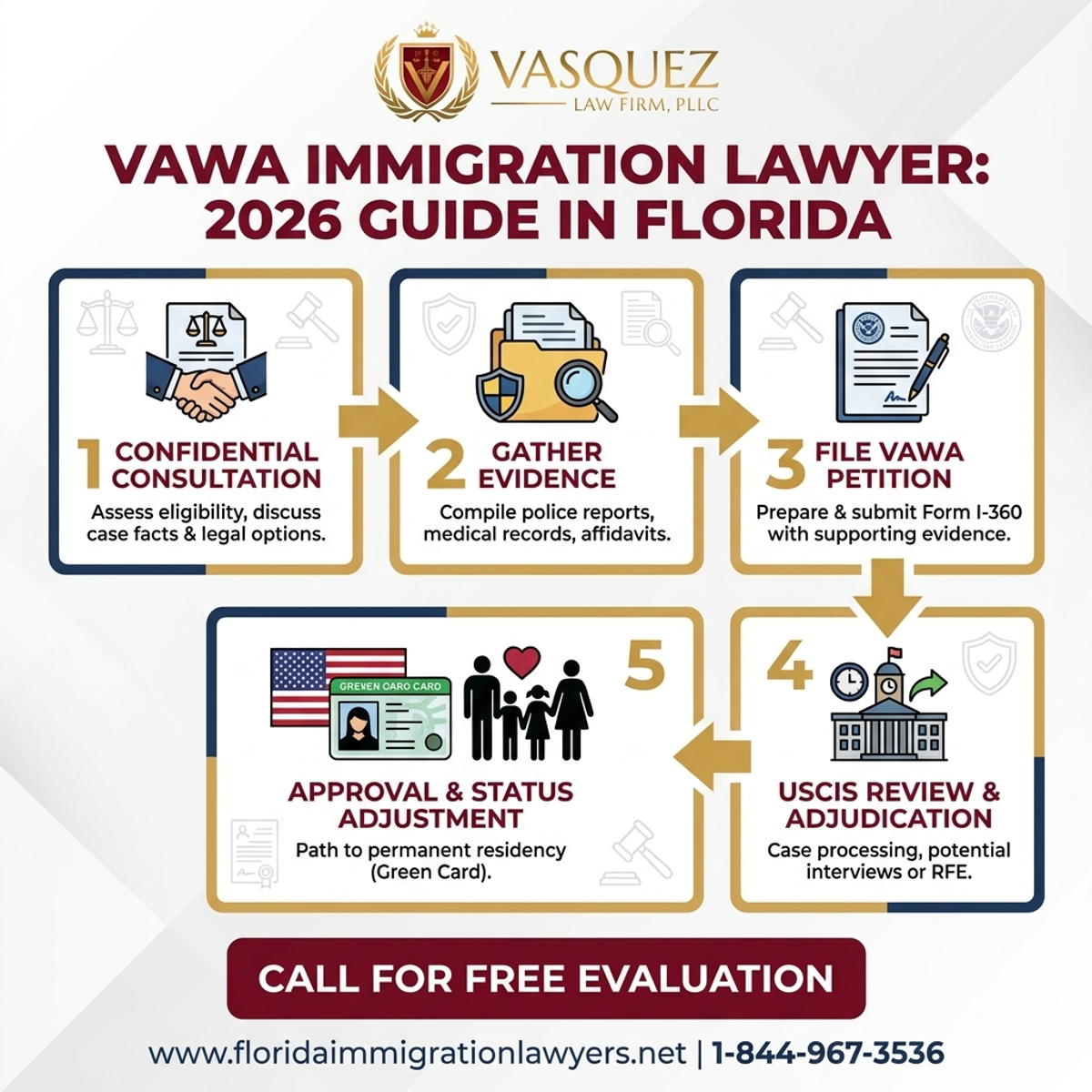
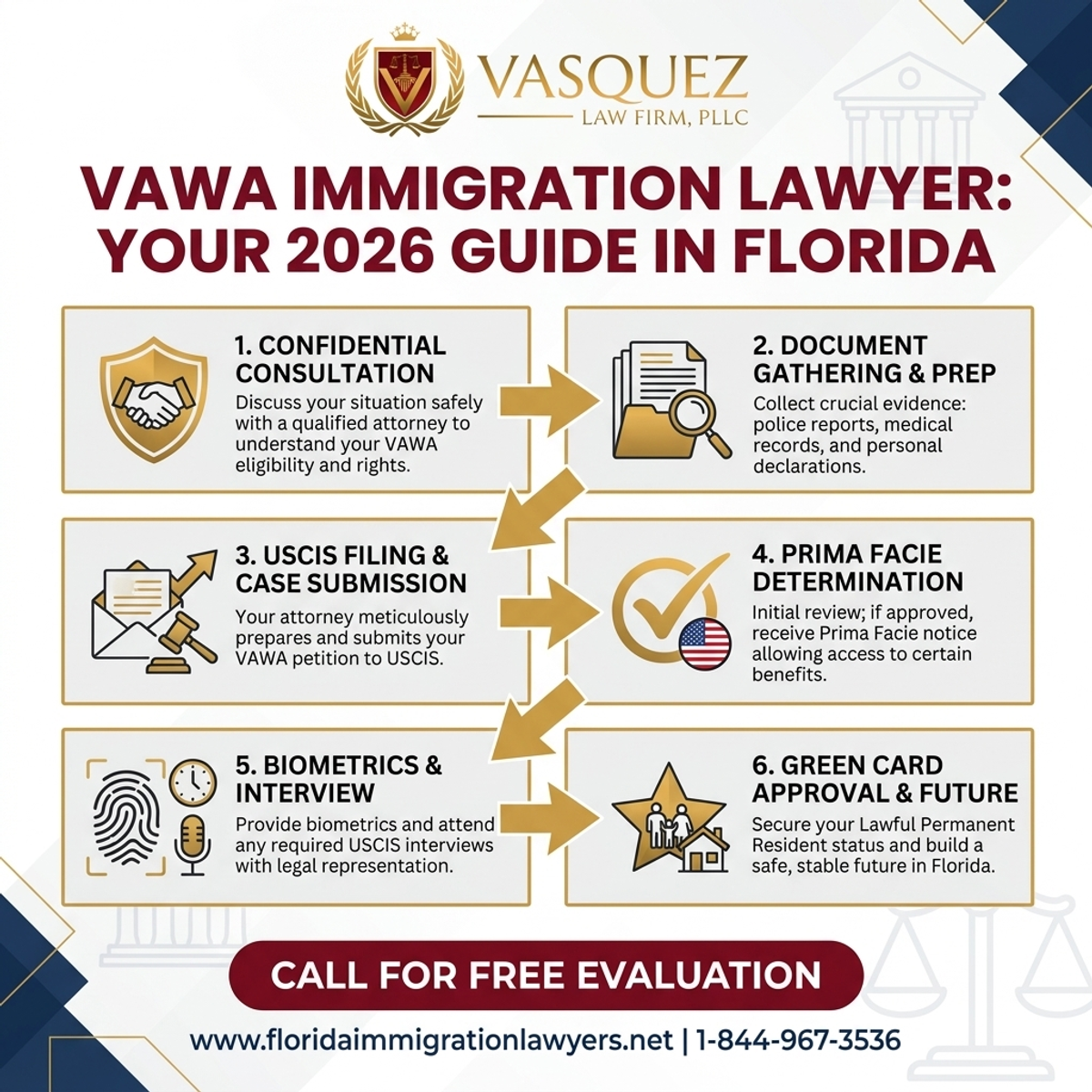
- Consult with a VAWA Immigration Lawyer: The first and most crucial step is to seek legal counsel. An experienced VAWA immigration lawyer in Florida can help you determine your eligibility, understand the types of evidence needed, and develop a strong case strategy. They can also ensure your safety throughout the process and protect your confidentiality.
- Gather Comprehensive Documentation: This involves collecting all available evidence to prove your qualifying relationship, the abuse you suffered, your good moral character, and your residence with the abuser. This can include affidavits from you and supporting witnesses, police reports, medical records, court documents (e.g., protective orders), counseling records, photographs, and joint financial or residential documents.
- Prepare and File Form I-360, Petition for Amerasian, Widow(er), or Special Immigrant: Your attorney will assist in completing Form I-360 accurately and compiling a robust supporting packet. The VAWA self-petition portion of this form is critical. This petition is filed with the USCIS Vermont Service Center, which handles all VAWA cases nationwide.
- Receive Prima Facie Determination (PFD): After USCIS receives your I-360 petition, they will review it to determine if it appears to be well-founded. If so, they may issue a Prima Facie Determination notice within a few months. This notice indicates that you appear to be eligible for VAWA relief and can make you eligible for certain public benefits and work authorization (Employment Authorization Document - EAD) while your petition is pending.
- Respond to Potential Request for Evidence (RFE) or Interview: USCIS may send an RFE if they need more information or clarification regarding your petition. While interviews for I-360 VAWA petitions are rare, they can occur. Your lawyer will help you prepare and respond effectively to any such requests.
- I-360 Approval: If your petition is approved, USCIS will send an approval notice. This means you have established your eligibility for VAWA relief and can proceed to apply for lawful permanent residency.
- Adjustment of Status (Form I-485) or Consular Processing: Once your I-360 is approved, you can apply for a green card. If you are physically present in the U.S. and an immigrant visa is immediately available (which is typically the case for VAWA self-petitioners), you can file Form I-485, Application to Register Permanent Residence or Adjust Status. If you are outside the U.S. or choose to, you would pursue consular processing through a U.S. embassy or consulate abroad.
- Interview for Green Card (if Adjusting Status): For I-485 applicants, an interview at a local USCIS field office (such as the Orlando or Miami field office) is typically required. Your attorney can accompany you to this interview, helping you prepare for questions about your case and ensuring a smooth process.
Through each of these steps, the guidance of an experienced legal professional is invaluable. They can help you present your case in the most compelling way, anticipate challenges, and ensure all deadlines are met. Contact Florida Immigration Lawyers for assistance with your VAWA self-petition.
Essential Documents for Your VAWA Application in Florida (2026 Checklist)
For a strong VAWA petition, essential documents include comprehensive proof of your qualifying relationship, detailed evidence of the abuse or extreme cruelty suffered, documentation of your good moral character, and verification of your U.S. residence with the abuser. The more evidence you can provide, the stronger your case will be, helping USCIS understand the full scope of your situation.
As of 2026, compiling a thorough documentation packet is crucial for VAWA self-petitioners in Florida. Here’s a checklist of documents typically required:
- Proof of Qualifying Relationship:
- Marriage certificate (for spouse petitioners).
- Birth certificates (for child or parent petitioners).
- Divorce decrees or death certificates (if applicable, to show previous marriages ended).
- Affidavits from you and others describing the good faith of your marriage (for spouse petitioners).
- Evidence of Abuse or Extreme Cruelty:
- Your detailed personal affidavit describing the abuse, including dates, specific incidents, and impact.
- Affidavits from witnesses (friends, family, clergy, therapists) who observed the abuse or its effects.
- Police reports or incident reports from local law enforcement (e.g., Orlando Police Department, Orange County Sheriff’s Office).
- Medical records detailing injuries or psychological treatment related to the abuse.
- Photographs of injuries, damaged property, or abusive messages.
- Court documents, such as protective orders, restraining orders, or divorce petitions citing abuse.
- Counseling or therapy records.
- Evidence of financial control or isolation by the abuser.
- Evidence of Residence with the Abuser in the U.S.:
- Joint leases, mortgages, or property deeds.
- Utility bills, bank statements, or mail showing both your names at the same address.
- Affidavits from witnesses confirming cohabitation.
- Evidence of Good Moral Character:
- Police clearance certificates from all places you have lived for six months or more.
- FBI background check.
- Affidavits from individuals attesting to your good character.
Step-by-Step Process — VAWA Immigration Lawyer: Your 2026 Guide in Florida
- Proof of Abuser’s U.S. Citizen or LPR Status:
- Copy of abuser’s birth certificate, passport, naturalization certificate, or green card.
- If you do not have access to these, provide any other evidence or information that can help USCIS verify their status.
- Your Identity and Immigration History Documents:
- Birth certificate, passport, previous visa stamps, I-94 records.
It is important to note that you do not need to have all of these documents. A strong VAWA case can be built with a combination of compelling evidence. Your personal affidavit, detailing your experiences, is often the most critical piece. A VAWA immigration lawyer can help you identify what specific documents are most relevant and how to best present them to USCIS.
VAWA Processing Times and Costs in 2026: What to Expect in Florida
As of 2026, the overall VAWA immigration process, from filing the I-360 self-petition to receiving a green card, typically ranges from 2.5 to 5 years, with the initial I-360 processing by USCIS often taking 18-36 months. While the I-360 petition itself is fee-exempt, applicants will incur costs for subsequent steps like adjustment of status, medical exams, and legal representation.
Understanding the timeline and potential costs involved is vital for planning your future. Here’s a breakdown of what VAWA applicants in Florida can generally expect:
VAWA Processing Timeline (as of 2026)
| Stage | Typical Timeframe (as of 2026) | Notes |
|---|---|---|
| I-360 Preparation (with attorney) | 2-4 months | Gathering documents, drafting detailed affidavits, strategy development. |
| I-360 Processing (USCIS Vermont Service Center) | 18-36 months | Varies significantly based on USCIS workload and case complexity. |
| Prima Facie Determination (PFD) | 4-6 months after I-360 filing | Notice indicating apparent eligibility, can lead to work authorization (EAD). |
| I-485 Adjustment of Status (if applicable) | 6-18 months after I-360 approval | Time for biometrics, potential interview at local USCIS office (e.g., Orlando, Miami). |
| Total Process to Green Card | 2.5-5 years | Highly variable; can be faster or slower depending on individual case facts and USCIS processing. |
It’s important to remember that these are general estimates. USCIS processing times can fluctuate, and individual circumstances, such as responding to Requests for Evidence (RFEs) or addressing complex issues, can extend the timeline. Your VAWA immigration lawyer will monitor your case’s progress and keep you informed.
VAWA Cost Factors and Fee Breakdown (as of 2026)
| Item | Typical Fee (as of 2026) | Notes |
|---|---|---|
| USCIS I-360 Filing Fee | $0 | VAWA self-petitions are specifically exempt from filing fees. |
| USCIS I-485 Filing Fee (Adjustment of Status) | Varies by age | Current fees should be checked on the USCIS website. |
| Biometrics Services Fee | Varies | Required for I-485 applicants; check USCIS website for current fee. |
| Medical Examination Fee | $200 - $500 | Paid directly to a USCIS-approved civil surgeon. |
| Attorney Fees | Varies widely | Depends on case complexity and attorney’s experience; often a flat fee for VAWA cases. |
| Translation Fees | Varies | If any supporting documents are not in English, certified translations are required. |
| Document Retrieval Fees | Varies | Costs for obtaining police reports, medical records, etc. |
While the I-360 itself is fee-exempt, the subsequent steps and associated professional fees can add up. Many law firms, including Florida Immigration Lawyers, offer payment plans to make legal representation accessible. It’s crucial to discuss all potential costs upfront with your attorney.
Protecting Your Rights: Confidentiality and Safety for VAWA Applicants in Florida
VAWA applications are strictly confidential, meaning USCIS will not notify the abuser of the self-petition, thereby protecting victims from retaliation and enabling them to pursue their immigration goals in safety. This critical provision is a cornerstone of the VAWA legislation, recognizing the severe risks faced by individuals fleeing domestic abuse. The confidentiality measures extend to all communications and documentation related to the petition, safeguarding the applicant's privacy and well-being throughout the entire process.
The confidentiality provisions under VAWA are explicitly stated in INA Section 204(a)(1)(C) and are designed to prevent abusers from using their immigration status to control or intimidate their victims. This means that USCIS cannot contact your abuser or disclose any information about your application to them. This protection is vital for individuals in Florida who may fear their abuser discovering their attempts to gain independence and legal status. Beyond confidentiality, VAWA offers additional layers of protection. Once a Prima Facie Determination (PFD) is issued, typically within a few months of filing the I-360, applicants become eligible for certain public benefits and, significantly, for work authorization (Employment Authorization Document or EAD). This EAD allows victims to gain financial independence, a crucial step in breaking free from abusive relationships. For those facing immediate danger, resources like domestic violence shelters in Orlando, Miami, and throughout Florida offer safe havens and support services, which can be referenced in your petition to further demonstrate your need for protection and good faith. A VAWA immigration lawyer can help you connect with these resources and incorporate them into your overall safety plan, ensuring that your journey towards immigration relief also prioritizes your personal security. Understanding these protections is empowering and helps victims move forward with confidence. For more information on pathways to protection, you may also explore asylum options if applicable to your circumstances.
Key Statistics — VAWA Immigration Lawyer: Your 2026 Guide in Florida
Do not navigate this process alone. Contact Florida Immigration Lawyers today.
Common Mistakes to Avoid in Your VAWA Self-Petition
Applying for VAWA relief is a detailed and often emotionally challenging process. Avoiding common mistakes is crucial for a successful outcome. Even minor errors or omissions can lead to significant delays or even denial of your petition, prolonging your vulnerability and uncertainty.
- Not Seeking Legal Counsel Early: Many applicants attempt to navigate the complex VAWA process alone, often resulting in insufficient evidence or incorrect form completion. A skilled VAWA immigration lawyer can identify eligibility issues, help gather compelling evidence, and ensure all legal requirements are met, significantly increasing your chances of approval.
- Filing Without Sufficient Evidence: VAWA cases are highly dependent on documentary evidence of abuse and other eligibility factors. Submitting a petition with weak or incomplete evidence, such as only a personal statement without corroborating documents (police reports, medical records, witness affidavits), is a primary reason for Requests for Evidence (RFEs) or denials.
- Misunderstanding “Extreme Cruelty”: Abuse is not always physical. Many applicants fail to adequately document emotional, psychological, financial, or sexual abuse, which falls under “extreme cruelty.” Clearly articulating and providing evidence for these less visible forms of abuse is essential.
- Not Disclosing All Relevant Information (Especially Criminal History): Attempting to hide past arrests, even minor ones, or prior immigration violations can severely jeopardize your good moral character requirement. It is always best to fully disclose all relevant information to your attorney, who can then advise on how to address it appropriately.
- Leaving the Abuser Without Documenting Abuse: While safety is paramount, leaving an abusive relationship without first attempting to document the abuse (e.g., getting police reports, medical attention, or taking photos) can make it harder to gather evidence later. If possible, collect evidence safely before or immediately after leaving.
- Withdrawing the Petition Due to Abuser’s Threats or Promises: Abusers often attempt to manipulate victims into withdrawing their petitions by making threats or false promises of change. Succumbing to such pressure can result in losing your opportunity for VAWA relief and returning to a dangerous situation. Remember, the process is confidential.
- Failing to Maintain Good Moral Character: After filing, applicants must continue to demonstrate good moral character. Any new arrests or legal troubles can negatively impact your case, even if your initial petition was strong.
- Failing to Update USCIS on Address Changes: Moving without notifying USCIS of your new address can lead to missed notices, RFEs, or even a denial if USCIS cannot reach you. Always file Form AR-11, Alien’s Change of Address Card, promptly.
- Not Seeking Medical or Psychological Help: Beyond providing evidence for your case, receiving professional help for the trauma of abuse is vital for your well-being. Documentation from therapists or doctors can also serve as strong supporting evidence for your petition.
When to Call a VAWA Immigration Lawyer
You should call a VAWA immigration lawyer as soon as you consider seeking immigration relief due to domestic abuse. The complexities of immigration law, combined with the sensitive nature of abuse, make legal guidance indispensable. An attorney can provide a safe and confidential space to discuss your situation, assess your eligibility, and help you understand the best path forward without fear of exposing your situation to your abuser. This initial consultation is critical for establishing a secure foundation for your case.
Specific scenarios that strongly warrant immediate legal consultation include: if you fear your abuser will discover your application, if you have limited access to documents, if you have any past criminal history or immigration violations, if your abuser has previously threatened you with deportation, or if you have been denied immigration benefits in the past. If you are unsure whether your experiences qualify as “extreme cruelty” or “battery,” an attorney can help you understand the legal definitions and determine if your case meets the criteria. Additionally, if you have children who were also abused, or if you are considering other forms of immigration relief like asylum or deportation defense, a lawyer can help you explore all available options and strategize the most effective approach. Florida Immigration Lawyers have extensive experience with VAWA petitions and understand the unique challenges faced by abuse victims in Florida. We can provide the compassionate and expert representation you need to navigate this journey successfully. Our team is ready to protect your rights and guide you towards a secure future.
About Florida Immigration Lawyers
Florida Immigration Lawyers is a leading law firm dedicated to providing compassionate and effective legal representation for immigrants across Florida. With offices located strategically to serve clients throughout the state, including the Orlando area, our team of experienced immigration attorneys understands the profound impact immigration challenges can have on individuals and families. We specialize in a wide range of immigration matters, from family-based petitions and business visas to complex deportation defense and humanitarian relief like VAWA and asylum. Our commitment is to offer personalized attention, strategic advice, and unwavering support to every client. We pride ourselves on our deep knowledge of immigration law, our empathetic approach, and our proven track record of helping clients achieve their immigration goals. We are available 24/7 to answer your questions and offer free, confidential case reviews. Your journey to a secure future in Florida starts with us. Call Florida Immigration Lawyers at 1-844-967-3536 today.
Sources and References
- U.S. Citizenship and Immigration Services (USCIS)
- Executive Office for Immigration Review (EOIR)
- U.S. Department of State
- 8 U.S.C. Chapter 12 - Immigration and Nationality Act (INA)
- INA Section 204(a)(1) - Petition for Alien Relative (Self-Petitioning Battered Spouses, Children, and Parents)
- 8 CFR Part 204 - Petitions, Subpart H - Petitions for Battered Spouses, Children, and Parents
- USCIS Policy Manual, Volume 7 - Adjustment of Status, Part G - Battered Spouses, Children, and Parents
Related services: immigration practice areas, family immigration services, citizenship and naturalization.
This article provides general legal information and is not intended as legal advice. Every case is unique, and outcomes depend on specific facts and circumstances. Contact an attorney for advice about your particular situation.
If you are a victim of abuse and believe you may be eligible for VAWA immigration relief, taking the first step towards a safer future is crucial. Do not face this journey alone. Florida Immigration Lawyers are here to provide the expert legal guidance and compassionate support you deserve. We offer free, confidential case reviews and are available 24/7 to discuss your options. Take control of your life and secure your immigration status. Call us today at 1-844-967-3536. Se Habla Espanol - Estamos aqui para ayudarle.
If you need legal assistance, learn more about our immigration legal services, or call us at 1-844-967-3536 for a free consultation.
Do Not Navigate This Process Alone
Our experienced immigration attorneys are ready to fight for you. Get a free, confidential consultation today.
Se Habla Español
Or leave your details and we’ll call you:
Free Evaluation in 24 Hours
Or talk to us right now

AI voice assistant — available 24/7
FreeFrequently Asked Questions

William J. Vásquez
Founding Attorney · Vasquez Law Firm
U.S. Air Force veteran and immigration attorney with years of hands-on U.S. immigration experience. J.D., NCCU School of Law. AILA member. Admitted to the 4th, 5th, and 11th Circuit Courts.
Available 24/7 - Free Evaluations
Reviewed for legal accuracy by William J. Vásquez
Licensed in North Carolina; U.S. immigration is federal practice.
Related Legal Services
Our Florida immigration attorneys can help you with immigration practice areas, free immigration consultation and experienced immigration attorneys. Call today at 1-844-967-3536 for a free consultation.
Related Links
Related Topics
Free Legal Consultation
Discuss your case with our experienced attorneys. We're available 24/7.
Se Habla Español - Estamos aquí para ayudarle.
Related Articles
U Visa Certification in Florida: Law Enforcement Guide 2026
For non-citizen crime victims in Florida, the U visa offers a vital path to protection and legal status. This comprehensive guide details the crucial process of obtaining U visa certification from law enforcement, a mandatory step for victims who have suffered substantial abuse and are willing to assist in criminal investigations. Learn about eligibility criteria, the role of agencies like the Orlando Police Department, the step-by-step application process, and expected timelines for 2026. We also cover cost factors and common pitfalls to avoid. Florida Immigration Lawyers provides expert assistance for victims across Florida, ensuring they can navigate these complex legal challenges with confidence and compassion. Discover how our dedicated team can help you pursue justice and secure your future.
Family Petitions for Citizenship Through Father's Family
For individuals in Florida seeking U.S. citizenship through their father's family, understanding the legal pathways is crucial. This comprehensive guide from Florida Immigration Lawyers explains the process, from filing a family petition (Form I-130) to naturalization. We cover derivative and acquired citizenship, step-by-step procedures, required documents, and typical timelines as of 2026. Learn about the cost factors, common mistakes to avoid, and when to seek professional legal assistance from an immigration lawyer in Orlando or anywhere in Florida. Our firm provides expert guidance for complex cases involving paternity, criminal records, or USCIS appeals, ensuring your application for citizenship through a father's family is meticulously prepared. Contact Florida Immigration Lawyers for a free case review.
Immigration Lawyer Orlando Free Consultation: What to Know
Explore the benefits of free immigration consultations in Orlando. Learn how to prepare and what to expect from these initial meetings with a qualified immigration lawyer.
Consular Processing for Florida Applicants: 2026 Guide
Consular processing is essential for Florida residents seeking an immigrant visa. Learn about the steps, timelines, and documents required for a successful application through U.S. embassies and consulates.