Consular Processing for Florida Applicants: 2026 Guide
Consular processing is essential for Florida residents seeking an immigrant visa. Learn about the steps, timelines, and documents required for a successful application through U.S. embassies and consulates.

Consular processing is a crucial step for Florida residents seeking an immigrant visa through a U.S. embassy or consulate. This process involves several steps, including filing a petition, receiving approval from the National Visa Center (NVC), and attending an embassy interview. Key takeaways include:
- File a petition with USCIS.
- Await NVC processing and document review.
- Prepare for the embassy interview.
- Receive the immigrant visa and enter the U.S.
Introduction
For many immigrants in Orlando, Florida, consular processing is a necessary path to obtaining a U.S. immigrant visa. This process, conducted through U.S. embassies or consulates, includes multiple steps such as filing petitions, attending interviews, and more. Navigating these steps can be complex, especially with recent changes affecting immigration policies. Call Florida Immigration Lawyers at 1-844-967-3536 for a free case review to ensure a smooth experience.
This journey, while rewarding, is often fraught with intricate legal requirements and potential pitfalls that can cause significant stress and delays. For families and individuals in Orlando and across Florida, understanding the nuances of consular processing is not just about following steps; it's about securing a future. The landscape of immigration law is constantly shifting, with new policies and procedures frequently introduced. Staying abreast of these changes is a full-time job, and attempting to navigate the process without expert guidance can lead to costly mistakes or even denial.
This is where the invaluable support of experienced immigration attorneys becomes critical. Florida Immigration Lawyers stands ready to demystify this complex process, offering personalized assistance to ensure your application is meticulously prepared and submitted, maximizing your chances of a successful outcome. Don't leave your future to chance; call us for a free case review to gain peace of mind and expert guidance.
What is Consular Processing and How Does It Work in 2026?
Consular processing is the method by which foreign nationals apply for an immigrant visa while outside the U.S. As of 2026, applicants must first file a petition, typically through a family member or employer, which the USCIS must approve. Once approved, the case is transferred to the National Visa Center (NVC) for additional processing.
After the NVC reviews all documentation and fees, they schedule an interview at the relevant U.S. embassy or consulate. The process culminates with the applicant attending this interview, where they will provide documentation and answer questions to determine visa eligibility.
Unlike adjustment of status, which allows eligible individuals already in the U.S. to change their immigration status without leaving the country, consular processing is specifically designed for those who are either residing abroad or who must return to their home country to complete the immigrant visa process. This distinction is crucial for many Florida residents sponsoring relatives or employers seeking to bring foreign talent, as it dictates the entire procedural pathway.
The initial petition, whether it's a family-sponsored Form I-130 or an employment-based Form I-140, serves as the foundation of the entire process. USCIS meticulously reviews these petitions to establish the bona fides of the relationship or employment offer. Any discrepancies or insufficient evidence at this stage can lead to Requests for Evidence (RFEs) or even denials, significantly prolonging the timeline. Once approved, USCIS forwards the case to the NVC, signaling the transition to the consular stage.
The NVC acts as a central hub, facilitating the collection of all necessary civil documents, financial affidavits, and application forms (DS-260). This phase is often referred to as 'documentarily qualified' and requires careful attention to detail. The NVC also conducts initial background checks and ensures all fees are paid before scheduling the interview. In 2026, applicants might encounter more streamlined digital submission processes, but the core requirements for thoroughness remain paramount. Understanding each agency's role is vital for a smooth transition between stages and avoiding common pitfalls.
How Long Does Consular Processing Take in Florida?
The timeline for consular processing can vary. Generally, the entire process, from petition filing to receiving an immigrant visa, can take several months to over a year. As of 2026, processing times have been impacted by policy changes and staffing levels at consulates.
The following table provides a general timeline:
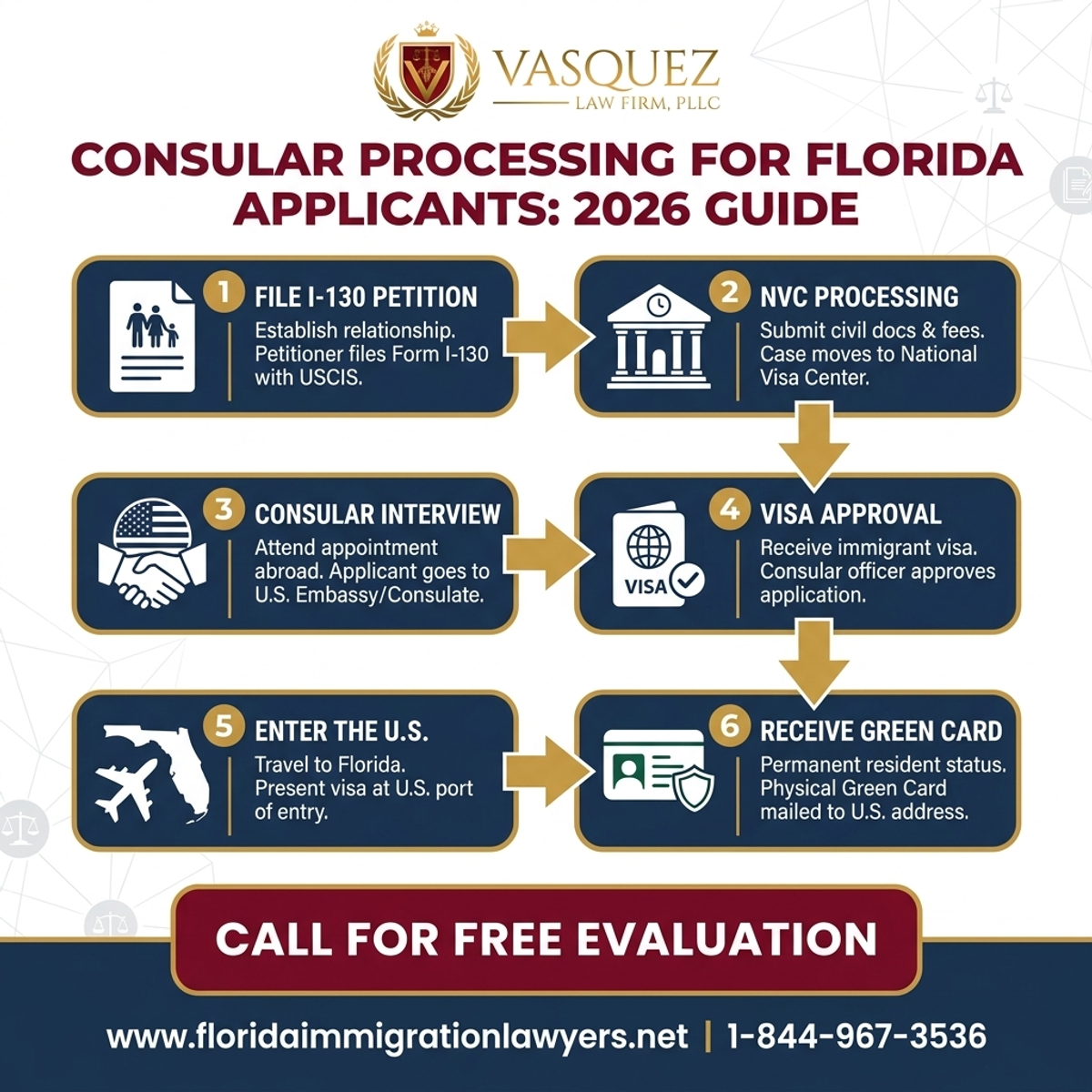
Step-by-Step Process — Consular Processing for Florida Applicants: 2026 Guide
| Stage | Typical Timeframe | Notes |
|---|---|---|
| Petition Filing | 6-12 months | Depends on USCIS workload. |
| NVC Processing | 2-4 months | Document review and fee processing. |
| Embassy Interview | 1-3 months | Interview scheduling and visa issuance. |
The variability in processing times is influenced by several factors, including the specific visa category (e.g., immediate relative vs. family preference categories), the applicant's country of origin, and the current workload at both USCIS and the relevant U.S. embassy or consulate. For instance, immediate relative petitions (spouses, unmarried children under 21, and parents of U.S. citizens) generally have shorter waiting periods once the I-130 is approved, as they are not subject to annual visa quotas. However, preference categories can involve several years of waiting due to visa bulletin backlogs.
Furthermore, administrative processing, which can occur after the interview, can add unpredictable delays. This often involves additional background checks or security reviews and can extend for weeks or even months without a clear timeline. While applicants cannot control all these external factors, they can significantly impact their own processing time by being meticulously prepared and responsive. Promptly submitting all requested documents, accurately completing forms, and responding swiftly to any NVC or consulate inquiries are crucial steps.
Working with experienced professionals like Florida Immigration Lawyers can help you anticipate potential delays and prepare thoroughly, ensuring that your application progresses as efficiently as possible. We can help you track your priority date, understand the Visa Bulletin, and advise on the best strategies to navigate potential bottlenecks, giving you the best chance for a timely outcome. Call us at 1-844-967-3536 for a free consultation to discuss your specific timeline.
What Documents Are Required for Consular Processing?
Applicants must prepare an extensive list of documents for successful consular processing. These documents help verify identity, eligibility, and relationships. Key documents include:
- Approved I-130 or I-140 petition
- NVC fee payment receipts
- Affidavit of Support (Form I-864)
- Immigrant visa application (Form DS-260)
- Birth and marriage certificates
- Police clearance certificates
- Medical examination results
Having all necessary documents ready can reduce delays and complications.
Each document serves a critical purpose in establishing the applicant's identity, eligibility, and the legitimacy of their relationship or employment. For example, the Affidavit of Support (Form I-864) is paramount, demonstrating that the U.S. petitioner has the financial means to support the immigrant and prevent them from becoming a public charge. Without sufficient financial sponsorship, the visa application can be denied, making this one of the most scrutinized aspects of the application.
Beyond the primary documents, applicants must be prepared to provide certified copies of all civil documents, such as birth certificates, marriage certificates, and divorce decrees, along with certified English translations if the originals are in another language. Police clearance certificates are required from every country where the applicant has resided for a certain period since the age of 16, ensuring a thorough background check. Medical examination results, conducted by a USCIS-approved physician, confirm the applicant meets health standards and are crucial for admissibility.
Organizing these documents systematically is a practical tip that cannot be overstated. Create a checklist, keep originals separate from copies, and bring all documents in a well-organized folder to the interview. Florida Immigration Lawyers can assist you in compiling this comprehensive dossier, ensuring no critical document is overlooked and that everything is presented correctly, thereby minimizing the risk of delays or rejections due to administrative errors.
Costs and Fees for Consular Processing
While exact fees may vary, applicants should be prepared for several costs associated with consular processing. The following table outlines potential fees:
| Item | Typical Fee | Notes |
|---|---|---|
| I-130/I-140 Petition | Varies | Depends on petition type. |
| NVC Processing Fees | Varies | Includes application and affidavit fees. |
| Medical Examination | Varies | Required by designated physicians. |
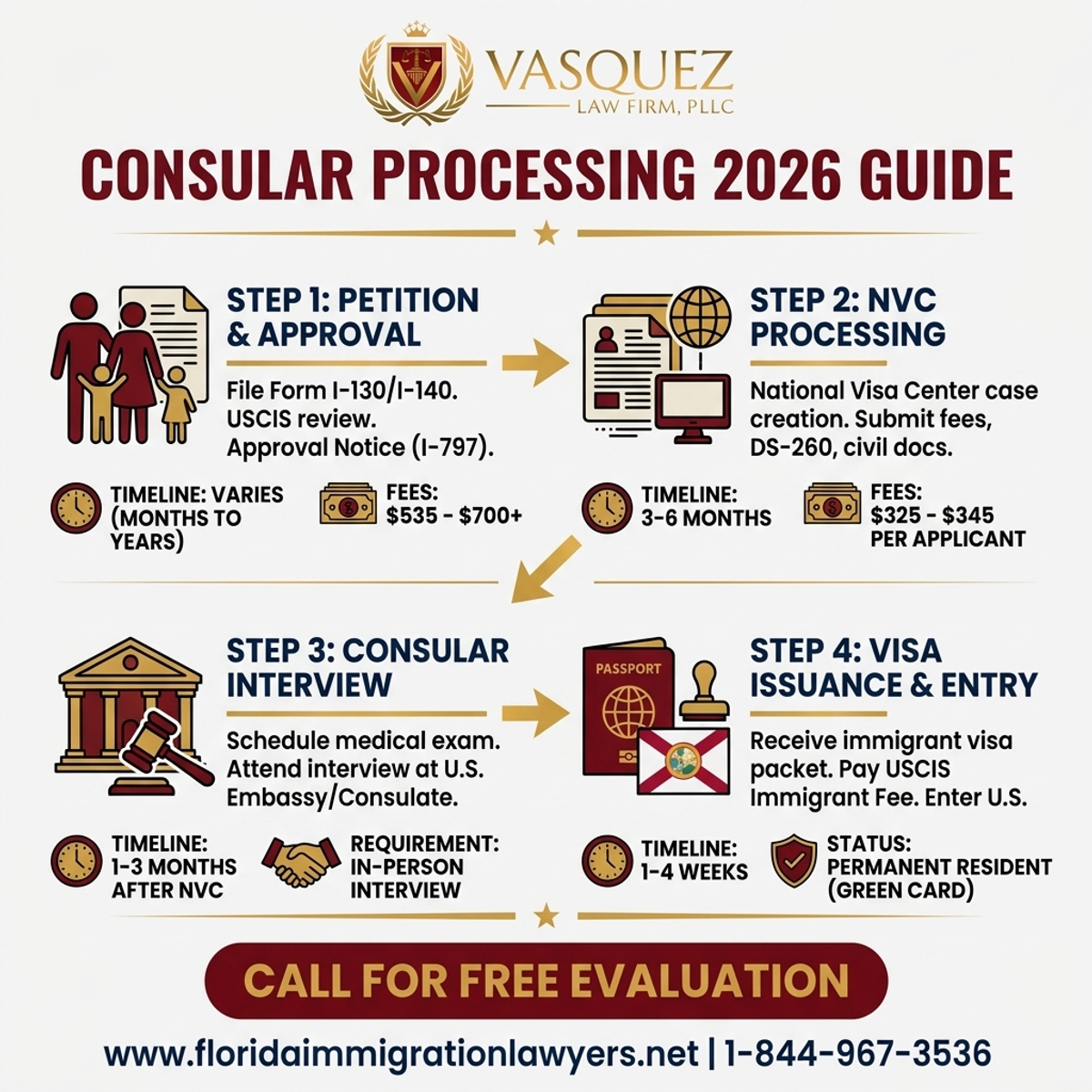
Key Statistics — Consular Processing for Florida Applicants: 2026 Guide
These fees are subject to change, so it is important to check current rates.
Understanding the financial commitment is a vital part of planning for consular processing. The I-130 petition fee, for instance, is typically a fixed amount, currently around $535, but it's important to verify the most up-to-date figures directly from the USCIS website. NVC processing fees include the immigrant visa application processing fee (currently $325 per applicant) and the Affidavit of Support fee (currently $120 per affidavit). These fees are non-refundable and must be paid before the NVC will schedule an interview.
Beyond these direct government fees, applicants should budget for additional expenses. The mandatory medical examination, conducted by an authorized panel physician, can range from $200 to $500 or more, depending on the location and required vaccinations. Travel expenses to the embassy or consulate for the interview, including flights, accommodation, and local transportation, can be substantial, especially for applicants traveling from remote areas or different countries. Furthermore, costs for obtaining police certificates, birth/marriage certificates, and professional translation services for foreign documents can add up quickly.
It is highly advisable to consult the official websites of USCIS and the Department of State for the most current fee schedules, as these are subject to change without prior notice. Engaging with Florida Immigration Lawyers can provide clarity on the total financial scope, helping you budget effectively and avoid any unexpected costs that could hinder your application progress.
How to Prepare for the Embassy Interview?
Preparation is key to a successful embassy interview. Applicants should gather all required documents, review their case details, and practice answering common interview questions. Dress professionally and arrive early to the appointment.
Typical questions may pertain to the applicant's personal history, relationship with the petitioner, and reasons for immigrating to the U.S. Being honest and clear in responses is crucial.
The embassy interview is often the most nerve-wracking but pivotal stage of consular processing. Thorough preparation can significantly boost confidence and improve the outcome. Beyond gathering documents, applicants should meticulously review their entire petition, including all forms and supporting evidence submitted to USCIS and the NVC. This means understanding the details of their relationship with the petitioner (for family-based visas) or the specifics of their job offer (for employment-based visas). Practicing answers to common questions, perhaps through a mock interview with a trusted advisor or attorney, can be incredibly beneficial.
During the interview, the consular officer's primary goal is to verify the information provided in your application and to determine your admissibility to the United States. Questions can range from your personal background and family history to your intentions for living in the U.S., your relationship with the petitioner, and your financial stability. It is crucial to answer truthfully, clearly, and concisely. Avoid volunteering unnecessary information, but be prepared to elaborate when asked. Any inconsistencies between your answers and your submitted documentation can raise red flags and lead to further scrutiny or even a denial.
After the interview, if approved, the visa is typically stamped into your passport and mailed to you. If there are issues, the officer might issue a Request for Evidence (RFE) or place the case under administrative processing. In such scenarios, having legal counsel from Florida Immigration Lawyers can be invaluable to understand the next steps and respond effectively. Remember, the goal is to present a consistent and credible case that demonstrates your eligibility and good faith. Do not navigate this process alone. Contact Florida Immigration Lawyers today.
Common Mistakes to Avoid
Navigating the complexities of consular processing requires meticulous attention to detail. Even minor oversights can lead to significant delays, requests for additional evidence, or even outright denial. Being aware of the most common pitfalls allows applicants to proactively avoid them, streamlining their path to an immigrant visa. The following list highlights critical errors that frequently derail applications, emphasizing the importance of diligence at every stage.
- Not submitting all required documents, leading to delays.
- Missing deadlines for NVC submissions.
- Failing to attend the scheduled interview without notifying the consulate.
- Providing incomplete or incorrect information on forms.
- Forgetting to bring original documents to the interview.
- Ignoring medical examination requirements.
- Misunderstanding the visa fee payment process.
- Overlooking the need for a police clearance certificate.
- Arriving late for the interview.
- Not preparing for potential interview questions.
Avoiding these common mistakes is paramount for a successful consular processing journey. Proactive preparation, meticulous document organization, and adherence to all deadlines are non-negotiable. When in doubt, seeking professional guidance from Florida Immigration Lawyers can provide the expert oversight needed to prevent these errors and ensure your application is as robust as possible.
When to Call a Lawyer
Legal assistance is crucial if you encounter complex issues during consular processing. If you receive a request for evidence, a notice of intent to deny, or face difficulties during the embassy interview, consult an attorney. Florida Immigration Lawyers can provide guidance and representation to protect your interests.
While some applicants may attempt to navigate consular processing independently, certain situations inherently call for the expertise of an immigration attorney. Complexities such as a prior visa overstay, a history of immigration violations, a criminal record, or previous denials of U.S. visa applications can trigger significant challenges that require specialized legal strategies, including the potential filing of waivers of inadmissibility. An attorney can assess your specific situation, determine if a waiver is needed, and meticulously prepare the necessary arguments and documentation to support it.
Furthermore, if your case enters 'administrative processing' after the interview, or if you receive a notice of intent to deny, legal intervention can be crucial. An attorney can communicate with the NVC or the embassy on your behalf, inquire about the status, and provide additional information or legal arguments to help resolve the issue. For Florida residents, having a local and accessible legal team like Florida Immigration Lawyers means you have dedicated advocates who understand both federal immigration law and the specific needs of the Florida community.
Our team can guide you through every potential hurdle, from preparing you for the interview to representing your interests in challenging situations. Don't risk your immigration future by facing complex legal issues alone; a free consultation with Florida Immigration Lawyers at 1-844-967-3536 can provide the clarity and support you need to make informed decisions.
Frequently Asked Questions (FAQs) About Consular Processing
About Florida Immigration Lawyers
Florida Immigration Lawyers is dedicated to assisting clients in navigating the complexities of immigration law. Our experienced attorneys offer services in consular processing, asylum, deportation defense, citizenship, and more. Contact us at 1-844-967-3536 or visit our website. We are available 24/7 and offer free case reviews, serving all of Florida.
Our firm is built on a foundation of deep legal knowledge, compassionate client service, and an unwavering commitment to achieving positive outcomes for those seeking to build a new life in the United States. We understand that each immigration journey is unique, often filled with personal stories and significant aspirations. That's why we offer personalized legal strategies tailored to your specific circumstances, ensuring you receive the most effective representation.
From our offices, we proudly serve clients across all of Florida, providing accessible and reliable legal support. Our 24/7 availability for urgent matters and our offer of free case reviews underscore our dedication to being there for you when you need us most. Whether you are navigating family immigration, employment visas, or complex deportation defense, Florida Immigration Lawyers is your trusted partner. Se Habla Español.
Sources and References
- U.S. Citizenship and Immigration Services (USCIS)
- Executive Office for Immigration Review (EOIR)
- 8 U.S.C. Chapter 12 - Immigration and Nationality Act
Related services: immigration practice areas, family immigration services, citizenship and naturalization.
This article provides general legal information and is not intended as legal advice. Every case is unique, and outcomes depend on specific facts and circumstances. Contact an attorney for advice about your particular situation.
Call Florida Immigration Lawyers at 1-844-967-3536 for a free consultation. Se Habla Español - Estamos aquí para ayudarle.
If you need legal assistance, learn more about our immigration legal services, or call us at 1-844-967-3536 for a free consultation.
Do Not Navigate This Process Alone
Our experienced immigration attorneys are ready to fight for you. Get a free, confidential consultation today.
Se Habla Español
Or leave your details and we’ll call you:
Free Evaluation in 24 Hours
Or talk to us right now
AI voice assistant — available 24/7
FreeFrequently Asked Questions

William J. Vásquez
Founding Attorney · Vasquez Law Firm
U.S. Air Force veteran and immigration attorney with years of hands-on U.S. immigration experience. J.D., NCCU School of Law. AILA member. Admitted to the 4th, 5th, and 11th Circuit Courts.
Available 24/7 - Free Evaluations
Reviewed for legal accuracy by William J. Vásquez
Licensed in North Carolina; U.S. immigration is federal practice.
Related Legal Services
Our Florida immigration attorneys can help you with experienced immigration attorneys, business immigration and asylum protection. Call today at 1-844-967-3536 for a free consultation.
Related Links
Related Topics
Free Legal Consultation
Discuss your case with our experienced attorneys. We're available 24/7.
Se Habla Español - Estamos aquí para ayudarle.
Related Articles
Immigration Lawyer Orlando Free Consultation Guide 2026
Discover how an immigration lawyer in Orlando can assist with your immigration needs. Learn about the services offered, what to expect during consultations, and common mistakes to avoid. Contact Florida Immigration Lawyers for a free consultation today.
Immigration Lawyer Orlando Free Consultation Today
Explore immigration services in Orlando with a focus on recent changes affecting DACA and legal immigration categories. Learn what documents are necessary, timeline expectations, and common mistakes to avoid. Get a free consultation today.
Orlando Immigration Fraud Attorney: I-601 Waivers
Facing allegations of immigration fraud or misrepresentation in Florida can be a frightening experience, potentially leading to inadmissibility and separation from loved ones. The I-601 Waiver of Grounds of Inadmissibility offers a critical pathway to overcome these challenges by demonstrating extreme hardship to a qualifying U.S. citizen or lawful permanent resident relative. This comprehensive guide details the eligibility criteria, the intricate step-by-step application process, essential documentation, and realistic processing timelines for I-601 waivers as of 2026, with a special focus on the Orlando and wider Florida context. We highlight common mistakes to avoid and emphasize the invaluable role of an experienced Orlando immigration fraud attorney. Florida Immigration Lawyers stands ready to provide expert legal counsel, ensuring your application is meticulously prepared and persuasively presented, guiding you through every complex stage.
CSPA Aging Out: Protecting Child Immigrants in Florida 2026
The Child Status Protection Act (CSPA) is a critical U.S. immigration law safeguarding children from 'aging out' of eligibility for permanent residency due to processing delays. This guide from Florida Immigration Lawyers explains CSPA eligibility, the precise age calculation, and the step-by-step process for families in Florida. We cover vital requirements, common mistakes like missing the 'sought to acquire' deadline, and provide a comprehensive document checklist. Understanding CSPA is essential for derivative beneficiaries in family-based petitions, especially with fluctuating visa bulletins and potential category conversions. Learn how to protect your child's immigration future and when to seek expert legal assistance from our firm, serving Jacksonville and all of Florida.