Immigration Bond Hearing Florida: Your 2026 Guide
Navigating an immigration bond hearing in Florida requires a clear understanding of the process, eligibility, and legal requirements. This 2026 guide from Florida Immigration Lawyers provides essential information on securing release from ICE detention, including details on bond hearings, required documents, typical timelines, and associated costs. Learn about the factors immigration judges consider, common mistakes to avoid, and when it's critical to enlist expert legal counsel. With Florida-specific insights and practical advice, this resource aims to empower individuals and families facing immigration detention across the state, from West Palm Beach to Miami. Secure a free consultation with our experienced attorneys for dedicated support.

An immigration bond hearing in Florida is a crucial legal proceeding where an immigration judge determines if a detained non-citizen can be released from U.S. Immigration and Customs Enforcement (ICE) custody by posting a bond. As of 2026, eligibility depends on factors like criminal history, flight risk, and community ties. The judge sets a bond amount, which must be paid to secure temporary release while the individual's immigration case proceeds. Navigating this process effectively often requires skilled legal representation to present a strong case for release.
- An immigration bond allows temporary release from ICE detention.
- Eligibility is assessed by an immigration judge based on various risk factors.
- Bond amounts vary widely, typically ranging from $1,500 to $25,000 or more.
- A bond hearing is a formal proceeding requiring evidence and legal arguments.
- Expert legal counsel significantly improves the chances of a favorable bond decision.
Finding out that a loved one has been detained by U.S. Immigration and Customs Enforcement (ICE) can be an incredibly distressing experience, especially when it happens in Florida. The immediate concern for many families is how to secure their release, and often, an immigration bond is the answer. Understanding the process of an immigration bond hearing in Florida is critical for anyone facing this challenging situation. This guide provides comprehensive information on eligibility, procedures, timelines, and costs as of 2026, offering clarity and practical advice.
At Florida Immigration Lawyers, we understand the complexities and emotional toll of immigration detention. Our dedicated team is here to help you navigate these difficult waters. If you or someone you know is facing an immigration bond hearing in West Palm Beach or anywhere in Florida, do not hesitate to seek professional legal assistance. Call Florida Immigration Lawyers at 1-844-967-3536 for a free consultation today.
What is an Immigration Bond Hearing in Florida?
An immigration bond hearing is a legal proceeding before an immigration judge to determine if an individual detained by ICE can be released on bond, and if so, what the appropriate bond amount should be. This hearing is vital for individuals seeking release from detention centers across Florida, such as the Glades County Detention Center or Broward Transitional Center. The primary goal is to convince the judge that the detainee does not pose a flight risk or a danger to the community, making them eligible for release while their immigration case progresses.
During the hearing, the immigration judge considers various factors, including the detainee's ties to the community, criminal history, immigration history, and potential eligibility for relief from removal. Unlike criminal bond hearings, immigration bond hearings fall under civil law, focusing on whether the individual's release would be detrimental to national security or a risk for them to abscond. The process is governed by sections of the Immigration and Nationality Act (INA), specifically 8 U.S.C. § 1226, which outlines the authority for detention and release on bond. Having an experienced attorney present at these hearings is paramount to effectively advocate for the detainee's release and present a compelling case to the judge.
The outcome of an immigration bond hearing can significantly impact a person's ability to prepare for their full immigration court proceedings, as being outside of detention allows for better access to legal counsel, family support, and evidence gathering. In Florida, these hearings are typically held at immigration courts located in Miami or Orlando, depending on where the individual is detained. Understanding the nuances of these hearings and preparing thoroughly are essential steps toward securing freedom and continuing the fight for legal status in the U.S.
Who is Eligible for an Immigration Bond in Florida?
Eligibility for an immigration bond in Florida is determined by an immigration judge, who assesses whether a detained individual poses a flight risk or a danger to the community. Generally, non-citizens detained by ICE who are not subject to mandatory detention under INA 236(c) may be eligible for a bond. This typically excludes individuals with certain serious criminal convictions or those who have recently re-entered the U.S. after a prior deportation order. The judge evaluates each case individually, considering all relevant circumstances.
The decision to grant a bond is discretionary, meaning the judge has significant leeway based on the evidence presented. Factors that positively influence eligibility include strong ties to the U.S. community, such as family members (especially U.S. citizens or lawful permanent residents) living in Florida, stable employment, property ownership, and a lack of serious criminal history. Conversely, a history of failing to appear for court dates, prior deportations, or convictions for crimes involving moral turpitude can significantly diminish the chances of receiving a bond. It is crucial to gather and present evidence demonstrating strong community ties and a low risk of flight.
Factors Affecting Bond Decisions
Immigration judges in Florida consider a range of factors when deciding whether to grant an immigration bond and its amount. These include:
- Community Ties: The presence of family members, particularly U.S. citizens or legal permanent residents, and a stable residence in Florida.
- Employment History: Consistent employment or a job offer demonstrates stability and a commitment to lawful conduct.
- Criminal Record: The nature and severity of any past criminal offenses. Minor infractions are viewed differently than serious felonies.
- Immigration History: Previous immigration violations, such as prior deportations or unauthorized entries, can negatively impact a bond decision.
- Likelihood of Success: The probability of the individual succeeding in their underlying immigration case, such as asylum or cancellation of removal.
- Flight Risk: Any evidence suggesting the individual might abscond or fail to appear for future court dates.
- Danger to the Community: Any credible evidence that the individual poses a threat to public safety.
Presenting a comprehensive case that addresses these factors is essential for a favorable outcome. An attorney can help organize evidence, prepare witnesses, and craft persuasive legal arguments to highlight the detainee's positive attributes and mitigate any negative perceptions.
How Does the Immigration Bond Process Work in Florida?
The immigration bond process in Florida typically begins after an individual is detained by ICE and placed into removal proceedings. Once detained, ICE may set an initial bond amount, or the individual may request a bond hearing before an immigration judge. This process requires careful navigation and adherence to specific legal steps. Understanding each stage is crucial for those seeking the release of a loved one.
The process generally involves several key steps, starting with the Notice to Appear (NTA) which formally initiates removal proceedings. If ICE does not set a bond, or if the amount is deemed too high, a request for a bond hearing can be made. This hearing is where the judge evaluates the eligibility criteria and determines a fair bond amount. Once a bond is set, it must be paid in full to an authorized ICE facility. After payment, the individual is released, typically with conditions such as regular check-ins with ICE. This entire process, from detention to release, can be complex and time-sensitive, often requiring immediate legal intervention to ensure due process and the best possible outcome.
Key Stages and What to Expect
- Detention and Notice to Appear (NTA): An individual is detained by ICE and served with an NTA, which informs them of the charges against them and the date of their first court appearance. This is the official start of removal proceedings.
- Initial Bond Determination (by ICE or Judge): ICE may initially offer a bond. If not, or if the bond is too high, the detainee or their attorney can request a bond hearing before an immigration judge. This request is typically made verbally at the first master calendar hearing or through a written motion.
- Bond Hearing Preparation: The attorney gathers evidence supporting the detainee's eligibility, such as proof of U.S. family ties, employment, community involvement, and a lack of criminal history. Witnesses may also be prepared to testify.
- The Bond Hearing: The hearing takes place before an immigration judge. The attorney presents arguments and evidence for release, while the ICE attorney may argue against it. The judge then makes a decision on whether to grant a bond and sets the amount.
- Bond Payment: If a bond is granted, the specified amount must be paid in full at an authorized ICE facility. This payment can be made by a U.S. citizen or lawful permanent resident, who then becomes the obligor responsible for ensuring the detainee appears for all future court dates.
- Release from Detention: Once the bond is paid and processed, the detained individual is released. They will typically be given instructions for their next court date and any conditions of their release.
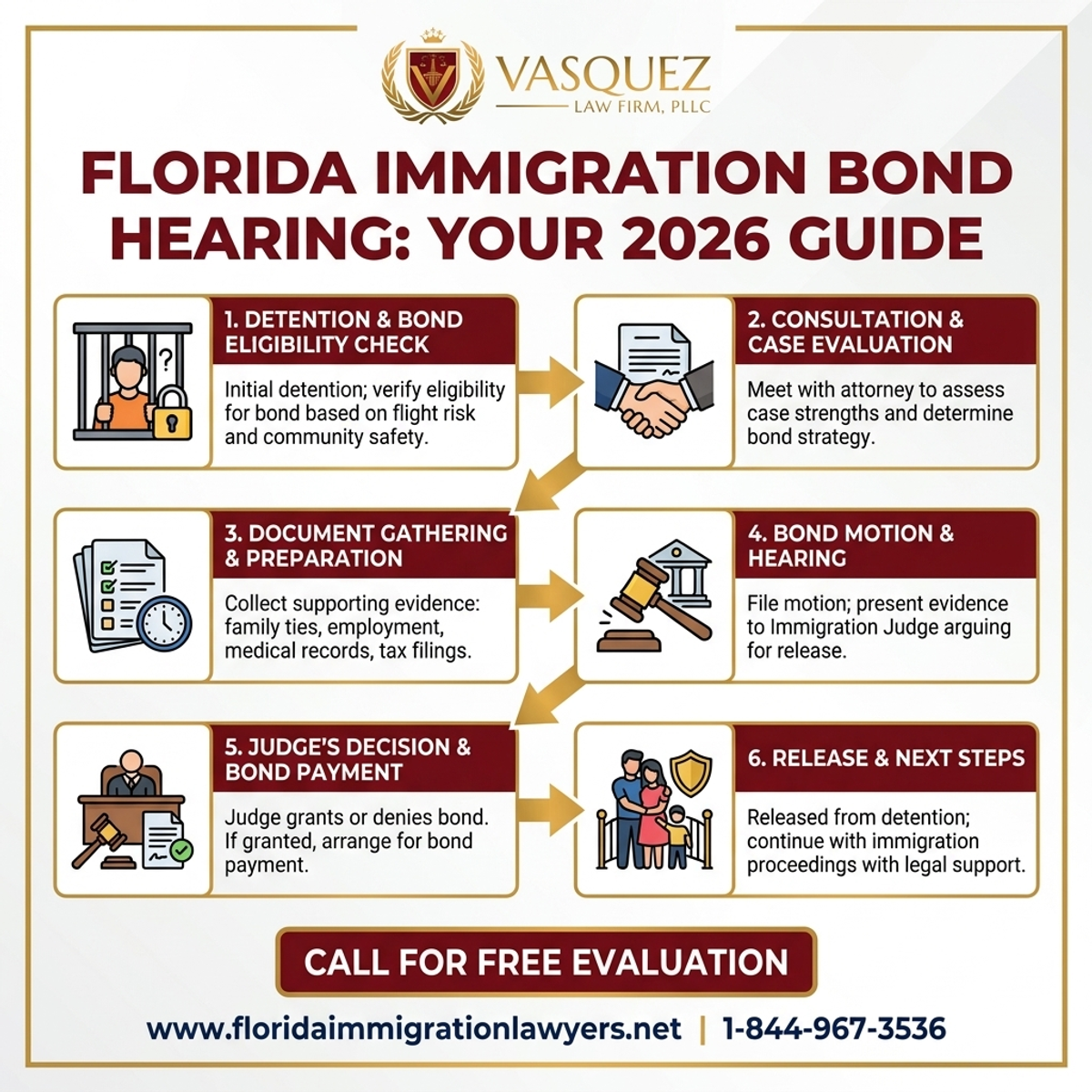
Step-by-Step Process — Immigration Bond Hearing Florida: Your 2026 Guide
Throughout these stages, legal counsel is invaluable for navigating the bureaucratic hurdles and presenting the strongest possible case. USCIS and EOIR (Executive Office for Immigration Review) provide official information on these processes, but a lawyer helps interpret and apply them to specific cases.
What Documents Are Needed for an Immigration Bond Hearing?
Preparing for an immigration bond hearing in Florida requires a thorough collection of supporting documents to demonstrate the detainee's ties to the community and lack of flight risk or danger. The more comprehensive and organized the documentation, the stronger the case for release. These documents help the immigration judge make an informed decision by providing concrete evidence of the detainee's circumstances.
A well-prepared document packet can significantly influence the judge's perception of the detainee's reliability and commitment to appearing for future court dates. It is not enough to simply state that a person has strong ties; these ties must be proven with tangible evidence. Missing or incomplete documentation can weaken a case, potentially leading to a higher bond amount or even a denial of bond. Your attorney will guide you through compiling this essential information, ensuring all necessary paperwork is in order and presented effectively during the bond hearing.
- Proof of Identity: Passport, birth certificate, national ID from home country.
- Proof of Residency: Utility bills, lease agreements, property deeds in Florida.
- Family Ties Documentation: Marriage certificates, birth certificates of U.S. citizen or LPR children/spouses, affidavits from family members in Florida.
- Employment Records: Pay stubs, employment verification letters, tax returns, job offer letters.
- Financial Records: Bank statements, proof of assets, or any evidence of financial stability.
- Character Reference Letters: Letters from community leaders, employers, or long-term friends attesting to the detainee's good character.
- Medical Records: If the detainee has significant health issues requiring ongoing care, these can support a bond request.
- Evidence of Rehabilitation: If there is a criminal history, proof of rehabilitation, completion of programs, or community service.
- Past Court Appearances: Records showing a history of appearing for all prior court dates, if applicable.
- Evidence of Relief Eligibility: Any initial documentation supporting eligibility for underlying immigration relief (e.g., asylum application, family petition).
What is the Typical Timeline for an Immigration Bond Hearing in 2026?
The timeline for an immigration bond hearing in Florida can vary significantly based on the detention facility, court docket, and specific circumstances of the case. As of 2026, while efforts are made to expedite these hearings, detainees and their families should be prepared for potential delays. Generally, a bond hearing is scheduled relatively quickly compared to other immigration court proceedings, recognizing the urgency of detention.
From the moment of detention to the actual bond hearing, the process can take anywhere from a few days to several weeks. If an individual is detained in a remote facility, it might take longer for them to be transported to an immigration court in Miami or Orlando. After the hearing, if a bond is granted, the payment process and subsequent release are usually swift, often occurring within 24-72 hours of payment. However, unforeseen administrative hurdles can occasionally extend these periods. Working with an attorney can help streamline the process and provide realistic expectations.
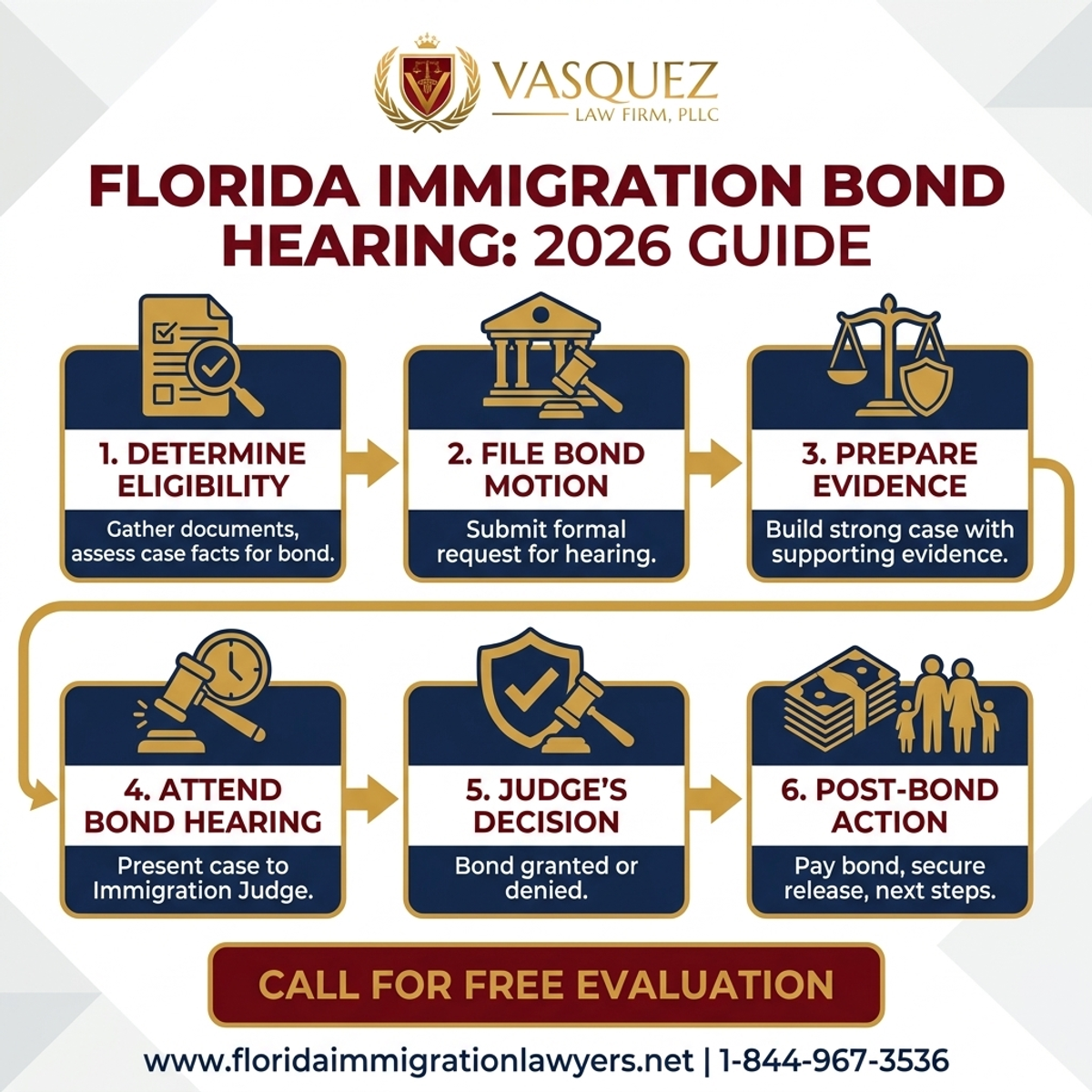
Key Statistics — Immigration Bond Hearing Florida: Your 2026 Guide
| Stage | Typical Timeframe (as of 2026) | Notes |
|---|---|---|
| Detention to NTA Issuance | Immediately to 72 hours | Individual is taken into ICE custody and served with charges. |
| NTA Issuance to First Master Calendar Hearing | 2-4 weeks | First appearance before an immigration judge, where bond may be requested. |
| Request for Bond Hearing to Actual Hearing | 1-3 weeks | Time for the court to schedule and hold the dedicated bond hearing. |
| Bond Hearing Decision | Immediately (same day) | Judge typically issues a decision at the conclusion of the hearing. |
| Bond Payment to Release | 24-72 hours | After payment is processed at an authorized ICE facility. |
How Much Does an Immigration Bond Cost in Florida?
The cost of an immigration bond in Florida is determined by an immigration judge and can vary significantly based on the individual's specific circumstances. As of 2026, there is no fixed price for an immigration bond; instead, the amount is set on a case-by-case basis. Judges consider factors such as flight risk, criminal history, and community ties when determining the bond amount. The minimum bond amount is typically $1,500, but they can range upwards of $25,000 or even higher in more complex cases involving significant flight risk or serious past offenses.
It is important to understand that the bond amount is a security deposit, not a fine. It is fully refundable once the individual's immigration case is concluded, provided they have appeared for all their scheduled court dates. In addition to the bond amount itself, families should also account for legal fees associated with hiring an immigration attorney, which can be a substantial but worthwhile investment. These fees cover the attorney's time for preparing the case, representing the detainee at the hearing, and handling all necessary paperwork. While the bond amount is a direct cost, legal fees are an investment in increasing the likelihood of a successful bond hearing and navigating the overall immigration process effectively.
Understanding Bond Amounts and Fees
The judge has broad discretion in setting the bond amount. While the minimum is usually $1,500, bonds for individuals with minor criminal records or perceived higher flight risk often fall between $5,000 and $15,000. For those with more serious issues, bonds can reach $20,000 to $25,000 or more. The bond must be paid in full by a U.S. citizen or lawful permanent resident at an authorized ICE facility. This person, known as the obligor, is responsible for ensuring the detainee attends all future court hearings.
| Item | Typical Fee (as of 2026) | Notes |
|---|---|---|
| Minimum Immigration Bond | $1,500 | Set by immigration judge, refundable if all court dates are met. |
| Average Immigration Bond | $5,000 - $15,000 | Varies greatly depending on individual case factors (flight risk, criminal history). |
| Higher Risk Bonds | $20,000 - $25,000+ | For cases with more serious concerns regarding flight or danger. |
| Attorney Legal Fees | Varies (hourly or flat fee) | Covers case preparation, representation at hearing, filings. Non-refundable. |
Do not navigate this complex process alone. The stakes are high, and the legal landscape of immigration bond hearings can be challenging to understand without expert guidance. Contact Florida Immigration Lawyers today for a free consultation. Our experienced attorneys are ready to provide the dedicated support you need.
Common Mistakes to Avoid in an Immigration Bond Hearing
Navigating an immigration bond hearing in Florida is fraught with potential pitfalls that can jeopardize a detainee's chance of release. Avoiding these common mistakes is crucial for a successful outcome.
- Failing to Appear for Court Dates: Missing any scheduled court appearance, even a preliminary one, is a severe error. It signals a high flight risk to the judge and can lead to immediate bond denial or revocation, making future release extremely difficult.
- Lying or Providing Inconsistent Information: Any false statements or inconsistencies in documentation or testimony can severely damage credibility with the immigration judge and ICE, leading to a denial of bond and potentially other legal repercussions.
- Not Providing Sufficient Evidence of Ties to the Community: Simply stating one has family or a job is not enough. Without concrete evidence like utility bills, birth certificates, employment letters, or property deeds, the judge may not be convinced of strong community ties.
- Ignoring Past Criminal History: Attempting to conceal or downplay past criminal convictions is a critical mistake. It's better to address them head-on, providing evidence of rehabilitation or mitigating circumstances, rather than letting the ICE attorney present them as a surprise.
- Failing to Hire an Experienced Immigration Attorney: Representing oneself or relying on inexperienced counsel can lead to missed deadlines, improper filings, and ineffective arguments. An attorney understands the nuances of immigration law and court procedures.
- Not Preparing Witnesses: If family or friends are testifying, they must be prepared to answer questions clearly and consistently. Unprepared witnesses can inadvertently harm the case by providing confusing or contradictory information.
- Underestimating the Importance of the Hearing: Some mistakenly believe a bond hearing is a mere formality. It is a critical legal proceeding where a strong, well-prepared case is essential for release.
- Failing to Understand Mandatory Detention Rules: Not realizing if a detainee is subject to mandatory detention under INA 236(c) can lead to false hopes and wasted effort. Certain criminal convictions make individuals ineligible for bond.
- Delaying Legal Action: The longer a person remains in detention, the more difficult it can become to gather evidence and build a case. Prompt legal action is often vital for a quicker resolution.
- Paying the Bond Without Understanding the Conditions: The obligor (the person paying the bond) must understand their responsibility to ensure the detainee attends all court dates. Failure to do so can result in forfeiture of the bond.
When to Call an Immigration Lawyer for a Bond Hearing
The decision to call an immigration lawyer for a bond hearing in Florida should ideally be made as soon as a loved one is detained by ICE. The complexities of immigration law, coupled with the urgency of securing release, make legal representation not just beneficial, but often indispensable. An experienced attorney can significantly improve the chances of a favorable bond decision and prevent critical mistakes.
You should contact Florida Immigration Lawyers immediately if any of these scenarios apply:
- Your loved one has just been detained by ICE: Prompt legal action can initiate the bond process quickly.
- ICE has denied a bond or set an unreasonably high amount: An attorney can challenge ICE's decision before an immigration judge.
- The detainee has a complex immigration history: Prior deportations, multiple entries, or asylum claims require expert legal navigation.
- There is a criminal history involved: Certain criminal convictions can affect bond eligibility or lead to mandatory detention, requiring a lawyer to assess options.
- You are unsure about eligibility or the required documentation: An attorney can clarify eligibility and help compile a comprehensive evidence packet.
- The detainee is subject to mandatory detention: While bond may not be possible, an attorney can explore other avenues for release or relief from removal.
- You need help understanding court procedures and legal arguments: An attorney provides essential guidance and representation in court.
At Florida Immigration Lawyers, we specialize in deportation defense and bond hearings. Our attorneys are well-versed in the specific procedures of Florida's immigration courts, including those serving West Palm Beach and surrounding areas. We work tirelessly to advocate for our clients' release, ensuring their rights are protected throughout the detention and bond process. Don't face this challenging time alone; let us put our expertise to work for you.
About Florida Immigration Lawyers
Florida Immigration Lawyers is a leading immigration law firm dedicated to serving individuals and families across the entire state of Florida. With a deep understanding of U.S. immigration law and a compassionate approach, our experienced attorneys provide comprehensive legal services to navigate complex immigration challenges. We pride ourselves on offering personalized attention and strategic advocacy for every client, from family-based petitions to deportation defense and citizenship applications.
Our firm is committed to protecting the rights and futures of immigrants in Florida. We offer a wide range of services, including asylum applications, visa petitions, green card processes, naturalization, and crucial representation in immigration bond hearings. We understand the unique needs of the Florida community, including those in West Palm Beach, Miami, Orlando, and Tampa. Available 24/7, we provide free, confidential consultations to discuss your case and develop an effective legal strategy. Choose Florida Immigration Lawyers for dedicated, knowledgeable, and accessible legal support.
Sources and References
- U.S. Citizenship and Immigration Services (USCIS)
- Executive Office for Immigration Review (EOIR)
- 8 U.S.C. Chapter 12 - Immigration and Nationality Act (INA)
- 8 U.S.C. § 1226 - Apprehension and Detention of Aliens
- 8 CFR Part 236 - Apprehension and Detention of Inadmissible and Deportable Aliens
Related services: asylum and refugee protection, immigration waivers, humanitarian protection programs, DACA renewal and applications.
This article provides general legal information and is not intended as legal advice. Every case is unique, and outcomes depend on specific facts and circumstances. Contact an attorney for advice about your particular situation.
Navigating an immigration bond hearing can be one of the most stressful experiences for non-citizens and their families in Florida. With the right legal guidance, however, a positive outcome is within reach. Do not face ICE or the immigration courts alone. Contact Florida Immigration Lawyers today at 1-844-967-3536 for a free consultation. Se Habla Español - Estamos aquí para ayudarle.
If you need legal assistance, learn more about our deportation defense practice, or call us at 1-844-967-3536 for a free consultation.
Do Not Navigate This Process Alone
Our experienced immigration attorneys are ready to fight for you. Get a free, confidential consultation today.
Se Habla Español
Or leave your details and we’ll call you:
Free Evaluation in 24 Hours
Or talk to us right now

AI voice assistant — available 24/7
FreeFrequently Asked Questions

William J. Vásquez
Founding Attorney · Vasquez Law Firm
U.S. Air Force veteran and immigration attorney with years of hands-on U.S. immigration experience. J.D., NCCU School of Law. AILA member. Admitted to the 4th, 5th, and 11th Circuit Courts.
Available 24/7 - Free Evaluations
Reviewed for legal accuracy by William J. Vásquez
Licensed in North Carolina; U.S. immigration is federal practice.
Related Legal Services
Our Florida immigration attorneys can help you with family immigration services, immigration practice areas and free immigration consultation. Call today at 1-844-967-3536 for a free consultation.
Related Links
Related Topics
Free Legal Consultation
Discuss your case with our experienced attorneys. We're available 24/7.
Se Habla Español - Estamos aquí para ayudarle.
Related Articles
How to Choose an Immigration Lawyer in Florida 2026
Selecting the right immigration lawyer in Florida is a critical decision that can profoundly impact your future. With complex regulations and varying case types, finding an attorney who specializes in your specific needs, possesses a strong reputation, and communicates transparently is paramount. This guide from Florida Immigration Lawyers provides actionable steps, from verifying credentials with the Florida Bar and understanding fee structures to recognizing common pitfalls like 'notario' scams. Learn how to effectively vet potential legal counsel, prepare necessary documents, and set realistic expectations for your immigration journey in 2026. Empower yourself to make an informed choice and secure expert legal representation for your family, business, or defense immigration needs in Orlando and across Florida.
VAWA Immigration Lawyer: Your 2026 Guide in Florida
For individuals in Florida experiencing domestic abuse from a U.S. citizen or lawful permanent resident, VAWA (Violence Against Women Act) immigration relief offers a confidential pathway to a green card. This article, updated for 2026, provides a comprehensive guide to understanding VAWA self-petitioning, including eligibility criteria, the step-by-step application process, essential documentation, and expected timelines. Learn about the crucial role of a VAWA immigration lawyer in navigating complex requirements, ensuring confidentiality, and protecting your rights throughout the process. We cover common mistakes to avoid and highlight when to seek expert legal counsel to secure your safety and immigration status in Florida. Florida Immigration Lawyers offers free case reviews and compassionate support.
U Visa Certification in Florida: Law Enforcement Guide 2026
For non-citizen crime victims in Florida, the U visa offers a vital path to protection and legal status. This comprehensive guide details the crucial process of obtaining U visa certification from law enforcement, a mandatory step for victims who have suffered substantial abuse and are willing to assist in criminal investigations. Learn about eligibility criteria, the role of agencies like the Orlando Police Department, the step-by-step application process, and expected timelines for 2026. We also cover cost factors and common pitfalls to avoid. Florida Immigration Lawyers provides expert assistance for victims across Florida, ensuring they can navigate these complex legal challenges with confidence and compassion. Discover how our dedicated team can help you pursue justice and secure your future.
Family Petitions for Citizenship Through Father's Family
For individuals in Florida seeking U.S. citizenship through their father's family, understanding the legal pathways is crucial. This comprehensive guide from Florida Immigration Lawyers explains the process, from filing a family petition (Form I-130) to naturalization. We cover derivative and acquired citizenship, step-by-step procedures, required documents, and typical timelines as of 2026. Learn about the cost factors, common mistakes to avoid, and when to seek professional legal assistance from an immigration lawyer in Orlando or anywhere in Florida. Our firm provides expert guidance for complex cases involving paternity, criminal records, or USCIS appeals, ensuring your application for citizenship through a father's family is meticulously prepared. Contact Florida Immigration Lawyers for a free case review.