TPS to Green Card: Florida Pathway Explained
Learn how to transition from TPS to a green card in Florida. Explore eligibility requirements, necessary documentation, and common pitfalls. Contact Florida Immigration Lawyers for guidance and support.

For many individuals living in Florida under Temporary Protected Status (TPS), the dream of obtaining a Green Card and securing permanent residency is a significant goal. While TPS offers vital temporary relief, it does not automatically lead to a Green Card. However, specific pathways exist for TPS holders to adjust their status and become lawful permanent residents. Navigating these complex immigration laws requires a clear understanding of the requirements and a strategic approach. This guide from VLF Florida will explain the process, highlight key considerations for those in Florida, and outline how our experienced Florida immigration lawyers can assist you every step of the way.
Understanding Temporary Protected Status (TPS) in Florida
Temporary Protected Status (TPS) is a humanitarian immigration benefit granted by the U.S. government to eligible nationals of certain countries experiencing conditions that make it unsafe for their citizens to return. These conditions can include armed conflict, environmental disaster, or other extraordinary and temporary circumstances. For individuals in Florida, TPS provides a crucial shield against deportation and allows them to live and work legally in the United States for a designated period.
While TPS offers temporary stability, it is not a path to permanent residency on its own. It's essential to understand that TPS status is temporary and must be re-registered periodically. However, holding TPS can be a critical stepping stone for some individuals to pursue a Green Card through other avenues, provided they meet specific eligibility criteria. The key is often tied to how one initially entered the U.S. and whether they have other qualifying family or employment relationships.
The Pathway from TPS to a Green Card: Key Requirements
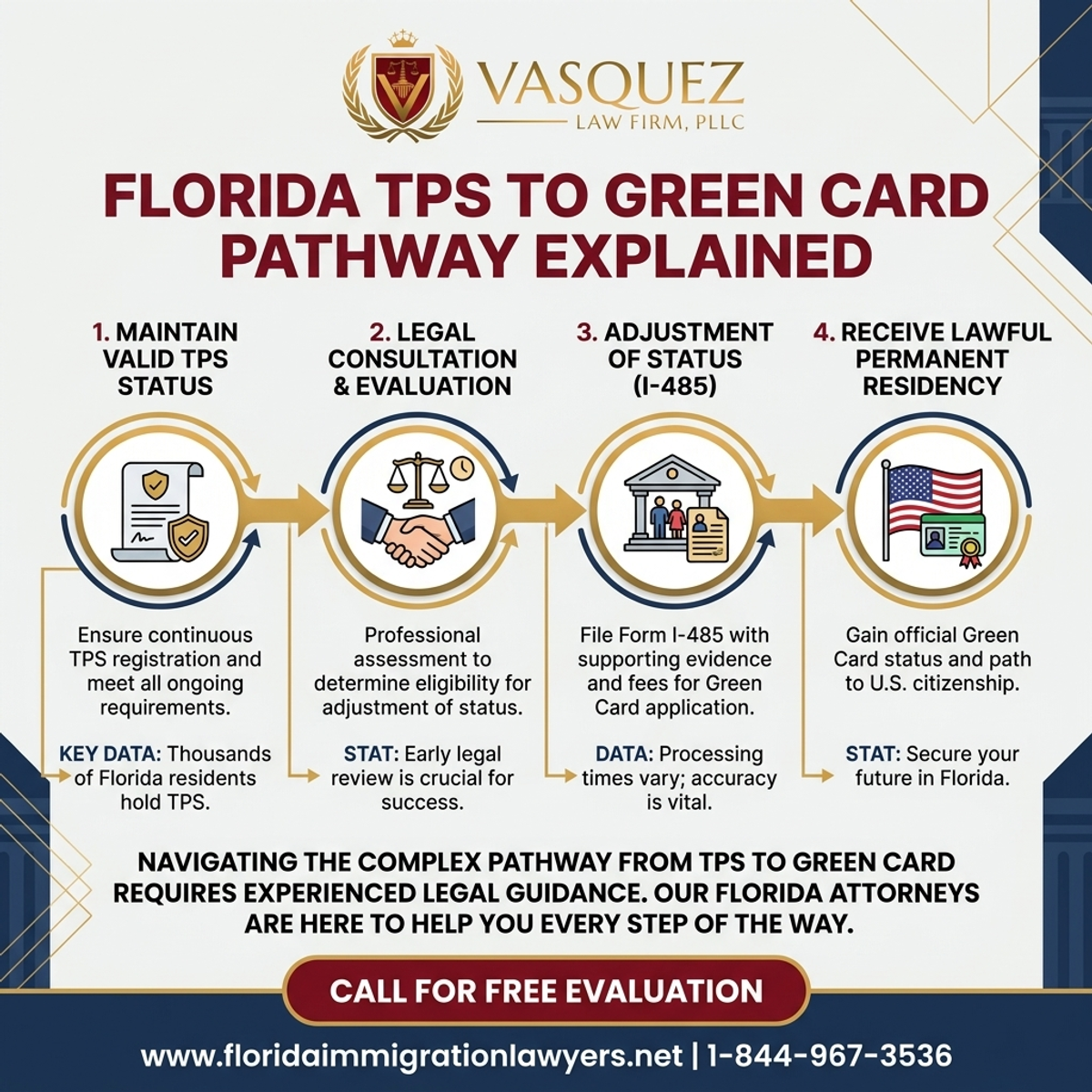
The transition from TPS to a Green Card typically occurs through a process called Adjustment of Status (AOS). This process allows eligible individuals already in the U.S. to apply for lawful permanent residency without having to leave the country. For TPS holders, the primary challenge often revolves around the "lawful admission" requirement for AOS.
- Lawful Admission: Historically, many TPS holders faced an obstacle because they might have entered the U.S. without inspection (EWI). However, significant legal developments, particularly the Matter of Z-R-Z-C- decision, have clarified that certain TPS grants can be considered an "admission" for the purpose of Adjustment of Status, even for those who entered without inspection. This is a critical point that requires careful legal analysis. If you received TPS after an entry without inspection, you might still be eligible for AOS if you traveled outside the U.S. with a TPS travel document (Form I-512T, Advance Parole) and were paroled back into the U.S.
- Qualifying Basis for a Green Card: Beyond lawful admission, a TPS holder must also have an independent basis to apply for a Green Card. Common pathways include:
- Family-Based Petitions: Being sponsored by an immediate relative (U.S. citizen spouse, parent, or unmarried child over 21) or other qualifying family member.
- Employment-Based Petitions: Being sponsored by an employer for a specific job.
- Asylum or Refugee Status: If you have also been granted asylum, that can be a direct path to a Green Card after one year.
- Special Immigrant Juvenile Status (SIJS) or VAWA: Other humanitarian avenues may also be available.
- Admissibility: Applicants must also be "admissible" to the U.S. as an immigrant. This means they must not have certain criminal convictions, immigration violations, or other issues that would make them ineligible. Waivers may be available for some grounds of inadmissibility.
Understanding these requirements and how they apply to your specific situation is paramount. An experienced immigration attorney can help you determine your eligibility and strategize the best approach.
Navigating the Adjustment of Status Process for TPS Holders
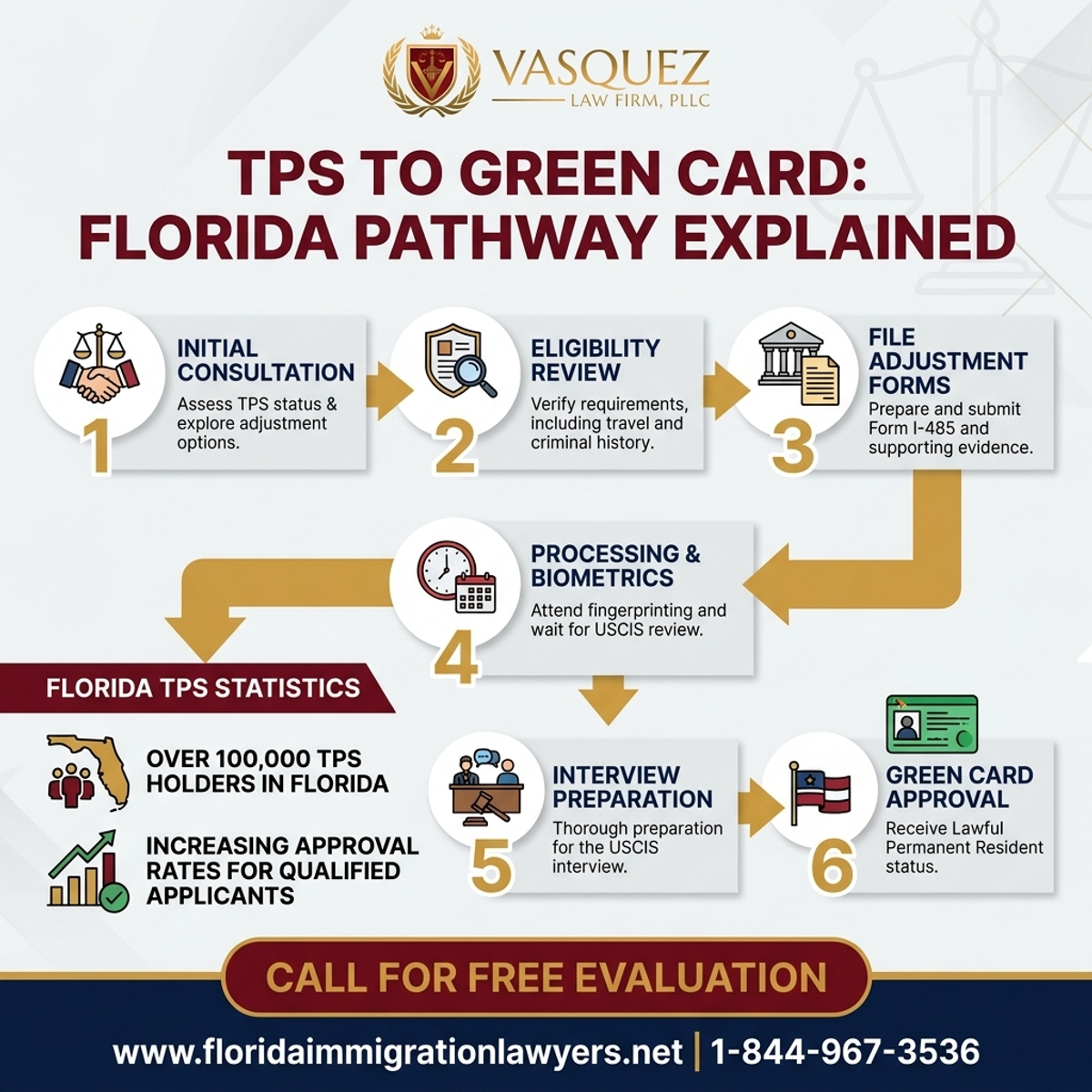
The Adjustment of Status process involves several steps and requires meticulous attention to detail. Here’s a general overview:
- Establish a Qualifying Basis: First, ensure you have a valid underlying petition (e.g., Form I-130, Petition for Alien Relative; Form I-140, Immigrant Petition for Alien Worker) approved or filed concurrently, if applicable.
- File Form I-485: This is the core application for Adjustment of Status. It must be filed with all required supporting documentation, including:
- Proof of TPS status.
- Proof of lawful admission (if applicable, often related to advance parole travel).
- Birth certificate, marriage certificate (if applicable).
- Medical examination report (Form I-693).
- Affidavits of support (Form I-864) from the petitioner.
- Passport photos.
- Other supporting evidence related to your qualifying basis.
- Biometrics Appointment: After filing, you will receive a notice to attend a biometrics appointment at a local USCIS Application Support Center (ASC). Here, your fingerprints, photo, and signature will be taken for background checks.
- Interview (if required): Not all Adjustment of Status cases require an interview, but many do, especially family-based petitions. The interview will typically be conducted at a USCIS field office in Florida, where an officer will review your application and supporting documents and ask questions to confirm your eligibility.
- Decision: If your application is approved, you will receive your Green Card by mail. If denied, it is crucial to consult with an attorney immediately to understand the reasons for denial and explore potential appeals or other options.
Step-by-Step Process — TPS to Green Card: Florida Pathway Explained | VLF Florida
The process can be lengthy, often taking months or even years, depending on the USCIS workload and the complexity of your case. Throughout this period, it's vital to maintain your TPS status, if possible, and comply with all USCIS requests for information. For personalized guidance through each step, do not hesitate to contact VLF Florida.
Special Considerations for TPS Holders in Florida
While immigration law is federal, the practical aspects of navigating the system can vary by location. For TPS holders in Florida, understanding the local landscape and having access to knowledgeable legal counsel is particularly important. Florida is home to a diverse immigrant population, and USCIS field offices across the state (such as in Miami, Orlando, and Tampa) handle a high volume of cases. This can sometimes lead to longer processing times or specific procedural nuances.
One key consideration for Florida residents is the importance of having a local attorney who is familiar with the specific practices and expectations of the USCIS offices in the region. An attorney based in Florida can provide insights into local trends, help prepare you for interviews at specific field offices, and advocate effectively on your behalf with local USCIS personnel. They can also connect you with local resources and support networks that can be invaluable during your immigration journey.
Furthermore, Florida's unique demographics mean that many TPS holders may have specific country-of-origin considerations that an experienced attorney can help navigate. Whether it's understanding the implications of recent policy changes affecting certain nationalities or preparing for the cultural aspects of an interview, local expertise makes a significant difference. Our dedicated attorneys at VLF Florida are deeply rooted in the Florida community and possess the specific knowledge required to guide TPS holders through their Green Card applications with confidence and competence. We understand the challenges and opportunities unique to Florida residents and are committed to providing tailored legal solutions.
Overcoming Challenges: Waivers and Other Relief Options
Even with a clear pathway, some TPS holders may encounter obstacles that complicate their Green Card application. These can include past immigration violations, certain criminal convictions, or issues related to misrepresentation. In such cases, it may be possible to apply for a waiver of inadmissibility.
- Waivers (Form I-601, Application for Waiver of Grounds of Inadmissibility; Form I-601A, Application for Provisional Unlawful Presence Waiver): These applications ask USCIS to overlook certain grounds of inadmissibility. They typically require demonstrating extreme hardship to a qualifying U.S. citizen or lawful permanent resident relative if you were denied a Green Card. The criteria for waivers are stringent and require compelling evidence and strong legal arguments.
- Deportation Defense: If you find yourself in removal proceedings, either because of inadmissibility issues or other immigration violations, it is critical to seek immediate legal counsel. A Green Card application might be pursued in conjunction with deportation defense strategies, often in immigration court.
- Asylum as an Alternative: For some individuals, especially those who fear persecution in their home country, applying for asylum could be an alternative or parallel path to permanent residency. While distinct from TPS, it's another form of protection that can lead to a Green Card after one year of asylum status. An attorney can help you assess if this option is viable for your situation.
Key Statistics — TPS to Green Card: Florida Pathway Explained | VLF Florida
These challenges underscore the importance of thorough preparation and legal representation. Attempting to navigate these complex issues without professional guidance can lead to costly delays or even denial of your application. Our team is adept at identifying potential hurdles early on and developing robust strategies to overcome them.
Frequently Asked Questions (FAQs)
Here are answers to some common questions regarding the TPS to Green Card pathway:
- Does TPS automatically lead to a Green Card? No, TPS is a temporary status. You must qualify for a Green Card through an independent basis, such as a family or employment petition, and meet other eligibility requirements.
- Can I apply for a Green Card if I entered the U.S. without inspection but have TPS? Potentially, yes. If you received TPS and then traveled outside the U.S. with Advance Parole (Form I-512T) and were paroled back in, that parole can be considered a lawful admission for AOS purposes. This is a complex area, and legal advice is crucial.
- What if my TPS expires while my Green Card application is pending? It's generally recommended to re-register for TPS if your country's designation is extended, even if you have a pending Green Card application. This ensures you maintain legal status and work authorization while waiting for a decision on your AOS.
- How long does the process typically take? The timeline varies greatly depending on the basis of your Green Card application, the USCIS field office processing your case, and the complexity of your individual circumstances. It can range from several months to several years.
- Do I need an attorney to apply for a Green Card? While not legally required, the process is highly complex, with many potential pitfalls. An experienced immigration attorney can significantly increase your chances of success by ensuring all forms are correctly filed, all evidence is submitted, and you are properly prepared for interviews.
- Can I travel outside the U.S. while my Green Card application is pending? If you have TPS and a pending AOS application, you should apply for Advance Parole (Form I-131) before traveling. Leaving the U.S. without Advance Parole can be considered abandonment of your AOS application and could prevent you from re-entering the country.
- What if I have a criminal record? Certain criminal convictions can make you inadmissible to the U.S. and ineligible for a Green Card. It is essential to disclose any criminal history to your attorney so they can assess its impact and determine if a waiver is available.
- What is the difference between TPS and Asylum? TPS is granted based on conditions in a specific country, offering temporary protection. Asylum is granted to individuals who fear persecution in their home country, offering a direct path to a Green Card after one year. While different, some individuals may be eligible for both.
- Where can I find reliable legal help in Florida? VLF Florida offers comprehensive immigration services, with a team of experienced attorneys dedicated to helping individuals navigate the TPS to Green Card pathway. Our local presence ensures we are familiar with the specific needs of Florida residents.
Why Choose VLF Florida for Your Green Card Journey?
Embarking on the journey from TPS to a Green Card is a significant step towards securing your future in the United States. At VLF Florida, we understand the profound impact this transition can have on your life and the lives of your loved ones. Our firm is dedicated to providing compassionate, knowledgeable, and effective legal representation to TPS holders across Florida.
Our team of skilled immigration attorneys brings extensive experience in Adjustment of Status cases, particularly those involving the unique complexities faced by TPS beneficiaries. We stay abreast of the latest immigration laws and policy changes, ensuring that our advice is always current and strategically sound. From the initial consultation to the final decision, we will meticulously prepare your application, gather all necessary documentation, and represent you diligently before USCIS.
We pride ourselves on our client-centered approach. We take the time to listen to your story, understand your specific circumstances, and develop a personalized legal strategy tailored to your needs. Our goal is not just to file paperwork, but to guide you through every challenge, answer every question, and advocate fiercely on your behalf. With VLF Florida, you gain a trusted partner committed to helping you achieve your dream of permanent residency.
Secure Your Future: Contact VLF Florida Today
The path from TPS to a Green Card can be intricate, but with the right legal guidance, it is entirely achievable. Don't leave your future to chance. If you are a TPS holder in Florida considering applying for a Green Card, we invite you to reach out to VLF Florida for a comprehensive consultation. Let our experience be your advantage in navigating the U.S. immigration system. Contact us today to schedule your free consultation and take the first step towards securing your permanent residency.
Sources and References
- U.S. Citizenship and Immigration Services (USCIS)
- Executive Office for Immigration Review (EOIR)
- U.S. Department of State - Bureau of Consular Affairs
- Immigration and Nationality Act (INA), 8 U.S.C. Chapter 12
Do Not Navigate This Process Alone
Our experienced immigration attorneys are ready to fight for you. Get a free, confidential case review today.
Se Habla Español
Or leave your details and we’ll call you:
Free Evaluation in 24 Hours
Or talk to us right now

AI voice assistant — available 24/7
FreeFrequently Asked Questions

William J. Vásquez
Founding Attorney · Vasquez Law Firm
U.S. Air Force veteran and immigration attorney with years of hands-on U.S. immigration experience. J.D., NCCU School of Law. AILA member. Admitted to the 4th, 5th, and 11th Circuit Courts.
Available 24/7 - Free Evaluations
Reviewed for legal accuracy by William J. Vásquez
Licensed in North Carolina; U.S. immigration is federal practice.
Related Legal Services
Our Florida immigration attorneys can help you with business immigration, deportation defense and family immigration services. Call today at 1-844-YO-PELEO for a free case review.
Related Links
Related Topics
Free Legal Case Review
Discuss your case with our experienced attorneys. We're available 24/7.
Se Habla Español - Estamos aquí para ayudarle.
Related Articles
EAD Advance Parole Combo Card in Florida: What You Need
An EAD advance parole combo card allows individuals with pending adjustment applications to both work and travel abroad without jeopardizing their green card application. Learn how to apply in Florida, what documents you need, and common mistakes to avoid.
PERM Labor Certification in Florida: A 2026 Guide
Learn all about the PERM labor certification process in Florida, essential for employers sponsoring green card applicants. Understand the steps, document requirements, and common mistakes to avoid in this 2026 guide.
Dual Citizenship Lawyer in Florida: What You Need to Know
For Florida residents, the concept of dual citizenship, or holding two passports, offers a compelling blend of opportunities and challenges. While the U.S. generally permits dual nationality, the path to achieving this status requires a meticulous understanding of both U.S. immigration laws and the citizenship policies of your country of origin. This guide explores the definition of dual citizenship, the detailed step-by-step process for U.S. naturalization, and the significant benefits and potential pitfalls involved. We cover essential documentation, typical timelines, and cost considerations for 2026, providing crucial insights for anyone in Orlando, Miami, or across Florida considering this important legal step. Learn about common mistakes to avoid and understand when to seek professional legal counsel to navigate this complex process successfully. Florida Immigration Lawyers is here to provide expert, bilingual support for your dual citizenship journey.
Immigration Lawyer Orlando Free Consultation in Florida
For individuals and families in Orlando, Florida, navigating the complexities of U.S. immigration law requires expert guidance. An immigration lawyer in Orlando offers crucial support for everything from visa applications and green card processes to naturalization and deportation defense. This comprehensive guide details what a free consultation covers, providing a step-by-step overview of immigration pathways, essential document checklists, and expected timelines in 2026. We also highlight common mistakes to avoid, discuss the critical role of legal counsel in deportation and asylum cases, and explain why choosing a local Orlando immigration attorney is beneficial. Florida Immigration Lawyers is dedicated to serving the diverse community of Orlando with compassionate, effective legal solutions, ensuring you receive personalized advice and robust representation for a successful immigration journey.