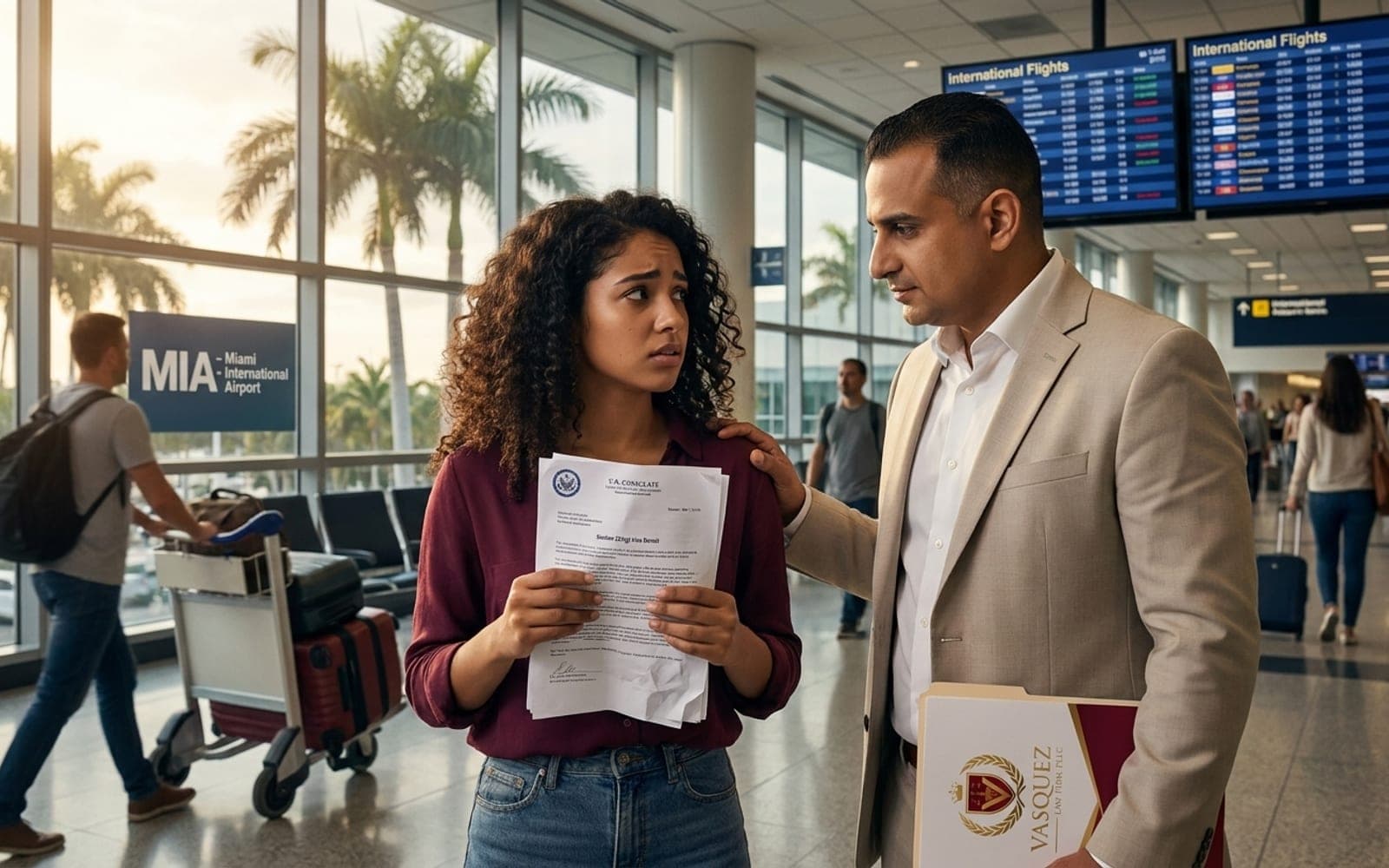
A temporary visa attorney helps you choose the right category and prepare before applying. The guide covers visitor visas, work visas including the blanket L petition, visa refusals and what a lawyer can and cannot do about them, and waivers for past problems. It also addresses extending or changing status inside the United States. Our firm has one Orlando office and works with Florida families, employers and relatives abroad by phone and secure video.
- The right preparation depends on the visa category and your purpose.
- The guide explains what a visa denial lawyer can and cannot do.
- Blanket L petitions are one work visa route covered.
- Waivers may matter when there are past problems.
Introduction
A temporary visa attorney helps people choose the right nonimmigrant visa, prepare a complete application, and respond when a visa is refused or a status is about to expire. Whether you are inviting a relative to visit Florida, hiring a foreign worker or trying to understand a denial, the right preparation depends on which visa category fits your purpose. This page covers visitor visas, work visas, visa refusals and waivers, and it is written for families, employers and individuals in Florida and for relatives abroad. To discuss your situation, call 1-844-YO-PELEO or contact us.
Vasquez Law Firm has one office, at 1111 E Amelia Street in Orlando. We work with families, workers and employers throughout Florida, and with relatives abroad, through phone and secure video consultations, and we meet in person in Orlando when that helps. Distance matters less than people expect, because visa applications are handled by federal agencies and consulates.
This guide is general information, not legal advice. Visa rules change and depend on your nationality and history, so confirm current requirements with the State Department and USCIS, and speak with a lawyer about your facts.
What Temporary Visas Cover
U.S. law separates visas into two groups: immigrant visas, which lead to permanent residence, and nonimmigrant visas, which allow a stay for a specific purpose and period. Common temporary categories include:
- B-1 and B-2 visitor visas for business meetings, tourism, family visits and medical treatment.
- Work categories such as H-1B for specialty occupations, L-1 for intracompany transferees, O-1 for people with extraordinary ability, and treaty-based categories such as E and TN. The E-3 is a related category for certain professionals from Australia.
- F-1 and M-1 student visas for academic and vocational study.
Every nonimmigrant visa has its own requirements, and using a visa for a purpose it does not allow can cause problems that follow a person for years.
Visitor Visas: When a Lawyer Helps
Most people do not need a lawyer for a routine B-2 application. A lawyer becomes useful when the history is complicated, for example a prior overstay, an earlier refusal, a past arrest, or a family member in the United States with a pending immigration case. In those situations a lawyer can review what the consular officer is likely to focus on and help the applicant gather documents that honestly show the purpose of the trip and ties to the home country.
A lawyer can also help visitors who are already in Florida. If something unexpected happens, such as a medical issue, a visitor may be able to request an extension or change of status with USCIS before the authorized stay ends. Waiting until after the I-94 date passes removes most options. A lawyer will also warn you about what a visitor may not do, such as working for a U.S. employer.
Many travelers from certain countries use the Visa Waiver Program instead of a visa. That program has its own limits, including restrictions on extending a stay or changing status, so anyone who entered that way should get advice before trying to remain longer.
How a Temporary Visa Case Works
The steps differ by category, but most nonimmigrant cases move through a similar sequence, in Florida as anywhere in the country.
- Identify the purpose. Decide what the person will do in the United States and for how long.
- Match the category. Choose the visa whose rules fit that purpose and the person's background.
- Gather documents. Collect identity records, evidence of the purpose and records of ties to the home country or of qualifications.
- File the application or petition. A visitor applies online and at a consulate; a worker's employer usually files a petition with USCIS first.
- Attend the interview. Consular officers interview most applicants and decide whether to issue the visa.
- Enter and follow the terms. The traveler is admitted by a border officer for a period shown on the I-94 and must follow the rules of the visa.
A visa is only permission to apply for admission. The border officer makes the final decision at the port of entry, and the length of stay is set by the I-94, not by the visa stamp.
Visa Refusals: What a Visa Denial Lawyer Can and Cannot Do
The most common reason for a visitor visa refusal is that the officer was not convinced the applicant will return home, a refusal under section 214(b) of the Immigration and Nationality Act. There is generally no appeal from a consular refusal. What a lawyer can do is review the reasons, identify what has changed or what was missing, and decide whether reapplying makes sense.
Other refusals are different:
- Administrative processing. The consulate may hold a case for more information or additional review. The length varies and cannot be predicted.
- Grounds of inadmissibility. Some refusals rest on criminal history, prior immigration violations or misrepresentation. In some of those cases a nonimmigrant waiver may be requested, and our waivers page explains the general idea.
Consular officers have wide discretion, and lawyers usually cannot attend consular interviews. A lawyer's role is preparation, review and, where the law allows, follow-up with the consulate.
Work Visas and the Blanket L Petition
For employers, a lawyer evaluates which category matches the job and the worker, prepares the petition with USCIS, and helps the employee through consular processing or a change of status. Our work visa practice page covers the main employment categories.
Large multinational companies that transfer employees often use a blanket L petition. Once USCIS approves a blanket petition for a qualifying organization, individual managers, executives and qualifying L-1B employees with advanced knowledge of the company can generally apply for L-1 status directly at a U.S. consulate using the blanket approval, rather than filing a separate petition for each person. A lawyer reviews whether the company meets the requirements, keeps the list of qualifying entities current and prepares employees for their consular interviews. Smaller companies usually file individual L-1 petitions instead.
Waivers and Past Problems
A past problem does not always end the possibility of a visa. Some grounds of inadmissibility can be waived, which means the government may allow a person to receive a visa or enter despite the problem. For nonimmigrant visas, a waiver is usually requested through the consulate and decided by U.S. Customs and Border Protection, and the standards and the process depend on the ground of inadmissibility.
A waiver is not automatic and is not a right. The officer weighs factors such as the reason for the trip, the seriousness of the past problem and how much time has passed. A lawyer can explain whether a waiver is available, what evidence supports it and whether the benefit is worth the effort and the time it takes.
Choosing an Attorney for Visa Matters
People who search for a lawyer usually want someone who explains their options honestly. Rankings do not answer that question, and Florida Bar rules do not allow lawyers to claim they are better than others. When you meet a visa lawyer, ask:
- Which visa categories fit my purpose, and what are the risks of each?
- What in my history might a consular officer or USCIS officer question?
- If my visa is refused, what will you do next?
- What exactly does your fee cover?
Any honest attorney will tell you that the final decision belongs to the government. Be cautious about any lawyer who guarantees an outcome, and about anyone who offers connections at a consulate.
It also helps to think about the story your application tells. A consular officer sees many applicants each day and decides quickly, so the facts should be consistent and easy to understand: why you are traveling, who is paying, where you will stay, what ties you have at home and when you plan to leave. Inconsistent answers between the form, the interview and any supporting documents are a frequent cause of refusals. Preparing for the interview with a lawyer means practicing honest, direct answers, not rehearsed ones.
Family members who are inviting a visitor can help by providing clear, truthful letters and records, but an invitation does not ensure the visa. The officer decides whether the applicant qualifies, and a relative's status in the United States can sometimes raise questions about whether the visitor intends to return.
Document Checklist for a Visa Consultation
- Passports, current and expired, with prior U.S. visas.
- Your I-94 record if you are in the United States.
- Any refusal letters or notes from a consular interview.
- For work visas: the job offer, job description, and your degrees and work history.
- Records of any arrest, immigration violation or prior application.
- For visitors: evidence of the purpose of the trip, such as an invitation and travel plans.
- Evidence of ties to the home country, such as employment, family and property.
Bring whatever you have. A lawyer can explain which documents matter most for your category and how to explain any gaps honestly.
Timeline and Processing Expectations
Visa timelines vary by consulate, by category and by season. The State Department and each U.S. embassy or consulate publish current interview wait times, and USCIS publishes processing information for petitions, and these figures change often. Check the current sources and plan with extra time, especially if a trip depends on a date.
For employers, the calendar also includes any registration period, labor certification or petition review that must be finished before the worker applies for a visa. A late start can mean that a worker cannot begin on the planned date. The table shows the usual stages.
| Stage | What happens | Who acts |
|---|
| Planning | Purpose and category are chosen | Applicant or employer, with the lawyer |
| Petition, if required | The employer files with USCIS and waits for approval | Employer and USCIS |
| Visa application | Form, fee and interview at a U.S. consulate | Applicant and consular officer |
| Administrative processing, if any | Extra review before a decision | The consulate or other agencies |
| Entry or extension | Admission at the border; extension or change of status if needed | Border officer, then USCIS |
Extending or Changing Status Inside the United States
Many nonimmigrants need to stay longer or switch to a different category. An extension of stay or a change of status is requested from USCIS, usually before the authorized stay ends, and the person generally must have kept the terms of the current status. A filing made on time may allow the person to remain in the country while the case is pending, although the rules differ by category and by the type of request.
Some people should not file, or should file only after advice. A person who has worked without authorization, who has a pending criminal case or who has an old overstay may face serious consequences if the application is denied. A lawyer can review the history first, tell you whether filing is safe and explain what happens if the request is denied.
Cost Factors and Fee Breakdown
Visa costs include government fees and legal fees, and some work cases involve employer costs. The table lists the usual items.
| Item | Amount | Notes |
|---|
| Visa application fee | Check USCIS for the current fee | Set by the State Department; check its website for your category |
| USCIS petition or extension fees | Check USCIS for the current fee | Differ by form and category |
| Waiver request filings | Check the court or agency for current fees | Depend on the type of waiver |
| Translations and records | Varies by case | Depend on the documents |
| Attorney fees | Varies by case | Set in a written agreement |
Government fees can change, and a visa application fee is generally not returned if the visa is refused, so ask a lawyer to review your history before you apply when a refusal is a real risk.
Legal fees depend on the category and the complexity of the case. Ask for the scope of work and the billing terms in writing, including what happens if the visa is refused.
Common Mistakes to Avoid
- Applying for a visitor visa when the real purpose is to work or to stay.
- Answering interview or application questions inaccurately or leaving out a prior refusal.
- Overstaying the I-94 date and assuming it can be fixed later.
- Reapplying right after a refusal without changing anything.
- Entering under the Visa Waiver Program and then trying to extend or change status.
- Using a consultant or agent who promises a visa through connections.
- Working in a category that does not authorize the job.
When to Call a Lawyer
Call before you apply if you have a prior refusal, overstay, arrest or immigration violation, or if your purpose does not fit neatly into one category. Call right away after a refusal, a notice from USCIS or a request for evidence, or when a status is about to expire. A short consultation can tell you which visa fits, what the officer may question and what to do next.
About Vasquez Law Firm
Vasquez Law Firm practices immigration law only. Our only office is at 1111 E Amelia Street in Orlando. We serve families, workers and employers throughout Florida by phone and secure video, with in-person meetings in Orlando. William J. Vásquez is the founding attorney. Consultations are available in English and Spanish. Call 1-844-YO-PELEO or contact our office to talk about your visa question.
Sources and References
Related services: waivers, immigration lawyers in Florida
Other ways people search for this
People look for this help under different names. Related searches include temporary visa lawyer near me; visitor visa lawyer near me; immigration visa lawyer near me; non-immigrant visa attorney near me; non-immigrant visa lawyer near me; us visa attorney near me; immigration lawyer for us visa near me; tourist visa attorney near me; us tourist visa lawyer near me; us visa immigration lawyer near me; non immigrant visa lawyer; visa application lawyer; visa law firm; immigration lawyer for visa; immigration lawyer for visa application; investment visa attorney; us visa lawyer; best visa attorney; e3 visa attorney; immigrant visa lawyer; immigration attorney visa; immigration lawyer for us visa; tourism visa lawyer; best visa lawyer; blanket l visa lawyer.
This article is general information, not legal advice. Every case is different; speak with an immigration lawyer about your situation.