221(g) Visa Denial & Consular Return in Florida 2026
A 221(g) visa denial is a temporary refusal, not a final rejection, indicating that your application requires additional documents or administrative processing before a final decision. For individuals in Florida, understanding this specific type of consular processing is crucial. This comprehensive guide explains the reasons behind a 221(g) notice, outlines the step-by-step process for responding, details what to expect during administrative processing, and discusses potential outcomes and associated costs. We cover common mistakes to avoid and highlight when legal assistance from Florida Immigration Lawyers can be invaluable. Our firm is dedicated to helping you navigate the complexities of immigration law, providing strategic guidance and advocacy to address your 221(g) denial and pursue a successful resolution. Contact us for a free case review and let our experienced team assist you.
A 221(g) visa denial indicates that your visa application has been refused temporarily because it is incomplete or requires further administrative processing. This is not a final denial but a request for additional information or a security review. In Florida, applicants facing a 221(g) must typically submit the requested documents to the consular post or await the completion of administrative processing before a final decision can be made. Understanding the specific reason for the 221(g) and responding promptly is crucial for a successful outcome.
- A 221(g) is a temporary visa refusal, not a final denial.
- It often means additional documents or administrative processing is required.
- Processing times vary widely, from weeks to several months, as of 2026.
- Promptly providing requested information is essential.
- Consulting an experienced immigration lawyer in Florida can significantly improve your chances.
The journey to obtaining a U.S. visa can be filled with anticipation and hope, especially for individuals and families in Florida seeking to reunite or pursue new opportunities. However, the process can sometimes encounter unexpected hurdles, such as a 221(g) visa denial. This specific type of refusal can leave applicants feeling confused, frustrated, and uncertain about their next steps. If you've received a 221(g) notice, you're not alone, and it's crucial to understand that this is often a temporary setback, not a permanent roadblock.
At Florida Immigration Lawyers, we understand the complexities of consular processing and the stress a 221(g) denial can cause. Our mission is to guide you through these challenges, helping you understand the reasons behind the refusal and strategize the best path forward. This comprehensive guide will explain what a 221(g) means, why it occurs, the steps involved in administrative processing, and how our firm can assist you in navigating this critical phase. We serve clients across all of Florida, including our Central Florida community in Orlando, providing dedicated and knowledgeable legal support. Call Florida Immigration Lawyers at 1-844-YO-PELEO for a free case review and let us help you clarify your situation and pursue a positive outcome.
What is a 221(g) Visa Denial and Administrative Processing?
A 221(g) visa denial is a temporary refusal issued by a U.S. consular officer when a visa application is deemed incomplete or requires further review before a final decision can be made. This is not a final denial but rather an indication that additional information, documents, or administrative processing is needed.
When a consular officer issues a 221(g) refusal, it means they cannot make a definitive decision on your visa application at that moment. This section of the Immigration and Nationality Act (INA), specifically INA Section 221(g), grants consular officers the authority to refuse a visa if they believe the applicant is ineligible or if the application lacks necessary supporting documentation. It's a procedural step rather than an outright rejection based on eligibility. For applicants in Florida, receiving this notice can be daunting, but it's important to approach it with a clear understanding of what it entails.
There are generally two main scenarios for a 221(g) refusal: first, when the consular officer needs more documents or information from the applicant to determine eligibility; and second, when the case is sent for 'administrative processing' (AP). Administrative processing involves additional background checks, security clearances, or inter-agency consultations, which are often beyond the control of the applicant or the consular post. These checks are designed to ensure national security and prevent visa fraud. As of 2026, the specific nature and duration of administrative processing can vary significantly, depending on the applicant's background, nationality, and the type of visa sought. Understanding the nuances of a 221(g) refusal is the first step toward effectively addressing it and moving forward with your immigration goals.
Why Do Visa Applications Receive a 221(g) Refusal in Florida?
Visa applications receive a 221(g) refusal for various reasons, including missing documents, security concerns, or eligibility issues, often leading to administrative processing to gather more information or conduct further checks.
The reasons for a 221(g) can range from simple administrative oversights to more complex security-related issues. For many Floridians with family or business ties abroad, understanding these common pitfalls is vital. One frequent reason is insufficient documentation. This could mean you failed to bring all required documents to your interview, submitted outdated forms, or provided documents that were not properly translated or certified. For example, a birth certificate missing an official seal or an employment letter lacking specific details could trigger a 221(g) for additional information. Consular officers are meticulous in their review, and any perceived deficiency can lead to a request for further evidence.
Another significant cause of 221(g) refusals, particularly for those entering administrative processing, relates to security checks and background verifications. These checks are routine for many visa categories and can involve inter-agency collaboration to verify an applicant's identity, past activities, and potential security risks. Common factors that might trigger extensive administrative processing include previous arrests or criminal history (even if expunged), certain professional backgrounds (e.g., sensitive scientific research, technology transfer), or travel to specific countries. In Florida, with its diverse population and international connections, applicants from various backgrounds may encounter these checks. While frustrating, these measures are in place to protect national security. It's also possible for a 221(g) to be issued if the consular officer suspects a potential ground of inadmissibility under INA Section 212(a), requiring further investigation or a waiver application.
What are the Consular Processing Steps After a 221(g) Denial?
After a 221(g) denial, applicants typically submit requested documents or await administrative processing completion, then receive final approval or further instructions from the consular post.
Receiving a 221(g) notice can feel like hitting a wall, but it's important to remember that there are clear steps to follow. The process often involves a return to the consular processing stage, but with specific instructions to address the noted deficiencies. For individuals in Florida, understanding these steps is critical to avoid further delays or complications. The consular officer will usually provide a written slip or instruction sheet detailing the reasons for the 221(g) and outlining what needs to be done. It's crucial to read this document carefully and understand precisely what is being requested. Ignoring or misunderstanding these instructions is one of the most common mistakes applicants make.
Step-by-Step Guide to Responding to a 221(g) Refusal:
- Review the 221(g) Slip Carefully: The first and most important step is to thoroughly read the refusal letter or slip provided by the consular officer. This document will specify whether additional documents are needed or if your case is undergoing administrative processing. Pay close attention to any case numbers or deadlines provided.
- Gather All Requested Documents: If documents are requested, meticulously collect every item specified. Ensure all documents are original or certified copies, and that any foreign language documents are accompanied by certified English translations. Do not submit anything that was not explicitly asked for, as this can confuse the process.
- Submit Documents as Instructed: The 221(g) slip will outline how to submit the additional information. This could involve mailing documents to the consulate, emailing scanned copies, or dropping them off at a designated location. Follow these instructions precisely to ensure your submission is received and properly associated with your case.
- Await Administrative Processing (AP): If your case is placed in administrative processing, there is often little you can do but wait. The consulate will not typically provide updates during this period. You may be able to check the status online using your case number on the Consular Electronic Application Center (CEAC) website, but specific details are rarely shared.
- Follow Up (If Permitted and After Reasonable Time): While it's generally advised not to repeatedly contact the consulate, if a significant amount of time has passed (e.g., several months beyond typical processing times), you may consider a polite inquiry through the specified channels. However, a lawyer can often make these inquiries more effectively.
- Receive Final Decision: Once the requested documents are reviewed or administrative processing is complete, the consulate will issue a final decision. This could be visa approval, requiring you to submit your passport for stamping, or a final visa denial based on inadmissibility.
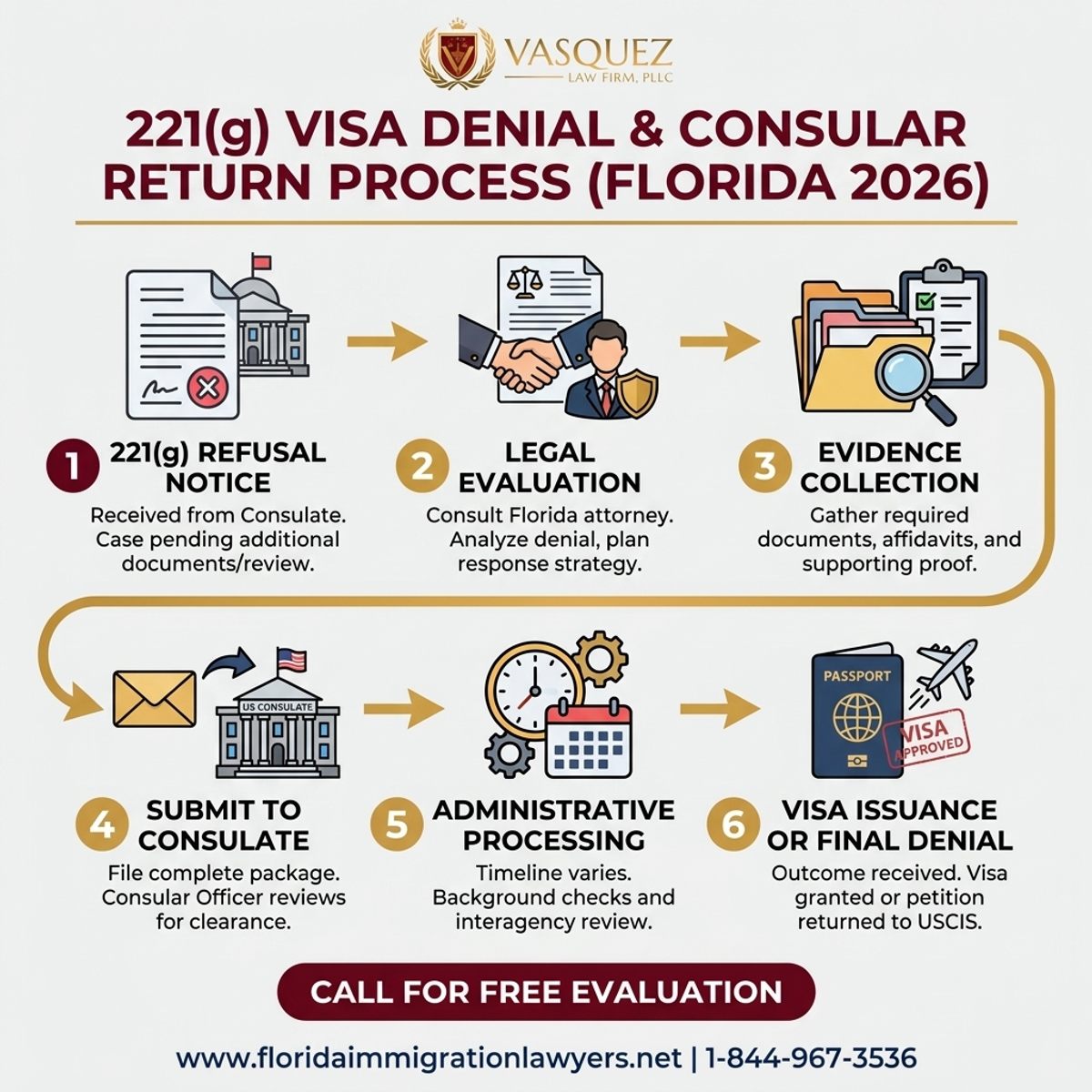
Step-by-Step Process — 221(g) Visa Denial & Consular Return in Florida 2026
For individuals in Central Florida and throughout the state, navigating these steps without legal guidance can be challenging. An experienced immigration attorney can help you understand the requirements, prepare your documents, and advocate on your behalf.
How Long Does 221(g) Administrative Processing Take in 2026?
As of 2026, administrative processing times vary significantly, from a few weeks to several months or even years, depending on the complexity of the case, the specific consulate, and the nature of the required checks.
One of the most frustrating aspects of a 221(g) administrative processing is the unpredictability of the timeline. Unlike standard visa processing, which often has published service standards, AP does not have a fixed duration. For applicants in Florida planning their futures, this uncertainty can be particularly stressful. The time frame is highly dependent on various factors, including the type of visa, the applicant's country of origin, the specific U.S. consulate or embassy handling the case, and the nature of the security or background checks being conducted. Some cases might be resolved within a few weeks, while others can languish for many months or even over a year. There is no legal maximum limit for administrative processing.
Factors that can prolong administrative processing include the need for inter-agency consultations (e.g., with the FBI, CIA, or other intelligence agencies), complex security advisory opinions (SAOs), or requests for information from foreign governments. For example, if an applicant has worked in a sensitive technology field or has a common name that requires extensive disambiguation, their case may take longer. Consulates in high-volume regions may also experience longer processing queues. While the U.S. Department of State endeavors to process cases as efficiently as possible, security protocols take precedence. As of 2026, applicants should be prepared for potential lengthy waits and adjust their plans accordingly. Regular checks on the CEAC website for status updates are recommended, but direct inquiries typically yield little additional information unless the processing time significantly exceeds the norm.
Timeline and Processing Expectations:
| Stage | Typical Timeframe (As of 2026) | Notes |
|---|---|---|
| Document Submission (if requested) | 1-2 weeks | Time for consulate to review newly submitted documents. |
| Administrative Processing (AP) | 2 weeks - 12+ months | Highly variable; no fixed duration. Depends on case complexity and security checks. |
| Final Decision after AP | 1-4 weeks | Once AP is complete, a decision is usually made relatively quickly (approval or final refusal). |
| Passport Return (if approved) | 3-7 business days | After visa stamp, passport is returned via designated courier. |
What Are the Potential Outcomes and Costs After a Visa Refusal?
After a 221(g) visa refusal, potential outcomes include visa issuance upon providing requested information or completing administrative processing, or a final denial due to inadmissibility, which may require a waiver. Costs primarily involve legal fees if retaining an attorney.
The outcome of a 221(g) refusal is not always negative. In many cases, once the requested documents are provided or administrative processing is completed, the visa is approved and issued. This is the most common and hoped-for result. However, there are instances where a 221(g) can lead to a final refusal if the applicant is found to be inadmissible under INA Section 212(a) and no waiver is available or granted. Grounds of inadmissibility can include health-related issues, criminal history, security concerns, misrepresentation, or previous immigration violations. If a final refusal is issued, the consular officer must inform the applicant of the specific grounds of inadmissibility.
Regarding costs, there is generally no additional government fee for responding to a 221(g) request or for undergoing administrative processing, assuming the original visa application fee was paid. However, applicants may incur indirect costs. These include expenses for obtaining new documents, certified translations, or travel costs if an additional interview is required. The most significant potential cost is retaining legal counsel. While not mandatory, an immigration attorney can be invaluable in complex 221(g) cases, especially those involving administrative processing or potential inadmissibility issues. An attorney can help identify the specific reasons for the 221(g), assist in gathering and preparing necessary documentation, communicate with the consulate (where appropriate), and advise on potential waivers if inadmissibility is a factor. For residents of Orlando and throughout Florida, investing in legal expertise can save time, reduce stress, and significantly improve the chances of a favorable outcome.
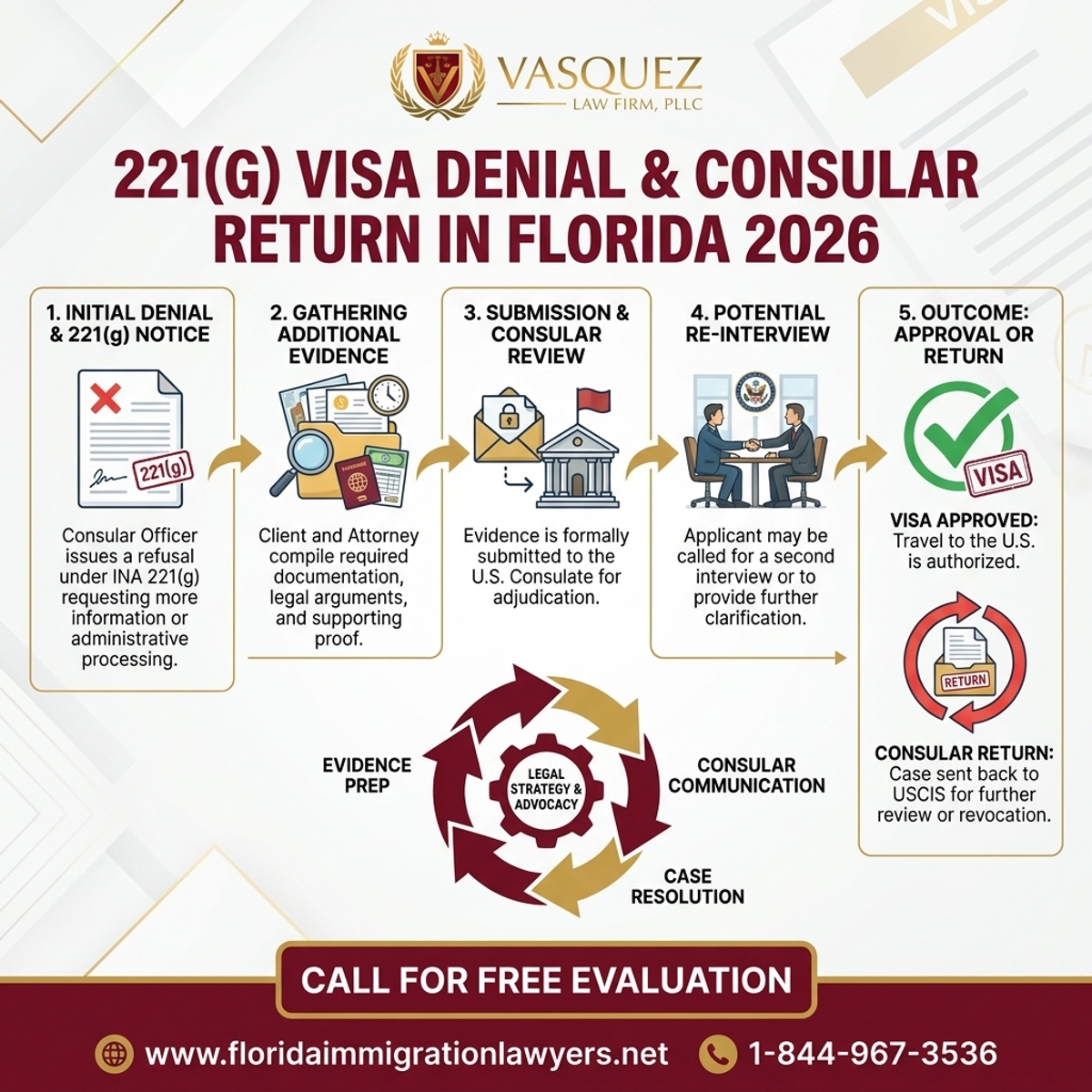
Key Statistics — 221(g) Visa Denial & Consular Return in Florida 2026
Cost Factors and Fee Breakdown:
| Item | Typical Fee (As of 2026) | Notes |
|---|---|---|
| Original Visa Filing Fees | Varies by visa type ($185-$345+) | No new fee for 221(g) itself, assuming original application fee was paid. |
| Attorney Consultation | $150-$400 | For initial case review, strategy, and understanding options. |
| Legal Representation (Hourly/Flat Fee) | $2,000-$10,000+ | For complex cases, RFE responses, waiver applications, or extended administrative processing support. |
| Document Translation & Certification | $20-$50 per page | Required for non-English documents. Costs vary by length and complexity. |
| Obtaining New Documents | Varies (e.g., birth certificates, police records) | Costs associated with acquiring official documents from government agencies. |
Navigating Visa Denials and Consular Interviews in Florida
For individuals in Florida, dealing with a 221(g) visa denial, particularly after a consular interview, requires a strategic approach. Florida is a melting pot of cultures, with a significant immigrant population, making immigration matters a common concern across the state, from Miami to Jacksonville and especially in Central Florida around Orlando. Many Floridians have family members or business interests that necessitate frequent international travel and visa applications. When a 221(g) is issued, it often means that the consular officer needs more clarity or evidence regarding your intentions, qualifications, or background, which may not have been fully addressed during the initial interview.
Preparing for any subsequent interactions with the consulate, whether it's submitting documents or potentially attending another interview, is paramount. This preparation should focus on directly addressing the reasons for the 221(g) as stated on the refusal slip. If the issue was a lack of documentation, ensure all requested items are gathered, organized, and properly translated. If the 221(g) points to administrative processing, understanding the potential areas of concern (e.g., past travel, employment history) can help you prepare for possible follow-up questions, though direct intervention during AP is usually limited. An immigration lawyer familiar with Florida's unique demographics and the common challenges faced by its residents can provide tailored advice. They can help you anticipate questions, prepare compelling evidence, and ensure your case is presented in the strongest possible light, whether you are dealing with a U.S. consulate abroad or navigating related issues with USCIS or EOIR from within Florida.
Do not navigate this process alone. Contact Florida Immigration Lawyers today.
Common Mistakes to Avoid After a 221(g) Visa Denial
Navigating a 221(g) visa denial can be tricky, and certain missteps can further complicate your case. Avoiding these common mistakes is crucial for a successful resolution:
- Misunderstanding the 221(g) Slip: Many applicants fail to read the refusal slip thoroughly, leading to incorrect document submissions or missed deadlines. This can cause significant delays or even lead to a final denial.
- Submitting Incomplete or Incorrect Documents: Only provide precisely what is requested. Submitting too little, too much, or incorrect information can be seen as non-compliance and prolong the administrative processing or lead to further questions.
- Failing to Respond Promptly: Some 221(g) notices come with a deadline, typically one year. Failing to respond within this timeframe can result in the closure of your application, requiring you to restart the entire visa process and pay new fees.
- Lying or Misrepresenting Facts: Any attempt to deceive a consular officer or provide false information can lead to a permanent visa ban under INA 212(a)(6)(C)(i), making it extremely difficult to ever obtain a U.S. visa.
- Traveling Internationally During Administrative Processing: While not always prohibited, international travel during AP can sometimes complicate or delay background checks, especially if travel patterns raise new questions. Consult with an attorney before making travel plans.
- Harassing Consular Officers or Embassy Staff: Repeated, aggressive, or rude inquiries will not expedite your case and can be counterproductive. Maintain professionalism and follow official communication channels.
- Assuming a 221(g) is a Final Denial: This misconception can lead to giving up on a perfectly viable case. A 221(g) is a temporary refusal, and many cases are ultimately approved.
- Not Seeking Legal Counsel: Especially for complex reasons like potential inadmissibility or lengthy administrative processing, attempting to resolve a 221(g) without legal guidance can lead to missed opportunities or irreversible errors.
- Ignoring Inadmissibility Grounds: If the 221(g) hints at an inadmissibility issue, simply submitting more documents won't help. A waiver may be required, which is a separate, complex application process.
- Lack of Proof of Ties to Home Country (for non-immigrant visas): For non-immigrant visas, a 221(g) might indicate a consular officer isn't convinced you intend to return home. Strengthen evidence of ties (family, property, employment) for future applications.
- Discarding Your 221(g) Slip: This slip contains vital information, including your case number and instructions. Keep it safe and readily accessible.
When to Call a Lawyer for a 221(g) Visa Denial
While some simple 221(g) requests for additional documents can be handled independently, many situations warrant the immediate assistance of an experienced immigration lawyer. If your 221(g) notice is unclear, points to complex issues, or if your case is stuck in prolonged administrative processing, legal guidance becomes invaluable. For individuals in Florida, navigating these intricate federal immigration laws requires specialized knowledge.
You should consider calling Florida Immigration Lawyers if:
- The reason for your 221(g) is vague or involves complex legal terms, such as potential inadmissibility grounds (e.g., INA 212(a)(3) for security-related issues, or INA 212(a)(6)(C) for misrepresentation).
- Your case has been in administrative processing for an unusually long time (e.g., more than six months) with no updates, and you are unsure how to inquire effectively.
- You suspect the 221(g) is related to a past criminal record, a previous visa overstay, or any other issue that could trigger an inadmissibility finding.
- You need to apply for a waiver of inadmissibility, which is a highly complex legal process.
- You are unsure which documents to provide or how to present them in the most favorable light.
- You have received conflicting information from different sources or are feeling overwhelmed by the process.
- You are facing a second interview, and you want to be thoroughly prepared to address all potential concerns.
Our experienced immigration attorneys at Florida Immigration Lawyers can assess your specific situation, clarify the reasons for the 221(g), help you gather and prepare the necessary documentation, and advocate on your behalf to the relevant authorities. We understand the nuances of consular processing and administrative delays, and we are committed to helping you achieve a successful outcome.
About Florida Immigration Lawyers
Florida Immigration Lawyers is an immigration law firm dedicated to serving individuals and families across the entire state of Florida. With a deep understanding of U.S. immigration law and a commitment to our clients, we provide comprehensive legal services tailored to your unique needs. Our team of compassionate and experienced attorneys, based in Central Florida, focuses on a wide range of immigration matters, including visa applications, family-based immigration, business immigration, asylum claims, deportation defense, and citizenship applications.
We pride ourselves on offering personalized attention, clear communication, and strategic advocacy to every client. We understand that immigration challenges can be life-altering, which is why we offer free case reviews to help you understand your options without financial obligation. Our firm is available 24/7, ensuring that you have access to legal advice when you need it most. Whether you are dealing with a 221(g) visa denial, navigating complex consular processing, or pursuing family-based petitions, Florida Immigration Lawyers is here to provide the dedicated support and representation you deserve. Call us today at 1-844-YO-PELEO to discuss your immigration needs.
Sources and References
- U.S. Citizenship and Immigration Services (USCIS)
- U.S. Department of State
- Executive Office for Immigration Review (EOIR)
- Consular Electronic Application Center (CEAC) - Visa Status Check
- 8 U.S.C. § 1182 - Immigration and Nationality Act, Section 212 (Inadmissible Aliens)
- 8 U.S.C. § 1201 - Immigration and Nationality Act, Section 221 (Issuance of Visas)
- 22 CFR Part 41 - Code of Federal Regulations, Visas: Documentation of Nonimmigrants
- USCIS Policy Manual
Related services: immigration practice areas, asylum protection, immigration lawyer cost in Florida.
This article provides general legal information and is not intended as legal advice. Every case is unique, and outcomes depend on specific facts and circumstances. Contact an attorney for advice about your particular situation.
A 221(g) visa denial doesn't have to be the end of your immigration journey. With the right legal guidance and a clear understanding of the process, you can overcome this challenge. Let Florida Immigration Lawyers be your trusted partner. Our team is ready to provide the assistance you need to navigate these complex waters. Don't delay in seeking the help you deserve. Contact Florida Immigration Lawyers today at 1-844-YO-PELEO for your free case review. Se Habla Español - Estamos aquí para ayudarle.
If you need legal assistance, learn more about immigration case consultation, or call us at 1-844-YO-PELEO for a free case review.
Do Not Navigate This Process Alone
Our experienced immigration attorneys are ready to fight for you. Get a free, confidential case review today.
Se Habla Español
Or leave your details and we’ll call you:
Free Evaluation in 24 Hours
Or talk to us right now

AI voice assistant — available 24/7
FreeFrequently Asked Questions

William J. Vásquez
Founding Attorney · Vasquez Law Firm
U.S. Air Force veteran and immigration attorney with years of hands-on U.S. immigration experience. J.D., NCCU School of Law. AILA member. Admitted to the 4th, 5th, and 11th Circuit Courts.
Available 24/7 - Free Evaluations
Reviewed for legal accuracy by William J. Vásquez
Licensed in North Carolina; U.S. immigration is federal practice.
Related Legal Services
Our Florida immigration attorneys can help you with deportation defense, family immigration services and immigration lawyer cost in Florida. Call today at 1-844-YO-PELEO for a free case review.
Related Links
Related Topics
Free Legal Case Review
Discuss your case with our experienced attorneys. We're available 24/7.
Se Habla Español - Estamos aquí para ayudarle.
Related Articles
DUI Immigration Consequences in Florida 2026
A DUI conviction in Florida can have severe immigration consequences, potentially leading to inadmissibility, deportation, or denial of immigration benefits. For non-citizens, a DUI is not just a traffic offense but a serious criminal matter that federal immigration law scrutinizes closely. Factors like multiple offenses, injury, or property damage can escalate a simple DUI to a Crime Involving Moral Turpitude (CIMT) or even an aggravated felony, triggering mandatory detention and removal proceedings. Understanding the specific nature of your Florida conviction and its interpretation under the Immigration and Nationality Act (INA) is crucial. This article outlines how DUIs impact immigration status, the grounds for inadmissibility and deportation, a step-by-step guide to navigating the process, essential documentation, and expected timelines for 2026. We also highlight common mistakes to avoid and when to seek legal counsel from an experienced immigration attorney. Florida Immigration Lawyers offers comprehensive support for individuals facing these challenging situations, providing expert guidance through complex legal landscapes.
PERM Labor Certification in Florida: A 2026 Guide
Learn all about the PERM labor certification process in Florida, essential for employers sponsoring green card applicants. Understand the steps, document requirements, and common mistakes to avoid in this 2026 guide.
Immigration Lawyer Orlando Free Consultation in Florida
For individuals and families in Orlando, Florida, navigating the complexities of U.S. immigration law requires expert guidance. An immigration lawyer in Orlando offers crucial support for everything from visa applications and green card processes to naturalization and deportation defense. This comprehensive guide details what a free consultation covers, providing a step-by-step overview of immigration pathways, essential document checklists, and expected timelines in 2026. We also highlight common mistakes to avoid, discuss the critical role of legal counsel in deportation and asylum cases, and explain why choosing a local Orlando immigration attorney is beneficial. Florida Immigration Lawyers is dedicated to serving the diverse community of Orlando with compassionate, effective legal solutions, ensuring you receive personalized advice and robust representation for a successful immigration journey.
EAD Advance Parole Combo Card in Florida: What You Need
An EAD advance parole combo card allows individuals with pending adjustment applications to both work and travel abroad without jeopardizing their green card application. Learn how to apply in Florida, what documents you need, and common mistakes to avoid.