Florida Visa Denial: Navigating 221(g) & Consular Returns
Facing a consular return after visa denial in Florida, often due to a 221(g) administrative processing refusal, can be a complex and stressful experience. This article provides a comprehensive guide for individuals in Florida, including West Palm Beach, on understanding the reasons for such denials and the steps to overcome them. We delve into the intricacies of Section 221(g), outline the necessary documentation, discuss typical processing timelines in 2026, and cover associated costs. Learn about common mistakes to avoid and when it's crucial to seek legal assistance from Florida Immigration Lawyers to navigate evolving immigration policies and secure your future in the U.S.
Quick Answer: Consular Return After Visa Denial Florida
A consular return after visa denial in Florida, often triggered by a 221(g) administrative processing refusal, means your visa application is temporarily halted or requires further documentation before a final decision. This is not necessarily a permanent denial but indicates that the consular officer needs more information or time to review your case. Navigating this complex process requires a thorough understanding of U.S. immigration law, meticulous document submission, and often, legal guidance to address specific ineligibilities or administrative hurdles. Seeking professional help from an experienced immigration lawyer in West Palm Beach or elsewhere in Florida can significantly improve your chances of a successful outcome, especially with evolving policies in 2026.
- A 221(g) refusal is a temporary hold, not a final denial, pending further review or documentation.
- It typically involves administrative processing or the submission of additional requested documents.
- Understanding the specific reason for denial is crucial for an effective response.
- Legal assistance can help identify issues, prepare responses, and advocate on your behalf.
- Processing times can vary significantly, requiring patience and persistent follow-up.
Navigating the complex landscape of U.S. immigration can be a challenging journey, especially when your visa application encounters an unexpected roadblock. For many individuals and families in Florida, a consular return after visa denial can bring immense stress and uncertainty. This situation often arises when a consular officer issues a refusal under Section 221(g) of the Immigration and Nationality Act (INA), indicating that your application requires further administrative processing or additional documentation.
Whether you're pursuing a family-based visa, an employment visa, or a non-immigrant visa, understanding the reasons behind such a denial and the steps you can take is paramount. The process can be particularly intricate, with evolving immigration policies and procedures, making legal guidance indispensable. This comprehensive guide from Florida Immigration Lawyers will demystify the consular return process, explain 221(g) administrative processing, outline common pitfalls, and provide actionable steps to help you overcome a visa denial in Florida in 2026.
We understand the dreams and aspirations tied to your immigration journey. Our firm is dedicated to providing compassionate and effective legal representation to individuals and families across Florida, including Orlando. If you are facing a visa denial or a consular return, do not attempt to navigate this complex process alone. Call Florida Immigration Lawyers at 1-844-YO-PELEO for a free consultation and let our experienced team help you understand your options and next steps.
What is a Consular Return After Visa Denial and 221(g) Administrative Processing?
A consular return after visa denial refers to the situation where a U.S. consular officer does not immediately approve or definitively deny a visa application during an interview. Instead, they return the application to the applicant and request further action, often under Section 221(g) of the Immigration and Nationality Act. This typically means the application is placed on administrative processing, requiring additional time for review or the submission of more documents.
When a consular officer hands you a 221(g) refusal letter, it signifies that your application is not complete or that further investigation is needed before a final decision can be made. This is not a permanent denial, but rather a temporary hold. It allows the U.S. Department of State to conduct additional background checks, verify information, or request supplementary evidence from the applicant. For individuals in Florida, receiving such a notice can be unsettling, but it's crucial to understand that there are often pathways to resolution.
Understanding 221(g) Refusals
Section 221(g) of the INA, codified at 8 U.S.C. § 1201(g), states that a visa cannot be issued if the applicant is ineligible under U.S. law or if the application is incomplete. This section is a broad authority for consular officers to refuse a visa when they need more information or time. Common reasons for a 221(g) refusal include pending security checks, lack of sufficient documentation to prove eligibility, or concerns about an applicant's intent to return to their home country after a temporary stay.
Administrative processing, also known as security advisory opinions (SAOs), can involve various government agencies, including the FBI, CIA, and other intelligence organizations. These checks are designed to ensure that the applicant does not pose a security risk to the United States. While these checks are standard procedure, they can sometimes cause significant delays. Understanding the specific nature of your 221(g) refusal is the first step towards resolving it effectively.
Common Reasons for Visa Denial
Visa denials can stem from a multitude of factors, ranging from simple administrative errors to more complex issues of ineligibility. Beyond 221(g) administrative processing, common reasons for outright denials include misrepresentation or fraud, previous immigration violations, criminal records, health-related grounds, or insufficient ties to a home country for non-immigrant visas. In some cases, a denial might be due to a lack of proper documentation or failure to meet the specific criteria for the visa category applied for.
For individuals in Florida and across the U.S., it is vital to meticulously prepare your application and understand all eligibility requirements. Even minor discrepancies or omissions can lead to delays or denials. Consular officers are trained to identify potential red flags, and any perceived inconsistency can trigger further scrutiny. Consulting with an immigration attorney can help you identify and address potential issues before they lead to a denial.
How Can I Overcome a 221(g) Visa Refusal in Florida?
Overcoming a 221(g) visa refusal in Florida primarily involves understanding the specific reason for the refusal and providing the requested information or addressing the underlying concern. This process typically requires a detailed and timely response to the consular post, often with additional evidence or clarification. Proactive engagement and meticulous preparation are key to resolving these administrative processing delays.
Responding to a 221(g) refusal requires careful attention to detail and a strategic approach. The consular officer's letter will usually specify what documents or information are needed. It is crucial to provide exactly what is asked for, and sometimes, a little more to fully clarify your case. For residents of West Palm Beach and other Florida communities, having local legal counsel can be invaluable in preparing a compelling response that addresses all concerns.
-
Review the 221(g) Refusal Letter Carefully: The letter will outline the specific reason for the administrative processing or the documents required. Understand whether it's an issue of missing documents, a need for further security checks, or a request for more information regarding your eligibility. Many 221(g) refusals provide a checklist of items to submit.
-
Gather All Requested Documents and Information: Collect every document specified in the refusal letter. This may include additional financial statements, employment verification, academic transcripts, police certificates, or detailed explanations for certain aspects of your application. Ensure all documents are authentic, accurate, and translated if necessary.
-
Prepare a Comprehensive Explanatory Statement: If the 221(g) refusal is due to a perceived ineligibility or a need for clarification, draft a clear, concise, and persuasive statement addressing the consular officer's concerns. Provide evidence to support your claims and demonstrate your eligibility under U.S. immigration law. This is where an experienced lawyer can be particularly helpful.
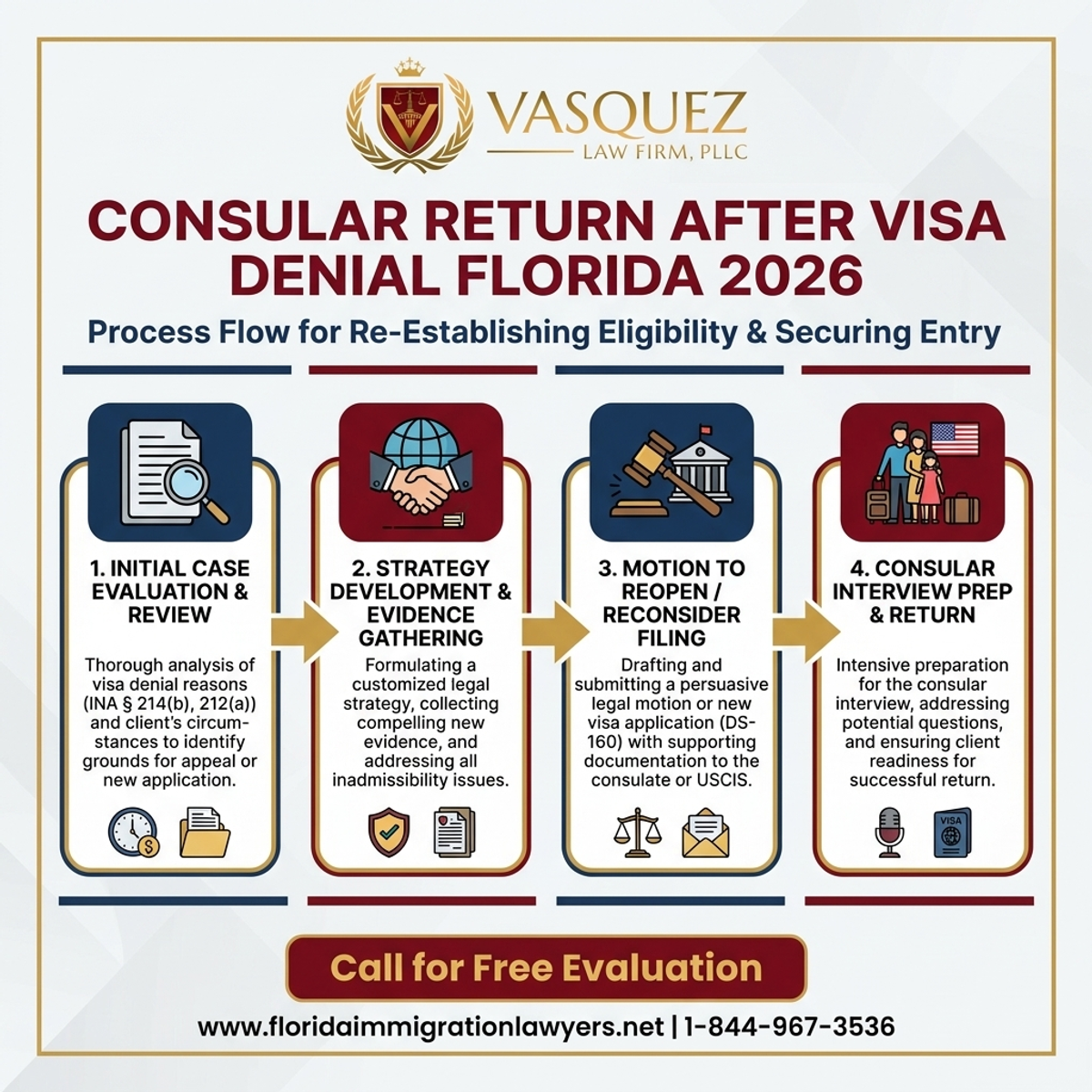
Step-by-Step Process — Consular Return After Visa Denial Florida in 2026
-
Submit Documents as Instructed: Follow the instructions provided in your 221(g) letter for submitting additional documents. This usually involves uploading them to a designated online portal or submitting them via mail or courier to the relevant U.S. embassy or consulate. Keep copies of everything you submit for your records.
-
Monitor Your Application Status: After submitting the requested information, regularly check the status of your visa application online using the case number provided. The State Department website often provides updates on administrative processing. Be prepared for potentially lengthy wait times, as some cases can take months or even years to resolve.
-
Seek Legal Intervention if Necessary: If your case remains in administrative processing for an extended period without updates, or if you believe the refusal is erroneous, an immigration attorney can intervene. They can contact the consulate on your behalf, submit inquiries, or explore other legal avenues, such as a Writ of Mandamus, to compel a decision. This is especially relevant for complex cases or those involving national security concerns.
What Documents Do I Need for Consular Processing After a Visa Denial?
After a visa denial, particularly a 221(g) refusal, the specific documents required for resubmission during consular processing will be explicitly listed in the refusal letter provided by the consular officer. These documents are crucial for addressing the identified deficiencies or concerns in your initial application. It is imperative to provide exactly what is requested, along with any additional supporting evidence that strengthens your case.
The documents needed can vary widely depending on the type of visa, the reason for the initial denial, and the specific circumstances of your case. For instance, if the concern was about financial stability, you might need more comprehensive bank statements or affidavits of support. If it was about intent to return, you might need stronger evidence of property ownership, family ties, or employment in your home country. Meticulous organization and completeness are key to a successful resubmission for residents throughout Florida.
Document Checklist for 221(g) Response (Common Examples):
- Your original 221(g) refusal letter.
- Your passport, valid for at least six months beyond your intended period of stay.
- A new visa application form (DS-160 or DS-260) if instructed, ensuring all information is accurate and updated.
- Original and copies of all documents requested in the 221(g) letter (e.g., birth certificates, marriage certificates, police certificates, academic records).
- Detailed financial documents: bank statements, tax returns, proof of income, letters from employers, or affidavits of support (Form I-864) from U.S. sponsors.
- Evidence of strong ties to your home country (for non-immigrant visas): property deeds, lease agreements, family photos, letters from employers confirming job security, university enrollment letters.
- Invitation letters from U.S. hosts, if applicable, providing more detail on the purpose and duration of your visit.
- Medical examination results, if previously expired or additional tests were requested.
- Any additional information or evidence specifically requested by the consular officer to clarify your eligibility or address concerns.
- A cover letter summarizing the documents being submitted and referencing the case number.
It is crucial to note that all foreign language documents must be accompanied by certified English translations. Failure to provide accurate translations or any requested document can lead to further delays or a final visa denial. For those in West Palm Beach or other parts of Florida, ensuring all documents meet U.S. government standards is a critical step in overcoming a visa denial.
What is the Typical Timeline for 221(g) Administrative Processing in 2026?
As of 2026, the typical timeline for 221(g) administrative processing can vary significantly, ranging from a few weeks to several months, and in some complex cases, over a year. There is no fixed duration, as processing times depend on the specific nature of the case, the completeness of the submitted documents, the volume of applications at the consulate, and the type of background checks required. Some cases are resolved quickly once the requested information is provided, while others, particularly those involving security advisory opinions, may experience prolonged delays.
The USCIS website and the Department of State's consular websites provide general processing timeframes, but 221(g) cases are often unique. Factors such as the country where the visa was applied for, current geopolitical events, and the specific section of law under which the refusal was issued can all influence the duration. Patience and diligent follow-up are essential for applicants navigating this stage of the immigration process, especially for those in Florida awaiting a resolution.
Typical Timeline for 221(g) Administrative Processing (2026)
| Stage | Typical Timeframe | Notes |
|---|---|---|
| Initial 221(g) Refusal | Immediately after interview | Consular officer issues a letter requesting more info or indicating administrative processing. |
| Gathering & Submitting Documents | 1-4 weeks | Depends on complexity of requested documents and applicant's ability to obtain them. |
| Consulate Review & Initial Processing | 2-8 weeks | Consulate reviews submitted documents and updates case status. Simple cases may be resolved here. |
| Administrative Processing (Security Checks) | 2-12 months (or longer) | If security checks or inter-agency consultations are required. No fixed timeline, highly variable. |
| Final Decision / Visa Issuance | Upon completion of processing | Applicant notified of approval or final denial. Passport requested for visa stamping. |
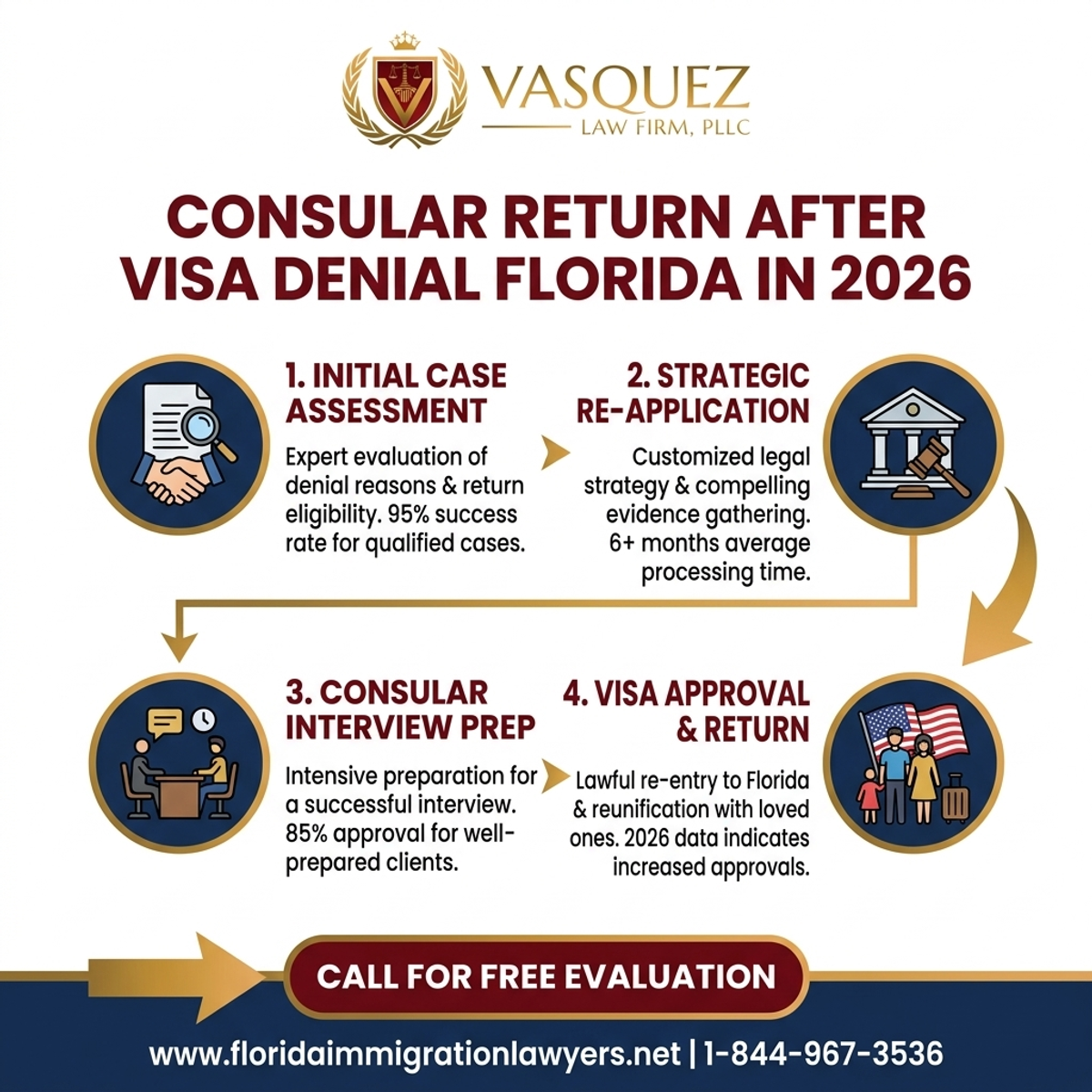
Key Statistics — Consular Return After Visa Denial Florida in 2026
It is important to remember that these are general estimates, and individual cases can deviate significantly. For individuals in Florida, especially those with time-sensitive matters, understanding these potential delays is crucial for planning. Legal counsel can help manage expectations and provide strategies for monitoring and, if possible, expediting the process.
What Are the Costs Associated with Overcoming a Visa Denial in Florida?
Overcoming a visa denial in Florida, particularly one involving 221(g) administrative processing, can incur various costs beyond the initial visa application fee. These costs are not fixed and depend heavily on the specific circumstances of your case, the type of documents required, and whether you seek legal assistance. While there are no direct government fees for responding to a 221(g) request, associated expenses can add up.
The financial implications can range from minor administrative costs to significant legal fees for complex cases. It is important to budget for these potential expenses when planning your immigration journey. For those in West Palm Beach and across Florida, understanding these cost factors helps in making informed decisions about how to proceed after a visa denial.
Typical Cost Factors for Overcoming a Visa Denial
| Item | Typical Fee Range (Approx.) | Notes |
|---|---|---|
| Document Procurement | Varies widely ($0 - $500+) | Fees for obtaining new birth certificates, police records, academic transcripts, etc. |
| Certified Translations | $20 - $50 per page | Required for any foreign language documents. Costs depend on document length and language. |
| Medical Examinations | $200 - $500+ | If previous exam expired or new tests are required due to health-related concerns. |
| Courier/Mail Services | $30 - $100+ | For secure submission of documents to the consulate. |
| Immigration Attorney Fees | $1,500 - $10,000+ | Highly variable based on case complexity, lawyer's experience, and services rendered (e.g., document review, response drafting, inquiry, intervention). |
| Travel Expenses | Varies widely | If you need to travel to gather documents or attend additional appointments. |
Please note that these are estimated costs and can change. Government filing fees for the initial visa application are separate and would have already been paid. Investing in experienced legal counsel can be a critical expense, but it often proves invaluable in navigating the complexities of 221(g) administrative processing and increasing the likelihood of a positive outcome. Florida Immigration Lawyers offers free consultations to discuss your case and potential costs.
Do not navigate this process alone. A visa denial, especially one involving administrative processing, can be overwhelming and confusing. Understanding the specific legal nuances and preparing a compelling response is critical. Contact Florida Immigration Lawyers today at 1-844-YO-PELEO for guidance and support.
Common Mistakes to Avoid After a Visa Denial
Navigating a consular return after a visa denial, particularly one involving 221(g) administrative processing, is fraught with potential pitfalls. Avoiding common mistakes can significantly improve your chances of a successful resolution. Many applicants, without proper legal guidance, inadvertently make errors that prolong the process or lead to a final denial.
-
Failing to Understand the Specific Reason for Denial: Many applicants skim the 221(g) letter and assume they know why their visa was refused. Not fully grasping the specific grounds for denial or the exact information requested can lead to an inadequate response, wasting time and effort.
-
Submitting Incomplete or Incorrect Documents: Responding with only some of the requested documents, or providing outdated or erroneous information, is a common error. This will only prolong the administrative processing or lead to a definitive refusal, as the consulate still lacks the necessary information.
-
Not Providing Certified Translations: Any document in a foreign language must be accompanied by a certified English translation. Failing to do so makes your documents unreadable to the consular officer, causing delays and potentially leading to rejection.
-
Delaying Your Response: While there isn't always a strict deadline for 221(g) responses, delaying can indicate a lack of seriousness or allow your case to become stale. Promptly gathering and submitting documents demonstrates diligence and can prevent further complications.
-
Providing False or Misleading Information: Attempting to 'fix' a past error by providing false information or misrepresenting facts is a severe mistake. This can lead to a permanent bar from entering the U.S. under INA Section 212(a)(6)(C)(i) for misrepresentation.
-
Ignoring Previous Immigration History: Not fully disclosing or downplaying previous visa denials, overstays, or other immigration violations can be detrimental. Consular officers have access to extensive databases, and inconsistencies will be flagged, leading to distrust and likely a final denial.
-
Contacting the Consulate Excessively: While monitoring your case is important, excessive and repetitive inquiries to the consulate without new information can be counterproductive. It can overwhelm staff and may not expedite your case; instead, focus on providing requested information.
-
Underestimating the Complexity of Administrative Processing: Many applicants assume 221(g) is a minor hurdle. In reality, it can involve extensive background checks and inter-agency reviews, requiring patience and a strategic approach. Underestimating this can lead to frustration and poor decision-making.
-
Not Seeking Legal Counsel: Attempting to navigate complex 221(g) issues or a visa denial without an experienced immigration attorney is a significant risk. Lawyers can identify hidden issues, prepare compelling responses, and advocate on your behalf, especially for those in West Palm Beach and across Florida facing intricate cases.
When to Call a Lawyer for Consular Return After Visa Denial in Florida
The moment you receive a 221(g) refusal or any form of visa denial, it is advisable to consult with an experienced immigration lawyer. While some minor requests for additional documents might seem straightforward, the underlying reasons for a consular return can be complex and have long-term implications for your immigration future. A lawyer can provide immediate clarity and strategic guidance, particularly for those in West Palm Beach, Miami, Orlando, or other Florida areas.
You should definitely call Florida Immigration Lawyers if:
- Your 221(g) letter is vague, and you don't understand the exact reason for the administrative processing.
- The requested documents are difficult to obtain, or you're unsure how to provide the information effectively.
- You have a complicated immigration history, including previous denials, overstays, or criminal records.
- You suspect the denial is based on a misunderstanding or an error by the consular officer.
- Your case involves a waiver of ineligibility (e.g., for certain health issues or past immigration violations).
- Your application has been in administrative processing for an unusually long time (e.g., more than 6-12 months) without any updates.
- You believe the denial might be related to national security concerns or other serious issues.
- You need to appeal a final visa denial or explore other avenues for entry into the U.S.
Our attorneys at Florida Immigration Lawyers focus on navigating these complex consular processes. We can help you understand the specific legal basis for your denial (e.g., INA Section 212(a) grounds of ineligibility), prepare a robust response, communicate with the consulate on your behalf, and advocate for your rights. We represent clients throughout Florida, ensuring personalized and effective legal strategies.
About Florida Immigration Lawyers
Florida Immigration Lawyers is an immigration law firm dedicated to serving individuals, families, and businesses across the entire state of Florida. With offices located strategically, we provide comprehensive legal services in all areas of immigration law, from visa applications and green cards to asylum claims and deportation defense. Our team of highly skilled and compassionate attorneys understands the unique challenges immigrants face and is committed to achieving the strongest possible outcomes for our clients.
We pride ourselves on our client-focused approach, offering personalized attention and clear communication throughout every step of the legal process. Whether you are in Orlando, or any other Florida community, our firm is here to provide accessible and effective legal solutions. We offer free consultations to evaluate your case and discuss how we can assist you in achieving your immigration goals. Our firm is available 24/7, ensuring you have access to legal advice when you need it most. Visit our website at floridaimmigrationlawyers.net or call us today.
Sources and References
- U.S. Citizenship and Immigration Services (USCIS)
- U.S. Department of State - Bureau of Consular Affairs
- Executive Office for Immigration Review (EOIR)
- Immigration and Nationality Act (INA) Section 221(g) - 8 U.S.C. § 1201(g)
- Immigration and Nationality Act (INA) Section 212(a) - 8 U.S.C. § 1182(a)
- 22 Code of Federal Regulations (CFR) Part 41 - Visas: Documentation of Nonimmigrants
Related services: immigration practice areas, family immigration services, citizenship and naturalization.
This article provides general legal information and is not intended as legal advice. Every case is unique, and outcomes depend on specific facts and circumstances. Contact an attorney for advice about your particular situation. Immigration laws and policies are subject to change, and it is crucial to consult with a qualified legal professional for the most current and accurate guidance.
Don't let a visa denial derail your dreams. With the right legal support, you can navigate the complexities of consular processing and administrative processing. Take the first step towards resolving your immigration matter today. Call Florida Immigration Lawyers at 1-844-YO-PELEO for a free, confidential consultation. Se Habla Espanol - Estamos aqui para ayudarle.
If you need legal assistance, learn more about get immigration legal help today, or call us at 1-844-YO-PELEO for a free consultation.
Do Not Navigate This Process Alone
Our experienced immigration attorneys are ready to fight for you. Get a free, confidential case review today.
Se Habla Español
Or leave your details and we’ll call you:
Free Evaluation in 24 Hours
Or talk to us right now

AI voice assistant — available 24/7
FreeFrequently Asked Questions

William J. Vásquez
Founding Attorney · Vasquez Law Firm
U.S. Air Force veteran and immigration attorney with years of hands-on U.S. immigration experience. J.D., NCCU School of Law. AILA member. Admitted to the 4th, 5th, and 11th Circuit Courts.
Available 24/7 - Free Evaluations
Reviewed for legal accuracy by William J. Vásquez
Licensed in North Carolina; U.S. immigration is federal practice.
Related Legal Services
Our Florida immigration attorneys can help you with experienced immigration attorneys, asylum protection and citizenship and naturalization. Call today at 1-844-YO-PELEO for a free case review.
Related Links
Related Topics
Free Legal Case Review
Discuss your case with our experienced attorneys. We're available 24/7.
Se Habla Español - Estamos aquí para ayudarle.
Related Articles
PERM Labor Certification in Florida: A 2026 Guide
Learn all about the PERM labor certification process in Florida, essential for employers sponsoring green card applicants. Understand the steps, document requirements, and common mistakes to avoid in this 2026 guide.
Dual Citizenship Lawyer in Florida: What You Need to Know
For Florida residents, the concept of dual citizenship, or holding two passports, offers a compelling blend of opportunities and challenges. While the U.S. generally permits dual nationality, the path to achieving this status requires a meticulous understanding of both U.S. immigration laws and the citizenship policies of your country of origin. This guide explores the definition of dual citizenship, the detailed step-by-step process for U.S. naturalization, and the significant benefits and potential pitfalls involved. We cover essential documentation, typical timelines, and cost considerations for 2026, providing crucial insights for anyone in Orlando, Miami, or across Florida considering this important legal step. Learn about common mistakes to avoid and understand when to seek professional legal counsel to navigate this complex process successfully. Florida Immigration Lawyers is here to provide expert, bilingual support for your dual citizenship journey.
EAD Advance Parole Combo Card in Florida: What You Need
An EAD advance parole combo card allows individuals with pending adjustment applications to both work and travel abroad without jeopardizing their green card application. Learn how to apply in Florida, what documents you need, and common mistakes to avoid.
Immigration Lawyer Orlando Free Consultation in Florida
For individuals and families in Orlando, Florida, navigating the complexities of U.S. immigration law requires expert guidance. An immigration lawyer in Orlando offers crucial support for everything from visa applications and green card processes to naturalization and deportation defense. This comprehensive guide details what a free consultation covers, providing a step-by-step overview of immigration pathways, essential document checklists, and expected timelines in 2026. We also highlight common mistakes to avoid, discuss the critical role of legal counsel in deportation and asylum cases, and explain why choosing a local Orlando immigration attorney is beneficial. Florida Immigration Lawyers is dedicated to serving the diverse community of Orlando with compassionate, effective legal solutions, ensuring you receive personalized advice and robust representation for a successful immigration journey.