Motion to Reopen Immigration Case in Florida: 2026 Guide
Explore the process of filing a motion to reopen an immigration case in Florida. Learn about eligibility, the filing process, and when to seek legal help. Discover key insights for ensuring a successful motion.

- A motion must be filed within 90 days of the final decision.
- New evidence or changes in circumstances are required.
- Legal representation can significantly improve outcomes.
Introduction
Facing an unfavorable immigration court decision can be daunting, especially if it affects your future in the United States. In Florida, particularly in areas like Naples, filing a motion to reopen your case may be a viable option. This detailed guide will walk you through the eligibility requirements, process, and potential outcomes of filing such a motion, ensuring you have the best chance at a positive result. For personalized assistance, call Florida Immigration Lawyers at 1-844-967-3536 for a free consultation.
An adverse immigration decision can feel like the end of the road, leading to significant stress and uncertainty for individuals and their families. However, the U.S. immigration system provides avenues for relief, and a motion to reopen is one of the most critical. It represents a vital opportunity to present new facts or demonstrate a change in circumstances that could fundamentally alter the outcome of a prior ruling, potentially preventing deportation or securing a path to legal status.
Navigating the intricacies of immigration law requires a deep understanding of legal precedents, procedural rules, and the specific requirements for different types of motions. This guide aims to demystify the process of filing a motion to reopen in Florida, offering clarity on what it entails and how to approach it strategically. Given the strict deadlines and high evidentiary standards, professional legal guidance is not just beneficial but often essential for a successful outcome.
What is a Motion to Reopen in Immigration Court?
A motion to reopen in immigration court is a request to review a case due to new evidence or changed circumstances. As of 2026, this motion must be filed within 90 days of the final administrative decision. The motion is typically used by individuals who have received a deportation order and have new information that could change the outcome.
Filing a motion to reopen requires presenting new, material evidence that was not previously available. It's crucial to adhere to deadlines and provide compelling evidence to increase the chances of success.
The core principle behind a motion to reopen is fairness and the opportunity to correct a previous decision based on information that was genuinely inaccessible or did not exist at the time of the initial hearing. "New evidence" must be material, meaning it is relevant to the issues in the case and could potentially change the outcome if considered. For instance, this could include newly discovered documents proving eligibility for a form of relief, a medical diagnosis supporting an asylum claim, or expert testimony on country conditions that were not available during the original proceedings.
"Changed circumstances" refer to significant developments that have occurred since the final decision was rendered. Examples might include a new marriage to a U.S. citizen that creates eligibility for adjustment of status, a change in country conditions that heightens the risk of persecution for an asylum seeker, or the enactment of new immigration laws that provide a previously unavailable form of relief. The burden is on the applicant to demonstrate that these changes are substantial and directly impact their eligibility for relief or the validity of the previous decision. Understanding these distinctions is paramount for crafting a strong and persuasive motion, and a seasoned attorney from Florida Immigration Lawyers can help identify the strongest grounds for your specific situation.
How to File a Motion to Reopen in Florida?
Filing a motion to reopen in Florida involves several steps. First, gather all necessary documentation, including the new evidence you intend to present. Next, complete Form I-290B, Notice of Appeal or Motion, and submit it to the appropriate immigration court or USCIS office.
- Gather new, relevant evidence.
- Complete and submit Form I-290B.
- Pay the required filing fee.
- Submit the motion within the 90-day deadline.
- Await a response from the immigration authorities.
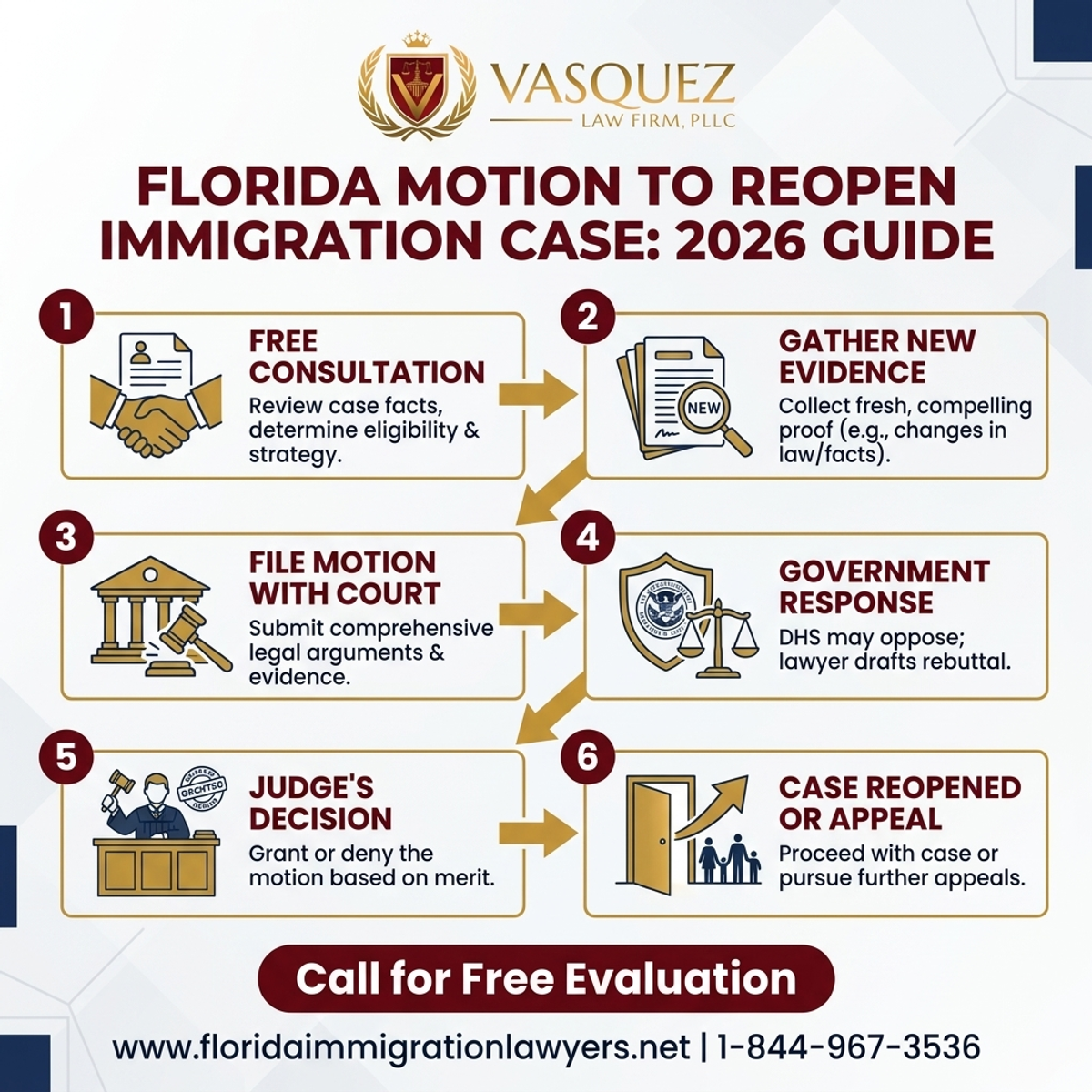
Step-by-Step Process — Motion to Reopen Immigration Case in Florida: 2026 Guide
Seek legal guidance to navigate this process effectively, ensuring all paperwork is accurately completed and submitted on time.
When gathering new, relevant evidence, specificity is key. This might include affidavits from witnesses, letters of support, updated medical records, psychological evaluations, expert opinions on country conditions or legal matters, or official government documents that were previously unavailable. Each piece of evidence must be meticulously organized, properly translated if in a foreign language (with a certified translation), and clearly demonstrate its materiality and why it could not have been presented earlier. A compelling motion often hinges on the quality and persuasiveness of this new documentation.
Completing Form I-290B requires careful attention to detail. This form serves as your official request, and any errors or omissions can lead to delays or even denial. You must clearly articulate the legal and factual grounds for reopening your case, referencing relevant statutes, regulations, and case law. It's not enough to simply submit new evidence; you must explain how this evidence directly impacts the previous decision and warrants a different outcome. This legal argumentation is a complex task best handled by an experienced immigration attorney. The team at Florida Immigration Lawyers is adept at crafting robust legal arguments to support your motion.
Finally, understanding where to submit your motion is crucial. If your case was decided by an Immigration Judge, the motion typically goes to the Executive Office for Immigration Review (EOIR) court that issued the decision. If the Board of Immigration Appeals (BIA) made the final decision, the motion must be filed directly with the BIA. For certain types of cases, particularly those involving USCIS decisions, the motion might be filed with USCIS. Always ensure you have proof of service and keep copies of everything submitted. Missing the 90-day deadline, with very limited exceptions, is an automatic bar to reopening your case, making timely and accurate submission paramount.
Timeline and Processing Expectations
| Stage | Typical Timeframe | Notes |
|---|---|---|
| File Motion | Within 90 days | From final decision |
| Initial Review | 1-3 months | Depends on case load |
| Final Decision | 6-12 months | Varies by complexity |
Timelines can vary significantly based on the specifics of the case and the court's schedule.
The processing of a motion to reopen is not a swift process, and applicants should prepare for a potentially lengthy wait. After initial submission, the court or Board of Immigration Appeals (BIA) will conduct an initial review to ensure the motion meets basic filing requirements and deadlines. Following this, the government (Department of Homeland Security, or DHS) will have an opportunity to respond to your motion, often filing an opposition brief. This exchange of legal arguments further contributes to the overall timeline.
Factors such as the complexity of your case, the volume of motions pending before the specific court or BIA, and the availability of judges can all influence how quickly a decision is reached. For instance, a case involving intricate legal questions or extensive new evidence may naturally take longer to adjudicate than a more straightforward one. While the table provides general estimates, it's not uncommon for some cases to extend beyond the 12-month mark, especially with current backlogs in the immigration system. Your legal team at Florida Immigration Lawyers can provide more specific insights based on their experience with similar cases and current court conditions.
It's important to maintain regular communication with your attorney during this waiting period and to be prepared for potential requests for further information or even a hearing, should the court decide one is necessary. While waiting can be frustrating, it's crucial to remain patient and allow the legal process to unfold. During this time, it is also important to continue complying with any existing immigration orders or reporting requirements, as non-compliance could negatively impact your motion.
Cost Factors and Fee Breakdown
| Item | Typical Fee | Notes |
|---|---|---|
| Filing Fee | Variable | Check current USCIS fees |
| Legal Fees | Varies | Depends on attorney |
Understanding the potential costs involved helps in planning your case effectively.
The "variable" nature of filing fees means that the exact amount can change, and it's essential to consult the most current fee schedule published by USCIS or EOIR (for motions filed with an Immigration Court or the BIA). These fees are non-refundable, even if your motion is denied. In certain circumstances, individuals with very low incomes may be eligible for a fee waiver, which must be requested with compelling evidence of financial hardship. Proper documentation for a fee waiver is critical, as an improperly filed waiver request can lead to rejection of the entire motion.
Legal fees for a motion to reopen can vary significantly based on the complexity of the case, the amount of evidence to be reviewed and prepared, and the attorney's experience and reputation. These fees typically cover a wide range of services, including in-depth legal research, drafting the motion and supporting brief, preparing and organizing exhibits, communicating with government agencies, and potentially representing you at a hearing if one is granted. While the cost can be a concern, investing in skilled legal representation often proves to be a wise decision, as it dramatically increases the likelihood of a favorable outcome and can prevent costly mistakes that could lead to permanent bars or deportation.
When considering the financial aspect, it’s beneficial to view legal fees as an investment in your future and your ability to remain in the United States. Many law firms, including Florida Immigration Lawyers, understand the financial pressures immigrants face and may offer flexible payment plans or transparent fee structures. During your free consultation with Florida Immigration Lawyers at 1-844-967-3536, you can discuss the anticipated costs and explore options that fit your circumstances, ensuring you have access to the expert legal support you need without undue financial burden.
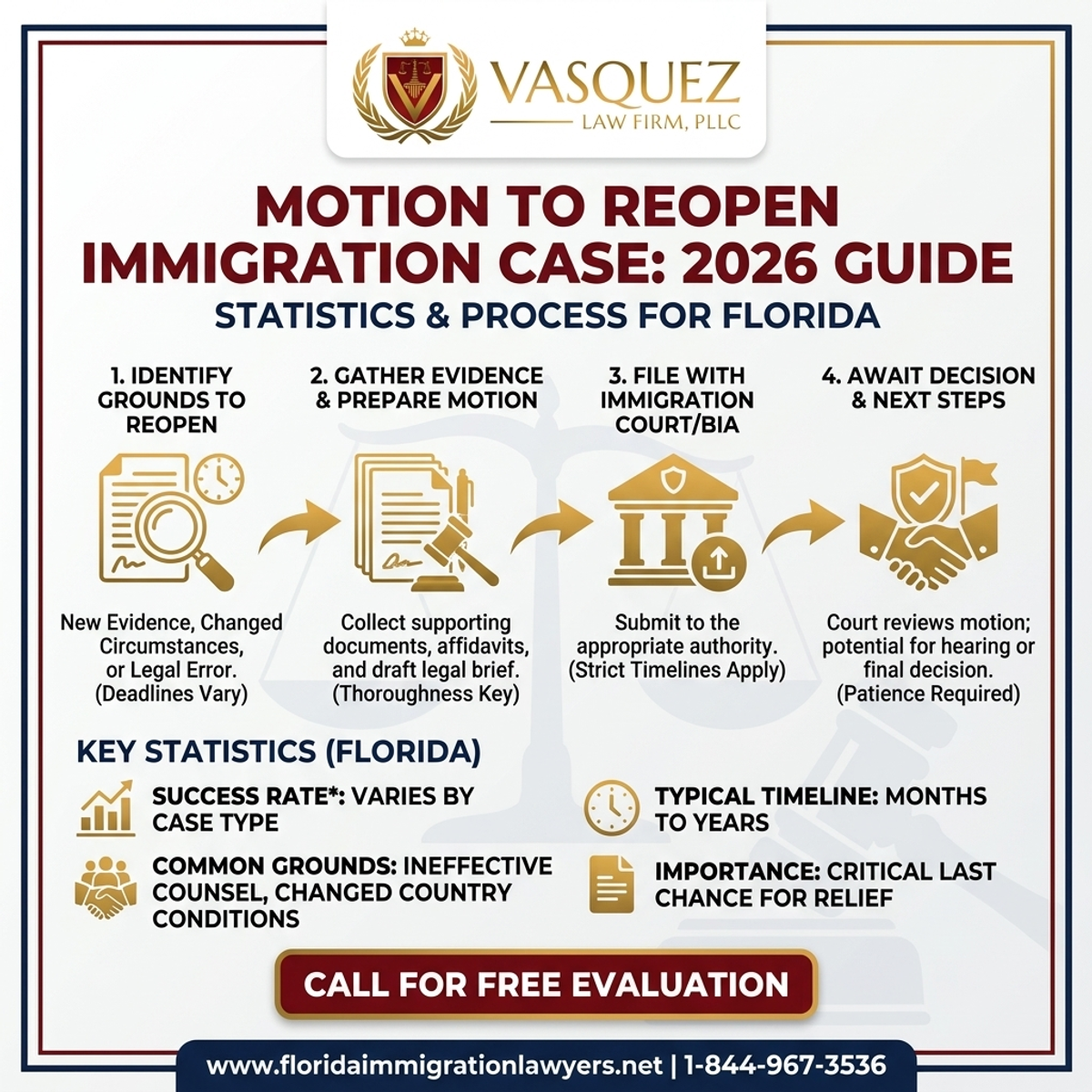
Key Statistics — Motion to Reopen Immigration Case in Florida: 2026 Guide
Common Mistakes to Avoid
- Missing the 90-day filing deadline, resulting in automatic denial.
- Submitting insufficient or irrelevant evidence, weakening the motion.
- Failing to properly complete Form I-290B, causing processing delays.
- Not consulting with an attorney, missing crucial legal strategies.
- Neglecting to pay the correct filing fee, halting the process.
- Overlooking changes in personal circumstances that could aid the case.
- Underestimating the complexity of immigration laws and procedures.
- Ignoring previous court decisions that influence the new motion.
- Failing to provide certified translations for foreign documents.
- Not addressing all issues raised in the original decision.
The strict 90-day filing deadline is perhaps the most critical hurdle. Unlike some other legal processes, immigration courts and the BIA are generally unforgiving when it comes to this time limit, with very few exceptions such as a joint motion with the government or a claim of ineffective assistance of counsel that meets specific, rigorous standards. Missing this deadline, even by a single day, will almost certainly lead to the motion's denial, regardless of the merits of your new evidence or changed circumstances.
Submitting insufficient or irrelevant evidence is another common pitfall. The evidence must not only be new and material but also directly address the grounds for reopening and demonstrate that, had it been available, it would have likely led to a different outcome. For example, simply providing a character reference letter might not be sufficient if the case requires proof of extreme hardship to a qualifying relative. An attorney can help you discern what evidence is truly impactful and how to present it in a persuasive manner.
Lastly, underestimating the complexity of immigration law is a significant error. Immigration statutes and regulations are constantly evolving, and the procedural requirements for motions to reopen are highly technical. A successful motion often requires sophisticated legal arguments, a thorough understanding of case precedents, and precise adherence to filing instructions. Attempting to navigate this process without professional legal assistance can lead to critical mistakes that jeopardize your chances of success. Florida Immigration Lawyers are well-versed in these complexities and can provide the strategic guidance needed to avoid these common errors.
When to Call a Lawyer
If you are facing deportation or have received a negative decision in your immigration case, it is critical to consult an attorney. Legal expertise is invaluable when filing a motion to reopen, as it involves complex legal arguments and substantial documentation.
Florida Immigration Lawyers can guide you through the process, ensuring that your motion is as strong as possible.
The moment you receive an unfavorable immigration decision, especially a deportation order, is the time to immediately seek legal counsel. The 90-day deadline begins ticking from the date of the final decision, leaving little room for error or delay. An experienced immigration attorney can quickly assess your case, identify potential grounds for a motion to reopen, and begin the arduous process of gathering the necessary evidence and preparing the legal arguments. This immediate action is crucial for preserving your rights and opportunities.
Beyond the deadline, the substantive legal challenges demand professional attention. For instance, proving "ineffective assistance of counsel" as an exception to the filing deadline is an incredibly high bar, requiring detailed evidence that your previous attorney's performance fell below professional standards and prejudiced your case. Similarly, demonstrating that new country conditions warrant asylum requires expert knowledge of international affairs and legal precedents. These are not tasks for someone without specialized legal training.
Engaging Florida Immigration Lawyers means you have a dedicated advocate who understands the nuances of immigration law in Florida and nationwide. Our team will meticulously review your original case, explore all possible avenues for relief, and construct a compelling motion to reopen. Don't face this critical juncture alone; call us at 1-844-967-3536 for a free consultation to discuss how we can fight for your right to remain in the U.S.
About Florida Immigration Lawyers
Florida Immigration Lawyers is a dedicated firm serving all of Florida, including Naples. We specialize in immigration law, offering services in family immigration, deportation defense, and more. Our team is available 24/7, providing free consultations to help you navigate your immigration matters effectively. Call us at 1-844-967-3536 or visit our website at Florida Immigration Lawyers.
Our commitment at Florida Immigration Lawyers extends beyond simply filing paperwork. We understand the profound impact immigration decisions have on individuals and families, and we approach each case with compassion, diligence, and a fierce dedication to achieving the best possible outcome. Our attorneys are not just legal professionals; they are advocates who passionately believe in justice and the right to a fair hearing. We pride ourselves on clear communication, ensuring our clients are informed and empowered throughout every stage of their legal journey.
With years of experience successfully representing clients in a wide array of complex immigration cases, including numerous motions to reopen, our firm has developed a reputation for excellence and effective legal strategies. We stay abreast of the latest changes in immigration policy and law, ensuring that our advice is always current and tailored to the unique circumstances of each client. Whether you're in Naples, Miami, Orlando, or anywhere else in Florida, our statewide reach means expert assistance is always within your grasp. We are here to provide the peace of mind that comes with knowing your case is in capable hands.
Sources and References
- U.S. Citizenship and Immigration Services (USCIS)
- Executive Office for Immigration Review (EOIR)
- 8 U.S.C. Chapter 12 - Immigration and Nationality Act
Related services: asylum and refugee protection, immigration waivers, humanitarian protection programs, DACA renewal and applications.
This article provides general legal information and is not intended as legal advice. Every case is unique, and outcomes depend on specific facts and circumstances. Contact an attorney for advice about your particular situation.
Final CTA
For assistance with your immigration case, contact Florida Immigration Lawyers at 1-844-967-3536 for a free consultation. Se Habla Español - Estamos aquí para ayudarle.
If you need legal assistance, learn more about Florida deportation defense legal team, or call us at 1-844-967-3536 for a free consultation.
Do Not Navigate This Process Alone
Our experienced immigration attorneys are ready to fight for you. Get a free, confidential consultation today.
Se Habla Español
Frequently Asked Questions
Harold Estrada-Rodriguez
Florida Immigration Attorney · FL Bar No. 1041171
Florida Bar attorney handling Florida-jurisdiction immigration matters. Bilingual representation, free consultations.
Available 24/7 - Free Evaluations
Related Legal Services
Our Florida immigration attorneys can help you with deportation defense, citizenship and naturalization and family immigration services. Call today at 1-844-967-3536 for a free consultation.
Related Links
Related Topics
Free Legal Consultation
Discuss your case with our experienced attorneys. We're available 24/7.
Se Habla Español - Estamos aquí para ayudarle.
Related Articles
USCIS Premium Processing I-539 H-4 Change of Status 2026
Explore the 2026 updates for USCIS premium processing of I-539 H-4 applications, offering expedited work authorization for H-4 spouses in Florida. Learn about the process, timelines, and costs involved, and avoid common pitfalls with our expert guidance.
Adjustment of Status Venice Florida: Your 2026 Guide
For individuals in Venice, Gainesville, and across Florida, understanding the adjustment of status process is key to securing permanent residency. This comprehensive guide details who is eligible, the step-by-step application process for Form I-485 in 2026, and the essential documents required. We cover typical timelines, associated costs, and what to expect during a USCIS interview, providing a clear roadmap. Learn about common mistakes to avoid that could jeopardize your application and identify when professional legal assistance from Florida Immigration Lawyers is crucial. Our firm provides expert guidance for your green card journey, ensuring you navigate the complexities with confidence.
Re-entry Permit Process for Green Card Holders in Florida
Explore the re-entry permit application process for Florida LPRs to avoid green card abandonment. Learn about necessary steps, documentation, and common pitfalls.
Deportation Defense Attorney Florida: Your 2026 Guide
Facing deportation proceedings in Florida can be a terrifying experience, impacting your future and your family's stability. This comprehensive guide from Florida Immigration Lawyers explains the critical role of a deportation defense attorney in Florida, detailing the removal process, common defenses like asylum and cancellation of removal, and crucial steps to protect your rights. Learn about what to expect in Florida's immigration courts, how long cases typically take in 2026, and the essential documents needed for your defense. We also highlight common mistakes to avoid and when it's vital to seek legal counsel. With offices serving clients from Orlando to West Palm Beach, our experienced team provides strategic and compassionate representation, offering free consultations to help you navigate these complex legal challenges.
