Re-entry Permit Process for Green Card Holders in Florida
Explore the re-entry permit application process for Florida LPRs to avoid green card abandonment. Learn about necessary steps, documentation, and common pitfalls.

For lawful permanent residents (LPRs) in Florida, a re-entry permit is crucial to avoid abandoning your green card status during extended travel abroad. This document, filed using Form I-131, allows LPRs to maintain their residency while outside the U.S. for over a year. Key points include:
- Essential for trips exceeding 12 months
- Prevents unintentional abandonment of residency
- Must be applied for while physically present in the U.S.
Understanding Re-entry Permits for Florida LPRs
If you're an LPR living in Orlando, Florida, planning extensive travel abroad, securing a re-entry permit is vital. Without it, you risk abandoning your permanent resident status, especially if your trip exceeds one year. This guide explores the essentials of re-entry permits, including the application process, timelines, and common pitfalls.
Call Florida Immigration Lawyers at 1-844-967-3536 for a free consultation.
What is a Re-entry Permit and Why is it Important?
A re-entry permit is a travel document for LPRs to retain their residency status while traveling outside the U.S. for extended periods, typically over a year. It is necessary to prevent green card abandonment, ensuring that your long-term travel does not jeopardize your status.
Without a re-entry permit, LPRs risk being denied re-entry into the U.S. or losing their residency status. This document serves as evidence of your intent to return and maintain your permanent residency.
USCIS generally presumes that an LPR who remains outside the U.S. for more than one year has abandoned their permanent resident status. However, even absences exceeding six months can raise questions at the port of entry regarding your intent to maintain U.S. residency. A re-entry permit actively counters this presumption, providing clear proof to immigration officials that your extended stay abroad is temporary and you fully intend to return to your life in the United States.
The importance of a re-entry permit extends beyond simply avoiding the one-year mark. It offers peace of mind, knowing that you have taken proactive steps to protect your hard-earned green card. Without it, you could face intense scrutiny from Customs and Border Protection (CBP) officers upon re-entry, potentially leading to lengthy questioning, secondary inspection, or even the initiation of removal proceedings. Having this document demonstrates your commitment to your LPR status, making your return journey smoother and more secure, especially for Florida residents with strong ties to the community.
Moreover, a re-entry permit can be crucial for LPRs who need to travel for family emergencies, business assignments, academic pursuits, or caregiving responsibilities that necessitate a prolonged stay abroad. It allows you to fulfill these obligations without the constant worry of jeopardizing your immigration status. Florida Immigration Lawyers can help you understand these nuances and prepare a strong application to safeguard your residency.
How to Apply for a Re-entry Permit?
To apply for a re-entry permit, you must file Form I-131 with the USCIS while physically present in the U.S. The application process includes several steps:
- Complete and submit Form I-131, Application for Travel Document.
- Pay the required filing fee.
- Attend a biometrics appointment at a USCIS Application Support Center in Florida.
- Await approval, which can take several months.
Ensure accuracy in your application to avoid delays. The USCIS office in Orlando handles these procedures efficiently.
The Form I-131 requires detailed information about your travel plans, including the purpose of your trip, the countries you intend to visit, and the expected duration of your stay abroad. It's crucial to be as thorough and honest as possible, providing a clear explanation for your extended absence. You will also need to demonstrate your continuing ties to the U.S., such as maintaining a residence, employment, bank accounts, and family connections in Florida. These details help USCIS determine your genuine intent to return.
The biometrics appointment is a mandatory step where your fingerprints, photograph, and signature are taken. This appointment is scheduled by USCIS after they receive your application and filing fee. It is critical that you attend this appointment as scheduled at a USCIS Application Support Center (ASC) in Florida. Failure to do so without proper rescheduling can lead to your application being denied. You must be physically present in the U.S. for both the filing of Form I-131 and the biometrics appointment. While you can depart the U.S. after your biometrics are captured, you cannot file or complete biometrics from abroad.
Beyond the form itself, it's advisable to include a cover letter explaining the compelling reasons for your extended travel and any additional supporting documentation that reinforces your ties to the United States. This might include property deeds, tax returns, employment letters, or proof of family residency in Florida. A well-prepared application minimizes the chances of receiving a Request for Evidence (RFE), which can significantly delay processing. Florida Immigration Lawyers can assist you in compiling a comprehensive application package to ensure all requirements are met.
Document Checklist for Re-entry Permit Application
- Completed Form I-131
- Copy of your green card
- Two passport-sized photos
- Filing fee receipt
- Evidence of planned travel (itinerary, tickets)
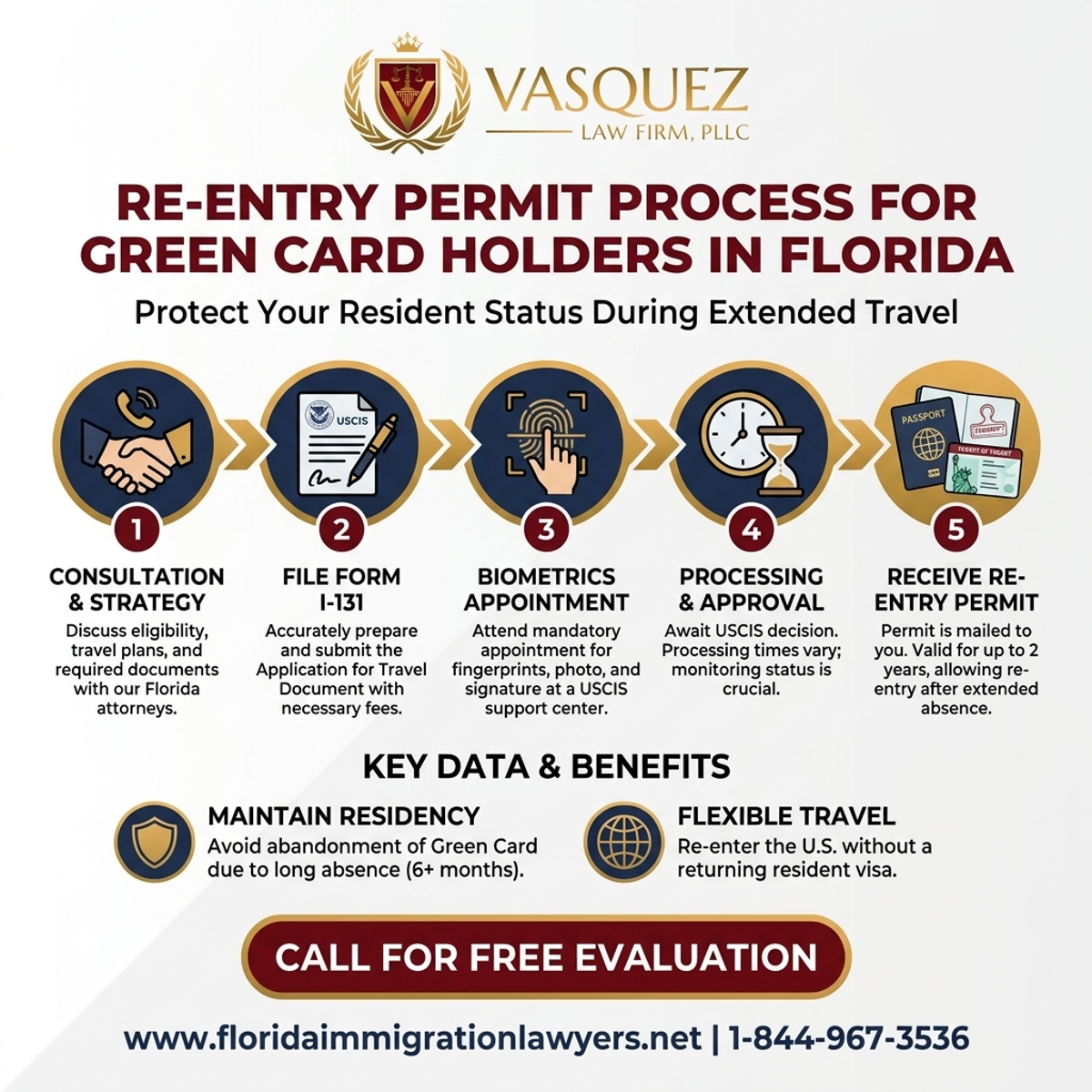
Step-by-Step Process — Re-entry Permit Process for Green Card Holders in Florida
What is the Timeline for Re-entry Permit Processing?
The processing timeline for a re-entry permit can vary significantly based on USCIS workload, current policies, and the completeness of your application. While the table below provides general estimates, it's crucial to check the official USCIS website for the most up-to-date processing times for Form I-131, which can fluctuate. Factors like a Request for Evidence (RFE) or background checks can also extend the overall duration.
| Stage | Typical Timeframe | Notes |
|---|---|---|
| Application Submission | 1-2 weeks | Ensure all documents are complete |
| Biometrics Appointment | 3-4 weeks | Scheduled by USCIS |
| Approval Process | 3-6 months | May vary based on caseload |
Given the potential for lengthy processing times, it is highly recommended that LPRs apply for a re-entry permit well in advance of their planned departure, ideally six to twelve months prior. This proactive approach helps mitigate risks associated with unexpected delays. Once your biometrics appointment is complete, you are generally permitted to travel internationally while your application is pending, but you must arrange for your re-entry permit to be mailed to a U.S. address or a designated U.S. consulate or embassy abroad for pickup once approved. Consult with Florida Immigration Lawyers to strategize your application timing.
Cost Factors and Fee Breakdown for Re-entry Permits
Understanding the costs associated with a re-entry permit is essential for proper financial planning. The fees listed below are subject to change, so always verify the most current amounts on the official USCIS website before submitting your application. These fees are non-refundable, even if your application is denied.
| Item | Typical Fee | Notes |
|---|---|---|
| Filing Fee | Varies | Check USCIS for current rates |
| Biometrics Fee | Varies | Additional to filing fee |
Keep updated with the latest fee structures on the USCIS website.
In addition to the standard filing and biometrics fees, applicants should also consider potential indirect costs. These might include expenses for obtaining passport-style photos, mailing costs, travel expenses to and from a USCIS Application Support Center in Florida for the biometrics appointment, and, if applicable, legal fees for professional assistance from Florida Immigration Lawyers. For individuals facing financial hardship, USCIS does offer fee waivers for certain forms, including Form I-131, if you meet specific eligibility criteria. It is important to explore all cost factors to ensure a smooth application process.
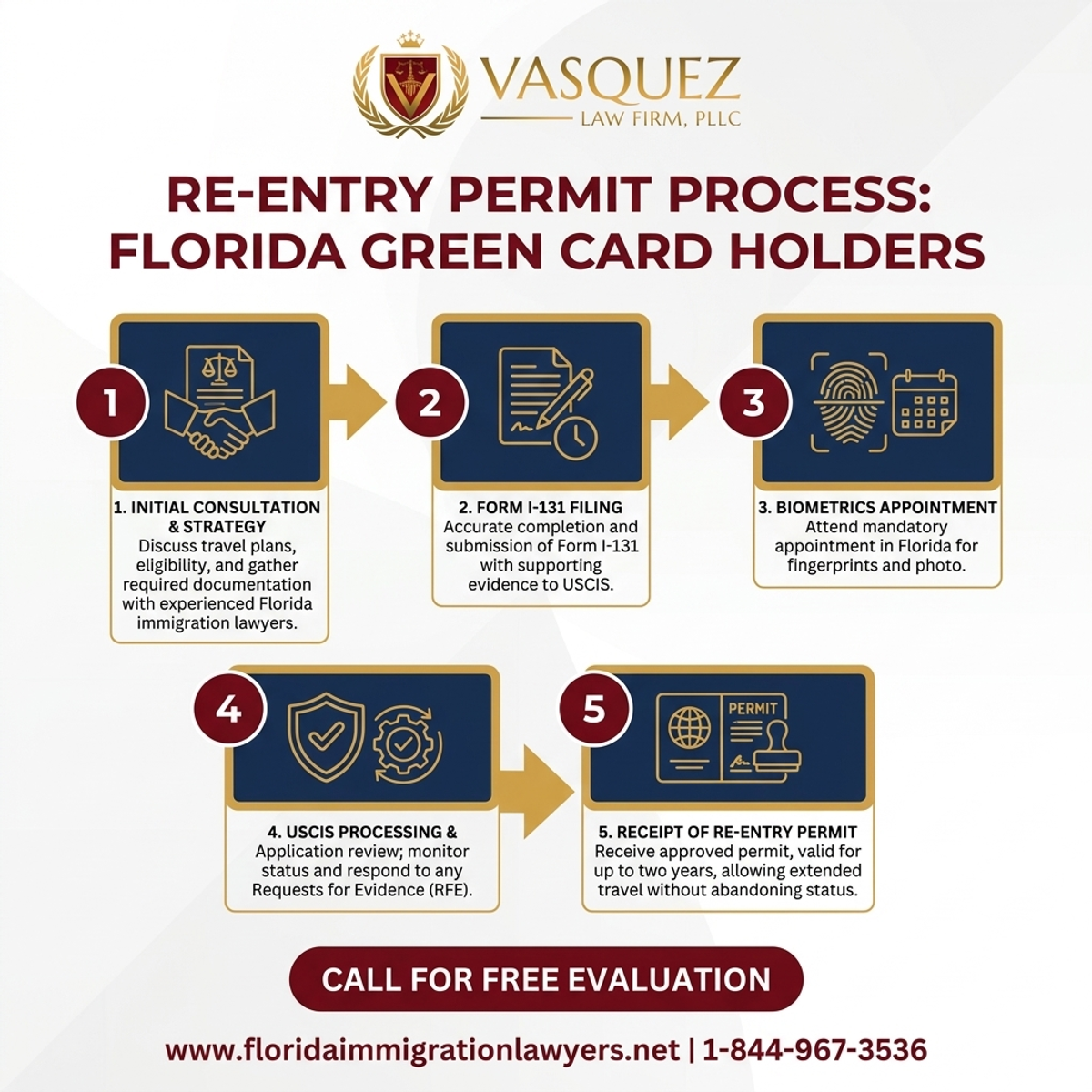
Key Statistics — Re-entry Permit Process for Green Card Holders in Florida
When Should You Seek Legal Assistance?
Do not navigate this process alone. Contact Florida Immigration Lawyers today.
If your travel plans are complex or if you've been outside the U.S. for an extended period without a permit, legal guidance is crucial. Our team can assist in filing and address any complications that may arise during the process.
Seeking legal assistance becomes particularly important if you have any potential complexities in your immigration history, such as previous long absences, a criminal record, or prior immigration violations. These factors can significantly complicate your re-entry permit application and may even impact your ability to re-enter the U.S. even with a permit. An experienced immigration attorney can help assess your specific situation, identify potential red flags, and advise on the best strategy to present your case to USCIS.
Furthermore, if your ties to the U.S. are not clearly established, or if you anticipate needing to travel before your re-entry permit is approved, consulting with a lawyer is highly advisable. Florida Immigration Lawyers can help you gather compelling evidence of your intent to return, craft a strong supporting statement, and navigate the process of departing the U.S. after your biometrics appointment while your application is still pending. Our expertise ensures that every detail is meticulously handled, minimizing risks and maximizing your chances of a successful outcome.
Common Mistakes to Avoid When Applying for a Re-entry Permit
- Failing to Apply While in the U.S. - Can lead to application denial.
- Missing the Biometrics Appointment - Results in processing delays.
- Incorrect Form Submission - Leads to rejection and wasted fees.
- Ignoring Expiry Dates - Travel must occur within the permit's validity.
- Not Retaining Copies of Documents - Essential for record-keeping.
- Providing Incomplete Travel Evidence - Weakens application credibility.
- Ignoring Legal Changes - Immigration laws can change, affecting eligibility.
- Applying Too Late - Last-minute applications may not be processed in time.
When to Call a Lawyer for Re-entry Permits?
If you are unsure about your eligibility or if you face legal complications, consulting with a lawyer is wise. Florida Immigration Lawyers can provide expert advice tailored to your situation.
You should strongly consider calling a lawyer if you've already been outside the U.S. for a significant period without a re-entry permit and are concerned about the presumption of abandonment. An attorney can help you prepare a strong case demonstrating your intent to maintain residency, even if you are already abroad. Additionally, if you receive a Request for Evidence (RFE) from USCIS, a lawyer can help you formulate a comprehensive and timely response, ensuring all requested information is provided accurately and effectively.
Other specific triggers for seeking legal counsel include having a conditional green card (e.g., through marriage or investment), as this status can have unique implications for re-entry permits. If you have any doubts about your ability to prove strong ties to Florida and the U.S., or if you've previously encountered issues with Customs and Border Protection upon re-entry, an attorney can provide invaluable guidance. Our team at Florida Immigration Lawyers is available to discuss your specific circumstances and provide the clarity you need. Don't hesitate to call 1-844-967-3536 for a free consultation.
About Florida Immigration Lawyers
Florida Immigration Lawyers is dedicated to providing comprehensive immigration legal services throughout Florida. Our experienced attorneys specialize in family immigration, deportation defense, citizenship, and business immigration. We offer free consultations and are available 24/7.
Phone: 1-844-967-3536
Website: https://www.floridaimmigrationlawyers.net
Sources and References
- U.S. Citizenship and Immigration Services (USCIS)
- Executive Office for Immigration Review (EOIR)
- 8 U.S.C. Chapter 12 - Immigration and Nationality Act
Related services: immigration practice areas, family immigration services.
This article provides general legal information and is not intended as legal advice. Every case is unique, and outcomes depend on specific facts and circumstances. Contact an attorney for advice about your particular situation.
For comprehensive legal assistance, call 1-844-967-3536. Se Habla Español - Estamos aquí para ayudarle.
If you need legal assistance, learn more about our immigration law practice, or call us at 1-844-967-3536 for a free consultation.
Do Not Navigate This Process Alone
Our experienced immigration attorneys are ready to fight for you. Get a free, confidential consultation today.
Se Habla Español
Frequently Asked Questions
Harold Estrada-Rodriguez
Florida Immigration Attorney · FL Bar No. 1041171
Florida Bar attorney handling Florida-jurisdiction immigration matters. Bilingual representation, free consultations.
Available 24/7 - Free Evaluations
Related Legal Services
Our Florida immigration attorneys can help you with experienced immigration attorneys, business immigration and asylum protection. Call today at 1-844-967-3536 for a free consultation.
Related Links
Related Topics
Free Legal Consultation
Discuss your case with our experienced attorneys. We're available 24/7.
Se Habla Español - Estamos aquí para ayudarle.
Related Articles
Adjustment of Status Venice Florida: Your 2026 Guide
For individuals in Venice, Gainesville, and across Florida, understanding the adjustment of status process is key to securing permanent residency. This comprehensive guide details who is eligible, the step-by-step application process for Form I-485 in 2026, and the essential documents required. We cover typical timelines, associated costs, and what to expect during a USCIS interview, providing a clear roadmap. Learn about common mistakes to avoid that could jeopardize your application and identify when professional legal assistance from Florida Immigration Lawyers is crucial. Our firm provides expert guidance for your green card journey, ensuring you navigate the complexities with confidence.
Deportation Defense Attorney Florida: Your 2026 Guide
Facing deportation proceedings in Florida can be a terrifying experience, impacting your future and your family's stability. This comprehensive guide from Florida Immigration Lawyers explains the critical role of a deportation defense attorney in Florida, detailing the removal process, common defenses like asylum and cancellation of removal, and crucial steps to protect your rights. Learn about what to expect in Florida's immigration courts, how long cases typically take in 2026, and the essential documents needed for your defense. We also highlight common mistakes to avoid and when it's vital to seek legal counsel. With offices serving clients from Orlando to West Palm Beach, our experienced team provides strategic and compassionate representation, offering free consultations to help you navigate these complex legal challenges.
U Visa Crime Victims Immigration Relief in Florida
Discover how the U visa provides essential immigration relief for crime victims in Florida, helping them gain stability and safety. Learn about eligibility, application steps, and how Florida Immigration Lawyers can assist you.
OPT STEM Extension Florida: Guide for Graduates 2026
For Florida F-1 graduates with a STEM degree, the 24-month OPT STEM extension is a critical opportunity to gain further work experience in the U.S. This comprehensive guide for 2026 details eligibility, the step-by-step application process, required documents, and expected timelines. We cover common mistakes to avoid and explain when seeking legal counsel from Florida Immigration Lawyers can be invaluable. From verifying your STEM eligibility to understanding USCIS fees and processing, this article provides essential information for international students in Kissimmee, Orlando, and across Florida. Learn how to secure your extended work authorization and continue building your career in the Sunshine State.