K-3 Visa Timeline for Spouses in Florida
Explore the 2026 K-3 spouse visa process for Florida residents. Learn about timelines, costs, and common pitfalls. Call Florida Immigration Lawyers for expert guidance.

The K-3 visa is designed to shorten the physical separation between foreign spouses and U.S. citizens while they await approval of their immigrant visa petition. As of 2026, the process involves multiple stages including the filing of Form I-129F and waiting for USCIS approval. Key takeaways include:
- Filing Form I-129F is the first step.
- Approval times can vary, typically taking several months.
- Florida residents may experience unique processing times based on local USCIS office.
Introduction
Living apart from your spouse while awaiting visa processing can be challenging, often taking an emotional and practical toll on relationships. The K-3 visa aims to bridge this gap, allowing foreign spouses to join their U.S. citizen partners in the United States more quickly, thereby fostering family unity sooner. This article provides a comprehensive overview of the K-3 visa process, with a special focus on Florida, particularly Fort Lauderdale.
The K-3 visa serves as a crucial nonimmigrant bridge, enabling spouses to reside together in the U.S. while the lengthier process of obtaining a permanent immigrant visa (green card) unfolds. This unique visa acknowledges the importance of keeping families together, rather than enduring prolonged separation due to administrative processing times. Understanding its nuances is vital for a smooth application.
Navigating the complexities of U.S. immigration law can be daunting, especially when your family's future hangs in the balance. For Florida residents, specific local processing variations and requirements can add another layer of intricacy. If you find yourself navigating this complex process, call Florida Immigration Lawyers at 1-844-967-3536 for a free consultation.
What is the K-3 Visa and How Does It Work?
The K-3 visa is a nonimmigrant visa specifically designed for the spouse of a U.S. citizen. Its primary purpose is to allow the foreign spouse to enter and reside in the United States while waiting for the approval of their immigrant visa petition (Form I-130). As of 2026, the process begins with the U.S. citizen filing Form I-129F, Petition for Alien Fiancé(e), with the USCIS. This petition, though titled for fiancés, is also used for K-3 spouses. Once approved, the foreign spouse can then apply for the K-3 visa at a U.S. embassy or consulate in their home country.
It's important to understand that the K-3 visa is not an immigrant visa itself; rather, it acts as a temporary status that grants entry and allows the spouse to remain in the U.S. until their underlying Form I-130 Immigrant Petition for Alien Relative is processed and they can adjust their status to a lawful permanent resident. This means the U.S. citizen must have already filed Form I-130 on behalf of their spouse before filing Form I-129F for the K-3 visa. The K-3 essentially allows for cohabitation during the often lengthy I-130 processing period.
This visa is particularly beneficial for those living in Florida, given the diverse immigrant population and the presence of numerous USCIS offices in the state that can facilitate the process. Beyond simply allowing physical presence, the K-3 visa also grants the foreign spouse the ability to apply for work authorization (Employment Authorization Document, EAD) upon arrival in the U.S. This enables them to contribute to the household income and integrate more fully into American society, a significant advantage over waiting abroad. For instance, imagine a U.S. citizen in Fort Lauderdale whose spouse in Brazil is waiting for their green card. Instead of months or years apart, the K-3 allows them to reunite sooner, fostering family unity and providing the spouse with the opportunity to work.
It is important to note that the K-3 visa must be applied for outside of the U.S., and upon approval, it allows the spouse to enter the country and stay until their immigrant visa is processed. The K-3 visa is generally issued for a two-year period and can be extended if the I-130 petition is still pending. This provides stability and peace of mind during a period that can often be filled with uncertainty.
How Long Does the K-3 Visa Process Take in Florida?
As of 2026, the timeline for obtaining a K-3 visa can vary significantly depending on several factors, including the specific USCIS service center handling your case, the volume of applications, and the foreign spouse's country of origin. Generally, the initial petition (Form I-129F) might take anywhere from 6 to 9 months for approval. Subsequent stages involve processing through the National Visa Center (NVC) and scheduling an interview at a U.S. consulate, which can add several more months to the overall timeline.
Factors that can influence processing times include the completeness and accuracy of your initial submission, any Requests for Evidence (RFEs) from USCIS, and the specific workload of the U.S. embassy or consulate where the interview will take place. For instance, some consulates are busier than others, leading to longer wait times for interview scheduling. Proactively ensuring all documents are correct and comprehensive can significantly reduce potential delays. Florida residents, especially those in Fort Lauderdale, may notice slight differences in processing times due to the volume of applications handled by local USCIS offices, which can impact initial petition approvals.
During the National Visa Center (NVC) stage, all required civil documents and affidavits of support are collected and reviewed. This critical phase ensures that the foreign spouse's case is documentarily qualified before an interview can be scheduled. Delays at this stage often occur due to missing documents or incorrect submissions. It's recommended to regularly check the USCIS website for the most current processing times and updates specific to Florida, and to utilize the NVC's online portal to track your case status. Staying informed and responding promptly to any requests is key to maintaining momentum in the application process. For Florida residents, particularly those in bustling areas like Fort Lauderdale, staying informed through the USCIS website and potentially consulting with Florida Immigration Lawyers can provide localized insights and help navigate any unforeseen challenges.
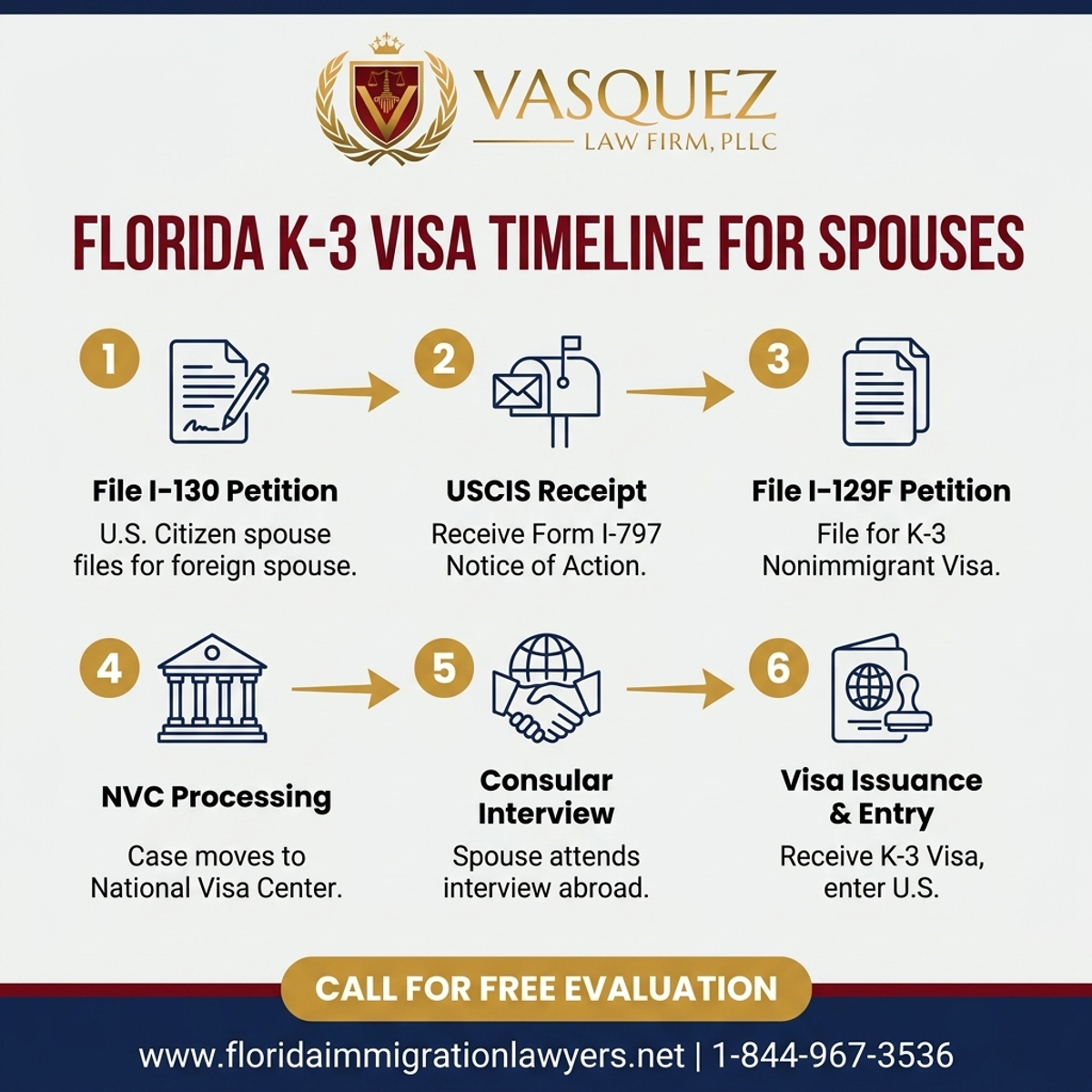
Step-by-Step Process — K-3 Visa Timeline for Spouses in Florida
Typical Timeline and Processing Expectations
| Stage | Typical Timeframe | Notes |
|---|---|---|
| File Form I-129F | 6-9 months | Initial petition approval by USCIS |
| National Visa Center Processing | 1-3 months | Forwarding to U.S. consulate |
| Consulate Interview and Approval | 2-3 months | Final decision on visa issuance |
What Documents Are Required for a K-3 Visa?
Gathering a comprehensive and accurate set of documents is paramount for a successful K-3 visa application. Any missing or incorrect documentation can lead to significant delays, including Requests for Evidence (RFEs) from USCIS or even denial. Each document must be submitted according to the guidelines outlined on the State Department website and USCIS instructions.
- Completed Form I-129F: This is the foundational petition filed by the U.S. citizen spouse. Ensure all sections are filled out accurately and completely, with no omissions.
- Proof of U.S. citizenship for the sponsoring spouse: This can include a copy of the U.S. citizen's birth certificate, naturalization certificate, or valid U.S. passport.
- Marriage certificate: A certified copy of your marriage certificate is essential to prove the legal validity of your union.
- Two passport-style photographs of the applicant: These photos must meet specific U.S. visa photo requirements regarding size, background, and facial expression.
- Evidence of the bona fide nature of the marriage: This is crucial for proving your marriage is genuine and not solely for immigration purposes. Examples include joint bank accounts, shared property leases, utility bills in both names, photographs together, affidavits from friends and family, and communication records.
- Form DS-160 confirmation page: The foreign spouse must complete the online Nonimmigrant Visa Application (DS-160) and bring the confirmation page to their interview.
- Medical examination results: A medical examination conducted by an authorized panel physician is required. Ensure all necessary vaccinations are up to date.
- Police certificates: Depending on the foreign spouse's country of residence and prior residences, police certificates may be required from all countries where they have lived for a certain period since age 16.
A common pitfall is submitting outdated forms or missing signatures, which can add months to the process. It is advisable to organize all documents meticulously, make multiple copies for your records, and ensure that any documents not in English are accompanied by certified translations. Florida Immigration Lawyers can help you meticulously prepare your document package, ensuring compliance with all requirements and minimizing the risk of delays.
How Much Does a K-3 Visa Cost?
The costs associated with a K-3 visa involve several components, and it's essential to prepare for these expenses to avoid any financial surprises during the application process. While exact fees can fluctuate based on government policy and individual circumstances, budgeting for these costs upfront is a critical step in your immigration journey.
Cost Factors and Fee Breakdown
| Item | Typical Fee | Notes |
|---|---|---|
| Form I-129F Filing | Varies | Check USCIS for current fee |
| Visa Application Fee | Varies | Consulate-specific |
| Medical Exam | Varies | Required for visa issuance |
Beyond the standard government filing and application fees, applicants should also anticipate other potential expenses. These can include attorney fees if you choose to hire legal representation, which is highly recommended for navigating complex immigration processes. Additional costs may arise from obtaining necessary civil documents, police certificates, and vaccinations during the medical examination. Travel expenses for the consular interview, especially if the foreign spouse resides far from the U.S. embassy or consulate, should also be factored into your budget.
It is crucial to regularly check both the USCIS and Department of State websites for the most current fee schedules, as these amounts are subject to change without prior notice. Unexpected fee increases or additional required services can impact your financial planning. While the K-3 aims to expedite reunification, it's crucial to understand the full financial commitment involved.
Consulting with Florida Immigration Lawyers can provide a clearer picture of potential legal fees and help you understand the overall financial landscape of your application. Our team can offer guidance on all associated costs, allowing you to plan effectively and avoid any unforeseen financial burdens as you work towards reuniting with your spouse.
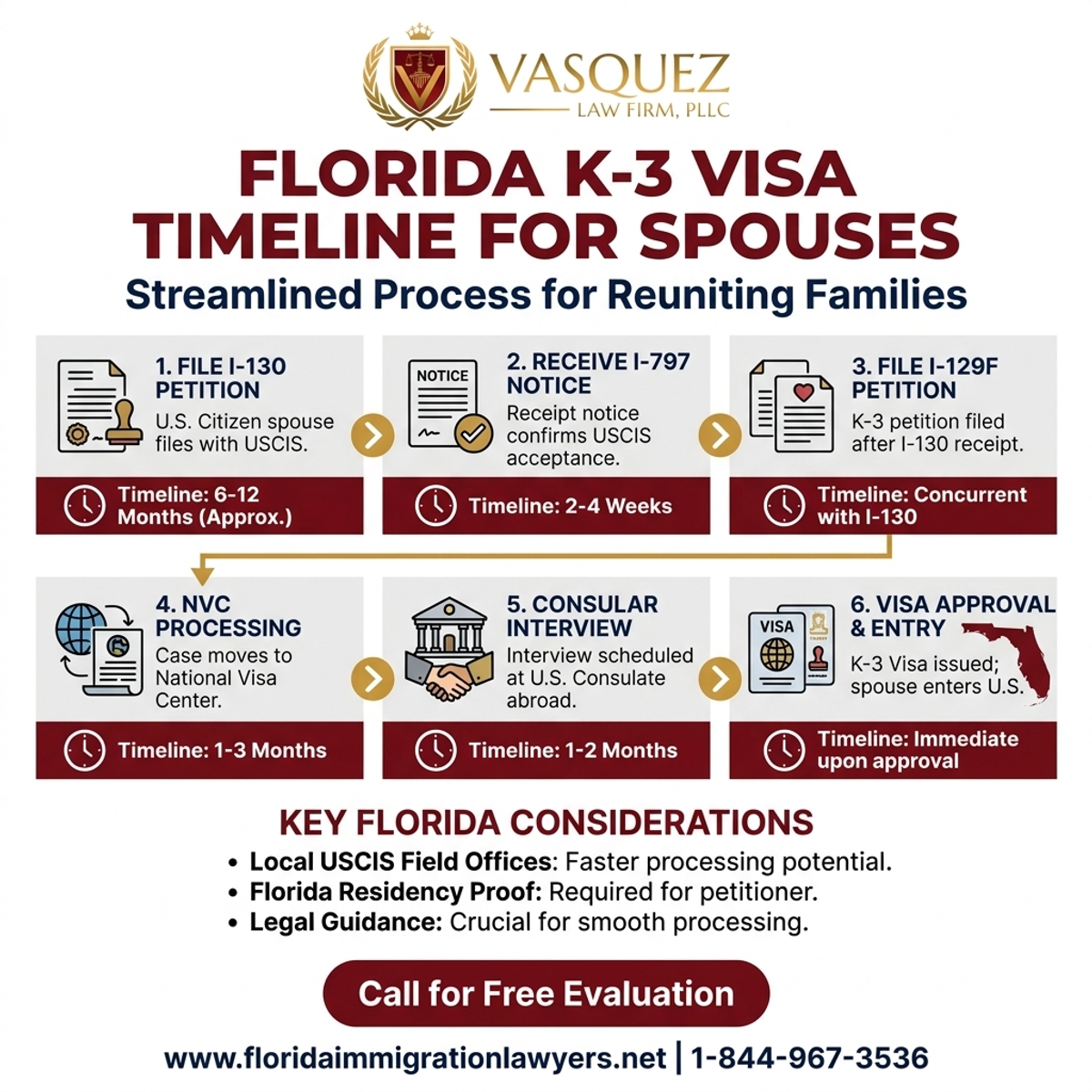
Key Statistics — K-3 Visa Timeline for Spouses in Florida
Where Can You Find Help with the K-3 Visa Process?
Navigating the immigration process can be daunting, filled with complex forms, strict deadlines, and ever-changing regulations. Florida Immigration Lawyers offers expert guidance through every step of the K-3 visa process. Our team is well-versed in the intricacies of immigration law and can provide assistance tailored to your specific situation, ensuring that your application is as strong and complete as possible.
Hiring an experienced immigration attorney can significantly ease the burden and reduce the risk of common mistakes that lead to delays or denials. Our services extend beyond mere form completion; we can help review your petition, prepare you for consular interviews, respond effectively to Requests for Evidence (RFEs), and troubleshoot any complex legal issues that may arise. This comprehensive support provides invaluable peace of mind during a critical time.
Our experienced team at Florida Immigration Lawyers understands the nuances of K-3 visas, especially for families in Florida, including Fort Lauderdale. We are committed to making this journey as smooth as possible for you and your spouse, leveraging our expertise to advocate for your family's reunification. Do not navigate this process alone. Contact Florida Immigration Lawyers today at 1-844-967-3536 for personalized and professional assistance.
Common Mistakes to Avoid in the K-3 Visa Process
- Submitting an incomplete Form I-129F, leading to delays.
- Failing to provide sufficient evidence of a bona fide marriage.
- Ignoring USCIS requests for additional information.
- Missing the consulate interview due to incorrect scheduling.
- Not preparing financially for all associated costs.
- Overlooking the expiration dates on key documents.
- Neglecting to update USCIS with any address changes.
- Submitting outdated forms or incorrect fees.
- Failing to attend the medical examination on time.
- Assuming the process is the same as other visa types.
- Not seeking legal advice when complications arise.
When to Call a Lawyer
Seeking legal advice is crucial when facing complex issues like a denied petition, a request for evidence from USCIS, or if there are criminal or immigration violations in your history. These situations require specialized knowledge and strategic intervention to protect your rights and ensure the best possible outcome. Florida Immigration Lawyers are equipped to handle these challenges and provide you with the best possible guidance.
Beyond reactive measures, a lawyer can play a proactive role in preventing issues. You should consider calling an attorney if there are any complexities in your background or your spouse's, such as previous immigration violations (e.g., overstays, unauthorized employment), a criminal record for either spouse, concerns about the validity of your marriage, or if the U.S. citizen sponsor has financial difficulties that might impact the affidavit of support. Even a seemingly minor issue can become a significant hurdle without proper legal guidance.
Don't wait until a problem arises. A proactive consultation with Florida Immigration Lawyers can identify potential hurdles early, allowing for strategic planning and a smoother application process. Our team is ready to assess your unique circumstances and offer tailored advice on everything from petition preparation to appeals, and general advice on maintaining legal status in the U.S.
About Florida Immigration Lawyers
Florida Immigration Lawyers is dedicated to helping clients navigate the complexities of U.S. immigration law with empathy, expertise, and a client-centric approach. We offer personalized services across various immigration matters, including family immigration, deportation defense, and business immigration, ensuring that each client receives the focused attention their case deserves. Our commitment extends to staying updated on the latest immigration law changes and policies to provide the most current and effective legal strategies.
Our team is available 24/7 to provide expert legal advice, understanding that immigration concerns can arise at any time. We believe in clear communication and transparent processes, guiding you through every step of your legal journey. Whether you're in Miami, Orlando, or Fort Lauderdale, our firm is dedicated to serving the diverse communities of Florida with unwavering legal support. We believe every family deserves the opportunity to be together.
Call us at 1-844-967-3536 or visit our website at www.floridaimmigrationlawyers.net. Se Habla Espanol, y estamos aqui para ayudarle con sus necesidades de inmigración.
Sources and References
- U.S. Citizenship and Immigration Services (USCIS)
- Executive Office for Immigration Review (EOIR)
- U.S. Department of State - Travel
- 8 U.S.C. Chapter 12 - Immigration and Nationality Act
Related services: family petition process, family-based green cards, fiancé visa (K-1), marriage-based immigration.
This article provides general legal information and is not intended as legal advice. Every case is unique, and outcomes depend on specific facts and circumstances. Contact an attorney for advice about your particular situation.
Frequently Asked Questions About the K-3 Visa
Here are some common questions regarding the K-3 visa process, offering practical advice for applicants.
Final CTA
For professional assistance with your K-3 visa application, let Florida Immigration Lawyers be your trusted partner in this significant journey. We are here to answer your questions, alleviate your concerns, and guide you every step of the way towards reuniting with your spouse in the U.S. Contact us at 1-844-967-3536 for a free consultation. Se Habla Espanol - Estamos aqui para ayudarle.
If you need legal assistance, learn more about family immigration consultation, or call us at 1-844-967-3536 for a free consultation.
Do Not Navigate This Process Alone
Our experienced immigration attorneys are ready to fight for you. Get a free, confidential consultation today.
Se Habla Español
Frequently Asked Questions
Harold Estrada-Rodriguez
Florida Immigration Attorney · FL Bar No. 1041171
Florida Bar attorney handling Florida-jurisdiction immigration matters. Bilingual representation, free consultations.
Available 24/7 - Free Evaluations
Related Legal Services
Our Florida immigration attorneys can help you with experienced immigration attorneys, business immigration and asylum protection. Call today at 1-844-967-3536 for a free consultation.
Related Links
Related Topics
Free Legal Consultation
Discuss your case with our experienced attorneys. We're available 24/7.
Se Habla Español - Estamos aquí para ayudarle.
Related Articles
Immigration Attorney Orlando Florida: Your Guide to Success
Navigating immigration in Florida requires expert legal guidance. An immigration attorney in Orlando, Florida, provides essential help with visas, green cards, citizenship, and deportation defense. This guide covers the complexities of U.S. immigration law, the crucial role of an attorney, common application processes, timelines, and fees. Learn why proactive legal support from Florida Immigration Lawyers is vital for your success in 2026. Avoid common mistakes and understand when to seek professional immigration help for your unique situation in Orlando or Naples. Schedule your free consultation today.
Immigration Scams Protection Florida: Don't Be a Victim
Immigration scams, particularly notario fraud, pose a significant threat to immigrants in Florida. These schemes exploit vulnerabilities, promising false hope and leading to severe financial and legal repercussions. This comprehensive guide from Florida Immigration Lawyers provides crucial insights into identifying common scams, understanding the red flags, and taking proactive steps for protection. Learn how to report fraud to authorities like USCIS and The Florida Bar, and understand the difference between legitimate legal services and fraudulent offers. With Florida-specific advice and detailed steps, we empower you to safeguard your immigration journey. Contact us for a free consultation and expert legal assistance.
Understanding the Child Status Protection Act in Florida
The Child Status Protection Act (CSPA) is crucial for families in Florida to ensure children remain eligible for immigration benefits. Learn how CSPA protects against aging out and get expert advice from Florida Immigration Lawyers.
VAWA Immigration Relief Florida: Protecting Abuse Victims
For non-citizen victims of domestic violence by a U.S. citizen or LPR spouse, parent, or adult child in Florida, VAWA (Violence Against Women Act) offers a critical pathway to legal status. This self-petitioning process allows individuals to apply for a green card confidentially, without the abuser's involvement. Eligibility requires proving the qualifying relationship, documented abuse, and good moral character. The journey involves filing Form I-360 with USCIS, followed by an application for adjustment of status. Florida Immigration Lawyers provides expert legal guidance, from evidence gathering to navigating interviews, ensuring victims in Naples and across Florida can achieve safety and independence. Our firm understands the unique challenges faced by immigrants and offers compassionate support through every step.
