Immigration Scams Protection Florida: Don't Be a Victim
Immigration scams, particularly notario fraud, pose a significant threat to immigrants in Florida. These schemes exploit vulnerabilities, promising false hope and leading to severe financial and legal repercussions. This comprehensive guide from Florida Immigration Lawyers provides crucial insights into identifying common scams, understanding the red flags, and taking proactive steps for protection. Learn how to report fraud to authorities like USCIS and The Florida Bar, and understand the difference between legitimate legal services and fraudulent offers. With Florida-specific advice and detailed steps, we empower you to safeguard your immigration journey. Contact us for a free consultation and expert legal assistance.

Protecting yourself from immigration scams in Florida requires vigilance and knowledge. These fraudulent schemes often target vulnerable individuals seeking legal status, promising expedited services or guaranteed outcomes that are impossible. Scammers, often posing as 'notarios' or unqualified legal consultants, exploit trust and fear, leading to financial loss, legal complications, and even deportation. It is crucial to verify credentials, understand the difference between legitimate legal professionals and fraudsters, and report suspicious activities immediately. Seeking guidance from a qualified immigration attorney in Florida is the safest way to navigate the complex immigration system and ensure your rights are protected.
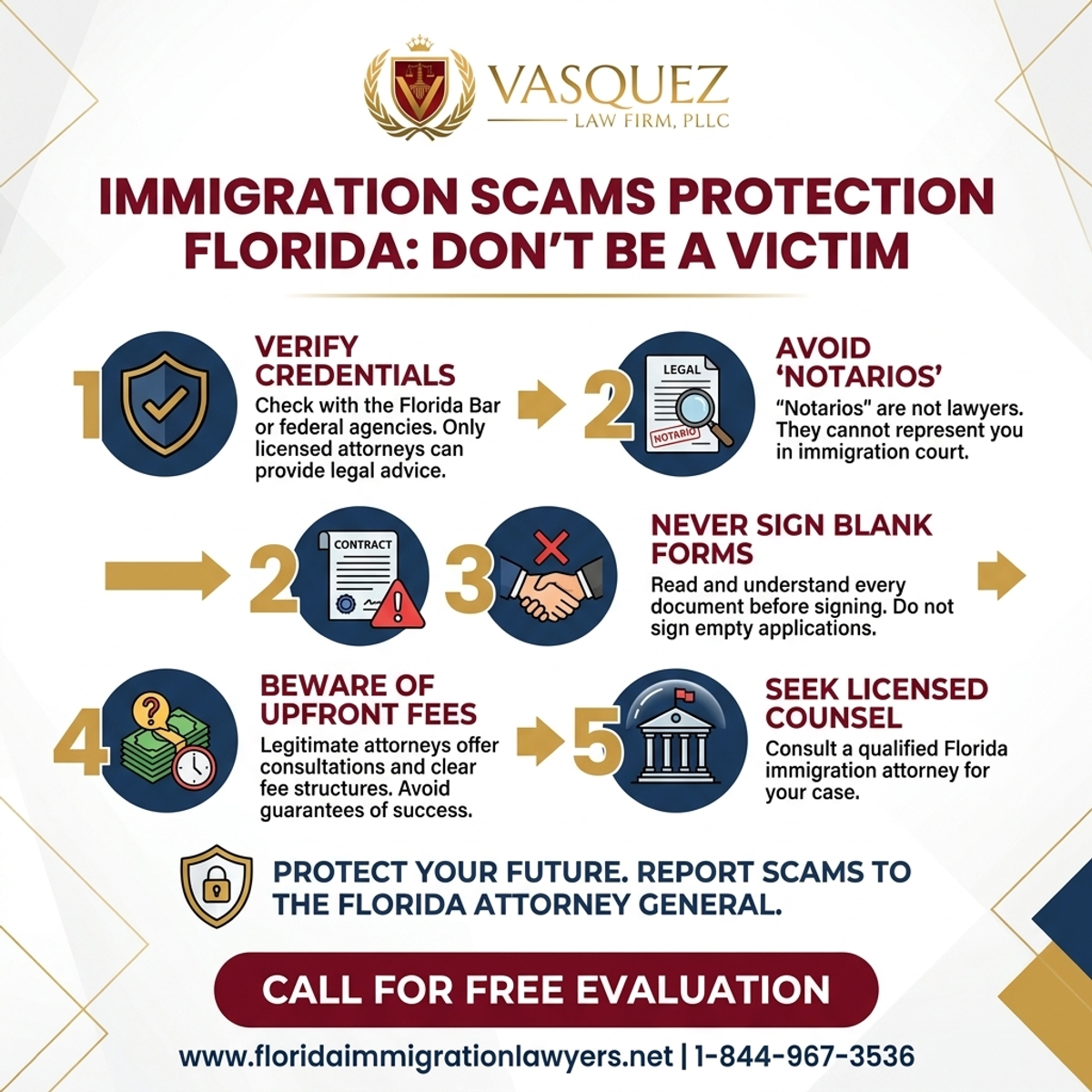
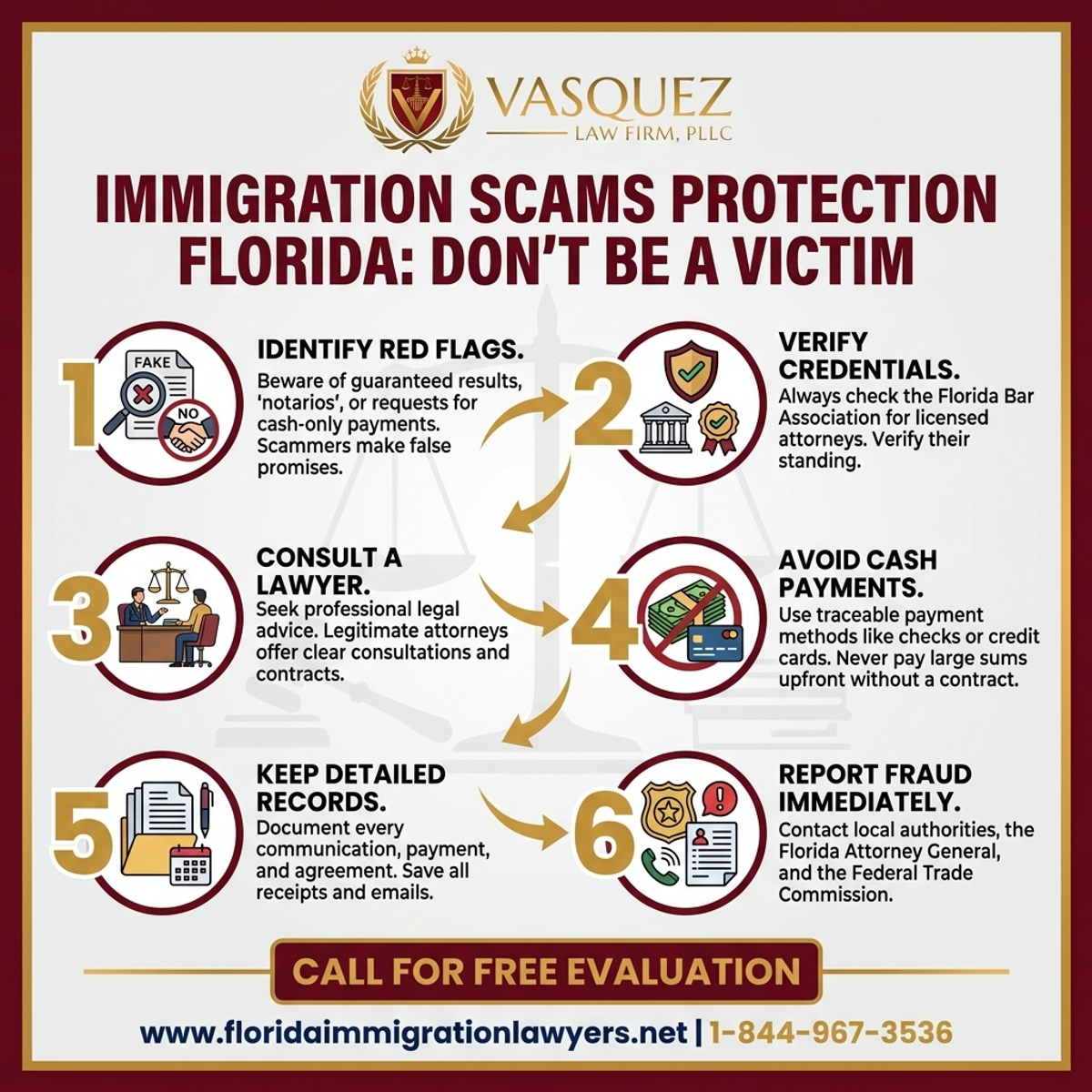
- Verify credentials: Only licensed attorneys or accredited representatives can provide legal advice.
- Be wary of guarantees: No one can guarantee immigration case outcomes.
- Never sign blank forms: Always understand what you are signing.
- Keep original documents: Never give your original documents to anyone.
- Report fraud: Contact authorities like USCIS or the Florida Bar if you suspect a scam.
Navigating the complex world of U.S. immigration can feel overwhelming, especially when you are trying to build a new life in Florida. Unfortunately, this vulnerability creates a fertile ground for unscrupulous individuals and organizations to perpetrate immigration scams. These fraudulent schemes, often referred to as notario fraud, prey on the hopes and dreams of immigrants, leading to devastating financial losses, jeopardized legal cases, and immense emotional distress. The promise of a quick fix or a guaranteed path to legal status is often a red flag, designed to exploit those unfamiliar with the intricate legal processes.
At Florida Immigration Lawyers, we understand the challenges and fears you face. Our mission is to empower you with the knowledge to protect yourself and your loved ones from these predatory practices. This comprehensive guide will equip you with essential information on identifying common scams, understanding your rights, and knowing when to seek legitimate legal assistance. We will delve into Florida-specific scenarios, recent trends, and actionable steps you can take to safeguard your immigration journey. Don't let fear or misinformation lead you astray. Call Florida Immigration Lawyers at 1-844-967-3536 for a free consultation and let our experienced team help you navigate your path safely and legally.
What are the Most Common Immigration Scams in Florida and How Do They Operate?
Immigration scams in Florida manifest in various forms, but they all share a common goal: to defraud immigrants by promising services they cannot deliver or by charging exorbitant fees for simple, free information. These scams often target individuals in communities across Florida, from Miami to Orlando, who may have limited English proficiency or a lack of understanding of U.S. law. A primary concern is notario fraud, where individuals, often called "notarios públicos" in Spanish, exploit the cultural misunderstanding that a "notario" in Latin America is a highly trained legal professional, equivalent to an attorney. In the U.S., a notary public merely witnesses signatures and cannot provide legal advice.
Scammers operating as notarios might offer to fill out complex immigration forms, claim to have "special connections" with immigration officials, or guarantee citizenship or green cards for a fee. Other prevalent scams include fake job offers designed to solicit application fees, fraudulent marriage proposals for green cards, or schemes that promise to "expedite" visa processing for an extra charge. Some con artists even impersonate government officials, demanding immediate payment for alleged immigration violations to avoid arrest or deportation. These tactics are particularly insidious, playing on the vulnerability of individuals who may be facing enforcement actions, such as those highlighted by recent surges in ICE detentions. Understanding these common patterns is the first step in protecting yourself and your family from becoming a victim.
How Can I Identify and Protect Myself from Notario Fraud and Immigration Scams in Florida?
Identifying and protecting yourself from notario fraud and other immigration scams in Florida requires careful attention to red flags and a proactive approach to verifying information. As of 2026, the landscape of immigration law remains complex, making it even more critical for immigrants in Orlando and throughout the state to be discerning. The key is to recognize that only licensed attorneys or BIA-accredited representatives are legally authorized to provide immigration legal advice. Anyone else offering such services should be viewed with extreme caution. Be particularly wary of individuals who advertise in non-traditional venues, use aggressive sales tactics, or operate out of non-professional settings.
To protect yourself, always ask for proof of licensure or accreditation. A legitimate attorney will have a bar license number, and accredited representatives will be listed on the Department of Justice's website. Never pay for blank forms, which are often available for free from USCIS. Be skeptical of anyone who promises guaranteed results, as immigration outcomes are never certain and depend on individual circumstances and legal merits. It is also vital to keep all your original documents; only provide copies. If a "notario" insists on holding your passport or birth certificate, it's a major warning sign. Always get a written contract detailing services and fees, and ensure you understand every document before signing it. Remember, if an offer seems too good to be true, it almost certainly is.
What is the Step-by-Step Process for Reporting Immigration Scams to Authorities in Florida?
If you suspect you've been a victim of an immigration scam or notario fraud in Florida, reporting it is a critical step to protect yourself and others in the community. As of 2026, multiple avenues exist for reporting such fraudulent activities, and acting swiftly can help prevent further harm. It's important to gather all available evidence before initiating a report. This includes any contracts, receipts, emails, text messages, or notes from conversations with the scammer. Documenting names, addresses, and phone numbers of the individuals or organizations involved is also crucial. Do not discard any materials, even if they seem insignificant.
-
Contact U.S. Citizenship and Immigration Services (USCIS): USCIS has a dedicated fraud detection and national security directorate. You can report immigration fraud by calling the USCIS Contact Center or by submitting a tip online. They investigate various forms of immigration benefit fraud. Be prepared to provide detailed information about the scam, including names, dates, and what was promised or done. This agency is a primary resource for reporting scams related to visa applications and other immigration benefits.
-
File a Complaint with the Florida Bar: If the individual purporting to be an attorney is unlicensed or engaging in unauthorized practice of law, you can file a complaint with The Florida Bar. This is especially relevant in cases of notario fraud where non-attorneys are providing legal advice. The Florida Bar investigates complaints against attorneys and those practicing law without a license, helping to protect the public from fraudulent legal services.
-
Report to the Federal Trade Commission (FTC): The FTC collects complaints about scams, fraud, and bad business practices. You can file a report online at reportfraud.ftc.gov. While they do not typically resolve individual complaints, their data helps law enforcement agencies identify patterns and pursue legal action against fraudsters. This is a broad platform for reporting consumer fraud, including immigration-related scams.
Step-by-Step Process — Immigration Scams Protection Florida: Don't Be a Victim
-
Contact Your Local Law Enforcement: For severe cases involving theft, extortion, or other criminal acts, you should also contact your local police department. In cities like Orlando or Miami, local authorities can investigate criminal fraud. They may work in conjunction with state or federal agencies to build a case against the perpetrators. Always remember that local police can assist with criminal complaints, even if immigration status is a concern.
-
Seek Legal Counsel: After reporting, it is highly advisable to consult with a legitimate immigration attorney. An attorney can help you understand the impact of the scam on your immigration case, explore potential remedies, and guide you through the process of correcting any errors made by the scammer. They can also represent you in any subsequent legal proceedings or help you refile necessary applications properly. This step is crucial for mitigating the damage and getting your immigration journey back on track.
What is the Typical Timeline for Investigating and Resolving Immigration Fraud Cases in 2026?
The timeline for investigating and resolving immigration fraud cases in Florida can vary significantly, depending on the complexity of the scam, the evidence available, and the resources of the investigating agencies. As of 2026, there isn't a fixed duration, but understanding the typical stages can help manage expectations. Initial reporting is often just the beginning of a potentially long process. Agencies like USCIS, the FTC, and local law enforcement have their own protocols and backlogs, which can influence how quickly a case moves forward. Factors such as the number of victims involved, the geographic scope of the scam, and the availability of witnesses can all impact the investigation's pace.
Below is a general overview of typical timeframes:
| Stage | Typical Timeframe | Notes |
|---|---|---|
| Initial Report Filing | Immediate to 1-2 weeks | Gathering evidence and submitting complaints to relevant agencies (USCIS, FTC, Florida Bar, local police). |
| Agency Review & Triage | 1-3 months | Agencies assess the report, determine jurisdiction, and assign to an investigator. Priority given to cases with widespread impact or severe harm. |
| Investigation Phase | 6 months to 2+ years | Investigators gather more evidence, interview witnesses, subpoena records. This phase can be lengthy, especially for complex or multi-state operations. |
| Legal Action (if applicable) | 1-3 years (after investigation) | If sufficient evidence for criminal prosecution or civil enforcement, legal proceedings begin. This involves court hearings, discovery, and potential trials. |
| Resolution & Remediation | Varies widely | Could involve criminal convictions, civil penalties, restitution for victims, or corrective actions for immigration applications. Remediation for your immigration case often requires re-filing with proper legal help. |
While the wheels of justice can turn slowly, your persistence in providing information and cooperating with investigators is vital. During this period, it's crucial to continue working with a legitimate immigration attorney to address any damage caused to your immigration case and ensure you remain on a lawful path. Do not assume that reporting the scam automatically fixes your immigration status; you will likely need to take proactive steps to correct any fraudulent filings or misrepresentations made on your behalf.
What Are the Costs Associated with Legitimate Immigration Legal Services in Florida and How Do They Compare?
Understanding the costs of legitimate immigration legal services in Florida is crucial for distinguishing reputable attorneys from those perpetrating immigration scams. Unlike fraudsters who demand upfront cash for vague promises, licensed immigration lawyers offer transparent fee structures for specific services. As of 2026, legal fees typically vary based on the complexity of the case, the experience of the attorney, and the type of immigration benefit sought. It's important to remember that these fees cover professional expertise, thorough case preparation, and representation, which are invaluable for navigating the intricate U.S. immigration system. These costs are an investment in your future and legal security.
Legitimate legal fees contrast sharply with the often hidden, arbitrary, and excessive charges of scammers. While specific fee amounts are not quoted here due to their variability and potential for change, the table below outlines typical fee structures for common immigration services. Always ensure you receive a written fee agreement that clearly details all costs, including attorney fees, government filing fees (which are separate and paid directly to agencies like USCIS), and any other expenses.
| Item | Typical Fee Structure | Notes |
|---|---|---|
| Initial Consultation | Free to $200-$300 | Many reputable firms, including Florida Immigration Lawyers, offer free initial consultations to discuss your case. |
| Family-Based Petitions (e.g., I-130) | Flat Fee | Covers preparation and filing of the petition. Government filing fees are separate. |
| Adjustment of Status (Green Card) | Flat Fee | More complex, often includes multiple forms (I-485, I-765, I-131) and interview preparation. |
| Naturalization (Citizenship) | Flat Fee | Covers N-400 application preparation and interview guidance. |
| Deportation Defense | Hourly or Flat Fee (often higher) | Highly complex, involves court appearances and extensive legal strategy. Can be very costly due to urgency and intricate legal work. |
| Visa Applications (Employment/Investor) | Flat Fee or Hourly | Varies widely based on visa type and complexity of business case. |
| Government Filing Fees | Fixed by USCIS/DOS | These are separate from attorney fees and are paid directly to the government. They change periodically. You can find current fees on the USCIS website. |
Key Statistics — Immigration Scams Protection Florida: Don't Be a Victim
When comparing services, always prioritize transparency, experience, and ethical practice over the lowest price or a "guaranteed" outcome. A legitimate attorney will never pressure you into immediate payment or discourage you from asking questions about their fees or services. Investing in qualified legal representation is the most secure path to achieving your immigration goals in Florida.
Do not navigate this process alone. Contact Florida Immigration Lawyers today to ensure your immigration journey is handled with integrity and expertise.
Common Mistakes to Avoid in Your Immigration Journey
Falling victim to immigration scams often stems from a lack of information or making preventable errors. Being aware of these common mistakes can significantly reduce your risk and protect your immigration future in Florida.
-
Trusting "Notarios" or Unlicensed Consultants: This is perhaps the most dangerous mistake. In the U.S., a notary public is not a lawyer and cannot provide legal advice. Always verify that anyone offering legal assistance is a licensed attorney or a Board of Immigration Appeals (BIA) accredited representative. Consequences include incorrect filings, missed deadlines, and even deportation.
-
Signing Blank or Unread Documents: Never sign any immigration form or contract without fully understanding its contents. Scammers often pressure individuals to sign blank forms, which they then fill out with false or misleading information, potentially leading to charges of misrepresentation or fraud against you.
-
Paying for Free Government Forms: USCIS provides many immigration forms for free on its official website. Paying a "consultant" for these forms is a clear sign of a scam. You should never have to purchase a government form.
-
Giving Away Original Documents: Your original birth certificate, passport, marriage certificate, and other vital documents are irreplaceable. Legitimate attorneys will only need copies or will return originals promptly after review. Never surrender your originals to anyone.
-
Believing "Guaranteed" Outcomes or "Special Connections": No one, not even the most experienced attorney, can guarantee the outcome of an immigration case. Claims of "special connections" with immigration officials are always fraudulent and designed to solicit money under false pretenses.
-
Ignoring Official Communications: Failing to respond to Requests for Evidence (RFEs) or notices from USCIS or immigration courts can lead to case denial or even deportation orders. Scammers might advise you to ignore these, further complicating your situation. Always seek legal counsel if you receive official correspondence.
-
Providing False Information on Applications: Whether intentionally or unknowingly (due to a scammer's actions), providing false or misleading information on immigration applications can lead to severe penalties, including a permanent bar from receiving immigration benefits or even criminal charges.
-
Not Getting a Written Contract: Always demand a written contract or retainer agreement that clearly outlines the services to be provided, the fees, and payment schedules. Without a contract, you have no legal recourse if the service is not rendered as promised.
-
Paying in Cash Without a Receipt: Always pay by check, money order, or credit card, and always demand a detailed receipt. Cash payments without proper documentation are untraceable and often a hallmark of fraudulent operations.
-
Relying Solely on Word-of-Mouth Advice: While recommendations are valuable, always verify the credentials and reputation of any legal professional. Immigration law is highly specific, and what worked for one person may not apply to your unique situation.
-
Delaying Legal Counsel After a Scam: If you suspect you've been scammed, do not delay seeking legitimate legal help. The sooner an attorney reviews your case, the better the chances of mitigating damage and correcting any errors before they become irreversible.
When to Call a Lawyer for Immigration Scams Protection in Florida
Recognizing the signs of an immigration scam is crucial, but knowing when to seek professional legal help is equally important. If you are an immigrant in Florida, particularly in areas like Orlando or Tampa, and have encountered any of the red flags discussed, or are simply unsure about the legitimacy of someone offering immigration services, it's time to call a qualified attorney. A lawyer can provide the necessary protection and guidance to safeguard your immigration journey. You should immediately contact an attorney if you suspect you've been a victim of notario fraud or any other deceptive practice.
Specific scenarios where legal intervention is essential include receiving suspicious requests for money or documents, being pressured to sign forms you don't understand, or being promised guaranteed outcomes. If you've already paid a scammer and fear your immigration case has been compromised, an attorney can help assess the damage, correct fraudulent filings, and advise on steps to recover your funds or legal standing. Furthermore, if you receive a Request for Evidence (RFE), a Notice of Intent to Deny (NOID), or a Notice to Appear (NTA) in immigration court, and believe it's related to a scam, immediate legal counsel is paramount. Florida Immigration Lawyers are here to offer expert guidance through these challenging situations, ensuring your rights are protected and your case is handled correctly. Contact us for peace of mind.
About Florida Immigration Lawyers
Florida Immigration Lawyers is a leading law firm dedicated to serving the diverse immigration needs of individuals and families across the entire state of Florida. With a deep understanding of U.S. immigration law and a compassionate approach, our experienced attorneys are committed to providing exceptional legal representation and personalized guidance. We believe in empowering our clients with knowledge and robust advocacy, especially when protecting them from devastating immigration scams and notario fraud. Our firm handles a wide range of immigration matters, including family-based visas, employment immigration, asylum, deportation defense, and naturalization. We pride ourselves on our client-focused service, strategic legal solutions, and unwavering commitment to achieving the best possible outcomes for those seeking a new beginning in the United States. We are available 24/7 to answer your questions and offer free consultations to discuss your unique situation. Visit our website at floridaimmigrationlawyers.net or call us directly at 1-844-967-3536.
Sources and References
- U.S. Citizenship and Immigration Services (USCIS)
- Executive Office for Immigration Review (EOIR)
- U.S. Department of State (Travel.State.Gov)
- 8 U.S. Code § 1324c - Penalties for document fraud
- 8 U.S. Code § 1324a - Unlawful employment of aliens
- 8 CFR Part 292 - Representation and appearances
- The Florida Bar - Unauthorized Practice of Law (floridabar.org)
Related services: immigration practice areas, experienced immigration attorneys.
This article provides general legal information and is not intended as legal advice. Every case is unique, and outcomes depend on specific facts and circumstances. Contact an attorney for advice about your particular situation.
Protect your future from immigration scams. Don't risk your immigration status or hard-earned money on fraudulent services. For trusted legal guidance and a free consultation, call Florida Immigration Lawyers today at 1-844-967-3536. Se Habla Espanol - Estamos aqui para ayudarle.
If you need legal assistance, learn more about how our immigration attorneys can help, or call us at 1-844-967-3536 for a free consultation.
Do Not Navigate This Process Alone
Our experienced immigration attorneys are ready to fight for you. Get a free, confidential consultation today.
Se Habla Español
Frequently Asked Questions
Harold Estrada-Rodriguez
Florida Immigration Attorney · FL Bar No. 1041171
Florida Bar attorney handling Florida-jurisdiction immigration matters. Bilingual representation, free consultations.
Available 24/7 - Free Evaluations
Related Legal Services
Our Florida immigration attorneys can help you with citizenship and naturalization, family immigration services and immigration practice areas. Call today at 1-844-967-3536 for a free consultation.
Related Links
Related Topics
Free Legal Consultation
Discuss your case with our experienced attorneys. We're available 24/7.
Se Habla Español - Estamos aquí para ayudarle.
Related Articles
K-3 Visa Timeline for Spouses in Florida | VLF Florida
Explore the 2026 K-3 spouse visa process for Florida residents. Learn about timelines, costs, and common pitfalls. Call Florida Immigration Lawyers for expert guidance.
Understanding the Child Status Protection Act in Florida
The Child Status Protection Act (CSPA) is crucial for families in Florida to ensure children remain eligible for immigration benefits. Learn how CSPA protects against aging out and get expert advice from Florida Immigration Lawyers.
VAWA Immigration Relief Florida: Protecting Abuse Victims
For non-citizen victims of domestic violence by a U.S. citizen or LPR spouse, parent, or adult child in Florida, VAWA (Violence Against Women Act) offers a critical pathway to legal status. This self-petitioning process allows individuals to apply for a green card confidentially, without the abuser's involvement. Eligibility requires proving the qualifying relationship, documented abuse, and good moral character. The journey involves filing Form I-360 with USCIS, followed by an application for adjustment of status. Florida Immigration Lawyers provides expert legal guidance, from evidence gathering to navigating interviews, ensuring victims in Naples and across Florida can achieve safety and independence. Our firm understands the unique challenges faced by immigrants and offers compassionate support through every step.
Immigration Services Naples Collier County Florida
Discover comprehensive immigration services in Naples, Collier County, Florida. This detailed guide covers family visas, employment immigration, green card applications, naturalization, and crucial deportation defense strategies. Learn about typical processing times as of 2026, associated costs, and essential documents. We also highlight common mistakes to avoid and when it's critical to consult an experienced Florida immigration lawyer. Florida Immigration Lawyers offers free consultations and dedicated support for all your immigration needs in Southwest Florida, ensuring you navigate the complex legal landscape with confidence.