Immigration Medical Exam: Florida Civil Surgeons Guide
Navigating the immigration medical exam process in Florida is crucial for green card applicants. Learn how to find a certified civil surgeon in Fort Lauderdale and what to expect. Contact Florida Immigration Lawyers for expert guidance.

Immigration medical exams are essential for those seeking permanent residence in the U.S. In Florida, especially in Fort Lauderdale, finding a qualified civil surgeon is crucial. Here’s what you need to know:
- Ensure the doctor is USCIS-approved.
- Bring all required documents, including vaccination records.
- The I-693 form must be completed accurately.
- Consult with a lawyer for complex cases.
Introduction
If you're applying for a green card in the United States, the immigration medical exam is a critical step in your journey. This exam, conducted by a USCIS-certified civil surgeon, ensures that applicants do not have health conditions that could pose a public health risk. For residents of Fort Lauderdale, Florida, understanding this process and knowing where to go can be daunting. This guide aims to demystify the immigration medical exam process and provide you with actionable steps to ensure success. Call Florida Immigration Lawyers at 1-844-967-3536 for a free consultation.
The immigration medical exam is more than just a routine check-up; it's a vital component designed to protect public health within the United States. It identifies applicants who may have communicable diseases of public health significance, physical or mental disorders associated with harmful behavior, or drug abuse/addiction. Successfully navigating this exam is paramount to avoiding delays or even denial of your green card application.
For individuals in Fort Lauderdale and throughout Florida, finding the right USCIS-approved civil surgeon and preparing thoroughly can make all the difference. This comprehensive guide will walk you through every aspect, from locating a qualified doctor to understanding potential outcomes and knowing when to seek legal counsel from experienced professionals like Florida Immigration Lawyers. Our goal is to equip you with the knowledge and confidence needed for a smooth and successful medical examination process.
Understanding the Immigration Medical Exam
The immigration medical exam, required for most green card applicants, ensures compliance with health-related immigration requirements. The exam typically includes a physical examination, a tuberculosis screening, and verification of vaccination records. It is vital that the exam is conducted by a USCIS-approved civil surgeon.
In Fort Lauderdale, there are several qualified civil surgeons, but you must ensure that the surgeon is currently listed on the USCIS website. This exam is not just a formality; it is a critical part of your green card application. If the results are not favorable, it could delay or even prevent your application.
The scope of the medical exam is quite broad, covering various aspects of your health. Beyond the physical examination, the civil surgeon will review your medical history, including any past illnesses, surgeries, or chronic conditions. They will also assess your mental health to ensure there are no conditions that could pose a risk to yourself or others. All findings are meticulously documented on Form I-693, Report of Medical Examination and Vaccination Record, which is then sealed and submitted with your immigration application.
A key focus of the exam is to screen for specific health conditions deemed inadmissible by U.S. immigration law. These include certain communicable diseases like active tuberculosis, syphilis, gonorrhea, and Hansen's disease (leprosy). Additionally, applicants are screened for physical or mental disorders that may be associated with harmful behavior, as well as drug abuse or addiction. The vaccination requirement is also critical, ensuring applicants are immunized against a range of preventable diseases, further safeguarding public health.
Step-by-Step Guide to Completing Your Immigration Medical Exam
- Find a USCIS-approved civil surgeon: Visit the USCIS website to locate a doctor in Fort Lauderdale. It's crucial to use only a USCIS-approved civil surgeon, as exams performed by other medical professionals will not be accepted. The USCIS website provides an up-to-date, searchable database by zip code, making it easy to find a qualified physician near you.
- Schedule your appointment: Contact the civil surgeon's office directly. Be prepared to discuss your medical history. When calling, clearly state that you need an immigration medical exam (I-693). Inquire about their process, what documents to bring, and the total cost. Some clinics may require an initial consultation before the full exam.
- Prepare your documents: Bring your passport, vaccination records, and any prior medical records. A valid government-issued photo ID is essential. Gather all available vaccination records, including childhood immunizations. If you have a history of tuberculosis, syphilis, or other conditions, bring all related diagnostic reports and treatment documentation.
- Complete Form I-693: The civil surgeon will fill out the medical examination section. Ensure it is sealed correctly. You will fill out Part 1 of the form, and the civil surgeon will complete the rest. It is imperative that the civil surgeon signs and dates the form, and then places it in a sealed envelope, often with their signature across the seal. Do NOT open this envelope once it is sealed.
- Submit the sealed I-693 form: Include it with your green card application to USCIS. The sealed envelope containing Form I-693 must be submitted to USCIS. Depending on your application type and filing location, you might submit it with your initial Form I-485 application, bring it to your green card interview, or mail it separately if requested. Always follow USCIS instructions carefully.
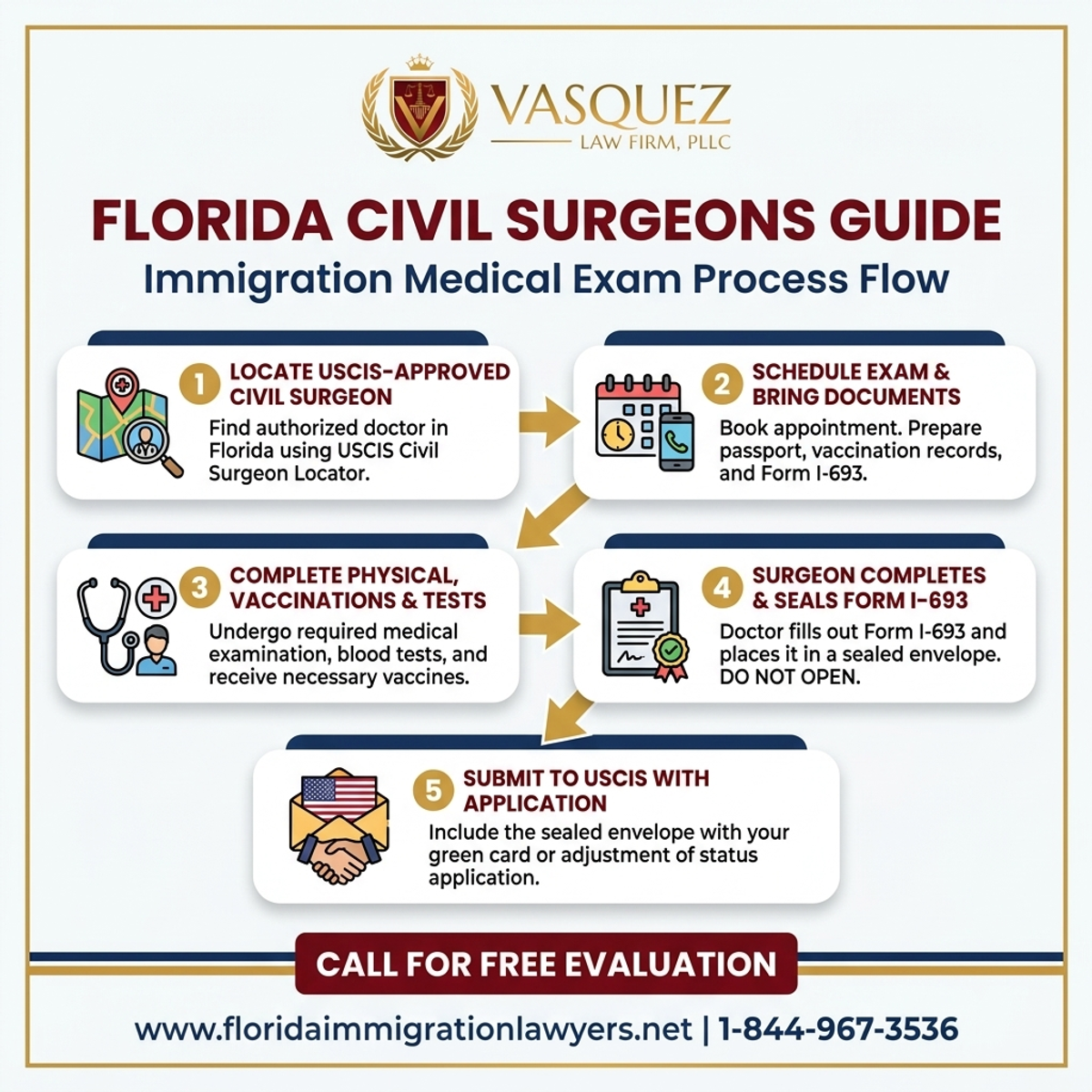
Step-by-Step Process — Immigration Medical Exam: Florida Civil Surgeons Guide
Document Checklist for Your Medical Exam
- Passport or government-issued ID: A valid, unexpired identification document is essential for verifying your identity. This could be your passport, national ID card, or driver's license.
- Vaccination records: Comprehensive records of all your vaccinations are critical. This includes immunizations for MMR (Measles, Mumps, Rubella), Polio, Tetanus and Diphtheria Toxoids, Pertussis, Haemophilus influenzae type B, Hepatitis A, Hepatitis B, Rotavirus, Meningococcal disease, and Varicella (chickenpox). If you lack records, the civil surgeon can often administer needed vaccines or order blood tests to check for immunity.
- Form I-693: While the civil surgeon completes most of this, you'll need to fill out Part 1 (Applicant Information) accurately before your appointment. Do not sign the form until instructed by the civil surgeon.
- Any past medical records: Bring any records pertaining to serious illnesses, hospitalizations, surgeries, chronic conditions, or mental health treatments. This helps the civil surgeon understand your full health history.
- Appointment confirmation: Keep your appointment details handy, including the doctor's name, address, and scheduled time.
- List of current medications: Provide a complete list of all prescription and over-the-counter medications you are currently taking, including dosages.
- Payment for the exam: Be prepared to pay the full fee, as many civil surgeons require payment upfront and insurance coverage can vary.
Timeline and Processing Expectations
The immigration medical examination process can vary in time depending on the availability of civil surgeons and your personal medical needs. Generally, you should allow several weeks to complete the examination and receive your results. Delays can occur if additional tests are required or if vaccination records are incomplete. It is advisable to schedule your exam well in advance of your application deadline.
Factors that can influence the timeline include the civil surgeon's schedule, the time it takes for lab results (especially for TB tests or blood work), and whether you need additional vaccinations. For instance, some vaccines require multiple doses over several weeks or months. If a medical condition is identified that requires further evaluation or treatment, this will naturally extend the process. Being proactive in gathering your documents and scheduling your appointment can significantly reduce potential delays.
A common scenario involves a positive initial TB skin test. If this occurs, you will likely need a chest X-ray and possibly sputum tests, which can add several weeks to the process. Similarly, if your vaccination records are incomplete, the civil surgeon may need to administer several vaccines, some of which require follow-up doses. Understanding these potential hurdles upfront allows you to plan accordingly. For complex situations, consulting with Florida Immigration Lawyers at 1-844-967-3536 can help you navigate potential issues and keep your application on track.
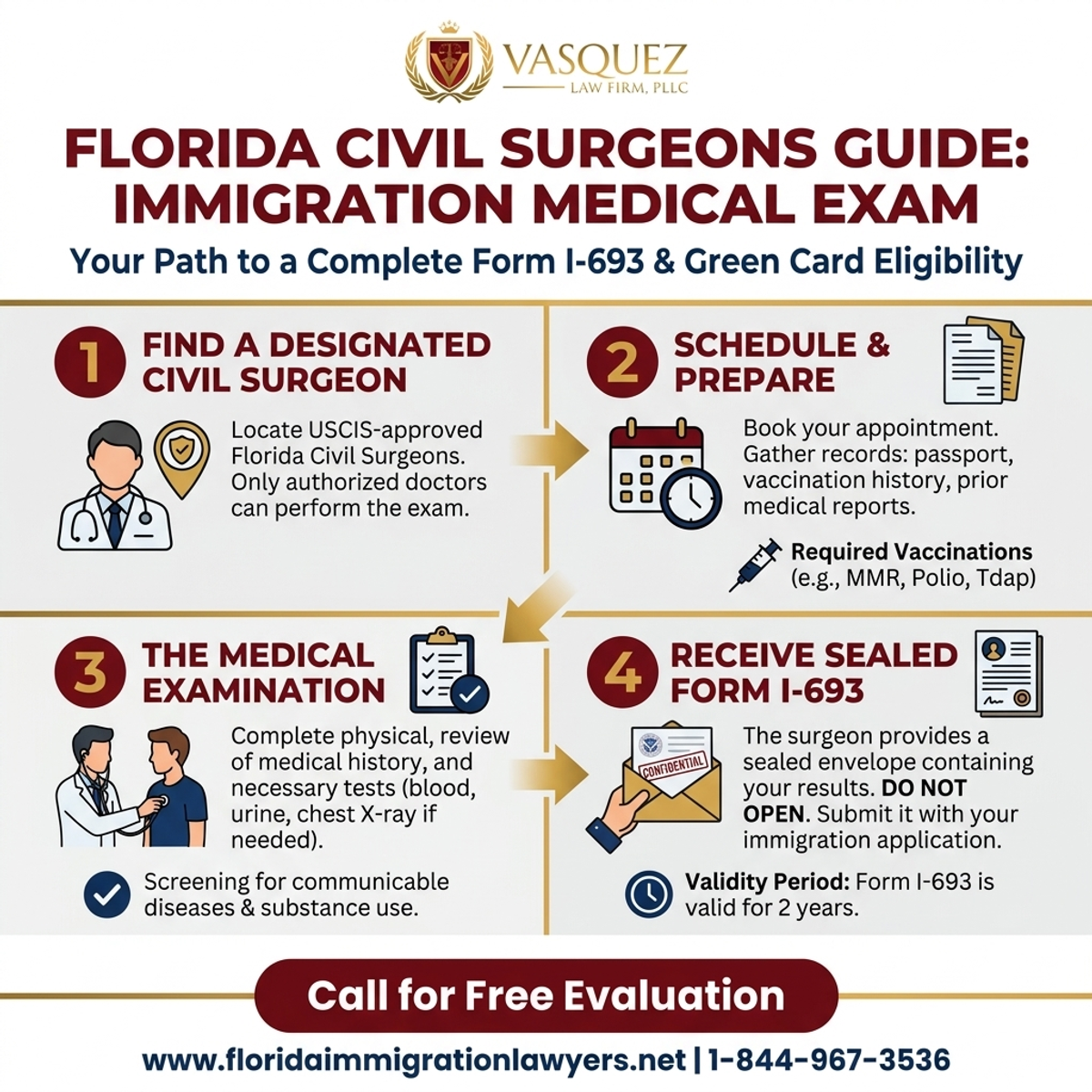
Key Statistics — Immigration Medical Exam: Florida Civil Surgeons Guide
Cost Factors and Fee Breakdown
The cost of the immigration medical exam in Florida can vary widely depending on the civil surgeon. Prices typically range based on the complexity of the examination and any additional vaccinations or tests required. While USCIS does not set a standard fee, it is important to inquire about costs upfront and ask whether your insurance might cover any part of the exam.
Typically, the base fee for the I-693 exam covers the physical examination, review of medical history, and completion of the form. However, additional costs can quickly add up. These often include fees for required blood tests (e.g., for syphilis), tuberculosis screening (skin test or chest X-ray), and any necessary vaccinations. If you lack complete vaccination records, the civil surgeon will administer the required shots, each adding to the total expense.
When contacting civil surgeons, always ask for a detailed breakdown of their fees. Inquire about the base exam cost, the cost of specific lab tests, and the price per vaccination. Some clinics offer a bundled price, while others charge à la carte. While some health insurance plans might cover certain lab tests or vaccinations, they rarely cover the entire immigration medical examination itself. It's wise to budget for the full cost out-of-pocket and inquire about payment plans if needed.
Common Mistakes to Avoid
- Choosing a non-approved civil surgeon: This can invalidate your exam results. Always verify the doctor's approval status on the official USCIS website before scheduling your appointment. An exam by an unapproved doctor will lead to rejection of your I-693 form and significant delays.
- Incomplete vaccination records: Missing records can delay processing. Make every effort to gather all vaccination records from childhood and adulthood. If records are unavailable, be prepared for the civil surgeon to administer necessary vaccines, which will add to the cost and potentially the timeline.
- Incorrectly completed I-693: Errors can lead to application rejection. Ensure you fill out your section (Part 1) accurately, and double-check that the civil surgeon has completed their sections thoroughly and signed where required. Any omissions or mistakes can cause USCIS to return the form.
- Not scheduling appointments early: Wait times can be long. Immigration processes are often lengthy, and civil surgeons' offices can have busy schedules. Schedule your medical exam well in advance of your application filing deadline to avoid last-minute stress and potential delays.
- Ignoring additional medical tests: Follow up on any tests the surgeon recommends. If the civil surgeon requests further tests (e.g., for a positive TB screen or other findings), complete them promptly. Failure to do so will result in an incomplete I-693, which USCIS will not accept.
- Forgetting to seal the I-693 form: USCIS requires forms in a sealed envelope. The civil surgeon must place the completed I-693 in a sealed envelope and sign across the seal. Do not open this envelope under any circumstances before submitting it to USCIS, as an opened envelope will render the form invalid.
- Not understanding the results: Clarify any findings with the civil surgeon. Before leaving the office, ask the civil surgeon to explain any medical findings, especially if they indicate a condition of public health significance. Understanding the results allows you to anticipate potential questions from USCIS.
- Failing to disclose medical history: Always be honest and transparent with the civil surgeon about your full medical history, including any mental health conditions or past drug use. Withholding information can lead to serious issues later in your immigration process.
When to Call a Lawyer
If you encounter any complications during your immigration medical exam, such as health conditions that could affect your application, it's crucial to seek legal advice. Florida Immigration Lawyers can provide guidance on how to address medical findings and ensure that your application remains on track. Do not hesitate to reach out for assistance, especially if your circumstances are complex or you're unsure about the next steps.
Specific scenarios where legal counsel becomes invaluable include having a history of a communicable disease, a positive test result for tuberculosis that requires extensive treatment, or a past diagnosis of a mental health condition or substance abuse. These situations often trigger additional scrutiny from USCIS, and an experienced immigration attorney can help you prepare waivers or provide necessary documentation to mitigate concerns.
Even if the medical exam itself goes smoothly, but you have a complex immigration history or other factors that make your overall application challenging, consulting with a lawyer is a wise decision. Florida Immigration Lawyers can review your entire case, including the medical findings, to identify any potential issues and formulate a strategy to present your application in the strongest possible light. Don't wait until a problem arises; proactive legal guidance from 1-844-967-3536 can prevent future complications.
Frequently Asked Questions (FAQs) About the Immigration Medical Exam
Navigating the immigration medical exam can bring up many questions. Here are some of the most common inquiries, along with practical advice to help you prepare:
About Florida Immigration Lawyers
Florida Immigration Lawyers is dedicated to assisting clients across Florida with their immigration needs. Our experienced attorneys specialize in a wide range of immigration services, including family immigration, asylum, and deportation defense. With a focus on personalized service and a commitment to achieving the best outcomes, we are here to help you navigate the complexities of immigration law. Contact us at 1-844-967-3536 or visit our website for more information.
Our team understands the profound impact immigration decisions have on individuals and families. We pride ourselves on offering compassionate, culturally sensitive, and highly effective legal representation. From the initial consultation to the final resolution of your case, Florida Immigration Lawyers stands by your side, providing clear guidance and vigorous advocacy. When your future in the U.S. is on the line, trust our expertise to protect your rights and pursue your goals.
Sources and References
- U.S. Citizenship and Immigration Services (USCIS)
- Executive Office for Immigration Review (EOIR)
- 8 U.S.C. Chapter 12 - Immigration and Nationality Act
Related services: immigration practice areas, family immigration services, citizenship and naturalization.
This article provides general legal information and is not intended as legal advice. Every case is unique, and outcomes depend on specific facts and circumstances. Contact an attorney for advice about your particular situation.
For expert guidance on your immigration medical exam and beyond, reach out to Florida Immigration Lawyers at 1-844-967-3536 for a free consultation. Se Habla Espanol - Estamos aqui para ayudarle.
If you need legal assistance, learn more about speak with an immigration lawyer, or call us at 1-844-967-3536 for a free consultation.
Do Not Navigate This Process Alone
Our experienced immigration attorneys are ready to fight for you. Get a free, confidential consultation today.
Se Habla Español
Frequently Asked Questions
Florida Immigration Lawyers
Immigration Attorney | Founder, Vasquez Law Firm
U.S. Air Force veteran and immigration attorney with thousands of cases resolved. J.D., NCCU School of Law. AILA member. Admitted to the 4th, 5th, and 11th Circuit Courts.
Available 24/7 - Free Evaluations
Related Legal Services
Our Florida immigration attorneys can help you with free immigration consultation, experienced immigration attorneys and business immigration. Call today at 1-844-967-3536 for a free consultation.
Related Links
Related Topics
Free Legal Consultation
Discuss your case with our experienced attorneys. We're available 24/7.
Se Habla Español - Estamos aquí para ayudarle.
Related Articles
Criminal Waiver for Immigration in Florida | VLF Florida
Learn about obtaining a criminal waiver for immigration in Florida, focusing on the I-601 form and overcoming past convictions for a better future. Contact Florida Immigration Lawyers at 1-844-967-3536 for a free consultation.
T Visa for Human Trafficking Victims in Florida | VLF Florida
Discover how the T visa can provide a path to safety and legal residency for human trafficking victims in Florida. Learn about the application process, eligibility criteria, and benefits. Our team at Florida Immigration Lawyers is here to help. Contact us today for a free consultation.
Military Naturalization: Expedited Path for Florida Service
Non-citizen service members in Florida, including those at MacDill Air Force Base, can pursue U.S. citizenship through military naturalization, an expedited process recognizing their sacrifice. This pathway waives certain residency requirements and offers faster processing under INA Sections 328 and 329. Understanding the eligibility criteria, detailed application steps, and essential documentation is crucial for a successful outcome. While the N-400 application fee is typically waived for military applicants, navigating the process can still be complex. Florida Immigration Lawyers provides expert guidance, helping service members avoid common mistakes and ensuring a smooth journey to becoming U.S. citizens. Contact us for a free consultation to learn how we can assist you.
How to Change B-2 to F-1 Status in Florida | VLF Florida
Learn how to change your status from B-2 to F-1 in Florida with this comprehensive guide. We cover everything from application steps to common mistakes. Call Florida Immigration Lawyers at 1-844-967-3536 for a free consultation.