Dual Citizenship in Florida: What You Need to Know
Dual citizenship offers many benefits, including the ability to live and work in two countries. Explore your options in Florida, and learn about the application process, eligibility requirements, and common pitfalls to avoid.

Dual citizenship allows an individual to hold citizenship in two countries simultaneously. This status provides numerous benefits, such as access to social services in both nations, the right to work without a visa, and increased travel flexibility. Key points include:
- Eligibility requirements vary by country.
- U.S. citizens must adhere to tax and legal obligations in both countries.
- Legal guidance is crucial for navigating complex laws.
Introduction
Imagine enjoying the cultural richness of two nations, with the ability to live, work, and travel freely between them. This is the reality for many who hold dual citizenship in Florida. However, understanding the intricacies of maintaining two passports can be complex. This article will guide you through the essentials of dual citizenship, focusing on the process in Florida, particularly in Tallahassee.
From eligibility requirements to potential challenges, we cover all the critical aspects you need to know. Call Florida Immigration Lawyers at 1-844-967-3536 for a free consultation to explore your dual citizenship options.
Dual citizenship offers a unique blend of global mobility and rooted identity, allowing individuals to maintain deep connections to their heritage while embracing new opportunities. For residents of Florida, a state renowned for its diverse population and international connections, the pursuit of dual nationality is a common and increasingly sought-after goal. It represents not just a legal status, but a lifestyle choice that enriches personal and professional horizons.
Navigating the legal framework for dual citizenship requires careful attention to both U.S. immigration laws and the specific regulations of your country of origin. This article aims to demystify the process, providing a comprehensive overview of what it means to be a dual citizen, the steps involved in achieving this status in Florida, and crucial considerations to ensure a smooth journey. We will delve into common pitfalls, financial aspects, and when professional legal assistance from experts like Florida Immigration Lawyers becomes indispensable.
Understanding Dual Citizenship in Florida
Dual citizenship is when an an individual holds citizenship in two different countries at the same time. In the U.S., this is permitted but not explicitly recognized. It means you can be a U.S. citizen and a citizen of another country simultaneously. This status allows you to enjoy the benefits of both nations, like voting rights and social services.
Florida, particularly areas like Tallahassee, sees a significant number of dual citizenship cases due to its diverse population. The state is home to many immigrants who seek to retain ties to their home country while enjoying the benefits of U.S. citizenship.
For many, dual citizenship is pursued through naturalization, marriage, or birthright. Each pathway has its own set of requirements and legal implications.
The U.S. government's stance on dual citizenship is one of tolerance rather than explicit endorsement. While it doesn't actively promote dual nationality, it generally does not prohibit U.S. citizens from holding citizenship in another country. This means that when you naturalize as a U.S. citizen, you are not typically required to renounce your previous citizenship, provided your country of origin also permits dual nationality. This policy allows individuals in Florida to enjoy the full spectrum of rights and responsibilities in both nations.
The benefits extend beyond mere legal status. Dual citizens often experience enhanced travel flexibility, as they can use the most convenient passport for entry and exit from various countries. They may also gain additional property rights, investment opportunities, and access to educational and healthcare systems in both nations. For families, it can simplify international travel and residency for children, ensuring they retain strong connections to their cultural heritage. Understanding these multifaceted advantages is key to appreciating the value of dual citizenship, especially for Florida's vibrant multicultural communities.
Case Study: Maria, a Brazilian national living in Miami, sought dual citizenship to simplify travel between the U.S. and Brazil and to ensure her children, born in the U.S., could easily access opportunities in both countries. By working with Florida Immigration Lawyers, she successfully navigated the naturalization process, retaining her Brazilian citizenship while becoming a proud U.S. citizen. This allowed her to vote in both elections and expand her business ventures internationally without visa restrictions.
Eligibility and Application Process
- Determine Eligibility: Assess if your birth country allows dual citizenship. Some countries, like India, do not permit it.
- Understand U.S. Requirements: The U.S. does not require you to renounce your prior citizenship when naturalizing.
- File for Naturalization: Complete Form N-400 through the USCIS.
- Attend Biometrics Appointment: You'll be scheduled for fingerprinting.
- Pass Citizenship Interview and Test: Demonstrate English proficiency and knowledge of U.S. history.
- Take the Oath of Allegiance: Finalize your U.S. citizenship in a ceremony.
Each step requires careful attention to detail to avoid delays or denials.
Before embarking on the U.S. naturalization journey, it is paramount to verify your country of origin's stance on dual citizenship. Countries like Mexico, Canada, and the United Kingdom generally permit it, while others, such as Japan, China, and India, typically do not. If your home country does not allow dual nationality, you may be required to renounce your original citizenship upon becoming a U.S. citizen. Failing to understand this critical aspect can lead to unintended loss of your original nationality, which can have significant personal and legal repercussions.
The naturalization process itself is a multi-stage journey overseen by U.S. Citizenship and Immigration Services (USCIS). After submitting Form N-400, Application for Naturalization, you will undergo a biometrics appointment where your fingerprints, photograph, and signature are collected for background checks. This is a crucial security step. Following this, you will be scheduled for an interview with a USCIS officer, where your eligibility will be confirmed, and your knowledge of English and U.S. civics will be tested. Thorough preparation for this interview and test is vital for success.
The final step is the Oath of Allegiance ceremony, a solemn event where you publicly affirm your commitment to the United States. While the U.S. does not generally require renunciation of prior citizenship, the oath does include a clause about foreswearing allegiance to any foreign state. However, for most dual citizens, this is interpreted as a renunciation of political allegiance, not a legal renunciation of citizenship. Consulting with Florida Immigration Lawyers can provide clarity on these nuances and ensure you are fully prepared for each stage of the application process, from initial eligibility assessment to the final oath.
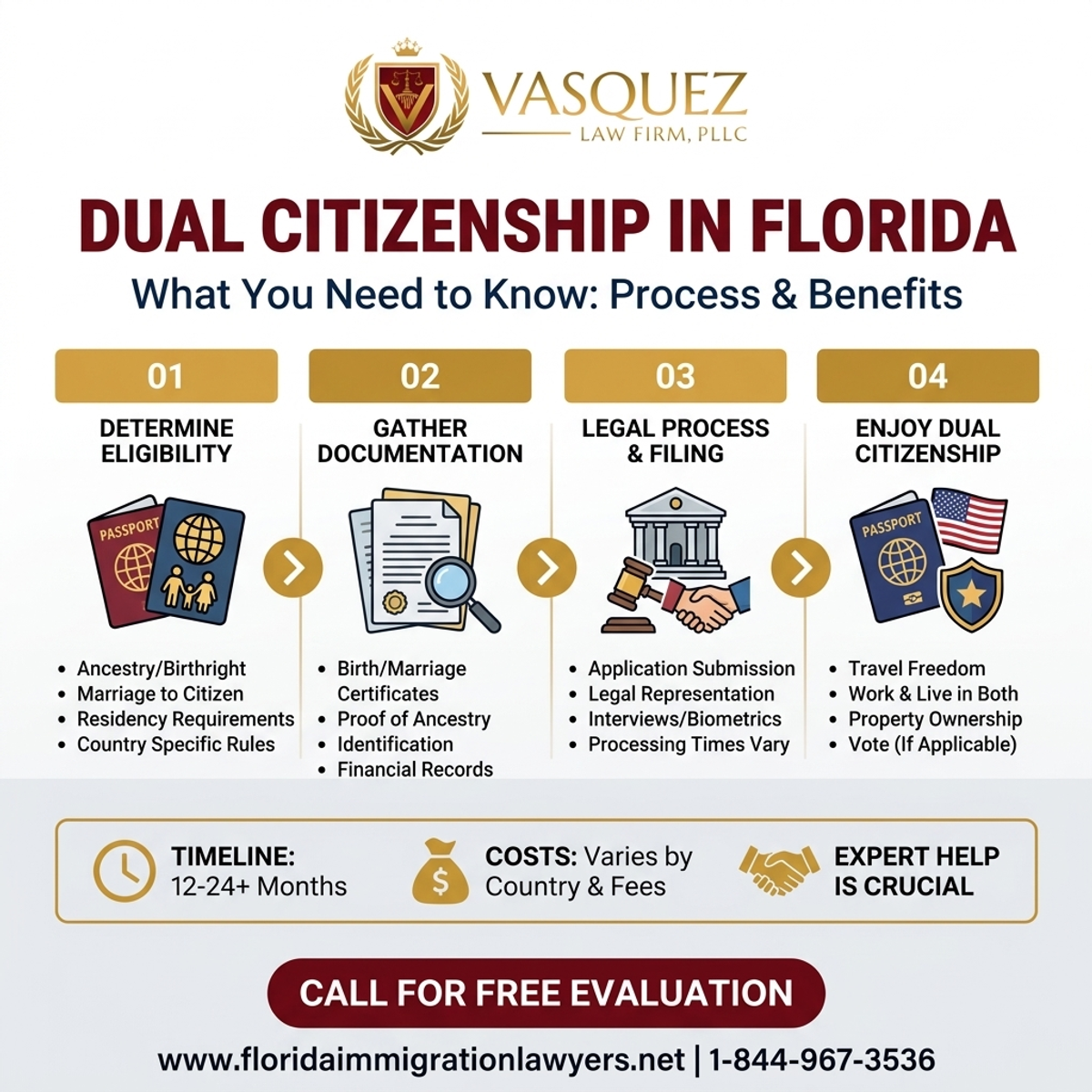
Step-by-Step Process — Dual Citizenship in Florida: What You Need to Know
Document Checklist for Dual Citizenship
- Birth Certificate
- Proof of Residence
- Current Passport(s)
- Marriage Certificate (if applicable)
- Naturalization Certificate (if already a U.S. citizen)
- Application Forms (such as Form N-400)
Ensure that all documents are current and accurate to prevent processing issues.
Beyond these core documents, applicants may need to provide additional evidence depending on their specific circumstances. This could include divorce decrees, military service records, tax transcripts, or evidence of name changes. For any documents not in English, certified translations are mandatory. It is crucial that these translations are complete and accurate, accompanied by a certification from the translator stating their competence and the accuracy of the translation. Inaccurate or incomplete documentation is one of the most common reasons for delays or Requests for Evidence (RFEs) from USCIS.
Maintaining an organized file of all your original documents and their certified copies is a practical tip that can save you considerable stress. Before submitting any application, make sure to review every document against the USCIS checklist and keep a complete set of copies for your records. This meticulous approach ensures that you are fully prepared for any inquiries from USCIS and can quickly provide additional information if requested. Florida Immigration Lawyers can assist in reviewing your documentation to ensure everything is in order before submission.
Timeline and Processing Expectations
Obtaining dual citizenship can take several months to over a year. The naturalization process, from filing to oath, typically takes 8-14 months. Factors such as application volume in local USCIS offices, like those serving Tallahassee, can affect timing.
Regularly check the status of your application online and prepare for potential delays by keeping all relevant documents updated and easily accessible.
The processing timeline for naturalization is highly variable and depends on several factors, including the specific USCIS field office handling your case, the complexity of your background checks, and the volume of applications at any given time. While 8-14 months is a general estimate, some cases can be resolved faster, while others might extend beyond 18 months, especially if there are issues with background checks or if a Request for Evidence (RFE) is issued. It's important to set realistic expectations and understand that patience is a key component of this journey.
To mitigate potential delays, ensure your application is meticulously prepared and all supporting documents are accurate and complete from the outset. Proactive monitoring of your case status through the USCIS online tool is highly recommended. If you notice unusual delays or receive an RFE, promptly consult with Florida Immigration Lawyers. Their expertise can help you understand the reason for the delay, respond effectively to RFEs, and potentially expedite certain aspects of your application if eligible. Having legal counsel can provide peace of mind and strategic guidance throughout the often-lengthy process.
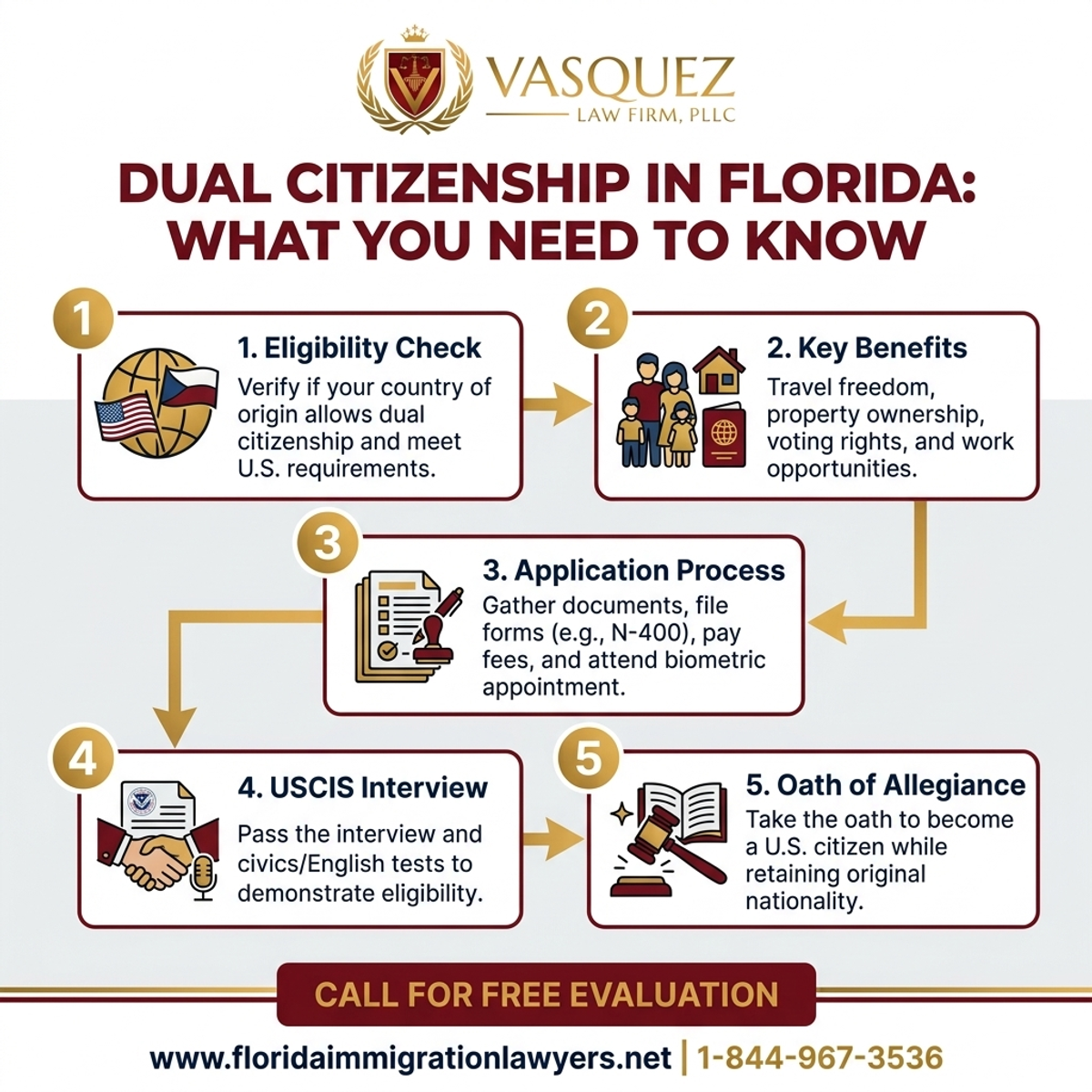
Key Statistics — Dual Citizenship in Florida: What You Need to Know
Cost Factors and Fee Breakdown
While fees vary, expect to pay for application processing, biometrics, and potentially legal assistance. These fees can range significantly based on your specific circumstances and the complexity of your case. It's wise to budget for additional costs that may arise during the process.
Do not navigate this process alone. Contact Florida Immigration Lawyers today.
The primary direct costs associated with U.S. naturalization include the USCIS filing fee for Form N-400 and the biometrics services fee. These fees are subject to change, so always check the latest fee schedule on the USCIS website. Beyond these government fees, applicants should budget for additional expenses such as obtaining certified copies of documents, professional translation services if needed, and potentially travel costs for appointments at USCIS offices in Florida.
One of the most significant variable costs is legal representation. While not mandatory, engaging an experienced immigration attorney from Florida Immigration Lawyers can be a worthwhile investment, especially for complex cases or those who prefer expert guidance. Legal fees cover services like document preparation, application review, representation at interviews, and assistance with any issues that arise. While it's an added expense, the peace of mind and increased likelihood of a successful outcome often outweigh the cost. For eligible low-income applicants, USCIS offers fee waivers, which can significantly reduce the financial burden of the application process.
Common Mistakes to Avoid
- Failing to Check Dual Citizenship Laws: Some countries do not allow dual citizenship, leading to potential loss of original citizenship.
- Incomplete Application Forms: Missing information can delay processing.
- Ignoring Tax Obligations: Dual citizens must comply with tax laws in both countries.
- Not Preparing for the Citizenship Test: Insufficient preparation can lead to failure.
- Forgetting to Update Legal Documents: Passports and IDs must reflect your dual status.
- Missing Deadlines: Timely submission of documents is crucial.
- Overlooking Cultural Differences: Understand the cultural implications of dual citizenship.
- Assuming Citizenship Grants Automatic Benefits: Each country may have specific requirements for accessing benefits.
Expanding on these common pitfalls can help applicants avoid significant setbacks. For example, regarding **Failing to Check Dual Citizenship Laws**, imagine a scenario where an applicant from a country like China, which strictly prohibits dual nationality, proceeds with U.S. naturalization without understanding the implications. This could result in the automatic forfeiture of their original citizenship, potentially impacting property ownership or inheritance rights in their home country. Always verify your birth country's specific laws via their embassy or a legal expert.
When it comes to **Incomplete Application Forms**, even a minor omission can trigger a Request for Evidence (RFE) from USCIS, significantly prolonging the processing time. A common error is neglecting to sign all required sections or leaving blank fields that should be marked 'N/A'. Double-checking every line and seeking a review from Florida Immigration Lawyers can prevent such easily avoidable delays.
**Ignoring Tax Obligations** is a critical mistake. U.S. citizens, including dual citizens, are generally required to report worldwide income to the IRS, regardless of where they reside. This often involves filing FBAR (Report of Foreign Bank and Financial Accounts) and complying with FATCA (Foreign Account Tax Compliance Act). Failure to comply can result in severe penalties. It is highly advisable to consult with a tax professional specializing in international taxation.
**Not Preparing for the Citizenship Test** is another frequent error. The English proficiency and civics test are mandatory components of the naturalization interview. Many resources are available, including free study guides and practice tests from USCIS. Dedicated study time and mock interviews can significantly boost confidence and ensure success, preventing the need for retesting.
**Forgetting to Update Legal Documents** post-naturalization can create logistical nightmares. Once you become a U.S. citizen, you should apply for a U.S. passport. If you retain your original citizenship, ensure your foreign passport is also valid and that both documents reflect your legal name. This prevents travel complications and ensures your legal status is consistent across all official records.
**Missing Deadlines** for submitting documents or responding to RFEs can lead to the denial of your application, requiring you to restart the entire process and incur new fees. Always mark important dates and submit documents well in advance of deadlines. If you anticipate difficulty meeting a deadline, contact Florida Immigration Lawyers immediately for guidance.
**Overlooking Cultural Differences** can manifest in various ways, such as misunderstanding military service obligations in your country of origin that may still apply to dual citizens. It’s important to be aware of any ongoing responsibilities or expectations from your other nationality that could impact your life or travel.
Finally, **Assuming Citizenship Grants Automatic Benefits** is a misconception. While dual citizenship provides many advantages, access to social services, voting rights, or certain professional licenses in either country may still have specific residency or other eligibility requirements. Always verify the criteria for any benefits you wish to access in either nation.
When to Call a Lawyer
Consider consulting a lawyer if you encounter complex legal issues, such as conflicting citizenship laws or potential tax complications. Legal assistance is also advisable if you receive a notice of denial or require representation in immigration court.
Florida Immigration Lawyers can help you navigate these challenges, ensuring that your rights and interests are protected throughout the process.
Beyond the common scenarios, there are specific instances where the expertise of an immigration lawyer becomes invaluable. If you have a criminal record, even a minor one, it can impact your naturalization eligibility. An attorney can assess the severity of the offense and advise on its potential implications or whether a waiver might be available. Similarly, if you have had previous immigration violations, such as overstaying a visa or unlawful entry, these issues can create significant hurdles that require specialized legal strategies.
Complex family situations, such as children born abroad to dual citizen parents, or cases involving military service in a foreign country, also warrant legal consultation. These scenarios often involve intricate interpretations of nationality laws in both countries. Furthermore, if you receive a Request for Evidence (RFE) that seems overwhelming, or if your application is denied, a lawyer can help you prepare a robust response or explore options for appeal. Proactive engagement with Florida Immigration Lawyers at 1-844-967-3536 can save you time, stress, and potential pitfalls in your dual citizenship journey.
About Florida Immigration Lawyers
Florida Immigration Lawyers is a dedicated firm offering comprehensive immigration services across Florida. Our experienced attorneys specialize in naturalization, deportation defense, and family immigration matters. We are available 24/7 to provide support and guidance.
Contact us at 1-844-967-3536 or visit our website for a free consultation.
Our commitment at Florida Immigration Lawyers is to provide personalized, compassionate, and effective legal representation. We understand that every immigration journey is unique, and we pride ourselves on offering tailored strategies that address the specific needs and goals of our clients. With a deep understanding of U.S. immigration law and its complexities, our team is dedicated to guiding you through every step of the dual citizenship process, ensuring your rights are protected and your aspirations realized. We are here to be your trusted partner in achieving your immigration dreams.
Sources and References
- U.S. Citizenship and Immigration Services (USCIS)
- Executive Office for Immigration Review (EOIR)
- 8 U.S.C. Chapter 12 - Immigration and Nationality Act
Frequently Asked Questions About Dual Citizenship
Here are some common questions about dual citizenship, with practical advice for those considering this status:
Related services: citizenship test preparation, dual citizenship guidance, family-based immigration.
This article provides general legal information and is not intended as legal advice. Every case is unique, and outcomes depend on specific facts and circumstances. Contact an attorney for advice about your particular situation.
Se Habla Español - Estamos aquí para ayudarle. Call us at 1-844-967-3536 for a free consultation.
If you need legal assistance, learn more about get citizenship help today, or call us at 1-844-967-3536 for a free consultation.
Do Not Navigate This Process Alone
Our experienced immigration attorneys are ready to fight for you. Get a free, confidential consultation today.
Se Habla Español
Frequently Asked Questions
Florida Immigration Lawyers
Immigration Attorney | Founder, Vasquez Law Firm
U.S. Air Force veteran and immigration attorney with thousands of cases resolved. J.D., NCCU School of Law. AILA member. Admitted to the 4th, 5th, and 11th Circuit Courts.
Available 24/7 - Free Evaluations
Related Legal Services
Our Florida immigration attorneys can help you with experienced immigration attorneys, business immigration and asylum protection. Call today at 1-844-967-3536 for a free consultation.
Related Links
Related Topics
Free Legal Consultation
Discuss your case with our experienced attorneys. We're available 24/7.
Se Habla Español - Estamos aquí para ayudarle.
Related Articles
Parole in Place for Military Families in Florida | VLF Florida
Parole in Place offers vital immigration relief for military families in Florida. Learn about eligibility, the application process, and how to avoid common pitfalls. Contact Florida Immigration Lawyers at 1-844-967-3536 for a free consultation.
RFE Response Florida: Expert Guide for USCIS Requests
Receiving a Request for Evidence (RFE) from USCIS can be a critical moment for any immigration applicant in Florida. This notice indicates that your application requires additional information or supporting documents to proceed. Understanding how to interpret your RFE, gather the precise evidence requested, and submit a timely, comprehensive response is vital for a successful outcome. This guide provides a detailed step-by-step process, essential document checklists, and insights into navigating RFE timelines. Florida Immigration Lawyers emphasizes the importance of avoiding common mistakes and highlights when professional legal assistance is indispensable. Our firm offers expert guidance to help you confidently address your RFE, safeguarding your immigration future in Florida. Contact us for a free consultation.
Immigration Lawyer in Cape Coral Southwest Florida
Navigating immigration in Cape Coral, Southwest Florida can be complex. Discover how a local immigration lawyer can help you achieve your goals. Call us for a free consultation.
Understanding H-4 EAD Spouse Work Permit Rules in Florida
Discover the essential rules for obtaining an H-4 EAD spouse work permit in Florida. Learn about eligibility, application steps, and common pitfalls. Contact Florida Immigration Lawyers for a free consultation.
