Immigration Medical Exam: Tampa, Florida Guide
Navigate the immigration medical exam process in Tampa, Florida with ease. Learn about requirements, steps, and common mistakes. Contact Florida Immigration Lawyers for a free consultation.

Navigating the U.S. immigration process can be complex, with numerous requirements and forms to complete. One crucial step for many applicants seeking lawful permanent residency (a Green Card) is the immigration medical exam, officially documented on Form I-693, Report of Medical Examination and Vaccination Record. If you're in Tampa, Florida, understanding this process is essential for a smooth application. This comprehensive guide will walk you through what to expect, how to prepare, and why this exam is a non-negotiable part of your immigration journey.
Why is the Immigration Medical Exam Required?
The U.S. Citizenship and Immigration Services (USCIS) requires this medical examination to ensure that applicants for adjustment of status (Green Card) or certain visa categories do not pose a public health risk to the United States. It also screens for certain communicable diseases, physical or mental disorders that could make an applicant inadmissible, and ensures compliance with vaccination requirements. The exam helps protect both the applicant and the public health of the nation, ensuring that new residents meet essential health standards before integrating into American communities. Understanding these health-related grounds of inadmissibility is crucial for any applicant, as failure to meet them can lead to significant delays or even denial of an application.
What Does the Immigration Medical Exam Entail?
The immigration medical exam is not a general physical. It is specifically designed by USCIS to identify certain health-related grounds of inadmissibility. It must be performed by a civil surgeon designated by USCIS. Here’s a detailed breakdown of what typically occurs:
1. Physical Examination
The civil surgeon will conduct a thorough physical examination. This includes checking your vital signs (blood pressure, heart rate, temperature), examining your eyes, ears, nose, throat, lungs, heart, abdomen, lymph nodes, and extremities. The surgeon will look for any signs of communicable diseases of public health significance, such as tuberculosis (TB), syphilis, and gonorrhea. They will also assess for any physical or mental disorders that could potentially pose a threat to the safety or welfare of the applicant or others. This is not a diagnostic exam for general health issues, but rather a screening for specific conditions outlined by public health regulations. The surgeon will document any abnormalities or findings that may require further evaluation or treatment before your immigration application can proceed.
2. Mental Health Evaluation
A mental health evaluation is also part of the exam. The civil surgeon will ask questions about your medical history, including any history of mental illness, substance abuse, or harmful behavior. They are looking to determine if you have a physical or mental disorder with associated harmful behavior, or a history of such behavior, that could pose a threat to yourself or others. Open and honest communication with the civil surgeon is crucial during this part of the exam to ensure accurate reporting. It's important to remember that having a mental health condition does not automatically make you inadmissible; the concern is primarily about conditions associated with harmful behavior that could endanger yourself or others.
3. Vaccination Requirements
One of the most critical components of the medical exam is ensuring you meet the U.S. vaccination requirements. You must show proof of vaccination against a range of diseases, including but not limited to mumps, measles, rubella, polio, tetanus and diphtheria toxoids, pertussis, Haemophilus influenzae type B, hepatitis B, and any other vaccinations recommended by the Advisory Committee for Immunization Practices (ACIP). If your vaccination records are incomplete or missing, the civil surgeon can administer the necessary vaccines during your appointment, or you may be referred to another clinic. It is highly recommended to gather all your vaccination records prior to your appointment to avoid delays and additional costs. Children and adults have different vaccination schedules, so ensure you understand the specific requirements for your age group.
4. Laboratory Tests
Specific lab tests are mandatory for all applicants aged 15 and older. These typically include:
- Tuberculosis (TB) Test: This is usually a blood test (IGRA - Interferon-Gamma Release Assay) like T-Spot or Quantiferon-TB Gold. A positive result may require further evaluation, such as a chest X-ray, to determine if you have active TB disease.
- Syphilis Test: A blood test to screen for syphilis.
- Gonorrhea Test: A urine test to screen for gonorrhea.
Additional tests may be required based on the civil surgeon's findings during the physical examination or your medical history. For instance, if you have a history of certain conditions or symptoms, the surgeon might request further diagnostic tests to rule out specific communicable diseases. All lab results must be returned to the civil surgeon before they can complete your Form I-693.
Finding a USCIS-Approved Civil Surgeon in Tampa, Florida
It is imperative that your immigration medical exam is performed by a USCIS-designated civil surgeon. Exams performed by other doctors will not be accepted. To find an approved civil surgeon in Tampa or elsewhere in Florida, you can use the USCIS website's "Find a Civil Surgeon" tool. Simply enter your zip code, and it will provide a list of approved doctors in your area. When choosing a surgeon, consider factors like location, availability, cost, and whether they speak your language or have staff who can assist with translation. Schedule your appointment well in advance, as some civil surgeons may have long waiting lists, especially in populous areas like Tampa. Always confirm their USCIS designation when booking your appointment to avoid any issues.
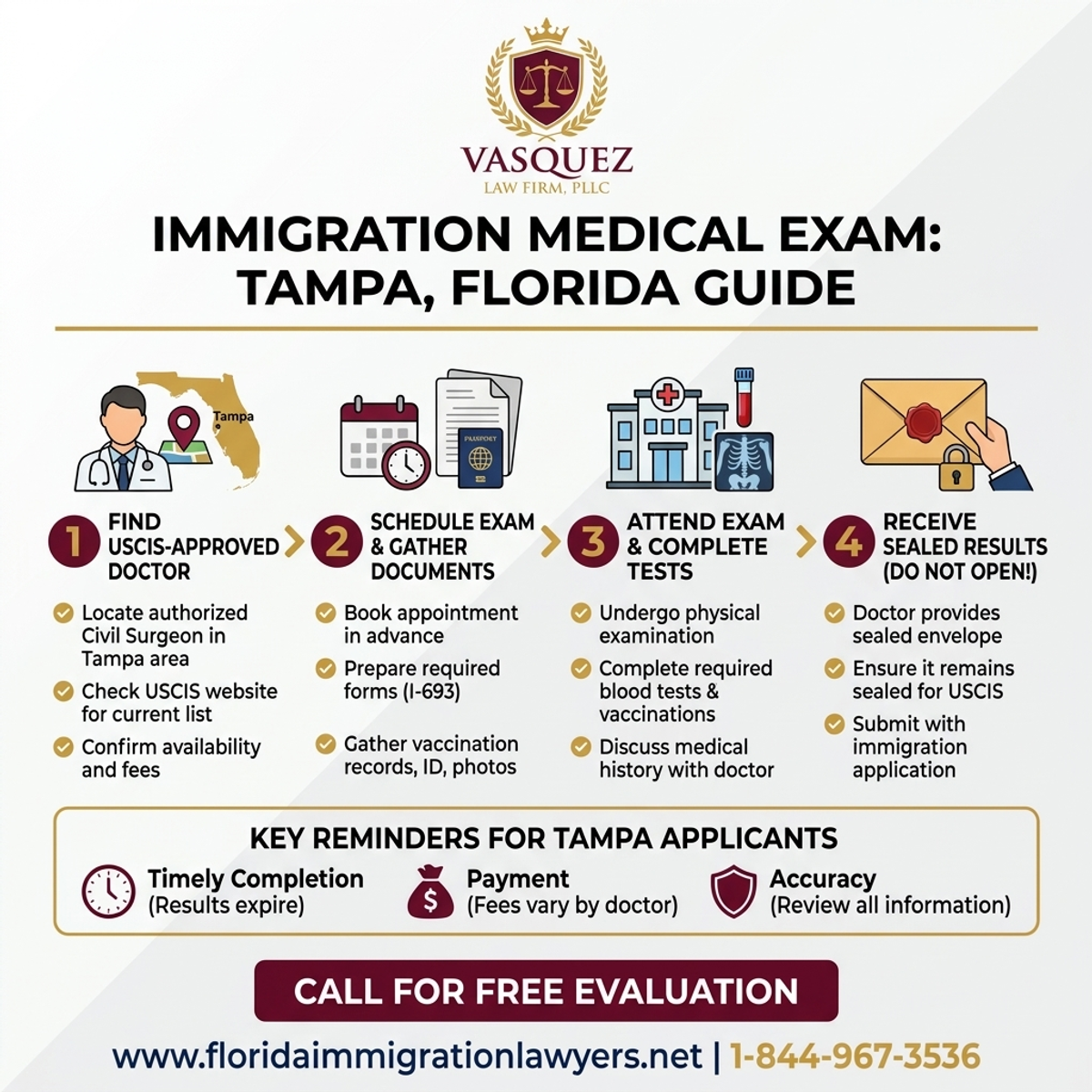
Step-by-Step Process — Immigration Medical Exam: Tampa, Florida Guide | VLF Florida
Preparing for Your Exam: What to Bring
Being well-prepared can significantly streamline your medical exam process. Here’s a checklist of essential items to bring to your appointment:
- Government-Issued Photo Identification: A valid passport is usually preferred, but a driver’s license or other official ID may be accepted.
- Form I-693: While the civil surgeon usually provides this, it’s good practice to be familiar with it. Do not sign it before your appointment.
- Vaccination Records: Original copies of all your immunization records. If you don't have them, the surgeon will assess and administer necessary vaccines.
- Medical History: Any records related to past or current medical conditions, hospitalizations, surgeries, or mental health treatments. This includes prescription lists.
- List of Medications: A comprehensive list of all prescription and over-the-counter medications you are currently taking.
- Eyeglasses or Contact Lenses: If you wear them.
- Payment: Be prepared to pay for the exam, lab tests, and any required vaccinations. Costs vary by civil surgeon and location, and most do not accept health insurance for this specific exam.
- Interpreter: If you are not fluent in English, bring a trusted interpreter. Some clinics may offer interpretation services, but it's best to confirm in advance.
Ensure all your documents are organized and easily accessible. Having everything ready will make your appointment more efficient and reduce the chances of needing a follow-up visit just for documentation.
The I-693 Form and What Happens After Your Exam
Once the civil surgeon completes your examination, administers any necessary vaccinations, and receives all lab results, they will fill out and sign Form I-693. This form details their findings and confirms that you meet the health-related requirements for immigration. The most critical aspect of this step is that the civil surgeon will place the completed Form I-693 and any supporting documentation in a sealed envelope. Do not open this envelope. USCIS will not accept an opened or tampered envelope. You will then submit this sealed envelope to USCIS as part of your overall immigration application package. The validity period for the I-693 is generally two years from the date the civil surgeon signs it, but it’s always best to submit it as soon as possible after your exam. If your immigration process extends beyond this period, you may be required to undergo another exam.
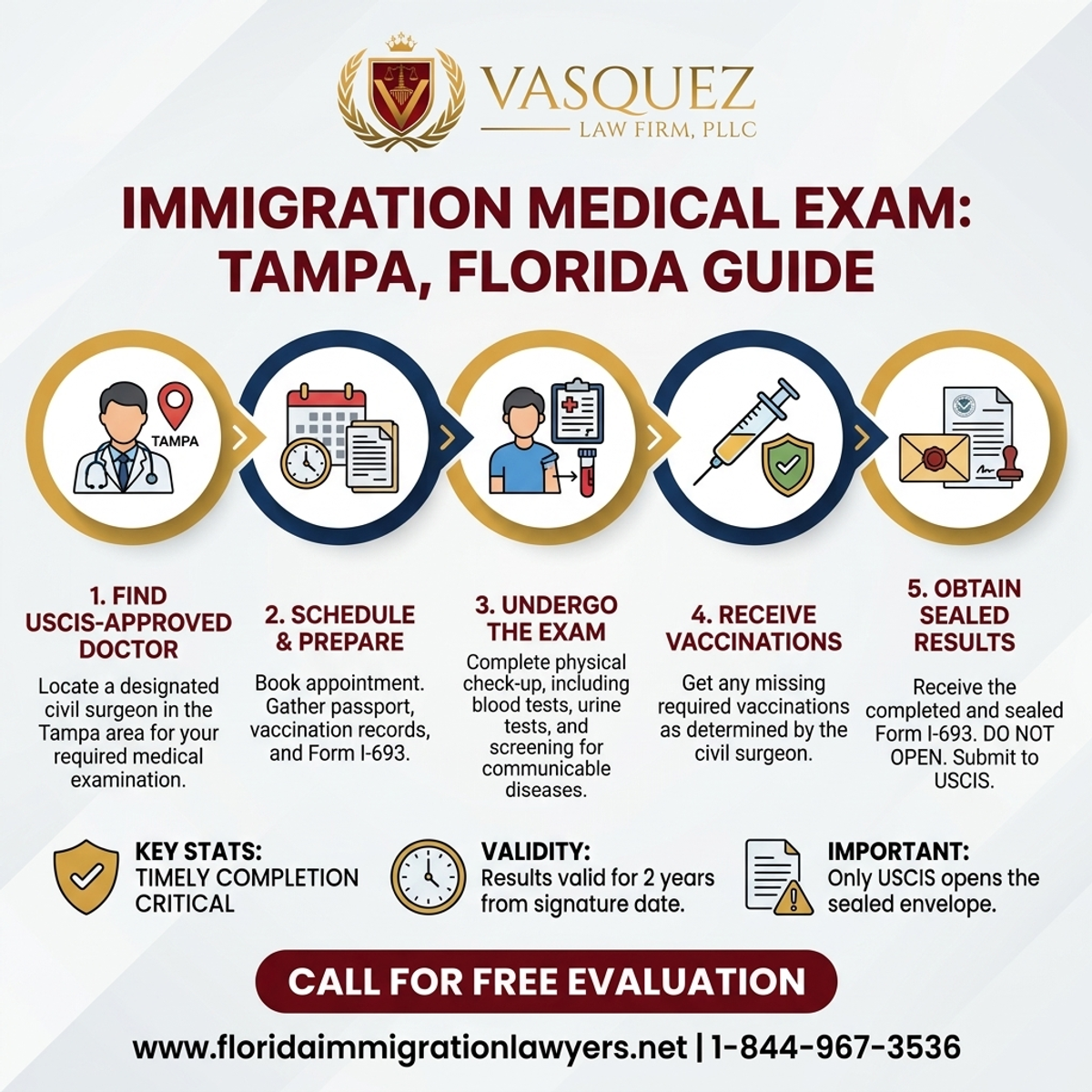
Key Statistics — Immigration Medical Exam: Tampa, Florida Guide | VLF Florida
The Critical Role of an Immigration Attorney in Your Medical Journey
While the immigration medical exam might seem like a straightforward medical procedure, it is an integral part of a much larger and often intricate immigration process. The results of your I-693 can have significant implications for your application, and navigating potential issues without expert guidance can lead to delays or even denial. This is where the invaluable assistance of an experienced immigration attorney becomes paramount.
An attorney specializing in immigration law can provide comprehensive support far beyond just the medical exam. They can help you understand the specific health-related grounds of inadmissibility and advise if any aspect of your medical history might require a waiver. For instance, certain medical conditions or a history of substance abuse might make an applicant inadmissible, but waivers are often available. An attorney can prepare and file these waivers on your behalf, significantly improving your chances of approval. They possess a deep understanding of USCIS policies and procedures, ensuring that all documentation is correctly prepared and submitted, minimizing the risk of RFEs (Requests for Evidence) or denials.
Furthermore, an attorney can ensure that your I-693 is submitted correctly and timely with the rest of your application. They can coordinate with your civil surgeon if there are any discrepancies or questions, and they can communicate directly with USCIS on your behalf, responding to Requests for Evidence (RFEs) related to your medical exam or any other part of your application. This proactive approach can prevent common pitfalls that often trip up self-filers, such as submitting an expired I-693 or an improperly sealed envelope. Their expertise can save you significant time, stress, and potential financial costs associated with rectifying errors.
For individuals seeking asylum, the medical exam can be particularly sensitive. Asylum seekers may have experienced trauma or persecution that has impacted their physical or mental health. An attorney can help articulate these circumstances to USCIS, ensuring that their medical history is understood within the context of their asylum claim, and advocating for appropriate considerations or waivers. Similarly, in deportation defense cases, medical conditions can sometimes play a role in arguments for relief or humanitarian considerations, and a skilled attorney can leverage these facts strategically to strengthen your case and protect your right to remain in the U.S.
Beyond the medical exam, an immigration lawyer provides holistic guidance for your entire journey. They help you choose the correct visa path, prepare all necessary documentation, represent you in interviews, and advocate for you at every stage. Having a dedicated legal team, such as the experienced attorneys at VLF Florida, means you have a powerful advocate ensuring your rights are protected and your application has the best possible chance of success. Don't underestimate the peace of mind and strategic advantage that professional legal counsel provides. If you have questions about your immigration medical exam or any other aspect of your immigration case, do not hesitate to contact us for a consultation. We are here to help you navigate these complex waters.
Common Pitfalls and How to Avoid Them
Even with thorough preparation, applicants can encounter issues. Being aware of common pitfalls can help you avoid them:
- Unopened Sealed Envelope: As mentioned, never open the sealed envelope from the civil surgeon. USCIS will reject it. This is a strict rule designed to prevent tampering with official medical reports.
- Expired I-693: The validity period is crucial. Submit your I-693 promptly after the exam. If your application process extends beyond two years, you might need a new exam, incurring additional costs and delays.
- Incomplete Vaccination Records: This is a frequent cause of delays. Gather all records beforehand or be prepared to get necessary vaccines at the exam. Failure to meet vaccination requirements will result in inadmissibility.
- Not Disclosing Full Medical History: Honesty is the best policy. Withholding information can lead to more serious problems down the line, including accusations of misrepresentation, which can have severe immigration consequences.
- Using an Unapproved Doctor: Only USCIS-designated civil surgeons can perform the exam. Double-check their designation on the USCIS website to ensure your exam is valid.
- Missing Follow-up Appointments: If the civil surgeon requests additional tests or evaluations (e.g., for a positive TB test), ensure you complete them promptly. Delays in follow-up can invalidate your initial exam results.
- Incorrectly Completed Form I-693: Although the civil surgeon is responsible for completing the form, minor errors can occur. An immigration attorney can review the form for completeness and accuracy before submission.
Tips for a Smooth Immigration Medical Exam Process
To ensure your immigration medical exam proceeds as smoothly as possible,
Sources and References
- U.S. Citizenship and Immigration Services (USCIS)
- Executive Office for Immigration Review (EOIR)
- U.S. Department of State - Bureau of Consular Affairs
- Immigration and Nationality Act (INA), 8 U.S.C. Chapter 12
Do Not Navigate This Process Alone
Our experienced immigration attorneys are ready to fight for you. Get a free, confidential case review today.
Se Habla Español
Or leave your details and we’ll call you:
Free Evaluation in 24 Hours
Or talk to us right now
AI voice assistant — available 24/7
FreeFrequently Asked Questions

William J. Vásquez
Founding Attorney · Vasquez Law Firm
U.S. Air Force veteran and immigration attorney with years of hands-on U.S. immigration experience. J.D., NCCU School of Law. AILA member. Admitted to the 4th, 5th, and 11th Circuit Courts.
Available 24/7 - Free Evaluations
Reviewed for legal accuracy by William J. Vásquez
Licensed in North Carolina; U.S. immigration is federal practice.
Related Legal Services
Our Florida immigration attorneys can help you with immigration lawyer cost in Florida, experienced immigration attorneys and asylum protection. Call today at 1-844-YO-PELEO for a free case review.
Related Links
Related Topics
Free Legal Case Review
Discuss your case with our experienced attorneys. We're available 24/7.
Se Habla Español - Estamos aquí para ayudarle.
Related Articles
Immigration Lawyer Orlando Free Consultation in Florida
For individuals and families in Orlando, Florida, navigating the complexities of U.S. immigration law requires expert guidance. An immigration lawyer in Orlando offers crucial support for everything from visa applications and green card processes to naturalization and deportation defense. This comprehensive guide details what a free consultation covers, providing a step-by-step overview of immigration pathways, essential document checklists, and expected timelines in 2026. We also highlight common mistakes to avoid, discuss the critical role of legal counsel in deportation and asylum cases, and explain why choosing a local Orlando immigration attorney is beneficial. Florida Immigration Lawyers is dedicated to serving the diverse community of Orlando with compassionate, effective legal solutions, ensuring you receive personalized advice and robust representation for a successful immigration journey.
Why Is Form N-600 Taking So Long in Florida? 2026 Delays
Form N-600 applications for a Certificate of Citizenship for children in Florida can encounter significant delays. This comprehensive guide from Florida Immigration Lawyers explores the common causes of these delays, including USCIS backlogs, incomplete documentation, and extensive background checks. We provide a detailed overview of the N-600 process, document requirements, and expected timelines for Florida residents. Learn how to navigate the application, understand associated fees, and avoid common mistakes that could prolong your child's path to formal citizenship documentation. Discover when legal counsel becomes essential and how our dedicated team can support your family throughout this crucial immigration journey.
Dual Citizenship Lawyer: Interview Tips in Florida
Navigating the citizenship interview process in Florida can be challenging. Learn essential tips and common pitfalls to ensure a successful naturalization process. Whether you're in Orlando or elsewhere, preparing effectively can make a significant difference. Florida Immigration Lawyers offers expert guidance and support to help you achieve your citizenship goals. Call us at 1-844-YO-PELEO for a free consultation.
Immigration Rights: Know Your Protections in Florida 2026
Understanding your immigration rights in Florida is paramount for your protection and peace of mind. This comprehensive guide details your core constitutional protections, including the right to remain silent and the right to an attorney, regardless of your immigration status. Learn essential strategies for interacting with ICE, what vital documents to carry, and a step-by-step overview of the immigration detention and removal process in Florida. We also cover common mistakes to avoid and when it's crucial to seek expert legal counsel. Florida Immigration Lawyers are dedicated to empowering you with the knowledge and support needed to navigate complex immigration challenges. Our firm offers free case reviews and serves clients across the entire state, ensuring you have access to experienced legal representation when you need it most.