Parole in Place for Military Families in Florida | VLF Flori
Parole in Place offers vital immigration relief for military families in Florida. Learn about eligibility, the application process, and how to avoid common pitfalls. Contact Florida Immigration Lawyers at 1-844-967-3536 for a free consultation.

Parole in Place (PIP) is a significant relief option for undocumented family members of U.S. military personnel in Florida. This policy allows eligible family members to remain in the United States legally and apply for a green card. Key takeaways include:
- Available to spouses, parents, and children of active-duty, reserve, and veteran military members.
- Provides temporary legal status and work authorization.
- Does not lead directly to citizenship but can facilitate further immigration benefits.
Introduction
Imagine serving your country with dedication, only to worry about the legal status of your loved ones. For many military families in Florida, this is a reality. Parole in Place (PIP) offers a beacon of hope, allowing undocumented family members of U.S. military personnel to remain in the United States legally. This article explores how PIP works, who qualifies, and what steps are involved in the process. If you or your family are affected, call Florida Immigration Lawyers at 1-844-967-3536 for a free consultation.
The emotional burden on service members is immense when their immediate family faces the threat of deportation. This stress can significantly impact their focus and well-being, directly affecting their ability to perform their duties effectively. PIP was specifically designed to alleviate this unique burden, recognizing the profound sacrifices made by military families.
Florida, with its numerous military bases and a large population of active-duty personnel, reservists, and veterans, sees a significant number of families who could benefit from this crucial program. Understanding the intricacies of PIP is not just a legal necessity but a moral imperative for those who serve and their loved ones.
This comprehensive guide aims to demystify the Parole in Place process, providing clear, actionable information for military families across the Sunshine State. From eligibility criteria to the application submission, we will cover every essential detail, ensuring you are well-equipped to navigate this path towards legal stability.
Understanding Parole in Place
Parole in Place is a discretionary option provided by the U.S. Citizenship and Immigration Services (USCIS) to help undocumented family members of military personnel. This includes active duty, reserve members, and veterans. The main goal is to alleviate the stress of potential deportation, allowing families to focus on their service commitments. While PIP does not directly grant citizenship, it is a crucial step towards obtaining a green card.
Parole in Place is particularly relevant in Florida, with its large and diverse military community. According to the U.S. Census Bureau, Florida is home to over 1.5 million veterans, many residing in military-friendly cities like Gainesville.
Legally, Parole in Place is granted under Section 212(d)(5) of the Immigration and Nationality Act (INA), which allows the Secretary of Homeland Security to "parole" individuals into the U.S. for urgent humanitarian reasons or significant public benefit. For military families, the "significant public benefit" is the support and stability provided to those who serve our nation, ensuring they can concentrate on their duties without the constant fear of their loved ones being removed from the country.
It's important to differentiate PIP from other forms of parole. Unlike humanitarian parole, which is typically for individuals outside the U.S. seeking entry, PIP is for individuals already present in the U.S. without authorization. Once granted, an individual is considered "paroled" into the United States, meaning they have a legal entry record. This legal entry is critical because it satisfies a requirement for adjusting status to a lawful permanent resident (green card holder) under Section 245(a) of the INA, which generally requires a lawful admission or parole.
The discretionary nature of PIP means that even if an applicant meets all the technical requirements, USCIS retains the authority to deny the application based on other factors, such as criminal history or national security concerns. This underscores the importance of presenting a strong, well-documented case and, ideally, seeking professional guidance from experienced immigration attorneys like those at Florida Immigration Lawyers.
Eligibility Requirements for Parole in Place
Not everyone is eligible for Parole in Place. The program specifically targets the immediate family members—spouses, parents, and children—of military personnel. Applicants must demonstrate their familial connection to a qualified military member and prove their physical presence in the United States.
Additionally, PIP applicants should have no significant criminal history, as this could lead to denial of the application. It's important to note that PIP is not a one-size-fits-all solution, and each case is reviewed individually. To ensure your application is processed smoothly, consulting with an immigration attorney is highly recommended.
Beyond the immediate family connection, the military member must be serving on active duty, in the Ready Reserve, or be a veteran who was honorably discharged. This broad definition ensures that a wide range of military families can potentially benefit. Proving the familial relationship requires official documents such as marriage certificates for spouses, birth certificates for children (unmarried and under 21), and birth certificates for parents. Accuracy and authenticity of these documents are paramount.
The "physical presence" requirement means the applicant must be in the United States at the time of filing. There is no specific duration of presence required, but demonstrating a stable residence and ties to the community can strengthen the application. Furthermore, the "good moral character" standard is implicitly assessed. While minor infractions might be overlooked, serious criminal offenses, particularly those involving violence, drugs, or national security threats, will almost certainly result in a denial. It is crucial to disclose all relevant information, even if seemingly minor, to your attorney.
For example, consider a scenario where Maria, an undocumented mother of a U.S. Army soldier stationed in Jacksonville, has lived in Florida for fifteen years. She has no criminal record and has been a diligent member of her community. Her son’s active duty status makes her a prime candidate for PIP. Without this program, Maria might face deportation, causing immense emotional distress to her son who is serving overseas. PIP offers her a pathway to remain with her family and eventually apply for a green card, providing much-needed stability.
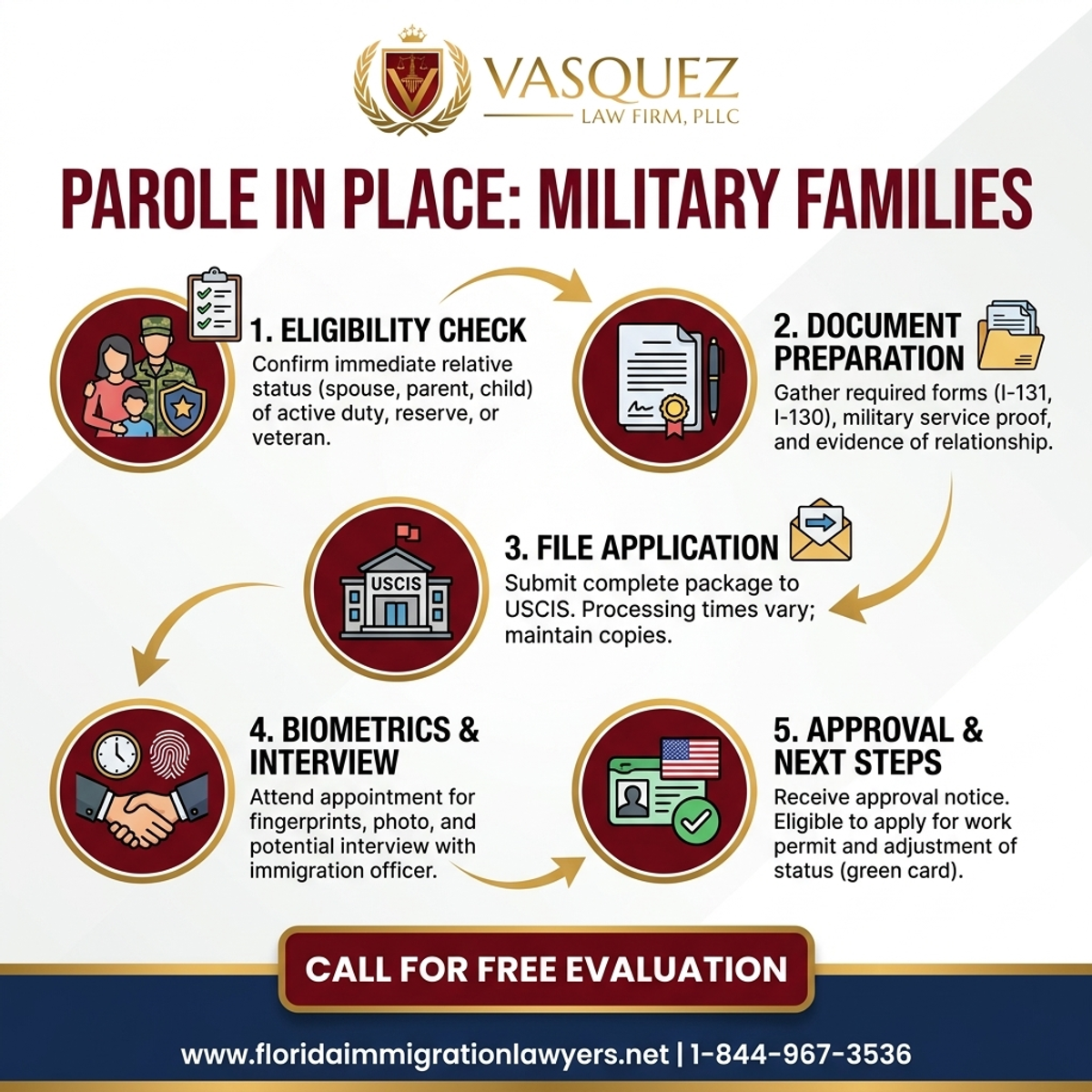
Step-by-Step Process — Parole in Place for Military Families in Florida
Step-by-Step Guide to Applying for Parole in Place
Navigating the Parole in Place application process requires meticulous attention to detail and a clear understanding of each step. This guide outlines the essential stages, but remember that personalized legal advice from Florida Immigration Lawyers can make a significant difference in the success of your application.
- Determine Eligibility: Verify your relationship with the military member and gather necessary documents like birth certificates and marriage licenses.
- Prepare Form I-131: Fill out the Form I-131, Application for Travel Document, indicating you are applying for Parole in Place.
- Include Supporting Documents: Attach proof of military service, proof of relationship, and any other required documentation.
- Submit the Application: Send your completed form and documents to the appropriate USCIS office in Florida.
- Await Decision: USCIS will review your application and inform you of their decision. Processing times can vary, so it's important to stay updated through the USCIS website.
Each step in this process is critical, and any misstep can lead to delays or even denial. For instance, ensuring your Form I-131 is correctly filled out and all supporting documents are accurately compiled is vital. USCIS evaluates each application thoroughly, and a well-prepared submission demonstrates your commitment and eligibility. Staying organized and proactive throughout this journey will significantly enhance your chances of a favorable outcome. If you have questions about any stage, do not hesitate to contact Florida Immigration Lawyers at 1-844-967-3536 for expert guidance.
Document Checklist for Parole in Place
A comprehensive and accurate submission of documents is the backbone of a successful Parole in Place application. Gathering all necessary evidence upfront can prevent delays and requests for additional information from USCIS. Ensure every document is legible and correctly organized.
- Completed Form I-131
- Proof of relationship to military member (e.g., marriage certificate, birth certificate)
- Copy of military member's service records
- Two passport-style photos
- Proof of identity (e.g., passport, driver’s license)
- Any relevant legal documents related to your immigration history
Beyond this core list, USCIS may request additional evidence depending on the specifics of your case. For instance, if there are name changes, previous marriages, or complex immigration histories, supplementary documents like divorce decrees or prior immigration records will be necessary. It is always wise to prepare a thorough package, potentially including affidavits from family members or community leaders attesting to your good moral character and relationship with the military member. A complete submission reflects diligence and can expedite the review process.
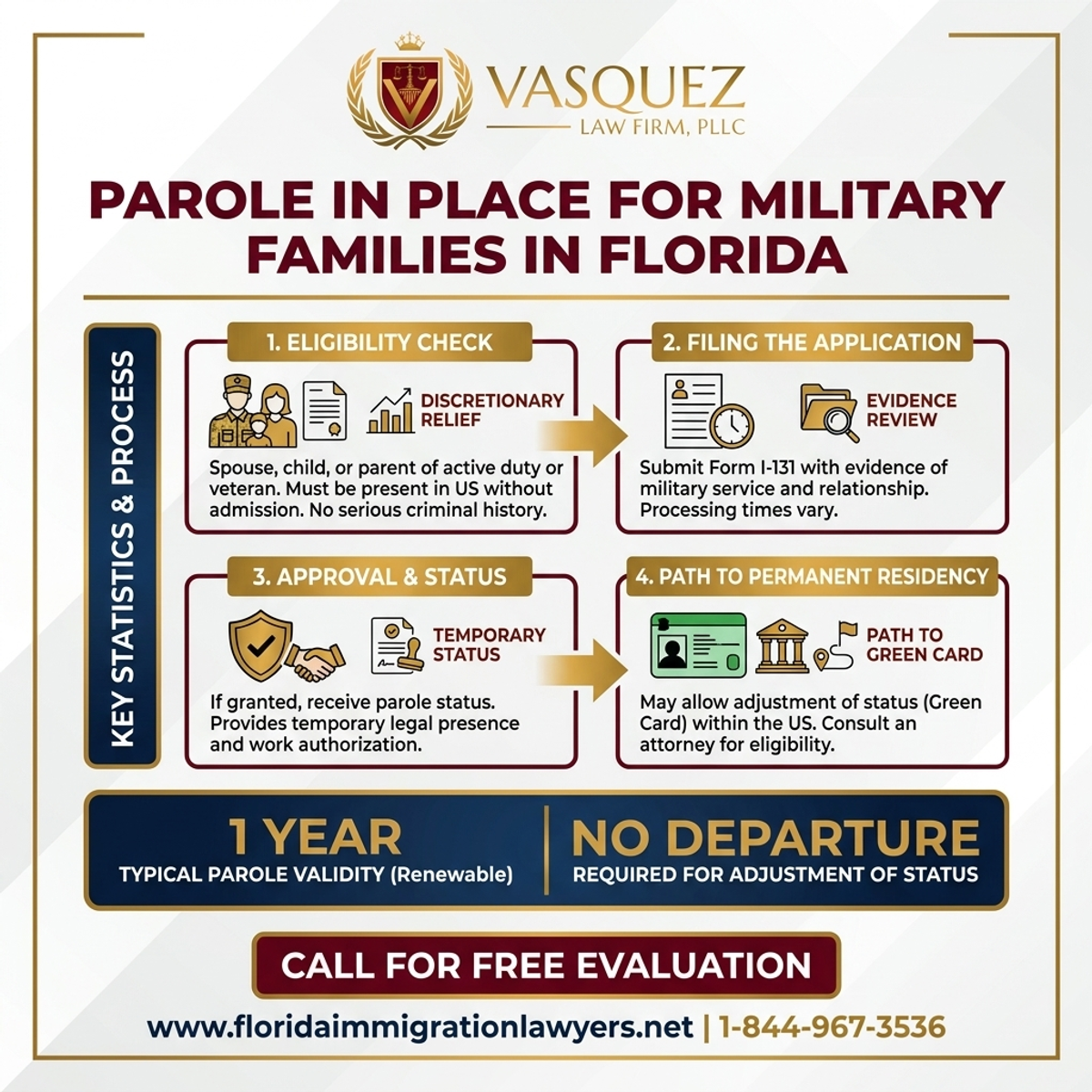
Key Statistics — Parole in Place for Military Families in Florida
Timeline and Processing Expectations
The processing time for Parole in Place applications can vary based on individual circumstances and current USCIS workloads. Typically, applicants in Florida can expect a wait time of several months. During this period, maintaining communication with USCIS and checking for updates on your application status is crucial.
Given recent updates to immigration policies, as reported by The New York Times, there may be changes affecting processing times and requirements. Staying informed is key to navigating this process successfully.
Factors influencing processing times include the specific USCIS service center handling your case, the volume of applications they are receiving, and the complexity of your individual application. For example, if your case involves a request for additional evidence (RFE) or requires extensive background checks due to a complex history, the processing time will likely extend beyond the typical estimates.
While waiting, it is important to avoid making assumptions or engaging in activities that could jeopardize your application, such as unauthorized travel outside the U.S. Proactively checking the USCIS website for general processing times and using your receipt number to track your specific case status is advisable. However, direct inquiries to USCIS should be handled carefully, and an immigration attorney can often make these inquiries more effectively on your behalf.
Preparing for potential delays is also a practical tip. Maintain copies of all submitted documents and correspondence, and be ready to respond promptly to any USCIS requests. This period can be stressful, but having a clear understanding of the process and professional legal support from Florida Immigration Lawyers can provide immense peace of mind and help manage expectations.
Cost Factors and Fee Breakdown
Applying for Parole in Place involves various fees, primarily associated with filing Form I-131. While these fees can change, it’s important to budget for application costs and potential legal fees if you choose to hire an attorney. Consulting with an immigration lawyer can provide clarity on the exact costs involved and help you prepare financially for the process.
Do not navigate this process alone. Contact Florida Immigration Lawyers today.
The primary filing fee is for Form I-131, Application for Travel Document. While this form is typically for advance parole for travel, it is used for PIP applications, and the fee must be paid unless a fee waiver is granted. Beyond this, applicants will also need to consider the cost of obtaining supporting documents, such as birth certificates or marriage licenses, especially if these need to be translated or obtained from foreign countries.
It's crucial to understand that the PIP application is often just the first step. Once parole is granted, the individual can then apply for Adjustment of Status to become a lawful permanent resident (green card holder) using Form I-485. This subsequent application involves its own significant filing fee, as well as a biometrics fee for fingerprinting and background checks. These costs can add up, so a comprehensive financial plan is essential.
Investing in legal representation, while an additional cost, often proves invaluable. An experienced immigration attorney can help identify potential fee waiver eligibility, ensure all forms are correctly completed to avoid rejections, and represent you throughout the entire process, including the subsequent green card application. This professional guidance can save you time, stress, and potentially more significant costs associated with errors or denials.
Common Mistakes to Avoid
The Parole in Place application process, though designed to assist military families, is fraught with potential pitfalls that can lead to significant delays or even outright denial. Being aware of these common mistakes and taking proactive steps to avoid them is crucial for a successful outcome.
- Failing to provide complete documentation: Missing documents can delay your application.
- Overlooking criminal history: Not disclosing past offenses can lead to application denial.
- Submitting late applications: Timeliness is crucial in immigration processes.
- Ignoring USCIS requests for additional information: Respond promptly to avoid delays.
- Incorrectly filling out forms: Errors can result in rejection or processing delays.
- Assuming PIP guarantees citizenship: While helpful, PIP is a temporary measure.
- Not consulting an attorney: Professional guidance can increase the success rate of your application.
Many of these common errors stem from a lack of familiarity with complex immigration law and procedures. For instance, misinterpreting eligibility criteria or failing to understand the nuances of 'good moral character' can be detrimental. Seeking professional assistance from Florida Immigration Lawyers can help you meticulously prepare your application, ensuring all requirements are met and potential issues are addressed before submission, thereby maximizing your chances of approval.
When to Call a Lawyer
While Parole in Place offers significant benefits, navigating the application process can be complex. If you face any challenges, such as a complicated immigration history or recent changes in military status, consulting an attorney is wise. Additionally, if your application is denied, an immigration lawyer can help explore alternative options and appeal processes.
At Florida Immigration Lawyers, we specialize in assisting military families throughout Florida, including those in Gainesville. Our dedicated team is here to support you every step of the way.
You should absolutely consider calling Florida Immigration Lawyers if your family member has any prior immigration violations, such as previous deportations, unlawful entries, or overstays beyond the initial entry. Similarly, if there's any criminal record, even a minor one, it's imperative to have an attorney review your case. These factors can significantly complicate your application and often require expert legal arguments and documentation to overcome.
Another critical time to seek legal counsel is if the military member's service record is complex, such as a less than honorable discharge, or if there are questions about their active duty status. An attorney can help gather the necessary military documentation and present it in the most favorable light. Moreover, if your family situation is unconventional, like step-parent/child relationships or adoptions, legal advice ensures all familial ties are properly established and documented according to USCIS standards.
Ultimately, an immigration lawyer provides more than just form-filling assistance; they offer strategic guidance, advocate on your behalf, and provide peace of mind. They can anticipate potential issues, prepare robust responses to USCIS inquiries, and represent you in any necessary interviews. Don't leave your family's future to chance; connect with Florida Immigration Lawyers at 1-844-967-3536 for a free consultation to understand your best path forward.
About Florida Immigration Lawyers
At Florida Immigration Lawyers, we are committed to providing expert legal services to our clients. Serving all of Florida, we offer assistance in various practice areas, including parole in place, asylum, deportation defense, and family immigration. Our team is available 24/7 to offer free consultations, ensuring you receive the guidance you need when you need it most. Contact us at 1-844-967-3536 or visit our website at https://www.floridaimmigrationlawyers.net.
Our deep understanding of military immigration policies, particularly those affecting the unique circumstances of service members and veterans in Florida, positions us as a leading resource for PIP cases. We recognize the profound sacrifices made by military families and are dedicated to providing compassionate, effective legal representation to help them achieve stability and peace of mind. From the initial eligibility assessment to the final green card application, our firm stands ready to support you.
Sources and References
- U.S. Citizenship and Immigration Services (USCIS)
- Executive Office for Immigration Review (EOIR)
- 8 U.S.C. Chapter 12 - Immigration and Nationality Act
- The New York Times
Related services: immigration practice areas, family immigration services, citizenship and naturalization.
This article provides general legal information and is not intended as legal advice. Every case is unique, and outcomes depend on specific facts and circumstances. Contact an attorney for advice about your particular situation.
For personalized assistance with your immigration needs, call Florida Immigration Lawyers at 1-844-967-3536 for a free consultation. Se Habla Espanol - Estamos aqui para ayudarle.
If you need legal assistance, learn more about our immigration law practice, or call us at 1-844-967-3536 for a free consultation.
Do Not Navigate This Process Alone
Our experienced immigration attorneys are ready to fight for you. Get a free, confidential consultation today.
Se Habla Español
Frequently Asked Questions
Florida Immigration Lawyers
Immigration Attorney | Founder, Vasquez Law Firm
U.S. Air Force veteran and immigration attorney with thousands of cases resolved. J.D., NCCU School of Law. AILA member. Admitted to the 4th, 5th, and 11th Circuit Courts.
Available 24/7 - Free Evaluations
Related Legal Services
Our Florida immigration attorneys can help you with free immigration consultation, experienced immigration attorneys and business immigration. Call today at 1-844-967-3536 for a free consultation.
Related Links
Related Topics
Free Legal Consultation
Discuss your case with our experienced attorneys. We're available 24/7.
Se Habla Español - Estamos aquí para ayudarle.
Related Articles
Dual Citizenship in Florida: What You Need to Know
Dual citizenship offers many benefits, including the ability to live and work in two countries. Explore your options in Florida, and learn about the application process, eligibility requirements, and common pitfalls to avoid.
RFE Response Florida: Expert Guide for USCIS Requests
Receiving a Request for Evidence (RFE) from USCIS can be a critical moment for any immigration applicant in Florida. This notice indicates that your application requires additional information or supporting documents to proceed. Understanding how to interpret your RFE, gather the precise evidence requested, and submit a timely, comprehensive response is vital for a successful outcome. This guide provides a detailed step-by-step process, essential document checklists, and insights into navigating RFE timelines. Florida Immigration Lawyers emphasizes the importance of avoiding common mistakes and highlights when professional legal assistance is indispensable. Our firm offers expert guidance to help you confidently address your RFE, safeguarding your immigration future in Florida. Contact us for a free consultation.
Immigration Lawyer in Cape Coral Southwest Florida
Navigating immigration in Cape Coral, Southwest Florida can be complex. Discover how a local immigration lawyer can help you achieve your goals. Call us for a free consultation.
Understanding H-4 EAD Spouse Work Permit Rules in Florida
Discover the essential rules for obtaining an H-4 EAD spouse work permit in Florida. Learn about eligibility, application steps, and common pitfalls. Contact Florida Immigration Lawyers for a free consultation.
