Understanding Good Moral Character for Naturalization in Flo
Learn about the good moral character requirement for naturalization in Florida, and how it affects your N-400 application. Understand the role of criminal history and how to demonstrate moral character effectively. For personalized advice, call Florida Immigration Lawyers at 1-844-967-3536.

Understanding Good Moral Character for Naturalization in Florida
Navigating the path to U.S. citizenship through naturalization is a significant step, and one of the most critical requirements is demonstrating 'Good Moral Character' (GMC). For individuals in Florida, understanding what constitutes GMC is essential for a successful N-400 application. This guide will help you understand the nuances of this requirement and how it impacts your journey to becoming a U.S. citizen.
If you're considering applying for naturalization or have questions about your eligibility, don't hesitate to contact our Florida Immigration Lawyers at 1-844-967-3536 for a consultation.
What is Good Moral Character (GMC)?
U.S. Citizenship and Immigration Services (USCIS) defines Good Moral Character as character which 'conforms to the generally accepted moral standards of the community.' While this definition might seem broad, USCIS provides specific guidelines and examples of conduct that may prevent an applicant from establishing GMC. Generally, GMC must be demonstrated for the statutory period immediately preceding the filing of the N-400 application, which is typically five years, or three years if applying as the spouse of a U.S. citizen.
Inadmissible Acts and Statutory Bars
Certain acts automatically bar an applicant from establishing GMC. These include, but are not limited to:
- Having been convicted of murder.
- Having been convicted of an aggravated felony (as defined in INA 101(a)(43)).
- Having engaged in prostitution or drug trafficking.
- Having been incarcerated for 180 days or more, regardless of the offense.
For a comprehensive list of statutory bars and detailed information, applicants should always refer to the official USCIS website or consult with an experienced immigration attorney.
Common Issues Affecting Good Moral Character in Florida
Many applicants in Florida encounter specific challenges that can raise questions about their GMC. These often involve criminal history, financial obligations, and misrepresentations.
Criminal History and Naturalization
A criminal record is one of the most common reasons for a GMC denial. Even minor offenses can impact your application. USCIS considers the nature of the crime, the sentence imposed, and rehabilitation efforts. Common issues include:
- DUI/DWI offenses: Multiple DUIs or a single severe DUI can be problematic.
- Petty offenses: While a single petty offense might not be a bar, a pattern of such offenses can indicate a lack of GMC.
- Drug-related offenses: Even possession of marijuana can be an issue, depending on state laws and federal interpretation.
- Domestic violence: Convictions related to domestic violence are serious and often lead to GMC denials.
It's crucial to disclose all arrests, charges, and convictions, regardless of how minor they seem or if they were expunged. Failure to disclose can be considered a misrepresentation, which itself is a bar to GMC. If you have a criminal record, seeking legal advice from a knowledgeable attorney specializing in deportation defense and naturalization is highly recommended.
Failure to Pay Child Support or Taxes
Demonstrating financial responsibility is also part of GMC. Failure to pay court-ordered child support or federal, state, or local taxes can be viewed negatively by USCIS. Applicants must show that they have made good faith efforts to meet these obligations.
False Testimony and Misrepresentation
Providing false testimony under oath or making misrepresentations to gain an immigration benefit is a serious offense that will almost certainly lead to a denial of GMC. Honesty and transparency are paramount throughout the naturalization process.
How to Prepare and Strengthen Your GMC Case
Preparing a strong case for Good Moral Character involves thorough documentation and, in some instances, demonstrating rehabilitation.
- Gather All Documentation: Obtain certified court dispositions for all arrests, charges, and convictions. Gather proof of tax payments and child support.
- Demonstrate Rehabilitation: If you have a past criminal record, provide evidence of rehabilitation, such as completion of probation, counseling, community service, or consistent employment.
- Character References: Letters from employers, community leaders, and family members can attest to your good character.
- Community Involvement: Participation in community activities, volunteering, or membership in religious organizations can demonstrate positive contributions to society.
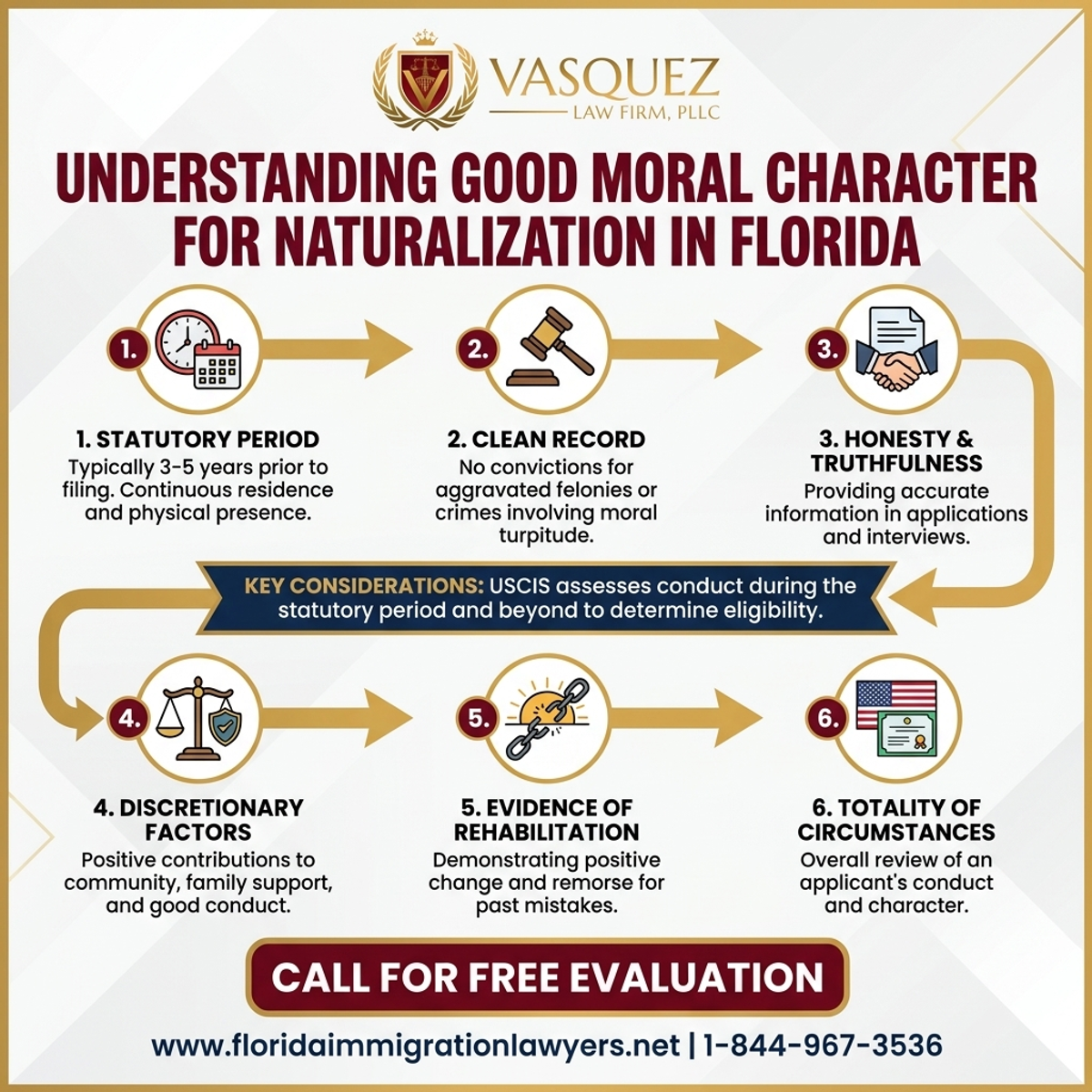
Step-by-Step Process — Understanding Good Moral Character for Naturalization in Florida
Understanding the intricacies of immigration law, including areas like asylum and naturalization, requires expert guidance. Our attorneys are here to help.
The Role of an Immigration Attorney in Florida
Given the subjective nature of the GMC requirement and the potential complexities of an applicant's background, working with an experienced Florida immigration lawyer is invaluable. An attorney can:
- Assess your specific situation and identify potential GMC issues.
- Help you gather and organize all necessary documentation.
- Prepare you for the USCIS interview.
- Represent you during the naturalization process, including responding to Requests for Evidence (RFEs) or Notices of Intent to Deny (NOIDs).
- Advise on the latest policies and interpretations from the Department of Justice, which can be found on justice.gov, and other relevant government agencies like travel.state.gov for broader immigration context.
Contact Our Florida Immigration Lawyers Today
The journey to U.S. citizenship is a significant one, and ensuring you meet the Good Moral Character requirement is fundamental. Don't leave your naturalization application to chance. Our dedicated team of Florida Immigration Lawyers is here to provide the expert legal guidance you need.
If you are ready to discuss your naturalization case or have concerns about your eligibility, please contact us today for a confidential consultation. Call us at 1-844-967-3536 to take the next step towards achieving your American dream.
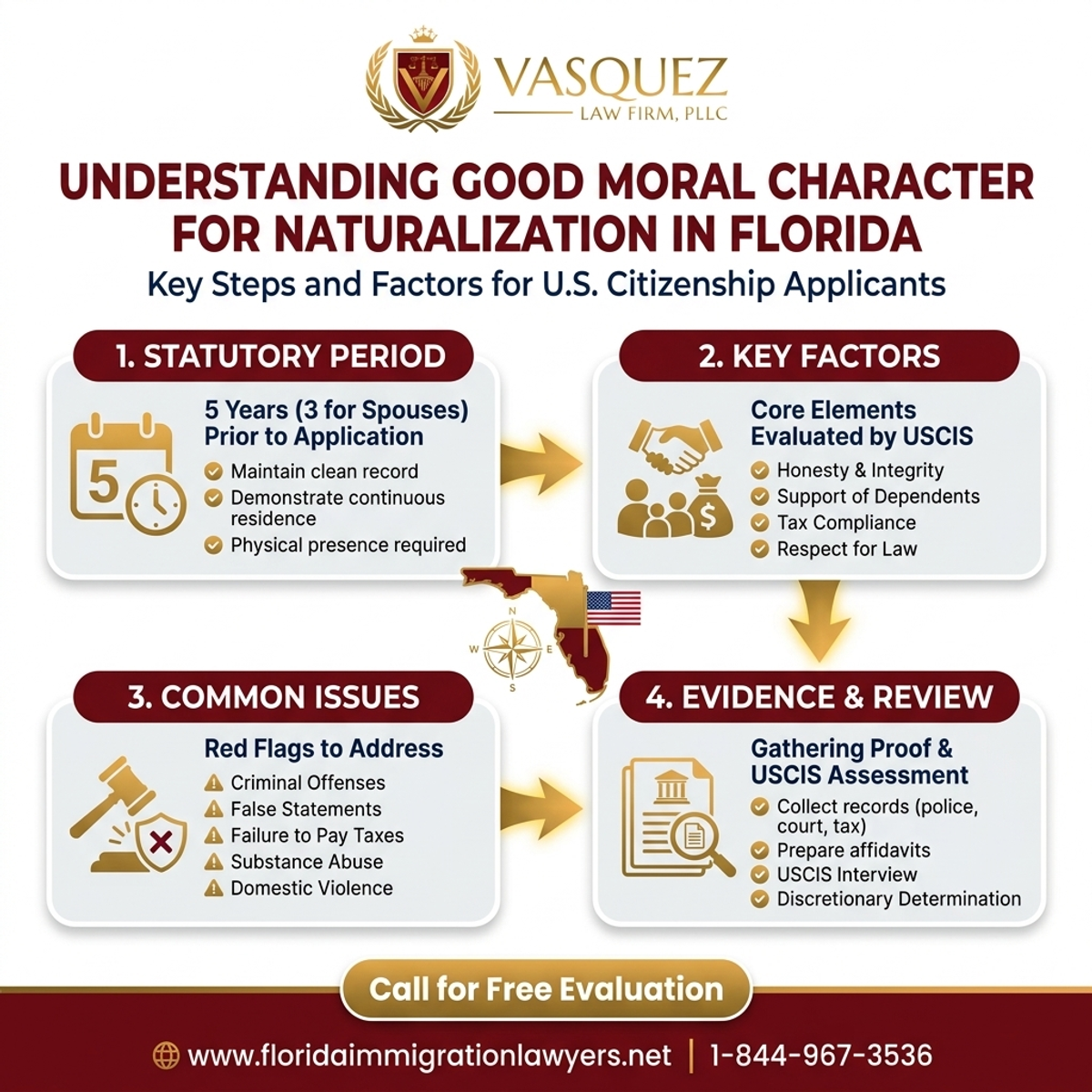
Key Statistics — Understanding Good Moral Character for Naturalization in Florida
Do Not Navigate This Process Alone
Our experienced immigration attorneys are ready to fight for you. Get a free, confidential consultation today.
Se Habla Español
Frequently Asked Questions
Florida Immigration Lawyers
Immigration Attorney | Founder, Vasquez Law Firm
U.S. Air Force veteran and immigration attorney with thousands of cases resolved. J.D., NCCU School of Law. AILA member. Admitted to the 4th, 5th, and 11th Circuit Courts.
Available 24/7 - Free Evaluations
Related Legal Services
Our Florida immigration attorneys can help you with experienced immigration attorneys, business immigration and asylum protection. Call today at 1-844-967-3536 for a free consultation.
Related Links
Related Topics
Free Legal Consultation
Discuss your case with our experienced attorneys. We're available 24/7.
Se Habla Español - Estamos aquí para ayudarle.
Related Articles
I-601A Provisional Waiver in Florida: What You Need to Know
Discover how the I-601A provisional waiver can help you stay with your family during the immigration process in Florida. Learn about eligibility, application steps, and common pitfalls. Call Florida Immigration Lawyers at 1-844-967-3536 for a free consultation.
U Visa for Crime Victims in Florida: Essential Guide
Discover the essentials of the U visa for crime victims in Florida, a crucial immigration relief option. Learn about eligibility, application steps, and common pitfalls. Contact Florida Immigration Lawyers at 1-844-967-3536 for expert guidance.
Fiance Visa K-1 Process in Florida | FL Immigration Lawyers
Learn how to bring your fiancé to Florida with a K-1 visa. Understand the process, requirements, and common pitfalls. Contact us for a free consultation.
I-601 Waiver Guide for Florida Immigrants | VLF Florida
Facing inadmissibility issues in Florida? Discover how the I-601 waiver can help you stay in the U.S. by demonstrating extreme hardship to a qualifying relative. Learn about eligibility, process, and common mistakes to avoid. Contact Florida Immigration Lawyers for expert guidance.
