I-601 Waiver Guide for Florida Immigrants | VLF Florida
Facing inadmissibility issues in Florida? Discover how the I-601 waiver can help you stay in the U.S. by demonstrating extreme hardship to a qualifying relative. Learn about eligibility, process, and common mistakes to avoid. Contact Florida Immigration Lawyers for expert guidance.

- Designed to address specific inadmissibility grounds.
- Requires proof of extreme hardship to a U.S. citizen or permanent resident relative.
- Processing times can vary, typically ranging from several months to over a year.
- Legal assistance is highly recommended to navigate this complex process.
Introduction
In Fort Lauderdale, Florida, immigrants facing challenges due to inadmissibility can find hope through the I-601 waiver. This waiver is designed to remove barriers that prevent immigrants from obtaining legal status in the U.S. The process involves demonstrating that a U.S. citizen or permanent resident relative would face extreme hardship without your presence. In this guide, we will walk you through the I-601 waiver process, eligibility requirements, necessary documentation, and common pitfalls to avoid. For personalized assistance, call Florida Immigration Lawyers at 1-844-967-3536 for a free consultation.
Understanding the I-601 Waiver
The I-601 waiver is a legal remedy for individuals deemed inadmissible to the U.S. under certain grounds specified in the Immigration and Nationality Act (INA). These grounds include unlawful presence, certain criminal convictions, and misrepresentation. The waiver allows applicants to request forgiveness by demonstrating that their exclusion would cause extreme hardship to a qualifying relative. This relative can be a U.S. citizen or a lawful permanent resident (LPR).
Eligibility Requirements
To qualify for an I-601 waiver, you must meet specific eligibility criteria. Primarily, you need a qualifying U.S. citizen or LPR relative who would suffer extreme hardship if you were denied admission. The determination of hardship involves a comprehensive analysis of factors like financial difficulties, medical conditions, and emotional impacts.
Step-by-Step Guide to Filing Form I-601
- Determine Grounds of Inadmissibility: Identify the specific grounds that make you inadmissible, as these will dictate whether an I-601 waiver is applicable.
- Collect Supporting Documentation: Gather evidence that demonstrates the extreme hardship your qualifying relative would face. This may include medical records, financial statements, and affidavits.
- Complete Form I-601: Carefully fill out Form I-601, ensuring all information is accurate and complete.
- Submit Your Application: Send your completed form and supporting documents to the designated USCIS address. Note that the application fee is subject to change, so verify the current fee on the USCIS website.
- Attend Biometrics Appointment: If required, attend a biometrics appointment for fingerprinting and photographing.
- Respond to Requests for Evidence (RFE): USCIS may request additional information. Be prompt and thorough in your response.
- Await Decision: Processing times vary, but it typically takes several months to over a year for USCIS to render a decision.
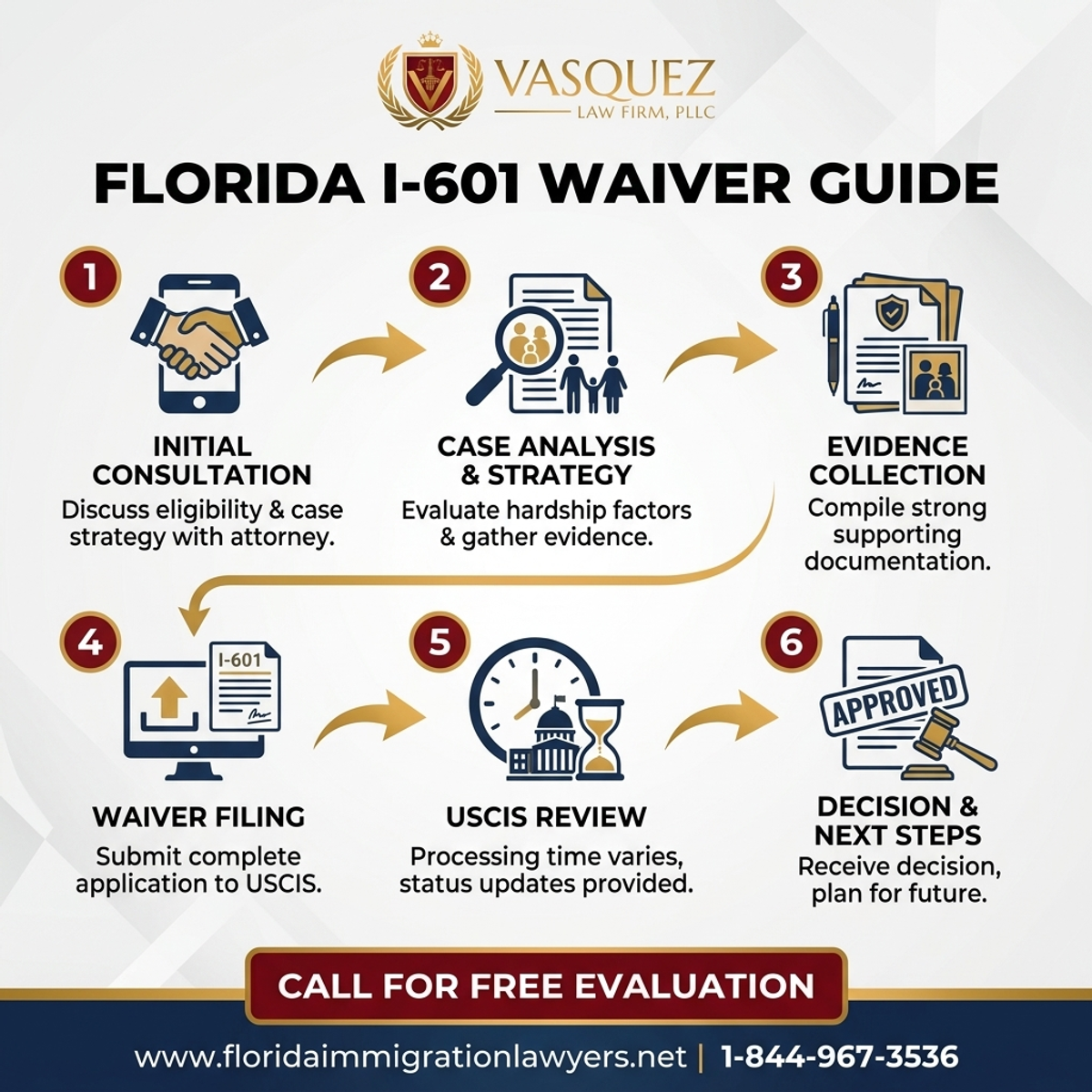
Step-by-Step Process — I-601 Waiver Guide for Florida Immigrants
Document Checklist for I-601 Waiver
- Completed Form I-601
- Proof of qualifying relative's citizenship or LPR status
- Evidence of extreme hardship
- Personal statement explaining hardship
- Supporting affidavits from family and friends
- Medical records, if applicable
- Financial documents
Timeline and Processing Expectations
Processing times for the I-601 waiver can vary based on several factors, including the complexity of the case and the current workload at the USCIS service center handling your application. Generally, applicants can expect a decision within 12 to 24 months. However, delays are possible, especially if additional evidence is requested. Regularly checking your case status on the USCIS website can provide updates on your application's progress.
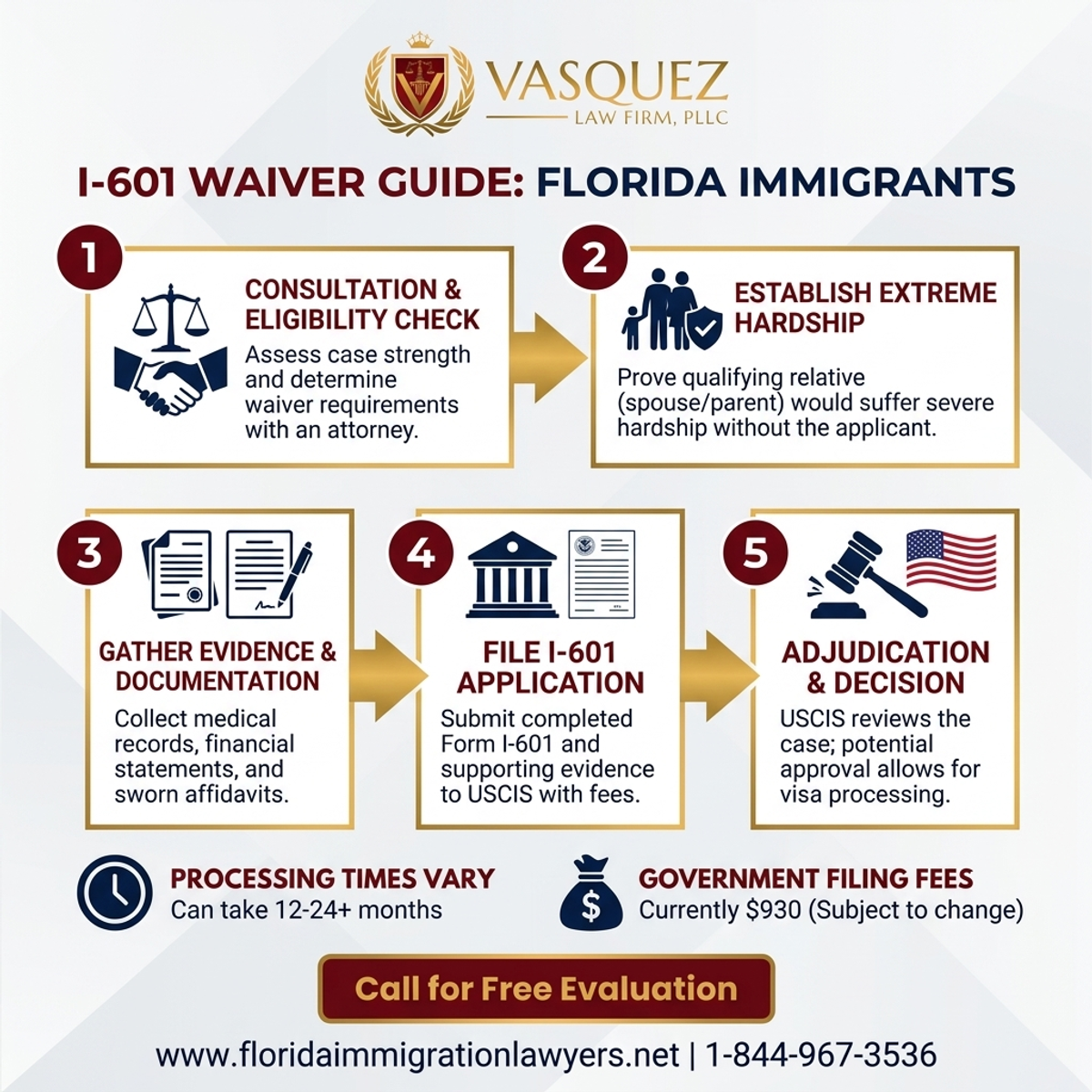
Key Statistics — I-601 Waiver Guide for Florida Immigrants
Cost Factors and Fee Breakdown
The fees associated with filing Form I-601 can change, so it is crucial to verify the current amount on the USCIS website. In addition to the filing fee, applicants should consider potential costs for gathering supporting documentation, legal assistance, and any travel related to biometrics appointments. While the initial expense may seem high, investing in a comprehensive application can improve your chances of success.
Do not navigate this process alone. Contact Florida Immigration Lawyers today.
Common Mistakes to Avoid
- Insufficient Evidence of Hardship: Failing to adequately document the hardship can lead to denial.
- Incorrect Form Filling: Errors or omissions on the form can lead to delays or denials.
- Ignoring USCIS Requests: Not responding to RFEs can negatively impact your case.
- Missing Deadlines: Missing submission deadlines can result in application rejection.
- Overlooking Legal Advice: Not consulting with an attorney can result in avoidable errors.
- Inadequate Explanation of Hardship: Generic statements without personal details may not suffice.
- Failing to Update Address: Not updating your address with USCIS can cause communication issues.
- Not Checking Case Status: Failing to monitor your application status can lead to missed updates.
When to Call a Lawyer
Navigating the complexities of an I-601 waiver application can be challenging. It is advisable to seek legal assistance if you face any of the following scenarios: difficulty identifying grounds of inadmissibility, challenges in demonstrating extreme hardship, or receiving an RFE. Florida Immigration Lawyers can provide expert guidance to increase your chances of a successful outcome. Call us for support.
About Florida Immigration Lawyers
Florida Immigration Lawyers is a dedicated firm serving all of Florida, including Fort Lauderdale. Our experienced attorneys specialize in various immigration matters, including waivers, deportation defense, and citizenship applications. We are available 24/7 to offer free consultations, ensuring you have access to the help you need. Call us at 1-844-967-3536 or visit our website for more information.
Sources and References
- U.S. Citizenship and Immigration Services (USCIS)
- Executive Office for Immigration Review (EOIR)
- 8 U.S.C. Chapter 12 - Immigration and Nationality Act
- 22 CFR Part 40 - Visas: Documentation of Immigrants and Nonimmigrants
Related services: immigration practice areas, family immigration services, citizenship and naturalization.
This article provides general legal information and is not intended as legal advice. Every case is unique, and outcomes depend on specific facts and circumstances. Contact an attorney for advice about your particular situation.
For further assistance, call Florida Immigration Lawyers at 1-844-967-3536 for a free consultation. Se Habla Espanol - Estamos aqui para ayudarle.
If you need legal assistance, learn more about learn about our immigration practice, or call us at 1-844-967-3536 for a free consultation.
Do Not Navigate This Process Alone
Our experienced immigration attorneys are ready to fight for you. Get a free, confidential consultation today.
Se Habla Español
Frequently Asked Questions
Florida Immigration Lawyers
Immigration Attorney | Founder, Vasquez Law Firm
U.S. Air Force veteran and immigration attorney with thousands of cases resolved. J.D., NCCU School of Law. AILA member. Admitted to the 4th, 5th, and 11th Circuit Courts.
Available 24/7 - Free Evaluations
Related Legal Services
Our Florida immigration attorneys can help you with immigration practice areas, free immigration consultation and experienced immigration attorneys. Call today at 1-844-967-3536 for a free consultation.
Related Links
Related Topics
Free Legal Consultation
Discuss your case with our experienced attorneys. We're available 24/7.
Se Habla Español - Estamos aquí para ayudarle.
Related Articles
Fiance Visa K-1 Process in Florida | FL Immigration Lawyers
Learn how to bring your fiancé to Florida with a K-1 visa. Understand the process, requirements, and common pitfalls. Contact us for a free consultation.
I-601 Waiver Guide for Florida Immigrants | VLF Florida
The I-601 waiver is essential for immigrants in Coral Springs, Florida, facing inadmissibility. Learn about eligibility, documentation, and common mistakes to avoid. Contact Florida Immigration Lawyers for a free consultation.
Understanding U Visa Certification in Florida | VLF Florida
Explore the process of U visa certification in Florida, focusing on law enforcement's role and how it aids crime victims. Contact Florida Immigration Lawyers for guidance.
Immigration Services in Jacksonville, Florida | VLF Florida
Navigating immigration services in Jacksonville, Florida, requires understanding visa processes and legal guidance. Explore our comprehensive guide for expert insights.