I-601 Waiver Guide for Florida Immigrants | VLF Florida
The I-601 waiver is essential for immigrants in Coral Springs, Florida, facing inadmissibility. Learn about eligibility, documentation, and common mistakes to avoid. Contact Florida Immigration Lawyers for a free consultation.

- Understanding the role of hardship in I-601 waivers.
- Necessary documentation and steps involved.
- Timelines and processing expectations.
Introduction
Imagine facing the prospect of being separated from loved ones due to immigration issues. For many in Coral Springs, Florida, and beyond, this is a reality. The I-601 waiver offers a lifeline for those deemed inadmissible to the U.S. due to certain grounds. This comprehensive guide will walk you through the essentials of the I-601 waiver, from eligibility to application. Call Florida Immigration Lawyers at 1-844-967-3536 for a free consultation.
Understanding the I-601 Waiver
The I-601 waiver, officially known as the Application for Waiver of Grounds of Inadmissibility, is a vital tool for immigrants who have been deemed inadmissible due to health, criminal, or other reasons. In Florida, where immigration issues are a common concern, understanding this waiver can make a significant difference in an immigrant's future.
Eligibility for an I-601 waiver typically hinges on proving that the refusal of admission would cause extreme hardship to a qualifying relative who is a U.S. citizen or lawful permanent resident. Factors such as family ties in the U.S., country conditions, and financial considerations are often evaluated.
For residents in Coral Springs and the wider Florida region, local demographics and community support can also play a role in demonstrating hardship. For more detailed legal criteria, refer to the USCIS guidelines.
Step-by-Step Guide to Applying for the I-601 Waiver
- Determine Eligibility: Assess whether your grounds of inadmissibility can be waived and identify the qualifying relative(s).
- Gather Documentation: Collect evidence of hardship, including financial records, medical reports, and letters of support.
- Complete Form I-601: Fill out the form accurately, ensuring all sections are completed and signed.
- Submit the Application: File the I-601 with the appropriate USCIS office, which for Florida residents might be the Tampa or Miami offices depending on your location.
- Await Decision: USCIS will review your application, which may include a request for additional information.
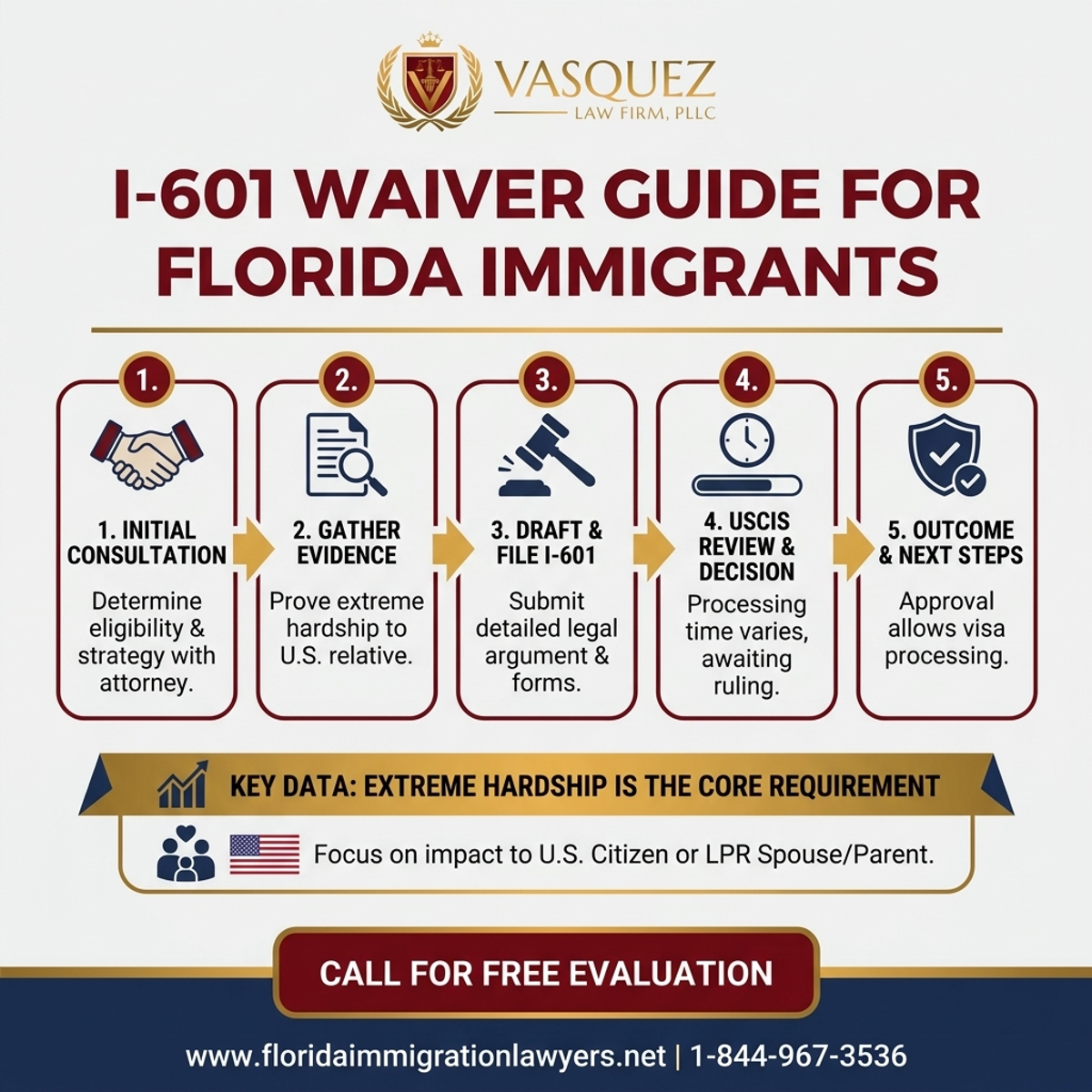
Step-by-Step Process — I-601 Waiver Guide for Florida Immigrants
Document Checklist for the I-601 Waiver
- Completed Form I-601
- Proof of relationship to a U.S. citizen or LPR (e.g., marriage certificate, birth certificate)
- Evidence of hardship (e.g., medical records, financial statements)
- Personal statements and affidavits
- Any previous immigration documentation
Timeline and Processing Expectations
Processing times for the I-601 waiver can vary significantly. In general, applicants in Florida should be prepared for a wait of several months. The current processing time can be checked on the USCIS website. Factors affecting the timeline include the complexity of the case and the completeness of the application.
During this period, it's crucial to respond promptly to any requests for additional information from USCIS to avoid delays.
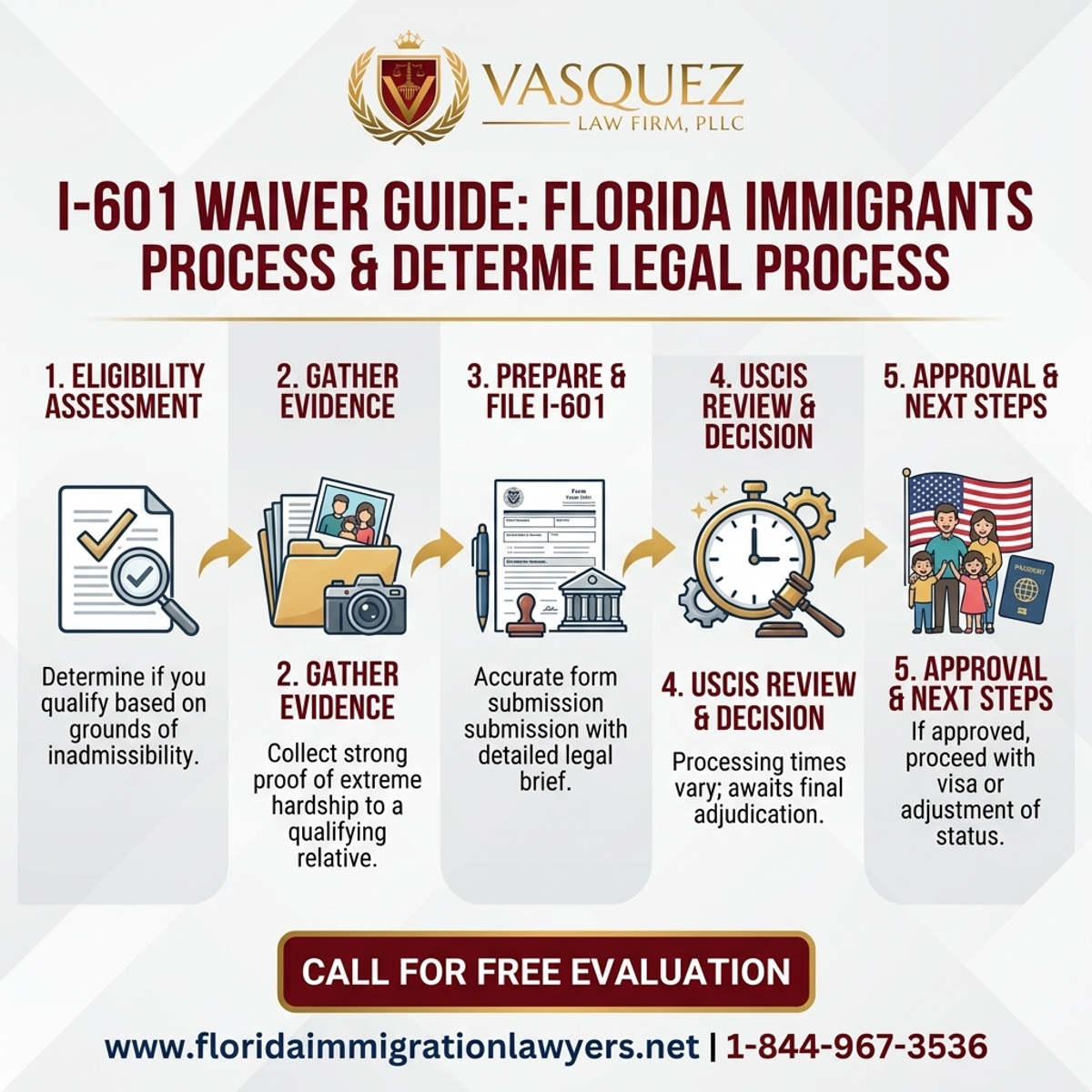
Key Statistics — I-601 Waiver Guide for Florida Immigrants
Cost Factors and Fee Breakdown
The filing fee for Form I-601 is subject to change, so it’s important to check the latest fee schedule on the USCIS website. Additional costs may include legal fees if you choose to hire an attorney to assist with the application process.
Consider the value of professional assistance, especially if your case involves complex issues of inadmissibility or if you require help gathering sufficient evidence of hardship.
Common Mistakes to Avoid
- Failing to provide sufficient evidence of hardship, which can result in denial.
- Incorrectly completing the I-601 form, leading to processing delays.
- Omitting necessary documentation, such as proof of relationship to the qualifying relative.
- Missing deadlines for submitting additional requested information.
- Not keeping copies of all submitted documents, which can be crucial for follow-ups.
- Underestimating the importance of legal advice, especially for complex cases.
- Providing inconsistent information that contradicts previous applications or records.
- Attempting to navigate the process without understanding USCIS requirements.
When to Call a Lawyer
Consider contacting an immigration lawyer if you face complex inadmissibility issues or if English is not your first language. A lawyer can provide invaluable assistance in understanding the nuances of your case, preparing a robust application, and ensuring all documentation is properly completed and submitted.
Florida Immigration Lawyers offer expert guidance tailored to residents of Coral Springs and throughout Florida. Contact us for a personalized consultation.
About Florida Immigration Lawyers
Florida Immigration Lawyers is dedicated to providing comprehensive immigration assistance across Florida, including Coral Springs. Our experienced team is available 24/7, offering free consultations to help you navigate your immigration journey. Contact us at 1-844-967-3536 or visit our website for more information.
Sources and References
- U.S. Citizenship and Immigration Services (USCIS)
- Executive Office for Immigration Review (EOIR)
- 8 U.S.C. Chapter 12 - Immigration and Nationality Act
Related services: immigration practice areas, family immigration services, citizenship and naturalization, deportation defense.
This article provides general legal information and is not intended as legal advice. Every case is unique, and outcomes depend on specific facts and circumstances. Contact an attorney for advice about your particular situation.
For assistance with your I-601 waiver or any immigration needs, contact Florida Immigration Lawyers at 1-844-967-3536. Se Habla Espanol - Estamos aqui para ayudarle.
If you need legal assistance, learn more about learn about our immigration practice, or call us at 1-844-967-3536 for a free consultation.
Do Not Navigate This Process Alone
Our experienced immigration attorneys are ready to fight for you. Get a free, confidential consultation today.
Se Habla Español
Frequently Asked Questions
Florida Immigration Lawyers
Immigration Attorney | Founder, Vasquez Law Firm
U.S. Air Force veteran and immigration attorney with thousands of cases resolved. J.D., NCCU School of Law. AILA member. Admitted to the 4th, 5th, and 11th Circuit Courts.
Available 24/7 - Free Evaluations
Related Legal Services
Our Florida immigration attorneys can help you with asylum protection, deportation defense and citizenship and naturalization. Call today at 1-844-967-3536 for a free consultation.
Related Links
Related Topics
Free Legal Consultation
Discuss your case with our experienced attorneys. We're available 24/7.
Se Habla Español - Estamos aquí para ayudarle.
Related Articles
Understanding U Visa Certification in Florida | VLF Florida
Explore the process of U visa certification in Florida, focusing on law enforcement's role and how it aids crime victims. Contact Florida Immigration Lawyers for guidance.
Immigration Services in Jacksonville, Florida | VLF Florida
Navigating immigration services in Jacksonville, Florida, requires understanding visa processes and legal guidance. Explore our comprehensive guide for expert insights.
Dual Citizenship in Florida: A Comprehensive Guide
Explore the advantages and process of obtaining dual citizenship in Florida. Learn about the naturalization process, common pitfalls to avoid, and when to seek legal assistance. Contact Florida Immigration Lawyers for expert guidance.
Immigration Attorney in Orlando, Florida: Your Guide
Finding the right immigration attorney in Orlando, Florida, can significantly impact your immigration journey. Learn about the services available and how to choose the best legal help for your needs. Call Florida Immigration Lawyers at 1-844-967-3536 for a free consultation.