Dual Citizenship in Florida: What You Need to Know
Explore dual citizenship in Florida, understand the process, and learn how to apply. Discover the benefits and complexities involved with having two passports and navigating immigration laws. Call Florida Immigration Lawyers for expert guidance.

Dual citizenship allows individuals to be citizens of two countries simultaneously. In Florida, many seek this status to enjoy the benefits and responsibilities that come with two passports. Key takeaways include:
- Eligibility varies by country of origin.
- U.S. citizens must comply with both countries' laws.
- Naturalization may impact your current citizenship status.
Introduction
Imagine living in the vibrant city of St. Petersburg, Florida, with the freedom and flexibility dual citizenship offers. Whether you’re an immigrant dreaming of becoming a U.S. citizen or a current American exploring citizenship elsewhere, understanding the process can be daunting. This article delves into dual citizenship, focusing on Florida’s unique immigration landscape. Call Florida Immigration Lawyers at 1-844-967-3536 for a free consultation.
Florida, known for its diverse population and strong international ties, is a hub for individuals seeking to maintain connections with their homelands while embracing life in the United States. Dual citizenship provides a bridge between these two worlds, offering numerous advantages from enhanced travel capabilities to strengthened family and business relationships across borders.
Navigating the intricate web of international and U.S. immigration laws requires careful attention to detail and a clear understanding of the requirements of all countries involved. This guide will break down the essential steps, considerations, and potential pitfalls for those pursuing dual nationality in the Sunshine State, ensuring you are well-prepared for your journey.
What is Dual Citizenship and How Does It Work?
Dual citizenship, or dual nationality, involves holding citizenship in two countries simultaneously. As of 2026, the U.S. allows dual citizenship, but the process can be complex.
To hold dual citizenship, you must comply with the laws of both countries. In many cases, becoming a U.S. citizen does not require renouncing your original citizenship, but this depends on the other country's laws. For example, some countries require renunciation of previous citizenship upon naturalization in the U.S.
Understanding your own country's stance on dual citizenship is crucial. You may need to consult a legal expert to navigate these waters, ensuring full compliance with all legal requirements.
The U.S. generally does not require individuals to renounce their prior citizenship when they naturalize, operating under the principle that renunciation must be a voluntary and intentional act. However, this U.S. policy does not dictate the laws of other nations. For instance, countries like Japan or India typically do not permit dual nationality, meaning that if you naturalize as a U.S. citizen, you may automatically lose your citizenship in those countries.
The benefits of dual citizenship are extensive, including the ability to live, work, and own property in both countries without needing a visa, easier international travel with two passports, and the right to vote and hold public office in both nations (subject to local laws). It also provides a sense of belonging and continuity for individuals with deep roots in more than one country. However, it also comes with responsibilities, such as potential tax obligations in both jurisdictions and military service requirements.
Before embarking on the U.S. naturalization process, it is highly advisable to research the citizenship laws of your country of origin thoroughly. A consultation with an immigration attorney at Florida Immigration Lawyers can help clarify these international legal nuances and provide tailored advice based on your specific circumstances, ensuring you make informed decisions.
How to Apply for Dual Citizenship in Florida?
Applying for dual citizenship in Florida involves multiple steps, primarily through the U.S. naturalization process.
- Determine Eligibility: Verify eligibility based on residency, age, and language proficiency.
- File Form N-400: Submit the Application for Naturalization to the USCIS.
- Attend Biometrics Appointment: Provide fingerprints and photos for security checks.
- Complete the Citizenship Interview: Demonstrate knowledge of U.S. history and government.
- Take the Oath of Allegiance: Finalize your citizenship status in a ceremony.
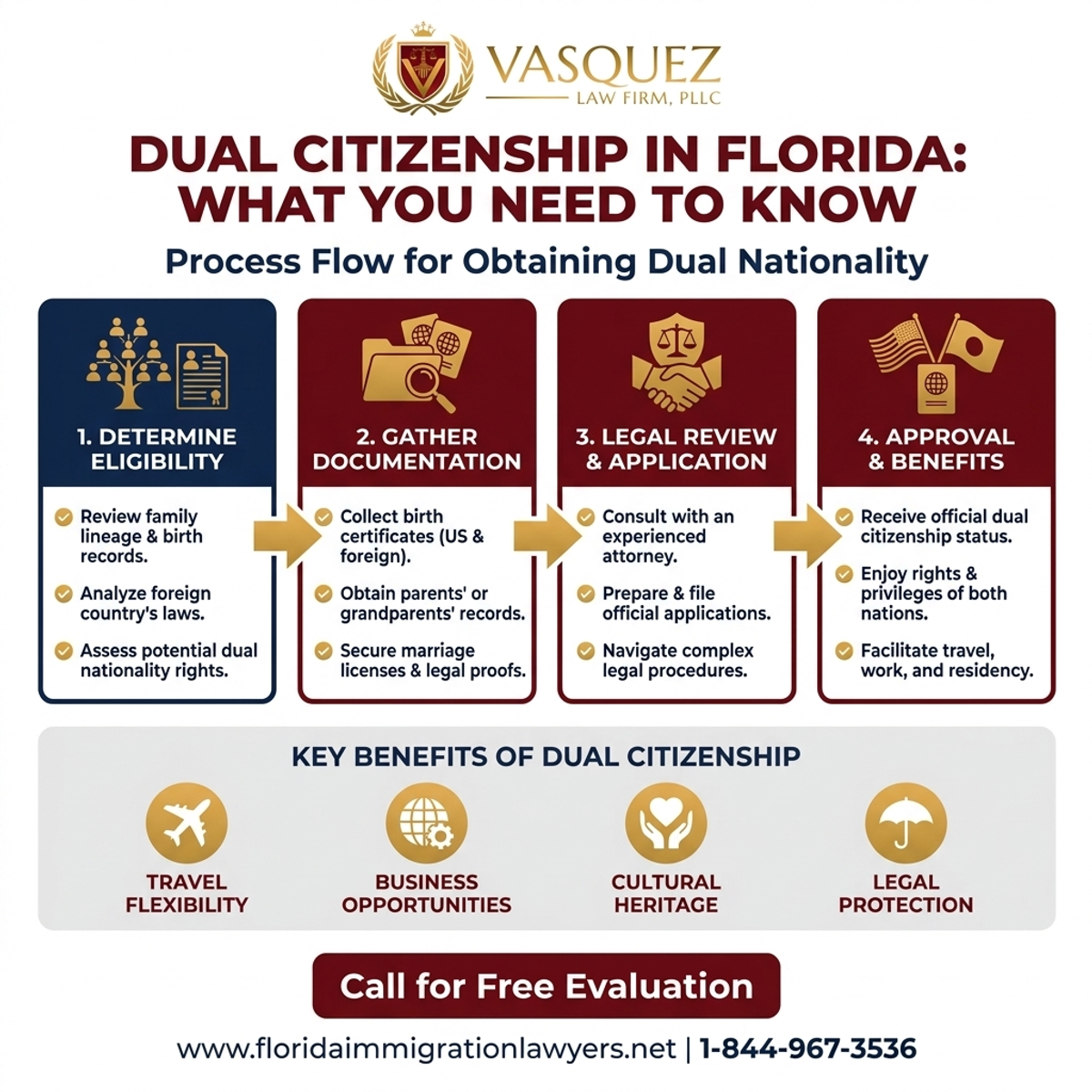
Step-by-Step Process — Dual Citizenship in Florida: What You Need to Know
Each step involves specific documentation and fees. As of 2026, the naturalization process takes several months, depending on individual circumstances and USCIS workload.
To elaborate on eligibility, you must generally be at least 18 years old, be a lawful permanent resident (Green Card holder) for a specified period (typically five years, or three years if married to a U.S. citizen), demonstrate continuous residence and physical presence in the U.S., show good moral character, and pass English and civics tests. For instance, if you've been a Green Card holder in Florida for four years and are married to a U.S. citizen, you might be eligible to apply a year earlier than the standard five-year requirement.
The Form N-400 is the cornerstone of your application. It’s a detailed document that requires accurate historical information about your residency, employment, travel, and moral character. Any discrepancies or omissions can lead to delays or even denial. Following its submission, the biometrics appointment is crucial for background checks and security clearances, where your fingerprints, photograph, and signature are collected. This step ensures national security and verifies your identity.
The citizenship interview is a pivotal moment where a USCIS officer will review your N-400 application, test your English proficiency (reading, writing, and speaking), and assess your knowledge of U.S. history and government. Proper preparation for this interview, including studying U.S. civics and practicing English, is vital for success. Finally, the Oath of Allegiance ceremony formally concludes your journey to U.S. citizenship, where you pledge loyalty to the United States. Florida Immigration Lawyers can provide comprehensive support throughout each of these stages, from preparing your N-400 to coaching you for your interview, making the process as smooth as possible. Call 1-844-967-3536 for assistance.
Document Checklist for Dual Citizenship Applications
- Valid passport from your home country
- Permanent Resident Card (Green Card)
- Form N-400 receipt notice
- Two passport-style photographs
- Tax documents and proof of residency
- Birth certificate and identification documents
It's essential to ensure all documents are accurate and complete to avoid delays or rejections.
Beyond the primary documents, you may also need marriage certificates, divorce decrees, military records, or court documents if applicable to your personal history. For any documents not in English, certified translations are mandatory. For example, if your birth certificate is in Spanish, you’ll need an accompanying English translation certified by a competent translator. Always make sure to keep original documents safe and only submit copies unless specifically requested otherwise by USCIS.
A common pitfall is submitting expired identification or incomplete tax records. USCIS requires proof of continuous good moral character, which includes demonstrating that you have filed your taxes correctly and on time. Gathering all necessary documentation can be time-consuming, so starting early is a practical tip. Florida Immigration Lawyers can help you compile a comprehensive and accurate document package, reducing the risk of RFEs (Requests for Evidence) or denials due to administrative errors.
Timeline and Processing Expectations
| Stage | Typical Timeframe | Notes |
|---|---|---|
| Eligibility Verification | 1-2 months | Depends on personal documentation |
| Form N-400 Processing | 6-12 months | Varies by USCIS workload |
| Biometrics Appointment | 1-2 months | Scheduled post-application |
| Interview and Tests | 3-5 months | Preparation is key |
| Oath Ceremony | 1-2 months | Final step in the process |
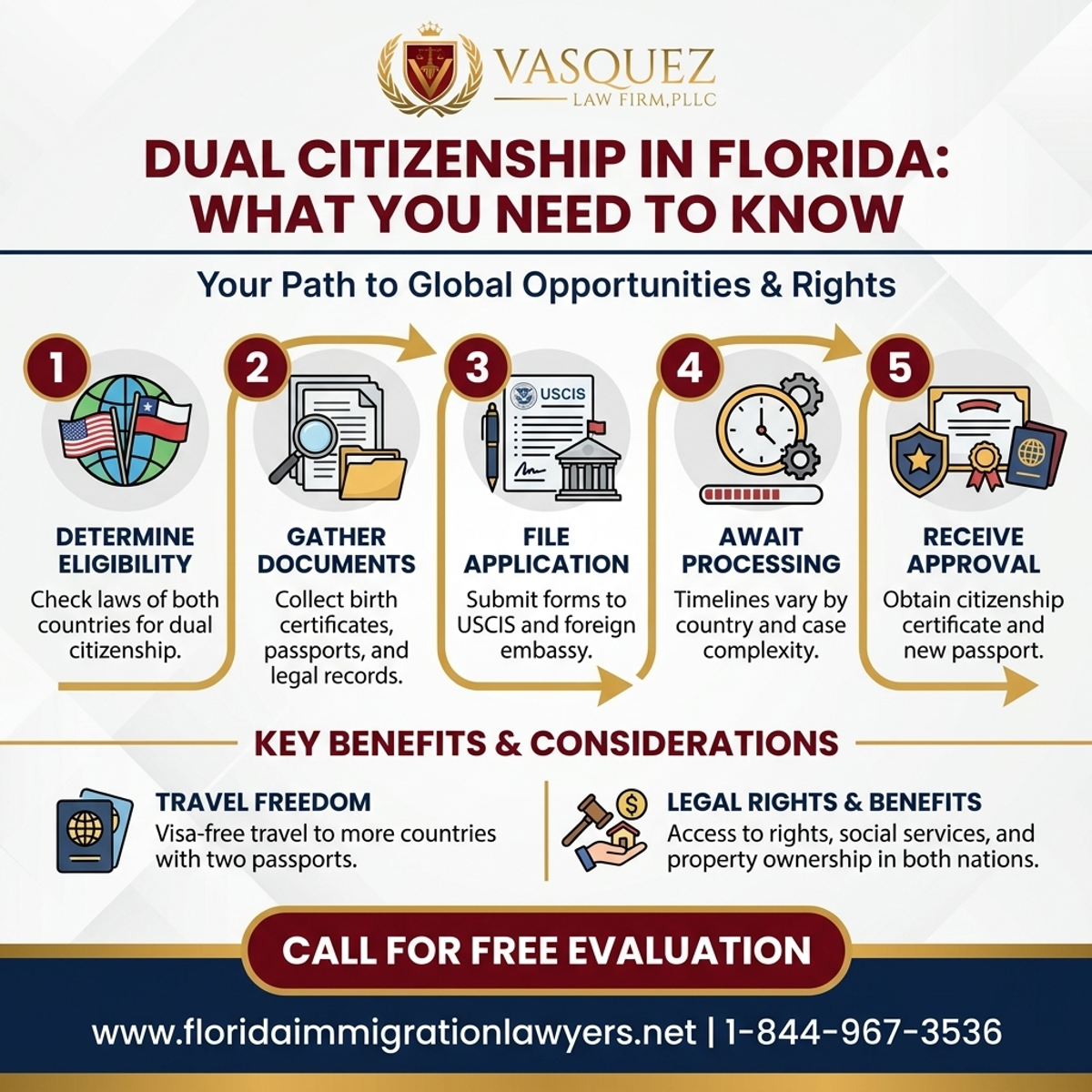
Key Statistics — Dual Citizenship in Florida: What You Need to Know
The processing times listed above are estimates and can fluctuate significantly based on various factors, including the specific USCIS field office handling your case, the volume of applications, and any complexities in your individual background. For example, a simple case with no travel history issues or criminal record will likely proceed faster than one requiring additional evidence or an interview reschedule.
It's important to monitor your application status online via the USCIS website using your receipt number. While patience is a virtue in immigration processes, excessive delays or unexpected requests for evidence should prompt a review of your case with an experienced legal professional. Florida Immigration Lawyers can help track your application, respond to USCIS inquiries, and intervene if your case deviates from typical processing times, ensuring your journey to dual citizenship remains on track.
Cost Factors and Fee Breakdown
| Item | Typical Fee | Notes |
|---|---|---|
| Form N-400 | Subject to change | Check USCIS for updates |
| Biometrics | Subject to change | Required for security checks |
| Passport Fees | Varies | Depends on the country |
The costs associated with dual citizenship can add up, so budgeting is important.
Beyond the direct USCIS application and biometrics fees, which are subject to periodic adjustments, applicants should budget for other potential expenses. These can include fees for obtaining certified copies of documents, professional translation services for foreign-language documents, and travel expenses for appointments at USCIS offices or for the oath ceremony. For example, if you reside in a remote part of Florida, travel to a USCIS field office in Orlando or Miami could incur significant costs.
Additionally, legal fees for immigration attorneys are a crucial investment, though they vary based on the complexity of the case and the services provided. While not mandatory, legal representation can significantly reduce stress, prevent costly errors, and expedite the process, often saving money in the long run by avoiding delays or rejections. Florida Immigration Lawyers offers transparent fee structures and can discuss payment options during your free consultation at 1-844-967-3536.
Do not navigate this process alone. Contact Florida Immigration Lawyers today.
Common Mistakes to Avoid
- Not Checking Dual Citizenship Legality: Some countries do not allow dual citizenship.
- Incorrect Documentation: Missing or incorrect documents can delay your application.
- Missing Deadlines: Failing to attend appointments or submit documents on time can lead to denial.
- Ignoring Tax Implications: Dual citizens must comply with tax laws in both countries.
- Neglecting Language Requirements: Insufficient language skills can hinder naturalization.
- Overlooking Legal Changes: Immigration laws change frequently; stay informed.
- DIY Approach: Complex cases benefit from professional legal advice.
Expanding on these common pitfalls, failing to verify the legality of dual citizenship in your country of origin can lead to unexpected loss of your original nationality – a significant outcome that many applicants wish to avoid. For example, some European countries have specific rules about how and when their citizens can acquire a second nationality. Incorrect or incomplete documentation, such as submitting an outdated Green Card copy or missing a required affidavit, is a leading cause of RFEs, which add months to processing times. Always double-check every form and supporting document.
Missing deadlines for appointments or failing to respond to USCIS requests for evidence within the specified timeframe can result in the abandonment or denial of your application, forcing you to restart the entire process and incur additional fees. The tax implications are also critical: U.S. citizens and Green Card holders, including dual citizens, are generally required to report their worldwide income to the IRS, and there are specific forms like FBAR (Report of Foreign Bank and Financial Accounts) that must be filed annually if you hold foreign accounts above a certain threshold. Neglecting these can lead to severe penalties.
Furthermore, underestimating the English and civics requirements for the naturalization interview is a frequent mistake. While the tests are not designed to be overly difficult, they require preparation. Finally, immigration laws are dynamic; what was true last year might not be true today. Relying solely on outdated information or attempting a complex case without legal guidance can lead to irreversible errors. Consulting with Florida Immigration Lawyers ensures you are fully informed and prepared for every aspect of your dual citizenship journey.
When to Call a Lawyer
If you encounter legal issues or uncertainties during your application, consulting an immigration lawyer is crucial. Specific scenarios include:
- Complex family situations
- Criminal records
- Previous immigration violations
Florida Immigration Lawyers are here to guide you through the complexities of dual citizenship. Our team is ready to help you navigate the process efficiently. Call us today!
Beyond the listed scenarios, there are several other critical situations where legal counsel becomes indispensable. If you have had any arrests, even if charges were dropped or expunged, it's vital to discuss this with an attorney before filing your N-400, as USCIS has stringent good moral character requirements. Similarly, if you have spent significant time outside the U.S. after becoming a permanent resident, it could impact your continuous residency requirement, necessitating expert advice.
You should also consider contacting an attorney if your application has been pending for an unusually long time, if you receive a Notice of Intent to Deny (NOID), or if you are unsure about the specific dual citizenship laws of your country of origin. An attorney from Florida Immigration Lawyers can provide clarity on these complex issues, represent you in USCIS interviews, and advocate on your behalf, significantly increasing your chances of a successful outcome. Don't risk your future by attempting to navigate these challenges alone; proactive legal support is key. Call 1-844-967-3536 for a free consultation.
About Florida Immigration Lawyers
Florida Immigration Lawyers is dedicated to providing top-notch legal services for all immigration needs. Our experienced attorneys offer personalized consultations, ensuring you receive the best guidance for your case. Call us at 1-844-967-3536 or visit our website for more information. Available 24/7, we proudly serve all of Florida, with services in English and Spanish.
Our team understands that every immigration journey is unique and deeply personal. We pride ourselves on a client-centric approach, offering compassionate yet rigorous legal representation. From the initial eligibility assessment to the final oath ceremony, we stand by our clients, demystifying the legal jargon and streamlining the application process. Our attorneys stay abreast of the latest changes in immigration law, ensuring that our advice is always current and strategically sound.
With a strong presence across Florida, we are committed to serving the diverse communities that make up our state. Our bilingual services in English and Spanish ensure that language is never a barrier to accessing quality legal assistance. Whether you are seeking dual citizenship to maintain cultural ties, expand business opportunities, or unite your family across borders, Florida Immigration Lawyers is your trusted partner, dedicated to achieving your immigration goals with integrity and expertise.
Sources and References
- U.S. Citizenship and Immigration Services (USCIS)
- Executive Office for Immigration Review (EOIR)
- U.S. State Department
- 8 U.S.C. Chapter 12 - Immigration and Nationality Act
Related services: citizenship test preparation, dual citizenship guidance, family-based immigration.
This article provides general legal information and is not intended as legal advice. Every case is unique, and outcomes depend on specific facts and circumstances. Contact an attorney for advice about your particular situation.
Conclusion
In conclusion, dual citizenship can be a profoundly rewarding opportunity, offering enhanced freedom, flexibility, and a deeper connection to multiple cultures and nations. However, it is a process fraught with legal complexities, requiring meticulous planning, accurate documentation, and a thorough understanding of both U.S. and foreign laws. The journey from application to oath can be lengthy and challenging, but with the right guidance, it is entirely achievable.
Navigating these intricate pathways alone can lead to costly errors, delays, or even denials. To ensure a smooth and successful application for dual citizenship in Florida, don't hesitate to seek professional legal guidance. Florida Immigration Lawyers stands ready to provide the expert assistance you need, offering personalized consultations and dedicated support every step of the way. Call us at 1-844-967-3536 for a free consultation. Se Habla Español - Estamos aquí para ayudarle.
If you need legal assistance, learn more about get citizenship help today, or call us at 1-844-967-3536 for a free consultation.
Do Not Navigate This Process Alone
Our experienced immigration attorneys are ready to fight for you. Get a free, confidential consultation today.
Se Habla Español
Frequently Asked Questions
Harold Estrada-Rodriguez
Florida Immigration Attorney · FL Bar No. 1041171
Florida Bar attorney handling Florida-jurisdiction immigration matters. Bilingual representation, free consultations.
Available 24/7 - Free Evaluations
Related Legal Services
Our Florida immigration attorneys can help you with business immigration, asylum protection and deportation defense. Call today at 1-844-967-3536 for a free consultation.
Related Links
Related Topics
Free Legal Consultation
Discuss your case with our experienced attorneys. We're available 24/7.
Se Habla Español - Estamos aquí para ayudarle.
Related Articles
Understanding the Child Status Protection Act in Florida
Worried about your child aging out of their immigration status in Florida? Discover how the Child Status Protection Act (CSPA) can help safeguard their future. Call Florida Immigration Lawyers at 1-844-967-3536 for expert guidance.
Protect Yourself from Immigration Scams in Florida
Immigration scams are a serious issue in Florida, particularly in areas like Hollywood. Learn how to identify and avoid scams such as notario fraud. Stay informed and seek legal help when necessary. Call Florida Immigration Lawyers for a free consultation.
H-4 EAD Spouse Work Permit Rules in Florida | VLF Florida
Discover how the H-4 EAD can empower spouses of H-1B visa holders in Florida to work legally. Our detailed guide covers eligibility, application process, and common pitfalls. Call Florida Immigration Lawyers for personalized assistance.
U Visa Immigration Relief for Crime Victims in Florida
U Visa provides a crucial pathway to legal status for crime victims in Florida. Learn about eligibility, application steps, and common pitfalls to avoid. Contact Florida Immigration Lawyers for expert guidance and a free consultation.
