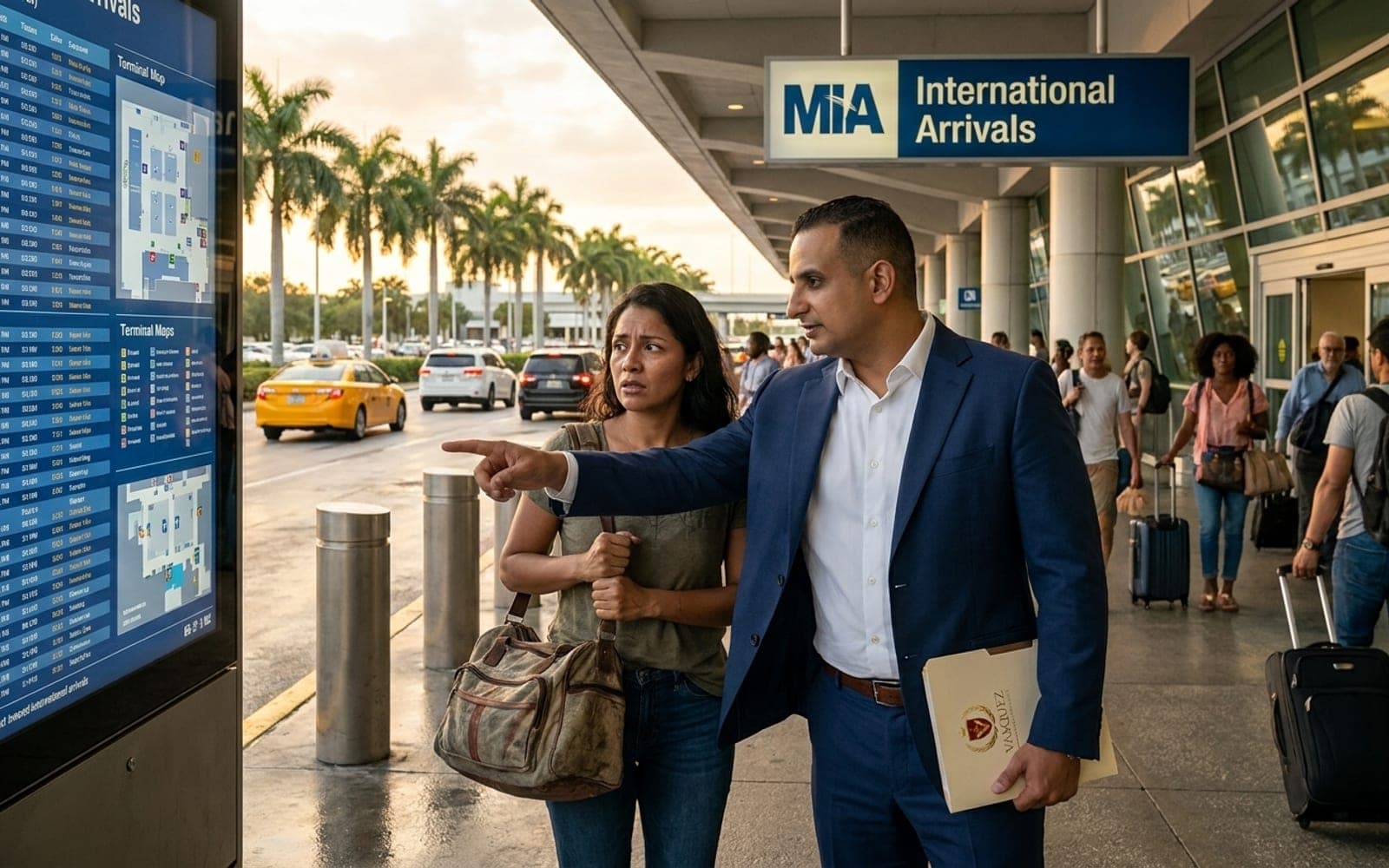
For Tampa-area residents who fear returning home or already have a court case, the first weeks matter. Asylum protects people who suffered persecution, or have a well-founded fear of it, based on race, religion, nationality, political opinion or membership in a particular social group. A good asylum attorney helps you meet deadlines, gather evidence and present your story clearly. Vasquez Law Firm serves Hillsborough County from its Orlando office, by secure video and phone, in English and Spanish, with in-person meetings held in Orlando.
- Asylum covers persecution or well-founded fear tied to five protected grounds.
- An attorney helps with deadlines, evidence and presenting your account clearly.
- Tampa-area clients are served by video and phone, with in-person meetings in Orlando.
- Consultations are available in English and Spanish for Tampa-area clients.
Introduction
If you fear returning to your home country, or you already have a case in immigration court, the decisions you make in the first weeks can shape the rest of your case. This guide explains asylum and removal defense for Tampa-area residents, and what an asylum attorney in Tampa should help you do: meet deadlines, build evidence and present your story clearly. To talk about your situation, call 1-844-YO-PELEO or contact us.
Vasquez Law Firm represents people across Hillsborough County from our Orlando office, by secure video and phone, in English and Spanish. We do not have an office in Tampa, and we say so plainly so that you know what to expect: most of the work can be done remotely, and in-person meetings take place in Orlando.
This article is general information, not legal advice. Asylum law and court procedures change, and every case depends on its own facts, so you should speak with a licensed immigration lawyer about your situation before you file or respond to a court notice.
Immigration Help for Tampa Residents
Tampa Bay is home to families from Venezuela, Cuba, Colombia, Honduras and many other countries, and the area includes mixed-status households in which one person may have a pending application and another may be in court. People searching for an asylum lawyer, a Tampa asylum attorney or a removal defense lawyer in Tampa are usually asking three practical questions: what protection is available, what evidence is missing, and what deadlines apply.
Who Can Qualify for Asylum
Asylum protects people who have suffered persecution, or have a well-founded fear of future persecution, because of their race, religion, nationality, political opinion, or membership in a particular social group. The harm must generally come from the government or from people the government is unable or unwilling to control. Fear of general crime or economic hardship, by itself, usually is not enough, though the facts of each case matter.
Several rules can block asylum, including the requirement to apply within one year of the last arrival in the United States, with limited exceptions for changed or extraordinary circumstances. Certain criminal convictions, persecution of others, and permanent resettlement in another country can also be bars. Anyone looking for an asylum lawyer in Tampa should raise these issues at the first meeting, because some of them can only be addressed if they are identified early.
Related Protections: Withholding and the Convention Against Torture
When asylum is not available, for example because the one-year deadline passed, other protections may still apply. Withholding of removal requires showing that persecution is more likely than not, a higher standard than asylum, and it does not lead to a green card or allow family members to be included. Protection under the Convention Against Torture covers people likely to be tortured with government involvement or acquiescence. A Tampa asylum lawyer will usually evaluate all three forms of protection together so that no option is overlooked.
Affirmative Versus Defensive Asylum
There are two main ways to request asylum, and the route depends on whether you are already in removal proceedings.
- Affirmative asylum. A person not in removal proceedings files Form I-589 with USCIS and attends an interview with an asylum officer. If the officer does not grant the case, it may be referred to immigration court.
- Defensive asylum. A person already in removal proceedings files the I-589 with the immigration court, and an immigration judge decides the case after a hearing.
Each route has different procedures and evidence expectations. A Tampa asylum attorney prepares the written declaration, gathers country conditions reports, identifies witnesses, and gets the applicant ready for detailed questioning. In a defensive case, a government attorney may cross-examine you, so preparation for that exchange matters.
After an asylum application has been pending for a period set by regulation, applicants may be able to request a work permit. The rules for that have changed over time, so we check the current requirements before advising anyone on when to file.
How the Asylum Process Works for Tampa Clients
The details differ by case, but most asylum matters follow a pattern. Your lawyer will adapt the steps to your arrival date, your history and whether a Notice to Appear has been issued.
- Intake and timeline. Your lawyer reviews your entry date, your documents and what happened, and checks the one-year deadline.
- Declaration and evidence. You prepare a detailed statement in your own words, and the team collects identity papers, records, witness statements and country conditions reports.
- Filing. Form I-589 is filed with USCIS or with the immigration court, depending on your situation.
- Interview or master calendar hearing. Affirmative cases are scheduled for an asylum interview, and court cases begin with a short hearing before a judge.
- Preparation for testimony. You practice answering questions, review your earlier statements and prepare any witnesses.
- Decision and next steps. The officer or judge decides, and if the case is denied there may be a short deadline to appeal.
Family members matter in an asylum case. In general, a spouse and unmarried children under 21 who are in the United States can be included in the application, and children who are outside the country may be addressed through separate procedures. Whether to include a family member depends on their own history and on whether they have a separate claim, so it should be discussed early. A lawyer can also explain what a grant of asylum may allow later, such as applying for work authorization and, if eligible, permanent residence, without promising any outcome in your case.
Removal Defense for Tampa Bay Residents
Many asylum cases begin, or end up, in immigration court. A removal defense lawyer in Tampa handles the full court process: reviewing the Notice to Appear, responding to the charges at a master calendar hearing, filing applications for relief, and presenting the case at the individual hearing. If a judge denies the case, there is generally a short deadline to appeal to the Board of Immigration Appeals.
A deportation defense lawyer also looks beyond asylum. Depending on the person's history, other forms of relief may include cancellation of removal, adjustment of status through a family member, waivers, or voluntary departure. When someone is detained, a deportation defense attorney can request a bond hearing if the person is eligible. Learn more on our deportation defense page.
If you started searching for a deportation lawyer because a relative just received a hearing notice, focus on three questions: what relief is available, what evidence is missing, and what deadlines apply. People also ask whether they must travel to court for every hearing. Immigration court hearings may be held in person or by video, depending on the court and the judge, and your lawyer will explain how your hearings are scheduled. Never skip a hearing, because a missed hearing can result in an order of removal.
How We Work With Tampa Clients
We do not have an office in Tampa. Our only office is at 1111 E Amelia Street in Orlando, and we serve Tampa Bay clients through secure video, phone calls, document uploads, and in-person meetings in Orlando. Many clients prefer the first consultation by video from home, which avoids a long drive and fits around work and school. We explain every step and every deadline in English or Spanish.
For hearings and interviews, we confirm the location and format named on your notice and prepare you beforehand. If you are in a different part of the Tampa Bay area from where your court or asylum office is located, the notice controls, and your lawyer will check it with you. Read about our asylum services.
Communities Around Tampa
Families from Venezuela, Cuba, Colombia, Honduras and other countries live in the neighborhoods west of downtown, including Town 'n' Country and West Tampa. Clients in Brandon and Riverview often have family members with separate cases, such as a spouse in court and a child with a pending application. We review each file and look for ways to coordinate strategy within the family. From Plant City to Sun City Center, anyone in Hillsborough County can work with us the same way: by phone, by video, and in person at our Orlando office.
Document Checklist for an Asylum Consultation
- Passport, national ID, and any travel documents, plus your I-94 record if you have one
- Any Notice to Appear, hearing notices, or prior USCIS filings
- Evidence of the harm or threats you faced: police reports, medical records, photos, messages, or letters
- Names and contact details of people who witnessed what happened
- Documents showing your membership in any group, party or religious community involved in your claim
- Records of any arrest, anywhere, and the final court outcome
- Birth and marriage certificates for family members you may want to include
Do not worry if you cannot collect everything at once. Part of our work is identifying what can be obtained safely and what can be explained. If gathering a document would put someone at risk, tell your lawyer before you try.
Timeline and Processing Expectations
Asylum timelines vary widely. Affirmative cases depend on the asylum office, and court cases depend on the immigration judge's calendar and whether the person is detained. USCIS and the immigration courts publish current information, and we do not quote times here because they change. Plan for the process to take some time, and use the waiting period to gather evidence and keep your contact information current with USCIS and the court.
The table below shows the general stages of an asylum or removal defense case and who acts at each one. Your case may skip some stages or add others.
| Stage | What happens | Who acts |
|---|
| Consultation | Review of deadlines, history and available protection | Applicant and lawyer |
| Filing | Form I-589 and evidence are submitted | Lawyer, with USCIS or the court |
| Interview or master calendar hearing | Interview with an officer or first hearing before a judge | Applicant, lawyer, officer or judge |
| Evidence deadlines | Declarations, witnesses and reports are filed | Applicant and lawyer |
| Individual hearing | Testimony and cross-examination before the judge | Applicant, DHS attorney and judge |
| Decision and appeal | Decision issued, with a short deadline to appeal | Judge, then the Board of Immigration Appeals |
If You Have Received a Notice to Appear
A Notice to Appear is the document that starts removal proceedings, and it lists the charges and often the date and place of the first hearing. Do not ignore it. Read it carefully, keep the original, and bring it to a lawyer as soon as possible. Check that your address on file with the court is current, because hearing notices are mailed to that address.
A lawyer reviews whether the charges are correct, whether the notice was properly issued and what relief may be available. Do not sign documents you do not understand, and do not rely on someone who is not a licensed attorney. Anyone who promises a specific result or asks you to add facts that did not happen should be avoided.
Cost Factors and Fee Breakdown
The costs of an asylum or removal defense case depend on the forum, the evidence needed and the length of the case.
| Item | Amount | Notes |
|---|
| Form I-589 filing | Check USCIS for the current fee | Fee rules for asylum applications have changed, so confirm them before filing |
| Immigration court filings | Check the court or agency for current fees | Depends on the application and the forum |
| Translations and records | Varies by case | All foreign-language documents need English translations |
| Medical or psychological evaluations | Varies by case | Only used when they help the claim |
| Attorney fees | Varies by case | Discussed at the consultation |
Government fee rules for asylum applications and related requests have changed over time, so confirm the current rule on the USCIS or court website, or have your lawyer confirm it, before you pay. Filing the wrong amount can cause a rejection and put your deadline at risk.
Attorney fees depend on whether the case is affirmative or in court, how many hearings are expected, and how much evidence must be gathered. Ask for a clear explanation of what is included and what is billed separately.
Common Mistakes to Avoid
- Waiting past the one-year filing deadline without checking whether an exception applies
- Giving a declaration that differs from earlier statements, such as those made at the border
- Missing a hearing or failing to update your address with the court
- Paying a notary, travel agent or unlicensed office for immigration advice
- Exaggerating or inventing details, which can damage credibility
- Submitting foreign-language documents without complete English translations
- Ignoring withholding of removal and Convention Against Torture protection when asylum is unavailable
When to Call a Lawyer
Call a lawyer as soon as you are afraid to return to your home country, especially if you arrived less than a year ago, and immediately if you have a Notice to Appear, a hearing date or a detained family member. Early advice can protect a filing deadline, preserve evidence and make sure that every form of protection is considered before the first hearing.
About Vasquez Law Firm
Vasquez Law Firm practices immigration law only. Our only office is at 1111 E Amelia Street in Orlando, Florida. We serve clients throughout Florida by phone and secure video, and we meet in person at the Orlando office. William J. Vásquez is the founding attorney, and consultations are offered in English and Spanish. We have no office in Tampa and serve Tampa Bay clients by phone and video. To talk about your situation, call 1-844-YO-PELEO or visit our contact page.
Sources and References
Related services: deportation defense in Florida, immigration lawyers in Florida
Other ways people search for this
People look for this help under different names. Related searches include best immigration attorney tampa; asylum lawyer tampa; asylum lawyer riverview; asylum lawyer brandon; asylum lawyer hillsborough county; asylum lawyer town n country; deportation defense lawyer tampa; deportation immigration lawyer tampa; deportation defense attorney tampa; immigration deportation lawyer tampa; removal defense lawyer tampa; deportation lawyer tampa; removal defense law firm tampa.
This article is general information, not legal advice. Every case is different; speak with an immigration lawyer about your situation.