USCIS Processing Times Florida 2026: Your Essential
For Florida residents, understanding USCIS processing times in 2026 is vital for immigration planning. This guide from Florida Immigration Lawyers provides comprehensive insights into what influences wait times for common forms like I-130, I-485, and N-400, especially for communities like Hialeah. Learn how to track your case, avoid common mistakes, and navigate the complexities of the immigration system. We cover essential document checklists, cost factors, and when to seek legal counsel to ensure a smoother process. Call Florida Immigration Lawyers at 1-844-967-3536 for a free consultation and personalized guidance.

USCIS processing times in Florida for 2026 vary significantly based on the form type, service center, and individual case complexities. While some applications like I-765 employment authorizations might process faster, family-based petitions (I-130) and adjustment of status (I-485) generally have longer wait times, often extending over a year. Factors like case volume, staffing, and policy changes all influence these timelines. Staying informed and preparing a thorough application are crucial.
- USCIS processing times Florida 2026 are highly variable by form and office.
- Family-based petitions and adjustment of status typically involve longer waits.
- Hialeah and other Florida residents should monitor official USCIS updates.
- Thorough application preparation can help avoid delays.
- Consult an immigration lawyer for personalized guidance on your specific case.
Navigating the complex world of U.S. immigration can be a daunting experience, especially when you are eagerly awaiting a decision on your application. For many individuals and families across Florida, understanding USCIS processing times Florida 2026 is a critical concern. You might be wondering how long it will take for your petition to be approved, or what factors could impact your wait.
This comprehensive guide from Florida Immigration Lawyers aims to demystify the current landscape of USCIS processing times for those living in Florida, including communities like Hialeah. We will explore what influences these timelines, how you can track your case, and what to expect in the coming year. Our goal is to provide you with clear, actionable information to help you navigate your immigration journey with greater confidence. Do not face this process alone. Call Florida Immigration Lawyers at 1-844-967-3536 for a free consultation to discuss your specific situation.
Understanding USCIS Processing Times in Florida for 2026
Immigrating to the United States involves several steps, each with its own set of requirements and processing periods. For those residing in Florida, including vibrant areas like Hialeah, understanding the current USCIS processing times Florida 2026 is essential for planning your future. These times are not static; they fluctuate based on many factors.
The U.S. Citizenship and Immigration Services (USCIS) is the federal agency responsible for administering the nation's lawful immigration system. They process a vast array of applications and petitions, from Green Cards to citizenship applications. Each application type has its own unique processing pipeline and associated wait times.
What Are USCIS Processing Times?
USCIS processing times refer to the period it takes for the agency to process a particular form from the date of receipt to the date of adjudication. These times are estimates and can vary significantly. They are generally published on the USCIS website and updated regularly to reflect current operational capacities.
For individuals in Florida, these processing times directly impact their lives, affecting everything from employment eligibility to family reunification. Keeping track of these estimates can help set realistic expectations. However, it is important to remember that these are averages and individual cases may differ.
Why Do Processing Times Vary So Much?
Several critical factors contribute to the variability of USCIS processing times Florida 2026. These include the volume of applications received, the staffing levels at specific service centers and field offices, and changes in immigration policies or priorities. National security concerns can also influence processing speeds.
For example, a high influx of a particular form type, such as I-130 petitions for family members, can lead to backlogs and extended wait times. Similarly, different USCIS field offices, like the one serving Hialeah residents, may have varying workloads and staffing, leading to localized differences in processing speeds. The complexity of your individual case, including any requests for evidence (RFEs), also plays a significant role.
Step-by-Step Guide to Navigating Your Immigration Application
Successfully navigating the immigration process requires careful planning and meticulous execution. While specific steps vary by application type, a general framework applies to most petitions filed with USCIS. Understanding this process can help you prepare for the journey ahead and potentially reduce delays in your USCIS processing times Florida 2026.
Whether you are seeking a family-based visa, employment authorization, or naturalization, following these general steps will lay a strong foundation for your application. This guide is designed to provide clarity for our clients across Florida, from Miami to Orlando.
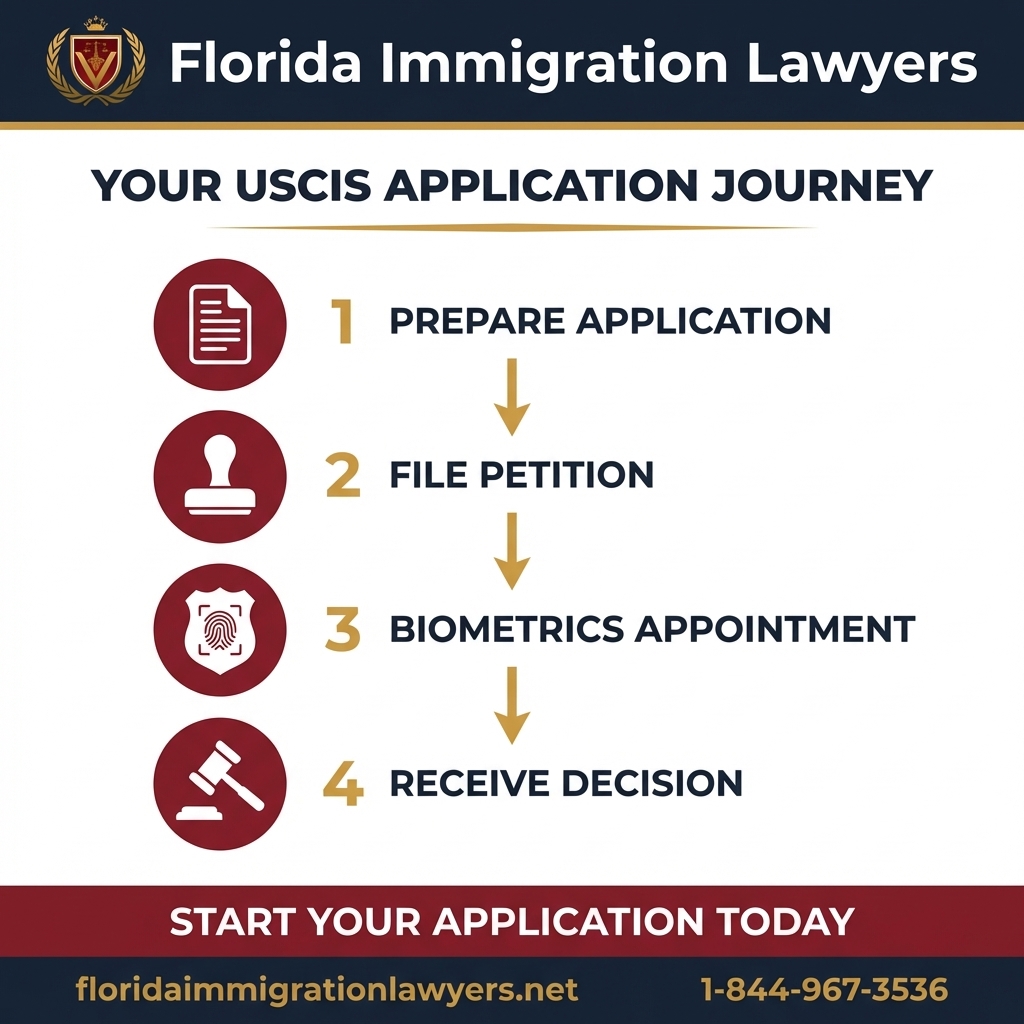
Preparing Your Application
- Understand Your Eligibility: Before filing any form, confirm you meet all eligibility requirements for the specific immigration benefit you seek. This often involves reviewing the Immigration and Nationality Act (INA) and relevant regulations. For instance, INA Section 212 outlines inadmissibility grounds, which could impact eligibility.
- Gather Required Documents: Collect all necessary supporting documents, such as birth certificates, marriage certificates, financial records, and police clearances. Ensure all foreign documents are translated into English by a certified translator. Incomplete documentation is a leading cause of delays.
- Complete the Correct Forms: Download and accurately fill out the most current version of the required USCIS forms from the official USCIS website. Pay close attention to all instructions and questions. Errors or omissions can lead to requests for evidence (RFEs) or outright denials.
- Pay Filing Fees: Determine the correct filing fees for your application and include the payment with your submission. USCIS fees are subject to change, so always check the latest fee schedule. Fee waivers may be available for eligible applicants.
Submitting Your Petition and Awaiting a Decision
- Submit Your Application: Mail your completed application package to the correct USCIS service center or field office. For many Florida residents, this might involve mailing to a lockbox facility or filing online. Always keep a copy of everything you send.
- Receive Receipt Notice: USCIS will typically send you a Form I-797C, Notice of Action, acknowledging receipt of your application. This notice will include your receipt number, which is crucial for tracking your case status.
- Attend Biometrics Appointment: Most applicants will receive an appointment notice for a biometrics (fingerprints, photos, signature) collection at an Application Support Center (ASC). This is a mandatory step for identity verification and background checks.
- Respond to Requests for Evidence (RFEs) or Interviews: USCIS may send an RFE if they need more information or an interview notice for further review. Respond promptly and thoroughly to all requests. If you live in Hialeah, your interview might be at the Miami Field Office.
- Receive a Decision: After all steps are completed and your case is reviewed, USCIS will issue a decision. This could be an approval, denial, or request for further action. If approved, you will receive your immigration benefit, such as a Green Card or naturalization certificate.
Essential Document Checklist for USCIS Applications
A complete and accurate application package is paramount to avoiding delays in your USCIS processing times Florida 2026. Missing documents or incorrect information can lead to significant setbacks, including requests for evidence (RFEs) or even denial. This checklist provides a general overview of commonly required documents.
Remember, the specific documents you need will depend entirely on the type of application you are filing. Always refer to the official USCIS instructions for your particular form. Consulting with an experienced immigration attorney can help ensure your submission is comprehensive.
Essential Documents for Family-Based Petitions
- Proof of U.S. Citizenship or Lawful Permanent Resident Status of Petitioner (e.g., U.S. passport, birth certificate, Green Card).
- Birth Certificates for both petitioner and beneficiary.
- Marriage Certificate (if applicable).
- Divorce Decrees or Death Certificates for any prior marriages (if applicable).
- Affidavit of Support (Form I-864) with supporting financial documents (tax returns, employment letters, pay stubs).
- Passport-style photographs for both petitioner and beneficiary.
- Medical Examination Report (Form I-693) completed by a USCIS-approved civil surgeon (for adjustment of status).
- Police Clearance Certificates from countries where the beneficiary has resided (if applicable).
Documents for Employment-Based Petitions and Naturalization
- Educational Transcripts and Diplomas.
- Professional Licenses and Certifications.
- Letters of Employment and Experience.
- Labor Condition Application (LCA) or PERM Labor Certification (if applicable).
- Proof of Financial Stability (for certain visa categories).
- For Naturalization (Form N-400):
- Green Card (Form I-551).
- Tax returns for the past five years (or three years if married to a U.S. citizen).
- Proof of continuous residence and physical presence in the U.S.
- Records of any arrests, citations, or detentions, even if charges were dismissed.
- Selective Service registration number (for male applicants born after 1959).
Timeline and Processing Expectations for Florida Applicants
Understanding the expected USCIS processing times Florida 2026 is crucial for anyone with an ongoing immigration case. While USCIS provides estimated timelines, these are subject to change. It is important to remember that each case is unique, and factors like the specific USCIS service center handling your application can influence the actual duration.
For applicants in Florida, including those residing in cities like Hialeah, Miami, and Orlando, monitoring these timelines is a regular part of the immigration journey. We will outline how you can check your case status and discuss general expectations for common application types.
Checking Your Case Status Online
USCIS offers several tools to help you track your application's progress. The primary method is through the USCIS Case Status Online tool. You will need the 13-character receipt number provided on your Form I-797C Notice of Action.
Additionally, USCIS publishes specific processing times by form type and service center on their website. This allows you to compare your current wait against the estimated range. You can also sign up for email updates on your case status, ensuring you receive timely notifications about any changes.
Average Processing Times for Common Forms (Florida Context)
While specific times fluctuate, here are general expectations for some common forms that impact USCIS processing times Florida 2026:
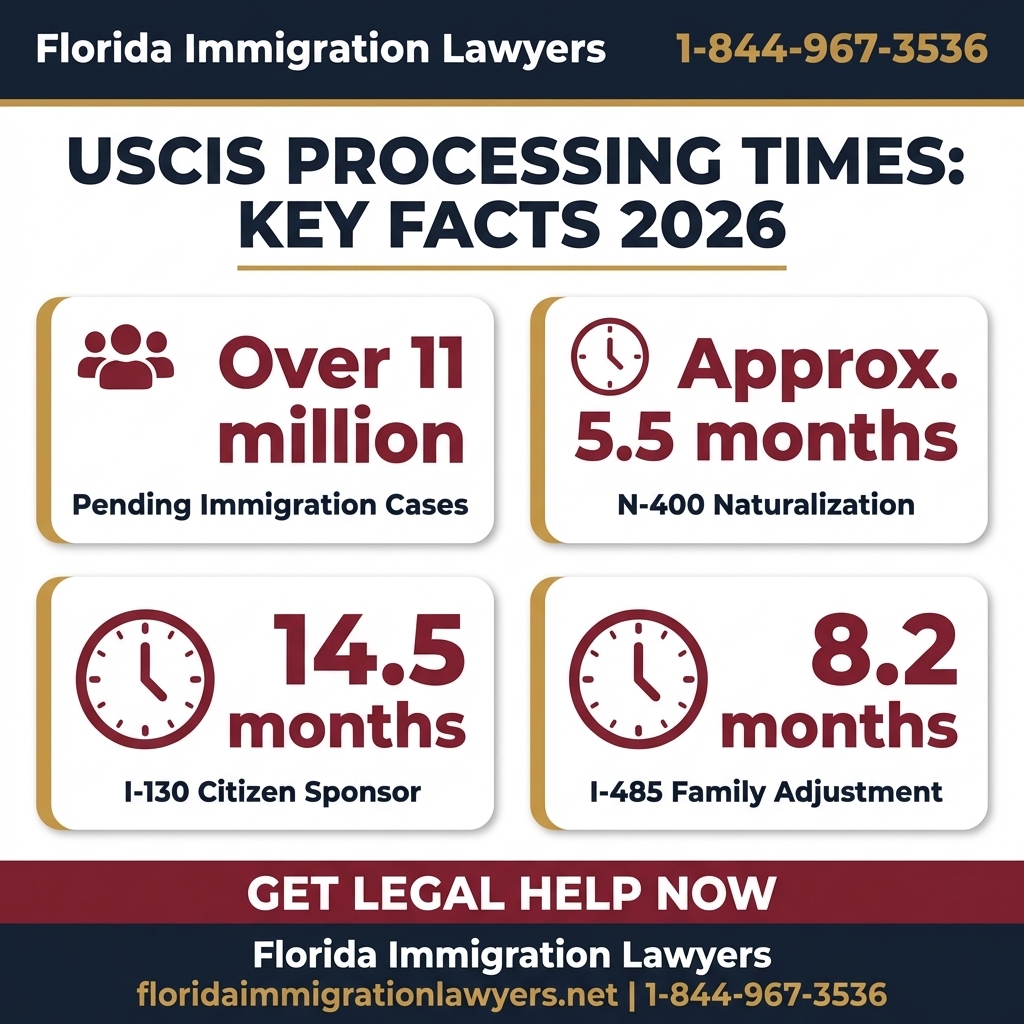
- Form I-130, Petition for Alien Relative: For U.S. citizens petitioning for immediate relatives (spouses, unmarried children under 21, parents), processing can range from 10 to 24 months, depending on the service center. For preference categories (e.g., married children, siblings), wait times are often much longer, sometimes several years, due to visa bulletin availability, which can be checked on travel.state.gov.
- Form I-485, Application to Register Permanent Residence or Adjust Status: Adjustment of status applications typically take 8 to 18 months, but this can vary significantly based on the underlying visa category and the local field office (e.g., Miami Field Office for Hialeah residents). Concurrent filing with an I-130 can extend the overall timeline.
- Form N-400, Application for Naturalization: Becoming a U.S. citizen generally takes 8 to 14 months from filing to oath ceremony. This includes background checks, interview scheduling, and the final ceremony. Wait times can vary by local field office.
- Form I-765, Application for Employment Authorization: EAD applications are often processed within 3 to 9 months, though some categories may be faster. This is a critical document for many immigrants awaiting Green Card approval, allowing them to work legally.
Expedited Processing Options
In certain urgent situations, you may be eligible to request expedited processing for your application. USCIS considers requests based on severe financial loss to a company or person, urgent humanitarian reasons, or compelling U.S. government interests. Such requests are granted on a discretionary basis and require strong supporting evidence.
Additionally, some employment-based petitions (like certain I-140 categories) offer premium processing, which guarantees USCIS action within a specific timeframe (e.g., 15 calendar days) for an additional fee. This option is not available for all form types, but it can significantly shorten wait times when applicable.
Cost Factors and Fee Breakdown for Immigration Applications
Understanding the financial aspects of your immigration journey is as crucial as knowing the USCIS processing times Florida 2026. Immigration applications involve various fees, which can add up quickly. These costs typically include USCIS filing fees, attorney fees, and other miscellaneous expenses.
While we cannot provide exact fee amounts as they are subject to change, we can outline the general cost categories you should anticipate. It is always best to check the most current USCIS fee schedule on their official website before submitting any application.
USCIS Filing Fees
Every USCIS form typically requires a filing fee. These fees are set by USCIS and are non-refundable, regardless of the outcome of your application. The amount varies significantly depending on the form. For example, an I-130 petition will have a different fee than an N-400 naturalization application. Some applications may also require a biometrics service fee.
Certain situations may allow for fee waivers, particularly for applicants who can demonstrate an inability to pay based on federal poverty guidelines or receipt of means-tested public benefits. Eligibility for fee waivers is strict, and thorough documentation is required to support such a request. For more details, refer to 8 CFR 103.7(c).
Attorney Fees and Other Costs
Beyond USCIS filing fees, you should budget for potential attorney fees if you choose to hire an immigration lawyer. While not mandatory, legal representation can be invaluable, especially for complex cases or when navigating fluctuating USCIS processing times Florida 2026. An attorney's fees will depend on the complexity of your case and the services provided.
Other potential costs include fees for document translations, obtaining certified copies of records, medical examinations (for adjustment of status), and travel expenses for interviews or biometrics appointments. These costs can vary, so it is wise to factor them into your overall financial planning for the immigration process.
Do not navigate this complex and often lengthy process alone. The stakes are too high to leave anything to chance. For personalized guidance on your specific immigration situation, including insights into current USCIS processing times Florida 2026, contact Florida Immigration Lawyers today. Our experienced team is ready to assist you.
Common Mistakes to Avoid During Your Immigration Process
Even a small error in your immigration application can lead to significant delays, requests for evidence, or even denial, prolonging your USCIS processing times Florida 2026. Avoiding these common pitfalls is crucial for a smooth and efficient process. Our firm frequently sees applicants make these preventable errors.
- Filing Incomplete Applications: Submitting a form with missing information or required documents is a primary reason for delays. USCIS will issue an RFE, which adds months to your processing time. Always double-check every item on the instructions.
- Using Outdated Forms: USCIS regularly updates its forms. Using an old version will result in your application being rejected. Always download the latest forms directly from the USCIS forms page.
- Not Providing Certified Translations: Any document not in English must be accompanied by a complete and accurate English translation, certified by the translator. Failure to do so renders the document unusable and causes delays.
- Ignoring Deadlines: Missing deadlines for RFEs, interview appointments, or appeals can lead to case denial or closure. Always respond promptly and keep track of all important dates.
- Failing to Disclose All Information: Withholding information, especially regarding criminal history or prior immigration violations, can be considered misrepresentation and lead to severe consequences, including permanent bars from immigration benefits. Honesty is always the best policy.
- Not Updating Address Changes: If you move, you must notify USCIS within 10 days using Form AR-11, Alien's Change of Address Card. Failure to do so can result in missed notices, interviews, or decisions, potentially leading to a denial without your knowledge.
- Incorrectly Calculating Physical Presence or Continuous Residence: For naturalization applications (N-400), accurately calculating your time in the U.S. is vital. Errors can lead to your application being denied, as outlined in 8 CFR 316.2.
- Submitting Incorrect Filing Fees: USCIS fees change periodically. Sending an incorrect fee amount will cause your application to be rejected and returned, delaying your case significantly. Always verify the current fees.
- Not Keeping Copies of Everything: Always make a complete copy of your entire application package before mailing it. This serves as your record and is invaluable if USCIS requests information or if your original package is lost.
- Attending Interviews Unprepared: For interviews, be ready to answer questions about your application, personal history, and eligibility. Review your application thoroughly and bring all original documents requested.
- Assuming Premium Processing is Always Available: Premium processing is only an option for specific form types and categories. Do not assume it can be used to expedite any application, as this can lead to disappointment and incorrect expectations.
- Failing to Seek Legal Counsel for Complex Cases: While some simple cases might be manageable, complex situations, previous denials, or criminal history absolutely warrant legal advice. An attorney can spot issues you might miss.
When to Call a Florida Immigration Lawyer
While this guide provides general information about USCIS processing times Florida 2026 and the immigration process, individual cases are often complex and unique. There are specific scenarios where the expertise of a qualified immigration attorney, like those at Florida Immigration Lawyers, becomes not just helpful, but essential. Navigating immigration law without professional guidance can lead to costly mistakes and significant delays.
Our firm helps clients throughout Florida, including Hialeah, Miami, Fort Lauderdale, and Orlando, with all aspects of immigration law. We understand the nuances of the system and are dedicated to protecting your rights and interests.
Specific Scenarios Requiring Legal Help
- Previous Denials or Immigration Issues: If you have had a prior visa denial, deportation order, or any other negative immigration history, an attorney can assess your options and help you overcome these challenges.
- Criminal History: Any criminal record, even minor infractions, can have severe immigration consequences. A lawyer can advise on the impact of your record and potential waivers.
- Complex Family Situations: Cases involving adopted children, stepchildren, or complex marital histories often require careful legal interpretation and documentation. Our family immigration lawyers specialize in these intricate matters.
- Deportation or Removal Proceedings: If you or a loved one are facing deportation defense, immediate legal intervention is critical. An attorney can represent you in immigration court and fight for your right to remain in the U.S.
- Asylum Claims: Seeking asylum is a highly sensitive and complex process requiring detailed knowledge of international and U.S. law. A lawyer can help you build a strong case and prepare for your interview.
- Business or Employment-Based Visas: These visas often involve intricate regulations, labor certifications, and specific employer requirements. Our business immigration attorneys can guide businesses and individuals through this process.
- Citizenship Application Issues: If you have concerns about your eligibility for citizenship, issues with continuous residence, or a complex interview history, legal counsel can be invaluable.
- Requests for Evidence (RFEs) or Notices of Intent to Deny (NOIDs): Receiving an RFE or NOID means USCIS has concerns about your application. An attorney can help you formulate a comprehensive and timely response, preventing a denial.
Warning Signs and Red Flags
Be vigilant for these signs that indicate you should seek legal advice immediately:
- You receive a notice from USCIS that you do not understand.
- Your case status online shows unexpected delays or changes.
- You have been waiting significantly longer than the posted USCIS processing times Florida 2026 for similar cases.
- You are asked to attend an interview without prior warning or adequate preparation.
- You suspect identity theft or fraud related to your immigration application.
Our attorneys at Florida Immigration Lawyers are here to provide the clarity and support you need. We offer a free consultation to assess your unique situation and provide strategic advice. Visit our attorneys page to learn more about our dedicated legal team.
People Also Ask (FAQs)
Here are answers to common questions regarding USCIS processing times and related immigration matters:
- Will USCIS speed up in 2026? USCIS continuously works to improve efficiency, but overall processing times depend on various factors like application volume, staffing, and legislative changes. While some forms may see improvements, a universal speed-up across all categories is not guaranteed. We recommend checking the official USCIS website for the most current information.
- How long is adjustment of status taking in 2026? Adjustment of status (Form I-485) processing times in 2026 typically range from 8 to 18 months, varying by the underlying visa category and the specific field office handling your case, such as the Miami Field Office for Hialeah residents. This timeline can extend if an RFE is issued.
- How long does I-130 take to get approved in 2026? For immediate relatives of U.S. citizens, I-130 petitions in 2026 generally take 10 to 24 months for approval, depending on the service center. For preference categories, the wait can be much longer due to annual visa limits.
- What not to say during a citizenship interview? During a citizenship interview, avoid making false statements, misrepresenting facts, or being disrespectful to the USCIS officer. Do not provide information that is not true, even if you think it will help your case. Be honest, calm, and answer all questions clearly and concisely. If you do not understand a question, ask for clarification.
About Florida Immigration Lawyers
Florida Immigration Lawyers is a leading immigration law firm dedicated to serving individuals, families, and businesses across the entire state of Florida. Our mission is to provide compassionate, effective, and results-driven legal representation in all areas of immigration law. We understand the profound impact immigration matters have on your life, and we are committed to guiding you through every step of the process.
Our experienced team of attorneys offers a comprehensive range of immigration services, including family-based visas, employment-based visas, naturalization, Green Cards, asylum, and deportation defense. We pride ourselves on our deep knowledge of immigration law, our personalized approach, and our unwavering dedication to our clients. We stay abreast of the latest changes in immigration policy, ensuring that our advice is always current and relevant to your needs, especially regarding USCIS processing times Florida 2026.
Why Choose Florida Immigration Lawyers?
- Experienced and Dedicated Team: Our lawyers have a proven track record of success in complex immigration cases.
- Client-Centered Approach: We prioritize your needs and provide clear, consistent communication throughout your case.
- Bilingual Services: We offer full services in English and Spanish to cater to Florida's diverse population.
- Comprehensive Support: From initial consultation to final resolution, we are with you every step of the way.
- Serving All of Florida: Whether you are in Hialeah, Miami, Orlando, Tampa, or anywhere else in the state, we are here to help.
We are available 24/7 to answer your questions and offer free consultations to help you understand your legal options. Do not hesitate to reach out for expert guidance. Call us today at 1-844-967-3536 or visit our website at https://www.floridaimmigrationlawyers.net to schedule your free consultation.
Sources and References
- U.S. Citizenship and Immigration Services (USCIS)
- USCIS Case Status Online
- USCIS Forms Page
- Executive Office for Immigration Review (EOIR)
- U.S. Department of State - Visa Bulletin
- 8 U.S.C. Chapter 12 - Immigration and Nationality Act (INA)
- INA Section 212 - General Classes of Aliens Ineligible to Receive Visas and Ineligible for Admission; Waivers of Inadmissibility
- 8 CFR 103.7(c) - Fee Waivers
- 8 CFR 316.2 - Requirements for Naturalization
This article provides general legal information and is not intended as legal advice. Every case is unique, and outcomes depend on specific facts and circumstances. Contact an attorney for advice about your particular situation. USCIS processing times Florida 2026 are estimates and subject to change without notice.
Understanding USCIS processing times Florida 2026 and navigating the intricate immigration system can be overwhelming. Let Florida Immigration Lawyers be your trusted partner. We offer comprehensive legal support tailored to your needs, ensuring you are well-informed and prepared. Do not leave your immigration future to chance.
Contact us for a free, confidential consultation today. Call 1-844-967-3536. Se Habla Español - Estamos aquí para ayudarle.
Do Not Navigate This Process Alone
Our experienced immigration attorneys are ready to fight for you. Get a free, confidential consultation today.
Se Habla Español
Frequently Asked Questions

William J. Vásquez
Founding Attorney · Vasquez Law Firm
U.S. Air Force veteran and immigration attorney with thousands of cases resolved. J.D., NCCU School of Law. AILA member. Admitted to the 4th, 5th, and 11th Circuit Courts.
Available 24/7 - Free Evaluations
Related Legal Services
Our Florida immigration attorneys can help you with family immigration services, immigration practice areas and free immigration consultation. Call today at 1-844-967-3536 for a free consultation.
Related Links
Related Topics
Free Legal Consultation
Discuss your case with our experienced attorneys. We're available 24/7.
Se Habla Español - Estamos aquí para ayudarle.
Related Articles
J-1 Waiver for Physicians in Florida: A 2026 Guide
Navigating the J-1 waiver process in Florida can be challenging for foreign physicians. Learn how the Conrad 30 program facilitates placements in underserved areas like Homestead, ensuring a successful application. Call Florida Immigration Lawyers today for expert guidance.
Naturalization Process Florida Timeline 2026 Guide
The naturalization process in Florida, culminating in U.S. citizenship, involves several key stages including eligibility assessment, filing Form N-400, biometrics, an interview, and the Oath of Allegiance. As of 2026, the typical timeline for this process in Florida ranges from 18 to 24 months, though individual experiences can vary. This guide from Florida Immigration Lawyers provides a comprehensive overview, covering requirements, step-by-step procedures, potential costs, and common pitfalls. We emphasize the importance of understanding Florida-specific nuances and the benefits of legal counsel to navigate this complex journey effectively. Contact us for a free consultation.
H-2B Visa for Florida Hospitality Seasonal Workers
Explore the H-2B visa process for seasonal workers in Florida's hospitality industry. Learn about costs, timelines, and common mistakes. Contact Florida Immigration Lawyers for expert assistance.
Military Naturalization Expedited at Florida Bases
Explore expedited military naturalization for service members stationed in Florida, including MacDill Air Force Base. Learn about eligibility, application steps, and how Florida Immigration Lawyers can assist you.