Refugee Status Florida Resettlement Guide 2026
Navigating refugee status and resettlement in Florida for 2026 demands a clear understanding of complex U.S. immigration laws and the support systems available. This comprehensive guide details the rigorous application process, from international referral to integration into communities like St. Petersburg. Learn about eligibility criteria, necessary documentation, typical timelines, and associated costs. We also highlight common pitfalls to avoid and crucial moments when legal counsel is indispensable. Florida Immigration Lawyers offers expert guidance for refugees and asylum seekers, ensuring a smoother transition to a new life in Florida. Contact us for a free consultation to protect your rights and secure your future.

Refugee status and subsequent resettlement in Florida for 2026 involves a complex, multi-stage process primarily managed by the U.S. Refugee Admissions Program (USRAP) for individuals seeking protection from persecution outside the United States. This path is distinct from asylum, which is sought from within the U.S. Florida, particularly regions like St. Petersburg and the wider Tampa Bay area, is a significant hub for refugee resettlement, offering diverse support services through various agencies. The process, from referral by organizations like UNHCR to arrival and integration, can span several years, requiring thorough vetting and adherence to strict legal frameworks. Understanding these steps and available resources is crucial for successful integration into Florida communities.
- Refugee status is determined outside the U.S., often through UNHCR, before resettlement.
- Florida is a major resettlement state, with St. Petersburg serving as a key integration point.
- The process involves rigorous security checks, medical exams, and cultural orientation.
- Resettlement agencies provide initial support for housing, employment, and education.
- Legal assistance is vital for navigating the Green Card application and eventual citizenship.
Imagine fleeing your home, leaving everything familiar behind, simply to find safety and a chance at a new life. This is the reality for countless individuals seeking refugee status Florida resettlement. For those arriving in the Sunshine State, particularly in welcoming communities like St. Petersburg, the journey is just beginning. Navigating the complexities of U.S. immigration law and the resettlement process can be overwhelming, but understanding the system is the first step toward building a secure future. This comprehensive guide will illuminate the pathway to refugee status and resettlement in Florida for 2026, offering crucial insights into eligibility, the application process, and the vital support systems available. If you or a loved one are seeking refuge, do not face this challenging journey alone. Call Florida Immigration Lawyers at 1-844-967-3536 for a free consultation.
What is Refugee Status and Resettlement in Florida?
Refugee status in the United States is a legal protection granted to individuals who have fled their home country and cannot return due to a well-founded fear of persecution based on race, religion, nationality, membership in a particular social group, or political opinion. This status is typically determined by the U.S. government while the individual is still outside the U.S., often through a referral from the United Nations High Commissioner for Refugees (UNHCR) or a U.S. Embassy. Resettlement then involves the process of relocating these individuals to a safe third country, with Florida being one of the leading states for such programs.
The distinction between a refugee and an asylum seeker is critical: refugees apply for protection from outside the U.S. and are resettled here, while asylum seekers apply for protection from within the U.S. or at a port of entry. As of 2026, Florida continues to be a primary destination for refugees due to its diverse population, established support networks, and economic opportunities. Cities like St. Petersburg, Orlando, and Miami have robust resettlement infrastructures, welcoming individuals from various conflict-affected regions globally. The legal foundation for refugee status is found in Section 101(a)(42) of the Immigration and Nationality Act (INA), which aligns with international standards set by the 1951 Refugee Convention. Understanding these foundational elements is paramount for anyone navigating the refugee status Florida resettlement process.
Florida's history as a haven for those seeking safety dates back decades, with significant populations from Cuba and Haiti finding new homes here. More recently, the state has welcomed refugees from Afghanistan, Ukraine, and Venezuela, reflecting ongoing global crises. These new arrivals contribute significantly to Florida's cultural and economic landscape, enriching communities like St. Petersburg with their skills, traditions, and resilience. The U.S. Refugee Admissions Program (USRAP) works with various non-governmental organizations (NGOs) and state agencies to facilitate this complex process, ensuring that refugees receive initial support upon arrival. This support is crucial for successful integration and helps individuals overcome the immense challenges of starting anew in a foreign land.
How Do Individuals Apply for Refugee Status and Resettlement?
Individuals typically apply for refugee status and resettlement through a rigorous, multi-step process that almost exclusively begins outside the United States. They cannot directly apply to the U.S. government for refugee status from abroad; instead, they must be referred by the United Nations High Commissioner for Refugees (UNHCR) or a U.S. Embassy in certain specific situations. Once referred, they enter the U.S. Refugee Admissions Program (USRAP), which manages their journey to safety and eventual refugee resettlement in Florida or another U.S. state.
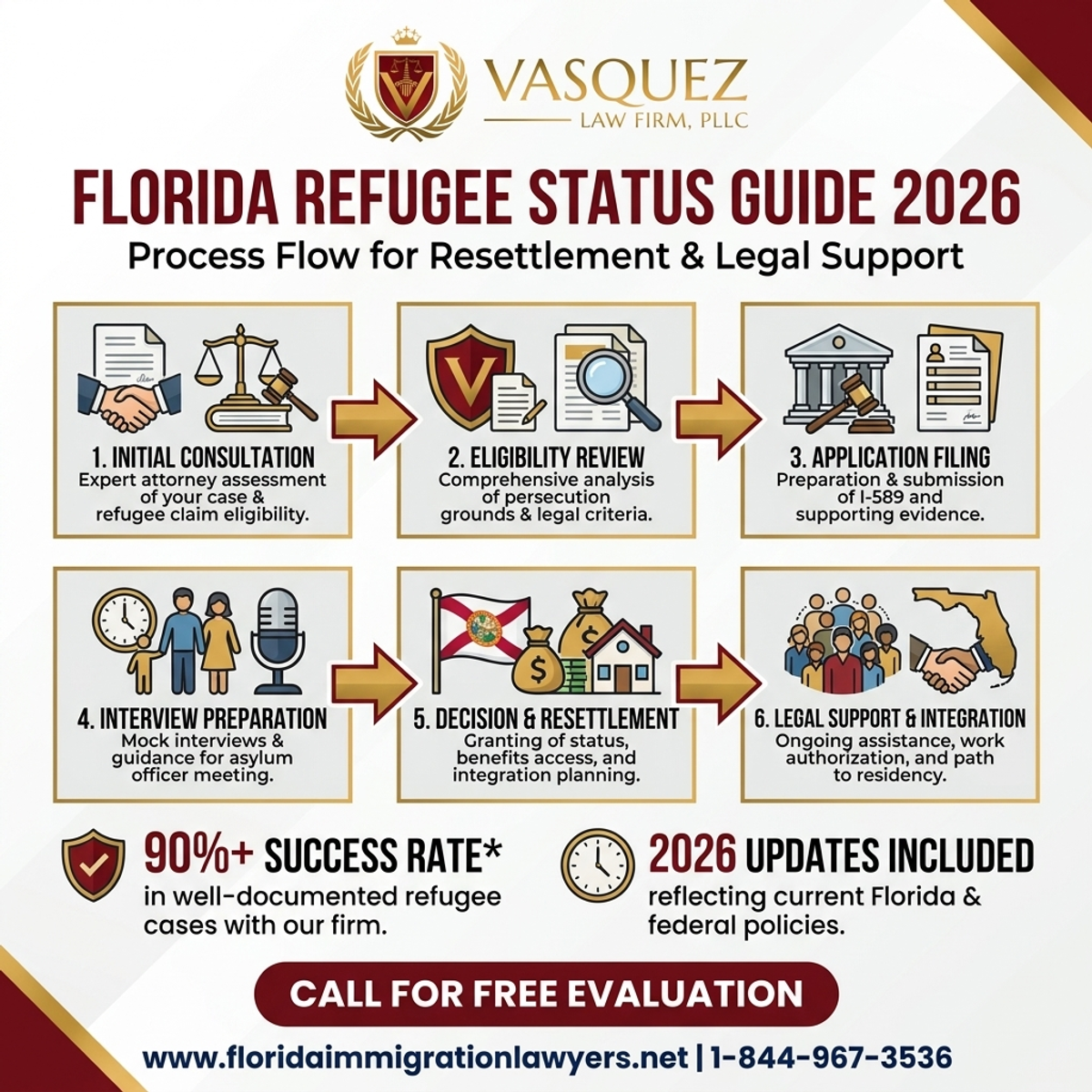
The application and resettlement process is comprehensive and designed to ensure both the safety of the refugee and the security of the United States. Here is a step-by-step guide:
-
Referral to USRAP: The process begins with a referral, most commonly from the UNHCR, which identifies individuals meeting the international definition of a refugee and determines their eligibility for resettlement. In limited cases, specific U.S. Embassies or Non-Governmental Organizations (NGOs) can also make referrals.
-
Resettlement Support Center (RSC) Processing: Once referred, the case is assigned to an overseas Resettlement Support Center (RSC). The RSC collects biographic and historic information, prepares the case for review, and conducts initial interviews.
-
USCIS Interview and Adjudication: A U.S. Citizenship and Immigration Services (USCIS) officer conducts an in-depth interview to determine if the individual meets the U.S. legal definition of a refugee. This is a critical step where the applicant must articulate their fear of persecution. USCIS officers are highly trained to assess these claims, ensuring compliance with INA Section 207.
-
Security Checks: All refugee applicants undergo extensive security checks by multiple U.S. government agencies, including the Department of Homeland Security (DHS), the Federal Bureau of Investigation (FBI), and other intelligence agencies. These checks are thorough and can take a significant amount of time, often contributing to delays in the overall process. As of 2026, these checks remain a stringent part of the process.
-
Medical Examination: Applicants must undergo a medical examination by an approved physician to ensure they do not have communicable diseases that would make them inadmissible to the U.S. Any health concerns are addressed to prevent public health risks.
-
Cultural Orientation: Prior to departure, refugees often receive cultural orientation classes designed to prepare them for life in the U.S., covering topics such as American laws, customs, and expectations regarding employment and education.
-
Placement and Travel: Once all approvals are granted, the case is assigned to a U.S. resettlement agency, often in Florida, based on factors like family ties, available services, and community capacity. The International Organization for Migration (IOM) then arranges for the refugee's travel to the United States.
-
Arrival and Initial Resettlement: Upon arrival in Florida, a local resettlement agency meets the refugee at the airport and begins providing initial support, including temporary housing, food, clothing, and assistance with enrolling children in school and adults in English language classes. This initial support is vital for integration into communities like St. Petersburg.
This entire process, from referral to arrival, can take anywhere from 18 months to several years, depending on the individual's country of origin, the complexity of their case, and the current processing backlogs within the USRAP. Patience and adherence to all instructions are essential. For those who successfully navigate this system, Florida offers a new beginning, supported by a network of dedicated professionals.
What Documents are Needed for Refugee Resettlement in Florida?
While much of the documentation for refugee status is processed by international and U.S. government agencies overseas, refugees embarking on resettlement in Florida will need to ensure they have access to certain personal and identifying documents. The initial application process managed by UNHCR and USCIS abroad typically involves collecting extensive biographical information, family histories, and evidence supporting the claim of persecution. However, upon arrival in Florida and for subsequent steps such as applying for a Green Card or accessing services, specific documents become crucial.
Here is a general checklist of documents and information that are vital throughout the refugee resettlement process, both abroad and upon arrival:
- Identity Documents: Any available national identification cards, passports (even if expired or from the country of persecution), birth certificates, or other official documents establishing identity and nationality. While refugees often flee without such documents, any existing records are important.
- Family Records: Marriage certificates, birth certificates for children, and other documents that establish family relationships. These are critical for family reunification and to ensure all family members are processed together.
- Proof of Persecution: While often difficult to obtain, any available evidence supporting the fear of persecution, such as police reports, court documents, witness statements, or news articles documenting the situation in their home country. This evidence strengthens the claim during the USCIS interview.
- Medical History: Records of vaccinations, significant medical conditions, and any ongoing treatments. A comprehensive medical examination is mandatory before travel to the U.S., but personal medical records can aid in continuity of care upon arrival in Florida.
- Educational and Employment History: Diplomas, transcripts, professional licenses, and employment records. These documents can be invaluable for job placement services and for accessing educational opportunities in Florida.
- Biometric Data: Fingerprints, photographs, and other biometric information are collected during the security vetting process overseas. This data is essential for identity verification and security checks.
- Refugee Travel Document: Upon arrival, refugees are typically issued an I-94 Arrival/Departure Record, which serves as proof of their refugee status. Later, they can apply for a Refugee Travel Document to facilitate international travel.
Step-by-Step Process — Refugee Status Florida Resettlement Guide 2026
It is important to understand that many refugees arrive with very few personal belongings or documents. Resettlement agencies in Florida, including those in St. Petersburg, are equipped to help individuals reconstruct their documentation and obtain necessary U.S. identification, such as Social Security cards and state IDs. However, having any available original documents can significantly streamline the process. For those seeking to adjust their status to lawful permanent resident, Form I-485 will require copies of their arrival documents and other personal information. Always consult with a legal professional to ensure all necessary documentation is properly prepared and submitted.
What is the Typical Timeline for Refugee Resettlement in 2026?
The typical timeline for refugee resettlement in Florida or anywhere in the U.S. is highly variable, but generally, the process from initial referral to arrival in the United States can take 18 months to several years. As of 2026, factors such as global refugee caseloads, country of origin, the complexity of individual cases, and the efficiency of security vetting processes continue to influence these timelines significantly. The U.S. Refugee Admissions Program (USRAP) aims for efficiency, but thoroughness in security and medical checks is paramount.
Here is an estimated timeline for the various stages of the refugee resettlement process:
| Stage | Typical Timeframe | Notes |
|---|---|---|
| UNHCR Registration & Referral | 6 months - 5+ years | Depends on the country of asylum, caseload, and individual vulnerability. |
| Resettlement Support Center (RSC) Processing | 3 - 12 months | Initial data collection, interviews, and case preparation. |
| USCIS Interview & Adjudication | 6 - 18 months | Wait times for interviews can be long; depends on USCIS capacity. |
| Security Vetting & Background Checks | 6 - 24 months | Multi-agency checks (FBI, DHS, DOD) often run concurrently with other steps. |
| Medical Examination | 1 - 3 months | Must be valid at the time of travel; may require re-examination if validity expires. |
| Cultural Orientation & Placement | 1 - 6 months | Matching with a resettlement agency in a U.S. city like St. Petersburg. |
| Travel to U.S. (IOM Coordination) | 1 - 3 months | Logistical arrangements, flight availability. |
| Initial Resettlement Support (Post-Arrival) | First 3 - 6 months | Intensive support for housing, food, and integration services. |
| Adjustment of Status (Green Card) | 1 year after arrival (application) + 6-18 months (processing) | Refugees are required to apply for a Green Card one year after arrival. Processing times vary by USCIS field office (e.g., Miami, Orlando). |
It is important for refugees and their advocates to manage expectations regarding these timelines. The U.S. government, including USCIS, has been working to streamline processes, particularly in response to backlogs. Recent news indicates a renewed focus on processing work permit applications and overall efficiency, which may positively impact some aspects of the resettlement timeline. However, the comprehensive nature of the security checks means that quick processing is rarely possible. For accurate, up-to-date information on processing times, always refer to the official USCIS website. The journey is long, but with proper legal guidance, it is navigable.
What are the Costs Associated with Refugee Resettlement in Florida?
The initial costs directly associated with applying for refugee status and resettlement in Florida are largely covered by the U.S. government and international organizations. This structure is designed to remove financial barriers for individuals who have often lost everything. However, while the application itself does not typically involve direct fees for the refugee, there are subsequent costs for integration, legal processes, and daily living expenses that individuals and their families will encounter upon arrival and in the years following.
Here is a breakdown of typical costs and financial considerations for refugees:
| Item | Typical Fee | Notes |
|---|---|---|
| Refugee Application (initial) | No Fee | Managed by USRAP, UNHCR, and RSCs; no direct application fee for the refugee. |
| Travel to U.S. | No Fee (initial) | Flights are typically arranged and paid for by the International Organization for Migration (IOM) as a loan, which refugees are expected to repay over time. |
| Initial Resettlement Services | No Fee | Services like temporary housing, food, cultural orientation, and initial job placement are covered by government grants to resettlement agencies for the first 90 days. |
| Adjustment of Status (Form I-485) | Varies by year | Required one year after arrival to apply for a Green Card. USCIS filing fees apply, though fee waivers may be available for eligible individuals. |
| Biometrics Fee | Varies by year | Collected by USCIS for fingerprinting and background checks; often included with the I-485 fee. |
| Legal Assistance | Varies | While initial resettlement is supported, legal counsel for Green Card applications, family petitions, or complex issues is an additional cost. Florida Immigration Lawyers offers free consultations. |
| Citizenship Application (Form N-400) | Varies by year | Required after meeting residency requirements (typically 5 years as an LPR). USCIS filing fees apply, with potential for fee waivers. |
| Daily Living Expenses | Ongoing | Housing, food, transportation, healthcare, and other costs of living in Florida, which refugees must cover once initial aid concludes. |
Key Statistics — Refugee Status Florida Resettlement Guide 2026
While the immediate financial burden of fleeing and initial resettlement is mitigated, refugees must prepare for long-term financial independence. Resettlement agencies in Florida, including those serving St. Petersburg, assist with financial literacy, employment services, and access to public benefits during the initial phase. However, the fees for applying for a Green Card (Adjustment of Status) and later for U.S. citizenship can be substantial. It is crucial for refugees to understand these potential costs and explore options for fee waivers or pro bono legal services if eligible. Consulting with an immigration attorney can provide clarity on these financial obligations and help plan for future immigration steps. You can find detailed fee information on the official USCIS website.
Refugee Services and Integration in St. Petersburg, Florida
St. Petersburg, Florida, along with the broader Tampa Bay area, stands as a vibrant hub for refugee resettlement in Florida, offering a comprehensive network of services designed to facilitate successful integration. When refugees arrive in St. Petersburg, they are typically met by representatives from local resettlement agencies, which are funded by the federal government and private donations to provide critical initial support. These services are essential for helping new arrivals navigate a completely unfamiliar environment and begin building a new life.
Key services provided in St. Petersburg and throughout Florida include:
- Airport Reception and Initial Housing: Refugees are met at the airport and taken to safe, temporary housing, which may be an apartment or a host family arrangement.
- Cultural Orientation: Programs help refugees understand American laws, cultural norms, and daily life, including banking, public transportation, and community expectations.
- Food and Basic Needs: Assistance with accessing food, clothing, and essential household items is provided during the initial weeks.
- Medical Assistance: Referrals to doctors and clinics for health screenings, immunizations, and ongoing medical care. Mental health support is also a critical component, addressing trauma experienced prior to and during displacement.
- English Language Training (ESL): Access to English classes is paramount for communication and employment, with various programs available for all proficiency levels.
- Employment Services: Job readiness training, resume building, interview preparation, and job placement assistance are offered to help refugees find stable employment quickly. Many agencies partner with local businesses in St. Petersburg to create opportunities.
- School Enrollment: Assistance with enrolling children in local schools and helping parents understand the U.S. education system.
- Social Security and State ID: Help applying for a Social Security card and a Florida state identification card or driver's license.
- Community Integration: Programs and events designed to connect refugees with their new communities, fostering a sense of belonging and reducing isolation.
Florida's resettlement agencies, such as Catholic Charities, World Relief, and others, play a pivotal role in this process. They work tirelessly to ensure that refugees in St. Petersburg and elsewhere receive the necessary tools and support for self-sufficiency and long-term integration. The diversity of St. Petersburg is further enriched by these new communities, creating a truly global city. However, the journey is not without its challenges. The competitive housing market in Florida, coupled with the need for rapid employment, can be difficult. This is where sustained community support and effective legal guidance become invaluable. For more information on federal programs, refer to the U.S. Department of State's Refugee Admissions Program.
Common Challenges for Refugees in Florida
While refugee resettlement in Florida offers a beacon of hope, the journey toward full integration is often fraught with significant challenges. Refugees arriving in the Sunshine State, including those settling in St. Petersburg, face a myriad of obstacles that can hinder their ability to achieve self-sufficiency and thrive. Understanding these common difficulties is crucial for both refugees and the communities that support them.
One of the most immediate challenges is the language barrier. Many refugees arrive with limited or no English proficiency, making daily tasks like grocery shopping, navigating public transportation, or communicating with doctors incredibly difficult. While ESL classes are provided, achieving fluency takes time and consistent effort. This barrier also significantly impacts employment opportunities, often limiting refugees to low-wage jobs, even if they possess higher education or professional skills from their home countries.
Cultural adjustment is another profound hurdle. Refugees must adapt to a completely new society with different customs, social norms, and legal systems. This can lead to feelings of isolation, confusion, and even culture shock. For example, understanding the nuances of the U.S. healthcare system, the education system, or even basic financial practices can be overwhelming. The warm, humid climate of Florida can also be an adjustment for those from different geographical regions.
Employment and economic integration present ongoing difficulties. Despite the best efforts of resettlement agencies, finding stable, well-paying jobs that match a refugee's qualifications can be a struggle. Issues like the non-recognition of foreign credentials, lack of U.S. work experience, and limited professional networks contribute to underemployment. The cost of living in Florida, particularly housing in desirable areas like St. Petersburg, can be prohibitive, often forcing families into difficult financial situations.
Access to affordable healthcare and mental health services is also a significant concern. Many refugees arrive with complex physical and psychological trauma from their experiences of persecution and displacement. While initial health screenings are provided, securing ongoing, affordable healthcare, especially specialized mental health support, can be challenging due to insurance complexities and provider availability. The recent news context, noting increased processing for work permits, while positive, does not immediately alleviate these deeper systemic challenges.
Finally, navigating the U.S. legal system for subsequent immigration steps, such as applying for a Green Card (Adjustment of Status) one year after arrival or eventually for U.S. citizenship, can be complex and intimidating. Understanding deadlines, required documentation, and potential pitfalls requires expert guidance. Without proper legal counsel, refugees risk making errors that could jeopardize their long-term immigration goals. This is why having trusted legal partners like Florida Immigration Lawyers is so important throughout the entire process.
Do not navigate this process alone. The journey to establishing a new life after seeking refugee status Florida resettlement can be complex and emotionally taxing. Contact Florida Immigration Lawyers today at 1-844-967-3536 for comprehensive legal support.
Common Mistakes to Avoid in Refugee Resettlement
Navigating the complex landscape of refugee resettlement requires careful attention to detail and adherence to numerous regulations. Even small oversights can lead to significant delays or adverse outcomes. Here are some common mistakes refugees and their families in Florida should strive to avoid:
-
Failing to Apply for Adjustment of Status (Green Card) on Time: Refugees are required to apply for lawful permanent resident (Green Card) status one year after their arrival in the U.S. Missing this crucial deadline without a valid reason can jeopardize future immigration benefits and even lead to removal proceedings. This application, Form I-485, is a mandatory step for long-term residency.
-
Providing Inconsistent Information: Any discrepancies between the information provided during the initial refugee interview overseas and subsequent applications (e.g., Green Card, citizenship) can raise red flags with USCIS. It is vital to be consistent and truthful in all statements, even if details seem minor. Inconsistencies can lead to accusations of misrepresentation, which carries severe immigration consequences.
-
Traveling Internationally Without a Refugee Travel Document: Refugees who travel outside the U.S. without first obtaining a Refugee Travel Document (Form I-131) risk being denied re-entry. A regular passport from their country of origin should not be used, as it could imply they no longer fear persecution there.
-
Not Engaging with Resettlement Agencies: The initial support provided by resettlement agencies in Florida is invaluable. Failing to participate in offered programs, such as ESL classes, job training, or cultural orientation, can slow down the integration process and limit access to vital resources. These agencies are crucial for successful refugee benefits Florida.
-
Neglecting to Seek Legal Advice for Complex Issues: While resettlement agencies offer extensive support, they are not immigration law firms. Issues such as criminal charges, family reunification challenges, or past immigration violations require specialized legal counsel. Attempting to handle these complexities alone can lead to severe and irreversible mistakes.
-
Ignoring USCIS Communications: The U.S. Citizenship and Immigration Services (USCIS) communicates important updates, requests for evidence (RFEs), and interview notices via mail. Failing to open, read, and respond to these communications promptly can lead to application denials or case closures.
-
Not Updating Address with USCIS: Moving without informing USCIS of a new address (Form AR-11) is a common mistake that can result in missed notices and critical deadlines. This is especially important in a mobile state like Florida.
-
Underestimating the Importance of English Proficiency: While not a legal requirement for refugee status, a lack of English proficiency significantly impacts job prospects, educational attainment, and overall integration. Not prioritizing ESL learning can create long-term barriers to self-sufficiency in St. Petersburg and beyond.
-
Falling Victim to Immigration Scams: Unfortunately, individuals new to the U.S. are often targets for unscrupulous individuals posing as immigration experts or attorneys. Always verify credentials and seek advice from accredited legal professionals or recognized non-profits. Never pay for blank forms or for services that seem too good to be true.
Avoiding these common pitfalls can significantly smooth the path for refugees in Florida, ensuring a more secure and successful transition into their new lives. Consulting with an experienced immigration attorney is the best way to prevent these mistakes and protect your future.
When to Call a Florida Immigration Lawyer for Refugee Matters
While refugee resettlement agencies provide invaluable initial support, there are specific situations where the expertise of a dedicated Florida immigration lawyer becomes absolutely essential. The U.S. immigration system is notoriously complex, and even minor errors can have significant, long-lasting consequences. Knowing when to seek legal counsel can make all the difference in a refugee's journey toward permanent residency and citizenship.
You should contact Florida Immigration Lawyers if you encounter any of the following scenarios:
- Applying for Adjustment of Status (Green Card): Although applying for a Green Card one year after arrival is mandatory for refugees, the application process (Form I-485) can be intricate. If you have any criminal history, prior immigration violations, or complex family circumstances, legal guidance is crucial to prevent denial.
- Family Reunification: If you wish to petition for family members to join you in the U.S. through a follow-to-join petition (Form I-730), an attorney can help navigate the requirements and ensure a smooth process. This is particularly important for asylum seekers Florida and refugees seeking to reunite their families.
- Facing a Denial or Request for Evidence (RFE): If your Green Card application or any other immigration benefit is denied, or if USCIS issues a Request for Evidence, a lawyer can help you understand the reasons for the denial or RFE and formulate a strong response or appeal.
- Criminal History or Legal Issues: Any interaction with law enforcement, even minor infractions, can have serious implications for your immigration status. A lawyer can assess the impact of criminal charges and advise on the best course of action to protect your refugee status and future.
- Considering International Travel: Before traveling outside the U.S., a refugee must obtain a Refugee Travel Document. An attorney can advise on the proper procedures and risks associated with international travel, especially if visiting countries where persecution was feared.
- Questions about Citizenship: When you become eligible for naturalization (typically after 5 years as a lawful permanent resident), an attorney can help you prepare your N-400 application, navigate the interview, and address any potential issues.
- Concerns about Humanitarian Parole Florida: While distinct from refugee status, if you have family members who might qualify for humanitarian parole, an attorney can explain the criteria and application process.
Florida Immigration Lawyers has extensive experience in all aspects of immigration law, including refugee status Florida resettlement. We understand the unique challenges faced by refugees in communities like St. Petersburg and are dedicated to providing compassionate, effective legal representation. Our attorneys can help you protect your rights, navigate bureaucratic hurdles, and achieve your long-term immigration goals. Do not hesitate to seek professional legal advice when your future in the U.S. is at stake.
About Florida Immigration Lawyers
Florida Immigration Lawyers is a leading immigration law firm dedicated to serving individuals and families across the entire state of Florida, including the vibrant communities of St. Petersburg, Orlando, and Miami. We understand that navigating the U.S. immigration system can be one of the most challenging experiences of a person's life, especially for those seeking refugee status Florida resettlement. Our mission is to provide compassionate, effective, and results-driven legal representation to help our clients achieve their American dreams.
Our team of experienced immigration attorneys specializes in a wide range of practice areas, including asylum, deportation defense, family-based immigration, business immigration, naturalization, and, crucially, assistance for refugees and asylees transitioning to permanent residency. We pride ourselves on offering personalized legal strategies tailored to each client's unique circumstances, ensuring that every case receives the attention and expertise it deserves. Whether you are at the initial stages of understanding your options or facing complex legal challenges, we are here to guide you.
We believe that everyone deserves access to high-quality legal counsel, which is why we offer free consultations to discuss your case and outline your best path forward. Our firm is available 24/7, recognizing that immigration issues often arise unexpectedly and require immediate attention. With a deep understanding of both federal immigration law and the specific needs of Florida's diverse immigrant communities, Florida Immigration Lawyers is your trusted partner. We are committed to upholding the rights of immigrants and helping them build stable, prosperous lives in Florida. Call us today at 1-844-967-3536 or visit our website at https://www.floridaimmigrationlawyers.net to learn more about how we can assist you. Our team is ready to help you with your immigration needs, offering dedicated support every step of the way.
Sources and References
- U.S. Citizenship and Immigration Services (USCIS)
- U.S. Department of State – Bureau of Population, Refugees, and Migration (PRM)
- Executive Office for Immigration Review (EOIR)
- 8 U.S.C. Chapter 12 - Immigration and Nationality Act (INA) Section 101(a)(42) - Definition of Refugee
- 8 U.S.C. Chapter 12 - Immigration and Nationality Act (INA) Section 207 - Annual Admission of Refugees
- 8 CFR Part 207 - Refugee Status and Asylum
- UNHCR - The UN Refugee Agency: 1951 Refugee Convention and its 1967 Protocol
Related services: asylum application process, withholding of removal.
This article provides general legal information and is not intended as legal advice. Every case is unique, and outcomes depend on specific facts and circumstances. Contact an attorney for advice about your particular situation. Immigration laws are subject to change, and specific fees mentioned are illustrative and may vary.
The path to refugee status Florida resettlement is a journey of courage and hope. Let Florida Immigration Lawyers be your guide, providing the expert legal support you need to secure your future in the U.S. We offer free, confidential consultations to discuss your options and develop a clear strategy. Call us today at 1-844-967-3536 to speak with an attorney. Se Habla Español - Estamos aquí para ayudarle.
If you need legal assistance, learn more about speak with an asylum lawyer, or call us at 1-844-967-3536 for a free consultation.
Do Not Navigate This Process Alone
Our experienced immigration attorneys are ready to fight for you. Get a free, confidential consultation today.
Se Habla Español
Frequently Asked Questions
Harold Estrada-Rodriguez
Florida Immigration Attorney · FL Bar No. 1041171
Florida Bar attorney handling Florida-jurisdiction immigration matters. Bilingual representation, free consultations.
Available 24/7 - Free Evaluations
Related Legal Services
Our Florida immigration attorneys can help you with immigration practice areas, free immigration consultation and experienced immigration attorneys. Call today at 1-844-967-3536 for a free consultation.
Related Links
Related Topics
Free Legal Consultation
Discuss your case with our experienced attorneys. We're available 24/7.
Se Habla Español - Estamos aquí para ayudarle.
Related Articles
Family Petition Immigration Lawyer in Miami | VLF Florida
Learn about family petition processes in Miami with expert legal guidance from Florida Immigration Lawyers. Discover how to navigate the complexities of immigration law to reunite with your loved ones. Contact us at 1-844-967-3536 for a free consultation today.
Florida Work Permit & EAD Application: Your 2026 Guide
For immigrants in Florida, obtaining an Employment Authorization Document (EAD), or work permit, is essential for lawful employment. This 2026 guide from Florida Immigration Lawyers details the Form I-765 application process, eligibility categories, required documents, and typical processing times. We cover critical aspects like fee structures, common mistakes to avoid, and when to seek legal counsel to navigate the complexities of federal immigration law. Whether you are in Miami, Orlando, or elsewhere in Florida, understanding these steps is vital to securing your right to work. Learn how our firm can provide expert assistance for your EAD application and ensure compliance with all USCIS requirements. We offer free consultations and are available 24/7.
I-360 Widow Self-Petition in Florida: Guide for 2026
For non-citizen spouses of deceased U.S. citizens in Florida, the I-360 widow self-petition offers a critical pathway to permanent residency. This detailed 2026 guide from Florida Immigration Lawyers explains eligibility, step-by-step filing, required documentation, typical processing timelines, and associated costs. We cover essential criteria such as the two-year filing deadline, the necessity of proving a good faith marriage, and the importance of not remarrying before petition approval. Additionally, we highlight common mistakes to avoid and specific scenarios where legal counsel is invaluable, particularly within Florida's unique demographic and legal environment. Our goal is to provide clear, actionable information to help surviving spouses navigate this complex process during a difficult time. Contact Florida Immigration Lawyers for a free consultation and personalized support.
NIW National Interest Waiver for Florida Professionals
Discover how the NIW can benefit Florida professionals seeking U.S. residency without employer sponsorship. Learn about the application process, costs, and common mistakes to avoid. Contact Florida Immigration Lawyers for expert guidance.