Refugee Resettlement Florida: Your Guide to a New Life
Navigating refugee resettlement in Florida requires understanding a complex legal and logistical process. This guide from Florida Immigration Lawyers provides essential information on refugee status, the step-by-step resettlement journey, critical documents, and available resources in Florida, including communities like Kissimmee. Learn about financial support, common challenges, and pathways to permanent residency and citizenship. We emphasize the importance of legal counsel to avoid pitfalls and ensure a smooth transition. Discover how expert legal assistance can protect your rights and help you build a secure future in the Sunshine State. Contact us for a free consultation to start your journey.

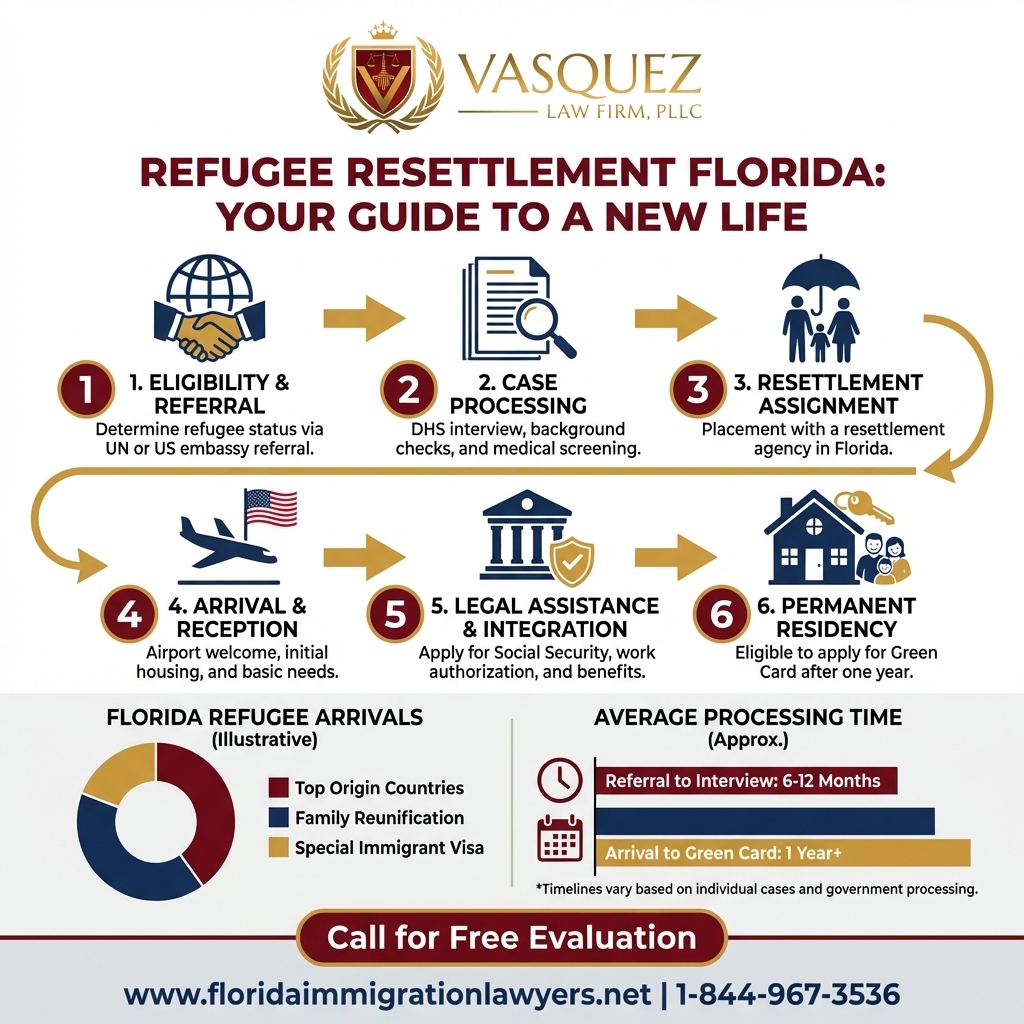
Refugee resettlement in Florida involves a structured process designed to help individuals and families fleeing persecution build a new life in the United States. This path typically begins with a referral to the U.S. Refugee Admissions Program (USRAP) from overseas, followed by rigorous screening, interviews, and health checks. Once approved, refugees are assigned to a resettlement agency in Florida, often in diverse communities like Kissimmee, which provides initial support for housing, employment, and cultural orientation. Understanding your rights and the available resources is crucial for a successful transition.
- Refugee status is granted overseas to those fleeing persecution.
- The resettlement process includes interviews, security checks, and cultural orientation.
- Florida agencies assist with housing, employment, and integration services.
- Legal guidance is vital for navigating complex immigration procedures.
- After one year, refugees can apply for lawful permanent residency.
Imagine arriving in a new country, having left everything behind due to fear and persecution. This is the reality for thousands seeking refugee resettlement in Florida each year, hoping to find safety and a fresh start. Florida, particularly vibrant areas like Kissimmee, has become a welcoming hub for many, offering a diverse community and various support systems. However, navigating the intricate legal and logistical steps of refugee resettlement can be overwhelming without expert guidance.
This comprehensive guide from Florida Immigration Lawyers will walk you through the entire process, from understanding refugee status to accessing critical resources and eventually adjusting your status to permanent residency. We aim to provide clear, actionable information to empower you and your family as you embark on this significant journey. Do not face this complex process alone. Call Florida Immigration Lawyers at 1-844-967-3536 for a free consultation and let our experienced team assist you every step of the way.
Understanding Refugee Status and Resettlement in Florida
Refugee status is a specific legal designation granted to individuals who have fled their home country due to a well-founded fear of persecution based on race, religion, nationality, membership in a particular social group, or political opinion. This status is typically determined by the United Nations High Commissioner for Refugees (UNHCR) or directly by the U.S. government while the individual is still outside the United States. It is distinct from asylum, which is sought by individuals already present in the U.S. or at a port of entry.
The U.S. Refugee Admissions Program (USRAP) is a robust program designed to provide protection to eligible refugees referred by the UNHCR, U.S. embassies, or specific NGOs. Once referred, candidates undergo a rigorous vetting process that includes multiple interviews, extensive background checks, and medical screenings conducted by various U.S. government agencies. This multi-layered approach ensures both the safety of the U.S. and the genuine need for protection of the applicant.
Florida plays a significant role in refugee resettlement within the United States. With its diverse population and a network of non-profit organizations, the state has historically welcomed a substantial number of refugees. Cities like Kissimmee, known for their multicultural communities and growing job markets, offer a supportive environment for newcomers. The U.S. government works with nine national resettlement agencies, which then partner with local affiliates throughout Florida, including offices serving the Kissimmee and Orlando areas, to provide essential services upon arrival. Understanding the legal definition of a refugee, as outlined in 8 U.S.C. Section 1101(a)(42) of the Immigration and Nationality Act (INA), is the first crucial step in this journey.
The Refugee Resettlement Process: A Step-by-Step Guide
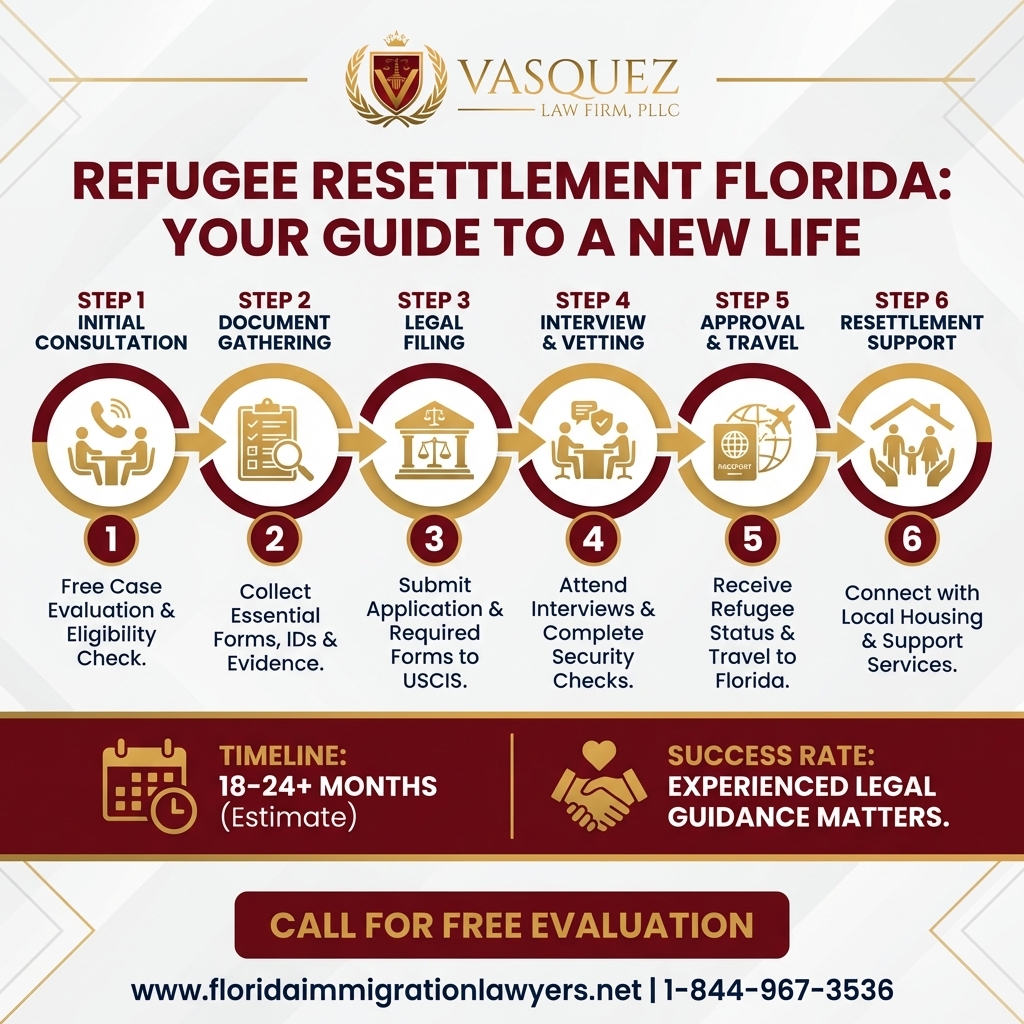
The journey from refugee status abroad to resettlement in Florida is a multi-stage process that can take a significant amount of time, often several years. Patience and thorough preparation are key. Here is a general overview of the steps involved:
- Referral to USRAP: Most refugees are referred to the U.S. Refugee Admissions Program (USRAP) by the UNHCR, a U.S. embassy, or a specially designated non-governmental organization. This initial referral identifies individuals who meet the definition of a refugee and are in need of resettlement.
- Resettlement Support Center (RSC) Processing: Once referred, the case is handled by a Resettlement Support Center (RSC) overseas. The RSC collects biographical information, conducts initial interviews, and prepares the case for review by U.S. Citizenship and Immigration Services (USCIS). This stage involves gathering extensive documentation and verifying identity.
- USCIS Interview and Adjudication: A USCIS officer conducts a thorough interview with the refugee applicant to determine eligibility for refugee status under U.S. law. This is a critical step where the applicant must demonstrate a well-founded fear of persecution. The officer reviews all evidence and makes a decision. More information on refugee processing can be found on the official USCIS website.
- Security and Medical Screenings: If preliminarily approved by USCIS, the applicant undergoes comprehensive security background checks by various U.S. government agencies. A medical examination is also required to ensure the applicant does not have a communicable disease that would pose a public health risk.
- Cultural Orientation: Prior to departure, refugees attend cultural orientation sessions. These sessions provide vital information about life in the United States, including U.S. laws, cultural norms, employment expectations, and the role of resettlement agencies.
- Assignment to a Resettlement Location and Travel: Once all clearances are obtained, the refugee is assigned to a resettlement agency in a U.S. city, often in Florida, based on factors like family ties, availability of services, and cost of living. Travel arrangements are then made through the International Organization for Migration (IOM).
- Initial Reception and Placement: Upon arrival in Florida, a local resettlement agency affiliate, perhaps in the Kissimmee area, meets the refugee at the airport. This agency provides initial housing, a modest stipend, and helps with immediate needs such as enrolling children in school, applying for social security, and finding initial employment.
- Ongoing Case Management: For several months post-arrival, the resettlement agency continues to provide case management services, assisting with integration into American society. This includes English language training, job search assistance, and access to medical care.
Essential Documents for Refugee Resettlement
Having all necessary documentation organized and readily available is paramount for a smooth refugee resettlement process. Missing or incomplete documents can cause significant delays. While the specific requirements may vary slightly based on individual circumstances, the following list outlines the typically required documents. It is always best to consult with your legal counsel or resettlement agency to confirm what you need.
- Identity Documents: Passports, national identity cards, or any other official identification from your home country. Even if expired or difficult to obtain, provide what you have and explain any discrepancies.
- Family Records: Birth certificates for all family members, marriage certificates, divorce decrees, and adoption papers. These documents are crucial for establishing family relationships and ensuring all eligible family members are included in the resettlement process.
- Proof of Persecution: Any documents, letters, photos, or other evidence that supports your claim of a well-founded fear of persecution in your home country. This could include police reports, court documents, news articles, or personal testimonies.
- Medical Records: Vaccination records, records of past illnesses or treatments, and any documentation related to chronic conditions. While a U.S. panel physician will conduct a new medical exam, having your past records can be helpful.
- Educational and Professional Certificates: Diplomas, academic transcripts, professional licenses, and employment records. These can aid in job placement and educational enrollment in Florida.
- Travel Documents: Any existing visas, entry stamps, or travel permits you may possess. Even documents related to previous attempts to seek safety can be relevant.
- Affidavit of Relationship (if applicable): If you have family members already in the U.S. who are sponsoring or assisting your resettlement, documents proving your relationship will be needed.
Always bring original documents if possible, along with certified translations into English. Keeping a secure, organized folder for these vital papers will significantly ease your journey.
Navigating Life in Florida: Resources for Refugees
Florida offers a robust network of resources designed to help refugees integrate into their new communities. From immediate needs to long-term self-sufficiency, these programs are critical for a successful transition. Understanding and utilizing these resources can make a significant difference in your resettlement experience, especially in areas like Kissimmee, which has a growing refugee population.
Initial Reception and Placement Services
Upon arrival, refugees are connected with local affiliates of national resettlement agencies. In Central Florida, these agencies often have offices in Orlando or Kissimmee. They provide initial housing, furniture, food, and clothing. They also help with critical tasks such as applying for Social Security cards, registering children for school, and accessing initial medical care. These services are crucial during the first 30-90 days.
Employment and Vocational Training
Finding stable employment is a top priority for most refugees. Florida agencies offer comprehensive employment services, including job readiness training, resume building, interview preparation, and job placement assistance. Many programs also provide vocational training to help refugees acquire new skills or adapt existing ones to the U.S. job market. For example, local community colleges and workforce development boards in the Kissimmee area often partner with resettlement agencies to offer targeted training programs. These resources are invaluable for achieving financial independence.
English Language Training (ELT) and Cultural Orientation
Language barriers can be a significant challenge. Free English as a Second Language (ESL) classes are widely available through resettlement agencies, community colleges, and adult education centers across Florida. These classes are essential for daily communication, employment, and civic engagement. Cultural orientation programs also help refugees understand American customs, laws, and societal norms, facilitating smoother integration.
Healthcare and Social Services
Refugees typically receive initial medical screening and assistance with accessing healthcare services. Depending on eligibility, they may qualify for Refugee Medical Assistance (RMA) or Medicaid. The Florida Department of Children and Families (DCF) also provides various social services, including food assistance (SNAP), cash assistance (TANF), and support for families with children. Local health clinics and community centers in Kissimmee are often equipped to serve diverse populations, offering culturally sensitive care.
Financial Considerations and Support Programs
Starting a new life in a new country comes with financial challenges. Fortunately, several programs are in place to support refugees during their initial period of resettlement in Florida. These programs aim to provide a safety net while individuals work towards self-sufficiency. Understanding what financial aid is available and how to access it is crucial for managing your transition, especially given varying costs of living across Florida, including Kissimmee.
Initial Resettlement Funds
Upon arrival, refugees typically receive a one-time Reception and Placement (R&P) grant from the U.S. Department of State, administered through local resettlement agencies. This grant is intended to cover initial expenses such as rent, food, clothing, and basic household items for the first 30-90 days. The amount is modest and designed to provide immediate relief, not long-term support. Agencies help manage these funds and assist with finding affordable housing, which can be a particular challenge in competitive markets like parts of Florida.
Refugee Cash Assistance (RCA) and Refugee Medical Assistance (RMA)
For eligible refugees who do not qualify for other federal assistance programs like Temporary Assistance for Needy Families (TANF) or Medicaid, Refugee Cash Assistance (RCA) and Refugee Medical Assistance (RMA) are available for up to eight months from the date of arrival. RCA provides financial support to meet basic needs, while RMA covers healthcare costs. These programs are vital for ensuring immediate financial stability and access to essential medical care during the critical early months of resettlement. Eligibility for these programs is determined based on income and family size.
Mainstream Benefits and Other Support
After the initial period or if eligible earlier, refugees can apply for mainstream public assistance programs available to U.S. citizens and other qualified immigrants. These may include the Supplemental Nutrition Assistance Program (SNAP, formerly food stamps), Medicaid, and Temporary Assistance for Needy Families (TANF). Access to these benefits is crucial for long-term financial stability. Additionally, many non-profit organizations and community groups in Florida, particularly in areas like Kissimmee, offer supplementary support, such as food banks, clothing drives, and financial literacy workshops. These resources collectively aim to ease the financial burden and facilitate economic integration.
Do not navigate this process alone. The complexities of applying for and maintaining refugee status, let alone understanding all the available financial support, can be overwhelming. Contact Florida Immigration Lawyers today for expert legal assistance. Our team is dedicated to helping you secure your future in Florida.
Challenges and Legal Protection for Refugees in Florida
While Florida offers numerous opportunities for refugees, the journey is not without its challenges. Navigating a new culture, language, and legal system can be daunting. Understanding these potential hurdles and knowing where to seek legal protection is crucial for long-term success and stability. Recent policy discussions, such as those highlighted in national news regarding immigration restrictions, underscore the dynamic and sometimes uncertain landscape that refugees must navigate.
Common Challenges Faced by Refugees
Refugees often face significant barriers upon arrival. Language proficiency is a primary concern, impacting employment, education, and daily interactions. Cultural differences can lead to misunderstandings and feelings of isolation. Finding affordable and suitable housing in competitive markets like Kissimmee can be difficult, as can securing sustainable employment that matches prior skills and experience. Mental health challenges, stemming from past trauma and the stresses of resettlement, are also prevalent. These issues require comprehensive support and resources to overcome.
The Importance of Legal Protection
Legal counsel is invaluable at every stage of the refugee journey. From ensuring proper documentation and understanding your rights to navigating the complex path to permanent residency, an immigration attorney can provide essential guidance. For instance, while refugee status is granted overseas, issues can arise, such as family reunification challenges (Form I-730) or even potential deportation proceedings if an individual's status is questioned. In such cases, having experienced legal representation is critical. The Executive Office for Immigration Review (EOIR) oversees immigration courts, and understanding these processes is vital for protection. More information on immigration court procedures can be found on the EOIR website.
Pathways to Permanent Residency and Citizenship
After one year of being granted refugee status in the U.S., you become eligible to apply for Lawful Permanent Resident (LPR) status, also known as a green card, by filing Form I-485, Application to Register Permanent Residence or Adjust Status. This is a critical step towards long-term stability and eventually, U.S. citizenship. The process involves submitting an application, attending an interview, and undergoing further background checks. An attorney can help ensure your application is complete and accurate, minimizing delays or potential denials. Once you obtain LPR status, after five years (or three years if married to a U.S. citizen), you may be eligible to apply for U.S. citizenship, solidifying your place in your new home. Our firm also assists with family immigration matters, helping you unite with loved ones.
Common Mistakes to Avoid During Refugee Resettlement
The refugee resettlement process is complex, and even small errors can lead to significant delays or adverse outcomes. Being aware of common pitfalls can help you navigate your journey more successfully. Avoid these mistakes to protect your status and future in Florida.
- Failing to Disclose Full History: Omitting or misrepresenting information about your past, including criminal history or prior immigration applications, can lead to charges of misrepresentation and potentially denial of benefits or even deportation. Always be truthful and comprehensive.
- Missing Important Deadlines: Immigration processes are strict with deadlines for filing applications, responding to requests for evidence, or appearing for interviews. Missing a deadline can result in the automatic denial of your application without further review, requiring you to restart or appeal.
- Not Keeping Address Updated with USCIS: You are legally required to inform USCIS of any change of address within 10 days of moving by filing Form AR-11. Failure to do so can result in important notices and interview appointments being sent to the wrong address, leading to missed opportunities and potential negative consequences for your case.
- Traveling Outside the U.S. Without Permission: As a refugee, traveling outside the United States without obtaining a Refugee Travel Document (Form I-131, Application for Travel Document) can be considered abandonment of your refugee status. Always consult with an attorney before planning any international travel.
- Incomplete or Inaccurate Applications: Submitting forms with errors, missing signatures, or insufficient supporting documentation is a leading cause of delays and Requests for Evidence (RFEs). This can prolong your process significantly and add stress.
- Not Seeking Professional Legal Advice: Attempting to navigate the entire immigration system alone, especially with complex refugee cases, can lead to critical errors. An experienced immigration attorney can help you understand your rights, prepare documents accurately, and represent you effectively.
- Ignoring Communications from USCIS or Resettlement Agencies: All letters, emails, or phone calls from immigration authorities or your assigned resettlement agency are important. Ignoring them can mean missing crucial instructions, interview dates, or requests for information, which could jeopardize your status.
- Failing to Understand Work Authorization Rules: Refugees are generally authorized to work immediately upon arrival. However, understanding the scope of this authorization and any necessary steps (like obtaining an Employment Authorization Document, EAD) is important to avoid unauthorized employment, which can have legal repercussions.
When to Call a Lawyer for Refugee Resettlement in Florida
While resettlement agencies provide invaluable support for initial integration, there are many situations where the specialized expertise of an immigration lawyer becomes absolutely essential. The legal landscape of refugee status and adjustment is intricate and constantly evolving. Knowing when to seek legal counsel can protect your rights and ensure a smoother path to a new life in Florida.
You should contact Florida Immigration Lawyers if you encounter any of the following scenarios:
- Complex Eligibility Issues: If your case involves complicated family situations, prior immigration history, or any criminal record, an attorney can assess the impact on your eligibility and advise on the best course of action.
- Application Denials or Requests for Evidence (RFEs): If your Form I-485 application for lawful permanent residency is denied, or you receive an RFE that you don't fully understand, legal counsel is critical for appealing the decision or providing a comprehensive response.
- Family Reunification Challenges: Sponsoring family members through Form I-730, Refugee/Asylee Relative Petition, can be complex. An attorney can help navigate eligibility requirements, documentation, and processing times to unite your family. Our firm specializes in family immigration matters.
- Deportation or Removal Proceedings: If you or a family member is placed in deportation defense proceedings, immediate legal representation is vital. An attorney can defend your rights and explore all available relief.
- Questions About Travel Documents: Before traveling internationally, it is imperative to understand the implications for your refugee status. An attorney can advise on obtaining a Refugee Travel Document and potential risks.
- Suspicions of Fraud or Misrepresentation: If you are accused of fraud or misrepresentation at any stage of your application, this is a serious matter requiring immediate legal intervention.
- Desire for Citizenship: Once eligible for naturalization, an attorney can guide you through the N-400 application process, prepare you for the civics test and interview, and address any potential issues. Our citizenship services are comprehensive.
- General Legal Advice and Advocacy: For any questions regarding your rights as a refugee, access to benefits, or interactions with immigration authorities, an attorney serves as your advocate and trusted advisor.
Florida Immigration Lawyers has extensive experience in all aspects of immigration law, including refugee and asylum cases. We understand the unique needs of individuals and families seeking a new life in Florida, particularly in diverse communities like Kissimmee. Our dedicated attorneys are here to provide compassionate and effective legal representation.
About Florida Immigration Lawyers
Florida Immigration Lawyers is a premier law firm dedicated to providing comprehensive and compassionate legal services to individuals and families throughout Florida. We understand the profound impact immigration matters have on people's lives, and we are committed to guiding our clients through every step of their journey with expertise and empathy.
Our firm specializes in a wide range of immigration services, including refugee and asylum claims, family-based petitions, employment visas, deportation defense, and naturalization. With a deep understanding of U.S. immigration law and its ever-changing policies, our experienced attorneys are well-equipped to handle even the most complex cases. We pride ourselves on offering personalized attention, strategic advice, and unwavering advocacy for each client.
Choosing Florida Immigration Lawyers means partnering with a team that genuinely cares about your future. We are available 24/7 to answer your questions and offer free consultations to assess your unique situation. Our bilingual staff ensures that language is never a barrier to receiving quality legal representation. We serve clients across all of Florida, including Kissimmee and surrounding areas, providing accessible and effective legal solutions. Your journey to a new life in Florida is our priority.
Sources and References
- U.S. Citizenship and Immigration Services (USCIS)
- U.S. Department of State
- Executive Office for Immigration Review (EOIR)
- 8 U.S.C. Chapter 12 - Immigration and Nationality Act (INA) Section 1101(a)(42)
- 8 CFR Part 207 - Refugee Status
- UNHCR - The UN Refugee Agency
Related services: asylum application process, withholding of removal, humanitarian protection programs.
This article provides general legal information and is not intended as legal advice. Every case is unique, and outcomes depend on specific facts and circumstances. Contact an attorney for advice about your particular situation.
Embarking on a new life as a refugee in Florida is a significant undertaking, filled with both hope and challenges. With the right legal support, you can navigate the complexities of the immigration system and build a secure future for yourself and your family. Do not hesitate to seek professional guidance.
Contact Florida Immigration Lawyers today for a free, confidential consultation. Call us at 1-844-967-3536. Se Habla Espanol - Estamos aqui para ayudarle.
Do Not Navigate This Process Alone
Our experienced immigration attorneys are ready to fight for you. Get a free, confidential consultation today.
Se Habla Español
Frequently Asked Questions

William J. Vásquez
Founding Attorney · Vasquez Law Firm
U.S. Air Force veteran and immigration attorney with thousands of cases resolved. J.D., NCCU School of Law. AILA member. Admitted to the 4th, 5th, and 11th Circuit Courts.
Available 24/7 - Free Evaluations
Related Legal Services
Our Florida immigration attorneys can help you with asylum protection, deportation defense and citizenship and naturalization. Call today at 1-844-967-3536 for a free consultation.
Related Links
Related Topics
Free Legal Consultation
Discuss your case with our experienced attorneys. We're available 24/7.
Se Habla Español - Estamos aquí para ayudarle.
Related Articles
Immigration Lawyer Cape Coral: Your SW Florida Legal Guide
Navigating immigration law in Cape Coral, Fort Myers, or Southwest Florida demands expert legal guidance. Florida Immigration Lawyers offers comprehensive services for visas, green cards, citizenship, and deportation defense, ensuring your case is handled with precision and care. From understanding complex forms to representing you in court, our dedicated team simplifies the process. We provide tailored strategies for family and employment-based immigration, offering crucial support through evolving laws. Don't risk delays or denials; partner with a trusted immigration lawyer in Lee County. Contact us for a free consultation and secure your future in Florida.
K-3 Spouse Visa Timeline in Florida 2026 | VLF Florida
Navigating the K-3 spouse visa process in Florida can be complex. Learn about the timeline, costs, and common mistakes to avoid. Contact Florida Immigration Lawyers for expert guidance.
ICE Check-In Attorney Florida Representation | VLF Florida
ICE check-ins in Florida, especially in cities like Orlando, are crucial for immigrants under supervision. Learn why having an attorney is vital, how ISAP affects you, and how to prepare. Call Florida Immigration Lawyers for guidance.
CR-1 IR-1 Spouse Visa Consular Processing Florida | VLF Florida
For U.S. citizens and green card holders in Florida, sponsoring a foreign national spouse for a CR-1 or IR-1 immigrant visa is a significant step towards family reunification. This comprehensive guide details the entire consular processing journey, from filing the initial I-130 petition with USCIS to navigating the National Visa Center (NVC) and attending the consular interview abroad. We break down the differences between conditional (CR-1) and immediate (IR-1) residency, provide crucial insights into current processing timelines and associated costs as of 2026, and highlight common mistakes to avoid. Florida Immigration Lawyers offers expert guidance to ensure a smooth and successful application process for families across the state, including St. Petersburg, Tampa, and Miami.