Understanding the Asylum One-Year Deadline in Florida
Navigating the asylum one-year deadline in Florida is crucial for those seeking refuge. Learn about Form I-589, exceptions, and how to avoid common mistakes. Consult with Florida Immigration Lawyers for expert guidance.

- File within one year of your last entry into the U.S.
- Understand exceptions like changed circumstances.
- Consult an attorney for guidance.
- Homestead, Florida has specific resources available.
Introduction
Imagine facing persecution in your home country and seeking refuge in Florida. Now, consider the critical one-year filing deadline for asylum seekers, a deadline that could define your future. This article explores the essentials of the asylum one-year deadline, the importance of Form I-589, and how changed circumstances may impact your case. Whether you're in Homestead or any part of Florida, understanding these details is vital. Call Florida Immigration Lawyers at 1-844-967-3536 for a free consultation.
The journey to asylum is often fraught with emotional and legal complexities. For those fleeing unimaginable dangers, the United States offers a beacon of hope, but navigating its intricate immigration laws requires precision and prompt action. The one-year deadline is not merely a bureaucratic hurdle; it's a fundamental requirement designed to ensure the timely presentation of asylum claims, reflecting the urgency of genuine fear of persecution.
This comprehensive guide aims to demystify the process, providing clarity on the critical steps involved, the necessary documentation, and the potential pitfalls to avoid. From understanding the nuances of 'changed circumstances' to preparing for your asylum interview, we'll equip you with essential knowledge. Our goal is to empower you with the information needed to pursue your asylum claim effectively in Florida, emphasizing the invaluable role of experienced legal counsel throughout this life-altering process.
Understanding the Asylum One-Year Deadline
The one-year filing deadline for asylum seekers is a critical component of the U.S. immigration process, detailed under the Immigration and Nationality Act (INA) Section 208. This deadline requires asylum seekers to file Form I-589 within one year of their last arrival in the United States. Missing this deadline can result in the denial of your asylum application.
Exceptions exist, such as changed circumstances or extraordinary conditions, but they are applied stringently. Understanding these exceptions is crucial for anyone seeking asylum in Florida, including areas like Homestead.
The rationale behind this strict deadline is to encourage prompt filing, which helps verify the credibility of claims and prevents individuals from using asylum as a means to circumvent other immigration laws after a significant delay. However, U.S. immigration law recognizes that life-altering events can occur, making timely filing impossible for some. This is where the exceptions come into play, offering a narrow pathway for those who can demonstrate a valid reason for their delay.
For example, 'changed circumstances' could include new laws or government policies in your home country that now put you at risk, or a significant change in your personal situation (e.g., marrying someone who is now persecuted). 'Extraordinary conditions' might cover severe illness, mental or physical disability, or legal incapacity during the one-year period. Proving these exceptions requires compelling evidence and a detailed explanation, making the assistance of an attorney from Florida Immigration Lawyers invaluable. They can help you identify if an exception applies to your case and gather the necessary documentation to support it effectively.
Step-by-Step Guide to Filing Form I-589
- Gather Required Documents: Collect all necessary documents, including personal identification, evidence of persecution, and any supporting affidavits.
- Complete Form I-589: Fill out the asylum application form accurately. Ensure all information is truthful and complete.
- Submit Your Application: File your application with the USCIS office that serves your area. In Florida, this often means the Miami Asylum Office.
- Attend the Biometrics Appointment: You will receive a notice to provide fingerprints and other biometric data.
- Interview Preparation: Prepare thoroughly for your asylum interview, often held at a local USCIS office.
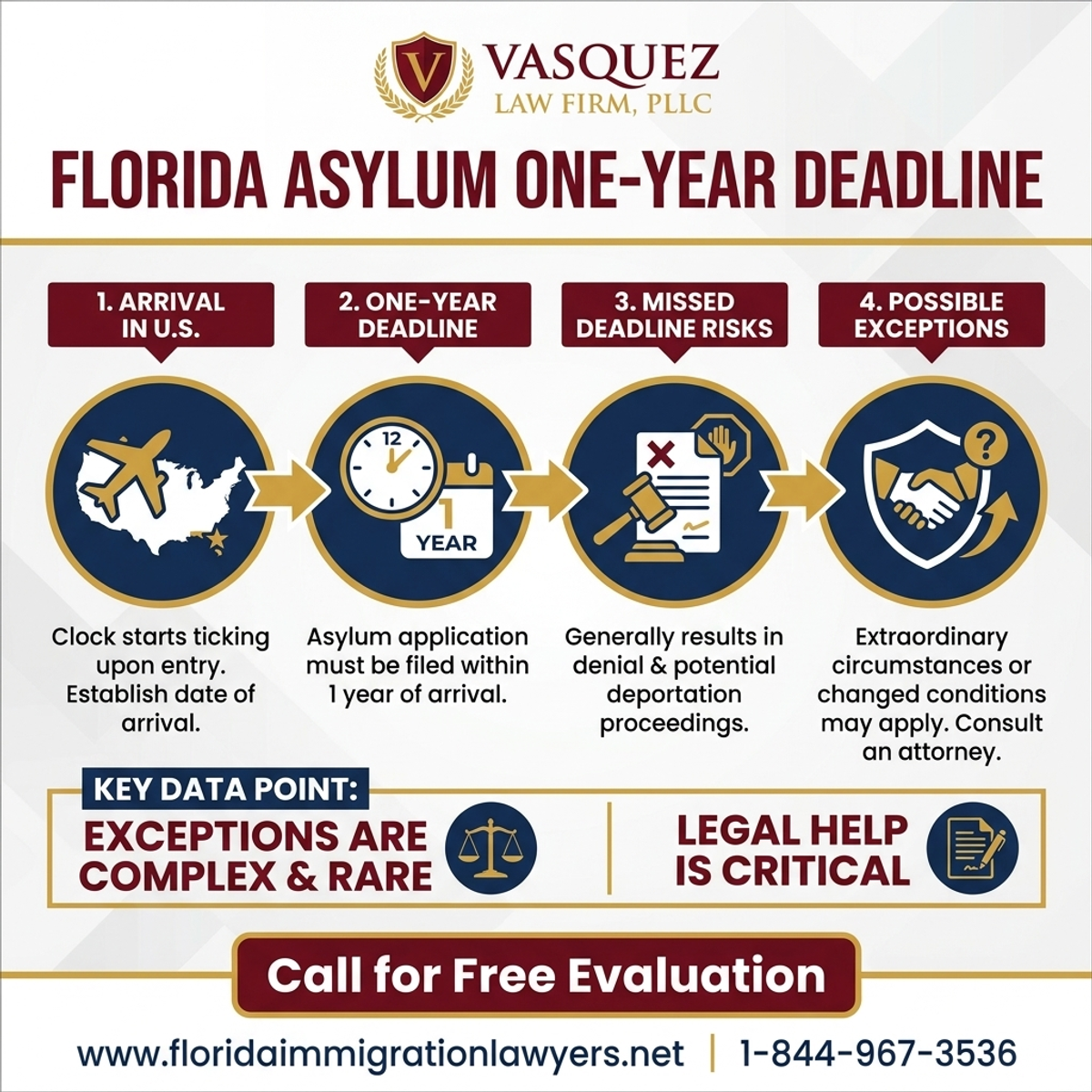
Step-by-Step Process — Understanding the Asylum One-Year Deadline in Florida
Expanding on these steps, gathering required documents means more than just collecting papers; it involves meticulously organizing them and ensuring they are translated into English by a certified translator, if necessary. This could include birth certificates, marriage licenses, school records, medical reports detailing injuries from persecution, police reports, news articles about your situation or country conditions, and letters from human rights organizations. The stronger and more diverse your evidence, the more compelling your case will be.
Completing Form I-589 requires extreme attention to detail. Every question must be answered truthfully and consistently with any other statements you've made to immigration officials. Inconsistencies, even minor ones, can severely damage your credibility. It's advisable to draft your personal statement carefully, detailing your fear of persecution, the reasons for it, and why you believe you cannot return to your home country. This narrative is the heart of your application.
After submitting your application, you will receive a receipt notice, which is crucial for tracking your case and applying for work authorization later. The biometrics appointment is mandatory and involves providing fingerprints, photographs, and a signature for background checks. Missing this appointment without proper rescheduling can lead to delays or even denial. Finally, preparing for your asylum interview involves reviewing your entire application, anticipating questions, and practicing how to articulate your story clearly and concisely. An attorney from Florida Immigration Lawyers can conduct mock interviews to help you feel confident and prepared.
Document Checklist for Asylum Application
- Completed Form I-589
- Passport-sized photos
- Copy of your passport or other travel document
- Evidence of persecution (e.g., police reports, medical records)
- Affidavits from witnesses
- Legal documents relating to changed circumstances
To elaborate on the importance of each document, the completed Form I-589 serves as the foundation of your claim, outlining your personal history and the basis for your fear. Passport-sized photos are for identification purposes, while copies of your passport or other travel documents establish your identity and entry into the U.S. These seem basic, but any discrepancies can raise questions.
Evidence of persecution is arguably the most critical component. This can range from official documents like police reports, court records, or arrest warrants, to more personal items such as medical records detailing injuries, psychological evaluations, photographs of injuries or destroyed property, and threatening letters or messages. These documents provide tangible proof of the harm you've suffered or fear. Affidavits from witnesses, including family, friends, or experts, can corroborate your story and provide additional context about your persecution or country conditions. If you are claiming an exception to the one-year deadline, legal documents or other evidence proving changed circumstances or extraordinary conditions are absolutely essential. For instance, new laws in your home country might require official government publications, or a severe illness might require medical records and doctor's notes. All foreign language documents must be accompanied by a certified English translation.
Timeline and Processing Expectations
Typically, the asylum application process can take several months to over a year. After filing Form I-589, you will receive a receipt notice from USCIS. The biometrics appointment usually follows within a few weeks. The interview scheduling depends on the caseload of the local USCIS office, such as in Miami, Florida. Delays are common, particularly if there are many applicants or if additional evidence is required.
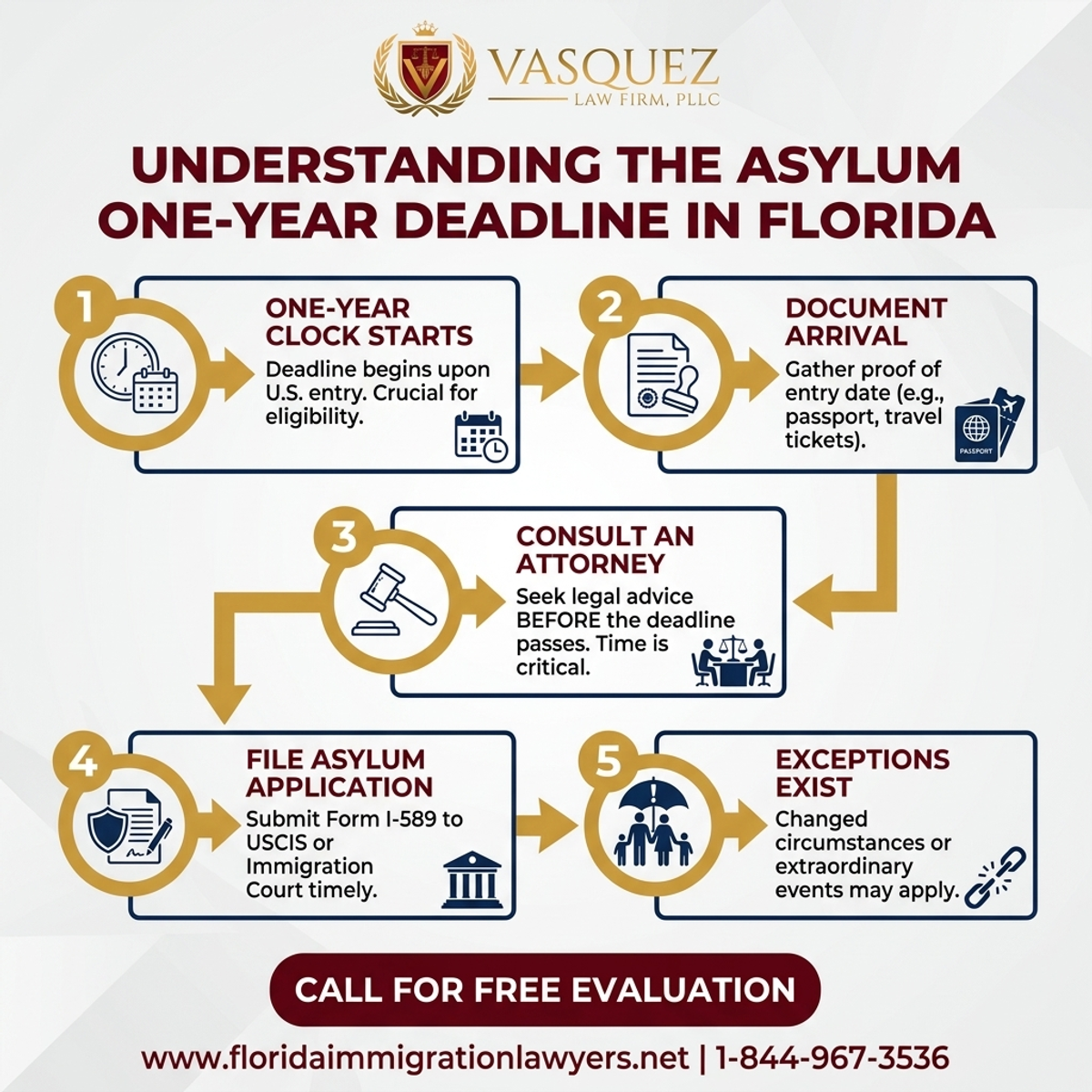
Key Statistics — Understanding the Asylum One-Year Deadline in Florida
The length of the asylum process can vary significantly based on factors such as the complexity of your case, the volume of applications at your specific asylum office, and any changes in immigration policy. While some cases are resolved relatively quickly, others can languish for years. During this waiting period, many asylum seekers become eligible to apply for an Employment Authorization Document (EAD) after 150 days, allowing them to work legally in the U.S. This provides crucial stability while awaiting a decision.
After your interview, the asylum officer will review your case and may issue a decision or request additional information. If your case is not granted by the asylum officer, it will typically be referred to an Immigration Judge in removal proceedings, giving you another opportunity to present your case. This referral process can add significant time to the overall timeline. Given these potential delays and the critical nature of each stage, maintaining open communication with your legal counsel from Florida Immigration Lawyers is essential to stay informed about your case's progress and to respond promptly to any USCIS requests.
Cost Factors and Fee Breakdown
Filing for asylum itself does not incur a fee. However, costs may arise from gathering documentation, legal assistance, and other related expenses. It's advisable to budget for these potential costs, especially if you need to hire an attorney to navigate complex legal issues. Legal representation can be invaluable in ensuring a thorough and compelling application.
While USCIS does not charge a fee for Form I-589, applicants should anticipate other necessary expenditures. These can include fees for obtaining official documents from your home country, certified translations of foreign documents, medical examinations if persecution involved physical harm, travel expenses for appointments, and potentially expert witness fees if specialized testimony is required to support your claim about country conditions or psychological impact. These ancillary costs can add up, so planning is crucial.
The most significant investment for many asylum seekers is legal representation. While not mandatory, having an experienced immigration attorney significantly increases your chances of success. An attorney helps in gathering comprehensive evidence, preparing a compelling personal statement, navigating complex legal arguments for exceptions to the one-year deadline, and expertly representing you during interviews and court hearings. Many firms, including Florida Immigration Lawyers, offer free initial consultations (call 1-844-967-3536) to discuss your case and provide an estimate of legal fees, helping you understand the financial commitment upfront.
Do not navigate this process alone. Contact Florida Immigration Lawyers today.
Common Mistakes to Avoid
- Missing the One-Year Deadline: Failing to file within one year can lead to denial unless exceptions apply.
- Incomplete Application: Omitting information can delay processing and negatively impact your case.
- Insufficient Evidence: Lack of documentation to support your claim can result in denial.
- Ignoring Changed Circumstances: Not updating your application with new evidence or changes in your situation can be detrimental.
- Not Seeking Legal Advice: Navigating asylum laws without professional help can lead to critical errors.
- Missing Appointments: Failing to attend biometrics or interviews can stall your application process.
- Providing Inconsistent Information: Discrepancies in your story can damage credibility.
- Late Evidence Submission: Submitting evidence after deadlines without proper justification can weaken your case.
- Misunderstanding the Process: Lack of knowledge about asylum proceedings can lead to errors.
- Not Preparing for Interviews: Being unprepared for your interview can result in a poor outcome.
Frequently Asked Questions About Asylum in Florida
What if I genuinely didn't know about the one-year deadline?
Unfortunately, ignorance of the law is generally not considered a valid exception to the one-year filing deadline. USCIS and immigration courts expect applicants to be aware of the requirements. However, if your lack of knowledge was due to specific extraordinary circumstances, such as severe trauma or prolonged detention without access to legal counsel, an attorney from Florida Immigration Lawyers might be able to argue for an exception. It's crucial to consult with an expert immediately to assess your unique situation and explore all potential avenues for relief.
Can I apply for a work permit while my asylum application is pending?
Yes, asylum applicants are generally eligible to apply for an Employment Authorization Document (EAD), also known as a work permit, 150 days after filing a complete Form I-589, provided your application is not frivolous. The EAD allows you to work legally in the U.S. while your asylum case is being processed. It's important to file Form I-765 (Application for Employment Authorization) correctly and track the waiting period. Florida Immigration Lawyers can assist you in preparing and submitting your EAD application efficiently.
What happens if my asylum claim is denied?
If your asylum claim is denied by a USCIS Asylum Officer, your case will typically be referred to an Immigration Judge in removal proceedings, unless you are in a valid immigration status. This means you will have another opportunity to present your asylum claim before the Immigration Court. You may also be able to appeal the Immigration Judge's decision to the Board of Immigration Appeals (BIA). Navigating these stages is highly complex, making legal representation from Florida Immigration Lawyers essential for your defense.
How do "changed circumstances" really work as an exception?
Changed circumstances refer to significant developments directly related to your eligibility for asylum that occurred after your arrival in the U.S. or after the one-year deadline. These could include new laws or government policies in your home country, a new form of persecution, or a change in your personal circumstances that now puts you at risk. You must prove these changes materially affect your asylum eligibility. Documenting these changes thoroughly is vital, and an attorney can help you build a strong case.
Is it possible to apply for asylum if I entered the U.S. without inspection?
Yes, it is generally possible to apply for asylum even if you entered the U.S. without inspection (i.e., illegally crossing the border). The method of entry does not automatically bar you from seeking asylum, provided you meet the eligibility criteria, including the one-year filing deadline or an applicable exception. However, your entry method can impact the procedural path of your case, often leading to removal proceedings. Consulting with Florida Immigration Lawyers is highly recommended to understand the specific implications for your situation.
When to Call a Lawyer
If you are unsure about your eligibility for asylum or have missed the one-year deadline, it is crucial to consult with an attorney. Legal experts can help you understand exceptions to the deadline, such as changed circumstances or extraordinary conditions. They can also assist in preparing your case and representing you at hearings or interviews.
Florida Immigration Lawyers offers comprehensive services to guide you through this complex process. Our team is well-versed in Florida-specific immigration issues and can provide the support you need.
Beyond the deadline, there are many scenarios where legal counsel becomes indispensable. For instance, if you have a criminal record, prior immigration violations, or if your case involves particularly sensitive or complex persecution claims (e.g., based on sexual orientation, gender identity, or specific political opinions), an attorney can navigate these challenges. Language barriers, fear of recounting traumatic events, or simply not understanding the intricate legal terminology can also make the process overwhelming without professional help.
An attorney from Florida Immigration Lawyers will not only help you prepare and file your Form I-589 but also meticulously gather and organize evidence, draft persuasive legal arguments, prepare you extensively for your interview, and represent you effectively before USCIS or in immigration court. Their expertise ensures that your rights are protected and that your story is presented in the strongest possible light, significantly enhancing your chances for a successful outcome. Don't hesitate to call 1-844-967-3536 for a free consultation.
About Florida Immigration Lawyers
Florida Immigration Lawyers is dedicated to serving immigrants across Florida, including the Homestead area. We offer a range of services, from asylum and deportation defense to family and business immigration. Our team is available 24/7, providing free consultations to help you navigate the immigration process. Contact us at 1-844-967-3536 or visit our website at www.floridaimmigrationlawyers.net.
Our firm understands the profound impact that immigration matters have on individuals and families. We are committed to providing compassionate, client-centered legal services, ensuring that every client feels heard, understood, and confidently represented. Our attorneys possess deep knowledge of U.S. asylum law, including the specific nuances of Florida's immigration landscape, and stay abreast of the latest policy changes and legal precedents.
Whether you are just beginning your asylum journey, facing an interview, or dealing with a denied claim, Florida Immigration Lawyers is here to advocate for you. We pride ourselves on our proactive approach, meticulous case preparation, and unwavering dedication to achieving the best possible outcomes for our clients. Reach out to us today for a free consultation and let us help you secure your future in the United States.
Sources and References
- U.S. Citizenship and Immigration Services (USCIS)
- Executive Office for Immigration Review (EOIR)
- 8 U.S.C. Chapter 12 - Immigration and Nationality Act
Related services: immigration practice areas, family immigration services.
This article provides general legal information and is not intended as legal advice. Every case is unique, and outcomes depend on specific facts and circumstances. Contact an attorney for advice about your particular situation.
Call us at 1-844-967-3536 for a free consultation. Se Habla Espanol - Estamos aqui para ayudarle.
If you need legal assistance, learn more about experienced asylum attorneys, or call us at 1-844-967-3536 for a free consultation.
Do Not Navigate This Process Alone
Our experienced immigration attorneys are ready to fight for you. Get a free, confidential consultation today.
Se Habla Español
Frequently Asked Questions

William J. Vásquez
Founding Attorney · Vasquez Law Firm
U.S. Air Force veteran and immigration attorney with thousands of cases resolved. J.D., NCCU School of Law. AILA member. Admitted to the 4th, 5th, and 11th Circuit Courts.
Available 24/7 - Free Evaluations
Related Legal Services
Our Florida immigration attorneys can help you with family immigration services, immigration practice areas and free immigration consultation. Call today at 1-844-967-3536 for a free consultation.
Related Links
Related Topics
Free Legal Consultation
Discuss your case with our experienced attorneys. We're available 24/7.
Se Habla Español - Estamos aquí para ayudarle.
Related Articles
Biometrics Appointment in Florida: What to Expect in 2026
Navigating a biometrics appointment in Florida is crucial for your USCIS process. Learn what to expect, how to prepare, and common pitfalls to avoid. Florida Immigration Lawyers are here to help with personalized guidance and support.
Withholding of Removal Explained: Florida Defense in 2026
For those in Florida facing deportation and fearing persecution or torture in their home country, understanding withholding of removal is critical. This form of protection prevents removal to a dangerous country, though it differs significantly from asylum in its eligibility criteria and benefits. It requires proving a "more likely than not" chance of persecution based on protected grounds or torture, a higher standard than asylum's "well-founded fear." While withholding of removal does not lead to a Green Card, it offers mandatory protection if the stringent criteria are met, even for some individuals barred from asylum. The process involves complex legal proceedings before an immigration judge, often in Miami or Orlando immigration courts. A comprehensive application, detailed testimony, and robust supporting evidence, including country conditions reports and affidavits, are essential. Given the high stakes and intricate legal requirements, securing the expertise of a Florida immigration lawyer is paramount to building a strong defense and navigating the path to safety.
US Visa Policy Changes July 2026: What Students in Florida
As of July 2026, international students in Florida seeking a change of status to an F-1 student visa must prepare for potential adjustments to U.S. visa policies. This comprehensive guide from Florida Immigration Lawyers explores the anticipated policy changes, detailing their potential impact on application requirements, processing times, and eligibility criteria. We provide a step-by-step overview of the change of status process, including a document checklist, expected timelines, and cost considerations. Understanding these complexities and avoiding common mistakes is crucial for a successful application. With potential changes approaching, proactive planning and expert legal guidance are more important than ever. Our firm is dedicated to helping students in Tampa and across Florida navigate these challenges, offering tailored advice and robust representation. Learn how to protect your academic future and ensure a smooth transition to F-1 student status.
Dual Citizenship Lawyer: Your 2026 Guide to Naturalization
Achieving U.S. citizenship is a profound milestone, but the path to naturalization, especially with dual citizenship in mind, is fraught with legal intricacies and a critical interview process. This comprehensive guide from Florida Immigration Lawyers demystifies the journey, offering essential citizenship interview tips and highlighting the invaluable role of a dual citizenship lawyer. We cover eligibility, document preparation, timelines, and common pitfalls, all tailored for Florida residents in areas like Pembroke Pines. Discover how expert legal counsel can prepare you for your naturalization interview, address dual nationality concerns, and ensure a smooth, successful application. From initial assessment to interview representation, we provide the support needed to navigate USCIS requirements confidently. Call Florida Immigration Lawyers for a free consultation to start your journey.