Dual Citizenship Lawyer: Your 2026 Guide to Naturalization
Achieving U.S. citizenship is a profound milestone, but the path to naturalization, especially with dual citizenship in mind, is fraught with legal intricacies and a critical interview process. This comprehensive guide from Florida Immigration Lawyers demystifies the journey, offering essential citizenship interview tips and highlighting the invaluable role of a dual citizenship lawyer. We cover eligibility, document preparation, timelines, and common pitfalls, all tailored for Florida residents in areas like Pembroke Pines. Discover how expert legal counsel can prepare you for your naturalization interview, address dual nationality concerns, and ensure a smooth, successful application. From initial assessment to interview representation, we provide the support needed to navigate USCIS requirements confidently. Call Florida Immigration Lawyers for a free consultation to start your journey.

A dual citizenship lawyer in Florida can provide essential guidance throughout the complex naturalization process, including crucial preparation for your citizenship interview. They ensure all documentation is accurate, help you understand the legal implications of dual nationality, and represent you if complications arise. For individuals in Florida, especially in areas like Pembroke Pines, having expert legal counsel can significantly improve your chances of a successful naturalization outcome, safeguarding your rights and clarifying potential issues related to maintaining two nationalities.
- Expert legal counsel for the naturalization process.
- Comprehensive preparation for your citizenship interview.
- Guidance on the implications and legalities of dual citizenship.
- Assistance with complex cases and potential issues.
- Representation and advocacy throughout your application.
For many immigrants in Florida, achieving U.S. citizenship is the culmination of a lifelong dream, offering stability, rights, and a sense of belonging. However, the path to naturalization, especially when considering dual citizenship, is often filled with intricate legal requirements, extensive paperwork, and a critical interview process. Navigating these complexities alone can be daunting, leading to delays or even denials. Understanding the nuances of the naturalization interview and the implications of dual nationality is paramount for a successful outcome.
This comprehensive guide from Florida Immigration Lawyers aims to demystify the naturalization process, provide invaluable citizenship interview tips, and highlight how a dedicated dual citizenship lawyer can be your strongest advocate. We will explore the steps involved, crucial documents, timelines, and common pitfalls to avoid, all with a focus on the Florida context. If you are ready to take the next step towards U.S. citizenship or have questions about dual nationality, do not hesitate. Call Florida Immigration Lawyers at 1-844-967-3536 for a free consultation today.
Understanding Dual Citizenship and Naturalization in Florida
Dual citizenship, also known as dual nationality, refers to a person being a citizen of two countries simultaneously. The United States generally permits its citizens to hold dual nationality. This means that when you naturalize as a U.S. citizen, you typically do not have to renounce your prior citizenship unless specifically required by your home country's laws. For many residents of Florida, particularly those from Latin American and Caribbean nations, maintaining ties to their country of origin through dual citizenship is a significant consideration. A dual citizenship lawyer can clarify how U.S. law and your country of origin's laws intersect, ensuring you make informed decisions.
Naturalization is the process by which a foreign citizen or national becomes a citizen of the United States. It involves meeting specific eligibility requirements outlined in the Immigration and Nationality Act (INA) Section 316, such as continuous residence, physical presence, good moral character, and an attachment to the principles of the U.S. Constitution. For Florida residents, the process is managed by U.S. Citizenship and Immigration Services (USCIS) through various field offices, including those in Miami, Orlando, and Tampa. These offices serve a vast and diverse immigrant population, reflecting Florida's status as a gateway state for many new Americans. Understanding these foundational concepts is the first step towards a successful application.
A Florida dual citizenship lawyer provides invaluable assistance from the very beginning. They can assess your eligibility, help you gather and organize the necessary documentation, and accurately complete Form N-400, Application for Naturalization. Their expertise is crucial in identifying potential issues, such as past criminal records, extended absences from the U.S., or complex marital histories, which could impact your application. By proactively addressing these concerns, a lawyer helps streamline your journey to citizenship and ensures compliance with all legal requirements, offering peace of mind throughout the rigorous process.
What is the Naturalization Interview Process in Florida?
The naturalization interview is a mandatory and pivotal step in becoming a U.S. citizen. It is conducted by a USCIS officer to verify the information on your Form N-400, assess your English language proficiency, and test your knowledge of U.S. history and government (civics). For applicants in Florida, these interviews take place at a local USCIS field office, such as the ones in Miami, Orlando, or Tampa, depending on your residency. The interview is a formal proceeding where accuracy and honesty are paramount. It typically lasts between 20 to 45 minutes, though it can vary based on the complexity of your case and the officer conducting the interview.
During the interview, the USCIS officer will review your application and supporting documents, ask questions about your background, family, employment, travel history, and good moral character. They will also administer the English test, which includes reading and writing simple sentences, and the civics test, consisting of up to 10 questions from a list of 100 possible questions. To pass, you must answer at least six correctly. This comprehensive evaluation ensures that applicants meet the statutory requirements for naturalization as per 8 CFR Part 316 and 335. Proper preparation for this interview is not just recommended; it is essential for a positive outcome.
Many applicants, especially those from Pembroke Pines and other South Florida communities, find the interview to be the most nerve-wracking part of the naturalization process. The pressure to perform well in English, coupled with the detailed questions about personal history, can be overwhelming. This is where professional guidance becomes indispensable. Preparing thoroughly, understanding what to expect, and practicing your answers can significantly boost your confidence. A dedicated dual citizenship lawyer can offer specific citizenship interview tips, conduct mock interviews, and ensure you are fully equipped to demonstrate your eligibility and commitment to U.S. citizenship effectively.
How Can a Dual Citizenship Lawyer Help with Your Naturalization Interview?
A dual citizenship lawyer provides invaluable assistance specifically tailored to preparing you for your naturalization interview, significantly enhancing your chances of success. Their expertise goes beyond simply reviewing your N-400 application; they offer strategic guidance on how to present your case effectively and confidently. For individuals residing in Florida, where USCIS offices handle thousands of naturalization applications annually, having a lawyer means you are not just another number, but a client with a meticulously prepared case. This support is particularly crucial if your case involves any complexities, such as a criminal record, extended overseas travel, or previous immigration issues.
One of the primary ways a lawyer helps is through comprehensive pre-interview preparation. This often includes conducting mock interviews, which simulate the actual USCIS interview experience. These practice sessions allow you to become familiar with the types of questions asked, refine your English communication skills, and confidently answer civics questions. Your attorney will also review all your original documents, ensuring they are correctly organized and readily accessible for the interview. They can anticipate potential questions based on your specific application and advise you on the best way to respond, ensuring consistency and accuracy with your submitted N-400 form and supporting evidence.
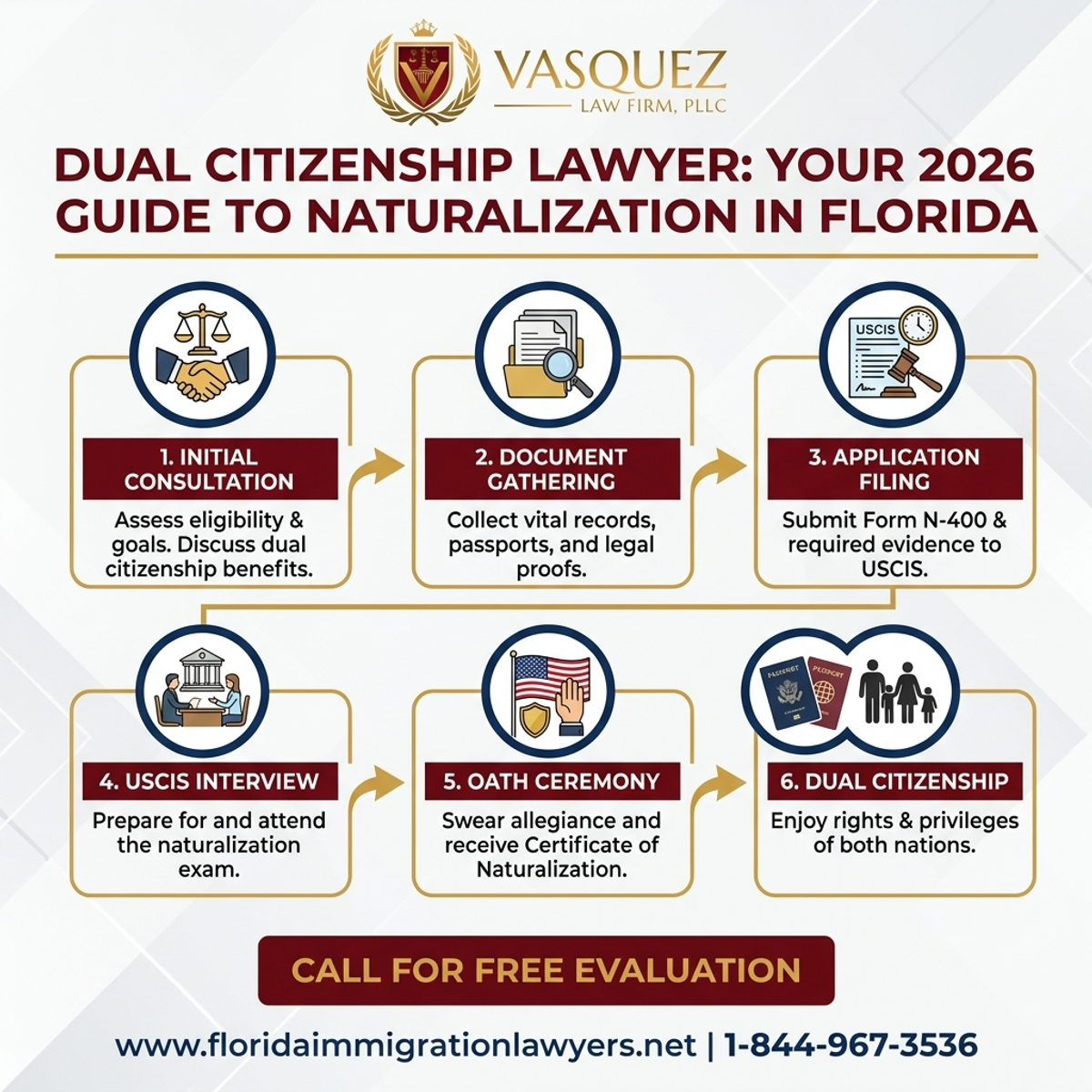
Step-by-Step Process — Dual Citizenship Lawyer: Your 2026 Guide to Naturalization in Florida
Furthermore, a dual citizenship lawyer can represent you at the interview. While not mandatory, having legal counsel present can be immensely beneficial. Your attorney can clarify questions, address any misunderstandings, and advocate on your behalf if the USCIS officer raises concerns or requests additional documentation. They also provide crucial advice regarding the implications of dual citizenship, helping you understand how becoming a U.S. citizen may affect your existing nationality and any obligations or rights you may have in your country of origin. This holistic support ensures that every aspect of your naturalization and dual citizenship considerations is expertly managed, providing reassurance and strategic advantage during a critical stage of your immigration journey.
Essential Documents for Your Naturalization Interview
Preparing the correct and complete documentation is a critical component of a successful naturalization interview. The USCIS officer will review your original documents to verify the information provided on your N-400 application. Failing to bring required documents or presenting incomplete information can lead to delays, requests for additional evidence, or even a denial of your application. Organizing these documents meticulously before your interview day, especially for residents of busy metropolitan areas like Miami or Orlando, can alleviate stress and demonstrate your thoroughness to the USCIS officer.
Here is a comprehensive checklist of documents you should prepare for your naturalization interview:
- Your Green Card (Permanent Resident Card).
- Your State-issued identification (driver's license or state ID).
- All valid and expired passports, including re-entry permits and travel documents.
- Your most recent N-400, Application for Naturalization, along with any supporting documents you submitted.
- Proof of continuous residence and physical presence, such as tax returns for the past five years (three years if married to a U.S. citizen), utility bills, and lease agreements.
- Marriage certificate (if applicable), divorce decrees (if applicable), and spouse's birth certificate or naturalization certificate (if applicable).
- Birth certificates of all children, whether biological, adopted, or stepchildren.
- Documentation for any arrests, citations, or criminal convictions, even if expunged or dismissed. This includes court dispositions, police reports, and sentencing records.
- Proof of selective service registration (for males aged 18-26).
- Evidence of any name changes (court orders, marriage certificates).
- Any documents USCIS specifically requested in your appointment letter.
It is important to bring original documents, not just copies. If any documents are not in English, you must also provide certified English translations. A Florida dual citizenship lawyer can help you compile, review, and organize these documents, ensuring that you have everything necessary for a smooth and efficient interview process. They can also advise you on how to address any missing or problematic documents effectively.
Navigating the Naturalization Timeline: What to Expect in 2026
As of 2026, the naturalization timeline can vary significantly based on the USCIS field office processing your application, the complexity of your case, and current caseloads. While there are general expectations, it is crucial to monitor the USCIS website for the most up-to-date processing times for your specific field office, whether it's Miami, Orlando, or Tampa. Understanding the typical stages and their durations can help you manage expectations and prepare accordingly for your citizenship interview.
Here is a general timeline for the naturalization process:
| Stage | Typical Timeframe | Notes |
|---|---|---|
| Form N-400 Submission | 0-2 weeks | USCIS sends a receipt notice (Form I-797C) after receiving your application. |
| Biometrics Appointment | 3-8 weeks after filing | Fingerprints, photos, and signature collected at an Application Support Center (ASC). |
| Interview Scheduling | 6-12 months after filing | You will receive an interview notice (Form I-797C) with the date, time, and location. |
| Naturalization Interview | Typically 9-18 months after filing | Conducted by a USCIS officer to review your application and test English/civics. |
| Decision and Oath Ceremony | 1-4 months after interview | If approved, you receive a notice for the Oath of Allegiance ceremony. Some decisions are made on the spot. |
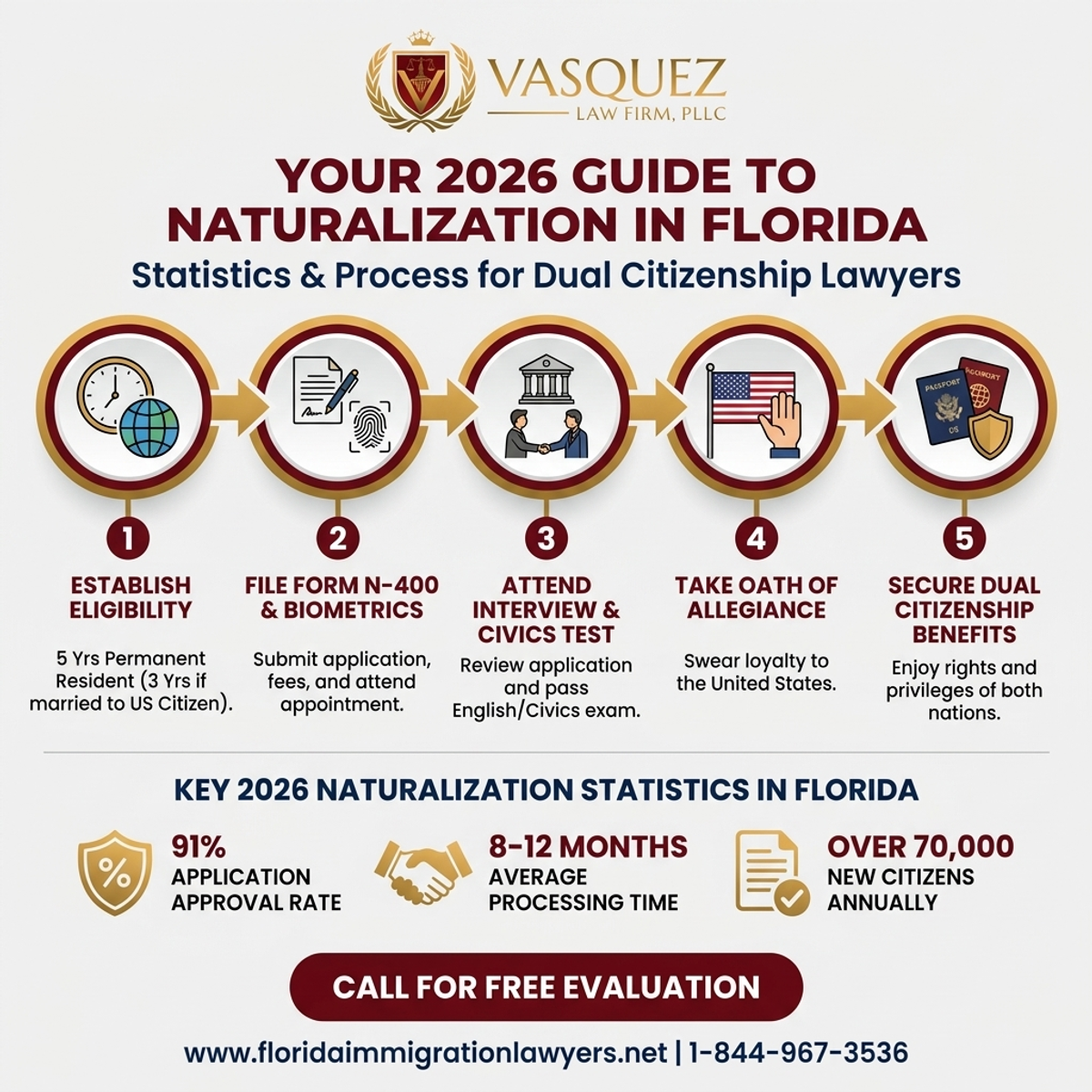
Key Statistics — Dual Citizenship Lawyer: Your 2026 Guide to Naturalization in Florida
It is important to note that these are typical timeframes and individual cases may take longer. Factors such as requests for evidence (RFE), specific background checks, or issues arising during your citizenship interview can extend the process. For example, if you have a complex immigration history or a minor criminal record, USCIS may require additional review, leading to delays. A Florida immigration lawyer can help you track your application's progress, respond to RFEs promptly, and explain any unexpected delays, providing clarity and support throughout this sometimes lengthy process.
Cost Factors and Fees for Naturalization in 2026
Understanding the financial aspects of naturalization is essential for planning your journey to U.S. citizenship. As of 2026, the costs associated with the naturalization process primarily include government filing fees and potential legal fees if you choose to hire an attorney. It is important to remember that USCIS fees can change, so always check the official USCIS website for the most current fee schedule before filing your application. These costs are a significant consideration for many families in Florida, and budgeting appropriately can prevent unnecessary stress or delays.
Here is a breakdown of typical cost factors:
| Item | Typical Fee (2026 Estimate) | Notes |
|---|---|---|
| Form N-400 Filing Fee | Varies (check USCIS website) | This fee is for processing your application for naturalization. |
| Biometrics Services Fee | Often included with N-400 fee | Covers the cost of collecting your fingerprints, photo, and signature. |
| Attorney Fees | Varies widely ($2,000 - $5,000+) | Depends on the complexity of your case and the services provided (e.g., full representation, interview prep only). |
| Translation Fees | Varies by document/translator | Required for any supporting documents not in English. |
| Document Retrieval Fees | Varies | For obtaining copies of records like criminal dispositions or birth certificates. |
USCIS offers fee waivers for certain low-income applicants who meet specific federal poverty guidelines. If you believe you may qualify for a fee waiver, a dual citizenship lawyer can help you determine eligibility and properly submit Form I-912, Request for Fee Waiver. While attorney fees are an additional expense, the investment in legal guidance can be invaluable, especially for complex cases or those who require extensive citizenship interview tips. For residents of Pembroke Pines and throughout Florida, engaging with Florida Immigration Lawyers provides access to experienced professionals who can make the naturalization process more manageable and successful, safeguarding your financial investment and your future.
Do not navigate this complex process alone. The journey to U.S. citizenship is too important to leave to chance. Contact Florida Immigration Lawyers today to ensure your application is strong and your rights are protected.
Common Mistakes to Avoid During Your Naturalization Process
The naturalization process is a detailed legal journey, and even minor errors can lead to significant delays or denials. Being aware of common mistakes can help you avoid pitfalls and ensure a smoother path to U.S. citizenship.
- Providing Incomplete or Inaccurate Information: Filling out Form N-400 with errors, omissions, or inconsistent details can raise red flags for USCIS. Consequences include requests for evidence, interview delays, or even a denial if misinformation is deemed intentional. Always double-check every entry carefully.
- Failing to Disclose Criminal History: Even minor offenses, expunged records, or arrests without conviction must be disclosed. Hiding any criminal history, no matter how old or seemingly insignificant, can lead to a finding of lack of good moral character and automatic denial, potentially resulting in deportation proceedings.
- Missing Deadlines or Appointments: USCIS operates on strict timelines. Missing a deadline for submitting requested documents or failing to appear for your biometrics or naturalization interview without proper notice can result in your application being closed or denied.
- Insufficient English Language Proficiency: While there are exceptions, most applicants must demonstrate an understanding of English. Poor performance on the English reading, writing, or speaking tests during the citizenship interview can lead to a failed interview and a re-test or denial.
- Lack of Preparation for the Civics Test: The civics test requires knowledge of U.S. history and government. Not studying the 100 civics questions thoroughly can result in failing the test, requiring a second interview, and potentially extending your naturalization timeline.
- Inadequate Documentation: Not bringing all original required documents to your interview, or submitting uncertified copies or translations, can cause delays. The USCIS officer needs to verify your information, and missing documents prevent this.
- Failing to Maintain Continuous Residence and Physical Presence: Extended trips outside the U.S. can break your continuous residence requirement, impacting your eligibility. Applicants must be cautious about travel, especially trips exceeding six months.
- Lying or Misrepresenting Facts: Any false statements or fraudulent representations during the application process or interview are severe offenses. This can lead to a permanent bar from naturalization and may even trigger deportation proceedings.
- Not Seeking Legal Counsel for Complex Cases: Attempting to navigate a complex naturalization case (e.g., criminal record, multiple marriages, long absences, previous denials) without legal assistance significantly increases the risk of denial. A dual citizenship lawyer can identify issues and strategize solutions.
When to Call a Lawyer for Your Naturalization Process
While some naturalization cases are straightforward, many applicants benefit immensely from the expertise of a seasoned immigration attorney. Deciding when to call a lawyer can be a crucial step towards a successful outcome, especially if you are navigating the complexities of dual citizenship or have unique circumstances. Florida Immigration Lawyers are here to provide the guidance you need, serving all communities from Pembroke Pines to Pensacola.
You should strongly consider contacting an attorney if any of the following scenarios apply to your situation:
- You have a criminal record: Any arrest, citation, or conviction, regardless of its severity or how long ago it occurred, can impact your good moral character requirement. An attorney can assess your record and advise on its implications.
- You have a complex immigration history: This includes previous visa denials, periods of unlawful presence, prior deportation proceedings, or issues with your green card application.
- You have spent significant time outside the U.S.: Long absences can affect your continuous residence or physical presence requirements. An attorney can help determine if your travel history will pose a problem.
- You have questions about dual citizenship: If you are unsure how naturalizing will affect your current nationality or have specific concerns about renunciation requirements from your home country, a dual citizenship lawyer is essential.
- You are concerned about the English or Civics test: While not a direct legal issue, an attorney can connect you with resources and provide tailored citizenship interview tips to boost your confidence.
- You have received a Request for Evidence (RFE) or Notice of Intent to Deny (NOID): These indicate USCIS has concerns about your application. An attorney can help you respond effectively and strategically.
- You have been denied naturalization: If your application was denied, an attorney can help you understand the reasons and explore options for appeal or reapplication, such as filing Form N-336, Request for a Hearing on a Decision in Naturalization Proceedings.
- You feel overwhelmed or anxious about the process: The peace of mind and expert guidance an attorney provides can be invaluable, ensuring every step is handled correctly.
Florida Immigration Lawyers specialize in these complex scenarios. Our team is dedicated to providing personalized legal strategies and unwavering support, ensuring your journey to U.S. citizenship is as smooth and successful as possible. We offer comprehensive services, including application preparation, interview coaching, and legal representation at USCIS interviews.
About Florida Immigration Lawyers
Florida Immigration Lawyers is a leading law firm dedicated to providing comprehensive and compassionate immigration legal services across the entire state of Florida. With a deep understanding of U.S. immigration law and its constant changes, our experienced attorneys are committed to helping individuals and families achieve their American dreams. We pride ourselves on offering personalized attention, strategic legal advice, and tenacious advocacy for every client, from family immigration petitions to complex deportation defense cases.
Our firm specializes in a wide range of immigration matters, including naturalization and citizenship, asylum and refugee claims, visa applications, green cards, and business immigration solutions. We understand the unique challenges faced by immigrants in Florida, including those in Pembroke Pines and surrounding communities, and tailor our services to meet your specific needs. Our team is available 24/7, offering free consultations to discuss your case and provide clear, actionable advice. We are proud to be a bilingual firm, with dedicated staff ready to assist you in English and Spanish, ensuring effective communication and cultural understanding.
Choosing Florida Immigration Lawyers means choosing a partner who will stand by you at every step of your immigration journey. Our commitment to excellence, ethical practice, and client success has earned us a reputation as trusted advocates. Let us put our expertise to work for you. Visit our attorneys page to learn more about our dedicated team, or contact us directly to schedule your free consultation. Your future in the U.S. starts here.
Sources and References
- U.S. Citizenship and Immigration Services (USCIS)
- U.S. Department of State - Bureau of Consular Affairs
- Executive Office for Immigration Review (EOIR)
- 8 U.S.C. Chapter 12 - Immigration and Nationality Act (INA) Section 316 - General requirements for naturalization.
- 8 CFR Part 316 - General Requirements for Naturalization.
- 8 CFR Part 335 - Examinations on Applications for Naturalization.
Related services: citizenship test preparation, dual citizenship guidance, citizenship test resources.
This article provides general legal information and is not intended as legal advice. Every case is unique, and outcomes depend on specific facts and circumstances. Contact an attorney for advice about your particular situation.
Your journey to U.S. citizenship, especially with dual nationality considerations, is a significant life event that deserves expert legal attention. Do not navigate the complexities of the naturalization process or prepare for your crucial citizenship interview without professional guidance. Florida Immigration Lawyers are here to empower you with knowledge and provide unwavering support. Contact us today for a free consultation to discuss your specific case and secure your future in the United States. Call 1-844-967-3536. Se Habla Espanol - Estamos aqui para ayudarle.
Do Not Navigate This Process Alone
Our experienced immigration attorneys are ready to fight for you. Get a free, confidential consultation today.
Se Habla Español
Frequently Asked Questions

William J. Vásquez
Founding Attorney · Vasquez Law Firm
U.S. Air Force veteran and immigration attorney with thousands of cases resolved. J.D., NCCU School of Law. AILA member. Admitted to the 4th, 5th, and 11th Circuit Courts.
Available 24/7 - Free Evaluations
Related Legal Services
Our Florida immigration attorneys can help you with citizenship and naturalization, family immigration services and immigration practice areas. Call today at 1-844-967-3536 for a free consultation.
Related Links
Related Topics
Free Legal Consultation
Discuss your case with our experienced attorneys. We're available 24/7.
Se Habla Español - Estamos aquí para ayudarle.
Related Articles
USCIS Stokes Interview for Marriage Fraud in Florida 2026
A USCIS Stokes interview for marriage fraud in Florida is a high-stakes process for couples whose marriage-based green card petition has raised suspicions. This intensive, separate interview aims to uncover inconsistencies in spouses' testimonies, often triggered by red flags in the I-130 petition or initial interview. Understanding the detailed questions, gathering comprehensive evidence, and preparing meticulously are crucial. A finding of marriage fraud carries severe consequences, including permanent immigration bars and potential deportation. This guide provides an in-depth look at the Stokes interview process, preparation strategies, common mistakes to avoid, and the importance of expert legal representation from Florida Immigration Lawyers to navigate this challenging situation effectively in Hialeah and across Florida in 2026.
TPS Honduras Updates 2026: Re-registration Deadlines in
For thousands of Honduran nationals in Florida, understanding the 2026 TPS re-registration deadlines is paramount. This guide from Florida Immigration Lawyers details the step-by-step process, critical documents, and expected timelines for maintaining your Temporary Protected Status. Learn about eligibility requirements, how to avoid common mistakes, and when to seek legal counsel to protect your right to live and work in the U.S. We cover USCIS updates, fee structures, and the importance of timely filing to prevent loss of status. Ensure your future is secure by preparing diligently for the upcoming re-registration period.
"INA 208(a)(2)" One-Year Filing Deadline in Florida
Learn about the "INA 208(a)(2)" one-year filing deadline for asylum in Florida, including exceptions and steps to file. Understand the importance of timely filing and how to navigate the process effectively with the help of Florida Immigration Lawyers.
Refugee Lawyer: Navigating Resettlement in Florida
Navigating refugee resettlement in Florida can be complex. This guide provides insights into the process, legal requirements, and how a refugee lawyer can assist. Explore the steps, common mistakes, and how to get help in Tampa.