Expungement Effect on Immigration in Florida | VLF Florida
Discover how expungement and sealed records affect immigration in Florida. Learn vital steps and when to seek legal assistance. Call us for a consultation.

- Expungement does not erase all immigration consequences.
- USCIS may still access sealed records.
- Consult a lawyer for personalized advice.
Introduction
Imagine you've lived in Gainesville, Florida, for years, building a life and community. Suddenly, you discover that a past criminal record might jeopardize your immigration status. This article explores how expungement and sealed records affect immigration in Florida.
The complexities of immigration law, especially when intertwined with state criminal justice systems, can be daunting. Many assume that once a record is expunged or sealed, it's completely gone, offering a clean slate. However, for non-citizens, this assumption can lead to severe and unexpected immigration consequences, from visa denials to deportation proceedings.
This article aims to demystify these intricate legal intersections, providing crucial insights for individuals residing in Gainesville and across Florida. Understanding these nuances is not just about legal compliance; it's about safeguarding your future, your family, and your ability to remain in the country you call home. Don't wait until it's too late – proactive legal consultation is your best defense.
We'll guide you through the legal maze, focusing on Gainesville and Florida's broader immigration landscape. Call Florida Immigration Lawyers at 1-844-967-3536 for a free consultation.
Understanding Expungement and Sealed Records
Expungement refers to the legal process of erasing a criminal record, while sealing means that the record is hidden from public view. In Florida, these processes can have significant implications for immigrants.
The fundamental distinction lies in the differing jurisdictions: state law governs expungement and sealing, while federal law dictates immigration matters. Even if a Florida court orders a record expunged or sealed, federal immigration agencies like USCIS (U.S. Citizenship and Immigration Services), ICE (Immigration and Customs Enforcement), and CBP (Customs and Border Protection) operate under federal statutes. These federal agencies often maintain access to national criminal databases, meaning they can still view records that are no longer public at the state level.
Even if a record is expunged or sealed, it may not disappear entirely from all databases. Immigration authorities, such as USCIS, may still access these records during background checks. This is crucial for immigrants in Gainesville seeking to adjust their status or apply for a green card.
This federal access means that what might seem like a resolved issue under Florida law can still trigger grounds of inadmissibility (preventing you from obtaining a green card or visa) or deportability (leading to removal proceedings). For instance, a misdemeanor drug possession charge, even if expunged, could still be considered a 'controlled substance offense' under federal immigration law, carrying severe penalties. It's not just about the conviction itself, but often the underlying conduct that immigration authorities scrutinize.
According to the USCIS, certain convictions, even if expunged, can trigger deportation or inadmissibility. It's essential to understand the nuances of how expungement interacts with immigration laws.
Navigating these dual legal systems requires specialized knowledge. An immigration attorney can help you understand how your specific expunged or sealed record might be interpreted by federal immigration authorities and what steps you can take to mitigate potential negative impacts. This is particularly vital for those pursuing naturalization, adjustment of status, or seeking to renew their DACA status.
Step-by-Step Guide to Expungement
- Check Eligibility: Not all offenses are eligible for expungement in Florida. Consult the EOIR to determine eligibility.
- File a Petition: Submit a petition for expungement in the court where the conviction occurred.
- Obtain a Certificate of Eligibility: Required from the Florida Department of Law Enforcement (FDLE).
- Attend a Hearing: A judge will decide on the petition. Immigration consequences may be discussed.
- Receive Court Order: If approved, the court issues an expungement order.
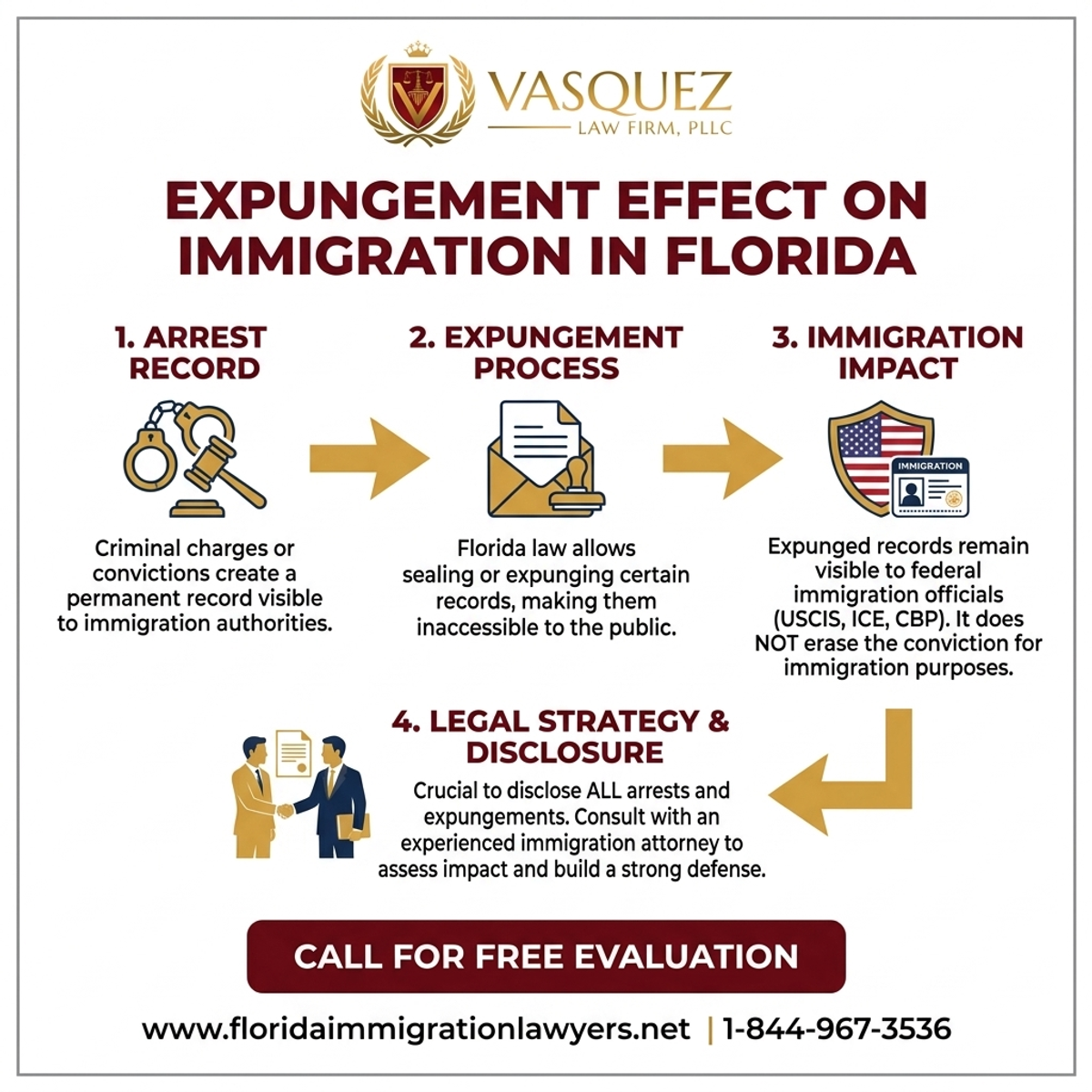
Step-by-Step Process — Expungement Effect on Immigration in Florida
Each step in the expungement process, while seemingly straightforward, carries significant weight, especially when immigration is a concern. For example, during the eligibility check, it's not enough to just see if your offense qualifies under Florida law; you must also consider how that specific offense is categorized under federal immigration statutes. What Florida considers a minor infraction, federal law might view as a serious crime involving moral turpitude (CIMT) or an aggravated felony, even if the sentence was light.
When filing a petition and obtaining the Certificate of Eligibility from the FDLE, accuracy and completeness are paramount. Any discrepancies or omissions could not only delay your expungement but also raise red flags with immigration authorities if they later access these records. During the court hearing, having an attorney who understands the interplay between state criminal law and federal immigration law is invaluable. They can articulate the details of your case in a way that minimizes future immigration risks, though no expungement can guarantee a clean slate with federal agencies.
Receiving the court order is a milestone, but it's crucial to understand that this order primarily affects your record at the state level. It does not automatically erase the incident from federal databases or from the memory of immigration officials. This is why immediate consultation with Florida Immigration Lawyers at 1-844-967-3536 is essential after an expungement, to understand what further steps, if any, are needed to address potential federal immigration implications.
Document Checklist for Expungement
- Petition for Expungement
- Certificate of Eligibility from FDLE
- Copy of Criminal Record
- Proof of Rehabilitation (if applicable)
- Legal Identification
Each document on this checklist plays a critical role in successfully navigating the expungement process in Florida. The Petition for Expungement is your formal request to the court, outlining the details of your case and your eligibility. It must be meticulously prepared, as any errors could lead to delays or denial. The Certificate of Eligibility from the FDLE is a crucial gatekeeper, confirming that your offense meets the state's criteria for expungement or sealing. Without it, your petition cannot proceed.
Providing a complete Copy of your Criminal Record ensures that the court has all necessary information to make an informed decision and that the correct record is targeted for expungement. Proof of Rehabilitation, while not always mandatory, can significantly strengthen your case, demonstrating to the judge that you have taken steps to improve your life since the incident. This can be particularly persuasive if the judge is considering the broader impact of the expungement. Finally, Legal Identification confirms your identity throughout the process.
For immigrants, the accuracy and completeness of these documents are even more critical. Any inconsistencies could be scrutinized by immigration officials during future applications. Working with an experienced legal team, such as Florida Immigration Lawyers, can help ensure all documentation is correctly prepared and submitted, minimizing potential issues down the line and providing peace of mind during this complex process.
Timeline and Processing Expectations
The expungement process in Florida can take several months, depending on the complexity of the case and the court's schedule. Typically, obtaining a Certificate of Eligibility takes 6-12 weeks. After filing, a court hearing may be scheduled within 4-6 months. It's crucial to plan accordingly, especially if immigration status adjustments are pending.
Several factors can influence the overall timeline, including the specific county court's backlog, the complexity of your criminal history, and the responsiveness of various agencies involved. For instance, obtaining the Certificate of Eligibility from the FDLE can sometimes take longer than the typical 6-12 weeks if there are complications with your record or if the agency is experiencing high volumes of requests. Similarly, court dockets can be crowded, extending the wait time for a hearing.
During this waiting period, it's vital to remain patient but also proactive. If you have pending immigration applications, such as a green card application or a naturalization petition, the timing of your expungement can be critical. An immigration attorney can help you strategically plan the expungement process in conjunction with your immigration goals, advising on whether to wait for the expungement to be finalized before submitting certain immigration forms, or how to properly disclose the ongoing process.
Managing expectations is key. While the expungement process aims to clear your state record, it does not guarantee an immediate or automatic resolution of federal immigration issues. The timeline for federal agencies to update their databases or to consider an expunged record can vary greatly. Therefore, continuous communication with your legal counsel at Florida Immigration Lawyers is essential to stay informed about your case's progress and any potential impacts on your immigration journey.
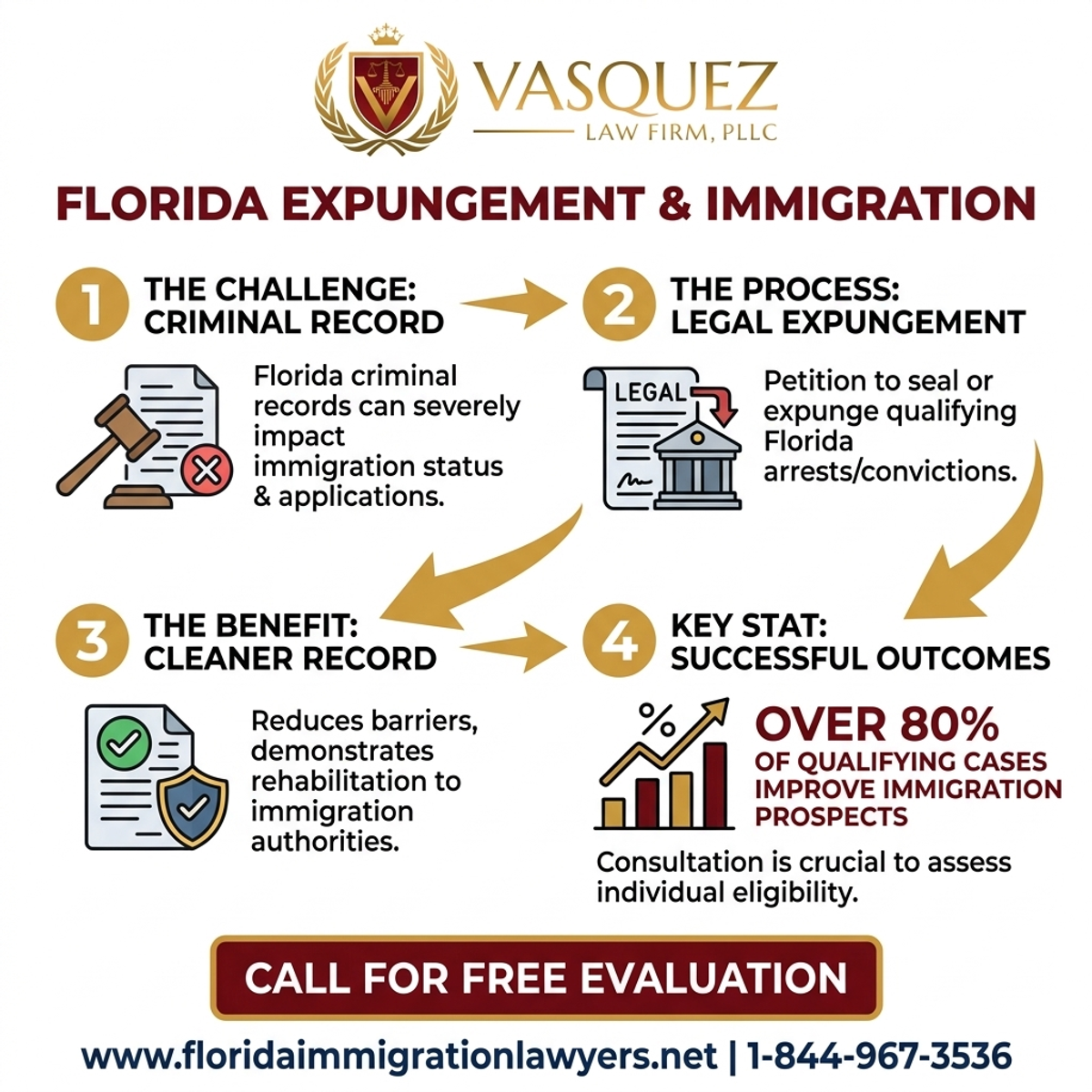
Key Statistics — Expungement Effect on Immigration in Florida
Cost Factors and Fee Breakdown
While specific fees can vary, expect costs related to filing petitions, obtaining certificates, and potential attorney fees. Legal assistance is highly recommended, especially with immigration implications. Remember, investing in legal guidance can save significant future costs related to immigration complications.
Beyond the state filing fees, which can range from a few hundred dollars, there are also costs associated with obtaining certified copies of records, fingerprinting fees for the FDLE certificate, and potentially other administrative charges. While these individual fees might seem manageable, they can add up. However, the most significant investment for many is legal representation. An experienced attorney will charge for their time and expertise, but this cost is often a small price to pay compared to the potential financial and emotional burden of immigration complications.
Consider the long-term implications: a denied visa, a prolonged deportation defense, or the inability to adjust status due to an unaddressed criminal record can cost tens of thousands of dollars in legal fees, lost income, and emotional distress. Investing in a knowledgeable attorney from the outset can help you navigate the process efficiently, avoid costly mistakes, and potentially save you from much greater expenses and hardships in the future. Florida Immigration Lawyers understand these stakes and offer transparent fee structures.
It’s not just about getting the expungement; it's about ensuring that the expungement serves its intended purpose without inadvertently creating new immigration problems. A lawyer specializing in both criminal and immigration law, or one who collaborates closely with immigration experts, can provide a comprehensive strategy. Don't let cost concerns deter you from seeking the professional guidance you need. Many firms, including Florida Immigration Lawyers, offer free initial consultations to discuss your case and provide an estimate of costs. Call 1-844-967-3536 today to explore your options.
Do not navigate this process alone. Contact Florida Immigration Lawyers today.
Common Mistakes to Avoid
- Assuming Expungement Erases All Records: Immigration authorities might still access sealed records.
- Not Consulting an Immigration Lawyer: Legal advice is crucial for understanding immigration consequences.
- Ignoring Eligibility Criteria: Not all offenses qualify for expungement.
- Submitting Incomplete Applications: Missing documents can delay the process.
- Failing to Disclose Expunged Records: Non-disclosure may lead to immigration denials.
- Overlooking Timelines: Delays can affect pending immigration applications.
- Misunderstanding the Impact of State vs. Federal Law: Federal immigration laws may override state expungement.
The path to resolving criminal records and managing their immigration impact is fraught with potential missteps, each with significant consequences. The most dangerous assumption is that an expunged record is completely erased from all existence. This misconception often leads immigrants to unknowingly withhold information from USCIS, which can be interpreted as misrepresentation or fraud, leading to even more severe penalties than the original offense.
Another critical error is failing to consult an immigration lawyer early in the process. State criminal defense attorneys may secure an expungement, but they often lack the specialized knowledge of federal immigration law to advise on its specific impact on a non-citizen. This oversight can leave individuals vulnerable to unforeseen immigration challenges. Similarly, ignoring the strict eligibility criteria for expungement or submitting incomplete applications wastes valuable time and resources, potentially jeopardizing critical immigration deadlines.
Ultimately, the interplay between state expungement laws and federal immigration regulations is complex and unforgiving. Federal law often has a broader definition of 'conviction' and 'crimes' than state law, meaning that even a successfully expunged record under Florida law could still be considered a disqualifying event by USCIS. This discrepancy underscores the absolute necessity of expert legal guidance. Florida Immigration Lawyers are adept at navigating these intricate legal landscapes, helping you avoid these common pitfalls and protecting your immigration future. Call us at 1-844-967-3536 for dedicated support.
When to Call a Lawyer
If you're unsure about how an expunged record affects your immigration status, it's time to seek legal advice. Warning signs include receiving notices from immigration authorities or having a criminal history with potential immigration consequences. Florida Immigration Lawyers offer specialized services to navigate these complex situations. Contact us for personalized assistance.
Beyond the obvious warning signs, you should consider calling a lawyer if you are planning to apply for any immigration benefit, such as a family-based visa, employment-based green card, adjustment of status, or naturalization, and have any history of arrest, charges, or convictions, regardless of how minor or how long ago they occurred. Even if you believe the record was expunged or sealed, it's safer to have an expert review your entire criminal history report (rap sheet) to ensure there are no surprises.
Furthermore, if you are currently in removal (deportation) proceedings, or if you have received a Notice to Appear (NTA) from immigration authorities, immediate legal intervention is critical. An expunged record might still be used against you in immigration court, but a skilled attorney can argue for its limited impact or explore other forms of relief. Florida Immigration Lawyers possess the expertise to analyze your specific situation, explain your options, and represent you vigorously before immigration courts and agencies. Don't delay—your immigration status could depend on it.
About Florida Immigration Lawyers
At Florida Immigration Lawyers, we specialize in providing tailored immigration legal services across Florida. Our experienced team handles cases ranging from asylum to deportation defense. Our commitment extends to providing compassionate and effective legal representation to individuals and families throughout Florida, ensuring that every client receives personalized attention and strategic advice tailored to their unique circumstances. Choose us for our commitment to your success and our comprehensive legal support. Call us at 1-844-967-3536 or visit our website for a free consultation.
Sources and References
- U.S. Citizenship and Immigration Services (USCIS)
- Executive Office for Immigration Review (EOIR)
- 8 U.S.C. Chapter 12 - Immigration and Nationality Act
Related services: immigration practice areas, family immigration services, citizenship and naturalization.
Frequently Asked Questions
This article provides general legal information and is not intended as legal advice. Every case is unique, and outcomes depend on specific facts and circumstances. Contact an attorney for advice about your particular situation.
Call Florida Immigration Lawyers 1-844-967-3536 for a free consultation. Se Habla Espanol - Estamos aqui para ayudarle.
If you need legal assistance, learn more about learn about our immigration practice, or call us at 1-844-967-3536 for a free consultation.
Do Not Navigate This Process Alone
Our experienced immigration attorneys are ready to fight for you. Get a free, confidential consultation today.
Se Habla Español
Frequently Asked Questions
Florida Immigration Lawyers
Immigration Attorney | Founder, Vasquez Law Firm
U.S. Air Force veteran and immigration attorney with thousands of cases resolved. J.D., NCCU School of Law. AILA member. Admitted to the 4th, 5th, and 11th Circuit Courts.
Available 24/7 - Free Evaluations
Related Legal Services
Our Florida immigration attorneys can help you with free immigration consultation, experienced immigration attorneys and business immigration. Call today at 1-844-967-3536 for a free consultation.
Related Links
Related Topics
Free Legal Consultation
Discuss your case with our experienced attorneys. We're available 24/7.
Se Habla Español - Estamos aquí para ayudarle.
Related Articles
Change of Status B-2 to F-1 Florida: Tourist to Student Visa
Transitioning from a B-2 tourist visa to an F-1 student visa in Florida opens doors to academic pursuits but requires careful navigation of U.S. immigration law. This comprehensive guide from Florida Immigration Lawyers details the step-by-step process for a change of status B-2 to F-1, including essential documents, eligibility criteria, and crucial timelines. Learn about the I-539 application, the "90-day rule," and how to demonstrate non-immigrant intent effectively. We also cover common mistakes to avoid, cost factors, and when professional legal assistance is indispensable. Whether you're in Fort Lauderdale or elsewhere in Florida, our expert team is here to provide the support needed to achieve your educational dreams. Contact us for a free consultation.
VAWA Immigration Relief in Florida: A Guide | VLF Florida
Learn about VAWA immigration relief in Florida and how it can help abuse victims gain independence. Call us for a free consultation.
Immigration Bond Hearing Florida: Your Guide to Freedom
When a loved one is detained by ICE in Florida, an immigration bond hearing becomes paramount for their release. This guide from Florida Immigration Lawyers provides a comprehensive overview of the process, covering eligibility, required documents, timelines, and costs. Learn how to navigate the complexities of detention, understand the factors an immigration judge considers, and avoid common mistakes that could jeopardize a favorable outcome. Our experienced attorneys are dedicated to helping families in Orlando and across Florida secure release through effective legal representation. Contact us for a free consultation to discuss your specific situation and take the first step towards reuniting with your family.
Expungement's Effect on Immigration in Florida | VLF Florida
Expungement can affect your immigration status in Florida. Learn how a sealed record influences immigration consequences and why consulting a lawyer is essential for navigating these complex issues.