Dual Citizenship Florida: Your Path to Two Passports
Exploring dual citizenship in Florida offers a unique opportunity to maintain ties with your country of origin while enjoying the full benefits of U.S. citizenship. This comprehensive guide from Florida Immigration Lawyers delves into the naturalization process, the legality of holding two passports, and the crucial considerations for Florida residents. Learn about the benefits, responsibilities, and common pitfalls to avoid. Our expert insights will help you navigate the complexities of dual nationality, ensuring a smooth path towards achieving your immigration goals in Fort Lauderdale and across the state. Contact us for a free consultation to discuss your specific situation.

Dual citizenship in Florida allows individuals to be recognized as citizens of both the United States and another country simultaneously. This status is generally permitted under U.S. law, which does not require a person to renounce their previous nationality upon naturalizing as a U.S. citizen, though some foreign countries may have different rules. For Florida residents, understanding the naturalization process and the specific laws of their native country is crucial. It offers benefits like enhanced travel freedom and property rights, but also involves responsibilities such as tax obligations. Navigating this complex area often requires professional legal guidance to ensure compliance and avoid potential pitfalls.
- U.S. law generally permits dual citizenship, but foreign laws vary.
- Acquisition often involves the U.S. naturalization process (N-400 application).
- Benefits include increased travel, property rights, and consular protection.
- Key responsibilities include tax compliance in both countries.
- Seek legal counsel for personalized guidance, especially in complex cases.
Many individuals dream of having the best of both worlds-maintaining deep roots in their home country while fully embracing life in the United States. For those living in the Sunshine State, the concept of dual citizenship Florida immigration offers a compelling pathway to achieve this balance. It allows you to hold two passports, enjoy the rights and privileges of two nations, and navigate the world with greater freedom and flexibility.
However, the journey to obtaining and maintaining dual citizenship is often filled with intricate legal details and potential complexities. From understanding the nuances of U.S. naturalization law to deciphering the policies of your country of origin, every step requires careful consideration. This comprehensive guide from Florida Immigration Lawyers will walk you through the essential aspects of dual citizenship, focusing on the specific context of Florida residents, helping you understand the process, benefits, and potential challenges. We aim to clarify common misconceptions and provide actionable insights so you can make informed decisions about your immigration future.
Do you have questions about your eligibility or the application process? Don't navigate this complex legal landscape alone. Call Florida Immigration Lawyers at 1-844-967-3536 for a free consultation today. Our experienced team is ready to assist you in Fort Lauderdale and across all of Florida.
Understanding Dual Citizenship in Florida's Immigration Landscape
Dual citizenship, also known as dual nationality, refers to a person's legal status as a citizen of two countries simultaneously. The United States generally permits its citizens to hold citizenship in another country. This means that if you naturalize as a U.S. citizen, you are typically not required to renounce your original citizenship, provided your home country also allows dual nationality. This policy is particularly relevant in Florida, a state renowned for its vibrant multicultural population and strong ties to international communities.
For individuals in Fort Lauderdale and throughout Florida, the ability to hold two passports US can offer significant advantages. It can simplify international travel, allow for property ownership in both nations, and provide access to social services or voting rights in two countries. However, it is essential to understand that while U.S. law does not prohibit dual citizenship, it does not actively endorse it either. The U.S. government views its dual citizens as U.S. citizens first and foremost, requiring them to fulfill all obligations of U.S. citizenship.
The legal framework for U.S. citizenship is primarily found in the Immigration and Nationality Act (INA), specifically 8 U.S.C. Chapter 12. There are various ways one can acquire U.S. citizenship, including birth in the U.S. (jus soli), birth abroad to U.S. citizen parents (jus sanguinis), or through the naturalization process. For many Florida residents seeking dual citizenship, the path often involves becoming a naturalized U.S. citizen while retaining their original nationality. Our firm specializes in guiding clients through these intricate processes, ensuring they understand both the opportunities and responsibilities that come with this unique status.
The Path to Dual Citizenship: The Naturalization Process in Florida
For most foreign nationals residing in Florida, achieving dual citizenship Florida immigration involves first becoming a naturalized U.S. citizen. The naturalization process is a formal application through U.S. Citizenship and Immigration Services (USCIS) that culminates in an oath of allegiance to the United States. This pathway is available to eligible lawful permanent residents (Green Card holders) who meet specific criteria outlined in the INA.
- Meet Eligibility Requirements: Generally, you must be 18 years old, a lawful permanent resident for at least 5 years (or 3 years if married to a U.S. citizen), have continuous residence and physical presence in the U.S., demonstrate good moral character, be able to read, write, and speak basic English, and pass a civics test.
- File Form N-400, Application for Naturalization: This is the primary application form submitted to USCIS. It requires detailed personal information, residency history, and answers to questions about your background. Accuracy and completeness are paramount to avoid delays or denials.
- Attend Biometrics Appointment: After filing, you will receive a notice for a biometrics appointment at a local Application Support Center (ASC). Here, your fingerprints, photograph, and signature are collected for background checks.
- Complete the Interview: A USCIS officer will interview you to verify the information on your N-400, test your English proficiency, and assess your knowledge of U.S. history and government. Preparation is key for this crucial step.
- Receive a Decision and Attend Oath Ceremony: If approved, you will receive a Notice of Oath of Allegiance. The oath ceremony is the final step where you formally become a U.S. citizen and receive your Certificate of Naturalization. These ceremonies often take place in federal courthouses or USCIS field offices across Florida, including those serving Fort Lauderdale.
Throughout this process, especially with the current immigration climate, it is vital to be meticulous and understand all legal implications. Recent policy changes, such as those impacting green card applicants, underscore the importance of expert legal guidance. Our attorneys at Florida Immigration Lawyers can help you prepare for each stage, ensuring your application is robust and addresses any potential challenges.
Retaining Foreign Citizenship While Acquiring US Citizenship
One of the most common questions for individuals seeking dual citizenship Florida immigration is whether they will lose their original citizenship once they become a U.S. citizen. The answer largely depends on the laws of your country of origin. U.S. law, as interpreted by the State Department, generally allows for dual nationality. The U.S. government does not require you to renounce your foreign citizenship unless there is clear intent to do so, such as through a formal declaration.
However, many countries have specific laws regarding the retention or loss of citizenship upon acquiring another. Some countries automatically revoke citizenship if you naturalize in another nation, while others require you to formally apply for retention or even pay a fee. It is absolutely critical for anyone considering dual citizenship to research and understand the laws of their native country before initiating the U.S. naturalization process. Resources like the Department of State's travel.state.gov website provide general information, but direct consultation with an attorney specializing in your home country's laws is often advisable.
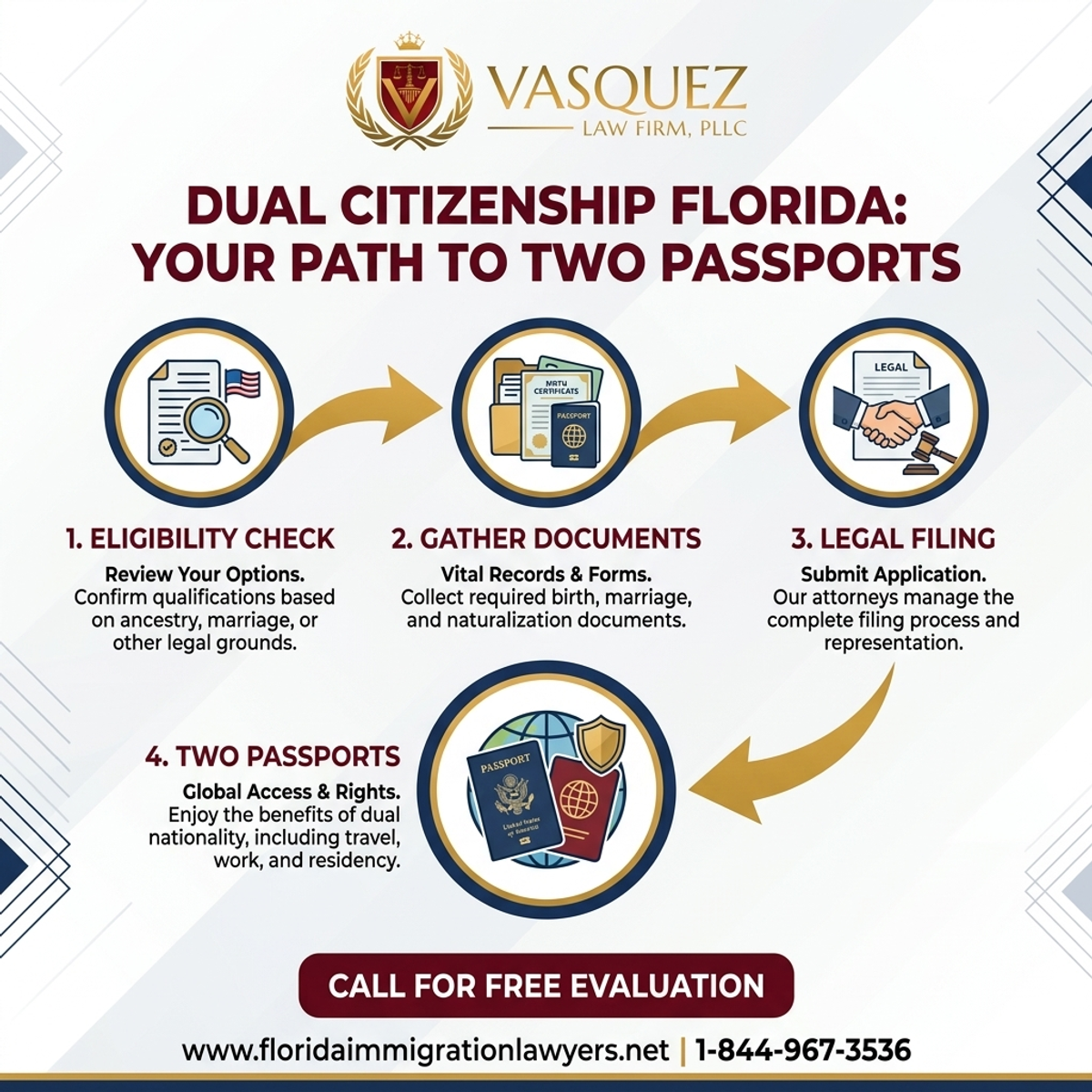
Step-by-Step Process — Dual Citizenship Florida: Your Path to Two Passports
For Florida's diverse population, particularly those from Latin American and Caribbean nations, many countries do permit dual nationality. This allows countless individuals in Fort Lauderdale and beyond to enjoy the benefits of both their heritage and their new American identity. Our firm can assist you in understanding the U.S. legal perspective and guide you on how to best approach checking your country's specific policies. The goal is to ensure that your pursuit of US citizenship benefits does not inadvertently lead to the loss of your cherished foreign citizenship.
Benefits and Responsibilities of Holding Two Passports
Holding two passports US opens up a world of opportunities and, naturally, entails certain responsibilities. The benefits are often highly appealing to individuals and families in Florida seeking greater global mobility and security. These include enhanced travel freedom, allowing you to enter and exit both countries with ease, often without the need for visas. It can also provide greater consular protection, meaning you can seek assistance from either country's embassy or consulate when abroad. For many, it means the ability to own property, work, and reside indefinitely in both nations, strengthening family ties and business connections across borders.
Moreover, dual citizens in Florida can often participate more fully in the civic life of both countries, including voting in elections, which is a significant aspect of democratic engagement. They may also find it easier to access social services, educational opportunities, and healthcare systems in both nations. This flexibility is especially valuable in a globalized world, offering peace of mind and practical advantages for those with international lives.
However, dual citizenship also comes with important responsibilities. All U.S. citizens, including dual nationals, are subject to U.S. tax laws, regardless of where they live or earn income. This means reporting foreign bank accounts and assets to the U.S. Treasury (FBAR) and potentially filing U.S. tax returns, even if they owe no U.S. taxes. Additionally, dual citizens must obey the laws of both countries. In times of international tension, navigating allegiance and potential military service obligations can become complex. It is crucial to understand these commitments fully. Our team can provide guidance on these complex issues, including potential tax implications, to ensure you are well-prepared for your dual citizen status.
Navigating Complexities: When Dual Citizenship Becomes Challenging
While dual citizenship Florida immigration offers numerous advantages, certain situations can introduce significant complexities. One of the primary challenges arises when a foreign country's laws explicitly prohibit dual nationality, or when they require formal renunciation of previous citizenship upon acquiring a new one. In such cases, individuals must make a difficult choice, often weighing emotional ties against practical benefits. Legal advice is critical here to understand the full implications of renunciation, both in the U.S. and abroad.
Another area of complexity involves security clearances for certain government jobs or sensitive positions. Some U.S. government roles may require applicants to divest themselves of foreign citizenship to mitigate potential conflicts of interest or security risks. While not universally required, it's a consideration for those pursuing specific career paths. Moreover, issues can arise regarding military service obligations if both countries claim the individual for conscription, though this is less common for U.S. citizens.
Recent shifts in immigration policy, such as those discussed in national news regarding stricter green card requirements, underscore an environment where immigration matters are under increased scrutiny. While not directly impacting dual citizenship, these changes reflect a broader trend of tightening immigration regulations, making expert legal counsel more vital than ever. For Florida residents, particularly those in Fort Lauderdale and surrounding communities, understanding how these broader trends might indirectly affect their journey to retaining foreign citizenship while embracing U.S. nationality is crucial. Our attorneys are adept at navigating these evolving landscapes, providing clarity and strategic advice to protect your interests.
Do not navigate this process alone. Contact Florida Immigration Lawyers today at 1-844-967-3536 for comprehensive legal support. We offer free consultations to discuss your unique situation.
Common Mistakes to Avoid in Your Dual Citizenship Journey
The path to dual citizenship is multifaceted, and even minor errors can lead to significant delays or complications. Avoid these common pitfalls:
- Not Researching Foreign Country's Laws: Assuming your home country permits dual nationality without verifying can lead to the unwitting loss of your original citizenship. Always confirm the specific laws of your country of origin.
- Misunderstanding U.S. Tax Obligations: Many dual citizens fail to understand that they are still subject to U.S. taxation on worldwide income and FBAR reporting requirements, regardless of residency. This can lead to severe penalties.
- Providing Incomplete or Inaccurate Information on Form N-400: Any discrepancies or omissions on your naturalization application can trigger delays, requests for additional evidence, or even a denial of your application.
- Failing to Disclose Criminal History: Even minor offenses or arrests that occurred years ago must be disclosed honestly on your N-400. Failure to do so can be considered a lack of good moral character and result in a denial or even deportation proceedings.
- Missing USCIS Deadlines: Ignoring requests for evidence (RFEs) or missing interview appointments can lead to the abandonment or denial of your application. Always respond promptly.
- Inadequate Preparation for the Naturalization Interview: Failing the English or civics test, or being unable to adequately answer questions about your application, can delay or jeopardize your naturalization.
- Assuming Automatic Dual Citizenship for Children: While children born abroad to U.S. citizens may acquire U.S. citizenship, the rules are complex and require proper documentation. Don't assume.
- Traveling Without Proper Documentation: Dual citizens should always enter and exit the U.S. using their U.S. passport. Using a foreign passport for U.S. entry can cause confusion and issues.
- Not Updating Your Address with USCIS: Moving without notifying USCIS of your new address can result in missed notices, interviews, or decisions, leading to application delays or denials.
- Ignoring the Oath of Allegiance: While the U.S. permits dual nationality, the oath requires allegiance to the U.S. first. Actions inconsistent with this oath can have serious consequences.
- Attempting to Navigate Complex Cases Alone: If you have a criminal record, previous immigration violations, or a complicated residency history, attempting naturalization without legal counsel significantly increases risk.
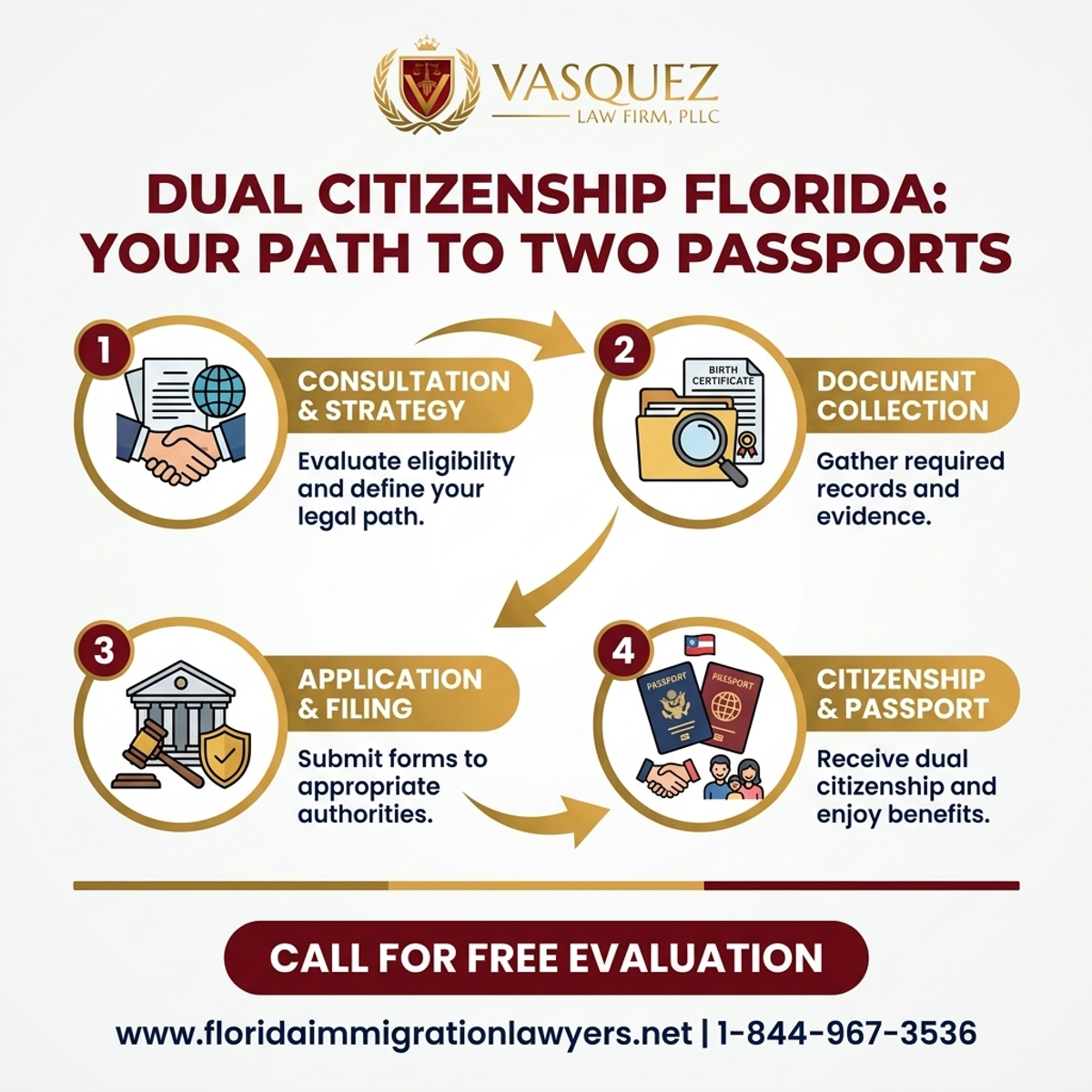
Key Statistics — Dual Citizenship Florida: Your Path to Two Passports
When to Call a Florida Immigration Lawyer for Dual Citizenship
Navigating the intricacies of dual citizenship Florida immigration can be overwhelming, particularly when specific circumstances add layers of complexity. While some straightforward cases might seem manageable, certain situations absolutely warrant the expertise of a seasoned immigration attorney. If you find yourself facing any of the following scenarios, contacting Florida Immigration Lawyers is not just recommended, it's essential.
You should call a lawyer if you have a criminal record, even a minor one, as this can impact your good moral character requirement for naturalization. Prior immigration violations, such as overstaying a visa or previous deportations, also necessitate expert legal review. If your country of origin has complex or ambiguous laws regarding dual nationality, or if you are unsure whether you will lose your original citizenship, an attorney can help you obtain clarity and strategize. Additionally, if you have received a Request for Evidence (RFE) from USCIS or a Notice of Intent to Deny (NOID) regarding your naturalization application, immediate legal intervention is critical. Our team serving Fort Lauderdale and all of Florida is well-versed in these challenges. We can provide the tailored advice and representation you need to protect your rights and achieve your dual citizenship goals.
Furthermore, if you are a U.S. citizen considering renouncing your U.S. citizenship to acquire another, or if you have children born abroad and need to establish their citizenship, these are highly technical areas requiring precise legal guidance. For any questions related to U.S. citizenship, naturalization, or complex dual nationality issues, our firm is here to provide comprehensive support and ensure you navigate the process successfully.
About Florida Immigration Lawyers
Florida Immigration Lawyers is a leading immigration law firm dedicated to serving individuals and families across the entire state of Florida. With a deep understanding of U.S. immigration law and a commitment to client success, our experienced attorneys provide compassionate and effective legal representation for a wide range of immigration matters. From naturalization and family-based visas to asylum and deportation defense, we stand by our clients every step of the way.
Our firm prides itself on its accessibility and client-focused approach. We understand that immigration challenges can be stressful and time-sensitive, which is why we offer free consultations and are available 24/7 to address your concerns. Our attorneys are fluent in both English and Spanish, ensuring that language is never a barrier to quality legal assistance. Whether you are in Fort Lauderdale, Miami, Orlando, or any other part of Florida, Florida Immigration Lawyers is your trusted partner for navigating the complexities of the U.S. immigration system. Call us today at 1-844-967-3536 or visit our website at https://www.floridaimmigrationlawyers.net to learn how we can help you achieve your immigration goals.
Sources and References
- U.S. Citizenship and Immigration Services (USCIS)
- U.S. Department of State - Bureau of Consular Affairs
- Executive Office for Immigration Review (EOIR)
- 8 U.S.C. Chapter 12 - Immigration and Nationality Act (INA)
- 8 CFR Part 337 - Oath of Allegiance
- USCIS Policy Manual, Volume 12 - Citizenship and Naturalization
Related services: immigration practice areas, family immigration services, asylum protection, business immigration.
This article provides general legal information and is not intended as legal advice. Every case is unique, and outcomes depend on specific facts and circumstances. Contact an attorney for advice about your particular situation.
Embarking on the journey to dual citizenship Florida immigration can open doors to incredible opportunities, but it requires careful planning and a thorough understanding of immigration laws. Don't leave your future to chance. Let the dedicated team at Florida Immigration Lawyers guide you through every step of the process. For a free, confidential consultation, call us today at 1-844-967-3536. Se Habla Espanol - Estamos aqui para ayudarle.
Do Not Navigate This Process Alone
Our experienced immigration attorneys are ready to fight for you. Get a free, confidential consultation today.
Se Habla Español
Frequently Asked Questions

William J. Vásquez
Founding Attorney · Vasquez Law Firm
U.S. Air Force veteran and immigration attorney with thousands of cases resolved. J.D., NCCU School of Law. AILA member. Admitted to the 4th, 5th, and 11th Circuit Courts.
Available 24/7 - Free Evaluations
Related Legal Services
Our Florida immigration attorneys can help you with family immigration services, immigration practice areas and free immigration consultation. Call today at 1-844-967-3536 for a free consultation.
Related Links
Related Topics
Free Legal Consultation
Discuss your case with our experienced attorneys. We're available 24/7.
Se Habla Español - Estamos aquí para ayudarle.
Related Articles
Biometrics Appointment in Florida: What to Expect in 2026
Navigating a biometrics appointment in Florida is crucial for your USCIS process. Learn what to expect, how to prepare, and common pitfalls to avoid. Florida Immigration Lawyers are here to help with personalized guidance and support.
Withholding of Removal Explained: Florida Defense in 2026
For those in Florida facing deportation and fearing persecution or torture in their home country, understanding withholding of removal is critical. This form of protection prevents removal to a dangerous country, though it differs significantly from asylum in its eligibility criteria and benefits. It requires proving a "more likely than not" chance of persecution based on protected grounds or torture, a higher standard than asylum's "well-founded fear." While withholding of removal does not lead to a Green Card, it offers mandatory protection if the stringent criteria are met, even for some individuals barred from asylum. The process involves complex legal proceedings before an immigration judge, often in Miami or Orlando immigration courts. A comprehensive application, detailed testimony, and robust supporting evidence, including country conditions reports and affidavits, are essential. Given the high stakes and intricate legal requirements, securing the expertise of a Florida immigration lawyer is paramount to building a strong defense and navigating the path to safety.
US Visa Policy Changes July 2026: What Students in Florida
As of July 2026, international students in Florida seeking a change of status to an F-1 student visa must prepare for potential adjustments to U.S. visa policies. This comprehensive guide from Florida Immigration Lawyers explores the anticipated policy changes, detailing their potential impact on application requirements, processing times, and eligibility criteria. We provide a step-by-step overview of the change of status process, including a document checklist, expected timelines, and cost considerations. Understanding these complexities and avoiding common mistakes is crucial for a successful application. With potential changes approaching, proactive planning and expert legal guidance are more important than ever. Our firm is dedicated to helping students in Tampa and across Florida navigate these challenges, offering tailored advice and robust representation. Learn how to protect your academic future and ensure a smooth transition to F-1 student status.
Dual Citizenship Lawyer: Your 2026 Guide to Naturalization
Achieving U.S. citizenship is a profound milestone, but the path to naturalization, especially with dual citizenship in mind, is fraught with legal intricacies and a critical interview process. This comprehensive guide from Florida Immigration Lawyers demystifies the journey, offering essential citizenship interview tips and highlighting the invaluable role of a dual citizenship lawyer. We cover eligibility, document preparation, timelines, and common pitfalls, all tailored for Florida residents in areas like Pembroke Pines. Discover how expert legal counsel can prepare you for your naturalization interview, address dual nationality concerns, and ensure a smooth, successful application. From initial assessment to interview representation, we provide the support needed to navigate USCIS requirements confidently. Call Florida Immigration Lawyers for a free consultation to start your journey.