Immigration Medical Exam: Florida Civil Surgeons Guide
Immigrants in West Palm Beach, Florida, must undergo an immigration medical exam as part of the green card process. Learn about the steps, costs, and common mistakes to avoid. Call Florida Immigration Lawyers at 1-844-967-3536 for a free consultation.

Immigration Medical Exam: Florida Civil Surgeons Guide
The immigration medical exam is a crucial step for many individuals seeking to immigrate to the United States or adjust their status. For those navigating the complex U.S. immigration system in Florida, understanding this requirement is paramount. This comprehensive guide will walk you through everything you need to know about the immigration medical exam, from finding a certified civil surgeon to understanding the necessary documentation and potential challenges. Our goal is to demystify the process and help you prepare thoroughly, ensuring a smoother path towards achieving your immigration goals.
What is the Immigration Medical Exam?
The immigration medical exam, officially known as the "Immigrant Medical Examination," is a mandatory health screening required by U.S. Citizenship and Immigration Services (USCIS). Its primary purpose is to identify applicants who have certain health-related conditions that could make them inadmissible to the United States under immigration law. These conditions generally fall into four categories: communicable diseases of public health significance, physical or mental disorders with associated harmful behavior, drug abuse or addiction, and lack of required vaccinations.
The exam must be performed by a USCIS-designated "civil surgeon." These are licensed medical doctors who have been specifically authorized by USCIS to conduct these examinations. The civil surgeon does not make the final decision on your admissibility; rather, they complete Form I-693, Report of Medical Examination and Vaccination Record, which is then reviewed by USCIS.
The examination is not a comprehensive physical check-up in the traditional sense, but rather a focused screening designed to meet specific immigration health requirements. It typically involves a physical examination, a mental status evaluation, a review of your medical history, and specific tests for certain diseases. Additionally, the civil surgeon will review your vaccination records to ensure compliance with U.S. public health standards. Understanding each component is vital for proper preparation.
Who Needs the Immigration Medical Exam?
Most individuals applying for an immigrant visa from abroad, or those applying for adjustment of status to become a lawful permanent resident (Green Card holder) within the United States, are required to undergo an immigration medical exam. This includes applicants for family-based green cards, employment-based green cards, asylum seekers, and refugees adjusting their status.
There are some limited exceptions, such as certain K visa applicants who have already undergone an exam abroad, or individuals who qualify for specific waivers. However, for the vast majority of applicants, this exam is a non-negotiable step. It is crucial to determine early in your immigration journey whether this requirement applies to you, as delays in completing the exam can significantly impact the processing time of your application.
Finding a USCIS Civil Surgeon in Florida
Locating an authorized civil surgeon is the first practical step in fulfilling your medical exam requirement. USCIS maintains a strict list of approved physicians, and only exams performed by these designated civil surgeons will be accepted. You cannot use your regular family doctor unless they are also a USCIS-approved civil surgeon.
To find a civil surgeon in Florida, you should visit the USCIS website and use their "Find a Civil Surgeon" tool. You can search by zip code or city to find a list of approved doctors near you. When selecting a civil surgeon, consider factors such as location, cost, availability, and whether they speak your language or have staff who can assist with translation. It's advisable to call several offices to compare prices and services, as fees can vary significantly. Ensure the clinic is reputable and has experience with immigration medical exams, as this specialized process requires specific knowledge of USCIS protocols.
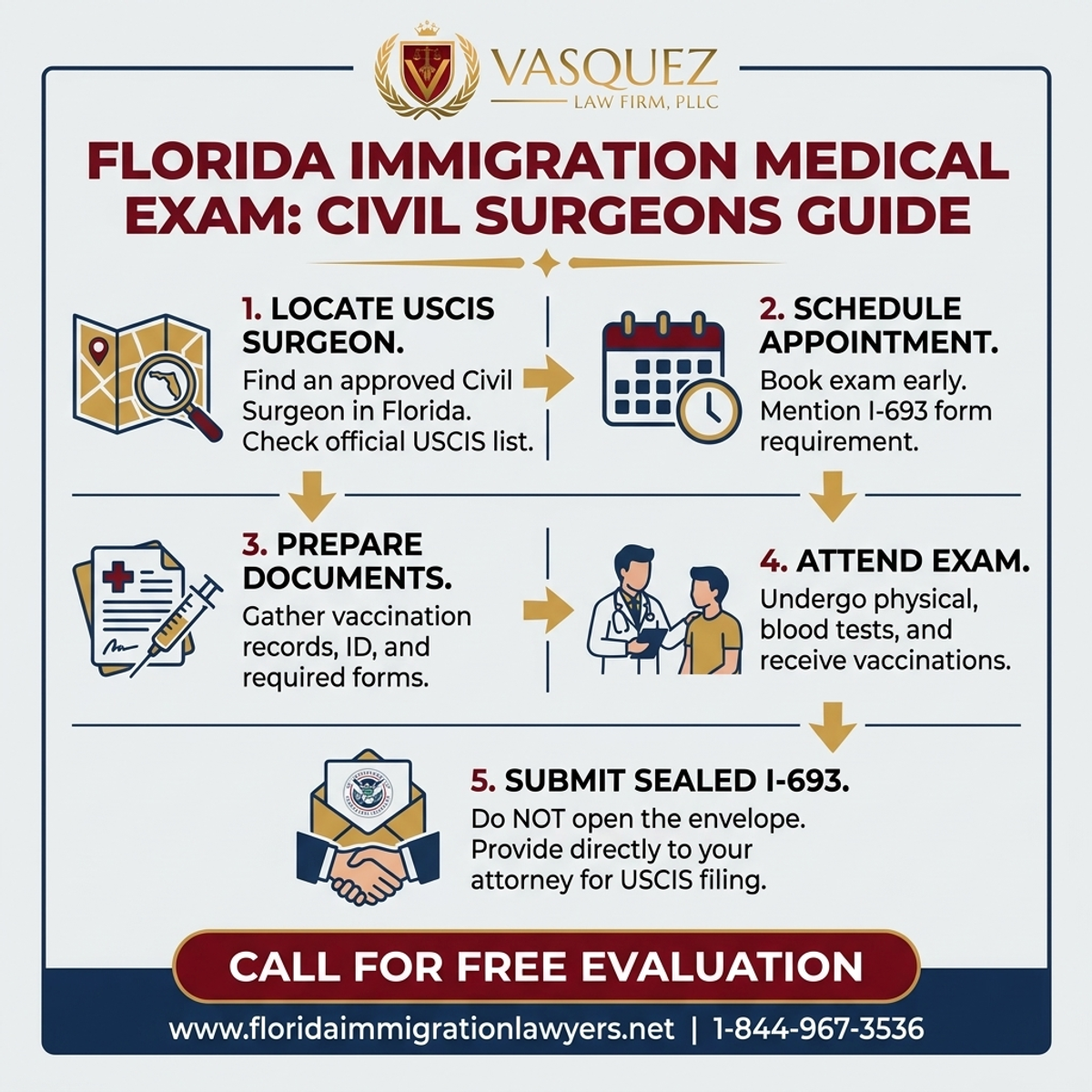
Step-by-Step Process — Immigration Medical Exam: Florida Civil Surgeons Guide
What to Expect During the Exam: A Detailed Breakdown
The immigration medical exam is comprehensive but focused. Here’s a breakdown of what typically occurs:
1. Medical History Review
The civil surgeon will ask detailed questions about your past and present medical conditions, hospitalizations, surgeries, and any history of mental illness, drug abuse, or harmful behavior. Be prepared to discuss any chronic conditions you have.
2. Physical Examination
This is a standard head-to-toe examination, but it's not as extensive as an annual physical. The civil surgeon will check your eyes, ears, nose, throat, heart, lungs, abdomen, and extremities. They will also assess your general appearance and mental status.
3. Mental Health Evaluation
The civil surgeon will screen for any signs of mental or psychological disorders that could be associated with harmful behavior. This is not a deep psychological assessment but a general screening.
4. Vaccination Requirements
This is a critical component. You must provide proof of vaccination for a range of diseases, including Measles, Mumps, Rubella, Polio, Tetanus and Diphtheria Toxoids, Pertussis, Haemophilus influenzae type B, Hepatitis A, Hepatitis B, Rotavirus, Meningococcal disease, Varicella, Pneumococcal disease, and Influenza. If you lack certain vaccinations, the civil surgeon will administer them or advise you on where to get them. Vaccination waivers are available in very limited circumstances, such as for religious or moral objections, but these require a separate application and approval by USCIS.
5. Tuberculosis (TB) Testing
All applicants aged two years or older must undergo a TB test. This is typically a TST (tuberculin skin test) or an IGRA (interferon-gamma release assay) blood test. If the initial test is positive, a chest X-ray will be required to determine if you have active TB disease. Further testing and treatment may be necessary if active TB is detected.
6. Syphilis and Gonorrhea Testing
Applicants aged 15 and older are required to be tested for syphilis and gonorrhea. These are blood and urine tests, respectively. If positive, treatment must be completed before the I-693 can be finalized.
7. Drug Abuse and Addiction Screening
The civil surgeon will screen for any history or current evidence of drug abuse or addiction. This includes a review of your medical history and a physical examination.
Required Documents for Your Appointment
To ensure a smooth process, gather all necessary documents before your appointment:
- Form I-693, Report of Medical Examination and Vaccination Record: Do not fill it out yourself, but bring the blank form.
- Government-issued photo identification: Such as a passport or driver's license.
- Vaccination records: Bring all original records, translated into English if necessary.
- Medical records: Any relevant records for past or present conditions, especially for chronic illnesses, mental health treatment, or previous positive TB tests.
- List of medications: Current medications, dosages, and prescribing doctors.
- Payment: Be prepared to pay the civil surgeon's fee, which is not covered by USCIS filing fees.
- Insurance card: While the exam is generally not covered by health insurance, some tests or vaccinations might be.
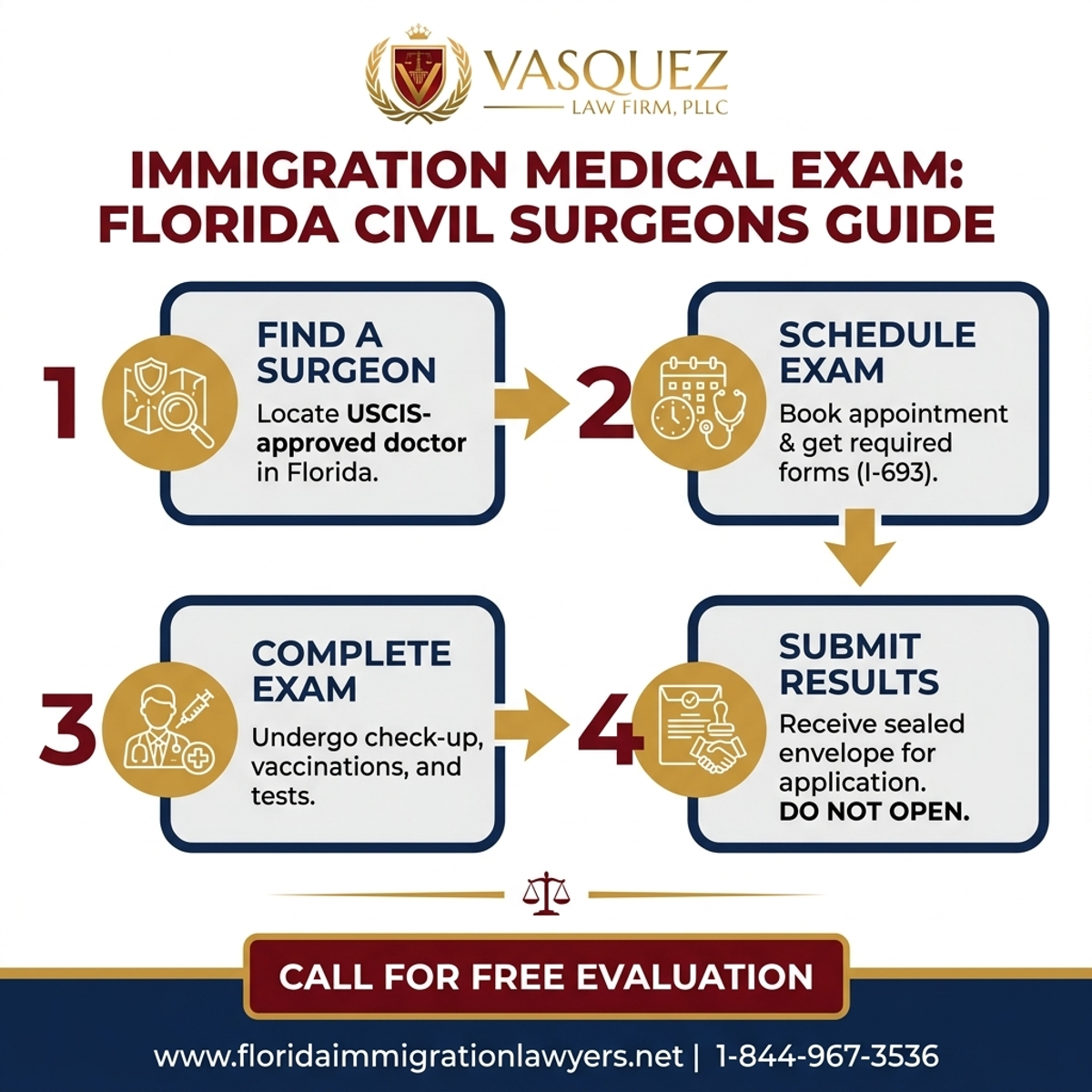
Key Statistics — Immigration Medical Exam: Florida Civil Surgeons Guide
Understanding the I-693 Form and Its Validity
Form I-693 is the official document completed by the civil surgeon. It details their findings, vaccination status, and any diagnosed conditions. The civil surgeon will seal the completed form in an envelope, which you must submit to USCIS. Do not open this envelope. USCIS will reject any I-693 form submitted in an unsealed envelope.
The validity period of Form I-693 is crucial. Generally, the form is valid for two years from the date the civil surgeon signs it, as long as it is submitted to USCIS within 60 days of the civil surgeon's signature. If you submit your adjustment of status application (Form I-485) without the I-693, you can submit it later, but ensure it remains valid. The rules regarding validity can be complex and are subject to change, so always check the latest USCIS guidance or consult with an immigration attorney.
After the Exam: What Happens Next?
Once the civil surgeon completes and seals your Form I-693, you are responsible for submitting it to USCIS. You can either submit it concurrently with your Form I-485 (Application to Adjust Status) or, if you've already filed your I-485, wait for a Request for Evidence (RFE) from USCIS to submit it. Submitting it proactively with your I-485 can sometimes expedite processing, but ensure its validity period aligns with your application timeline. Keep a copy of your vaccination record and a non-sealed copy of the I-693 for your personal records.
The Critical Role of an Immigration Attorney in Your Medical Exam Process
While the immigration medical exam is a medical procedure, its implications are entirely legal. Navigating the requirements, understanding potential inadmissibility grounds, and ensuring proper documentation can be complex, especially if you have a complicated medical history. This is where the expertise of an experienced immigration attorney becomes invaluable.
An attorney can provide crucial guidance even before your exam. They can help you understand what to expect, advise you on gathering necessary medical records, and prepare you for potential issues. For instance, if you have a history of a communicable disease, a mental health condition, or have previously tested positive for TB, an attorney can assess whether these conditions might lead to a finding of inadmissibility and explore potential waivers.
Health-related grounds of inadmissibility can be particularly challenging. Conditions such as certain communicable diseases, physical or mental disorders with associated harmful behavior, or a history of drug abuse can prevent you from obtaining a green card. An attorney can help determine if a waiver of inadmissibility (Form I-601 or I-602) is applicable to your situation and assist in preparing the complex documentation required for such a waiver. This is particularly relevant for individuals who may have sought asylum and have health conditions related to past trauma.
Furthermore, if USCIS issues a Request for Evidence (RFE) regarding your I-693 or if there are delays in your application due to medical reasons, an attorney can help you respond effectively and advocate on your behalf. They ensure that your medical exam results are correctly interpreted and submitted in the context of your overall immigration application.
For comprehensive support throughout your immigration journey, including expert advice on the medical exam and all other aspects of your case, do not hesitate to consult with our experienced attorneys. We are here to help you understand your rights and options.
Common Issues and Potential Delays
Even with careful preparation, issues can arise. Common problems include:
- Incomplete Documentation: Missing vaccination records or medical histories can cause delays.
- Positive Test Results: A positive TB test, or tests for syphilis/gonorrhea, will require further evaluation and treatment before the I-693 can be finalized.
- Unforeseen Medical Conditions: Discovery of a condition during the exam that falls under inadmissibility grounds.
- Civil Surgeon Errors: Mistakes in filling out the I-693 form can lead to RFEs.
- Validity Period Expiration: If your I-693 expires before USCIS processes your application, you may need a new exam.
Addressing these issues promptly is crucial. An attorney can be vital in resolving complex medical inadmissibility issues that could otherwise lead to deportation defense proceedings.
Conclusion
The immigration medical exam is a critical, non-negotiable step in the U.S. immigration process. While it may seem daunting, thorough preparation and understanding of the requirements can significantly ease the process. By choosing a reputable civil surgeon, gathering all necessary documents, and being transparent about your medical history, you can ensure your Form I-693 is accurately completed and submitted. Remember, the goal is to demonstrate that you meet the public health requirements for admission to the United States. If you encounter any complexities or have concerns about your medical history impacting your immigration case, seeking professional legal advice is always recommended. Our team is ready to assist you. Contact us today for a consultation.
Sources and References
- U.S. Citizenship and Immigration Services (USCIS)
- Executive Office for Immigration Review (EOIR)
- U.S. Department of State - Bureau of Consular Affairs
- Immigration and Nationality Act (INA), 8 U.S.C. Chapter 12
Do Not Navigate This Process Alone
Our experienced immigration attorneys are ready to fight for you. Get a free, confidential consultation today.
Se Habla Español
Frequently Asked Questions
Florida Immigration Lawyers
Immigration Attorney | Founder, Vasquez Law Firm
U.S. Air Force veteran and immigration attorney with thousands of cases resolved. J.D., NCCU School of Law. AILA member. Admitted to the 4th, 5th, and 11th Circuit Courts.
Available 24/7 - Free Evaluations
Related Legal Services
Our Florida immigration attorneys can help you with business immigration, asylum protection and deportation defense. Call today at 1-844-967-3536 for a free consultation.
Related Links
Related Topics
Free Legal Consultation
Discuss your case with our experienced attorneys. We're available 24/7.
Se Habla Español - Estamos aquí para ayudarle.
Related Articles
Dual Citizenship Florida: Your Path to Two Passports
Exploring dual citizenship in Florida offers a unique opportunity to maintain ties with your country of origin while enjoying the full benefits of U.S. citizenship. This comprehensive guide from Florida Immigration Lawyers delves into the naturalization process, the legality of holding two passports, and the crucial considerations for Florida residents. Learn about the benefits, responsibilities, and common pitfalls to avoid. Our expert insights will help you navigate the complexities of dual nationality, ensuring a smooth path towards achieving your immigration goals in Fort Lauderdale and across the state. Contact us for a free consultation to discuss your specific situation.
Expungement Effect on Immigration in Florida | VLF Florida
Discover how expungement and sealed records affect immigration in Florida. Learn vital steps and when to seek legal assistance. Call us for a consultation.
Change of Status B-2 to F-1 Florida: Tourist to Student Visa
Transitioning from a B-2 tourist visa to an F-1 student visa in Florida opens doors to academic pursuits but requires careful navigation of U.S. immigration law. This comprehensive guide from Florida Immigration Lawyers details the step-by-step process for a change of status B-2 to F-1, including essential documents, eligibility criteria, and crucial timelines. Learn about the I-539 application, the "90-day rule," and how to demonstrate non-immigrant intent effectively. We also cover common mistakes to avoid, cost factors, and when professional legal assistance is indispensable. Whether you're in Fort Lauderdale or elsewhere in Florida, our expert team is here to provide the support needed to achieve your educational dreams. Contact us for a free consultation.
VAWA Immigration Relief in Florida: A Guide | VLF Florida
Learn about VAWA immigration relief in Florida and how it can help abuse victims gain independence. Call us for a free consultation.