Protect Yourself from Immigration Scams in Florida
Learn how to protect against immigration scams in Florida, focusing on St. Petersburg. This guide covers identifying scams, verifying credentials, and getting legal help. Call Florida Immigration Lawyers at 1-844-967-3536 for assistance.

Florida, a vibrant state known for its diverse communities and welcoming spirit, is also home to a significant immigrant population. Unfortunately, this makes it a prime target for unscrupulous individuals and organizations who prey on the hopes and vulnerabilities of those seeking a better life. Immigration scams can have devastating and irreversible consequences, leading to severe financial loss, legal complications, and even deportation. Understanding the insidious nature of these scams, recognizing their red flags, and knowing how to protect yourself and your loved ones is not just important—it's absolutely critical.
Understanding Immigration Scams: A Deceptive Path to Ruin
Immigration scams encompass a wide range of deceptive practices where individuals or entities falsely claim to provide legitimate immigration services, legal advice, or guaranteed pathways to legal status in the U.S. These fraudsters often exploit a lack of familiarity with U.S. immigration laws, language barriers, and the desperation of those seeking to navigate a complex system. They promise quick fixes, special connections, or expedited processes, all while charging exorbitant fees for services they are not qualified to provide or that are entirely fraudulent.
Common Types of Immigration Scams Prevalent in Florida
Scammers employ various tactics, constantly evolving their methods to ensnare unsuspecting victims. Here are some of the most common types of immigration scams you might encounter in Florida:
Notario Fraud: A Dangerous Misunderstanding
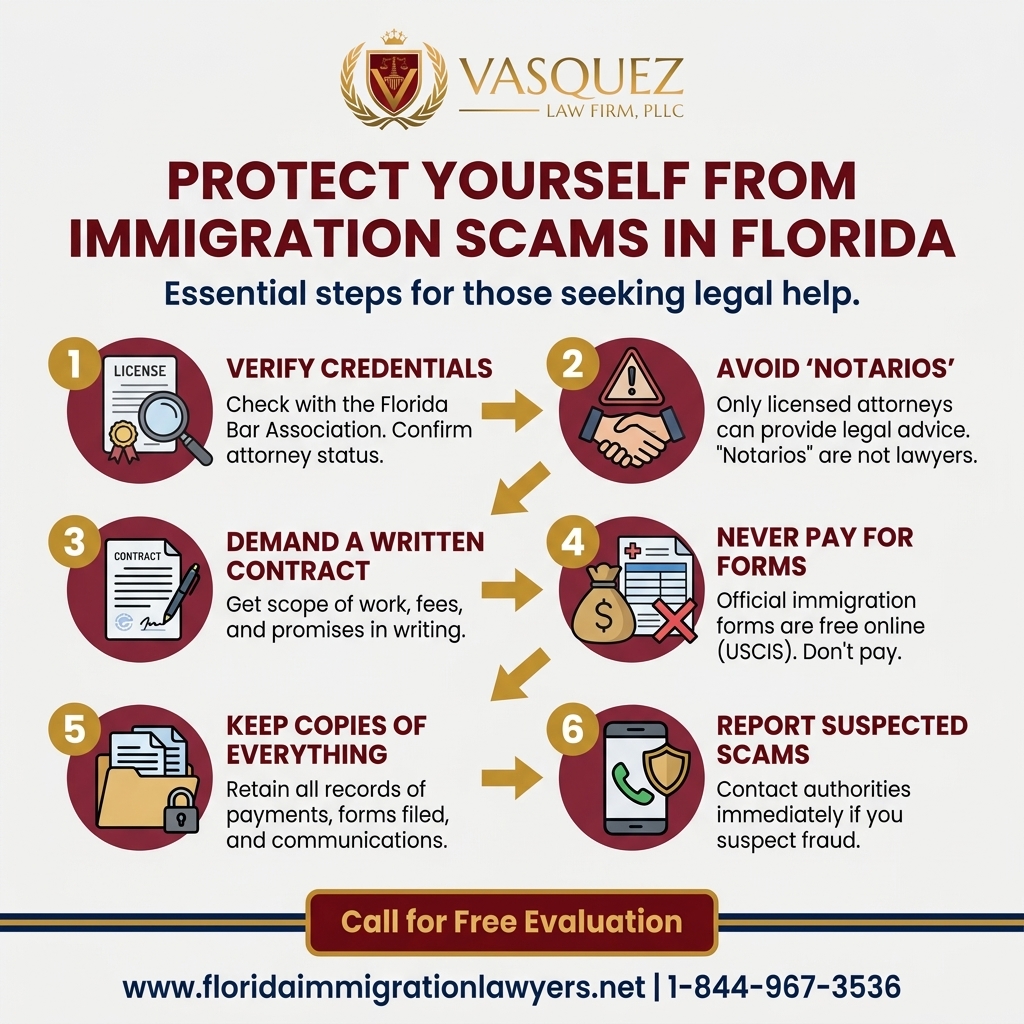
This is arguably the most pervasive and damaging scam, particularly within Hispanic communities. In many Latin American countries, a "notario publico" is a highly trained legal professional, often an attorney. However, in the United States, a "notary public" is only authorized to witness signatures and administer oaths; they are explicitly prohibited from providing legal advice or representing individuals in immigration matters. Unscrupulous individuals exploit this misunderstanding, posing as "notarios" and claiming to be qualified to offer legal counsel, fill out complex immigration forms, or even represent clients in court. This unauthorized practice of law invariably leads to incorrect applications, missed deadlines, severe legal complications, and often, deportation proceedings. Always remember: a U.S. notary public is NOT an attorney.
Fake Lawyers, Consultants, and Immigration Service Providers
Some fraudsters go as far as to impersonate licensed attorneys or accredited representatives. They may set up convincing but fake offices, create professional-looking websites, or use official-sounding titles to deceive. They often charge exorbitant fees for services they are neither qualified nor authorized to provide, or for services that are never rendered. These individuals may even claim to have "special connections" with immigration officials, promising guaranteed outcomes that are simply impossible. Verifying the credentials of anyone offering legal advice is paramount.
Government Impersonation Scams: Threats and False Demands
In these scams, fraudsters pretend to be officials from U.S. Citizenship and Immigration Services (USCIS), Immigration and Customs Enforcement (ICE), or other government agencies. They often contact victims via phone, email, or even text messages, demanding immediate payment for supposed "fines," "fees," or "back taxes." They threaten arrest, deportation, or other severe penalties if payment is not made instantly, often requesting payment via gift cards, wire transfers, or cryptocurrency—methods that legitimate government agencies would never use. Remember, USCIS and ICE will never demand payment over the phone or via email, nor will they threaten immediate arrest for non-payment without due process.
Marriage Fraud: Exploitation and Severe Penalties
While sometimes initiated by individuals seeking to exploit others, marriage fraud can also involve third-party scammers who facilitate fake marriages for immigration benefits in exchange for a fee. Both the U.S. citizen and the immigrant involved in a fraudulent marriage scheme face severe legal penalties, including hefty fines, imprisonment, and deportation. It can also lead to permanent bars from future immigration benefits.
Investment Scams (EB-5 Visa Fraud)
Though less common for the general immigrant population, sophisticated scammers also target high-net-worth individuals interested in the EB-5 investor visa program. They may promote fraudulent investment projects that do not meet USCIS requirements, leading to significant financial losses and the denial of visa petitions.
Document Fraud and Identity Theft
Some scammers offer to sell fake immigration documents, green cards, or even U.S. passports. Engaging in document fraud carries severe criminal penalties, including fines, imprisonment, and permanent bars from entering the U.S. In other cases, fraudsters may steal personal information under the guise of providing services, leading to identity theft.
Online and Social Media Scams
The digital age has opened new avenues for scammers. They create fake websites mimicking official government sites, send phishing emails designed to steal personal information, or make false promises of immigration assistance through social media platforms. Always be wary of unsolicited offers or websites that look suspicious.
The Devastating Impact of Immigration Scams on Individuals and Families
The consequences of falling victim to an immigration scam extend far beyond financial loss. These fraudulent schemes can shatter lives, separate families, and permanently derail legitimate pathways to legal status. Understanding the full scope of this impact underscores the critical need for vigilance and informed decision-making.
Financial Ruin and Exploitation
Victims often lose their life savings, money borrowed from family, or funds intended for legitimate legal fees. Scammers frequently demand large upfront cash payments, promising services that are never delivered or are completely worthless. This financial exploitation can leave individuals and families in dire economic straits, making it even harder to pursue their immigration goals through proper channels.
Severe Legal Jeopardy and Deportation
Perhaps the most severe consequence is the legal damage inflicted. Fraudulent applications filled out by unauthorized individuals often contain errors, misrepresentations, or even outright lies that can trigger serious immigration violations. This can lead to denial of legitimate applications, placement in deportation proceedings, and even permanent bars from re-entering the United States. Victims may unknowingly commit immigration fraud themselves by signing false documents, putting their entire immigration future at risk. In cases where individuals have sought asylum, a scam could jeopardize their entire claim, leaving them vulnerable to removal.
Emotional Distress and Loss of Trust
The emotional toll on victims is immense. The betrayal, shame, and fear associated with being scammed can lead to significant psychological distress, anxiety, and depression. Victims often become distrustful of anyone offering assistance, making it difficult for them to seek legitimate help when they desperately need it. The dream of a secure future in the U.S. can be shattered, leaving behind a trail of despair and hopelessness.
Delays and Complications in Legitimate Cases
Even if a scam doesn't lead to immediate deportation, it can cause significant delays and complications for any future legitimate immigration applications. Correcting errors made by fraudulent service providers can be a lengthy, expensive, and arduous process, often requiring extensive legal intervention to mitigate the damage. This puts victims at a severe disadvantage, prolonging their uncertainty and delaying their path to legal residency.
Key Red Flags to Watch Out For
Vigilance is your best defense. Be acutely aware of these warning signs that indicate you might be dealing with a scammer:
- Guaranteed Results: No legitimate attorney or government agency can guarantee the outcome or speed of an immigration case. The process is complex and depends on many factors.
- Demands for Large Upfront Cash Payments: Be suspicious of anyone demanding large sums of cash, especially without a clear breakdown of services or a written contract.
- Requests to Sign Blank Forms: Never, under any circumstances, sign an immigration form that is blank or incomplete. You must understand and agree with every piece of information submitted on your behalf.
- Refusal to Provide Written Contracts or Receipts: Legitimate professionals will always provide a detailed written contract outlining services, fees, and timelines, as well as receipts for all payments.
- Claims of "Special Connections": Beware of individuals who claim to have inside connections with immigration officials or promise to expedite your case through illicit means. This is a classic scam tactic.
- Pressure to Act Immediately: Scammers often create a sense of urgency to prevent you from doing your research or seeking a second opinion.
- Unusual Payment Methods: Demands for payment via gift cards, wire transfers, cryptocurrency, or direct cash deposits to personal accounts are almost always signs of a scam.
- Unsolicited Contact: Be wary of unexpected calls, emails, or messages from individuals claiming to be immigration officials or offering immigration services.
Proactive Steps to Protect Yourself from Immigration Scams
Empower yourself with knowledge and take decisive actions to safeguard your immigration journey:
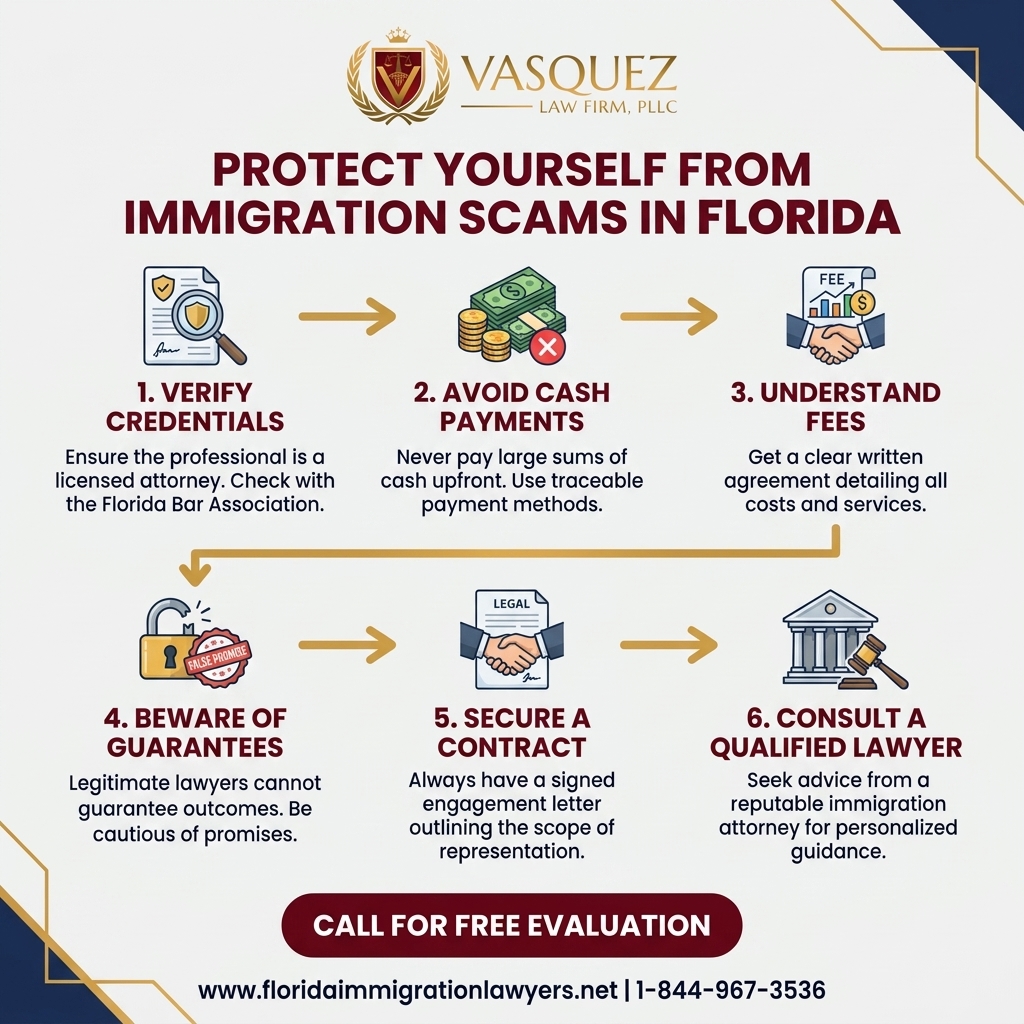
- Verify Credentials: Always confirm that the person offering legal advice or services is a licensed attorney or an accredited representative recognized by the Department of Justice. You can check with the Florida Bar Association for attorneys or the Department of Justice's Executive Office for Immigration Review (EOIR) for accredited representatives. Our experienced attorneys are fully licensed and in good standing with the Florida Bar.
- Get Everything in Writing: Insist on a detailed written contract that clearly outlines the services to be provided, the total fees, payment schedules, and any other terms. Read it carefully and ensure you understand it before signing.
- Never Sign Blank Forms: Before signing any document, ensure it is completely filled out, and you understand its contents and implications. Request copies of everything you sign and submit.
- Avoid Cash Payments: Whenever possible, pay by check, money order, or credit card, and always obtain a dated receipt. This creates a paper trail that can be crucial evidence if a scam occurs.
- Educate Yourself from Official Sources: Learn about the immigration process directly from official government websites like USCIS.gov. Understanding the basics of immigration law can help you spot inconsistencies in a scammer's claims.
- Seek Legitimate Legal Counsel: If you need assistance with an immigration matter, consult with a reputable and qualified immigration attorney. They can provide accurate information, ethical guidance, and effective representation. Don't hesitate to contact us for a consultation.
What to Do If You Suspect or Are a Victim of a Scam
If you believe you have been targeted by or fallen victim to an immigration scam, immediate action is crucial to mitigate potential damage:
- Stop All Contact: Cease all communication with the suspected scammer immediately. Do not send any more money or provide further personal information.
- Gather Evidence: Collect all documents, emails, text messages, phone records, payment receipts, and any other information related to the scam. This evidence will be vital for reporting the fraud and for any subsequent legal action.
- Report the Scam:
- File a complaint with the Federal Trade Commission (FTC) at ReportFraud.ftc.gov.
- Report the incident to your state's Attorney General's office.
- If the scammer claimed to be an attorney, report them to the Florida Bar Association.
- If the scammer claimed to be a "notario" or immigration consultant, report them to USCIS.
- If you suspect identity theft, report it to the police and the FTC.
- Seek Legal Counsel Immediately: Contact a legitimate and experienced immigration attorney without delay. They can assess the damage caused by the scam, advise you on the impact on your immigration case, and help you explore your legal options. This is especially critical if the scam has put you at risk of deportation or jeopardized a pending application like asylum.
The Indispensable Role of a Qualified Immigration Attorney
In a landscape rife with scams, the value of a legitimate, qualified immigration attorney cannot be overstated. Unlike fraudulent notarios or consultants, licensed attorneys are bound by strict ethical codes and professional standards. They possess an in-depth understanding of complex U.S. immigration laws and regulations, which are constantly changing. A reputable attorney will:
- Provide accurate, honest, and up-to-date legal advice.
- Help you understand your eligibility for various immigration benefits.
- Properly prepare and file all necessary forms and documentation with USCIS and other agencies.
- Represent you ethically and effectively in interviews, hearings, and court proceedings.
- Protect your rights and best interests throughout the entire immigration process.
- Help you navigate challenges, including those arising from past scams or errors.
Choosing an attorney is an investment in your future, ensuring that your immigration journey is handled with the utmost care and professionalism.
Why Choose Florida Immigration Lawyers for Your Protection
At Florida Immigration Lawyers, we are acutely aware of the challenges and dangers immigrants face, especially from fraudulent schemes. Our team of dedicated and experienced attorneys is committed to providing ethical, compassionate, and highly effective legal representation. We prioritize protecting our clients from fraud and guiding them safely through the intricate immigration system. We understand that every case is unique, and we offer personalized attention to ensure your specific needs are met with integrity and expertise. We offer a free consultation to discuss your situation, provide clear, honest advice, and outline a legitimate path forward. Don't let fear or misinformation dictate your future; let us be your trusted legal partner. Contact us today.
Conclusion
Immigration scams pose a severe and persistent threat to the immigrant community in Florida. By arming yourself with knowledge, recognizing the critical red flags, and taking proactive steps to verify credentials and seek legitimate legal counsel, you can protect yourself and your loved ones from falling victim to these predatory schemes. Always remember: if an offer sounds too good to be true, it almost certainly is. Your future in the United States is too important to entrust to anyone but a qualified and ethical legal professional. Stay informed, stay vigilant, and choose your legal representation wisely.
Sources and References
- U.S. Citizenship and Immigration Services (USCIS)
- Executive Office for Immigration Review (EOIR)
- U.S. Department of State - Bureau of Consular Affairs
- Immigration and Nationality Act (INA), 8 U.S.C. Chapter 12
Do Not Navigate This Process Alone
Our experienced immigration attorneys are ready to fight for you. Get a free, confidential consultation today.
Se Habla Español
Frequently Asked Questions

William J. Vásquez
Founding Attorney · Vasquez Law Firm
U.S. Air Force veteran and immigration attorney with thousands of cases resolved. J.D., NCCU School of Law. AILA member. Admitted to the 4th, 5th, and 11th Circuit Courts.
Available 24/7 - Free Evaluations
Related Legal Services
Our Florida immigration attorneys can help you with asylum protection, deportation defense and citizenship and naturalization. Call today at 1-844-967-3536 for a free consultation.
Related Links
Related Topics
Free Legal Consultation
Discuss your case with our experienced attorneys. We're available 24/7.
Se Habla Español - Estamos aquí para ayudarle.
Related Articles
Understanding the Child Status Protection Act in Florida
Worried about your child aging out of their immigration status in Florida? Discover how the Child Status Protection Act (CSPA) can help safeguard their future. Call Florida Immigration Lawyers at 1-844-967-3536 for expert guidance.
Protect Yourself from Immigration Scams in Florida
Immigration scams are a serious issue in Florida, particularly in areas like Hollywood. Learn how to identify and avoid scams such as notario fraud. Stay informed and seek legal help when necessary. Call Florida Immigration Lawyers for a free consultation.
H-4 EAD Spouse Work Permit Rules in Florida | VLF Florida
Discover how the H-4 EAD can empower spouses of H-1B visa holders in Florida to work legally. Our detailed guide covers eligibility, application process, and common pitfalls. Call Florida Immigration Lawyers for personalized assistance.
U Visa Immigration Relief for Crime Victims in Florida
U Visa provides a crucial pathway to legal status for crime victims in Florida. Learn about eligibility, application steps, and common pitfalls to avoid. Contact Florida Immigration Lawyers for expert guidance and a free consultation.