Understanding Expungement's Impact on Immigration in Florida
Discover how expungement and sealed records affect immigration outcomes in Florida. Learn the steps, common mistakes, and when to seek legal help.

- Expunged records may still affect immigration outcomes.
- Legal advice is crucial for navigating these complexities.
- Florida's laws on expungement differ from federal immigration laws.
Introduction
Imagine moving to Orlando, Florida, with dreams of a bright future in the U.S., only to discover that a past criminal record could jeopardize your immigration status. Understanding how expungement and sealed records affect immigration is crucial for many immigrants in Florida. This article explores these impacts in depth, providing guidance on navigating this complex area of law. Call Florida Immigration Lawyers at 1-844-967-3536 for a free consultation if you need personalized advice.
The journey to a new life in America is often filled with hope and aspiration. However, for those with a past encounter with the criminal justice system, even minor incidents can cast a long shadow over their immigration prospects. Florida's state laws on expungement aim to offer a fresh start, but federal immigration regulations operate under a different set of rules, creating a complex legal labyrinth that can be challenging to navigate without expert guidance.
This disparity between state and federal law is precisely why understanding the nuances of expungement and its implications for your immigration journey is paramount. A seemingly "erased" record at the state level might still be visible and detrimental when applying for a visa, green card, or citizenship. Our goal is to shed light on these critical issues, offering clarity and practical advice to help you protect your immigration status in Florida. For tailored assistance, remember that Florida Immigration Lawyers are ready to provide a free consultation.
Understanding Expungement and Sealed Records
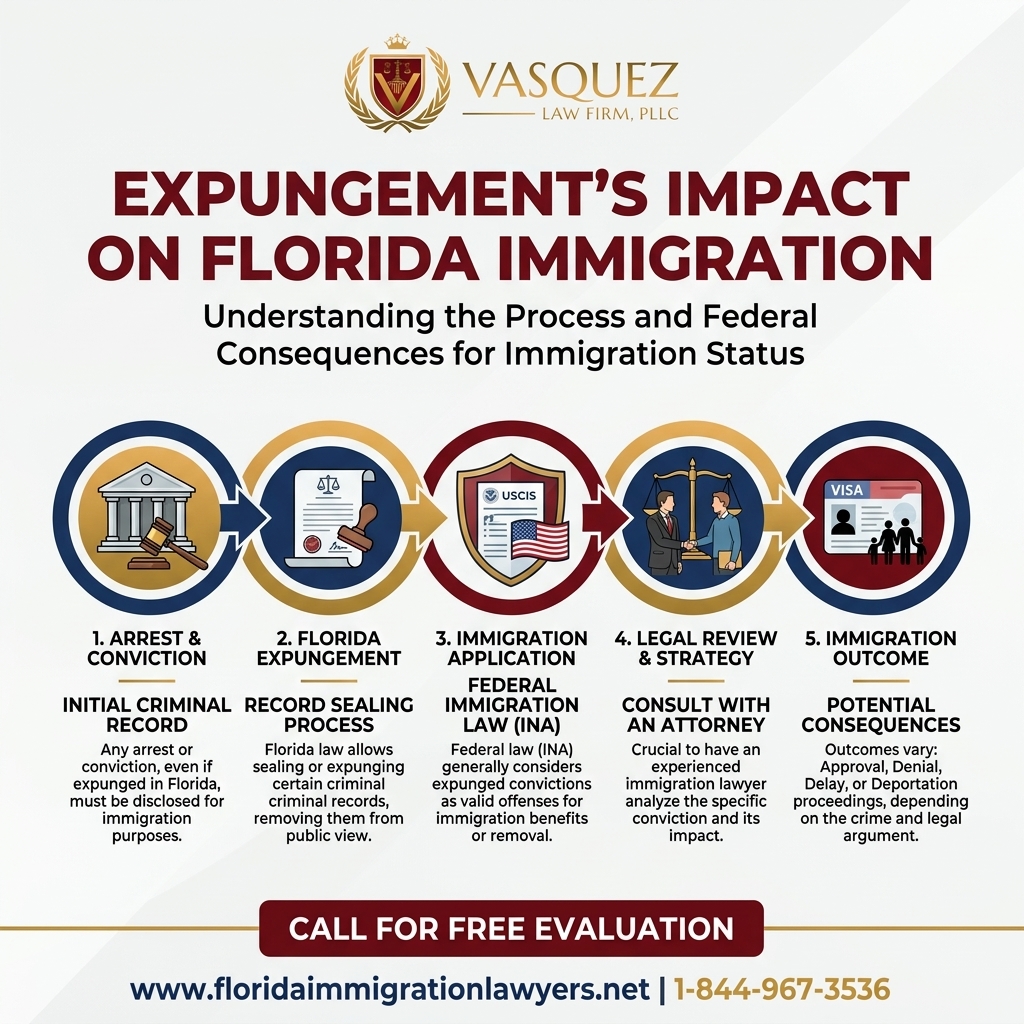
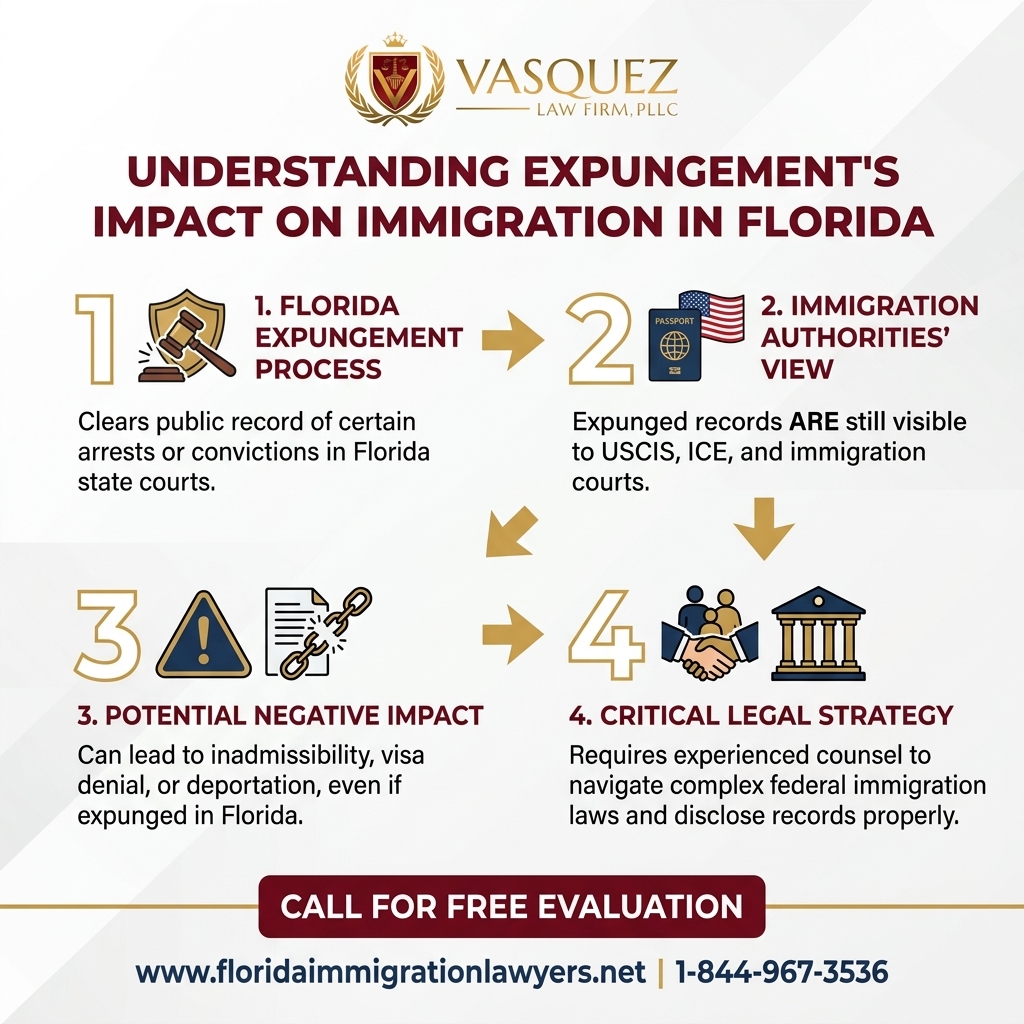
In Florida, expungement refers to the legal process of erasing or sealing a criminal record from public view. This can be a vital step for individuals seeking to move forward without the burden of past mistakes. However, in the context of immigration, expunged records can still be visible to federal authorities, which may affect immigration proceedings. It's important to consult with an immigration attorney to understand how these records might impact your specific case.
While both expungement and sealing aim to remove a criminal record from public access, they differ slightly. An expunged record is legally destroyed or erased, making it as if the event never occurred. A sealed record is merely hidden from public view but still exists and can be accessed by certain government agencies, including law enforcement and, critically, federal immigration authorities like USCIS, ICE, and CBP. This distinction is vital because federal immigration law often operates independently of state criminal law.
Federal immigration agencies have broad authority to access criminal history information, regardless of whether a state court has expunged or sealed the record. This is primarily due to national security and public safety concerns. For example, if you apply for a green card or naturalization, federal background checks will likely reveal any past arrests or convictions, even if they've been expunged at the state level. This federal visibility means that what might be a clean slate in Florida state courts could still be a significant hurdle in your immigration application.
Furthermore, the nature of the crime matters immensely. Certain offenses, such as Crimes Involving Moral Turpitude (CIMT), aggravated felonies, drug offenses, and domestic violence, carry severe immigration consequences, often leading to inadmissibility or deportability. Even if expunged, these types of records can trigger federal scrutiny and require a sophisticated legal strategy. Understanding these intricacies is where the expertise of Florida Immigration Lawyers becomes invaluable.
Step-by-Step Guide to Expungement in Florida
- Determine Eligibility: Not all offenses are eligible for expungement. You must meet specific criteria under Florida law.
- File a Petition: You must file a petition with the court to request expungement.
- Provide Documentation: Gather all necessary documents, including your criminal record and any required affidavits.
- Await Court Decision: The court will review your petition and decide whether to grant the expungement.
- Follow Up: If granted, ensure all agencies that held your record update their files accordingly.
Let's delve deeper into each step. First, determining eligibility is crucial. Florida Statutes outline strict criteria for expungement. Generally, you cannot have been previously adjudicated guilty of any criminal offense, and the offense you wish to expunge must not be on the list of ineligible crimes, which includes most violent felonies, sex offenses, and certain drug trafficking charges. You must also not have received a prior expungement or sealing. A thorough review of your criminal history by a knowledgeable attorney is essential to confirm your eligibility before proceeding, saving you time and resources.
Once eligibility is confirmed, the next step involves preparing and filing a Petition for Expungement or Sealing with the appropriate court. This petition must be accurately completed, detailing the specific charges and the reasons for the request. It often requires obtaining a Certificate of Eligibility from the Florida Department of Law Enforcement (FDLE), which verifies that your record meets the state's criteria. Any inaccuracies or omissions in this documentation can lead to significant delays or even denial of your petition.
Providing comprehensive documentation is paramount. This includes a certified disposition of your case, which is the official court record of the outcome, a sworn statement of eligibility affirming you meet all criteria, and a fingerprint card for background verification. A notarized affidavit might also be required, attesting to the facts of your case. Gathering these documents can be time-consuming and requires careful attention to detail. An experienced attorney can help you compile and organize all necessary paperwork efficiently, ensuring nothing is overlooked.
After filing, you must await the court's decision. This phase typically involves a review by a judge, and in some cases, a hearing may be scheduled where you or your attorney might need to present arguments. The court will consider all evidence, including your petition and supporting documents, before issuing an order. A favorable decision will result in an order granting the expungement or sealing of your record. This waiting period can be anxious, but having legal representation ensures you are prepared for any contingencies.
Finally, if your petition is granted, proactive follow-up is critical. The court order needs to be properly distributed to all relevant agencies that hold your criminal record, such as the FDLE, local law enforcement agencies, and the clerk of courts. It is your responsibility, or more practically, your attorney's responsibility, to ensure these agencies comply with the order and update their files. Without proper follow-up, your record might not be fully removed from all databases, potentially causing future issues. Florida Immigration Lawyers can assist with this crucial final step to ensure your expungement is thoroughly processed.
Document Checklist for Expungement
- Certified disposition of the case
- Sworn statement of eligibility
- Fingerprint card
- Notarized affidavit
Accurate and complete documentation is the backbone of a successful expungement petition. Each item on this checklist serves a critical purpose in verifying your identity, the details of your case, and your eligibility under Florida law. Missing or incorrectly filled documents can cause significant delays or even outright denial of your expungement request. Ensuring every piece of paperwork is meticulously prepared and submitted is a crucial step towards achieving a clean slate.
Timeline and Processing Expectations
The expungement process in Florida typically takes several months, involving multiple steps and coordination with various legal entities. Once initiated, it can take anywhere from 6 to 12 months to complete, depending on the complexity of the case.
Several factors can influence this timeline, including the specific court's backlog, the responsiveness of the Florida Department of Law Enforcement (FDLE) in issuing the Certificate of Eligibility, and the efficiency with which all required documents are gathered and submitted. Complex cases involving multiple charges or jurisdictions might naturally take longer. It is important to manage your expectations and understand that this is not a quick process. Patience and consistent follow-up, often facilitated by a legal team, are key.
During this period, it's crucial to avoid any new arrests or legal issues, as these could jeopardize your expungement petition. Your attorney will keep you informed about the progress and any necessary actions on your part. While the waiting period can be lengthy, the long-term benefits of an expunged record, even with federal immigration implications, often outweigh the temporary inconvenience. Florida Immigration Lawyers can help you navigate these timelines effectively.
Cost Factors and Fee Breakdown
The costs associated with expungement in Florida can vary widely. Legal fees, court filing costs, and administrative fees for document processing are typical expenses. It's important to budget for these in advance and seek legal advice to understand the full scope of potential costs.
Breaking down the costs, you can expect to pay for several components. Attorney fees constitute a significant portion, reflecting the legal expertise required to navigate the complex process, prepare documents, and represent you in court. These fees might be structured as a flat fee for the entire process or an hourly rate, depending on the law firm and the complexity of your case. Additionally, there are mandatory court filing fees, fees for obtaining certified copies of documents, fingerprinting fees, and potentially fees for background checks from the FDLE.
While the upfront costs of expungement might seem substantial, it's crucial to view this as an investment in your future. A successful expungement can open doors to better employment opportunities, housing, and most importantly for immigrants, a clearer path through federal immigration processes. Attempting to navigate this intricate legal process without professional help can lead to costly mistakes, delays, or even denial, which could have far more severe and enduring financial and personal consequences. Florida Immigration Lawyers offer transparent fee structures and can discuss all potential costs during your free consultation at 1-844-967-3536.
Do not navigate this process alone. Contact Florida Immigration Lawyers today.
Common Mistakes to Avoid
- Failing to check eligibility: Not all offenses can be expunged under Florida law, leading to wasted efforts.
- Ignoring federal implications: Expunged records may still impact federal immigration decisions.
- Incorrect documentation: Missing or incorrect documents can delay or derail your expungement efforts.
- Not consulting an attorney: Legal advice is crucial for understanding complex interactions between state and federal laws.
- Assuming privacy: Expunged records may still be accessible to certain agencies, including immigration authorities.
- Overlooking timelines: Delays in filing or gathering documents can extend the expungement process unnecessarily.
- Misunderstanding costs: Failing to budget for all potential fees can lead to unexpected financial strain.
Avoiding these common pitfalls is essential for a successful expungement process and, more importantly, for safeguarding your immigration status. Each mistake, from failing to verify eligibility to misunderstanding federal oversight, can have significant repercussions, potentially leading to delays, denials, or even triggering adverse immigration actions. Proactive and informed decision-making, ideally with the guidance of an experienced attorney, is your best defense against these challenges.
For instance, assuming an expunged record grants complete privacy can be a critical error. Federal immigration agencies operate under different rules, and their access to your criminal history remains largely unaffected by state expungement orders. This oversight can lead to unexpected complications during visa interviews or green card applications. Consulting with Florida Immigration Lawyers can help you understand these federal implications thoroughly and prepare accordingly, ensuring you are not caught off guard.
When to Call a Lawyer
When facing the complexities of expungement and its impact on your immigration status, it's crucial to consult with a legal expert. Scenarios suchs as a pending deportation case, a complex criminal record, or confusion about eligibility for expungement are all strong indicators that professional legal advice is necessary. Florida Immigration Lawyers offer comprehensive services to guide you through this challenging process.
Beyond these clear-cut situations, you should consider calling a lawyer if you are planning to apply for naturalization, renew your green card, apply for any type of visa, or if you have any past arrests or convictions, no matter how minor you perceive them to be or how long ago they occurred. Even a dismissed charge or a plea of no contest can have unforeseen consequences in the eyes of federal immigration law. For example, a shoplifting charge, even expunged, might be considered a Crime Involving Moral Turpitude (CIMT) by USCIS, potentially leading to inadmissibility.
Moreover, if you have been recently arrested, even for a seemingly minor offense, contacting an immigration attorney immediately is paramount. Early intervention can often prevent a minor incident from escalating into a major immigration problem. An attorney can advise you on how to handle the criminal case in a way that minimizes its impact on your immigration status, potentially exploring alternatives that are more favorable for your long-term goals. Don't wait until an immigration application is denied; proactive consultation with Florida Immigration Lawyers at 1-844-967-3536 can make all the difference.
Frequently Asked Questions
Q: What is the difference between expungement and sealing in Florida?
In Florida, expungement legally destroys or erases a criminal record as if it never happened, making it inaccessible to most entities. Sealing, however, hides the record from public view but it still exists and can be accessed by specific government agencies, including federal immigration authorities. For immigration purposes, this distinction is critical, as sealed records remain visible to federal agents, potentially impacting your case.
Q: Can an expunged record ever be seen by immigration authorities?
Yes, absolutely. Despite a state-level expungement, federal immigration authorities like USCIS, ICE, and CBP typically retain access to your full criminal history. Federal law supersedes state law in this regard, meaning an expunged record in Florida can still be a significant factor in federal immigration decisions regarding visas, green cards, or naturalization. It's crucial to disclose such records.
Q: What types of crimes are most problematic for immigrants, even if expunged?
Crimes that are particularly problematic for immigrants, even if expunged, include Crimes Involving Moral Turpitude (CIMT), aggravated felonies, drug offenses (even minor possession), domestic violence, and certain fraud-related crimes. These offenses can lead to inadmissibility or deportability under federal immigration law. Always consult an attorney to understand how your specific offense might be interpreted by federal agencies.
Q: Should I disclose an expunged record on immigration forms?
Yes, it is almost always advisable to disclose an expunged record on immigration forms. Federal immigration applications often ask if you have ever been arrested, charged, or convicted, regardless of expungement. Failing to disclose, even if you believe the record is erased, can be considered misrepresentation or fraud, leading to severe penalties, including denial of benefits or even a bar from future immigration relief. Transparency is key.
Q: How can Florida Immigration Lawyers help with my expunged record?
Florida Immigration Lawyers can provide comprehensive assistance by evaluating your specific criminal history and its federal immigration implications. We guide you through the Florida expungement process, ensuring all steps are correctly followed. Crucially, we then help you prepare for immigration applications, advising on how to properly disclose expunged records and mitigating any potential negative impacts, offering a strategic approach to protect your immigration status.
About Florida Immigration Lawyers
Florida Immigration Lawyers is a leading immigration law firm serving all of Florida. Our bilingual team is available 24/7 to provide free consultations and assist with all your immigration needs, from family immigration to deportation defense. Contact us at 1-844-967-3536 or visit our website at floridaimmigrationlawyers.net.
Sources and References
- U.S. Citizenship and Immigration Services (USCIS)
- Executive Office for Immigration Review (EOIR)
- U.S. Department of State
- 8 U.S.C. Chapter 12 - Immigration and Nationality Act
Related services: immigration practice areas, family immigration services, citizenship and naturalization.
This article provides general legal information and is not intended as legal advice. Every case is unique, and outcomes depend on specific facts and circumstances. Contact an attorney for advice about your particular situation.
For expert legal assistance, call Florida Immigration Lawyers at 1-844-967-3536 for a free consultation. Se Habla Espanol - Estamos aqui para ayudarle.
If you need legal assistance, learn more about learn about our immigration practice, or call us at 1-844-967-3536 for a free consultation.
Do Not Navigate This Process Alone
Our experienced immigration attorneys are ready to fight for you. Get a free, confidential consultation today.
Se Habla Español
Frequently Asked Questions

William J. Vásquez
Founding Attorney · Vasquez Law Firm
U.S. Air Force veteran and immigration attorney with thousands of cases resolved. J.D., NCCU School of Law. AILA member. Admitted to the 4th, 5th, and 11th Circuit Courts.
Available 24/7 - Free Evaluations
Related Legal Services
Our Florida immigration attorneys can help you with family immigration services, immigration practice areas and free immigration consultation. Call today at 1-844-967-3536 for a free consultation.
Related Links
Related Topics
Free Legal Consultation
Discuss your case with our experienced attorneys. We're available 24/7.
Se Habla Español - Estamos aquí para ayudarle.
Related Articles
Immigration Bond Hearing Florida: Your 2026 Guide | VLF Florida
Navigating an immigration bond hearing in Florida requires a clear understanding of the process, eligibility, and legal requirements. This 2026 guide from Florida Immigration Lawyers provides essential information on securing release from ICE detention, including details on bond hearings, required documents, typical timelines, and associated costs. Learn about the factors immigration judges consider, common mistakes to avoid, and when it's critical to enlist expert legal counsel. With Florida-specific insights and practical advice, this resource aims to empower individuals and families facing immigration detention across the state, from West Palm Beach to Miami. Secure a free consultation with our experienced attorneys for dedicated support.
J-1 Waiver for Physicians in Florida: A 2026 Guide
Navigating the J-1 waiver process in Florida can be challenging for foreign physicians. Learn how the Conrad 30 program facilitates placements in underserved areas like Homestead, ensuring a successful application. Call Florida Immigration Lawyers today for expert guidance.
Naturalization Process Florida Timeline 2026 Guide
The naturalization process in Florida, culminating in U.S. citizenship, involves several key stages including eligibility assessment, filing Form N-400, biometrics, an interview, and the Oath of Allegiance. As of 2026, the typical timeline for this process in Florida ranges from 18 to 24 months, though individual experiences can vary. This guide from Florida Immigration Lawyers provides a comprehensive overview, covering requirements, step-by-step procedures, potential costs, and common pitfalls. We emphasize the importance of understanding Florida-specific nuances and the benefits of legal counsel to navigate this complex journey effectively. Contact us for a free consultation.
H-2B Visa for Florida Hospitality Seasonal Workers
Explore the H-2B visa process for seasonal workers in Florida's hospitality industry. Learn about costs, timelines, and common mistakes. Contact Florida Immigration Lawyers for expert assistance.