Refugee Resettlement Florida: Your Guide to Status in 2026
For those seeking safety and a new beginning, understanding refugee status and the resettlement process in Florida is crucial. This comprehensive guide for 2026 details the step-by-step journey, necessary documentation, expected timelines, and associated costs. Florida, particularly the Tampa Bay area, offers robust support networks for refugees, but navigating the legal and practical aspects requires careful attention. Learn about federal oversight, local assistance, and key differences between refugee and asylum status. Discover how to avoid common pitfalls and when legal counsel is essential to ensure a successful transition into your new community. Our firm, Florida Immigration Lawyers, is here to help you every step of the way.

Refugee resettlement in Florida involves a structured process managed by federal agencies, state programs, and non-profit organizations to help individuals granted refugee status rebuild their lives. As of 2026, this process typically includes initial reception, housing assistance, cultural orientation, employment services, and access to healthcare and education. While the federal government oversees eligibility and initial placement, local organizations in areas like Tampa provide crucial on-the-ground support. Understanding your rights and available resources is vital for a successful transition into Florida communities.
- Refugee status is granted by the U.S. government, often after referral from UNHCR.
- Resettlement aid in Florida covers housing, employment, and social services.
- The process is complex, involving multiple agencies and strict eligibility criteria.
- Legal guidance from an experienced immigration attorney is highly recommended.
For those seeking safety and a new beginning, the journey to refugee status and resettlement in the United States can be overwhelming. Florida, with its diverse communities and established support networks, has long been a destination for refugees from around the world. Navigating the legal complexities and practical challenges of immigration and resettlement requires expert guidance.
This comprehensive guide, current as of 2026, will walk you through the process of refugee resettlement in Florida, focusing on key aspects from initial status determination to becoming an integrated member of the community. We will explore the steps involved, the support systems available, and crucial legal considerations. Our goal is to empower you with the knowledge needed to successfully navigate this life-changing transition.
Do you have questions about your eligibility or the resettlement process in Florida? Don't face this journey alone. Call Florida Immigration Lawyers at 1-844-967-3536 for a free consultation today. Our experienced attorneys are here to provide the compassionate and effective legal support you deserve, serving clients across all of Florida.
Understanding Refugee Status and Asylum in Florida
Refugee status and asylum are distinct but related forms of humanitarian protection under U.S. immigration law, governed by the Immigration and Nationality Act (INA). A refugee is generally someone who applies for protection from outside the United States, often after being referred by the United Nations High Commissioner for Refugees (UNHCR) or identified by the U.S. government in their home country or a third country. They must demonstrate a well-founded fear of persecution on account of race, religion, nationality, membership in a particular social group, or political opinion. Upon approval, refugees are admitted to the U.S. and are eligible for resettlement assistance.
In contrast, an asylee is someone who applies for protection from within the United States or at a U.S. port of entry, meeting the same definition of persecution as a refugee. The application process for asylum is typically managed by U.S. Citizenship and Immigration Services (USCIS) or the Executive Office for Immigration Review (EOIR) through immigration courts. Both refugees and asylees are granted legal status, allowing them to live and work in the U.S. and eventually apply for lawful permanent residency. Understanding these differences is crucial when seeking protection in Florida.
As of 2026, Florida continues to be a significant state for both refugee resettlement and asylum seekers, particularly in urban centers like Tampa, Orlando, and Miami. The Tampa Bay area, in particular, has a robust network of non-profit organizations dedicated to assisting new arrivals. The legal framework for these protections is complex, often requiring detailed documentation and compelling testimony. Seeking legal counsel early in the process can significantly improve your chances of a successful outcome.
How Does Refugee Resettlement Work in Florida in 2026?
Refugee resettlement in Florida in 2026 follows a coordinated federal-state-local approach, beginning with federal approval and culminating in comprehensive support services to help refugees achieve self-sufficiency. Once individuals are granted refugee status and approved for admission to the U.S., they are typically assigned to one of several resettlement agencies with local affiliates in Florida. These agencies provide initial reception and placement services, including housing, cultural orientation, and assistance with accessing essential services.
The resettlement process is designed to be holistic, addressing immediate needs while also fostering long-term integration into American society. This includes linking refugees with English language classes, job training programs, healthcare providers, and schools for children. In Florida, specific programs vary by location, but the overarching goal remains to ensure that refugees have the tools and support necessary to thrive. This structured approach helps alleviate the initial burdens of relocation and allows individuals to focus on rebuilding their lives.
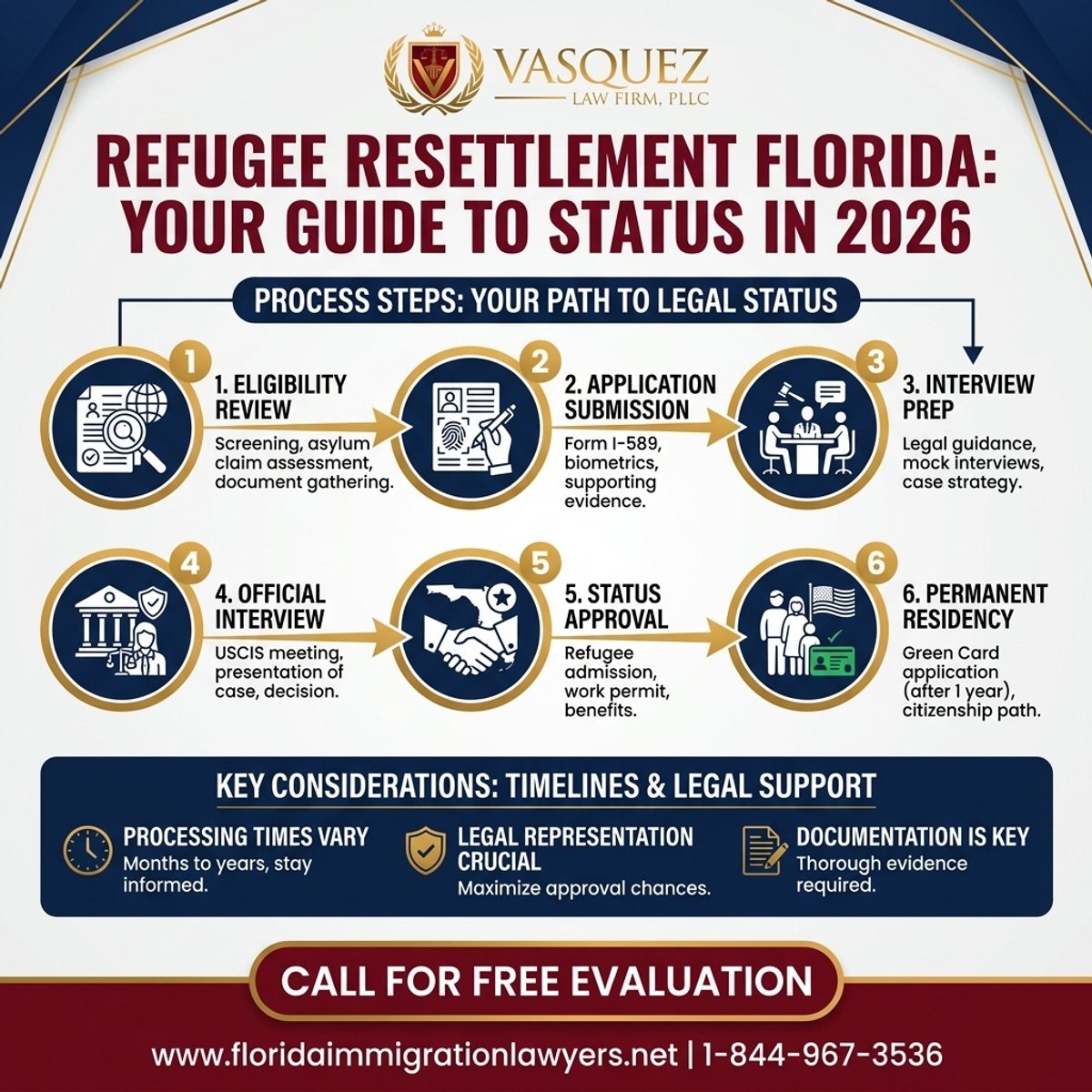
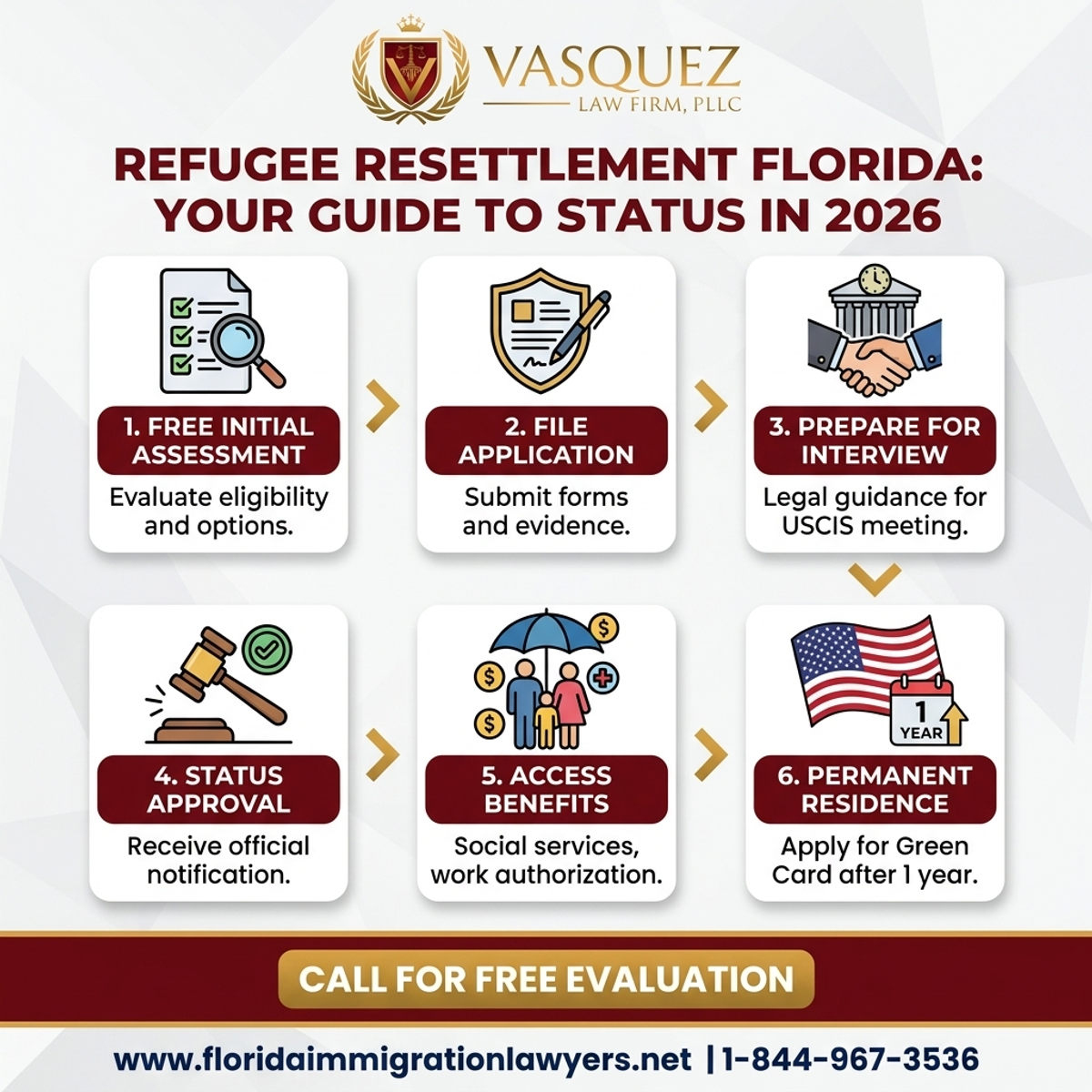
Step-by-Step Guide to Refugee Resettlement in Florida
The journey of a refugee from their home country to a new life in Florida involves several distinct stages. This process is highly structured and aims to provide comprehensive support.
- Referral and Vetting: Most refugees are referred to the U.S. Refugee Admissions Program (USRAP) by the UNHCR or identified by U.S. embassies. They undergo rigorous security checks and interviews by multiple U.S. government agencies, including the Department of Homeland Security and the State Department. This stage can take several years.
- Status Determination: USCIS officers conduct interviews to determine if the individual meets the definition of a refugee under U.S. law (INA Section 101(a)(42)). This involves assessing the well-founded fear of persecution.
- Health Screening: Approved refugees undergo medical examinations to ensure they meet U.S. health requirements and to identify any medical needs for post-arrival care.
- Assignment to a Resettlement Agency: Refugees are assigned to one of nine national resettlement agencies, which then work with their local affiliates in states like Florida. Factors like family ties, language capabilities, and availability of services influence placement.
- Arrival and Initial Reception: Upon arrival in Florida, a representative from the local resettlement agency meets the refugee at the airport. Within the first 30-90 days, the agency provides immediate necessities such as safe housing, essential furnishings, culturally appropriate food, and assistance with applying for Social Security cards and accessing public benefits.
- Cultural Orientation and Integration Services: Refugees receive orientation on American laws, culture, and daily life. They are connected with English language training, employment services, and school enrollment for children. The goal is to foster economic self-sufficiency and social integration.
- Adjustment of Status: One year after admission as a refugee, individuals are eligible to apply for lawful permanent resident (green card) status. This is a critical step towards long-term residency and eventually, U.S. citizenship.
What Documents Do Refugees Need for Resettlement in Florida?
A comprehensive set of documents is essential for refugees undergoing resettlement in Florida. These documents are critical for establishing identity, accessing services, and progressing through the legal immigration process. While specific requirements may vary slightly depending on the individual's country of origin and the resettlement agency, a core set of documents is universally needed. Organizing these materials meticulously can significantly streamline your resettlement journey and avoid unnecessary delays.
As of 2026, refugees are typically provided with initial travel documents and other essential paperwork upon arrival. However, they will need to work with their resettlement agency to obtain or replace other critical identification and legal documents. These documents are vital for everything from enrolling children in school to securing employment and applying for a green card. Ensuring all paperwork is accurate and up-to-date is a key responsibility for new arrivals.
Step-by-Step Process — Refugee Resettlement Florida: Your Guide to Status in 2026
Key Document Checklist for Refugee Resettlement
- I-94 Arrival/Departure Record: This document serves as proof of lawful admission as a refugee. It is electronically generated upon entry and is crucial for all subsequent applications.
- Refugee Travel Document: For international travel, refugees may need to apply for this document from USCIS (Form I-131).
- Social Security Card: Essential for employment, banking, and accessing government benefits. Resettlement agencies assist with the application process.
- Employment Authorization Document (EAD): While refugees are generally work-authorized upon arrival, an EAD (Form I-766) is often needed for employers and serves as a primary form of ID.
- State Identification Card or Driver's License: Obtained through the Florida Department of Highway Safety and Motor Vehicles. This is vital for daily life, banking, and personal identification.
- Birth Certificates: For all family members, translated into English and certified.
- Marriage Certificates: If applicable, translated and certified.
- Educational Transcripts/Diplomas: If available, these can help with job placement and further education.
- Medical Records: Including vaccination records, critical for healthcare access and school enrollment.
- Proof of Address: Utility bills, lease agreements, or letters from the resettlement agency.
What is the Timeline for Refugee Status and Resettlement in Florida?
The timeline for obtaining refugee status and subsequently completing the resettlement process in Florida can vary significantly, often extending over several years. This lengthy duration is primarily due to the rigorous vetting and security checks required by the U.S. government before granting refugee status. Once status is granted and an individual arrives in Florida, the initial resettlement phase is much shorter, typically lasting a few months, but the journey to full integration is ongoing.
As of 2026, the pre-arrival phase, from initial referral to final approval and travel, can range from 18 months to several years, depending on the country of origin, security concerns, and processing backlogs. The post-arrival resettlement services, provided by local agencies in Florida, focus on immediate needs and typically span 30 to 90 days. However, support for employment, education, and social integration can continue for much longer, often up to five years, to ensure successful adaptation.
Typical Timeline for Refugee Status and Resettlement
This table provides a general overview of the expected timeframes for different stages of the refugee process. Please note that these are estimates, and individual cases may vary significantly.
| Stage | Typical Timeframe | Notes |
|---|---|---|
| UNHCR Referral / Identification | Varies (can be years) | Often the longest initial waiting period, depending on global refugee crises. |
| USCIS Interview & Vetting | 6 months - 3 years | Rigorous security checks by multiple U.S. agencies. |
| Medical Exam & Cultural Orientation (Pre-departure) | 1-6 months | Final preparations before travel to the U.S. |
| Arrival in Florida & Initial Reception | First 30-90 days | Housing, food, basic necessities, Social Security application. |
| Intensive Case Management & Services | Up to 12 months | English classes, job search, school enrollment, health access. |
| Application for Green Card (I-485) | 1 year after admission | Mandatory application for Lawful Permanent Resident status. |
| Green Card Processing | 6-18 months | USCIS processing time for adjustment of status. |
| Eligibility for Citizenship | 5 years after admission | Refugees can apply for naturalization after 5 years as a Lawful Permanent Resident. |
What Are the Costs Associated with Refugee Resettlement in Florida?
The costs associated with refugee resettlement in Florida are primarily covered by federal funding and charitable organizations, especially during the initial reception and placement phase. Refugees themselves are not typically expected to bear the upfront costs of their travel to the U.S. or the initial resettlement services. However, as they transition to self-sufficiency, they will incur standard living expenses and some administrative fees for subsequent immigration applications.
As of 2026, the U.S. government, through the Department of State and the Department of Health and Human Services, provides funding to resettlement agencies to cover initial costs such as airfare (often as a loan), rent assistance, food, and basic supplies. Refugees are expected to repay their travel loans over time. Beyond the initial support period, which typically lasts 30-90 days, refugees become responsible for their own living expenses. They will also face fees for applications like the green card (Form I-485) and naturalization (Form N-400), though fee waivers may be available based on income.
Typical Fee Breakdown for Refugee Immigration Applications (2026)
While initial resettlement costs are largely covered, refugees will encounter certain government filing fees as they progress towards permanent residency and citizenship. These fees are subject to change by USCIS.
Key Statistics — Refugee Resettlement Florida: Your Guide to Status in 2026
| Item | Typical Fee | Notes |
|---|---|---|
| Travel Loan Repayment | Varies | Repaid over time to the International Organization for Migration (IOM). |
| Application to Adjust Status (Form I-485) | Varies (e.g., ~$1,225) | Required one year after admission as a refugee to get a Green Card. Fee waivers often available. |
| Biometrics Fee | Included in I-485 | For fingerprinting and background checks. |
| Application for Naturalization (Form N-400) | Varies (e.g., ~$725) | To become a U.S. citizen. Fee waivers often available. |
| Refugee Travel Document (Form I-131) | Varies (e.g., ~$575) | If international travel is needed before obtaining a Green Card. |
| Legal Assistance | Varies | Costs for attorney services. Free or low-cost legal aid may be available. |
Do not navigate this complex process alone. The journey to refugee status and successful resettlement in Florida is filled with legal nuances and practical challenges. Contact Florida Immigration Lawyers today at 1-844-967-3536 for a free consultation. Our dedicated team is ready to provide the guidance and support you need every step of the way.
Common Mistakes to Avoid in Refugee Resettlement in Florida
Navigating refugee resettlement can be challenging, and certain missteps can delay or complicate the process. Being aware of these common mistakes can help you avoid them and ensure a smoother transition to life in Florida.
- Failing to Attend Scheduled Appointments: Missing interviews with USCIS, resettlement agencies, or medical appointments can lead to delays, case dismissal, or even loss of benefits. Always prioritize and attend all scheduled meetings.
- Providing Inconsistent or False Information: Any discrepancies in your story or documentation, or providing false information, can lead to accusations of fraud, denial of status, and potential deportation proceedings. Honesty and consistency are paramount.
- Not Seeking Legal Advice: Many refugees try to navigate the complex legal system alone. Without an attorney, you might miss crucial deadlines, misunderstand legal requirements, or fail to present your case effectively, especially during the adjustment of status or asylum application phase.
- Ignoring Repayment of Travel Loans: While an interest-free loan, neglecting to repay your travel loan to the International Organization for Migration (IOM) can negatively impact your credit and future immigration applications.
- Not Applying for a Green Card After One Year: Refugees are required to apply for adjustment of status (Form I-485) one year after admission. Failing to do so can jeopardize your long-term legal status in the U.S.
- Not Learning English: While challenging, English proficiency is crucial for employment, navigating daily life, and integrating into the community. Neglecting language classes can limit opportunities.
- Delaying Job Search: Resettlement agencies provide initial support, but becoming self-sufficient through employment is a primary goal. Delaying your job search can lead to financial hardship once initial aid expires.
- Failing to Obtain State Identification: A Florida ID or driver's license is essential for banking, renting, and many other daily activities. Not securing this can create significant hurdles.
- Not Understanding Your Rights and Responsibilities: Being unaware of your legal rights as a refugee or your responsibilities under U.S. law can lead to unintended violations or exploitation.
- Traveling Internationally Without a Refugee Travel Document: If you travel outside the U.S. without a valid Refugee Travel Document (Form I-131) before obtaining a green card, you may be denied re-entry.
When to Call a Florida Immigration Lawyer
The journey of a refugee, from seeking status to achieving full resettlement in Florida, is fraught with legal complexities. While resettlement agencies provide invaluable support, their role is primarily humanitarian and not legal representation. There are many critical junctures where the specialized knowledge of a Florida immigration lawyer becomes indispensable.
You should consider contacting Florida Immigration Lawyers if you are:
- Applying for Asylum: If you are seeking asylum from within the U.S. or at a port of entry, the process is highly adversarial and requires expert legal advocacy to present a strong case.
- Facing Denial or Delays: If your refugee or asylum application is denied, or if you experience significant, unexplained delays, an attorney can help appeal the decision or investigate the cause.
- Applying for Adjustment of Status (Green Card): The Form I-485 application is complex, and errors can lead to denials. An attorney ensures all documentation is correct and deadlines are met.
- Navigating Family Reunification: If you wish to bring family members to the U.S. through refugee relative petitions (Form I-730), an attorney can guide you through the intricate process.
- Facing Deportation or Removal Proceedings: If you are placed in deportation or removal proceedings, immediate legal representation is crucial to protect your rights and explore all possible defenses.
- Having Issues with Employment Authorization: If you encounter difficulties obtaining or renewing your Employment Authorization Document (EAD), legal assistance can help resolve the problem.
- Encountering Unforeseen Legal Challenges: Any criminal charges, changes in immigration law, or personal circumstances that might affect your status warrant immediate legal consultation.
Our attorneys at Florida Immigration Lawyers are deeply familiar with the nuances of refugee and asylum law. We understand the unique challenges faced by individuals seeking safety and a new life. We offer comprehensive legal services, from initial application guidance to representation in complex court proceedings, ensuring your rights are protected every step of the way. Don't leave your future to chance; secure experienced legal counsel.
About Florida Immigration Lawyers
Florida Immigration Lawyers is a leading law firm dedicated to providing comprehensive and compassionate immigration legal services across the entire state of Florida. With a deep understanding of U.S. immigration law and a commitment to our clients, we strive to make the complex immigration process as smooth and successful as possible. Our firm is proud to serve individuals, families, and businesses with a wide range of immigration needs, including refugee and asylum cases, family-based petitions, business immigration, deportation defense, and citizenship applications.
Our team of experienced and multilingual attorneys is passionate about advocating for immigrant rights and helping clients achieve their American dream. We understand the profound impact immigration matters have on individuals and their families, which is why we offer personalized attention and strategic legal solutions tailored to each unique situation. Whether you are in Tampa, Miami, Orlando, or anywhere else in Florida, our firm is accessible and ready to assist you. We offer free consultations and are available 24/7 to address your urgent legal concerns.
At Florida Immigration Lawyers, we believe that everyone deserves high-quality legal representation. We are committed to transparency, integrity, and achieving the best possible outcomes for our clients. Let us be your trusted legal partner on your immigration journey. Visit our website at www.floridaimmigrationlawyers.net or call us today at 1-844-967-3536 to schedule your free consultation.
Sources and References
- U.S. Citizenship and Immigration Services (USCIS)
- Executive Office for Immigration Review (EOIR)
- U.S. Department of State - Bureau of Population, Refugees, and Migration
- 8 U.S. Code § 1101 - Definitions (Immigration and Nationality Act Section 101)
- 8 U.S. Code § 1157 - Annual admission of refugees and admission of emergency refugees
- 8 U.S. Code § 1158 - Asylum
- 8 Code of Federal Regulations (CFR) Part 207 - Refugee Procedures
- 8 Code of Federal Regulations (CFR) Part 208 - Procedures for Asylum and Withholding of Removal
- United Nations High Commissioner for Refugees (UNHCR) - https://www.unhcr.org/us-en
Related services: asylum application process, humanitarian protection programs.
This article provides general legal information and is not intended as legal advice. Every case is unique, and outcomes depend on specific facts and circumstances. Contact an attorney for advice about your particular situation.
Your journey to a new life in Florida is important. Do not hesitate to seek professional legal assistance to ensure a smooth and successful resettlement. Contact Florida Immigration Lawyers for a free consultation at 1-844-967-3536. Se Habla Espanol - Estamos aqui para ayudarle.
If you need legal assistance, learn more about speak with an asylum lawyer, or call us at 1-844-967-3536 for a free consultation.
Do Not Navigate This Process Alone
Our experienced immigration attorneys are ready to fight for you. Get a free, confidential consultation today.
Se Habla Español
Frequently Asked Questions
Harold Estrada-Rodriguez
Florida Immigration Attorney · FL Bar No. 1041171
Florida Bar attorney handling Florida-jurisdiction immigration matters. Bilingual representation, free consultations.
Available 24/7 - Free Evaluations
Related Legal Services
Our Florida immigration attorneys can help you with free immigration consultation, experienced immigration attorneys and business immigration. Call today at 1-844-967-3536 for a free consultation.
Related Links
Related Topics
Free Legal Consultation
Discuss your case with our experienced attorneys. We're available 24/7.
Se Habla Español - Estamos aquí para ayudarle.
Related Articles
Understanding the Stokes Interview for Marriage Fraud in Florida
Discover the essentials of the Stokes interview process in Florida. Learn how to prepare effectively and understand the significance of legal assistance. Contact Florida Immigration Lawyers for expert guidance.
Dual Citizenship Florida: Your 2026 Guide to Two Passports
Exploring dual citizenship in Florida opens doors to expanded rights and opportunities, allowing individuals to hold two passports simultaneously. This detailed 2026 guide covers eligibility through naturalization, step-by-step processes, essential documentation, and expected timelines and costs. We delve into the benefits, such as enhanced travel freedom and property rights, alongside potential challenges like tax obligations. Learn how U.S. law generally permits dual nationality, but also understand the critical need to verify your country of origin's stance. Avoid common pitfalls and discover when expert legal counsel from Florida Immigration Lawyers is essential to navigate this intricate journey successfully. Our firm provides comprehensive support for residents across Florida.
O-1 Visa for Extraordinary Ability in Florida | VLF Florida
Explore the O-1 visa for extraordinary ability in Florida and learn how it can open doors for talented individuals. Our guide covers qualifications, application steps, common mistakes, and when to seek legal assistance. Call Florida Immigration Lawyers at 1-844-967-3536 for expert guidance.
E-2 Visa for Florida Business Investors | VLF Florida
Explore the E-2 investor visa process for establishing a business in Florida. Learn about requirements, costs, and timelines specific to West Palm Beach.
