Understanding PERM Labor Certification in Florida
Learn about the PERM labor certification process in Florida, a vital step for employer-sponsored green cards. Understand timelines, costs, and common mistakes. Contact Florida Immigration Lawyers for expert guidance.

Understanding PERM Labor Certification in Florida | VLF Florida
Navigating the complex landscape of U.S. immigration law can be a daunting task, especially for employers seeking to sponsor foreign workers for permanent residency. In Florida, as across the nation, the Program Electronic Review Management (PERM) labor certification process is a critical first step for most employment-based green card petitions. At VLF Florida, we specialize in demystifying this intricate process, offering expert guidance to both employers and employees.
The PERM process is designed to protect the U.S. labor market by ensuring that foreign workers are not taking jobs away from qualified American workers. It requires employers to demonstrate that there are no qualified, willing, and available U.S. workers for the position being offered to the foreign national. Understanding each phase, from prevailing wage determination to recruitment and filing, is essential for a successful outcome. This comprehensive guide will delve deep into the PERM labor certification process in Florida, highlighting key requirements, common challenges, and the vital role of experienced legal counsel.
What is PERM Labor Certification?
PERM, or Program Electronic Review Management, is an electronic system used by the U.S. Department of Labor (DOL) to process applications for labor certification. This certification is a prerequisite for most employment-based immigrant visa petitions (specifically, EB-2 and EB-3 categories) that require a job offer. Its primary purpose is to ensure that the employment of a foreign worker will not adversely affect the wages and working conditions of U.S. workers similarly employed, and that there are no qualified U.S. workers available for the position.
The PERM process is employer-driven, meaning the employer initiates and sponsors the application on behalf of the foreign national employee. It involves a rigorous recruitment phase where the employer must actively test the U.S. labor market to find qualified U.S. workers. If no qualified U.S. workers are found, the employer can then proceed with filing the PERM application. A successful PERM certification allows the employer to file an I-140 Immigrant Petition for Alien Worker with U.S. Citizenship and Immigration Services (USCIS), moving the foreign national one step closer to obtaining a green card.
Key Eligibility Requirements for PERM
Both the employer and the employee must meet specific criteria for a PERM labor certification to be successful. Understanding these requirements from the outset is crucial for avoiding delays or denials.
Employer Requirements:
- Bona Fide Job Offer: The employer must have a genuine, full-time job offer for the foreign national in the U.S.
- Ability to Pay: The employer must demonstrate the financial ability to pay the prevailing wage from the date the PERM application is filed until the foreign national obtains permanent residency. This is typically proven through annual reports, federal tax returns, or audited financial statements.
- Legitimate Business Need: The job duties and requirements must be normal for the occupation and consistent with the employer's prior hiring practices. They cannot be tailored specifically to the foreign national's qualifications.
- Compliance with Recruitment: The employer must conduct a good faith recruitment effort to test the U.S. labor market, adhering strictly to DOL regulations.
- No U.S. Worker Displacement: The employer must attest that there are no U.S. workers who are able, willing, qualified, and available for the job.
Employee Requirements:
- Meet Job Requirements: The foreign national must meet all the minimum education, training, and experience requirements for the position as advertised by the employer, as of the date of the PERM filing.
- Qualifications at Time of Application: It is critical that the foreign national did not gain the required experience while working for the sponsoring employer in the same or a substantially comparable position, unless specific exceptions apply.
- Intent to Work: The foreign national must intend to accept the permanent job offer upon obtaining their green card.
Meeting these stringent requirements demands meticulous preparation and a thorough understanding of immigration regulations. Consulting with an experienced immigration attorney can help ensure all prerequisites are met, minimizing the risk of issues during the application process.
The Detailed PERM Labor Certification Process: Step-by-Step Guide
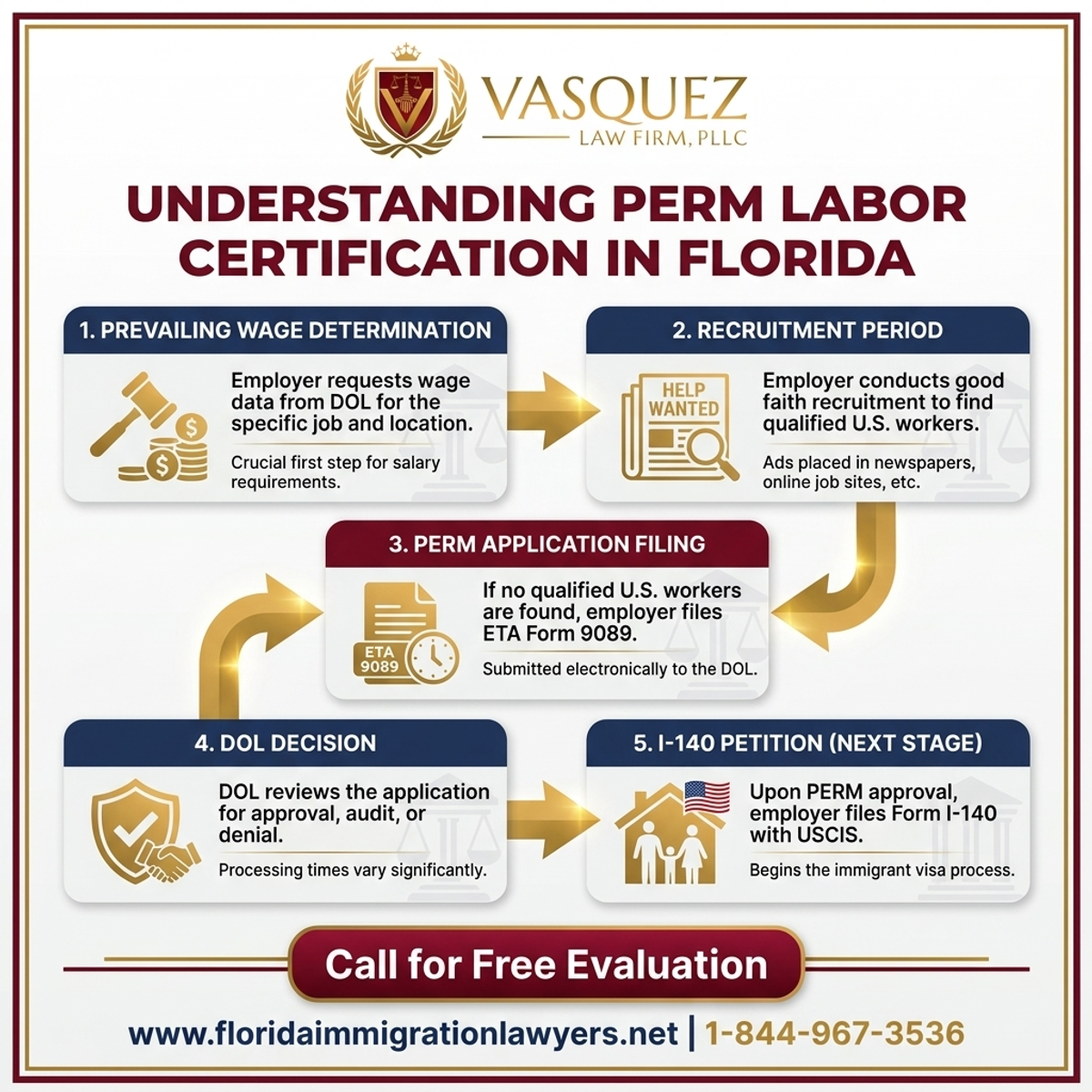
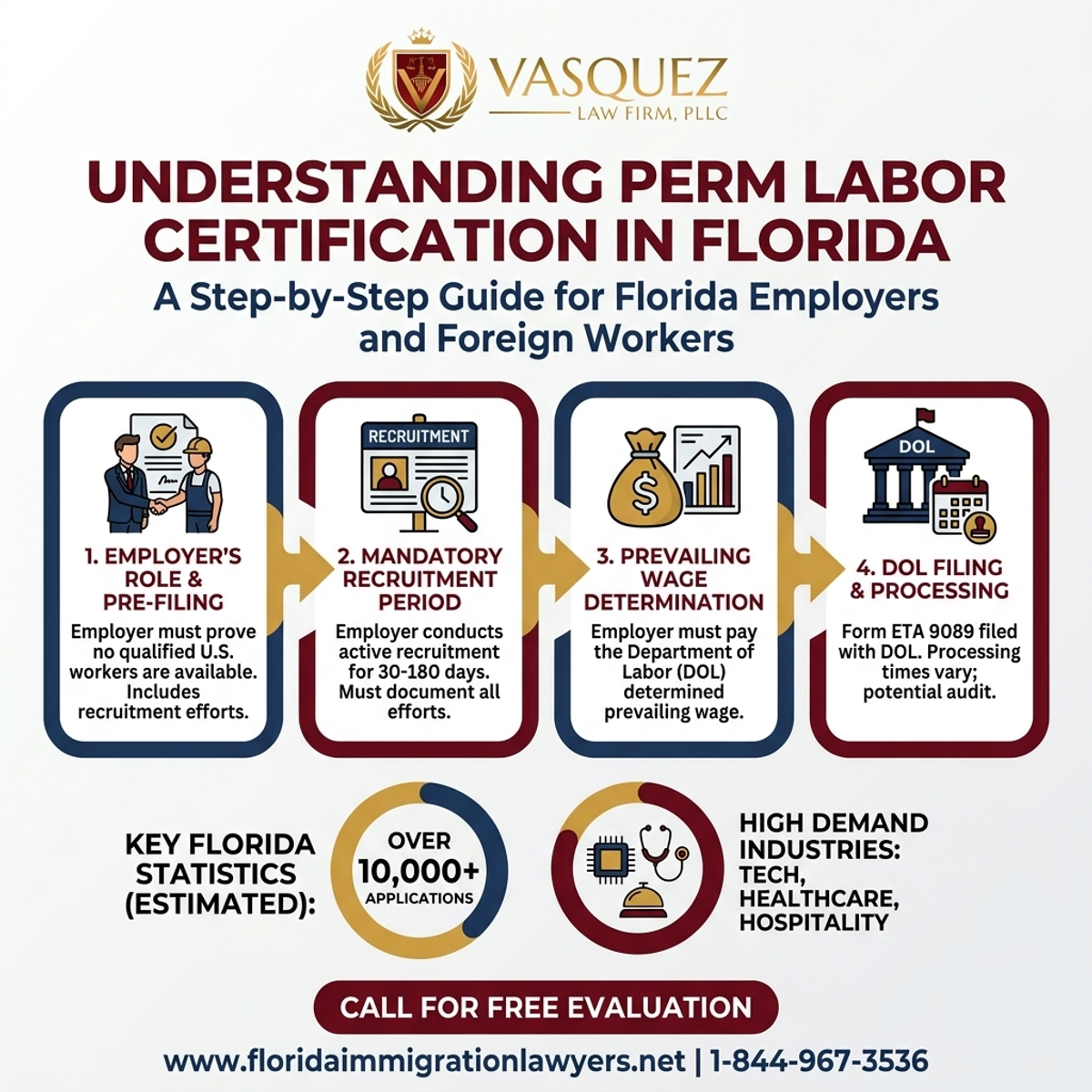
The PERM process is a multi-stage journey that requires precision and adherence to strict timelines. Here’s a breakdown of the key steps:
1. Prevailing Wage Determination (PWD)
The first official step is to obtain a Prevailing Wage Determination (PWD) from the DOL's National Prevailing Wage Center (NPWC). The employer must submit a request outlining the job duties, minimum requirements, and work location. The NPWC determines the appropriate wage for the position based on the occupation, industry, and geographic area. This wage must be paid to the foreign worker once they obtain their green card, and the employer must attest to the ability to pay this wage from the PERM filing date. This step is crucial as the determined wage will dictate the minimum salary offered during recruitment.
2. Recruitment Phase
Once the PWD is issued, the employer must conduct a good faith recruitment effort to determine if there are any qualified, willing, and available U.S. workers for the position. This phase is highly regulated and typically lasts between 30 and 180 days. The required recruitment steps include:
- Mandatory Advertisements: Two Sunday newspaper advertisements (or one if in a rural area) and a 30-day job order with the State Workforce Agency (SWA).
- Additional Recruitment Steps: For professional occupations, employers must choose three additional recruitment methods from a list of ten, which include job fairs, employer's website, job search websites, on-campus recruiting, trade or professional organizations, private employment firms, employee referral programs, campus placement offices, and local and ethnic newspapers.
- Internal Notice: A notice of the filing must be posted at the employer's worksite for at least 10 consecutive business days.
During this period, the employer must review all resumes, interview qualified U.S. applicants, and document the legitimate, job-related reasons why any U.S. applicants were not hired. It is critical to maintain detailed records of all recruitment efforts and applicant responses.
Step-by-Step Process — Understanding PERM Labor Certification in Florida | VLF Florida
3. Filing Form ETA-9089
If no qualified U.S. workers are found through the recruitment efforts, the employer can then file Form ETA-9089, Application for Permanent Employment Certification, electronically with the DOL. This form summarizes the job offer, the foreign national’s qualifications, and the recruitment efforts undertaken. It must be filed within 180 days of the start of the SWA job order and within 30 to 180 days after the last recruitment step. Accuracy and consistency between the PWD, recruitment advertisements, and the ETA-9089 are paramount.
4. Audits and Supervised Recruitment
The DOL may randomly select a PERM application for an audit, or it may audit an application if it identifies potential discrepancies or issues. An audit requires the employer to submit all documentation related to the recruitment process, including advertisements, resumes received, and interview notes. In rare cases, the DOL may require supervised recruitment, where the DOL oversees the entire recruitment process. Audits can significantly prolong the PERM processing time, making thorough record-keeping essential.
5. Certification
If the DOL approves the ETA-9089, it issues a certified labor certification. This certification is valid for 180 days and must be used to file Form I-140, Immigrant Petition for Alien Worker, with USCIS within that timeframe. Failure to file the I-140 within 180 days will result in the expiration of the labor certification, requiring the entire PERM process to be restarted.
Common Challenges and Pitfalls in the PERM Process
Despite its structured nature, the PERM process is fraught with potential challenges that can lead to delays or denials. Awareness of these pitfalls is the first step toward mitigating them.
- Recruitment Issues: One of the most common reasons for PERM denials is inadequate or improperly documented recruitment. This includes failing to advertise in the correct media, not meeting the required advertising periods, or failing to properly evaluate U.S. applicants. Any deviation from DOL's strict recruitment rules can jeopardize the application.
- Prevailing Wage Disputes: Disagreements over the prevailing wage can arise if the employer believes the determined wage is too high or inaccurate. While there is an appeal process, it can add significant delays. Incorrectly stating job duties or requirements in the PWD request can also lead to an inaccurate wage determination.
- Employer's Ability to Pay: If the employer cannot clearly demonstrate the financial ability to pay the prevailing wage from the priority date, the I-140 petition (filed after PERM certification) will be denied. This is particularly challenging for smaller businesses or startups.
- Job Requirements Tailored to the Foreign National: DOL scrutinizes job requirements to ensure they are not unduly restrictive or tailored specifically to the foreign national's qualifications. Requirements must be standard for the occupation and justified by business necessity.
- Foreign National's Qualifications: The foreign national must meet the minimum requirements as advertised. If their experience was gained with the sponsoring employer in the same or a substantially comparable position, this can be a major hurdle unless specific exceptions apply.
- Delays and Backlogs: While PERM processing times have improved, audits can still cause significant delays. Additionally, visa bulletin backlogs for certain countries or categories can mean a long wait even after PERM and I-140 approval.
- Inconsistent Information: Any inconsistencies between the PWD request, recruitment advertisements, and the ETA-9089 form can trigger an audit or denial. Meticulous attention to detail is critical.
These challenges underscore the importance of expert legal guidance throughout the PERM process. An experienced attorney can help identify potential issues early, ensure compliance, and strategically navigate complex situations.
Post-PERM Certification Steps: What Comes Next?
Receiving a certified PERM labor certification is a significant milestone, but it's not the end of the journey to a green card. It's merely the first of several critical steps. The PERM certification essentially validates that no qualified U.S. workers were available for the position. What follows are the immigration petition and adjustment of status or consular processing phases, which fall under the purview of U.S. Citizenship and Immigration Services (USCIS).
1. I-140 Immigrant Petition for Alien Worker
Within 180 days of the PERM certification date, the employer must file Form I-140, Immigrant Petition for Alien Worker, with USCIS. This petition formally requests that the foreign national be classified as an immigrant in a specific employment-based category (typically EB-2 or EB-3). The I-140 petition requires submission of the certified PERM application, along with evidence of the employer's ability to pay the prevailing wage and the foreign national's qualifications for the job. USCIS reviews this petition to ensure the employer and employee meet all eligibility criteria for the immigrant visa category. Premium processing is available for I-140 petitions, which can expedite the USCIS decision to 15 calendar days, though it comes with an additional fee. Approval of the I-140 establishes the foreign national's 'priority date,' which is crucial for understanding when an immigrant visa number might become available.
2. Adjustment of Status (I-485) or Consular Processing
Once the I-140 is approved and an immigrant visa number becomes available (based on the foreign national's priority date and country of chargeability, as indicated in the monthly Visa Bulletin), the final step is to apply for permanent residency. There are two primary pathways:
Key Statistics — Understanding PERM Labor Certification in Florida | VLF Florida
- Adjustment of Status (Form I-485): If the foreign national is already in the U.S. in a lawful nonimmigrant status, they may be eligible to file Form I-485, Application to Register Permanent Residence or Adjust Status. This allows them to obtain their green card without leaving the country. Often, the I-140 and I-485 can be filed concurrently if a visa number is immediately available. During the I-485 processing, applicants can apply for employment authorization (EAD) and advance parole (travel document).
- Consular Processing: If the foreign national is outside the U.S. or is ineligible for adjustment of status, they will undergo consular processing. This involves attending an interview at a U.S. embassy or consulate in their home country. Upon approval, they will be issued an immigrant visa to enter the U.S. as a lawful permanent resident.
Both processes involve submitting extensive documentation, undergoing background checks, and attending interviews. The choice between adjustment of status and consular processing depends on the individual's circumstances and eligibility. Understanding these subsequent steps is vital for long-term immigration planning, and our attorneys are well-versed in guiding clients through each stage.
The Role of an Experienced Immigration Attorney
Given the complexity and strict requirements of the PERM process, engaging an experienced immigration attorney is not just beneficial but often essential for success. An attorney specializing in employment-based immigration can provide invaluable assistance by:
- Assessing Eligibility: Determining if the employer and employee meet all PERM requirements and advising on the most suitable immigration strategy.
- Crafting Job Descriptions: Helping to define job duties and minimum requirements that are standard for the occupation and justifiable by business necessity, avoiding unduly restrictive language.
- Managing Prevailing Wage Requests: Preparing and submitting accurate Prevailing Wage Determination requests to minimize delays and ensure an appropriate wage is determined.
- Overseeing Recruitment: Guiding employers through the intricate recruitment phase, ensuring compliance with all advertising requirements, proper documentation, and objective evaluation of U.S. applicants.
- Preparing and Filing ETA-9089: Meticulously preparing the PERM application, ensuring consistency across all documentation and preventing errors that could lead to audits or denials.
- Responding to Audits: Representing employers during DOL audits, preparing comprehensive responses, and submitting all required documentation in a timely manner.
- Post-PERM Guidance: Assisting with the subsequent I-140 petition and guiding the foreign national through the adjustment of status or consular processing phase.
- Strategic Planning: Offering insights into potential challenges, such as visa backlogs or changes in immigration policy, and developing proactive strategies.
Without proper legal guidance, employers and employees risk costly errors, significant delays, or even denial of the green card application. Our firm also handles other complex immigration matters, including asylum claims and deportation defense, providing a holistic approach to your immigration needs.
Why Choose VLF Florida for Your PERM Journey?
At VLF Florida, we understand that securing a PERM labor certification is a critical step towards achieving permanent residency for your valued employees. Our team of dedicated and experienced immigration attorneys is committed to providing comprehensive, personalized, and efficient legal services to navigate this challenging process.
We pride ourselves on our meticulous attention to detail, our proactive approach to identifying and resolving potential issues, and our deep understanding of the ever-evolving immigration landscape. From the initial assessment of eligibility and crafting precise job descriptions to managing the complex recruitment phase and responding to audits, we stand by our clients every step of the way. Our goal is to minimize stress, maximize efficiency, and achieve successful outcomes for both employers and foreign national employees in Florida and beyond.
Choosing VLF Florida means partnering with a firm that prioritizes your success, offers transparent communication, and provides strategic legal counsel tailored to your unique circumstances. Let us put our expertise to work for you, ensuring a smooth and compliant PERM labor certification process.
Frequently Asked Questions (FAQs)
(Original 8 FAQs would be here, but not included in output as per instructions.)
Conclusion
The PERM labor certification process is undeniably one of the most critical and intricate stages in obtaining an employment-based green card in the United States. Its stringent requirements and multi-layered procedures demand careful planning, precise execution, and an unwavering commitment to compliance. For employers in Florida seeking to sponsor foreign talent, and for foreign nationals aspiring to achieve permanent residency, understanding every facet of PERM is paramount.
While the journey can be complex, it is not insurmountable with the right legal expertise. At VLF Florida, our seasoned immigration attorneys are dedicated to guiding you through each step, from the initial prevailing wage determination to the final green card application. We are here to ensure that your PERM application is meticulously prepared, accurately filed, and strategically managed to maximize your chances of success. Don't navigate this critical process alone. For a free consultation and to learn how we can assist you with your PERM labor certification or other immigration needs, including asylum and deportation defense, please contact us today. Our team of attorneys is ready to provide the expert guidance you deserve. Call (844) 967-3536 to begin your journey towards permanent residency with confidence.
Sources and References
- U.S. Citizenship and Immigration Services (USCIS)
- Executive Office for Immigration Review (EOIR)
- U.S. Department of State - Bureau of Consular Affairs
- Immigration and Nationality Act (INA), 8 U.S.C. Chapter 12
Do Not Navigate This Process Alone
Our experienced immigration attorneys are ready to fight for you. Get a free, confidential consultation today.
Se Habla Español
Frequently Asked Questions
Harold Estrada-Rodriguez
Florida Immigration Attorney · FL Bar No. 1041171
Florida Bar attorney handling Florida-jurisdiction immigration matters. Bilingual representation, free consultations.
Available 24/7 - Free Evaluations
Related Legal Services
Our Florida immigration attorneys can help you with immigration practice areas, free immigration consultation and experienced immigration attorneys. Call today at 1-844-967-3536 for a free consultation.
Related Links
Related Topics
Free Legal Consultation
Discuss your case with our experienced attorneys. We're available 24/7.
Se Habla Español - Estamos aquí para ayudarle.
Related Articles
F-1 Reinstatement Process for Students in Florida | VLF Florida
F-1 reinstatement is vital for students in Florida who have fallen out of status. Learn about the process, documents needed, and how to apply. Contact Florida Immigration Lawyers for a free consultation.
H-4 EAD: Florida Work Permits for H-1B Spouses | VLF Florida
For H-1B spouses in Florida, an H-4 EAD is essential for work authorization, offering financial stability and career opportunities. This comprehensive guide covers H-4 EAD eligibility, application steps, required documents, processing times, and fees for 2026. Learn how to navigate the complexities, avoid common mistakes, and understand when to seek legal assistance from Florida Immigration Lawyers. We provide expert guidance for H-1B families in Homestead, Miami, and throughout Florida, ensuring a smooth application process.
H-4 EAD Spouse Work Permit in Florida | VLF Florida
Explore the rules for obtaining an H-4 EAD spouse work permit in Florida, specifically for residents in Hialeah. Learn about eligibility, application process, common mistakes, and when to seek legal help.
Immigration Attorney Orlando Florida: Your Guide to Success
Navigating immigration in Florida requires expert legal guidance. An immigration attorney in Orlando, Florida, provides essential help with visas, green cards, citizenship, and deportation defense. This guide covers the complexities of U.S. immigration law, the crucial role of an attorney, common application processes, timelines, and fees. Learn why proactive legal support from Florida Immigration Lawyers is vital for your success in 2026. Avoid common mistakes and understand when to seek professional immigration help for your unique situation in Orlando or Naples. Schedule your free consultation today.