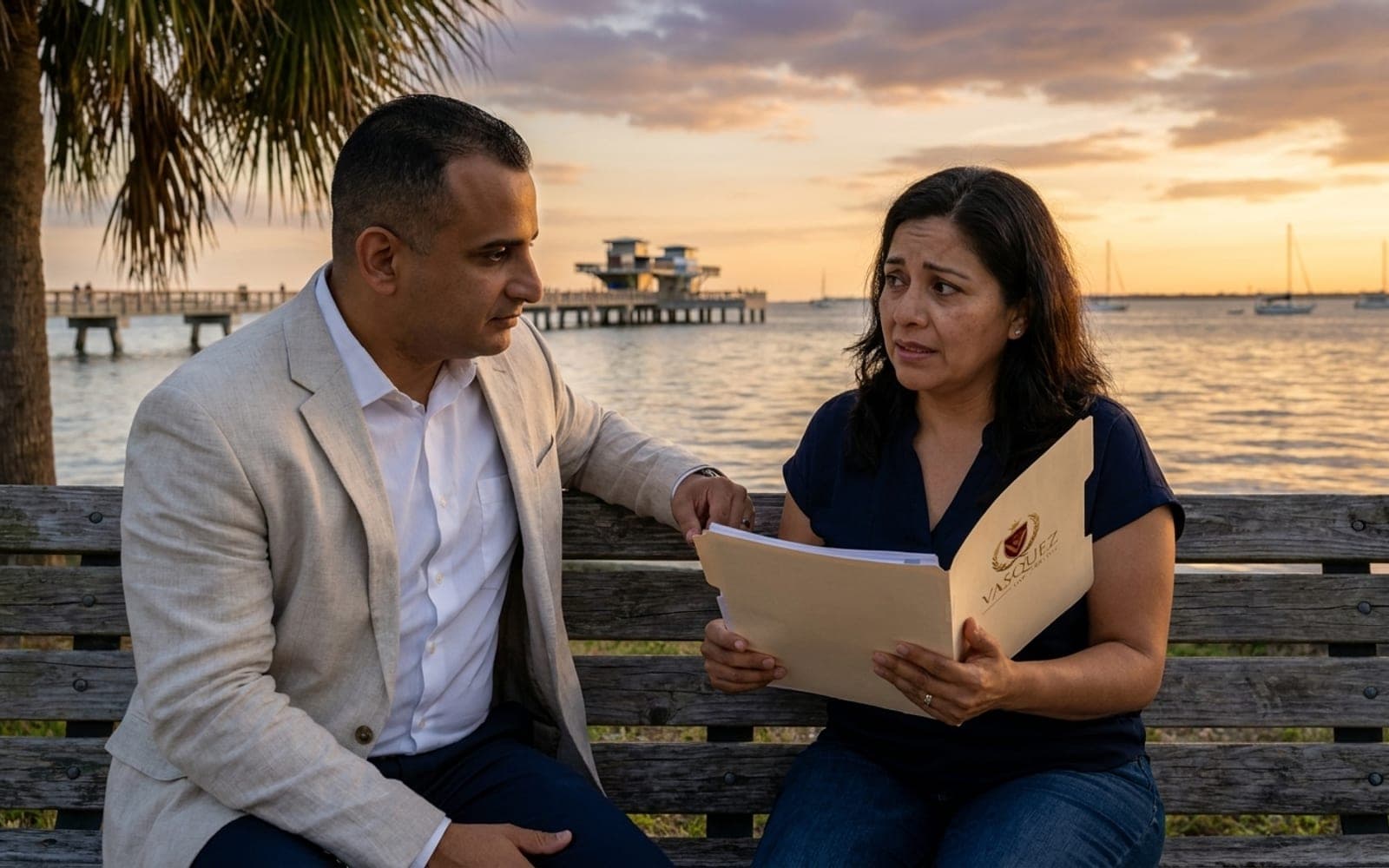
Asylum protects people who were persecuted, or fear persecution, because of race, religion, nationality, political opinion or membership in a particular social group. An Orlando asylum lawyer helps prepare the declaration and evidence, explains the affirmative path through USCIS and the defensive path in immigration court, and addresses work permits while a case is pending. The page also covers waivers, criminal-record issues and appeals. Deadlines are strict, so speak with a lawyer about your own facts as soon as you can.
- Asylum can be filed affirmatively with USCIS or raised defensively in court.
- The declaration and supporting evidence are central to the application.
- Work permits while a case is pending are discussed in the guide.
- Criminal records and appeals can affect the path of a case.
Introduction
Orlando asylum lawyers help people who fear returning to their home country ask the United States for protection, and they often handle the problems that come with it: work permits, waivers, removal proceedings and appeals. This page gives a practical overview of how these cases connect and what to expect at each stage. If you or a family member need help, call 1-844-YO-PELEO or contact us.
Vasquez Law Firm represents clients in these matters from our office in Orlando and serves clients throughout Florida by phone and video, in English and Spanish. We practice immigration law only.
This article is general information, not legal advice. Asylum law, filing deadlines and court procedures are strict and change over time, so talk with a lawyer about the facts of your own case as soon as you can.
Immigration Help for Orlando Residents
Asylum protects people who have been persecuted, or fear persecution, because of race, religion, nationality, political opinion or membership in a particular social group. There are two main paths.
- An affirmative application is filed with USCIS on Form I-589 by someone who is not in removal proceedings, followed by an interview with an asylum officer.
- A defensive application is presented to an immigration judge as a defense against removal.
A political asylum attorney spends much of the case on evidence: a detailed personal declaration, identity documents, country conditions reports, medical or psychological records and statements from witnesses. Consistency matters, because officers and judges compare what you say at the interview or hearing with what you wrote in the application.
There is generally a one-year filing deadline counted from your last arrival in the United States, with limited exceptions for changed or extraordinary circumstances. If you are close to that deadline or past it, talk to a lawyer right away so the options, including related protections such as withholding of removal and protection under the Convention Against Torture, can be reviewed. Read more on our asylum lawyer page.
How We Work With Orlando Clients
Our only office is at 1111 E Amelia Street in Orlando, so Orlando-area clients can meet with us in person. Clients elsewhere in Florida can meet by phone or secure video. Consultations are available in English and Spanish. Asylum cases involve sensitive history, so we make time to listen before we prepare any document, and we explain each step before it happens.
- Consultation. We learn your history, the reasons for your fear and where you are in the process.
- Deadline and status review. We check the one-year deadline, any pending applications and any court dates.
- Evidence plan. We list the documents, witnesses and country information that could support the claim.
- Declaration and forms. We prepare a detailed personal declaration and the application, and we review them with you line by line.
- Filing. The application is filed with USCIS or presented in immigration court.
- Interview or hearing preparation. We prepare you for questions and explain what happens on the day.
Please do not sign anything you have not read or do not understand, and tell us if anything in the application is wrong. Corrections made early are simple, but errors found later can affect credibility.
Preparing Your Asylum Declaration and Evidence
The declaration is your own account of what happened and why you fear returning. It should be detailed, chronological and specific about dates, places, people and events, and it should explain why the harm happened because of a protected ground. Many applicants find it painful to write about these events, so we work in stages and take breaks. The declaration must be truthful, and every detail should match the forms and any other statements you have made.
Evidence supports the declaration. It may include identity documents, membership records, medical or psychological reports, police or court records, photos, messages and statements from witnesses. Country condition reports from reliable sources show whether the harm you describe fits what is known about the place. If you cannot get a document, the declaration should explain why, and other evidence may help fill the gap.
Preparing for the interview or hearing is just as important. We go over the questions an officer or a government attorney may ask, discuss how to answer calmly and truthfully and explain what to do if you do not remember something. Credibility is central in asylum cases, so consistency and honesty matter more than a perfect memory.
Work Permits While a Case Is Pending
Many people with pending immigration cases need an Employment Authorization Document (EAD) to support their families. Asylum applicants can request a work permit only after their application has been pending for a period set by regulation, and certain delays they cause can stop that clock. Other categories, such as pending adjustment of status, TPS and some humanitarian cases, have their own eligibility rules.
A work permit attorney checks that the correct eligibility category is used on Form I-765, that renewals are filed on time and that a gap in work authorization is handled correctly. If you are looking for help with a work permit, bring your current card, your receipt notices and any denial letters. Our work permit page explains the basics.
Waivers: Two Different Meanings
When someone asks for a visa waiver attorney, they may mean one of two things. The first is the Visa Waiver Program, which lets citizens of participating countries visit for short stays without a visa after ESTA approval. Visitors who enter this way give up many rights to contest removal and generally cannot extend their stay, so overstays create serious problems.
The second meaning is a waiver of inadmissibility. Prior unlawful presence, certain criminal history, misrepresentation and other grounds can make a person inadmissible. Forms such as I-601, I-601A and I-212 ask the government to forgive certain grounds, often by showing extreme hardship to a qualifying U.S. citizen or permanent resident relative. A lawyer builds the hardship evidence: medical records, financial records, school records and country information.
Deportation and Removal Defense in Orlando Immigration Court
Orlando has its own immigration court, run by the Executive Office for Immigration Review, which hears removal cases for many Central Florida residents. If you receive a Notice to Appear, the case begins with a master calendar hearing and may later go to an individual hearing where evidence and testimony are presented. Defenses can include asylum, cancellation of removal, adjustment of status, waivers or challenging the government's charges.
A removal defense attorney reviews the Notice to Appear for errors, requests the government's records when appropriate and prepares the applications and witnesses. Missing a hearing can lead to an order of removal in your absence, so keep your address updated with the court. When people compare deportation defense law firms, they should ask who will appear at the hearing, how evidence will be prepared and how the lawyer communicates before each court date. We also handle bond requests when a family member is detained. See our deportation defense page.
Criminal Records and Immigration Consequences
An arrest or conviction can affect a green card, a citizenship application or a pending asylum case. Some offenses can trigger removal; others can block a future benefit. A lawyer who handles criminal immigration consequences looks at the exact statute, the record of conviction and the sentence to assess the immigration risk.
Our firm practices immigration law only. People who face criminal charges usually need two lawyers working together: a criminal defense attorney who handles the charge in state or federal court, and an immigration lawyer who explains how each possible plea or outcome could affect immigration status. We work alongside your criminal defense lawyer on that second question, and we encourage you to raise the immigration issue with your defense lawyer before any plea.
Appeals and Federal Court Options
A denial is not always the end. Decisions of immigration judges can generally be appealed to the Board of Immigration Appeals, and the deadline is short, generally 30 days. Some USCIS denials can be appealed to the Administrative Appeals Office or reopened or reconsidered by motion.
In some cases, the next step is federal court. A petition for review may be filed with the U.S. Court of Appeals for the Eleventh Circuit after a final removal order, or a lawsuit may be filed in federal district court when an agency has unreasonably delayed a decision. These deadlines are strict and often cannot be extended, so guidance should come quickly. An immigration appeal lawyer reviews the record to find legal or factual errors worth raising.
Safety and confidentiality are priorities. Asylum applicants may fear that information could reach the people they fled, so ask how your information will be stored and who will see it. Tell us about any family members still abroad, and we will discuss how to handle information that could put them at risk.
Family members who are in the United States may also have options. A spouse or child can sometimes be included in the asylum application or have a separate path, and the choice affects status and work authorization, so raise it in the first consultation.
Document Checklist for an Asylum Consultation
- Every notice you have received from USCIS, ICE or the immigration court.
- Your passport, I-94 record and any prior visas.
- Copies of applications already filed, including Form I-589 if you have one.
- Police reports and official court dispositions for any arrest, even if dismissed.
- Any decision you want to appeal, with the date you received it.
- Evidence of the harm you suffered or fear, such as medical records, threats, news reports or statements.
- Identity documents, such as birth certificates and national IDs, with translations where needed.
If you do not have all of these, bring what you have. In asylum cases it is common to lack some documents because leaving was urgent, and a lawyer can explain how to show the claim in other ways.
Timeline and Processing Expectations
Asylum cases take different amounts of time depending on whether they are filed with USCIS or presented in court, the court's calendar and the evidence needed. USCIS and the Executive Office for Immigration Review publish current information, and we do not quote times because they change. Be cautious about any lawyer who guarantees an outcome or a timeline.
What you can do is keep your address current, answer every notice on time and keep gathering evidence while the case is pending. The table below shows the general stages of an asylum case.
| Stage | What happens | Who acts |
|---|
| Case review | The history, deadline and options are reviewed | Client and lawyer |
| Application | Form I-589 and the declaration are prepared and filed | Lawyer and client, then USCIS or the court |
| Biometrics | Fingerprints and a photo are collected | USCIS |
| Interview or hearing | The case is presented to an asylum officer or an immigration judge | Applicant and counsel |
| Decision | The case is granted, denied or referred to court | Asylum officer or immigration judge |
| Appeal | A decision may be appealed on a short deadline | Applicant and lawyer |
Cost Factors and Fee Breakdown
The cost of an asylum case depends on its path and length.
| Item | Amount | Notes |
|---|
| Form I-589 filing | Check USCIS for the current fee | Rules and fees for asylum filings can change, so check the form page |
| Work permit application | Check USCIS for the current fee | Depends on the category |
| Appeals and motions | Check the court or agency for current fees | Vary by the type of filing |
| Translations and records | Varies by case | Needed for foreign-language evidence |
| Attorney fees | Varies by case | Explained in a written fee agreement |
Ask what the fee covers, including interview or hearing attendance and any appeal. Asylum cases can go on for a long time, so a clear agreement about future work matters.
Government fees change, so check the current instructions before you file.
Common Mistakes to Avoid
- Missing the one-year filing deadline without asking about exceptions.
- Writing a declaration that is vague, inconsistent with other papers or incomplete.
- Ignoring a Notice to Appear or missing a court date.
- Applying for a work permit before the rules allow it, or letting a renewal lapse.
- Failing to talk about a criminal charge with an immigration lawyer before a plea.
- Relying on a notario or consultant who is not a licensed lawyer.
When to Call a Lawyer
Call a lawyer as soon as you decide to seek protection, and call immediately if you are near the one-year deadline, have a Notice to Appear or a court date, or have received a denial. If a family member is detained, call right away. Be cautious about any lawyer who guarantees an outcome. A lawyer can prepare the case and explain the risks, but the decision belongs to the asylum officer or the judge.
About Vasquez Law Firm
Vasquez Law Firm practices immigration law only. The firm's only office is at 1111 E Amelia Street in Orlando. We serve clients across Florida by phone and secure video, and we meet in person at the Orlando office. William J. Vásquez is the founding attorney. Consultations are offered in English and Spanish. Clients in Orlando can meet us in person, and clients elsewhere in Florida can meet by phone or video. To talk about your situation, call 1-844-YO-PELEO or contact us.
Sources and References
Related services: asylum, immigration lawyers in Florida
Other ways people search for this
People look for this help under different names. Related searches include orlando visa attorneys; deportation lawyer orlando; deportation defense lawyer orlando; orlando deportation lawyer; deportation defense lawyers in orlando; orlando deportation defense attorney; orlando deportation defense lawyer; orlando immigration criminal defense attorney; removal defense lawyer orlando; cancellation of removal lawyer in orlando; deportation defense attorney in orlando; deportation defense attorneys in orlando; deportation defense lawyer in orlando; orlando cancellation of removal attorney; orlando deportation defense attorneys; orlando deportation defense law firm; political asylum attorney in orlando; us asylum lawyer orlando; work permits attorney orlando; work permits lawyer orlando; orlando visa waiver attorney; visa waiver attorney orlando fl; orlando deportation defense law firms; orlando deportation defense lawyers; orlando removal defense attorney; criminal immigration lawyer orlando; orlando immigration criminal defense lawyer; federal immigration litigation lawyer orlando; immigration appeal lawyer orlando; appeal immigration decision orlando attorney.
This article is general information, not legal advice. Every case is different; speak with an immigration lawyer about your situation.