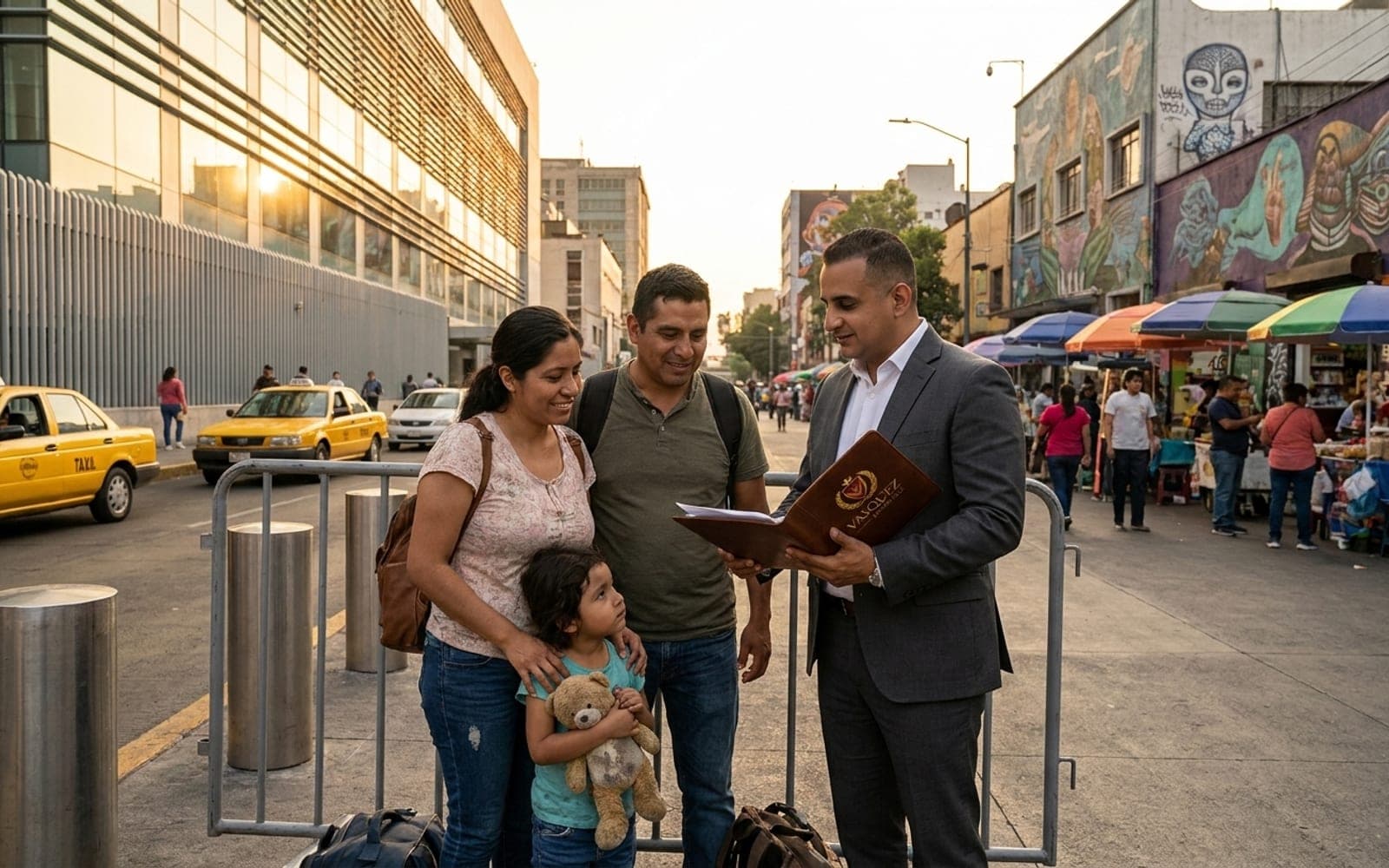
An international immigration case crosses borders, for example a spouse waiting for an interview abroad, a parent who needs a visa or a green card holder planning a long trip. Searching for an international lawyer is really a search for someone who understands both the U.S. process and what happens at embassies and consulates overseas. The guide explains consular steps, travel risks while a case is pending and interview preparation. Vasquez Law Firm handles these matters across Florida from its only office, in Orlando.
- International cases involve both U.S. processing and overseas consulates.
- The guide explains travel risks while a case is pending.
- It covers how to prepare for the consular interview abroad.
- It explains what can happen when inadmissibility comes up abroad.
- The firm serves Florida clients by phone, video and in Orlando.
Introduction
Many immigration cases cross borders: a spouse waiting for an interview abroad, a parent who needs a visa, or a green card holder planning a long trip. An international immigration lawyer near me search is really a search for someone who understands both the U.S. process and what happens at embassies and consulates overseas. This guide is for Florida families with a relative abroad, and it explains the steps, the travel risks and the questions to ask. To talk about your case, call 1-844-YO-PELEO or contact us.
Vasquez Law Firm handles these matters for clients across Florida by phone, video and in person at our only office, at 1111 E Amelia Street in Orlando, in English and Spanish. William J. Vásquez is the founding attorney, and the firm practices immigration law only.
This page is general information, not legal advice. Consular procedures, travel restrictions and visa rules for particular nationalities change, so check the current instructions and have a lawyer review your documents before you plan travel or schedule an interview.
What an International Immigration Case Involves
When part of a case happens outside the United States, more agencies are involved. A typical family case starts with a petition filed with USCIS. After approval, the case moves to the National Visa Center, which collects forms and civil documents, and then to a U.S. embassy or consulate for the interview. The relative completes a medical exam with an approved physician before the interview.
A lawyer's work in these cases includes choosing between processing inside the U.S. and processing abroad, checking whether the relative might face a ground of inadmissibility such as a prior overstay, preparing a complete document package, and explaining what the consular officer is likely to ask. Our family petitions page explains the first step in more detail, and our immigration services page lists the other matters we handle.
How the Consular Process Works for Florida Families
The steps below describe a typical family-based immigrant visa case processed abroad. Details differ by category and country.
- The U.S. citizen or permanent resident files a petition with USCIS and receives a receipt notice.
- USCIS approves the petition and forwards the case to the National Visa Center when processing will be abroad.
- The family pays the required fees, submits the affidavit of support and uploads civil documents.
- The consulate schedules an interview once the file is complete and a visa number is available.
- The relative completes the medical exam with an approved physician.
- The relative attends the interview with the originals of the documents.
- If approved, the visa is issued, and the relative travels to the United States and becomes a permanent resident upon admission.
Each step has instructions that are updated from time to time, so confirm them on the agency websites. A lawyer can check that names, dates and civil records match across the file, since small differences are a frequent cause of delay.
Travel While a Case Is Pending
Travel is one of the most common international questions. Leaving the U.S. while an adjustment of status application is pending can be treated as abandoning the application unless the person first obtains advance parole, and leaving after a period of unlawful presence can trigger a bar to returning. Green card holders who plan long trips abroad may need a reentry permit to help show they did not abandon their residence. Talk to a lawyer before you book a ticket.
Immigration Help for Families From Mexico, Latin America and Beyond
A person searching for a Mexican immigration attorney near me often has a relative whose immigrant visa interview will take place at the U.S. consulate in Ciudad Juárez, which handles immigrant visas for Mexico. When the relative has spent time in the U.S. without status, a waiver may be needed before the interview, and some waivers can be requested from inside the United States before the person leaves. Getting that order of steps right is important.
Families who look for a Latino immigration lawyer near me often want to discuss the case in Spanish, and our consultations can be conducted entirely in Spanish. Common matters include family petitions, waivers, TPS, asylum and defense in immigration court.
Iranian and Persian-Speaking Families
Someone looking for an Iranian immigration lawyer near me or a Persian immigration lawyer near me often faces an extra step: there is no U.S. embassy in Iran, so Iranian applicants usually attend visa interviews at a U.S. embassy or consulate in another country. Travel and visa restrictions affecting certain nationalities have changed several times, so a lawyer should check the current rules before anyone plans travel or schedules an interview. Our consultations are in English and Spanish; if your family is more comfortable in Farsi, say so when you reach out and ask how interpretation will be handled.
Faith, Persecution and Religious Workers
We represent people of every faith and of none. Some searches reflect a wish to work with someone who understands a person's background, such as a Muslim immigration lawyer near me, or a "juif lawyer immigration near me" search (juif is the French word for Jewish). Whatever your faith, two areas of immigration law may matter:
- Asylum based on religion. Religion is one of the protected grounds for asylum. A person who has been persecuted, or fears persecution, because of religious belief or practice may qualify. Asylum generally must be requested within one year of arrival, with limited exceptions. See our asylum page.
- Religious workers. U.S. law includes nonimmigrant and immigrant categories for ministers and certain religious workers of qualifying organizations. Eligibility depends on the organization and the position.
Military Families
A military immigration lawyer near me search often comes from a service member or veteran with a family member abroad, or from someone serving who is not yet a citizen. Immigration law includes special naturalization provisions for people who served honorably in the U.S. armed forces, and family members of service members have had certain discretionary options over the years. Because those programs change, a lawyer checks what is currently available and reviews service records before recommending a path.
Local Presence Versus Online Appointments
Many people say they are looking for an immigration lawyer near me because they assume the lawyer must be close by. Some prefer local immigration lawyers; others simply want a lawyer who will answer the phone. In immigration law, distance matters less than you might expect, because the process is federal and most of the work is done through documents and meetings that can happen remotely. That is especially true in international cases, where your relative is not in Florida anyway.
We offer online appointments: you can request a phone or video consultation through our contact page. We have no office outside Orlando, and clients who want to meet face to face can come to 1111 E Amelia Street. Before the meeting, gather passports, I-94 records, notices from USCIS, the National Visa Center or any embassy, civil documents with English translations, and records of any arrest in any country.
Preparing for the Consular Interview
The interview is usually short, and the officer decides largely on the file and on the relative's answers. Prepare the relative to answer questions about the relationship, the family's history and past travel to the United States, in the same way the forms were answered. Differences between what the forms say and what the relative says are a common reason for further questions. The relative should bring the originals of every civil document, the medical exam results in the sealed envelope if the consulate provides one, and the appointment letter.
If the officer finds a problem, such as a past overstay or a missing document, the case may be refused for a time while the issue is addressed, or placed in administrative processing. Do not panic, and do not try to explain a problem by changing the story. Ask the officer what is needed, write it down, and contact your lawyer with the exact wording of any refusal notice, since it identifies the legal ground and the next step.
When inadmissibility comes up abroad
Some relatives learn at the interview that they are inadmissible, for example because of unlawful presence in the United States, a past misrepresentation or certain offenses. Some of these problems can be addressed by a waiver, and the right form and timing depend on the ground and the person's relationship to a qualifying relative. This is why we review the relative's full history before the petition is filed, not after the interview. If you suspect a problem, see our overview of immigration waivers and speak with a lawyer early.
For families inside Florida, our role during the consular stage is to coordinate: we review the documents the relative will carry, prepare the sponsor for questions about the affidavit of support, and stay in contact by phone or video while the relative is abroad. Time zones and travel make in-person meetings difficult, which is another reason remote consultations suit international cases well.
We also remind families to keep every email and notice from the consulate in one place.
Document Checklist for International Immigration Cases
- Passports and any prior U.S. visas or visa refusals for the relative abroad.
- Proof of the petitioner's U.S. citizenship or permanent residence.
- Birth, marriage and divorce certificates, with English translations.
- Notices from USCIS, the National Visa Center or any consulate.
- Police certificates and court records from countries where the relative lived, if required.
- Recent tax returns and pay records of the sponsor, for the affidavit of support.
- Records of any arrest in any country, even if the case was dismissed.
Civil documents must usually be originals or approved copies, and translations must be complete. Ask what the consulate requires for your country, because requirements differ.
Timeline and Processing Expectations
International cases involve USCIS, the National Visa Center and the consulate, and each has its own pace. USCIS publishes current processing times, and the State Department publishes the Visa Bulletin and consular information, so check those sources instead of relying on what another family experienced. A case can pause when documents are missing, when a visa number is not yet available, or when a consular officer requests additional administrative processing.
The practical advice is to keep the file complete, answer every request promptly and keep your contact details current with every agency. The table shows the stages.
| Stage | What happens | Who acts |
|---|
| Petition | Relationship is proved to USCIS | Petitioner and lawyer |
| National Visa Center | Fees, forms and civil documents are collected | Family and the National Visa Center |
| Medical exam | Approved physician examines the relative | Relative abroad |
| Consular interview | Officer reviews the case and the documents | Relative and consulate |
| Decision | Visa is approved, refused or placed in further review | Consulate |
| Entry | Relative travels and is admitted | Relative and border officers |
Cost Factors and Fee Breakdown
International cases include fees to several agencies, and amounts change, so the table lists items rather than figures.
| Item | Amount | Notes |
|---|
| USCIS petition fee | Check USCIS for the current fee | Charged when the petition is filed |
| National Visa Center and visa fees | Check the court or agency for current fees | Set by the State Department and paid for consular processing |
| Medical exam and vaccines | Varies by case | Paid to the approved physician |
| Translations and records | Varies by case | Paid to translators and agencies |
| Attorney fees | Varies by case | Depend on the number of applicants, waivers and the complexity of the history |
Ask for a written scope of work. Government fees and attorney fees are separate, and some government fees may not be refunded if a case is denied.
If a waiver is likely to be needed, ask how it would affect the plan and the cost before filing the first petition.
Common Mistakes to Avoid
- Booking travel for a relative before checking the effect on a pending case or a possible bar.
- Assuming a petition approval means the relative can come to the United States right away.
- Submitting civil documents without complete translations or with different spellings of names.
- Skipping a disclosure of an arrest or a prior visa refusal.
- Attending a consular interview unprepared for questions about the relationship or past stays.
- Relying on a notario or consultant who is not a licensed lawyer or accredited representative.
- Trusting anyone who promises approval.
When to Call a Lawyer
Call before you file a petition if the relative has ever overstayed, entered without inspection or been refused a visa, before any travel while a case is pending, and when you receive a notice from the National Visa Center or a consulate. To start, call 1-844-YO-PELEO or request a phone or video consultation through the contact page.
About Vasquez Law Firm
Vasquez Law Firm practices immigration law only. Our only office is at 1111 E Amelia Street in Orlando. We serve clients across Florida by phone and secure video, with in-person meetings in Orlando. William J. Vásquez is the founding attorney. Consultations are available in English and Spanish at 1-844-YO-PELEO, and you can contact the firm online.
Sources and References
Related services: family petitions, immigration lawyers in Florida
Other ways people search for this
People look for this help under different names. Related searches include local immigration lawyer; lawyer of immigration near me; local immigration lawyers near me; looking for immigration lawyer near me; online appointments immigration lawyer near me.
This article is general information, not legal advice. Every case is different; speak with an immigration lawyer about your situation.